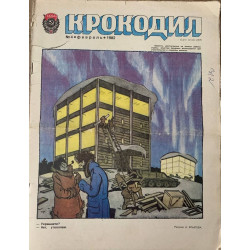


Vintage Krokodil Magazine No. 27, 1982 - Soviet Satire, Journalism, Cartoons
- Brand: Pravda Publishing House
- Product Code: SKM07
- Availability: In Stock
-
Shipping
- International tracked shipping
- Carefully packed & bubble wrapped
- Worldwide delivery: 7–22 business days
- Ships from Ukraine
-
Returns
- 30-day returns: damaged or not as described
- Full refund after inspection
- Contact us before returning
- Learn more about our return policy →
-
Before You Buy
- Every item is a genuine Soviet-era original — no replicas, no reproductions
- Condition is detailed in the product description
- Customs duties may apply — buyer's responsibility
- Questions? Contact us before purchasing →
$10.00Only 1 left
Original Soviet Krokodil Magazine No. 27 (1982)
This authentic issue of Krokodil Magazine No. 27 (1982) captures the everyday realities of the Soviet Union through investigative journalism, political satire, humorous fiction and the magazine's famous editorial cartoons. Rather than focusing primarily on international affairs, this issue examines the challenges of Soviet industry, agriculture, consumer services and technological progress, making it an excellent historical snapshot of life in the USSR during the early 1980s.
Published at a time when improving productivity and product quality had become national priorities, the magazine combines serious reporting with humor, exposing bureaucratic inefficiency, poor planning and the gap between technological achievements and everyday consumer experience.
Feature Investigation – "How to Lose a Million?"
One of the issue's most significant publications is the investigative report "How to Lose a Million?" by special correspondent Yuri Borin. Using a real case from the Lipetsk Region, the article examines how administrative restructuring transformed a successful pig-breeding complex into an unprofitable enterprise burdened with massive debt.
Through detailed reporting and sharp irony, Borin demonstrates how poorly planned reforms, excessive specialization and bureaucratic decision-making resulted in financial losses exceeding one million rubles. Rather than criticizing agriculture itself, the article exposes management failures, ineffective planning and the unintended consequences of administrative experimentation.
Following Progress
Another major feature, "Following Progress", is an investigative essay by special correspondent Leonid Prudovsky. The article follows the author's journey across Moscow, Kalinin and Uglich in search of warranty service for a modern Soviet quartz watch.
What begins as a simple repair request evolves into an ironic examination of Soviet consumer services. The investigation reveals the contradiction between advanced manufacturing and the lack of a nationwide repair infrastructure. Factories produce sophisticated technology, yet service centers often lack the equipment or authorization to repair it, leaving customers caught in a maze of bureaucracy.
The article ultimately argues that genuine technological progress should include reliable maintenance and after-sales service, not merely the introduction of new products.
Agriculture and Food Production
Agriculture remains an important theme throughout the issue. Several reports discuss crop production, farm management and the implementation of the Soviet Food Programme, emphasizing the importance of efficient planning rather than excessive administrative control.
Editorial cartoons accompanying these articles humorously criticize delays in the production of agricultural machinery, shortages of equipment and the bureaucratic obstacles preventing farms from operating efficiently.
Workplace Humor
One of the issue's most memorable literary pieces is "Agashkin's Magic Hammer" by Viktor Baklanov. The story humorously follows an exceptionally productive factory worker whose innovative working method attracts endless meetings, seminars and official demonstrations.
Instead of allowing the worker to continue producing results, management transforms him into a permanent lecturer and symbol of "best practices." The story brilliantly satirizes the tendency to celebrate innovation through conferences and paperwork rather than encouraging practical work on the factory floor.
Political Cartoons & Graphic Satire
Like every classic issue of Krokodil, No. 27 is richly illustrated with original cartoons and caricatures by leading Soviet artists. The visual satire focuses on bureaucracy, industrial planning, workplace inefficiency, consumer services and everyday social behavior.
The issue also includes the regular section "Krokodil's View", where contemporary events are interpreted through satirical commentary and humorous fictional journalism. One notable piece cleverly reimagines Shakespeare's Othello as a Cold War intelligence report, parodying the style of sensational Western media and intelligence narratives.
Main Topics Covered
- Economic reforms and agricultural management.
- The consequences of ineffective administrative planning.
- Modern Soviet consumer electronics and warranty service.
- The challenges of technological progress.
- Factory innovation and workplace productivity.
- Bureaucracy and excessive administrative procedures.
- Industrial modernization and product quality.
- Original literary satire and humorous fiction.
- Editorial cartoons and illustrated social commentary.
Historical Significance
Issue No. 27 offers a valuable insight into Soviet society during the early 1980s, when modernization, technological innovation and economic efficiency became central public concerns. Through investigative reporting, satire and graphic illustration, the magazine documents how official ambitions often collided with practical reality.
Today this issue serves as both an engaging literary publication and an authentic historical document illustrating Soviet journalism, graphic design, consumer culture and workplace life during the late Cold War period.
Why Collectors Value This Issue
- Original Soviet publication from 1982.
- Investigative report on agricultural reforms and economic planning.
- Rare feature examining the history of Soviet quartz watches and warranty service.
- Classic satire by Yuri Borin, Leonid Prudovsky and Viktor Baklanov.
- Original Soviet caricatures and editorial artwork.
- Excellent reference for collectors of Soviet magazines, Cold War history, industrial design and vintage consumer culture.
Whether you collect Soviet periodicals, Cold War memorabilia, vintage graphic art or historical publications, Krokodil Magazine No. 27 (1982) remains an outstanding collectible that combines investigative journalism, humor, social criticism and original Soviet illustration into one of the year's most memorable issues.
No questions answered yet — be the first comrade to ask.
Related Products
- No. 382 Only 1 leftIn stock
- No. 350 Only 1 leftIn stock
- No. 390 Only 1 leftIn stock
- No. 342 Only 1 leftIn stock
- No. 386 Only 1 leftIn stock
- No. 351 Only 1 leftIn stock
- No. 410 Only 1 leftIn stock
- No. 380 Only 1 leftIn stock