

The Poljot Stadium: Service Guide for the 2628H Caliber with Full Calendar and Pusher Date Correction
"Some movements reward careful attention; others demand it absolutely..."
— Reflections from the workbench
From a technician's perspective, watches divide naturally into categories based on service complexity. Some movements flow through disassembly and reassembly almost effortlessly. Others require heightened attention at specific stages. And then there are calibers that demand sustained concentration throughout, where the engineering elegance that makes them interesting also makes them unforgiving of careless handling.
The Poljot caliber 2628H belongs firmly in this last category. Known among collectors by its case style designation "Stadium," this seventeen-jewel movement incorporates a full calendar displaying both day of week and date, with the distinctive feature of pusher-actuated rapid date correction. The calendar mechanism represents a unique engineering approach within Soviet horology, mounting directly to the main plate rather than existing as a separate module. This integration creates a compact assembly but demands particular care during service.
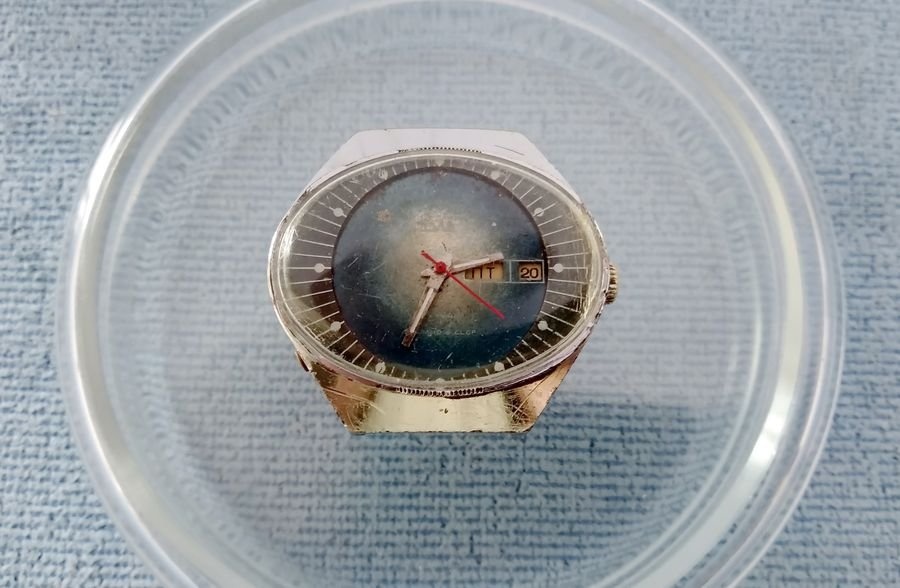
The specimen examined here arrived in severely deteriorated condition, its lubricants congealed and components immobilized. Yet inspection confirmed all parts remained sound, justifying the considerable effort required for proper restoration. What follows documents that process with particular attention to the calendar mechanism's distinctive requirements.
Case and External Features
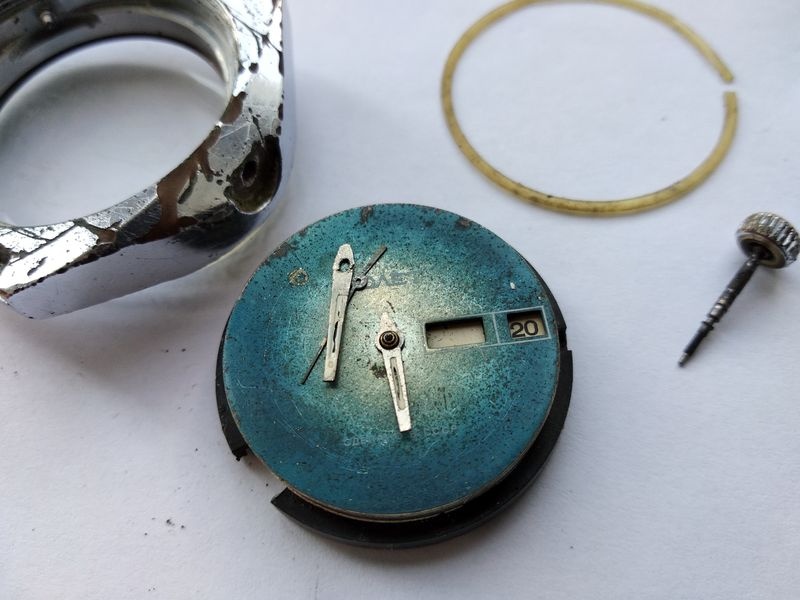
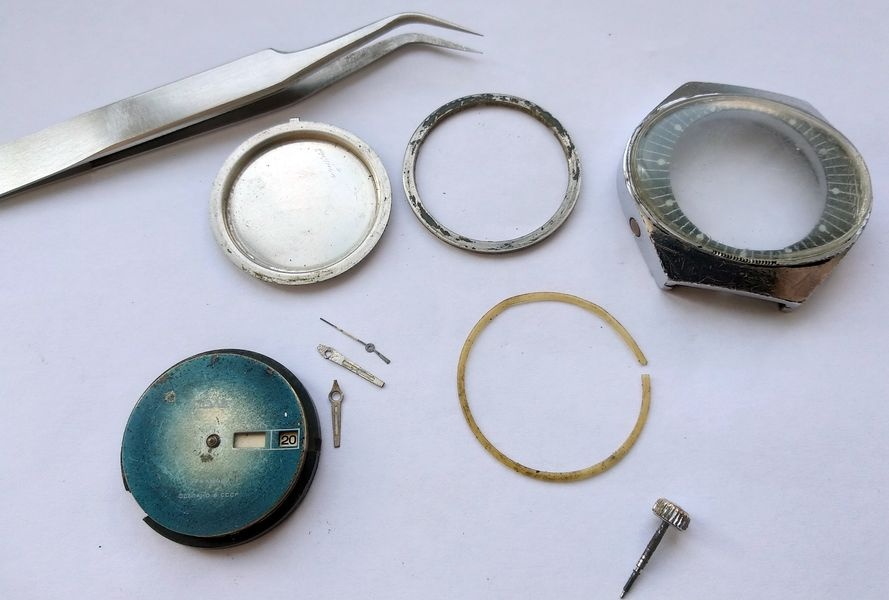
The Stadium case employs an unusual tonneau form that distinguished it from contemporary Soviet production. Despite significant surface deterioration, the watch retains visual interest as a vintage artifact. More relevant to service, the case incorporates features directly related to the calendar mechanism that require understanding before disassembly.
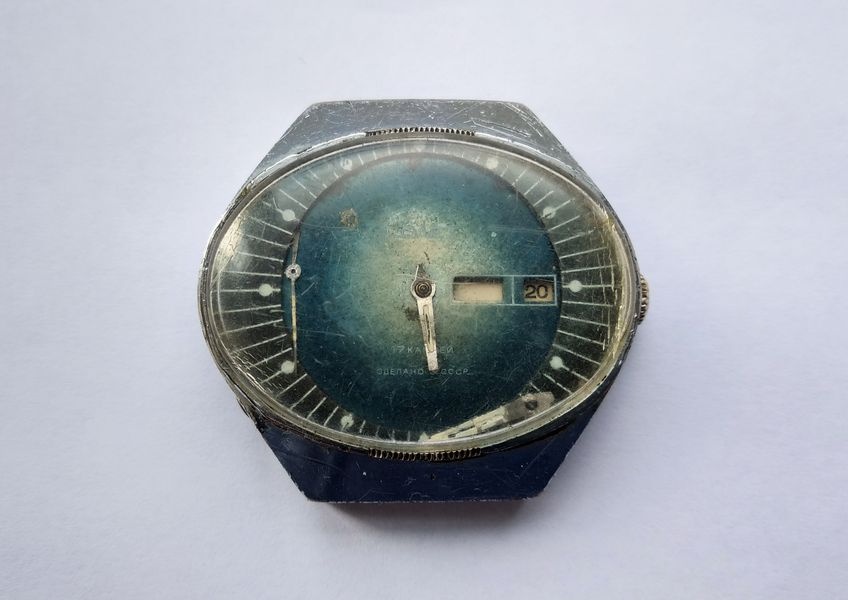
The crown operates in two positions following standard Soviet practice, providing winding and time-setting functions. The calendar mechanism, however, receives its own dedicated control.
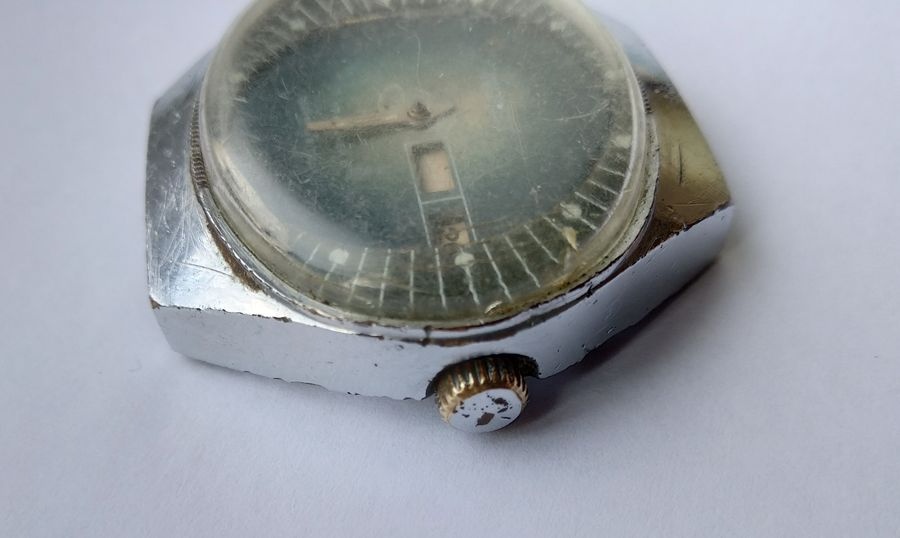
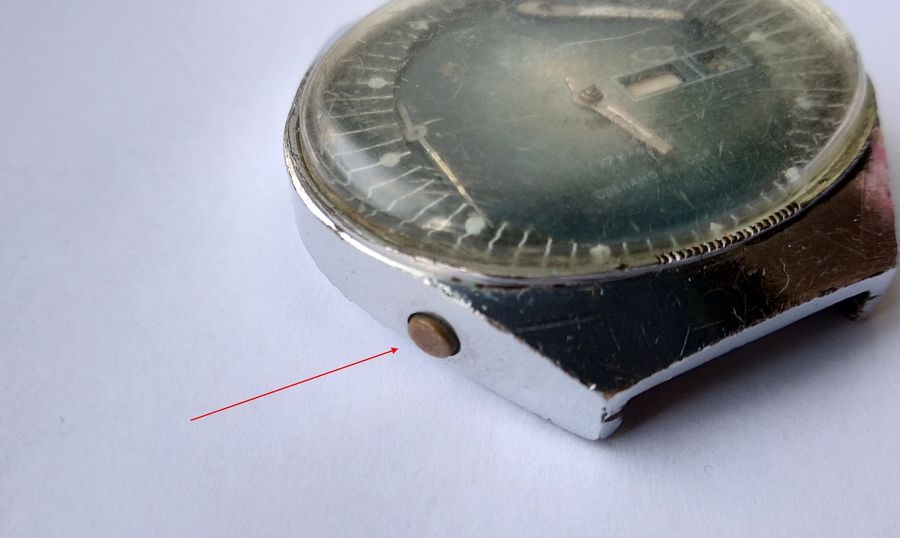
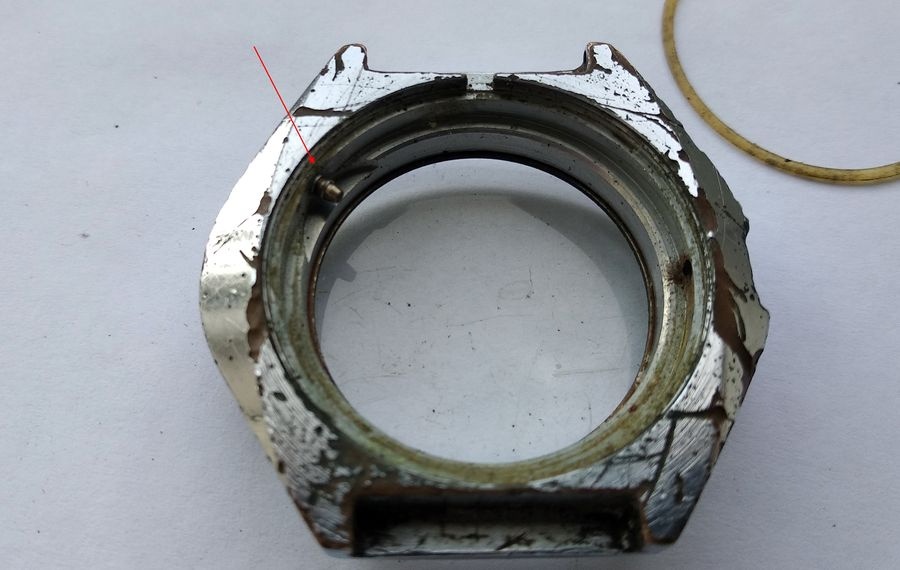
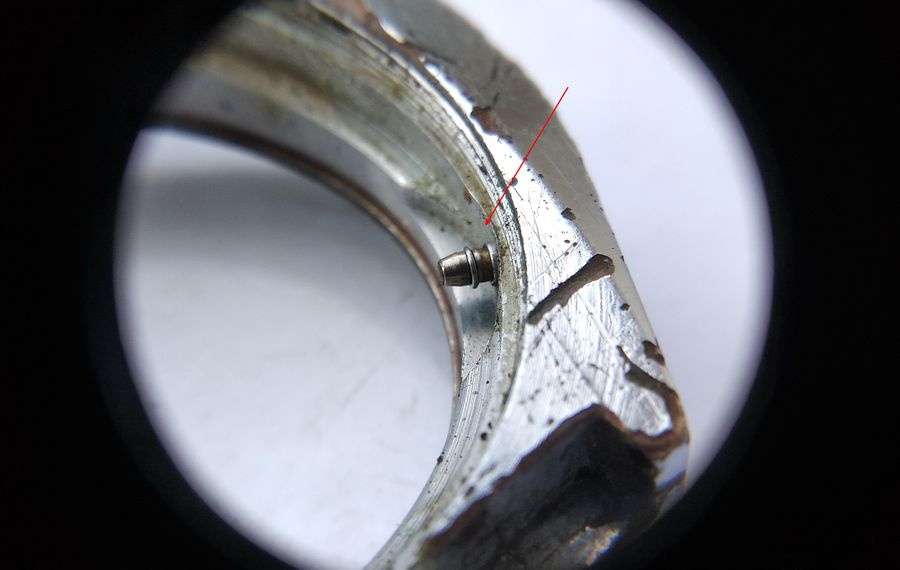
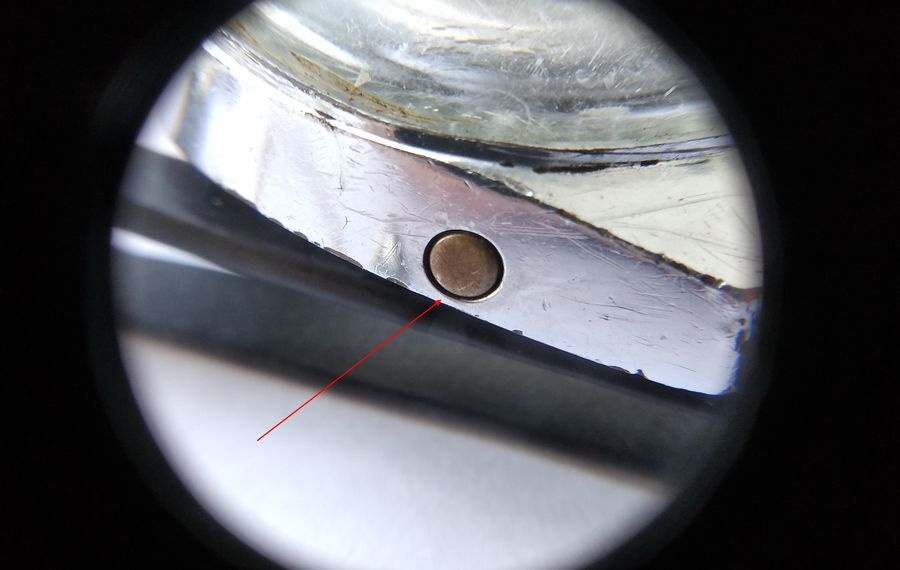
The date correction pusher mounted at the eight o'clock position represents this caliber's distinguishing external feature. Pressing this button advances the date disk by one position, enabling rapid correction without cycling the hands through twenty-four hours for each day requiring adjustment. This convenience comes at the cost of additional mechanical complexity within the movement.
The case back secures with a threaded ring compressing a gasket, providing splash resistance appropriate for daily wear. The "splash resistant" rating indicates protection against incidental moisture rather than immersion capability.
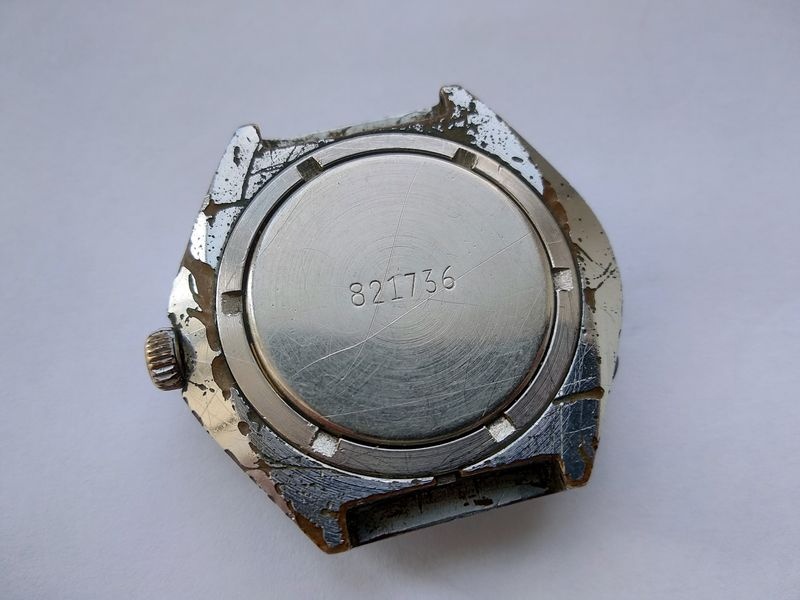
Movement Identification
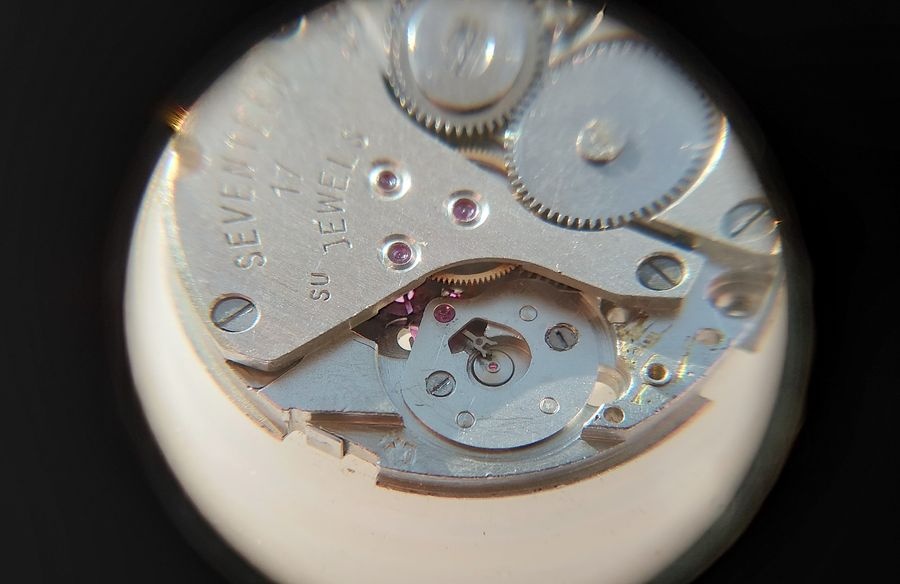
Opening the case back reveals the caliber 2628H with its seventeen-jewel specification marked in Latin characters for export identification. The "SU" designation indicates post-1980 manufacture, providing approximate dating for this example.
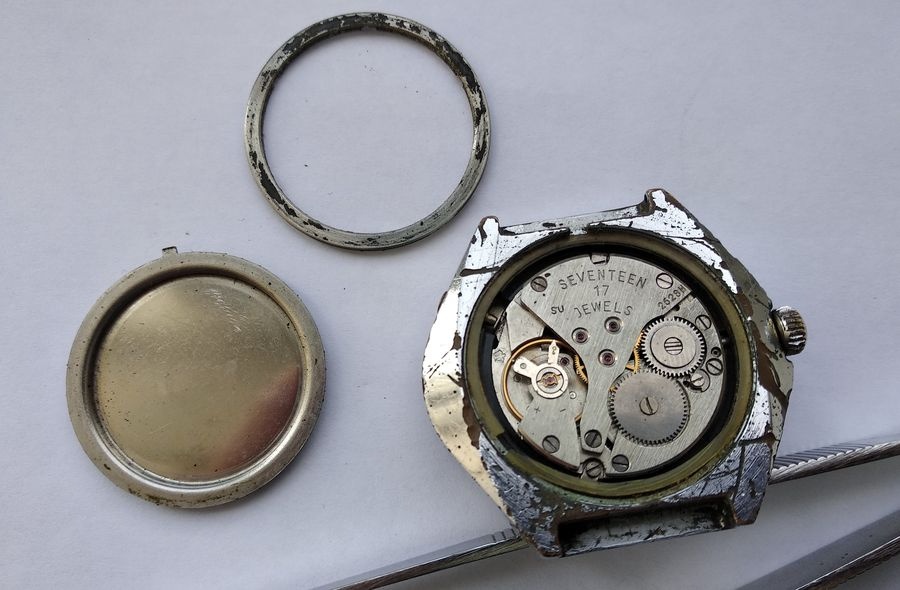
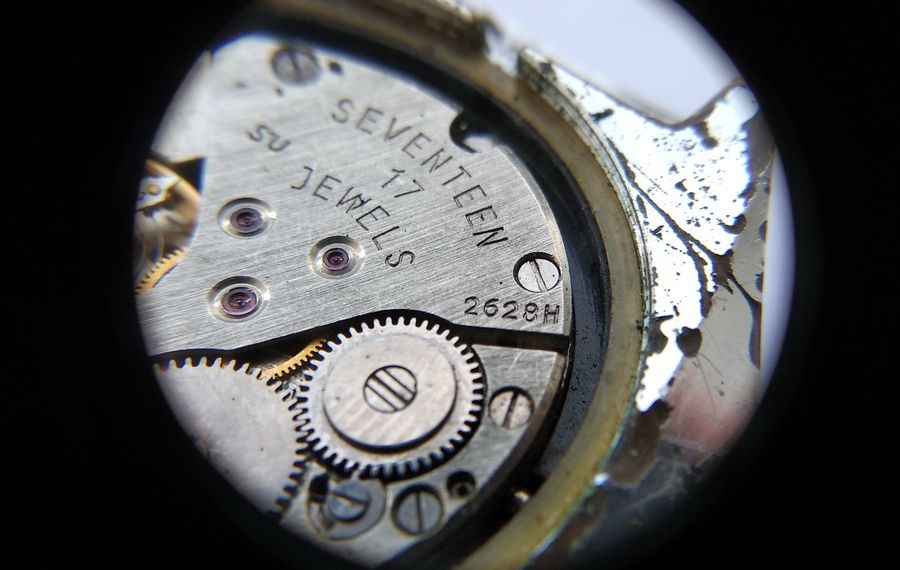
Extraction from Case
Stem removal proceeds via the standard release button, though the accumulated contamination becomes immediately apparent as debris trails from the withdrawn stem.
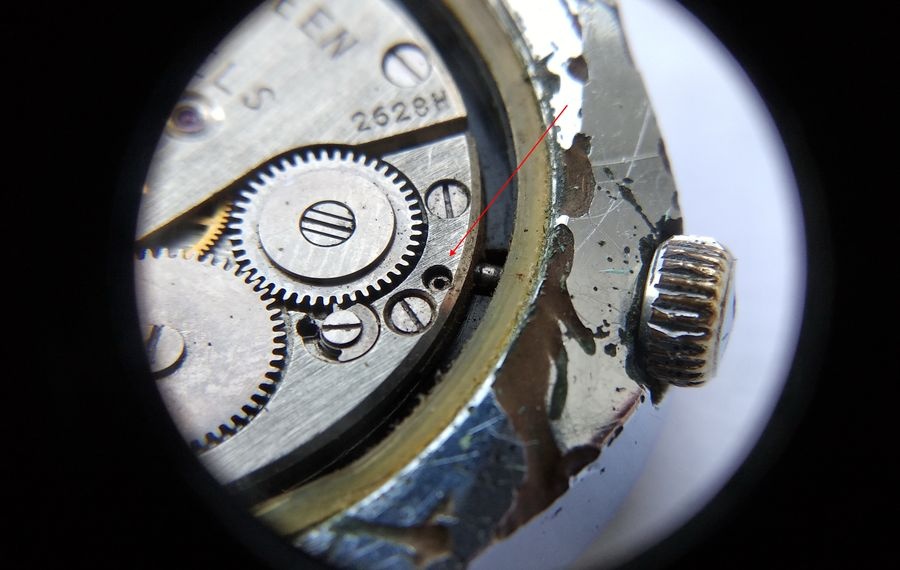
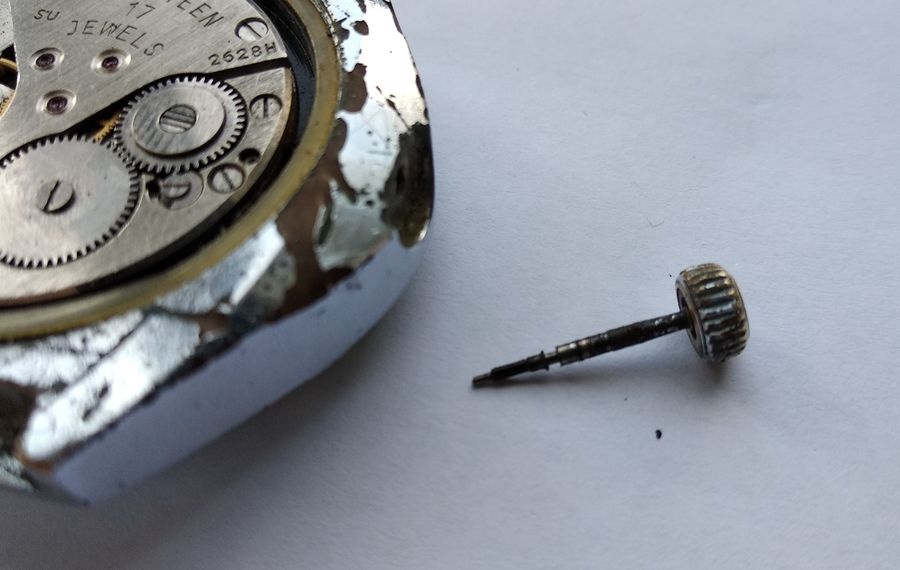
The case interior reveals the pusher mechanism from within. The internal button face interfaces with a transfer lever in the movement, transmitting the correction impulse to the calendar mechanism.
Movement Preparation
The movement mounts within a plastic frame secured by two screws with retaining tabs. This frame provides shock isolation and positions the movement correctly relative to the pusher port.
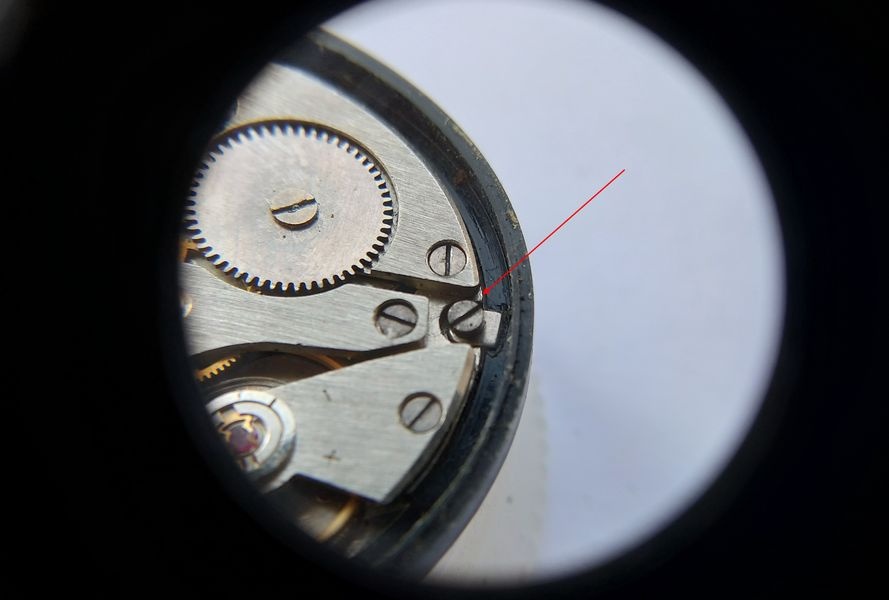
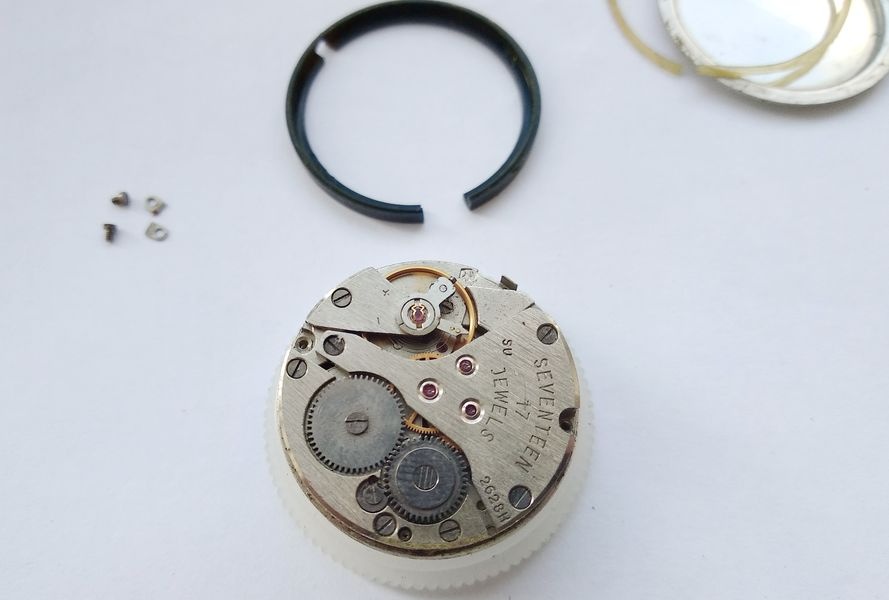
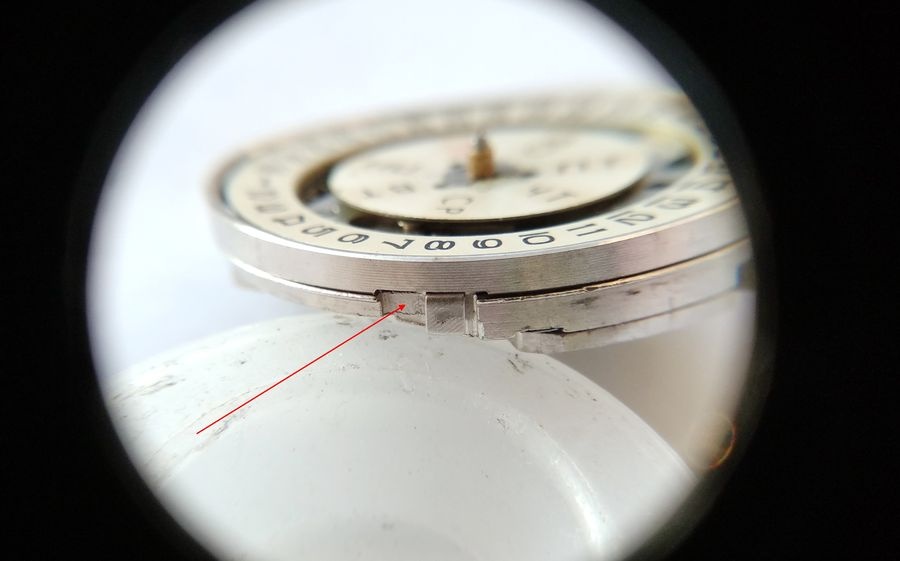
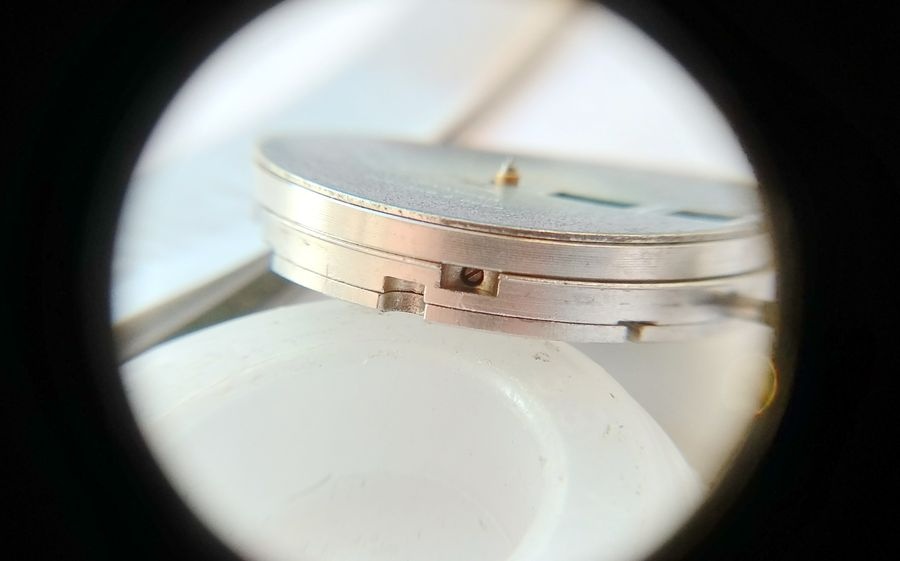
A critical detail appears at this stage: the calendar transfer lever that interfaces with the case pusher. This lever, unique to the 2628H, transmits external button presses to the date advance mechanism. An intermediate positioning ring between the main plate and dial carries a relief that must align with this lever. Misalignment prevents proper pusher function.
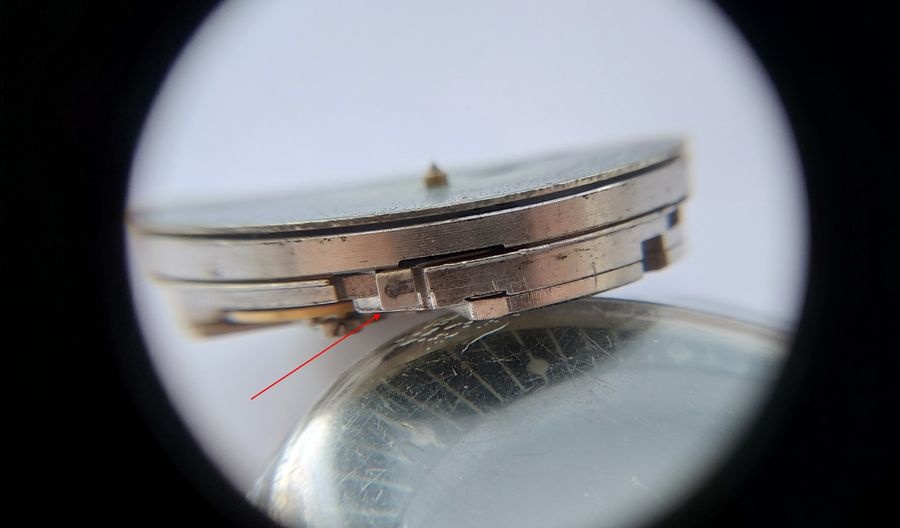
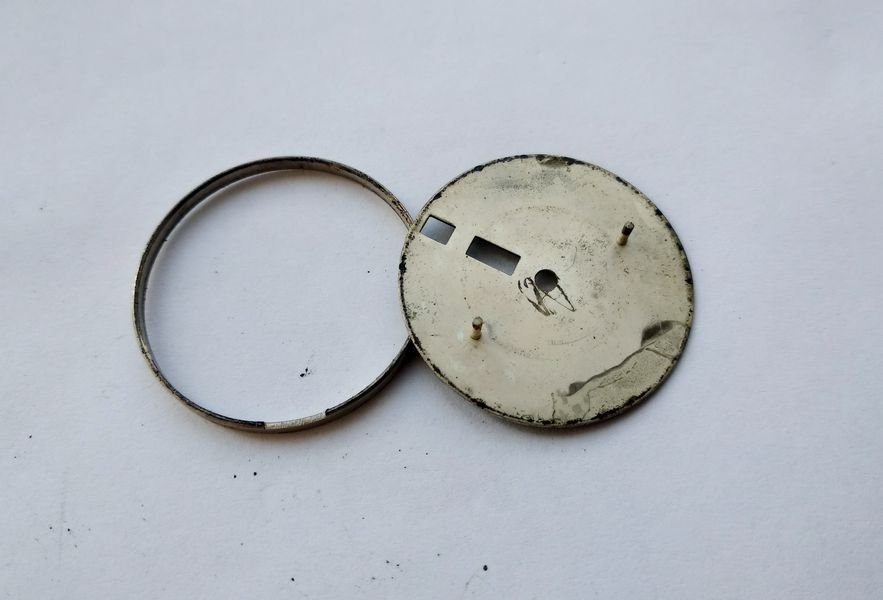
The dial in this specimen was found unsecured, the retaining screws having loosened during the watch's service life. The dial assembly lifts away together with the positioning ring.
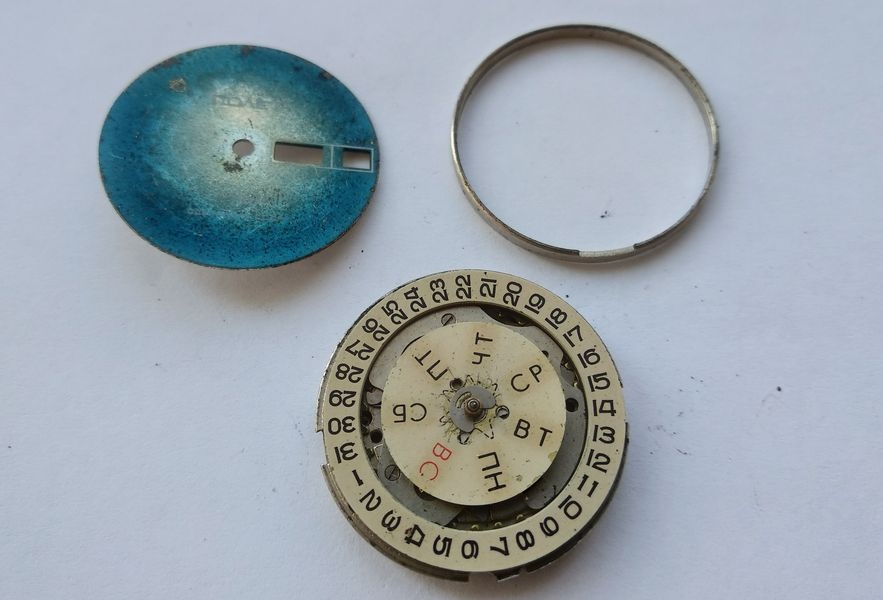
Examination of the dial reveals its nature as a decorative overlay rather than a complete dial. The actual time scale appears as an oval track printed on an element mounted within the case itself. The removable component carries only the brand identification and supplementary markings.
Calendar Mechanism Disassembly
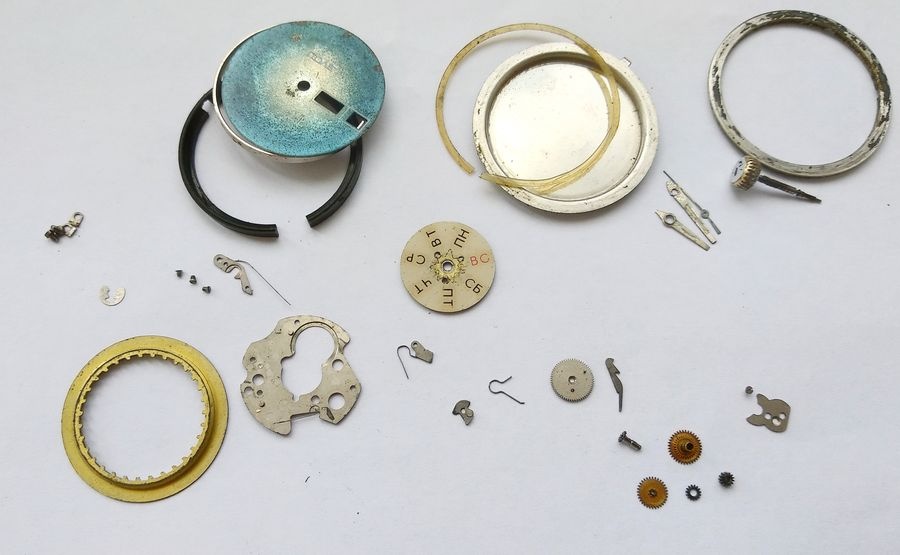
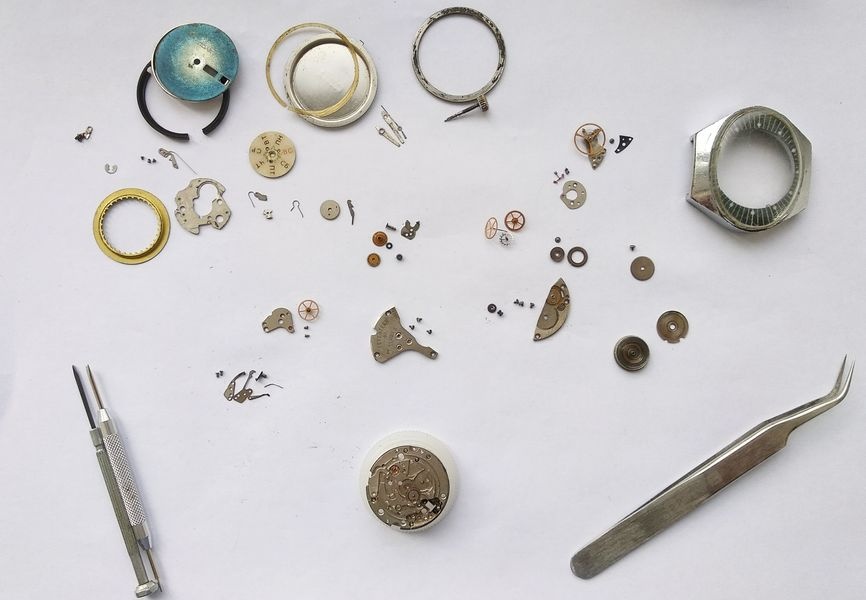
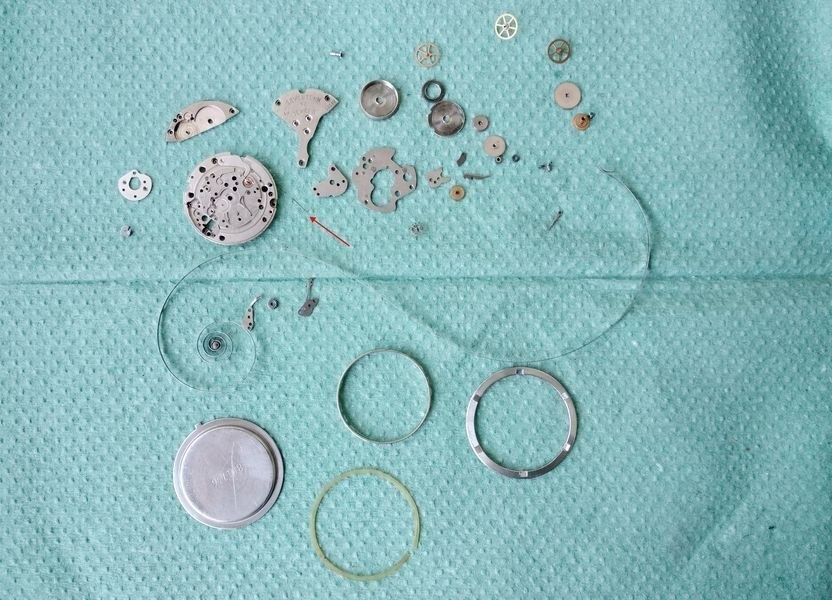
The calendar mechanism demands careful attention during disassembly. Small springs and precisely positioned components require systematic removal with attention to their installation orientation.
The day-of-week disk removes first, secured by a spring retaining washer.
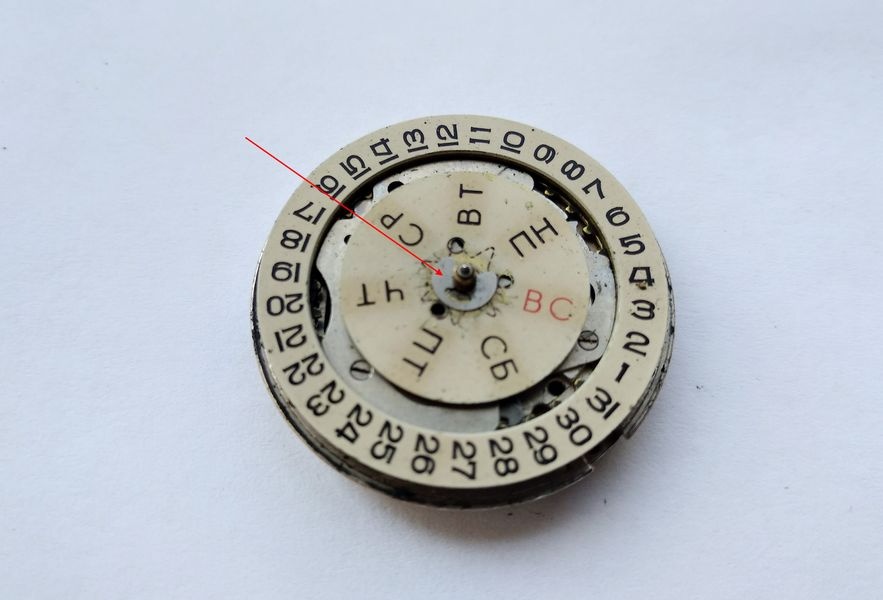
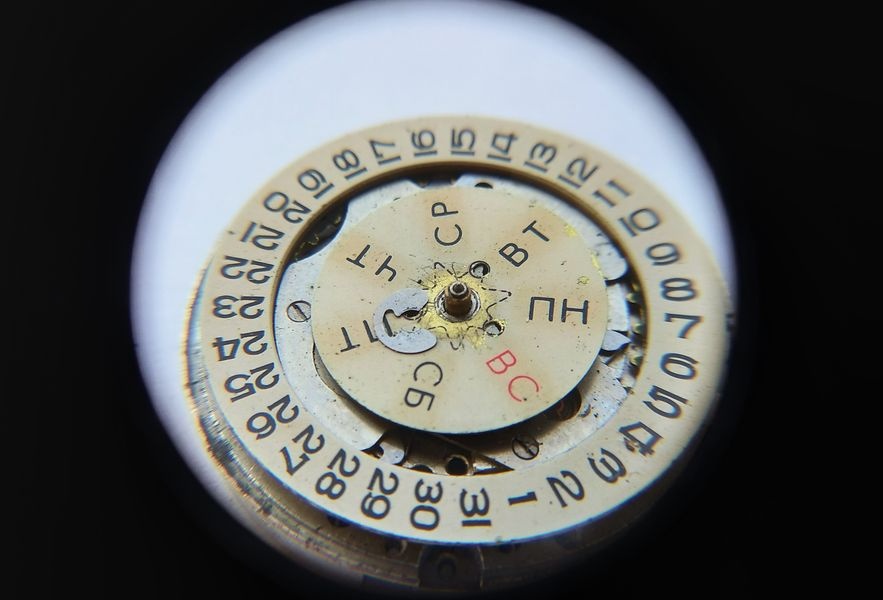
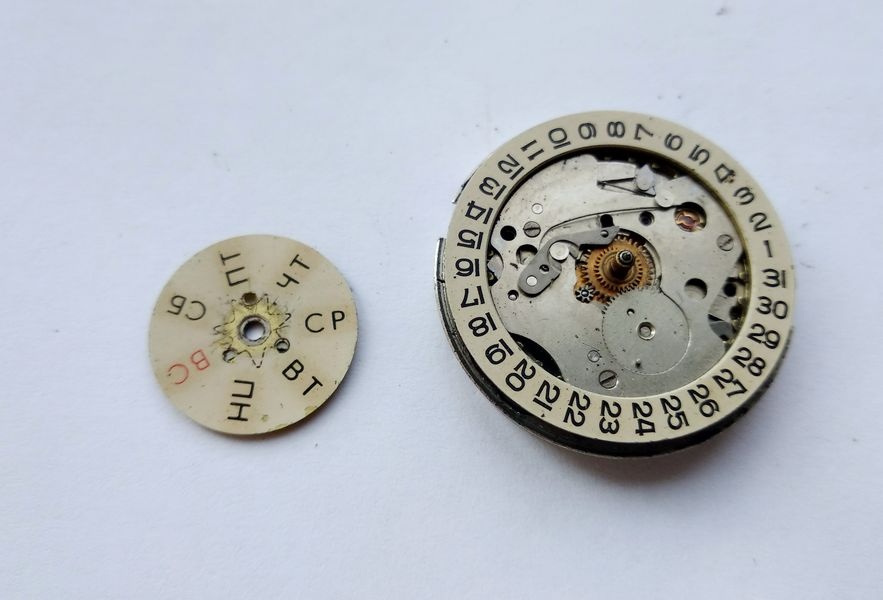
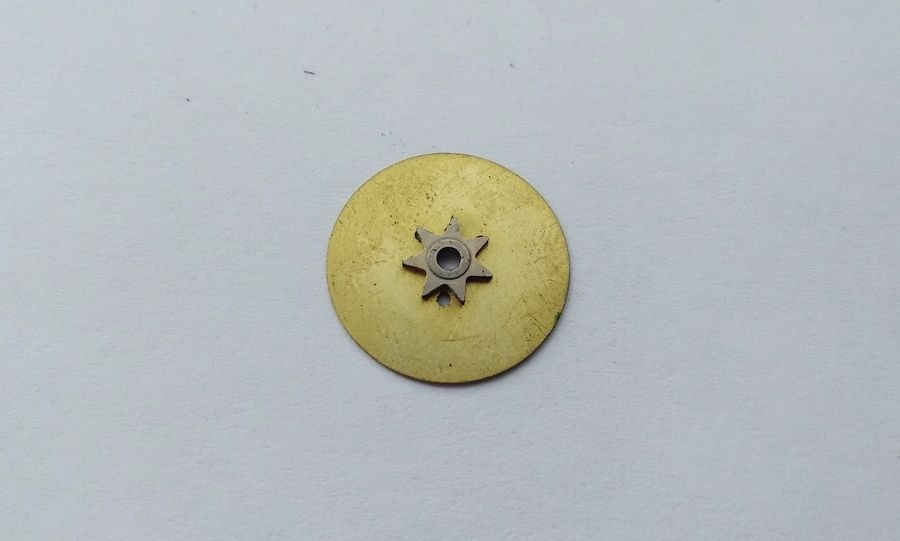
The day disk detent lever follows, requiring careful release of its positioning spring before removal. This lever exhibits a complex profile essential to proper calendar function.
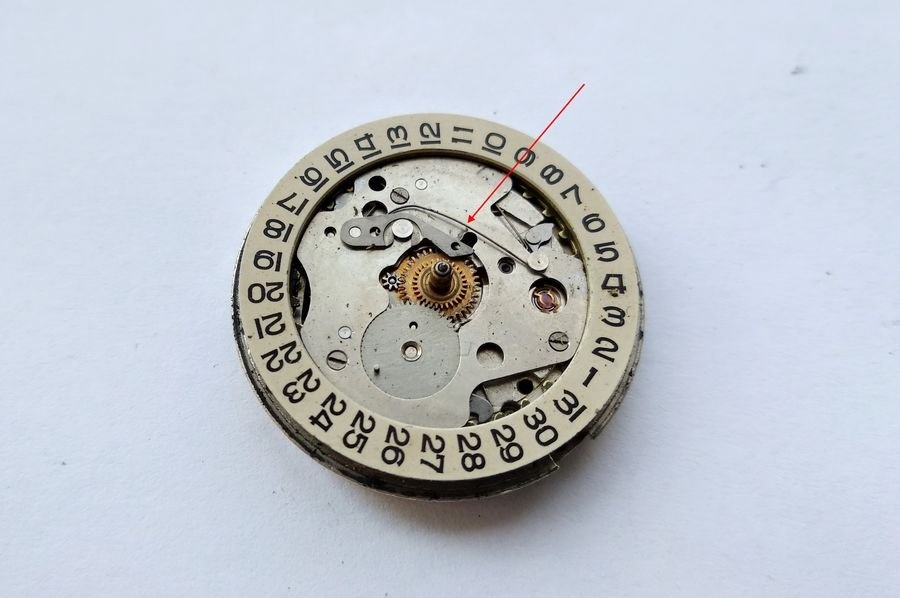
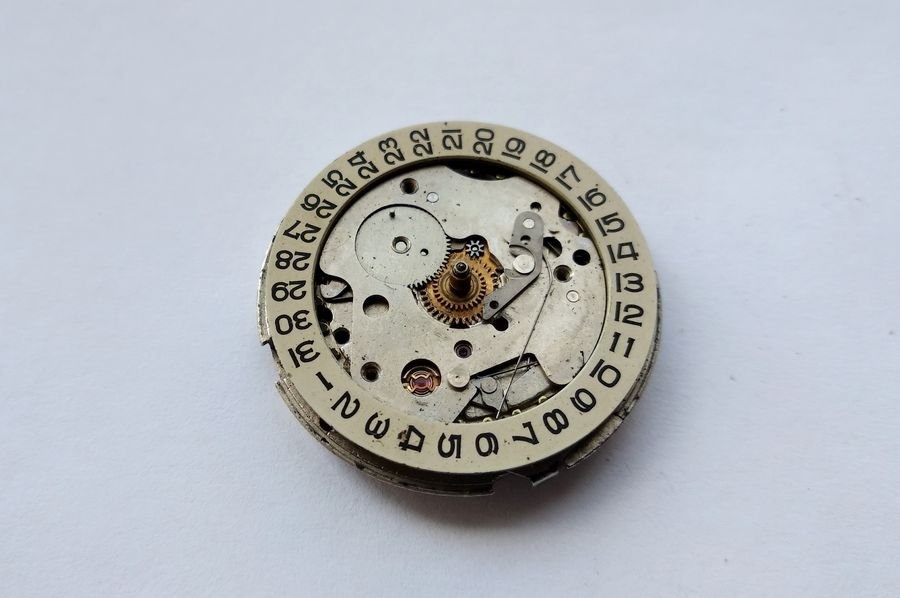
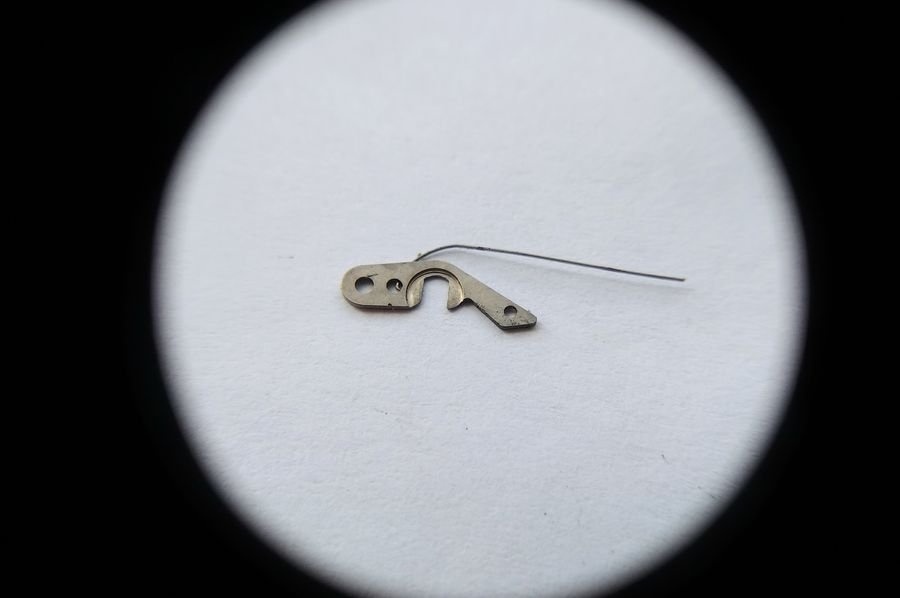
The calendar plate now lifts away, exposing the date disk beneath.
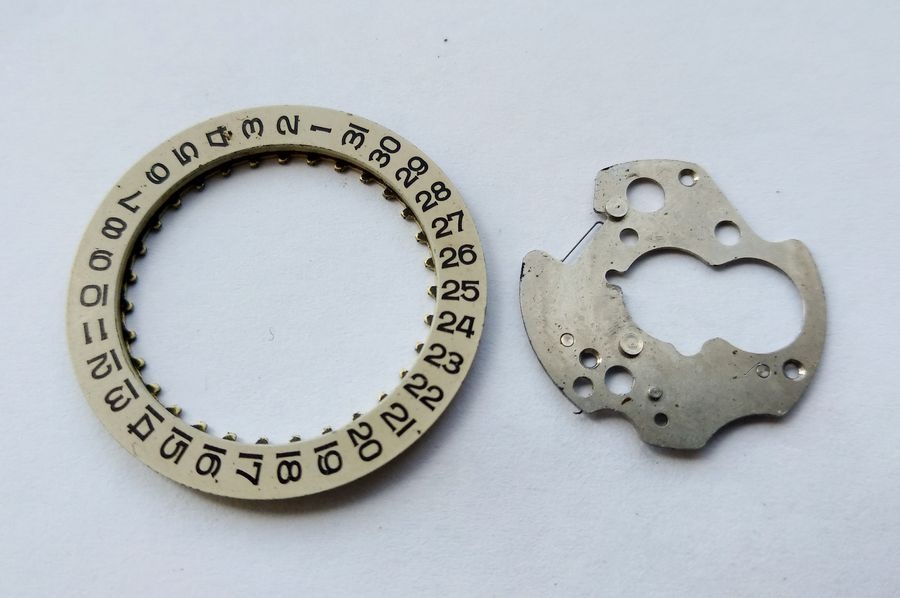
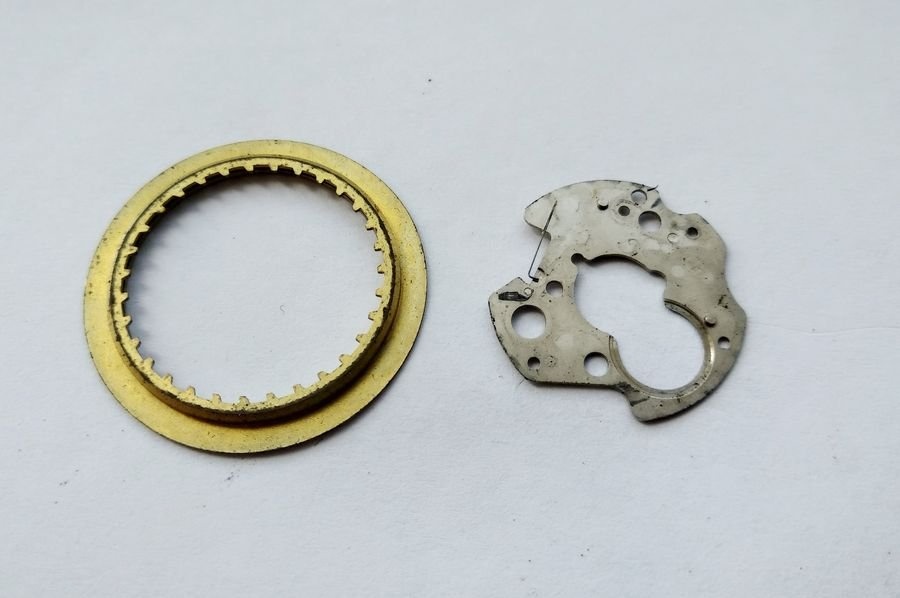
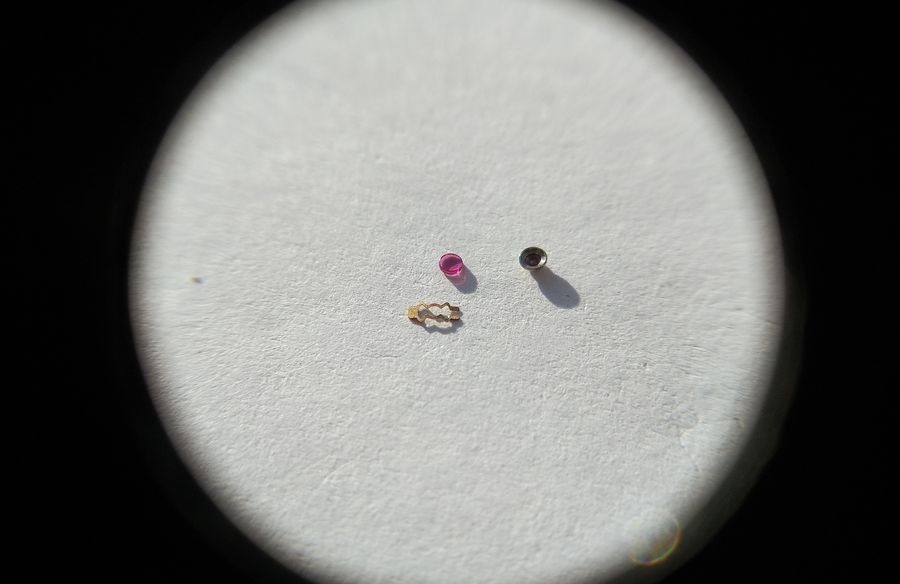
A critical warning: a small positioning spring resides within the calendar plate assembly. This spring does not launch during removal but will fall free if the plate is inverted carelessly. Its dimensions make recovery difficult should it escape to the floor. Note its installed orientation carefully.
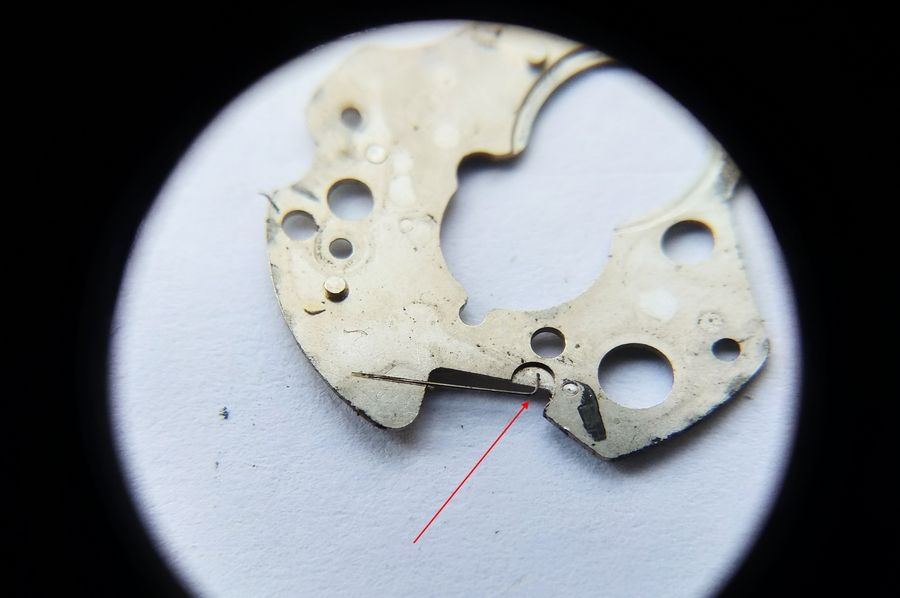
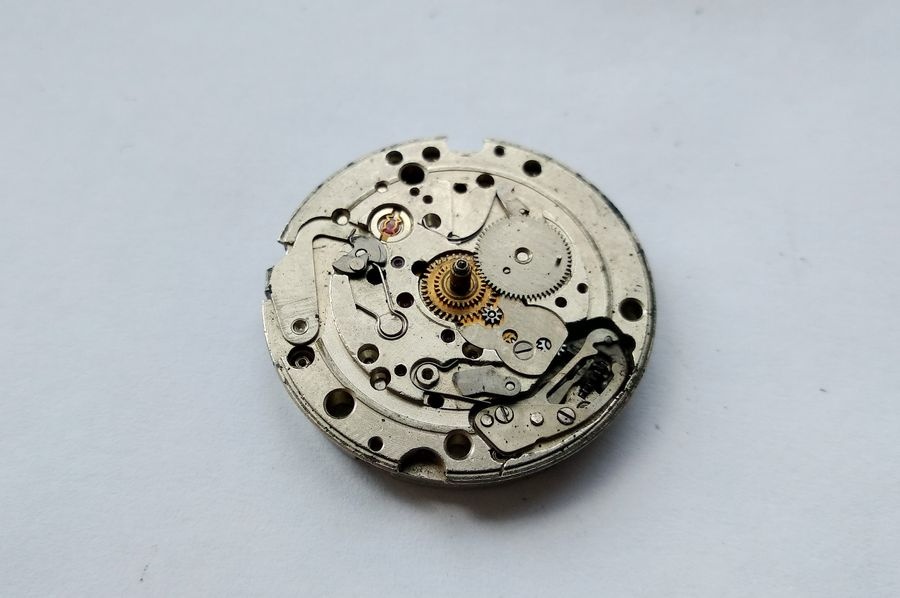
The Integrated Date Correction Mechanism
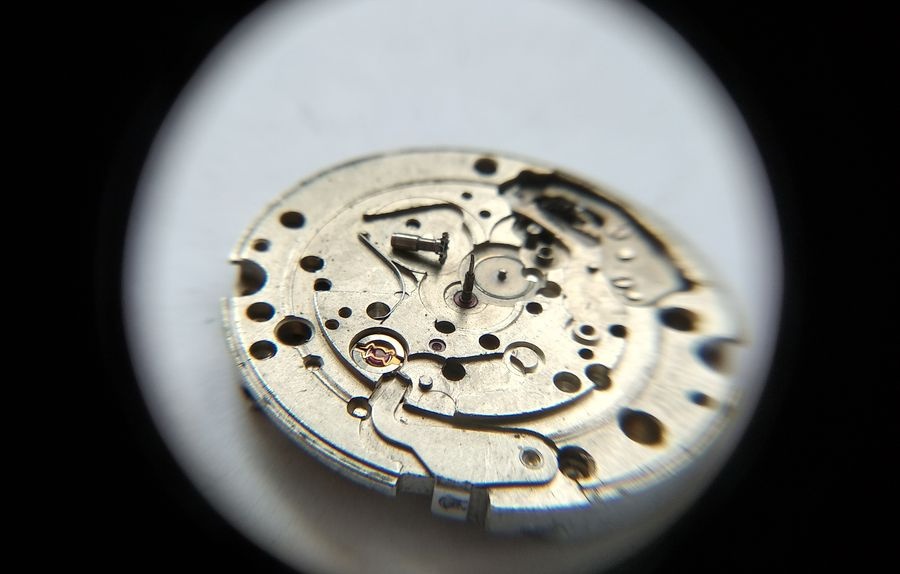
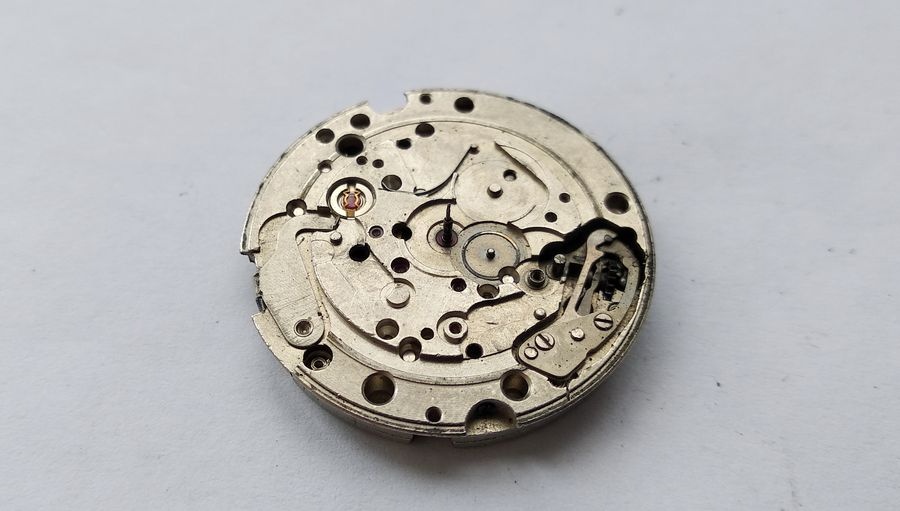
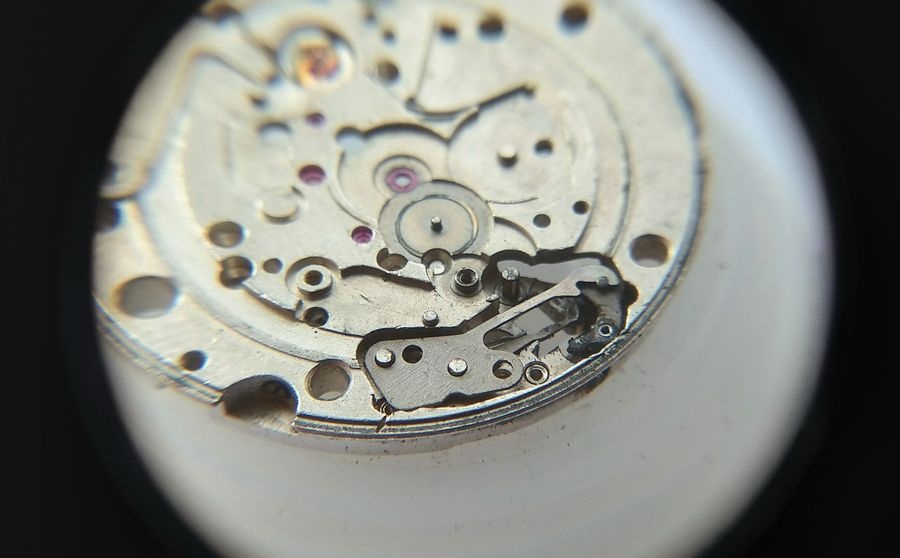
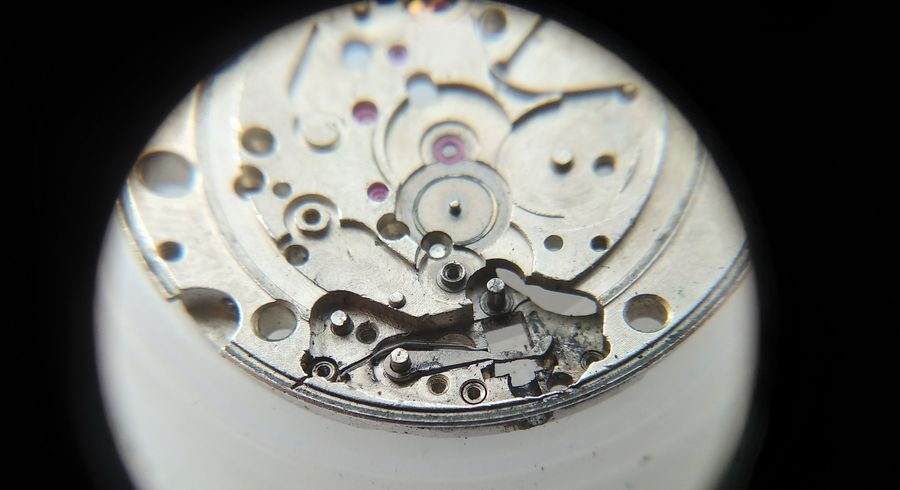
The rapid date correction system distinguishes the 2628H from other Soviet calendar calibers. Unlike the Slava approach where date correction exists as a separate module added to the basic movement, the Poljot design integrates this function directly into the main plate architecture. The result is elegant but demanding.
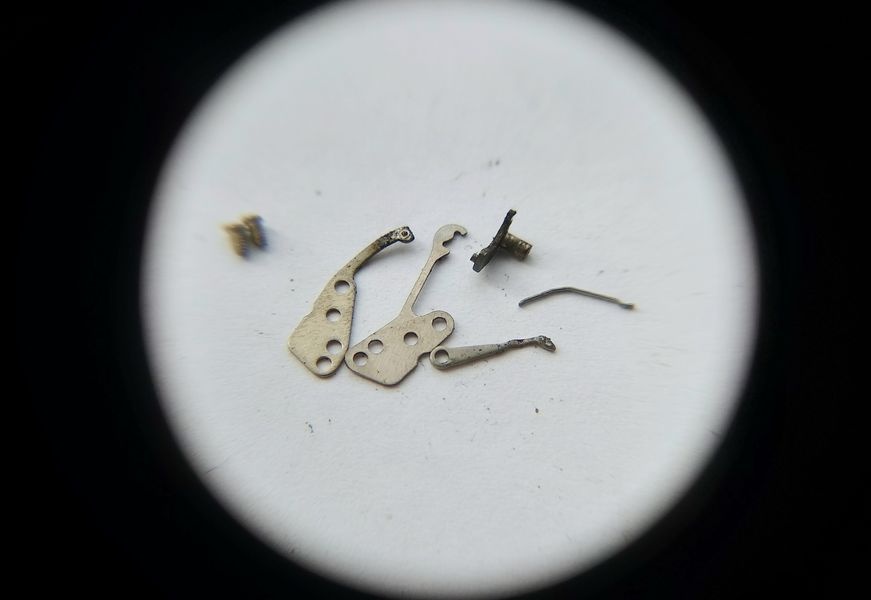
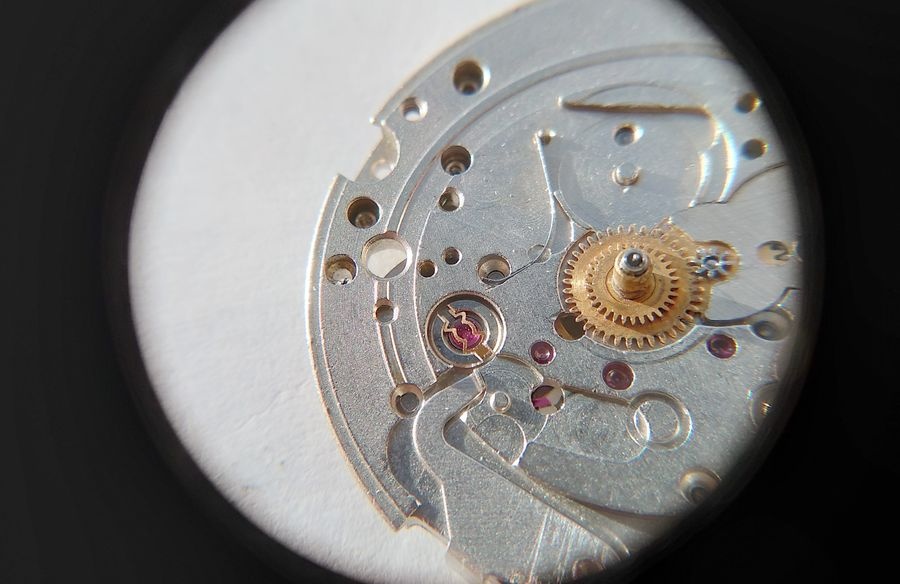
The mechanism comprises a transfer lever receiving pusher input, a complex actuator assembly, and an R-shaped return spring similar in concept to those employed in keyless works. The actuator consists of two articulated sections that translate button pressure into rotational impulse on the date disk.
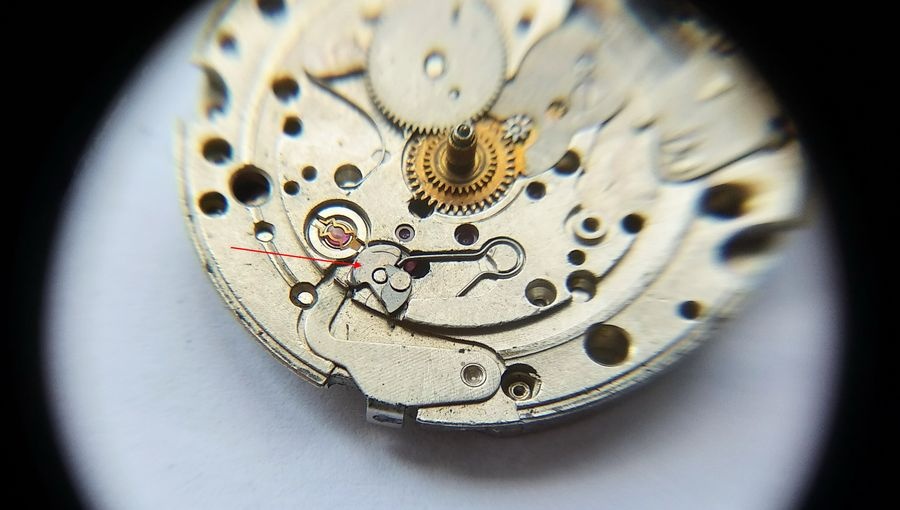
The command wheel and date advance lever mount nearby. In this specimen, prior service attempts had displaced these components from their correct positions, requiring careful restoration during reassembly.
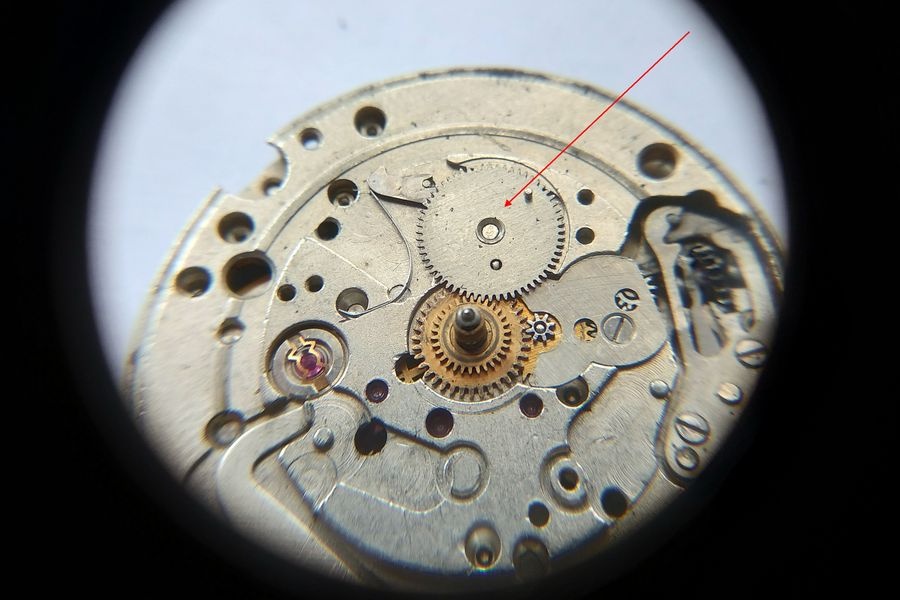
Removing the calendar wheel cover exposes the motion works and intermediate wheels.
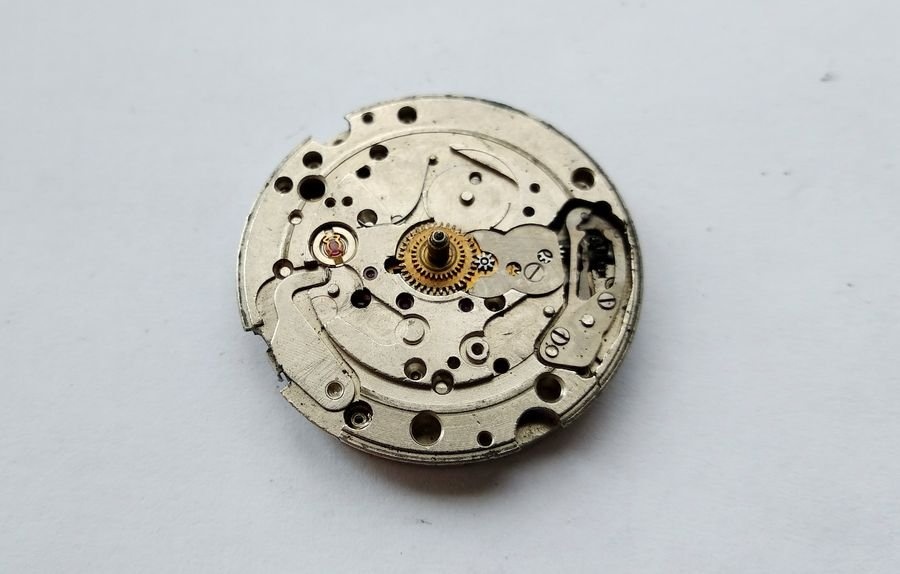
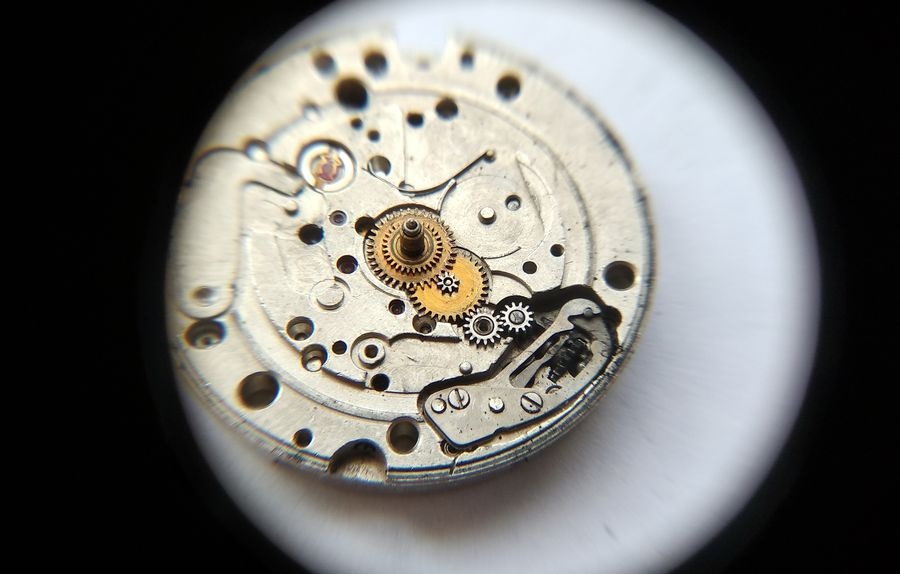
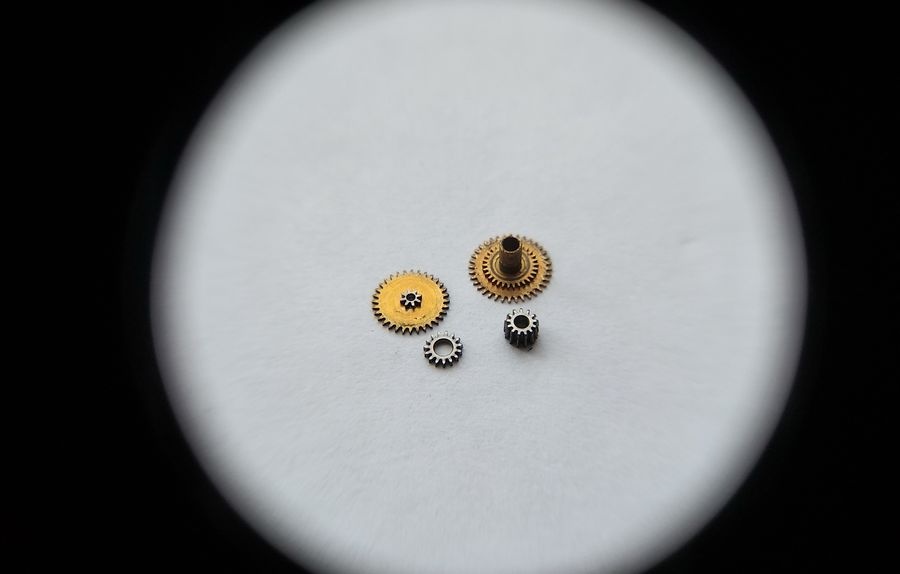
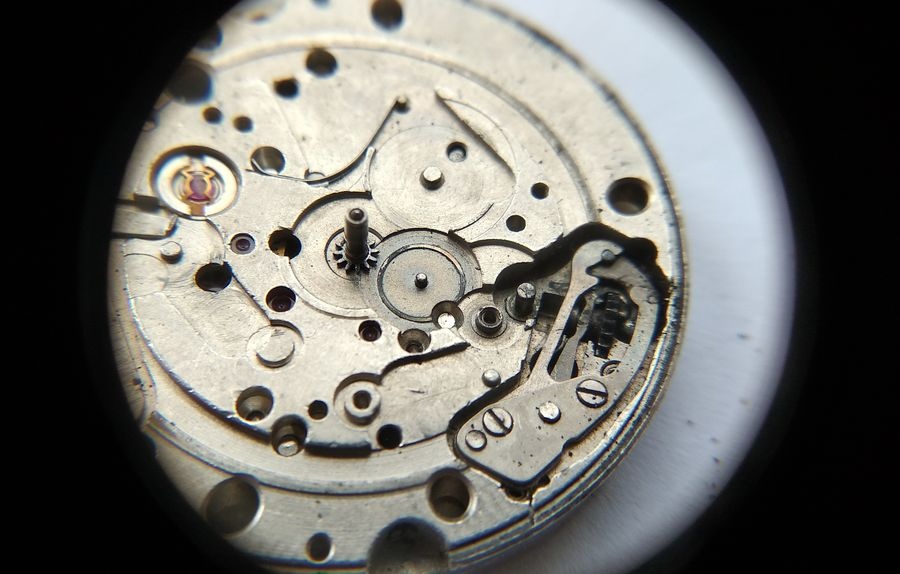
An unexpected discovery during disassembly: the broken post of a previous seconds hand remained pressed onto the fourth wheel arbor. This required careful extraction before reassembly.
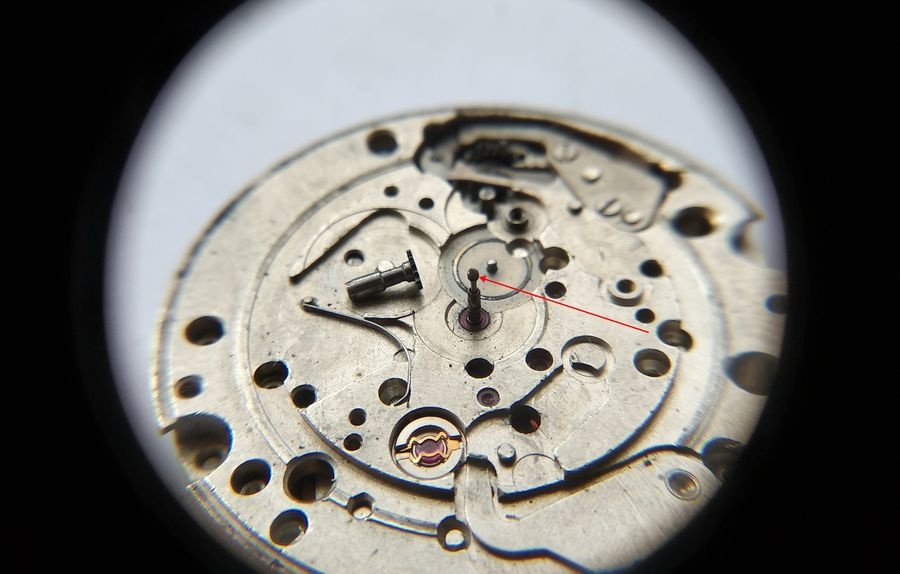
Going Train Disassembly
With the calendar mechanism cleared, disassembly proceeds to the going train. The Poljot 26xx series employs standard Soviet architecture familiar from previous examinations.
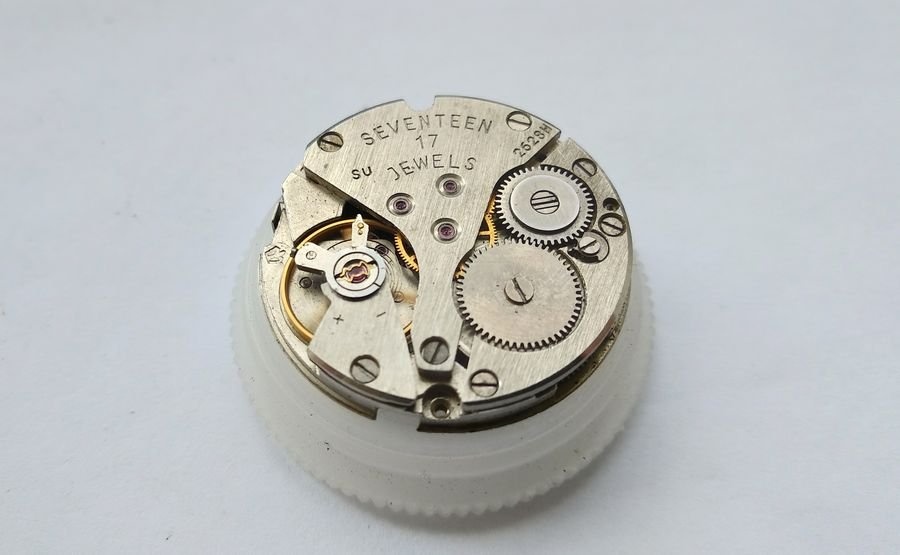
The balance assembly presents standard construction with movable stud carrier and shock protection. The customary timing washer appears in its expected position.
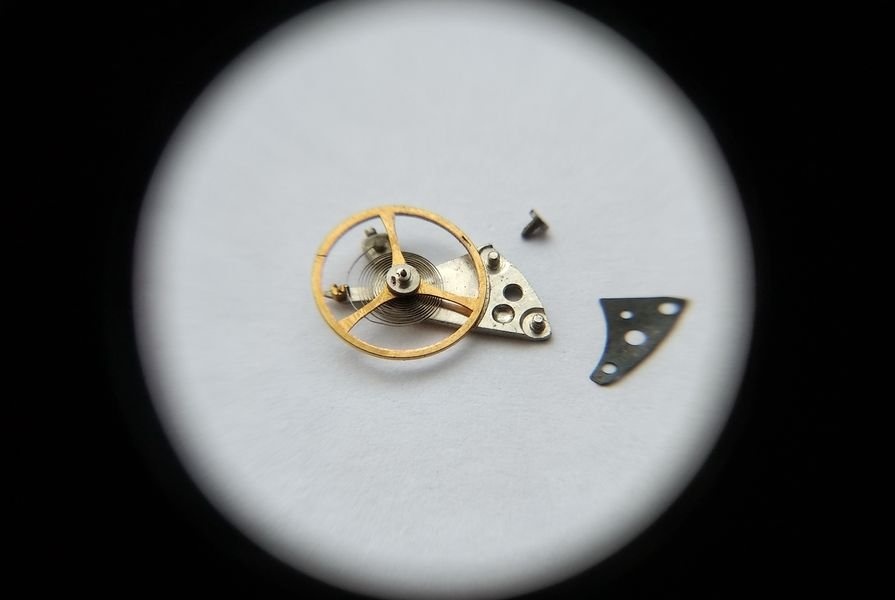
The pallet fork and bridge follow standard Poljot practice for the 26xx series.
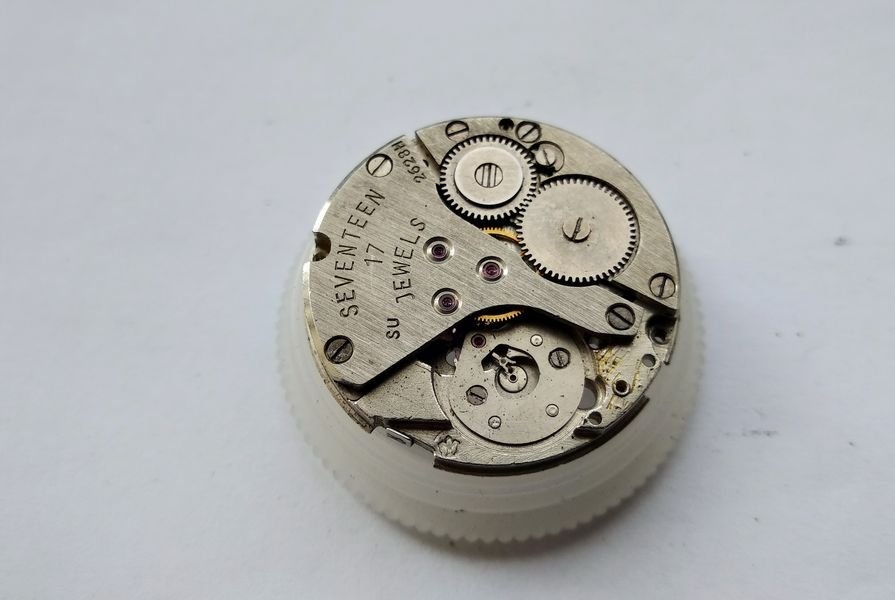
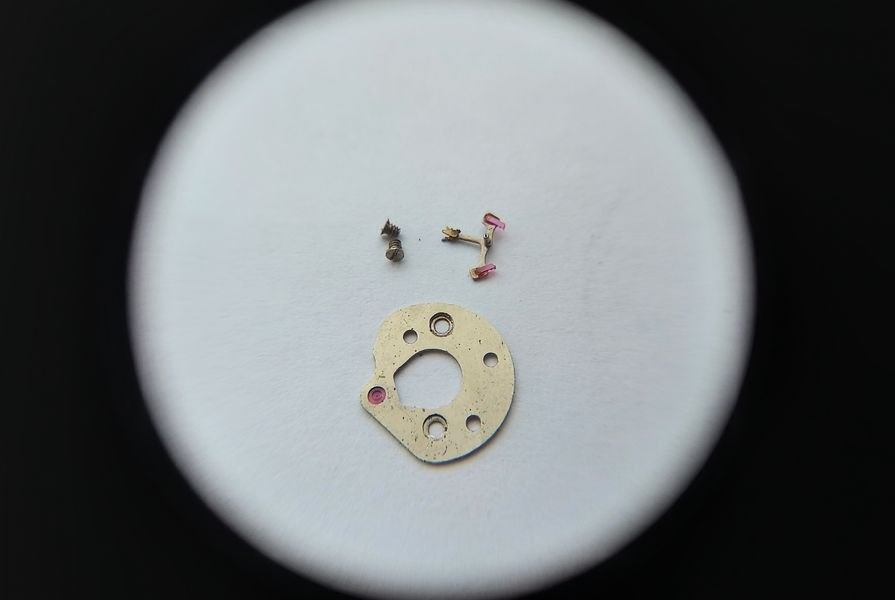
The mainspring motor disassembles quickly. Note the left-hand thread on the ratchet wheel, indicated by three radial marks on the screw head.
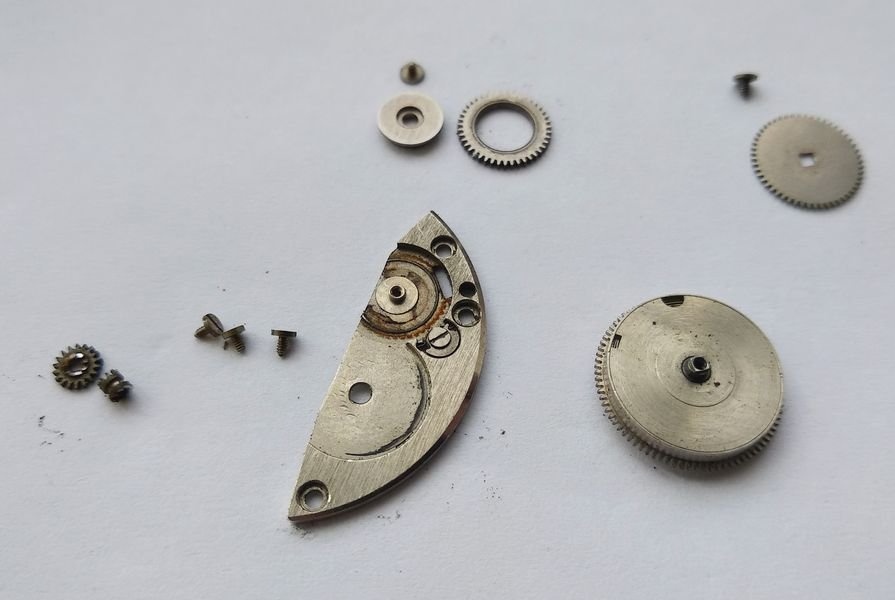
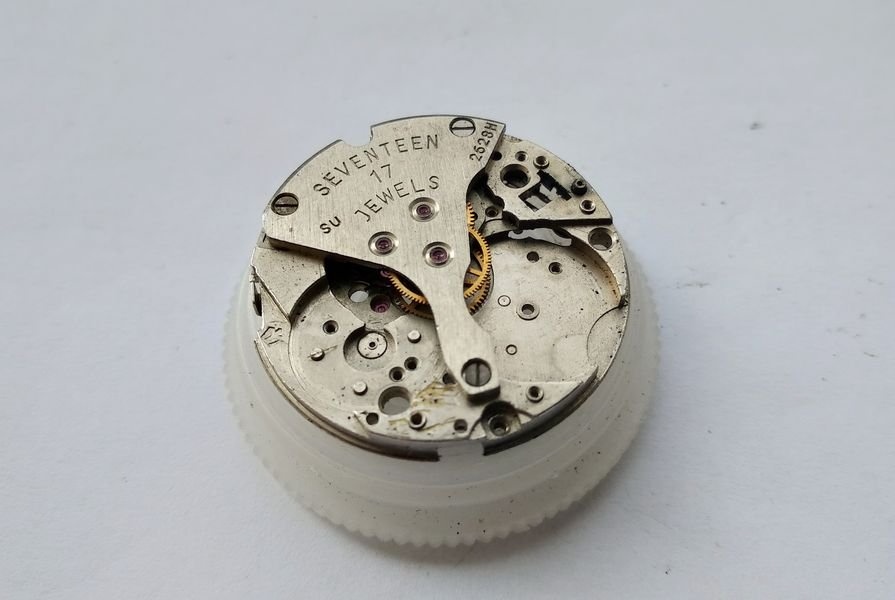
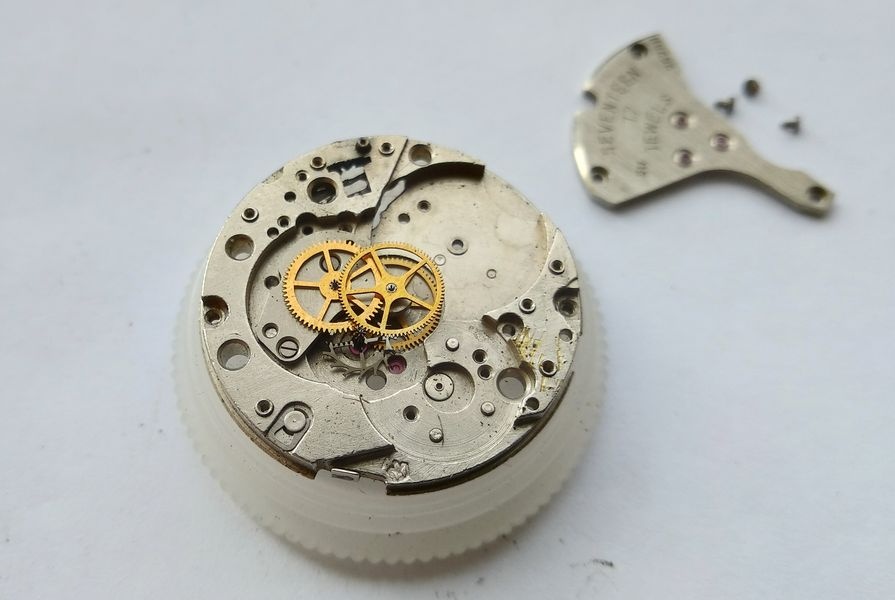
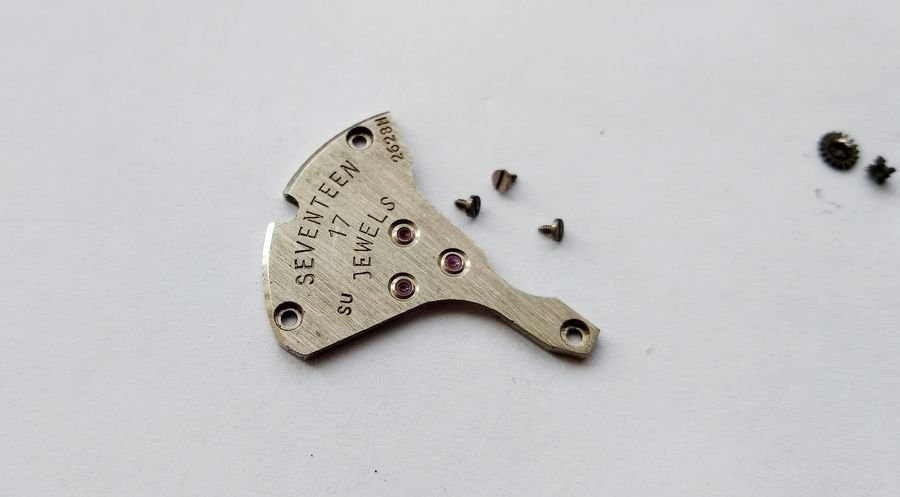
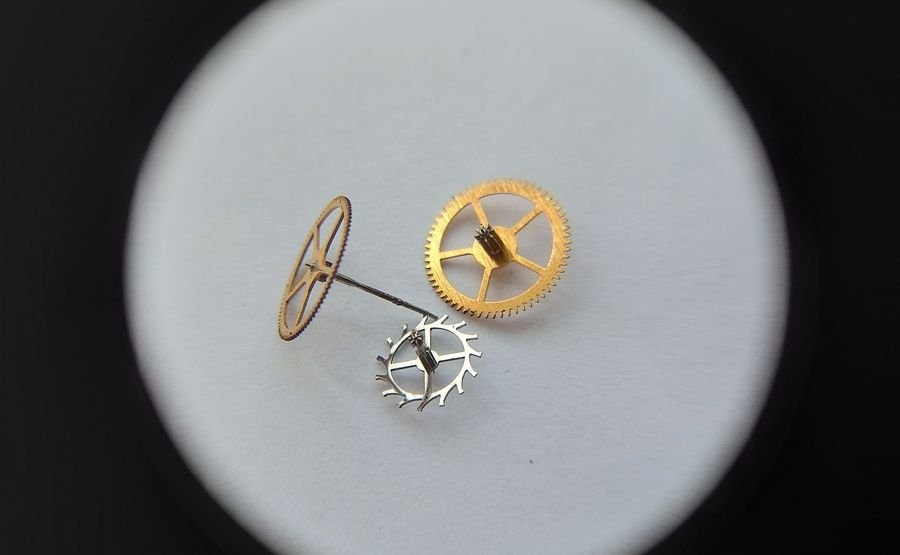
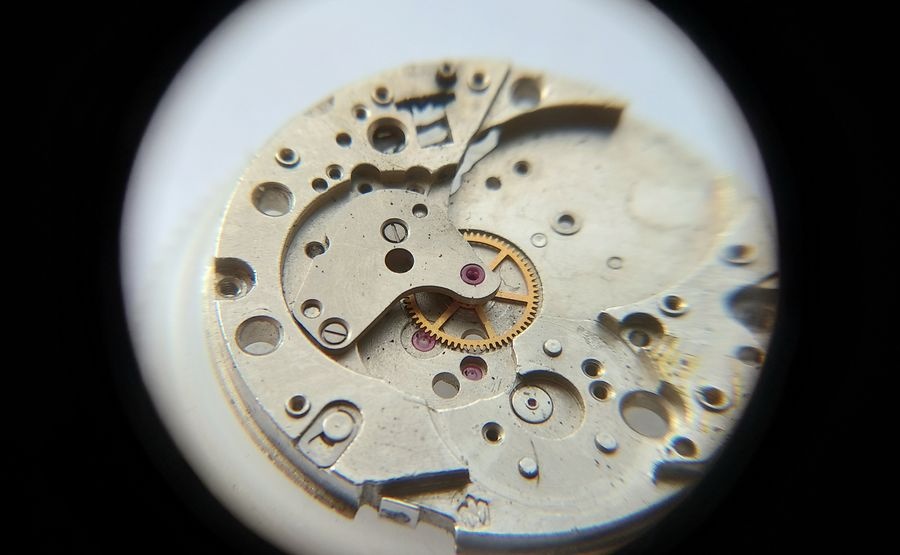
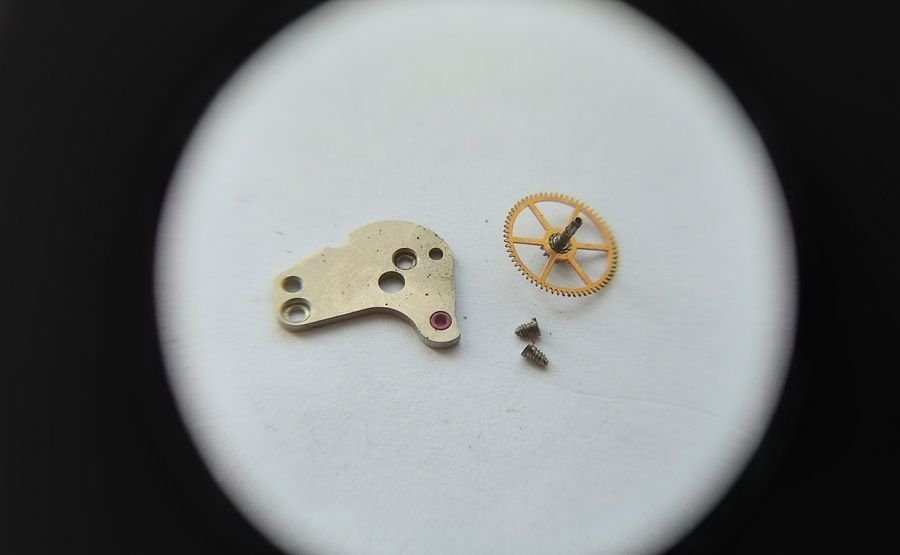
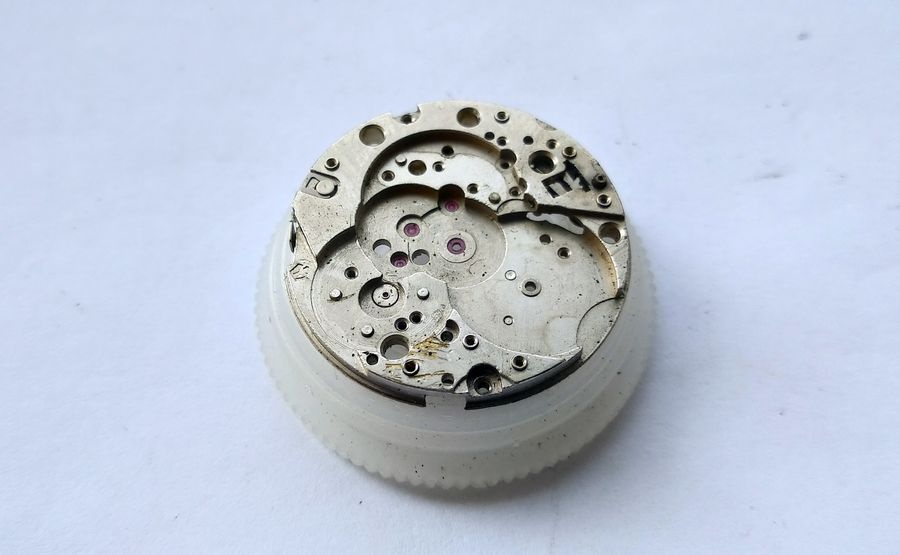
The keyless works require mention of a Poljot-specific detail: two spring covers secure the setting mechanism rather than the single cover common in other calibers.
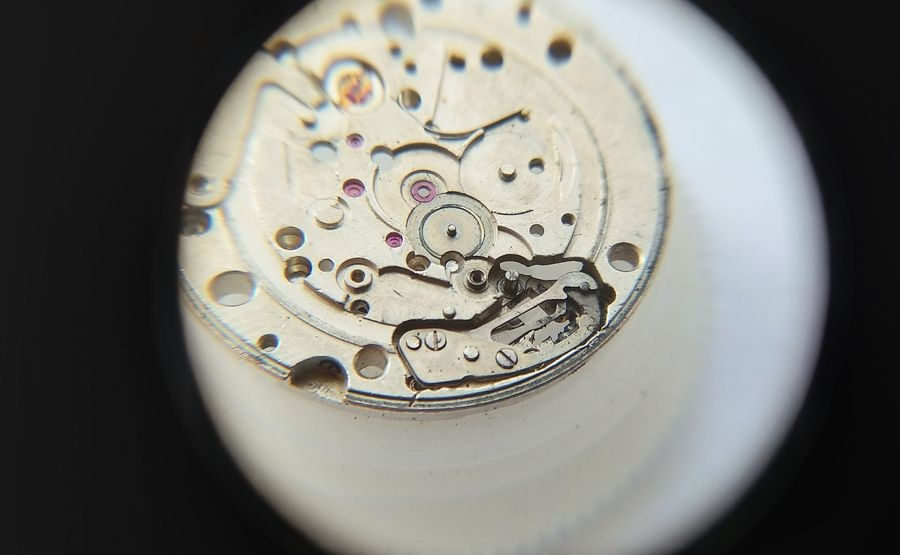
Cleaning and Mainspring Service
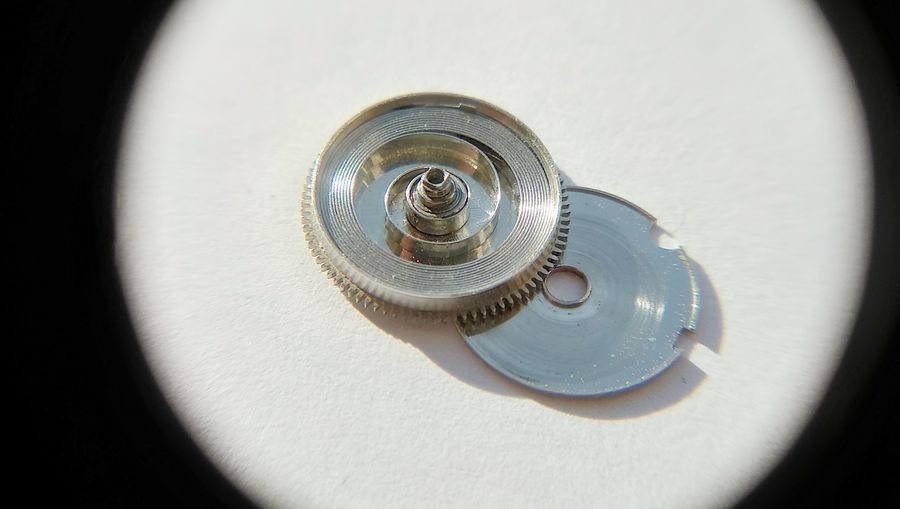
The mainspring barrel reveals the extent of lubricant degradation throughout the movement.
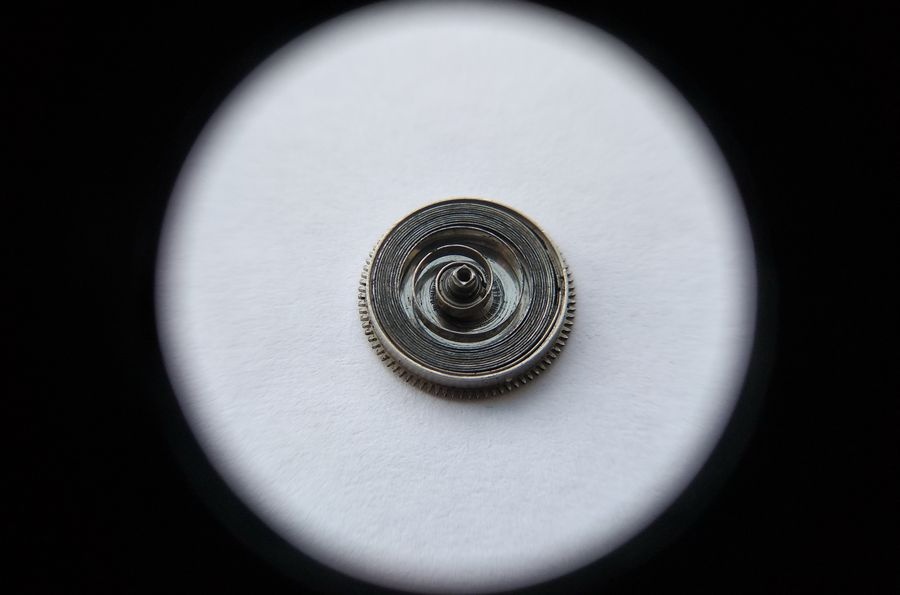
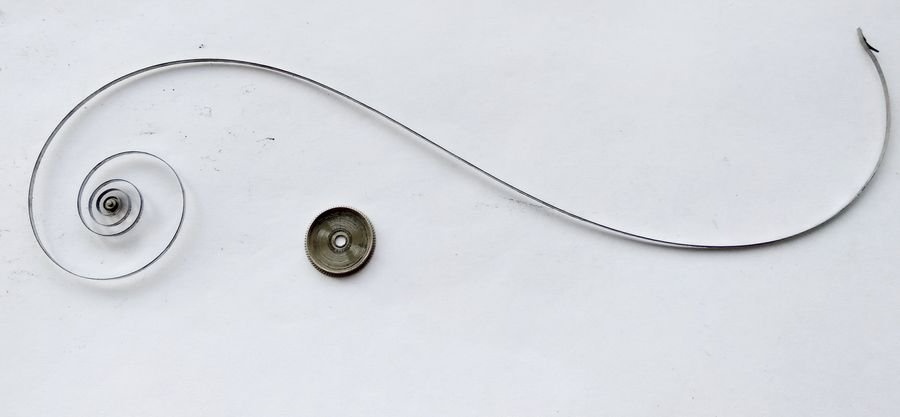
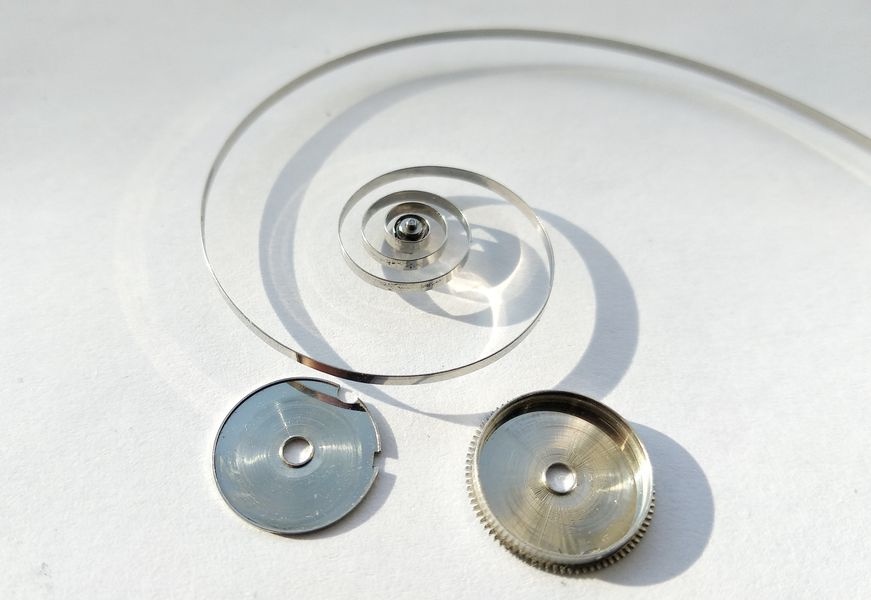
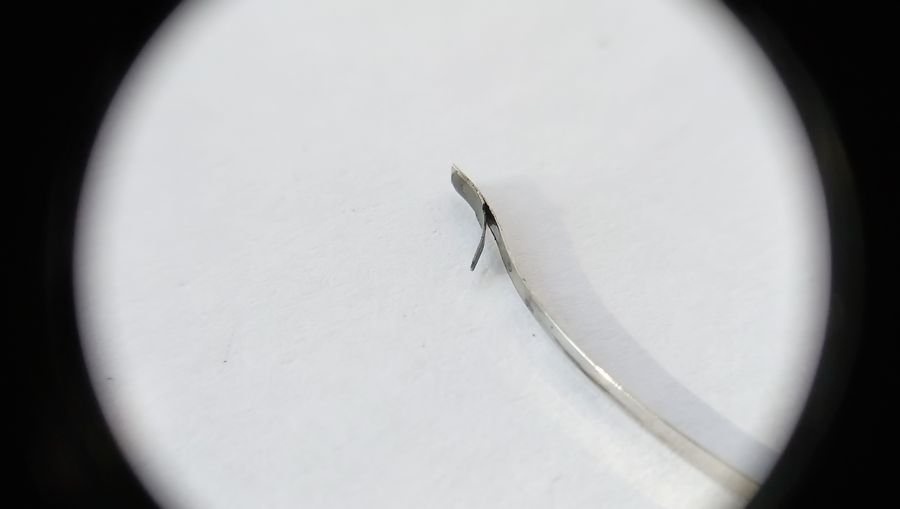
The mainspring employs the desirable S-curve profile, a quality indicator in Soviet movements.
Reassembly: Going Train
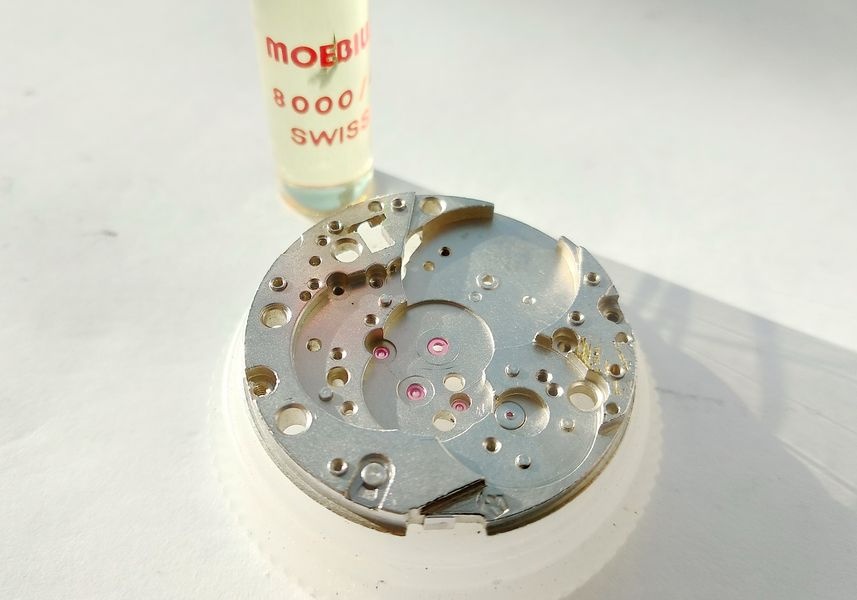
Reassembly begins with the main plate and center wheel, working outward through the gear train. Moebius 8000 provides bearing lubrication throughout.
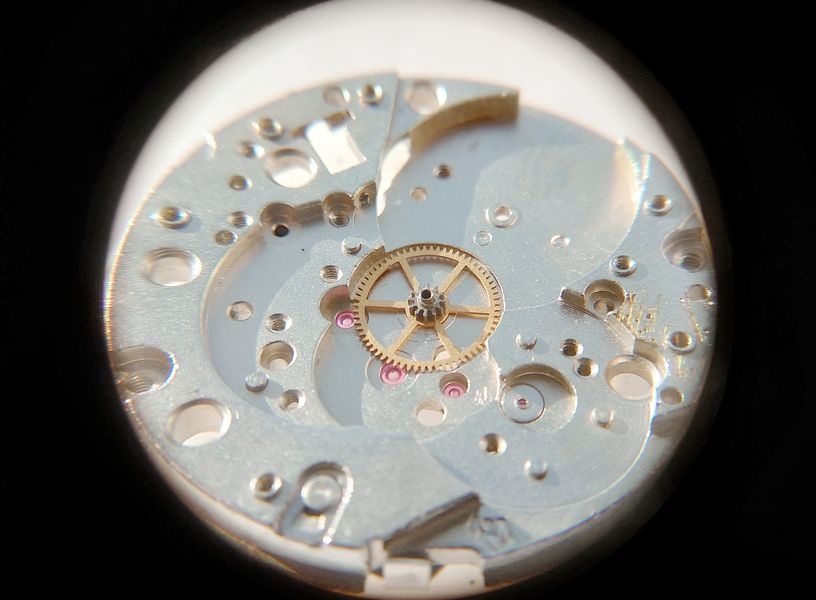
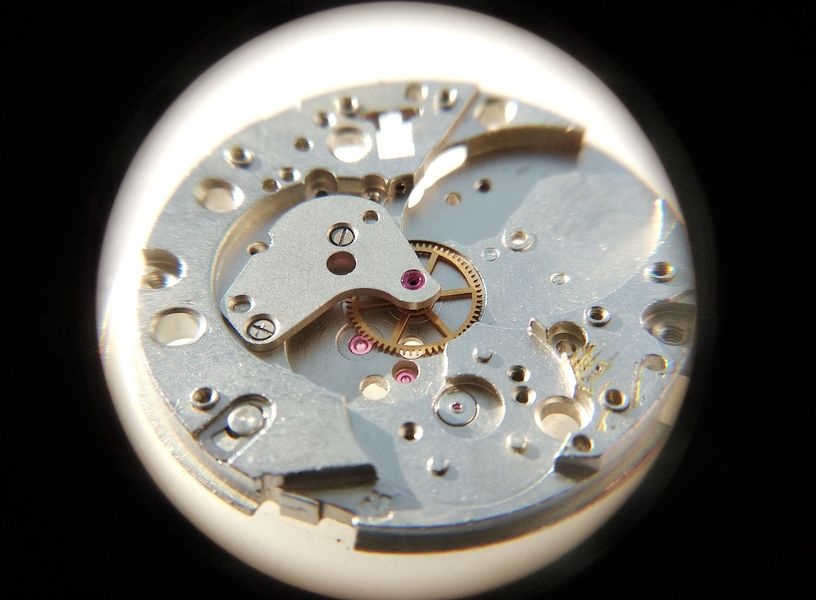
The minute wheel installs from the dial side, preparing for motion works and calendar assembly.
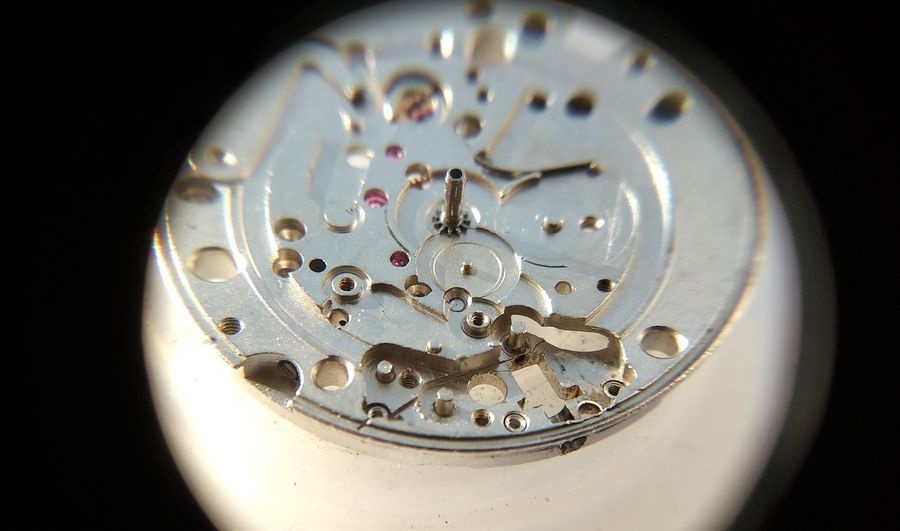
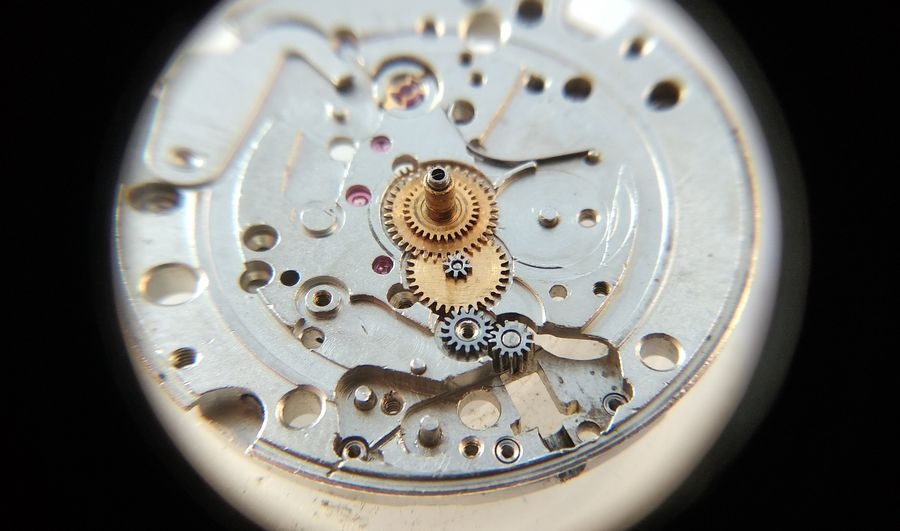
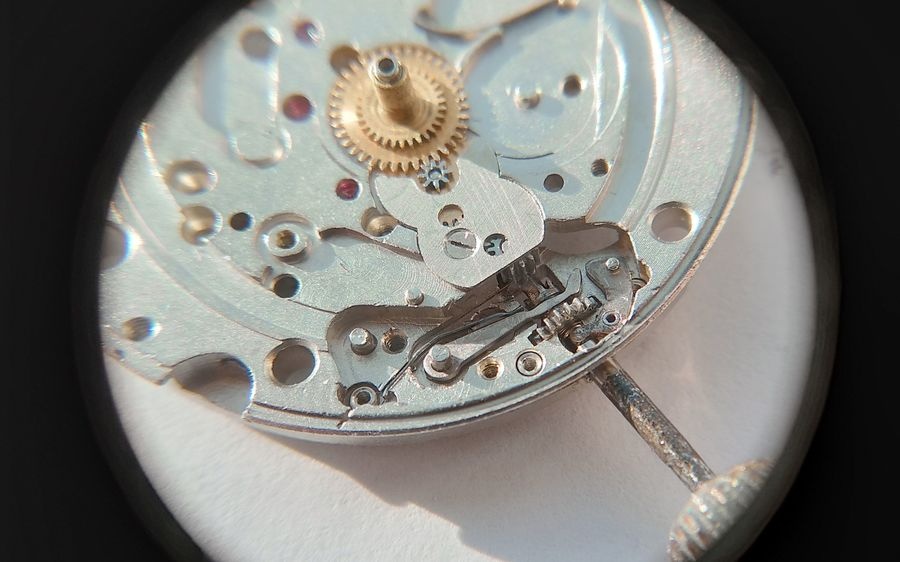
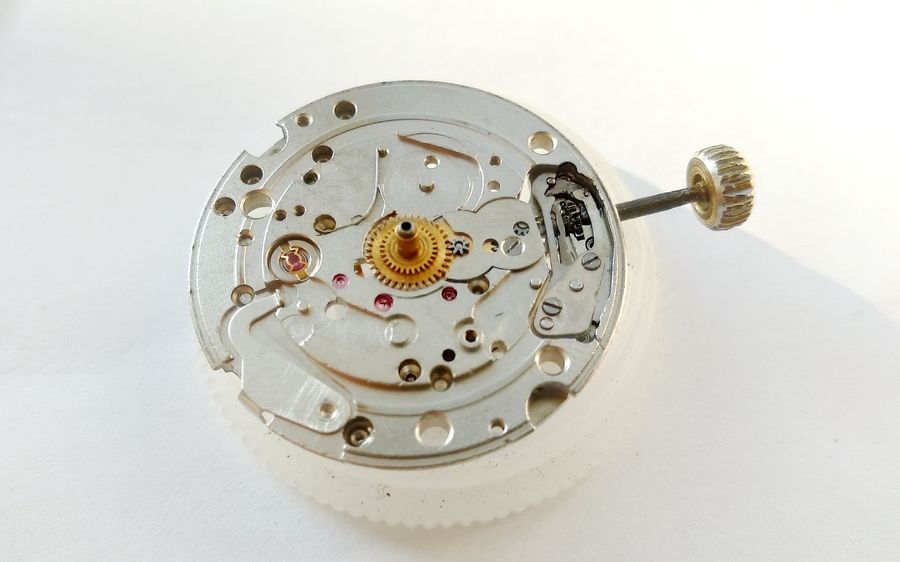
The gear train wheels install with their bridge. The Poljot layout positions these wheels in a configuration that complicates bridge installation, requiring careful manipulation to engage all pivots simultaneously.
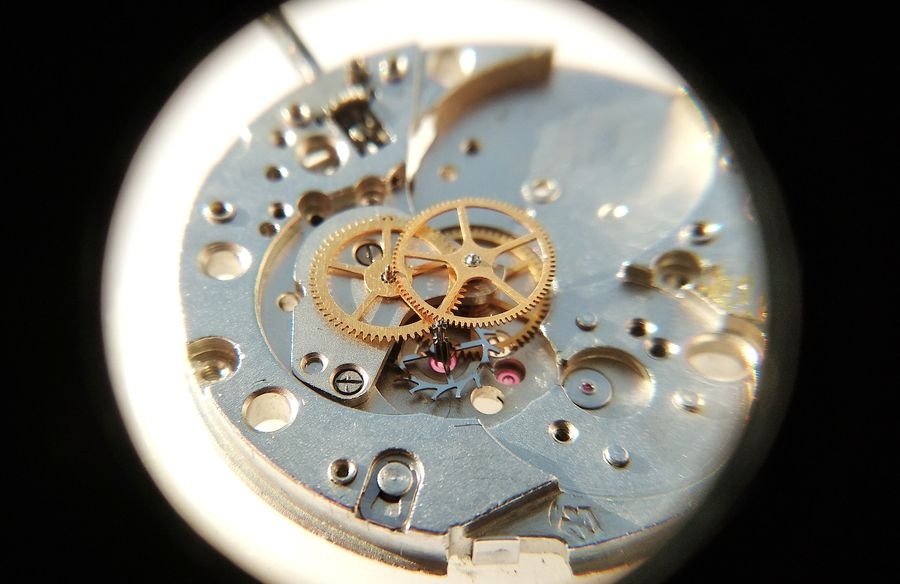
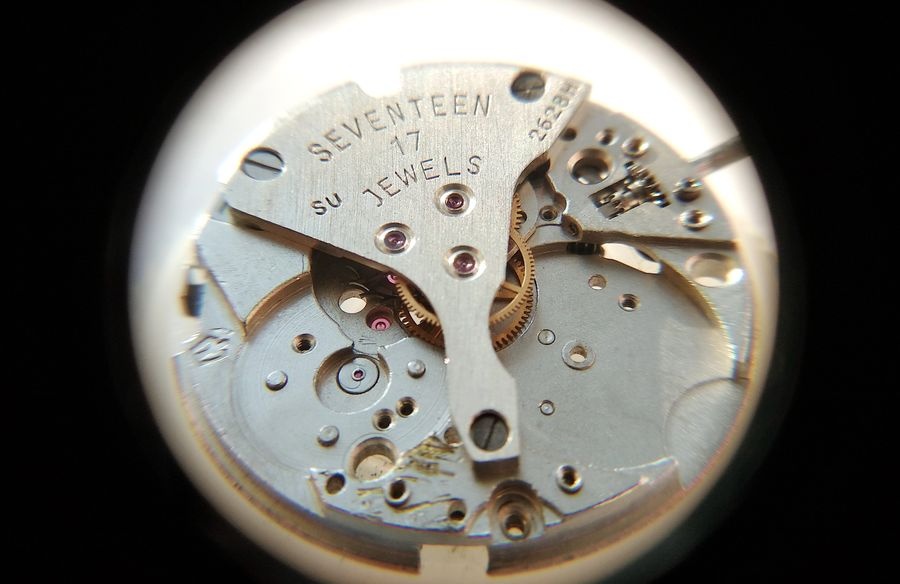
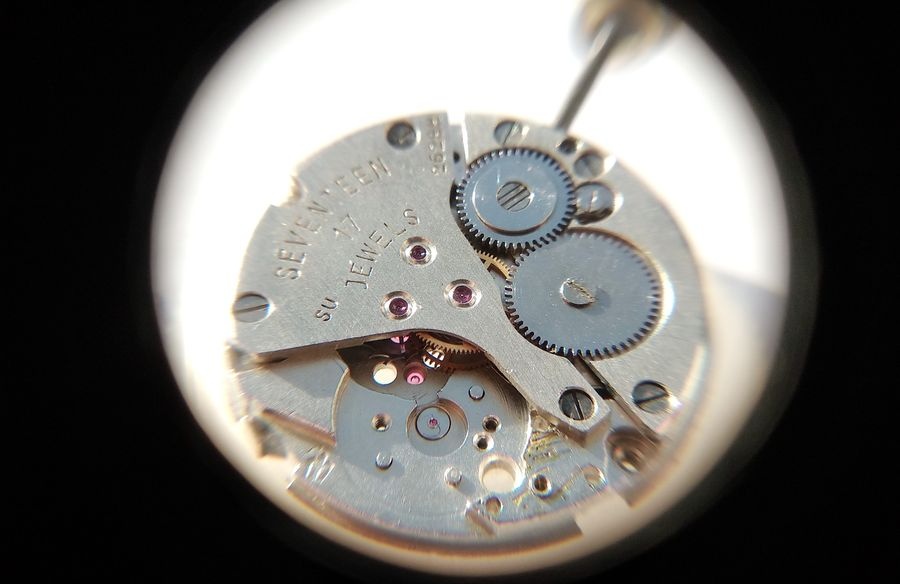
Pallet fork installation follows standard practice: the fork pivots receive no lubrication, while the pallet stone impulse faces require careful oil application.
Reassembly: Calendar Mechanism
Calendar assembly demands precise attention to component positioning. The date advance lever installs first, its accumulator spring carefully handled to prevent deformation.
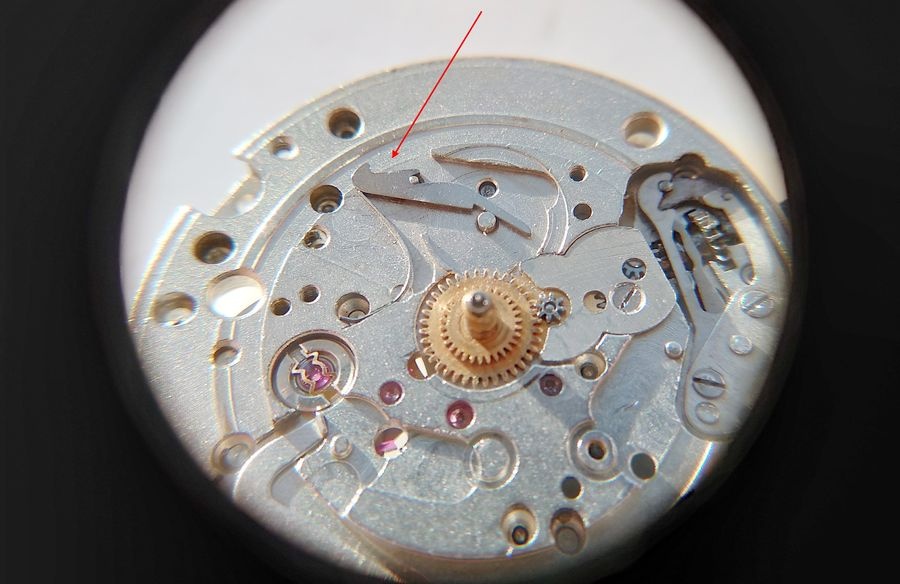
The command wheel follows, its eccentric requiring alignment with the advance lever.
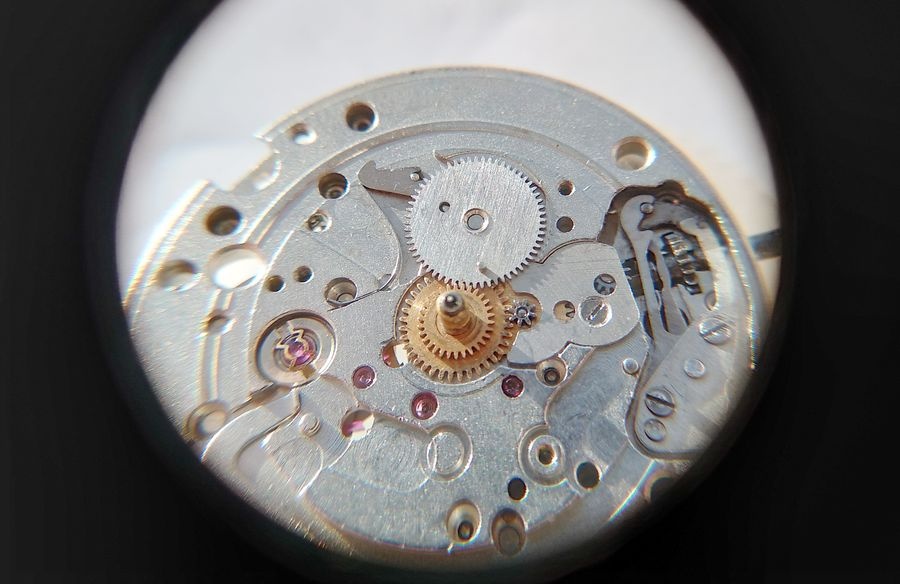
The pusher actuator mechanism presents the most demanding installation. The articulated components must engage correctly while the R-spring remains captured. These springs share the launching tendency common to all similar components.
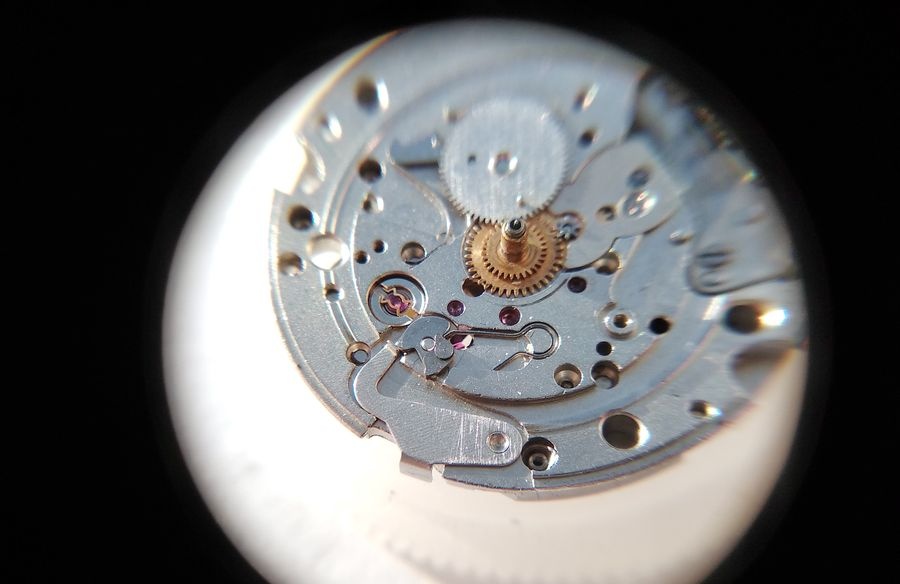
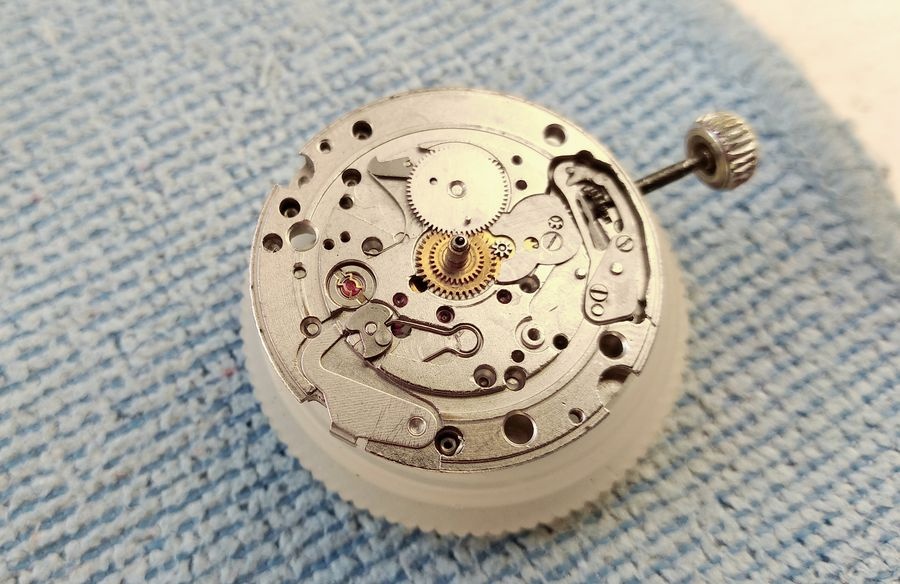
With actuation mechanisms verified, the date disk mounts in position.
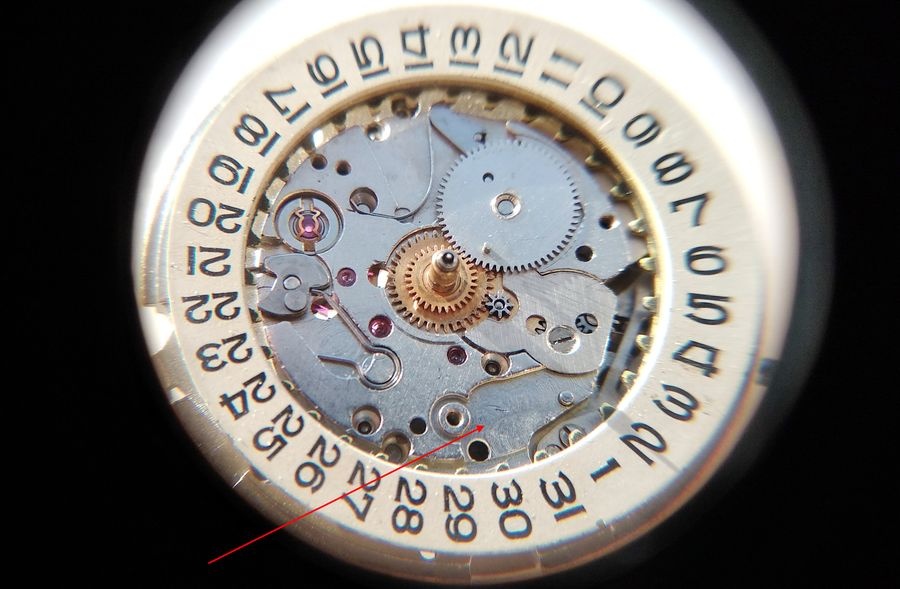
Only after the date disk is in place can the date detent lever and its R-spring be installed. Reversing this sequence results in component displacement and potential part loss.
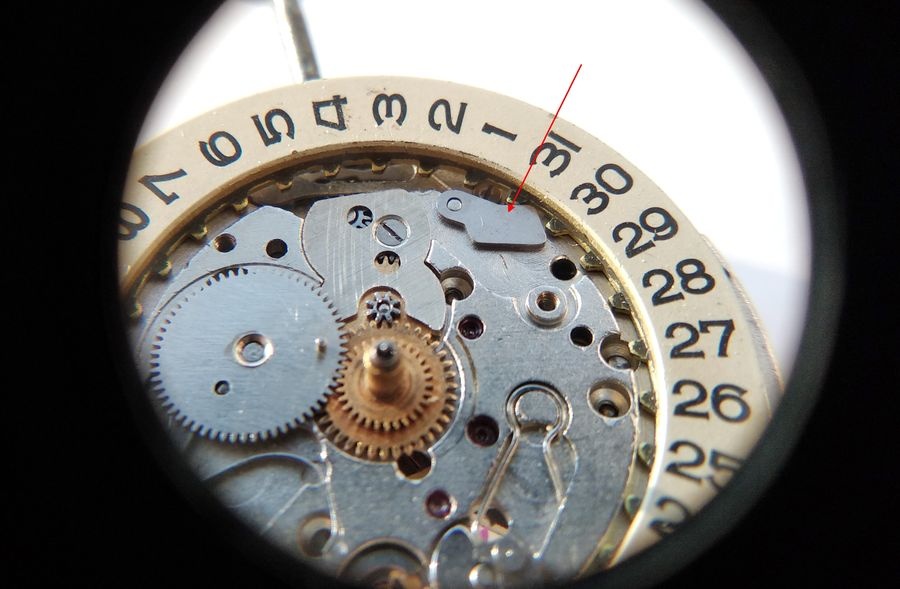
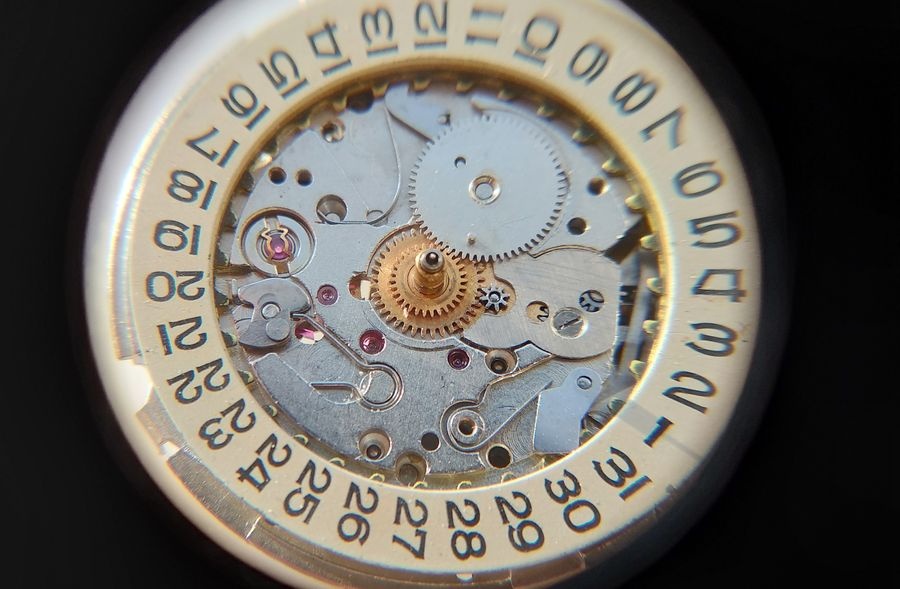
The calendar plate with its critical positioning spring now covers the mechanism.
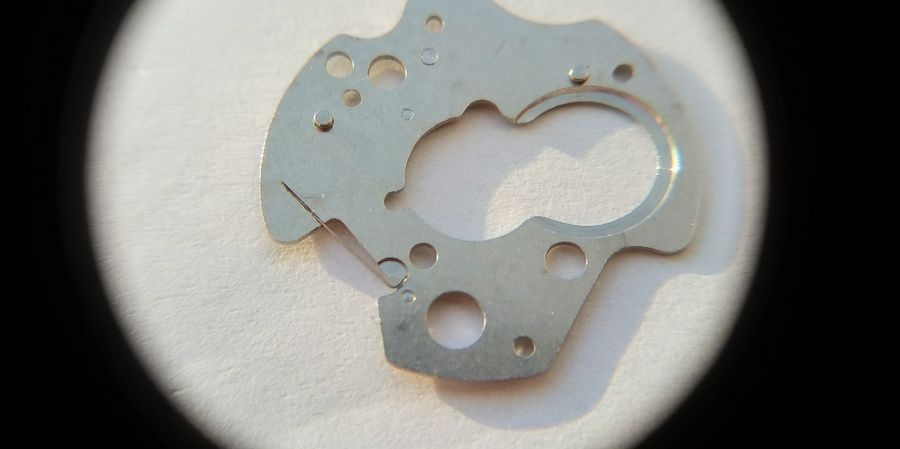
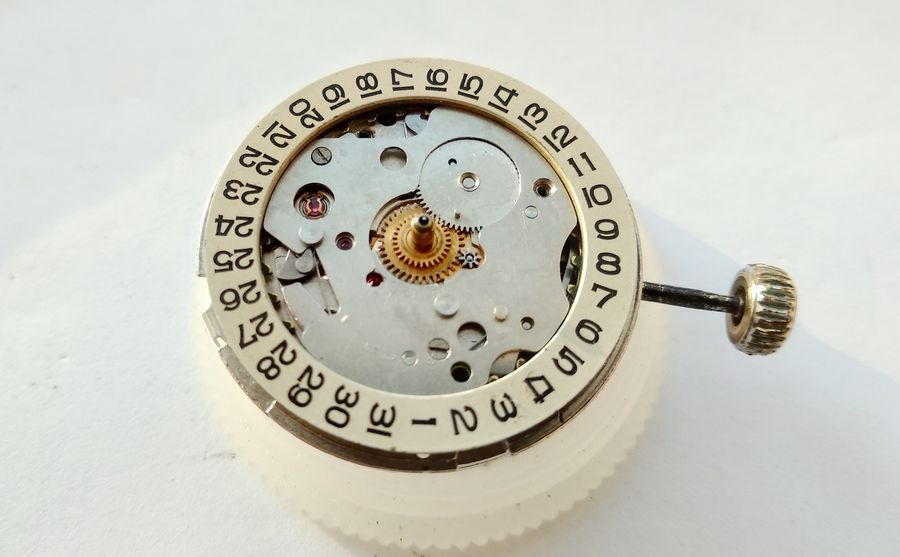
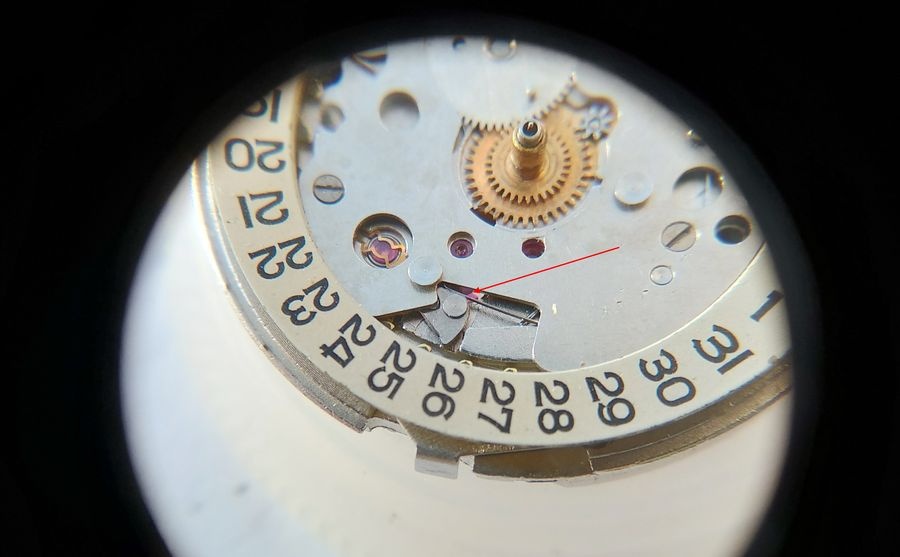
The day-of-week assembly completes the calendar: detent lever, day disk, and retaining washer install in sequence.
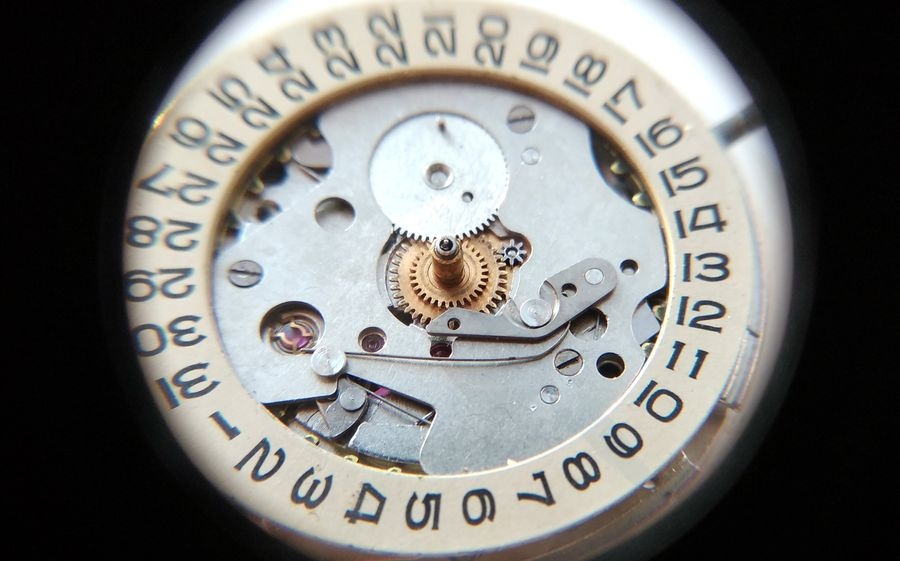
The positioning ring and dial return with careful attention to the ring's orientation relative to the pusher transfer lever.
Final Assembly and Results
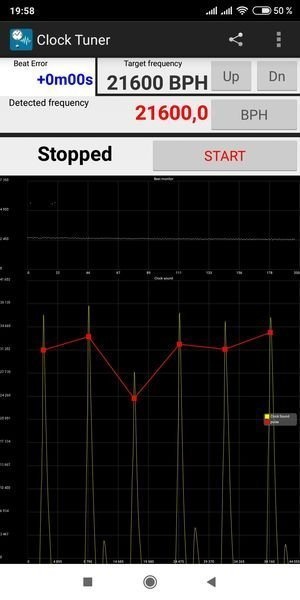
With the calendar complete, the balance installs and the movement comes alive.
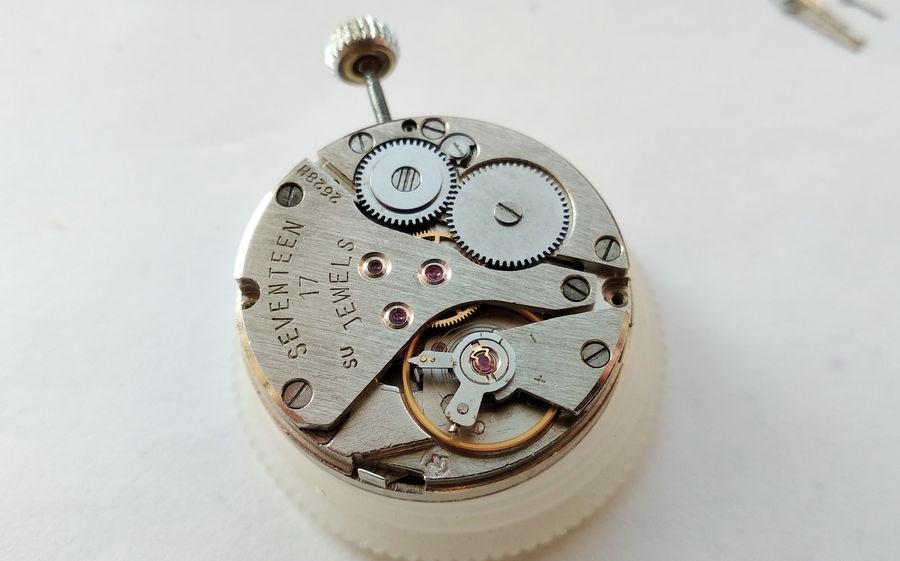
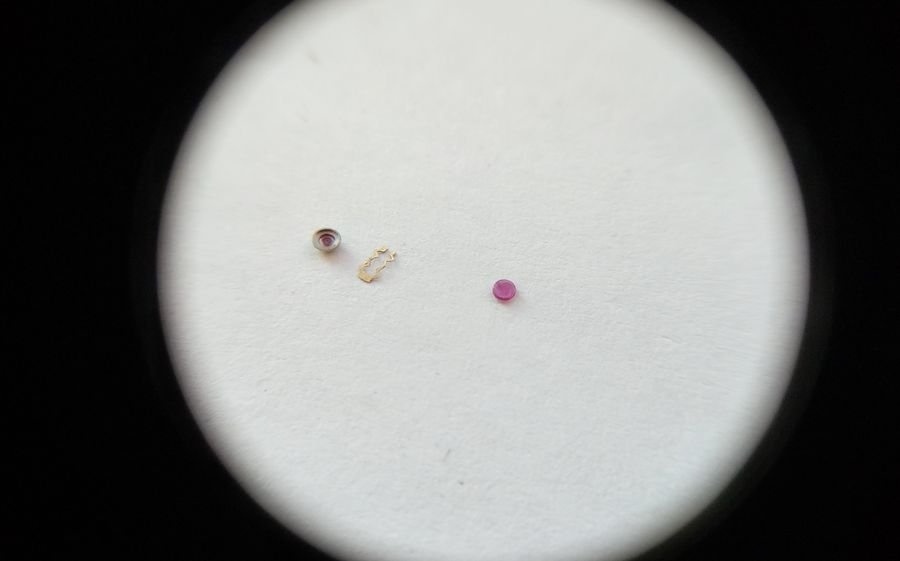
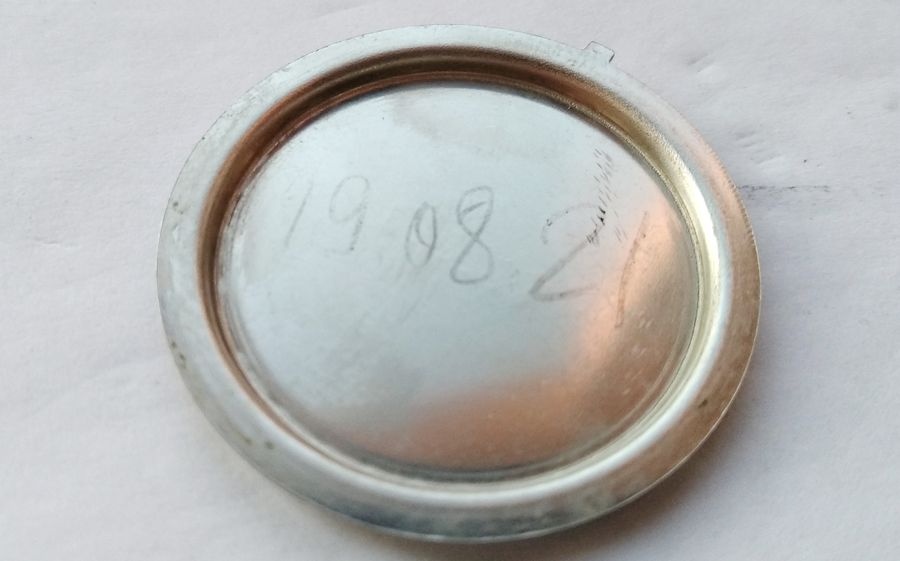
A service date inscription documents the restoration for future reference.
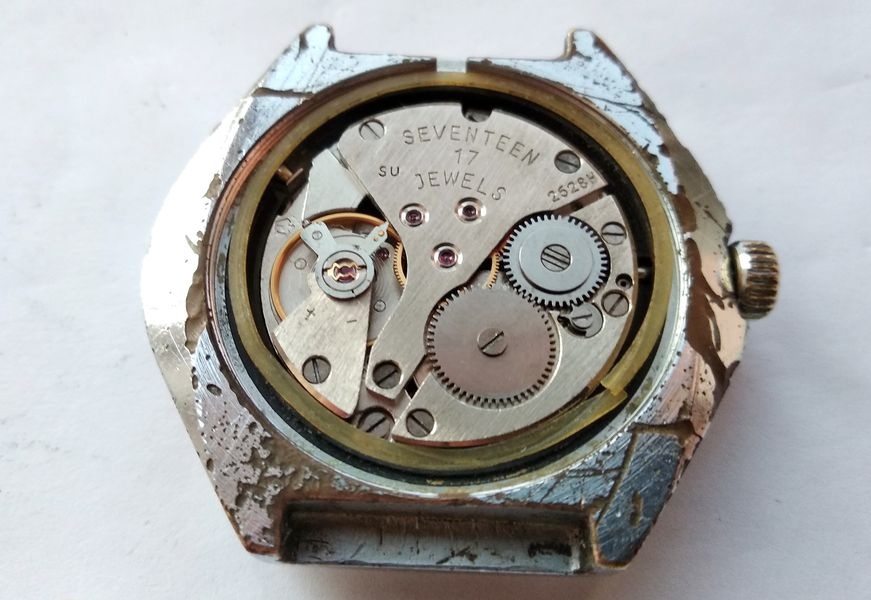
The completed restoration returns a mechanically excellent movement to service, housed in a case that honestly reflects its age. A replacement seconds hand in the correct red color completes the dial presentation.
Technical Observations
The Poljot caliber 2628H represents a distinctive approach to full calendar mechanism design within Soviet horology. By integrating the rapid-set date correction directly into the main plate architecture, the engineers achieved a compact solution that avoids the module-upon-module construction seen in comparable Slava calibers. The cost appears in service complexity: multiple springs, precisely positioned levers, and interdependent components that punish careless handling.
The seventeen-jewel specification indicates a movement of moderate grade, adequate for reliable timekeeping without premium pretension. The S-curve mainspring and standard shock protection represent quality appropriate to the intended market positioning.
For technicians encountering this caliber, the calendar mechanism demands respect. Components must be removed and installed in specific sequences. Springs require careful handling and documentation of their installed orientations. The pusher transfer lever and positioning ring alignment deserves verification before the watch returns to service. Patience invested during assembly prevents frustrating disassembly to correct oversights.
The Stadium case design, distinctive in its era, houses a movement worthy of the attention its calendar mechanism requires. For collectors seeking interesting Soviet complications in unusual presentations, this combination offers genuine appeal.
Comments
Write a comment