

The Raketa Caliber 2603: A Transitional Soviet Movement Between Pobeda and Modern Raketa
"Old things have history, spirit, individuality. When I repair them, they become part of my story..."
— Jennifer Crusie, Agnes and the Hitman
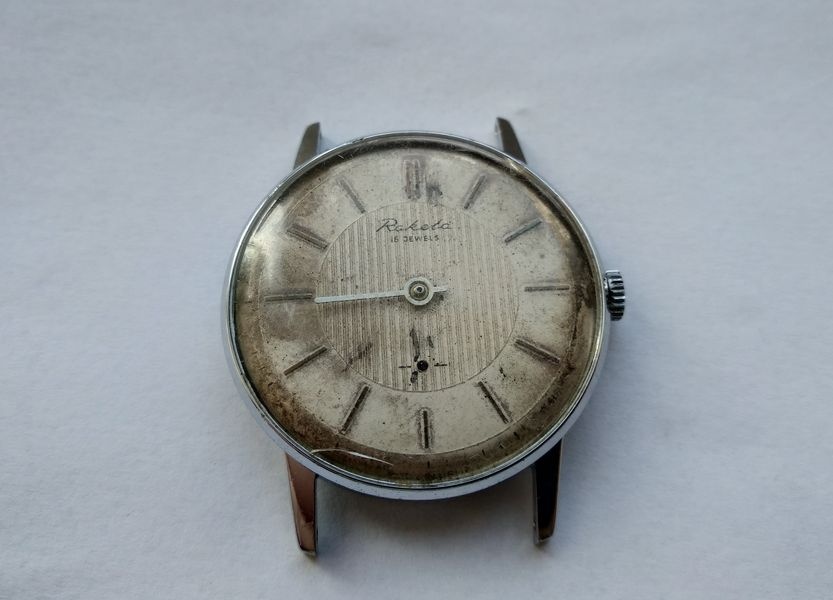
Opening the case back of this particular watch revealed a service date scratched into the metal: "7.88" — July 1988. More than thirty years had passed since a watchmaker's hands last touched this movement. Yet despite the alarming external condition, a few turns of the crown produced motion. The balance began its labored but steady tick-tock, struggling against decades of congealed lubricant. Still alive. And if alive, then worth saving.
The Raketa caliber 2603 represents a fascinating transitional moment in Soviet watch history. No longer the primitive Pobeda-era design, not yet the refined later Raketa calibers, the 2603 embodies the Soviet industry's incremental approach to modernization. Understanding this movement requires context: the long lineage from which it emerged and the improvements it introduced.
Technical Specifications
Before examining history and restoration, the essential specifications:
Case diameter: 34mm. Height including crystal: 8.5mm — genuinely thin for a Soviet watch. Width across crown: 35.5mm. Lug to lug: 41mm. Lug width: 18mm. Balance frequency: 18,000 vph (2.5 Hz). Balance: shock-protected.
These dimensions and the shock protection represent the caliber's distinguishing characteristics within the K-26 family.
Historical Context: The K-26 Lineage
The story begins in 1936 when specialists from the French firm Lip SA d'Horlogerie assisted in establishing watch production at the Frunze Factory in Penza. The French caliber Lip R26, a 26mm round movement with subsidiary seconds, became the foundation. Renamed K-26 (K for "krugliy," meaning round), this caliber would become the most mass-produced movement in Soviet watchmaking history.
The K-26's primary virtue was simplicity. In an era when qualified watch service essentially did not exist across the vast Soviet territory, a movement repairable "on the knee" with minimal tools and training offered genuine practical value. Production costs remained low. The tradeoff: frequent service requirements and limited durability.
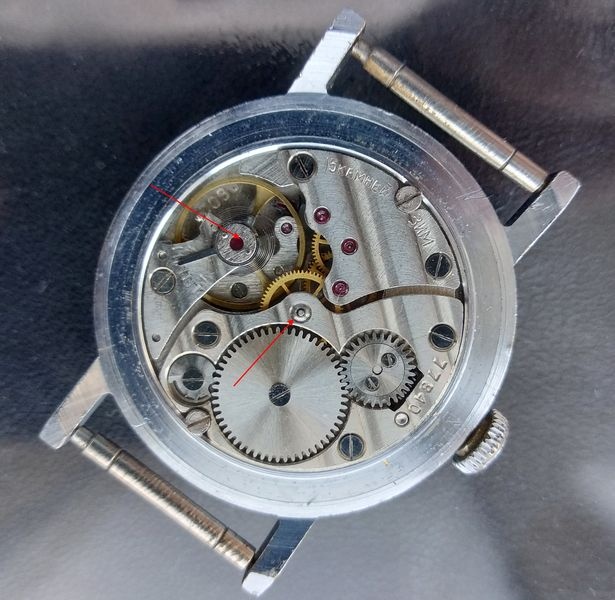
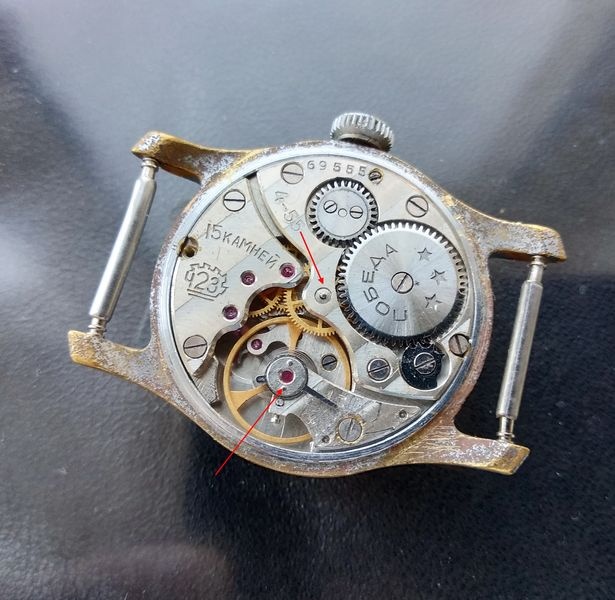
Time passed. The caliber received incremental improvements while maintaining its fundamental architecture. Various factories produced their versions, with quality and finish varying considerably.
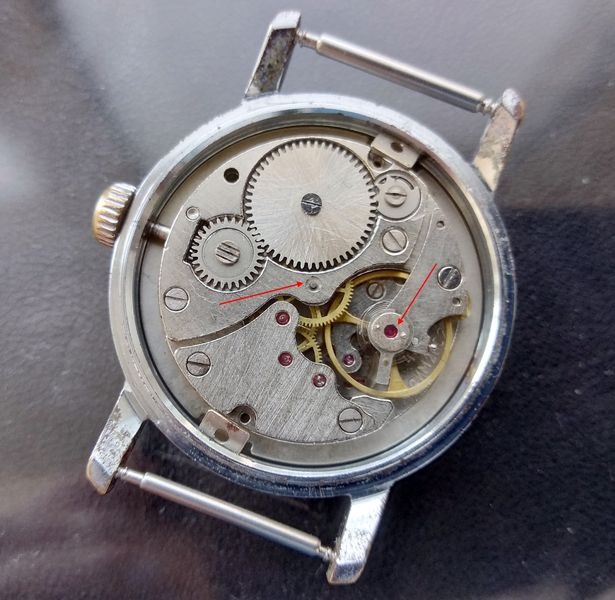

These late ZIM examples show the caliber at its most economized: absent decorative finishing, perfunctory oil sinks, maximum cost reduction. The designation 2602 indicates a 26mm caliber ("26") with subsidiary seconds ("02").
The 2603: First Steps Toward Modernization
The designation 2603 indicates a significant upgrade: the "03" suffix denotes subsidiary seconds with shock-protected balance. The Incabloc shock protection system finally addressed the K-26 family's notorious fragility. Additionally, jewel bearings appeared on the escape wheel pivots.
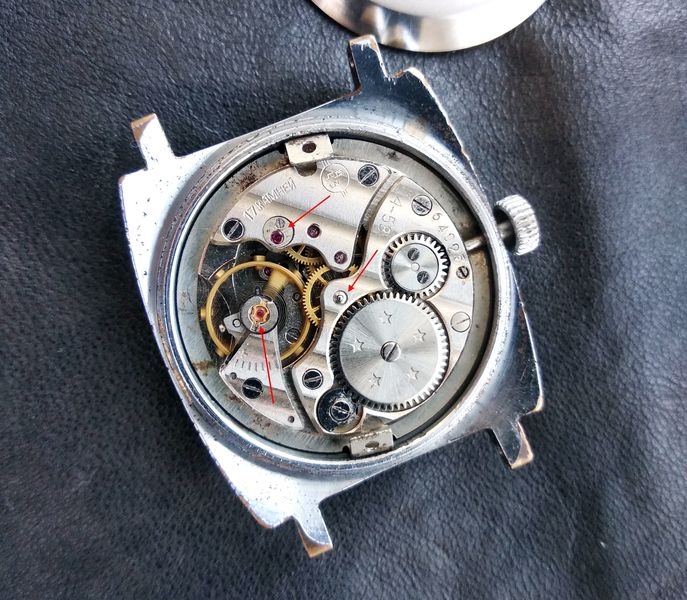
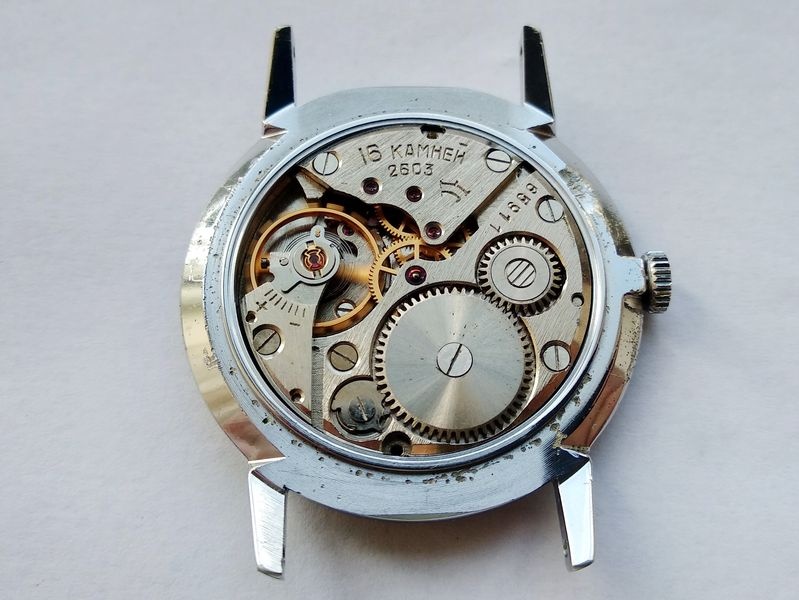
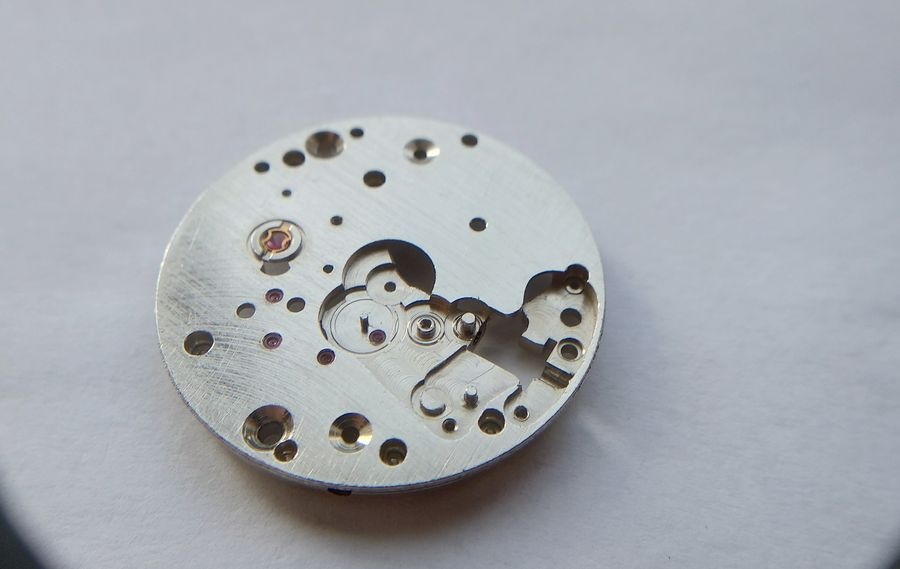
The Petrodvorets Watch Factory's version of the 2603, produced for Raketa-branded watches, completed the modernization by adding the center wheel jewel bearing that earlier variants still lacked. This specimen represents that final evolution within the 2603 designation.
Disassembly
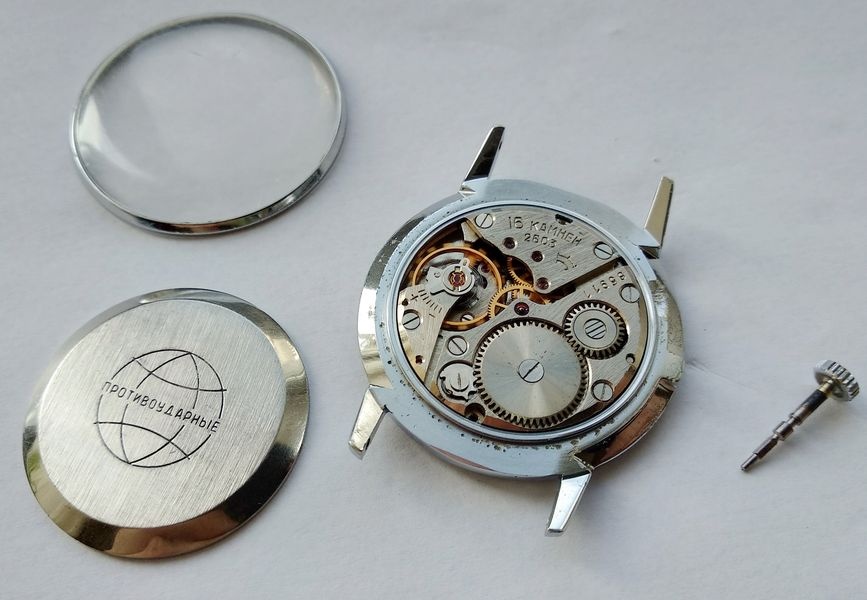
The crystal bezel lifts away with gentle prying.
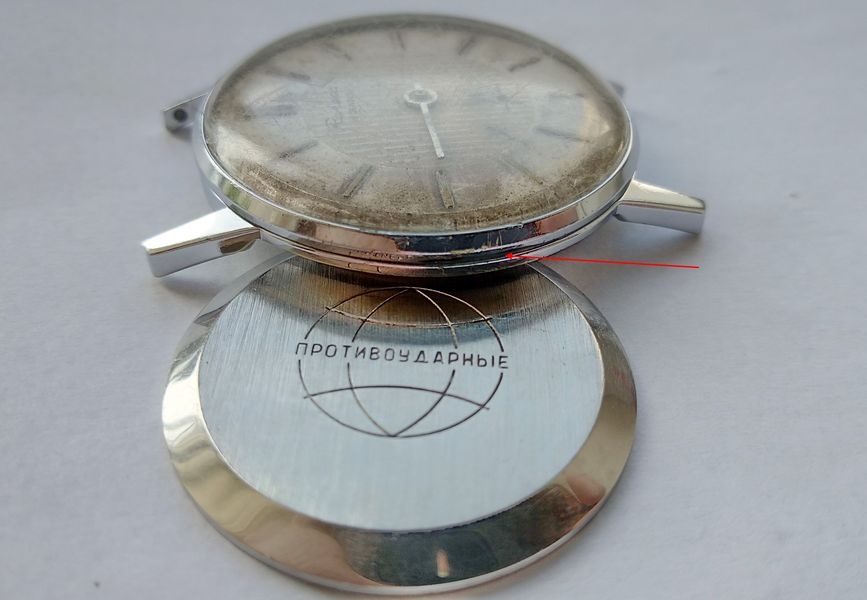
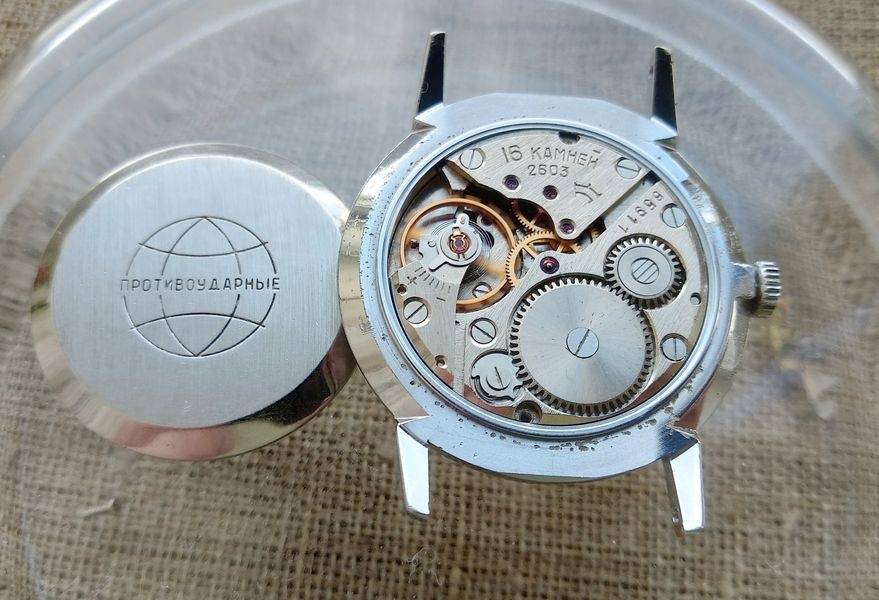
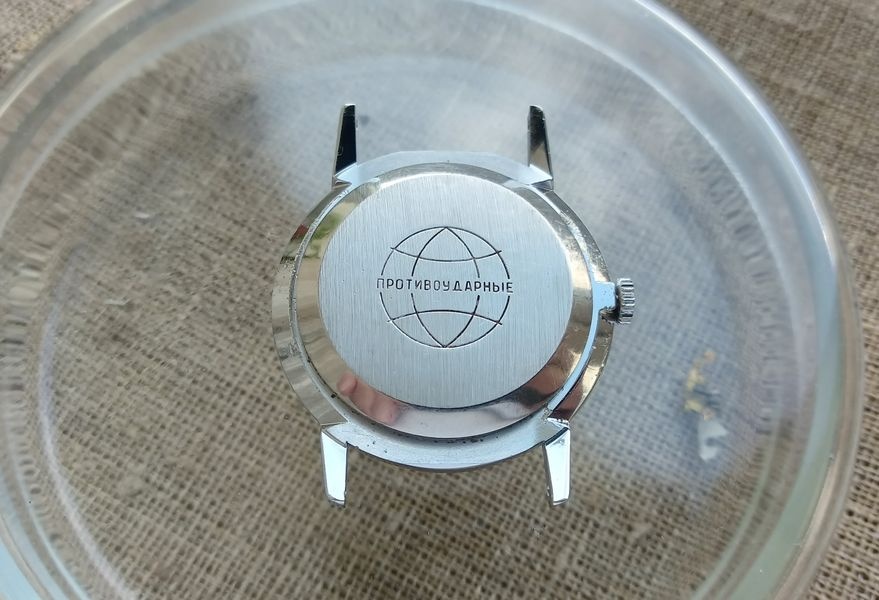
The stem releases via the standard button. The dust cover proudly proclaims "ПРОТИВОУДАРНЫЕ" — shock-protected. This feature represented a genuine selling point when these watches were new; Soviet consumers actively sought shock-protected models.
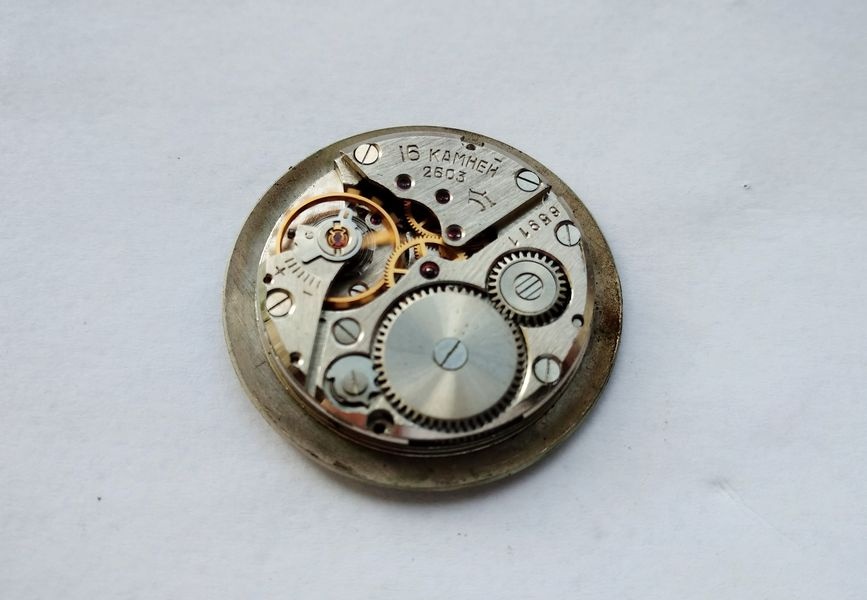
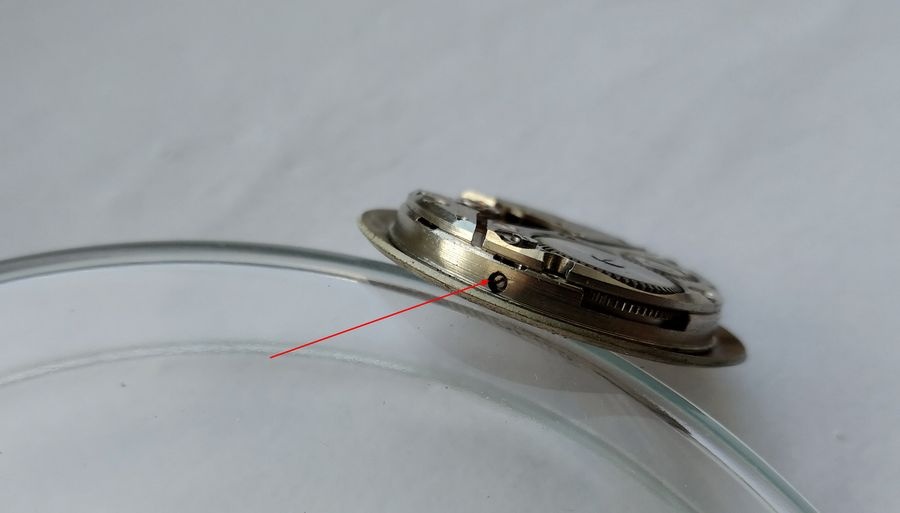
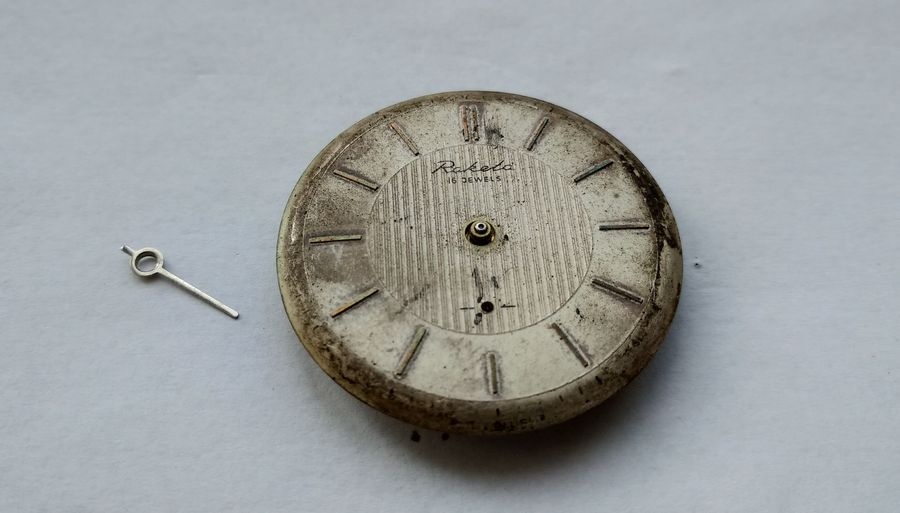
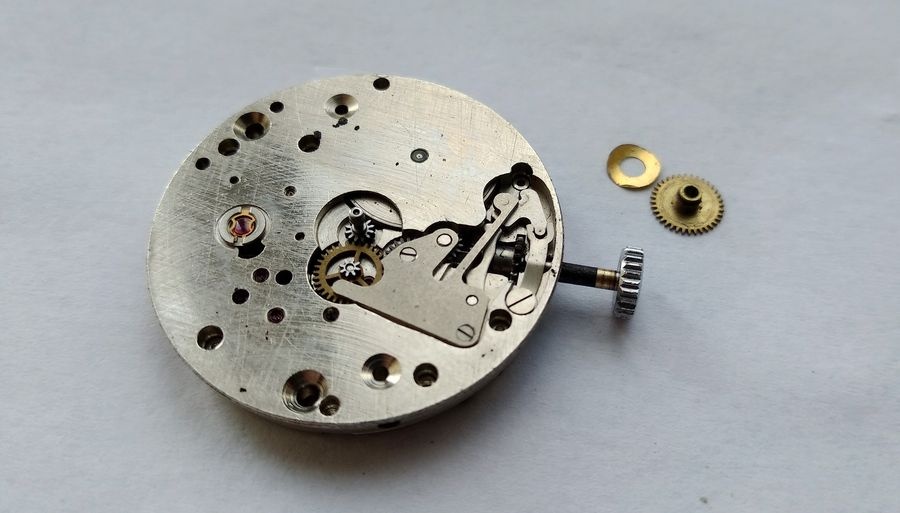
A technological accommodation appears on the dial underside: relief cutouts providing clearance for the now-taller shock protection assembly and the winding pinion.
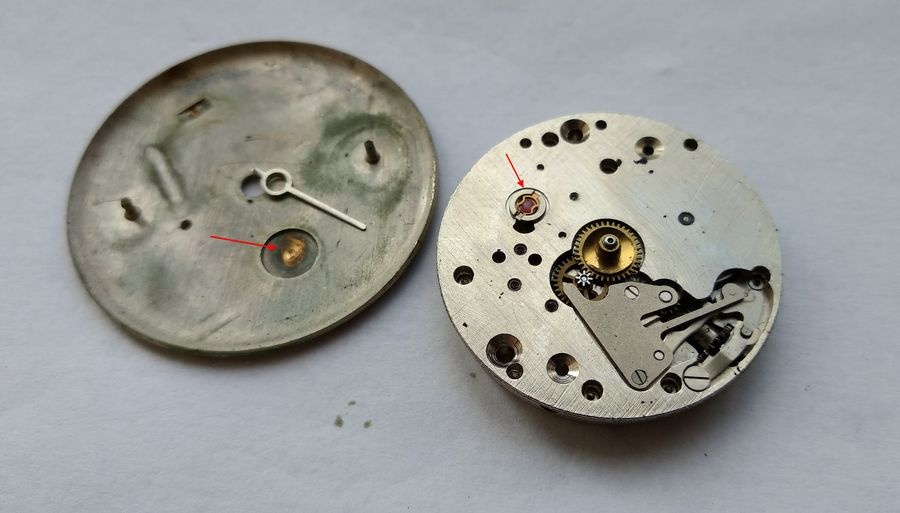
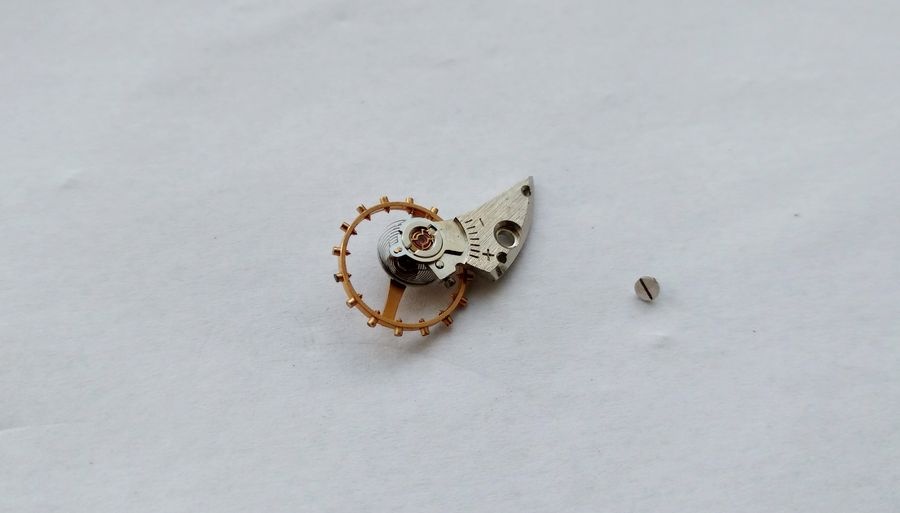
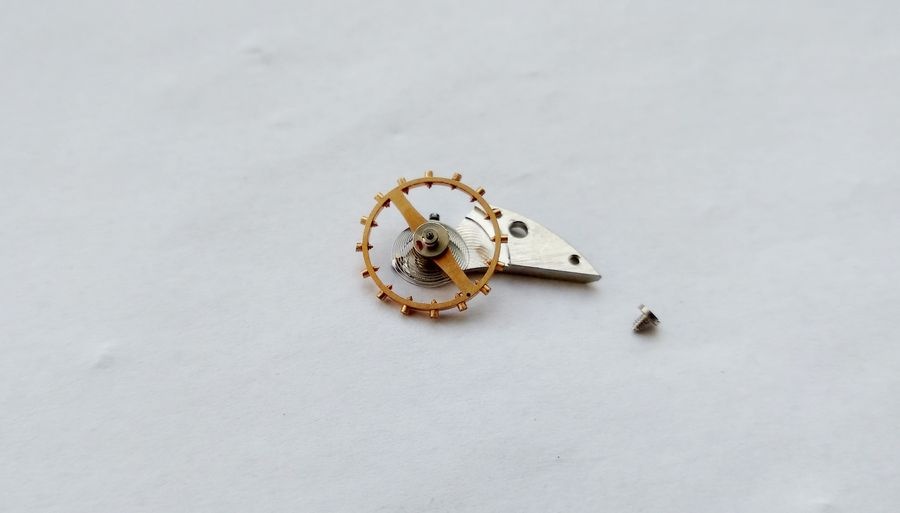
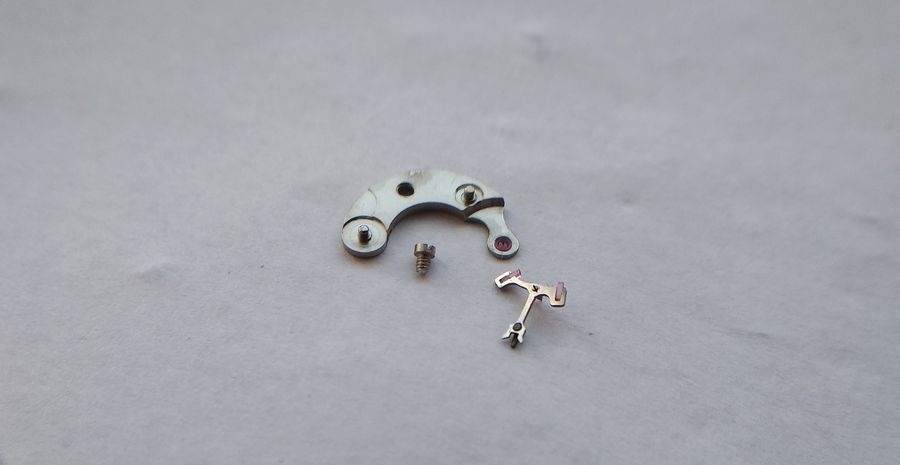
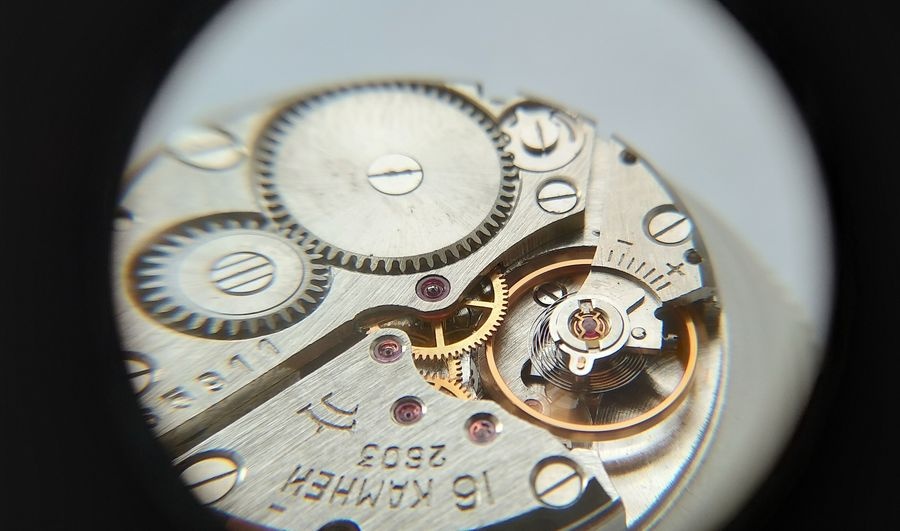
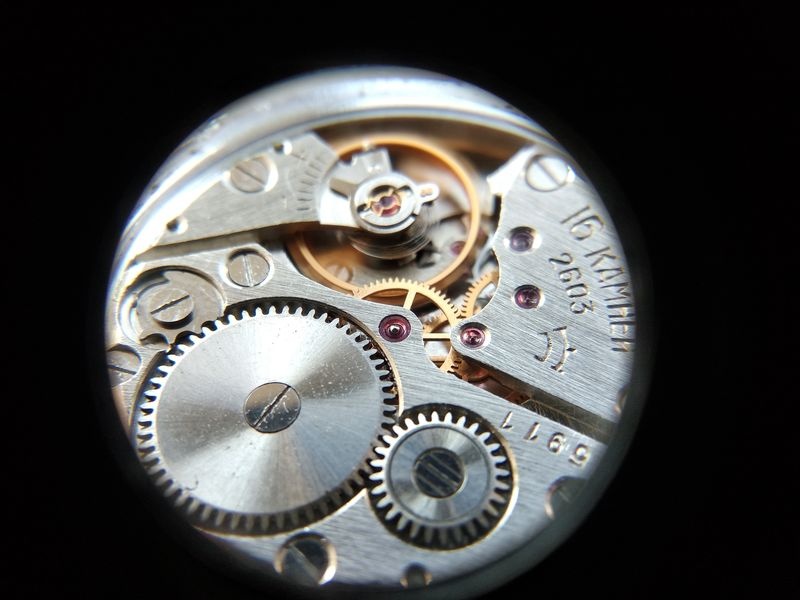
The balance reveals its quality: Breguet overcoil hairspring, screw-compensated wheel, and the Incabloc protection. The stud carrier is fixed rather than movable, a characteristic requiring mention when discussing regulation capability. The pivots show no wear — testimony to the shock protection's effectiveness over decades of use.
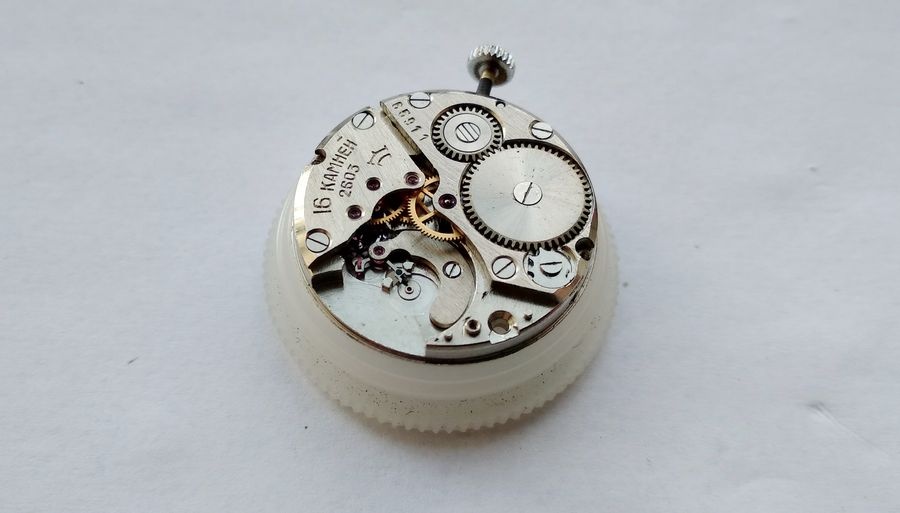
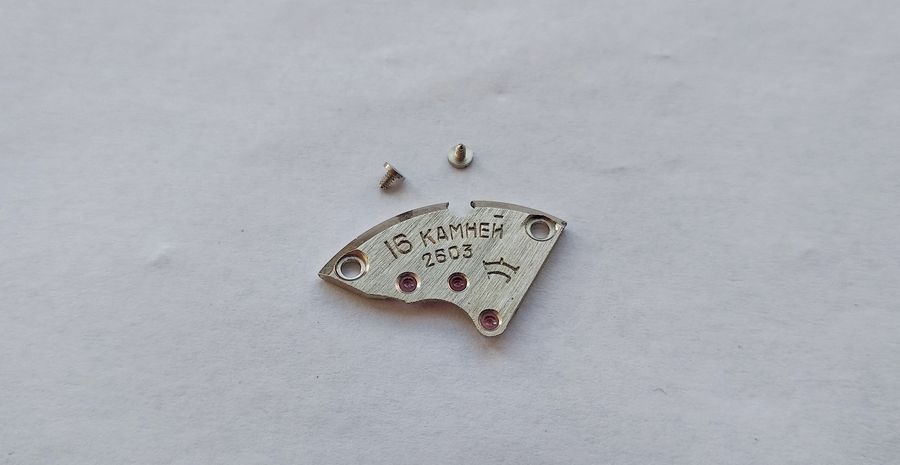
The train bridge carries the "16 камней" (16 jewels) inscription and the iconic Raketa symbol. The jewel count reflects the improvements: shock jewels plus escape wheel jewels plus the center wheel bearing. Not yet the 2609B or 2609HA that would follow, but a meaningful advance.
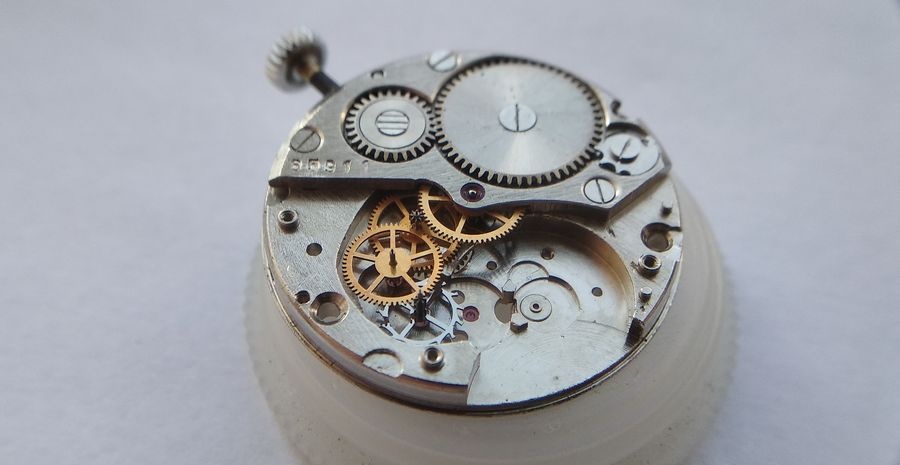
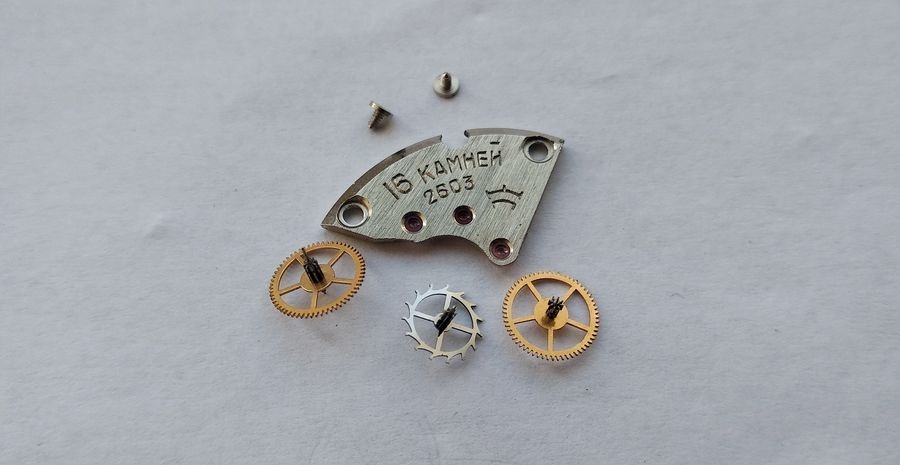
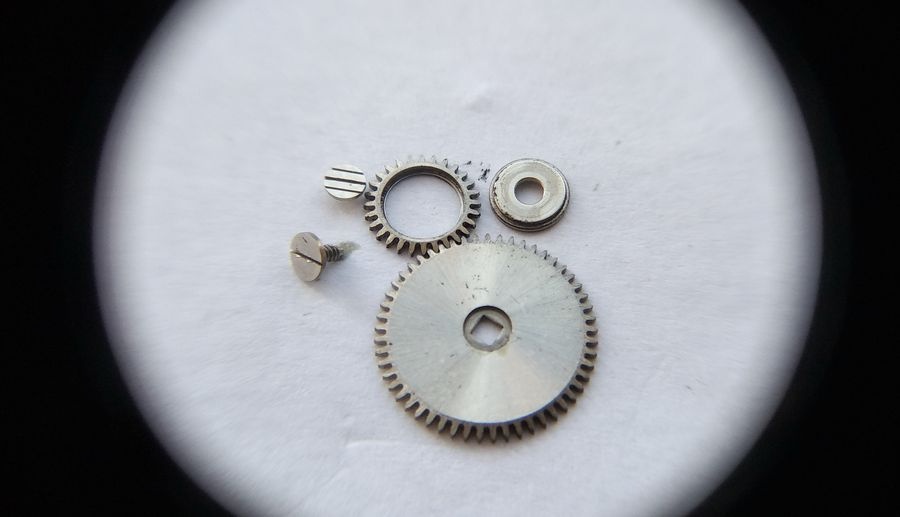
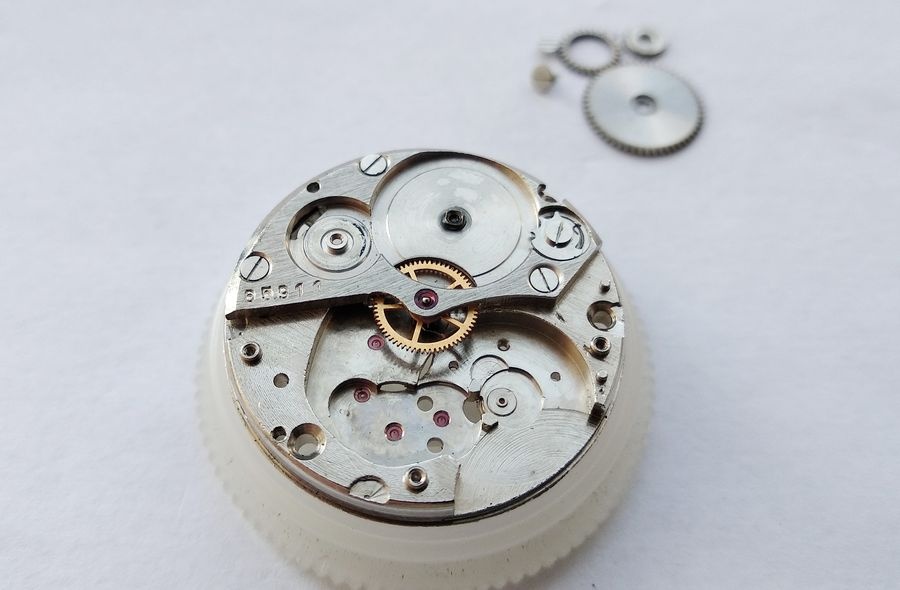
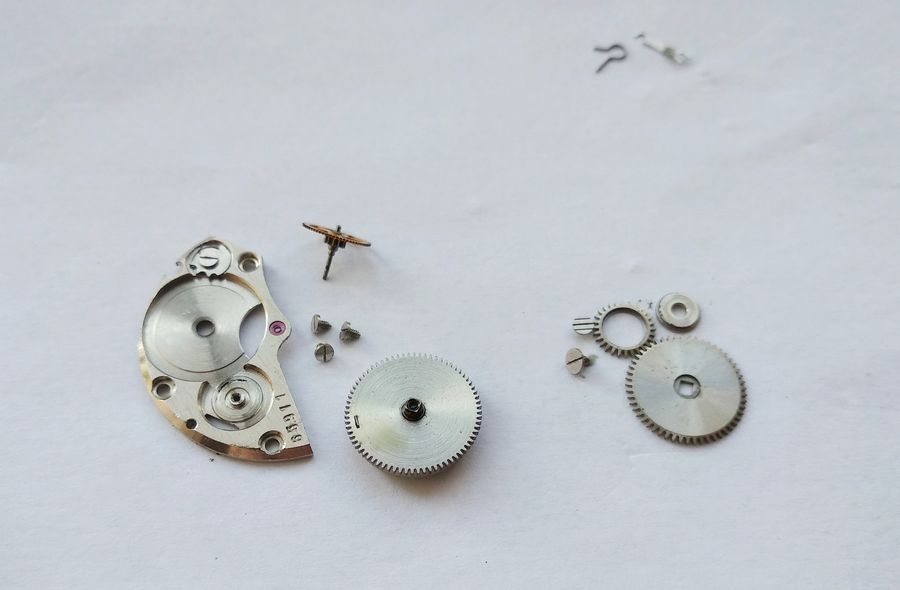
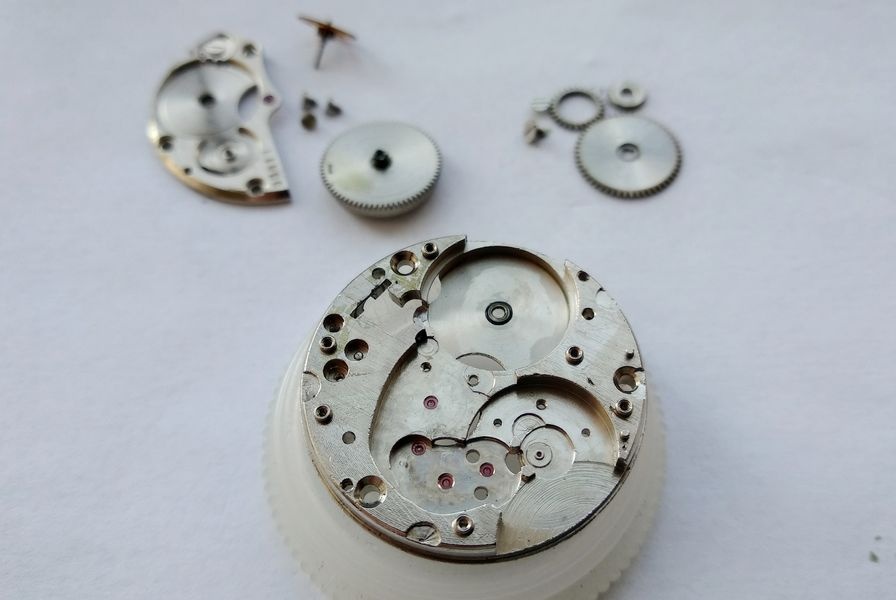
The dial side presents the K-26's characteristic simplicity. Without calendar complications, the motion works consist only of the basic wheel train.
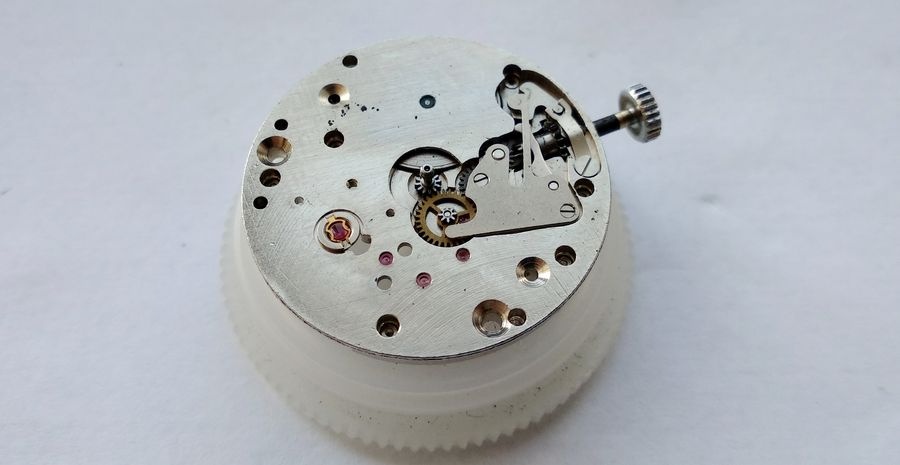
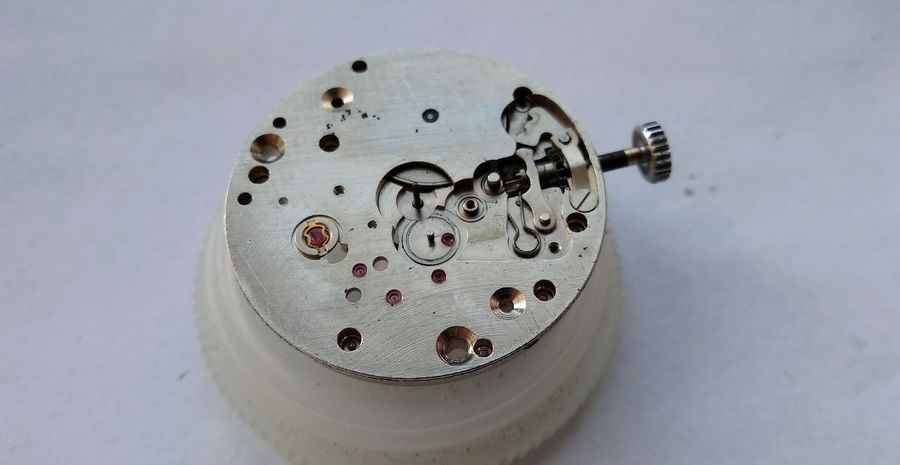
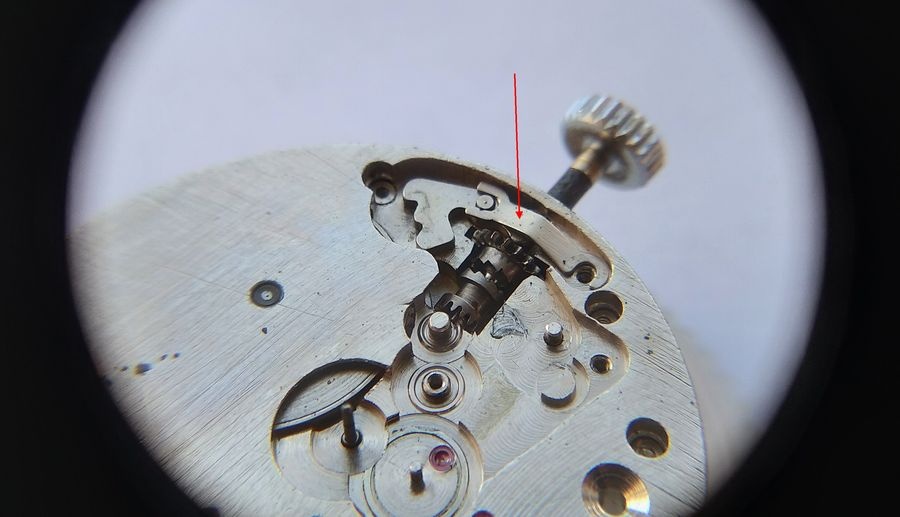
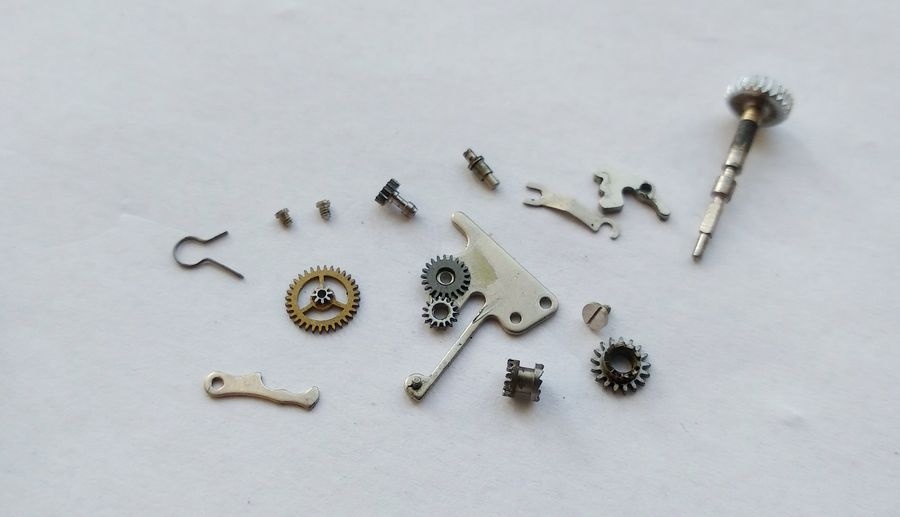
A characteristic spring in the keyless works retains both the intermediate lever and the stem release button.
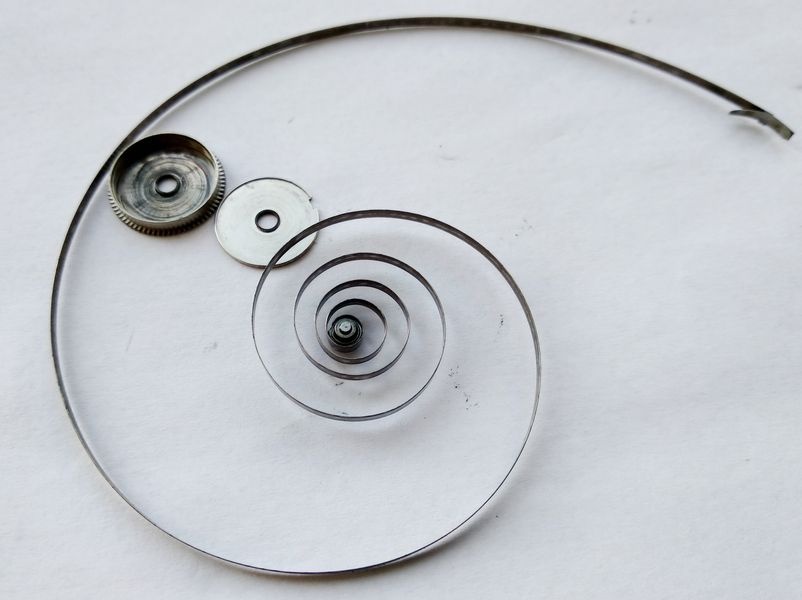
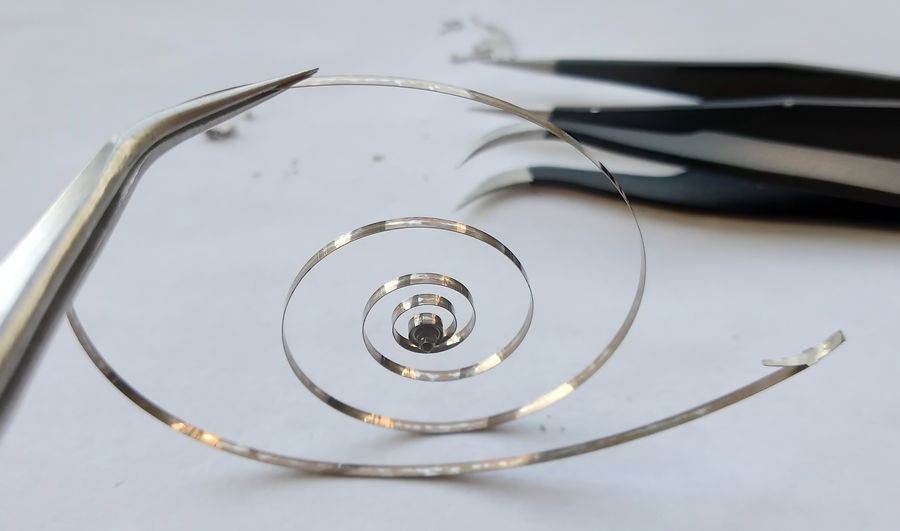
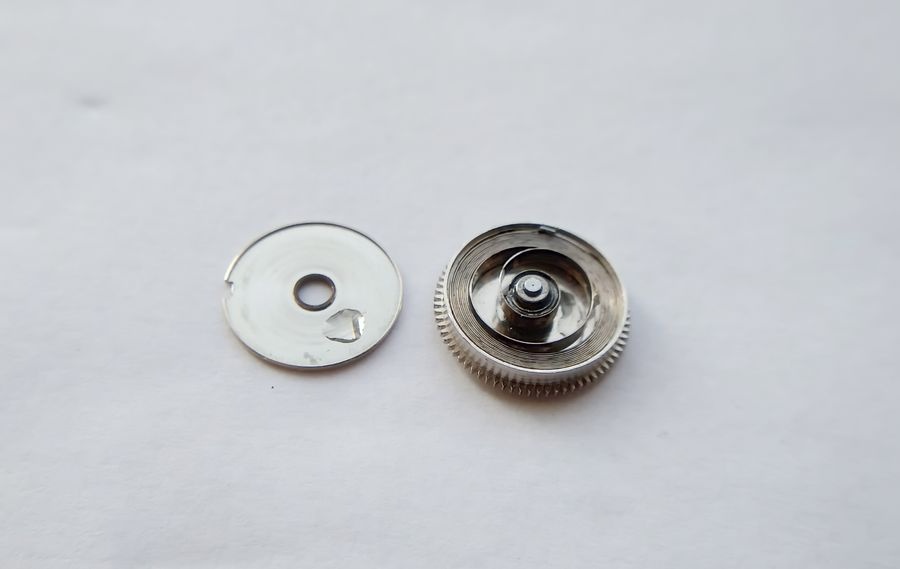
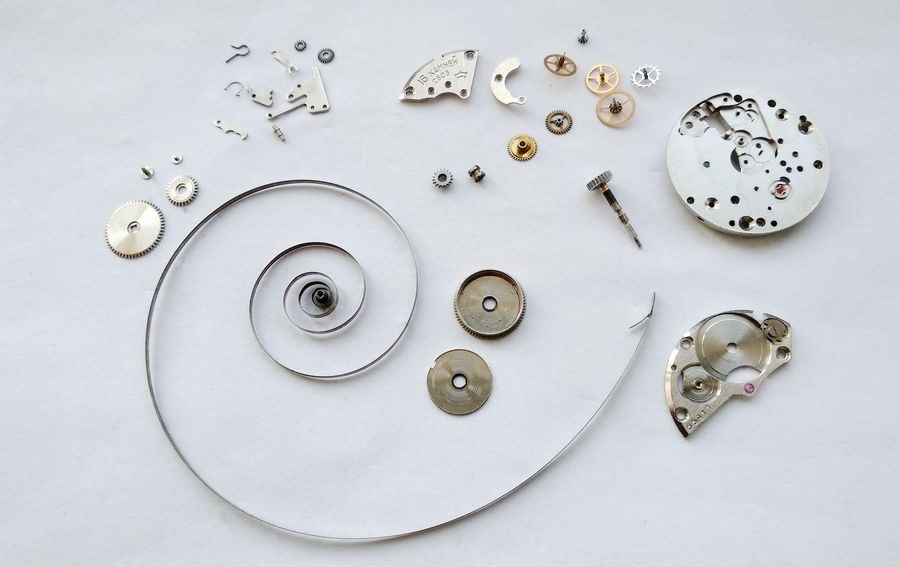
Cleaning and Mainspring Service
Reassembly
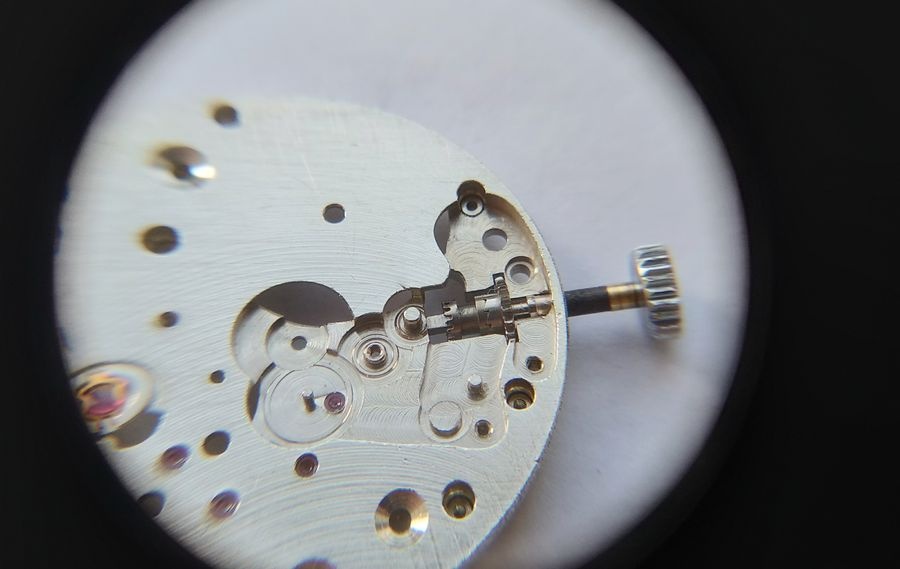
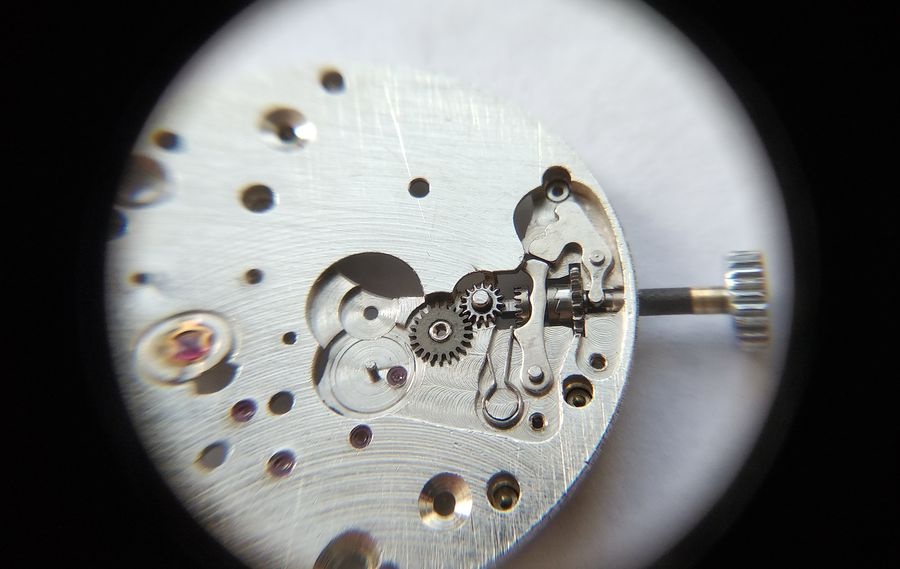
A critical assembly sequence note for K-26 family movements: once the motion works are installed, the center wheel jewel becomes inaccessible for lubrication. The jewel must receive its oil before the escape and intermediate wheels are positioned.
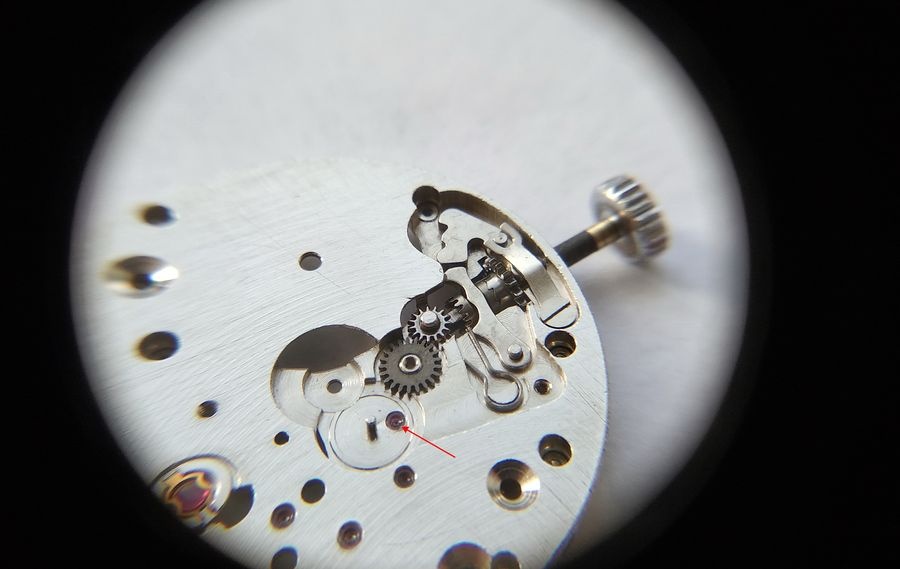
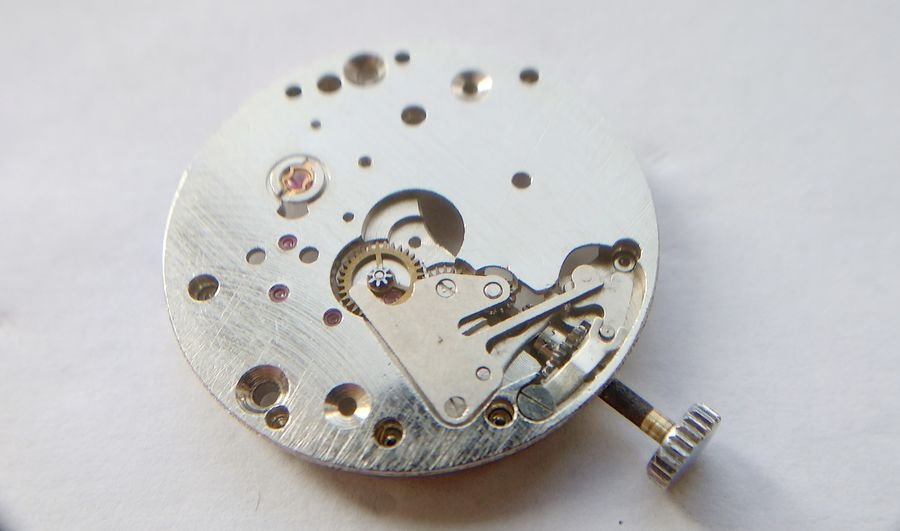
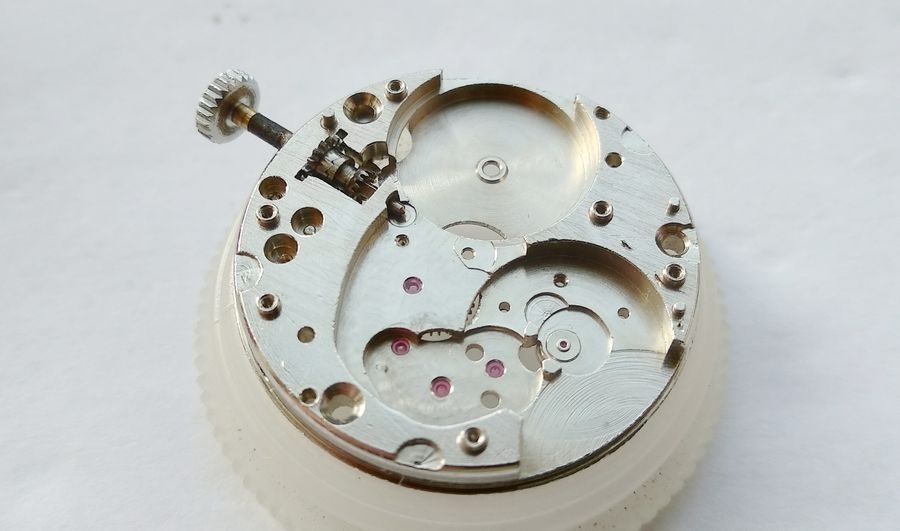
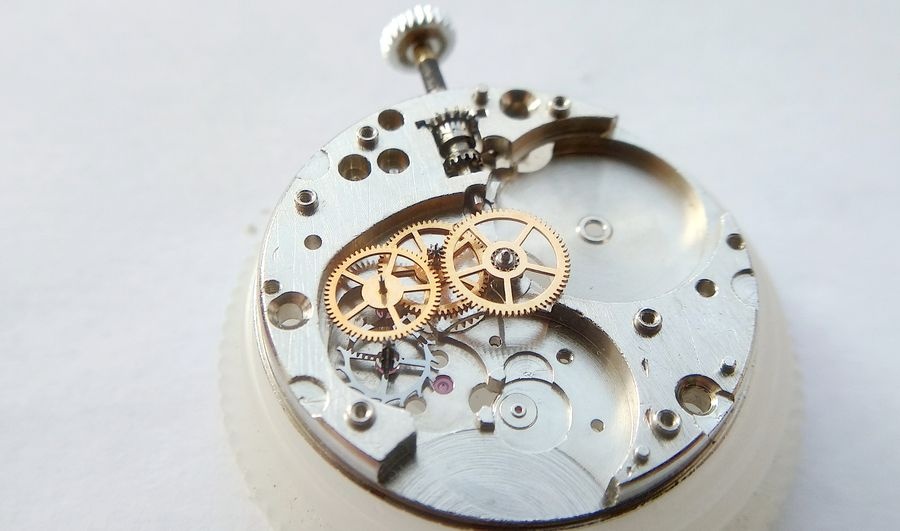
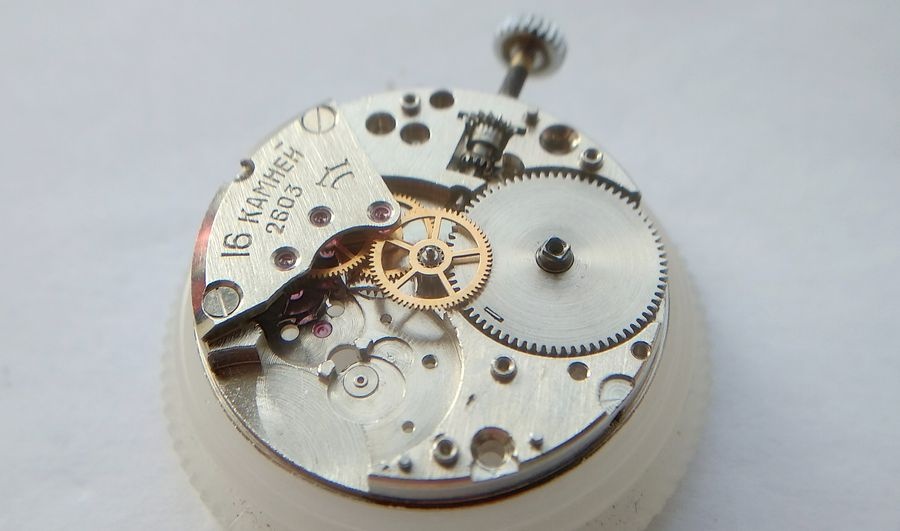
Installing the barrel bridge requires care: the center wheel now runs in a jewel bearing rather than a brass bushing. Careless handling risks chipping the jewel. The reward for this attention is exceptional power transmission — these early 2603 movements exhibit superb mainspring rundown characteristics.
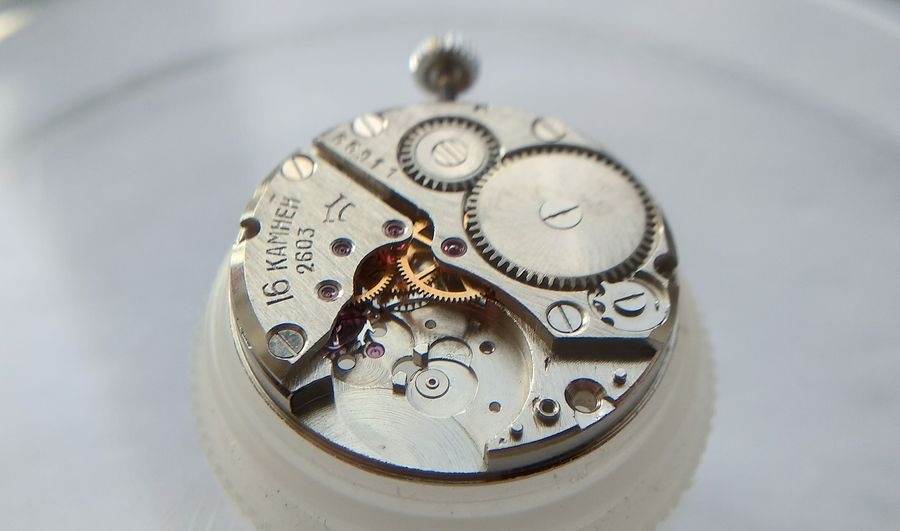
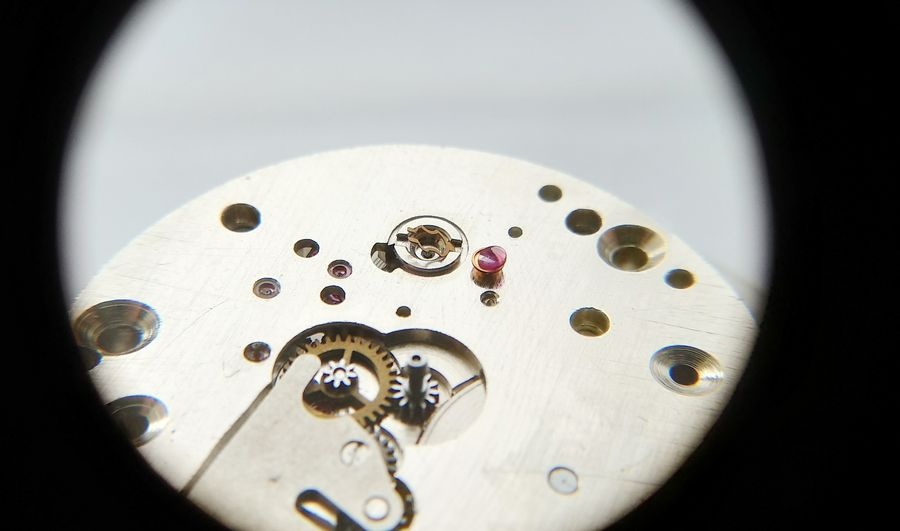
Moebius 8000 provided lubrication throughout — a proven performer for vintage Soviet calibers.
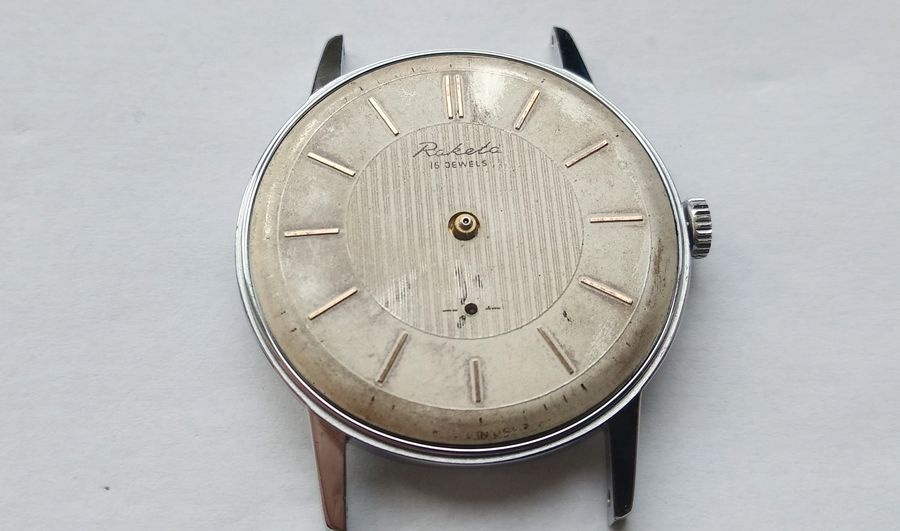
Chemical treatment restored the oxidized dial. The silver brightened considerably, though photographs render it gray rather than the white visible in person.
Results
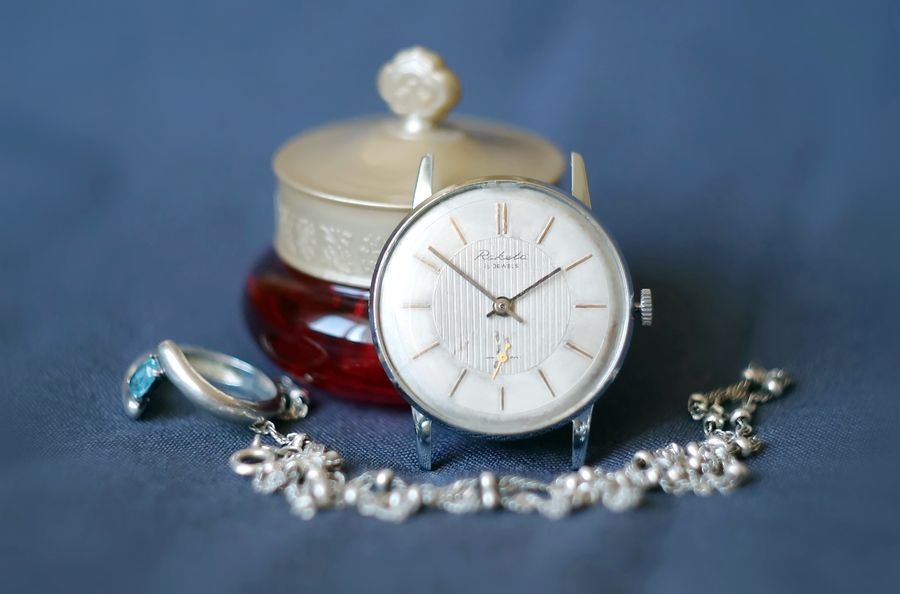
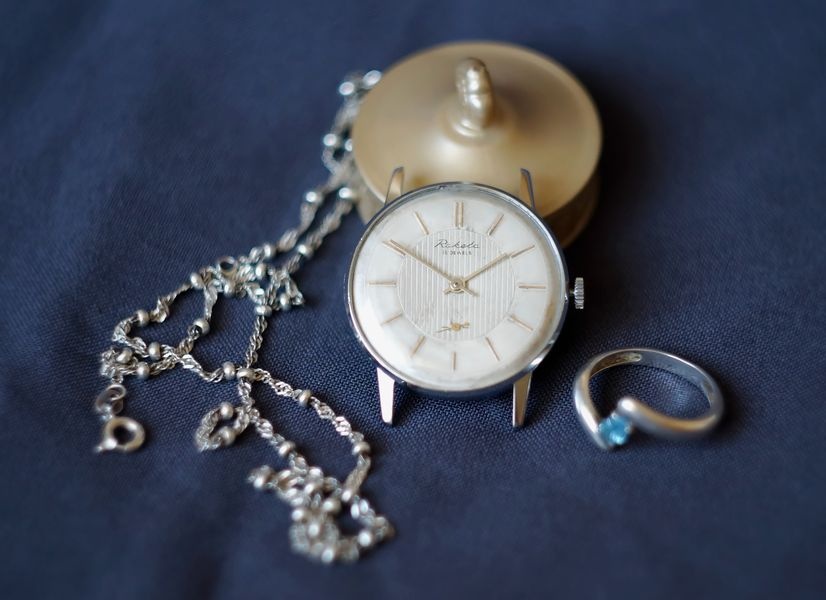
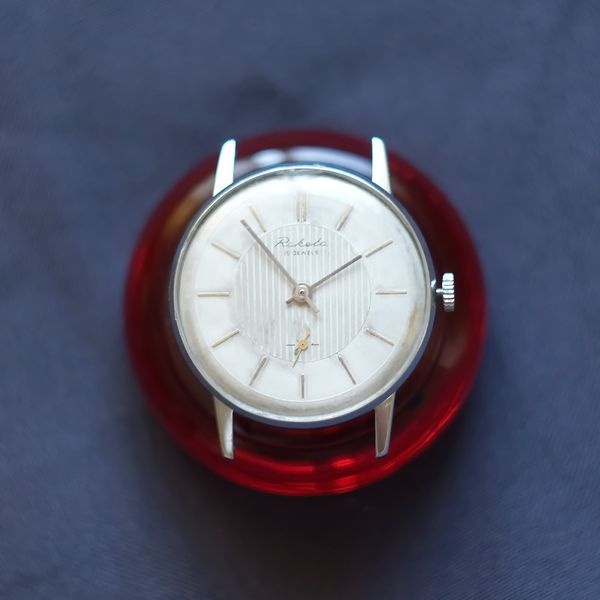
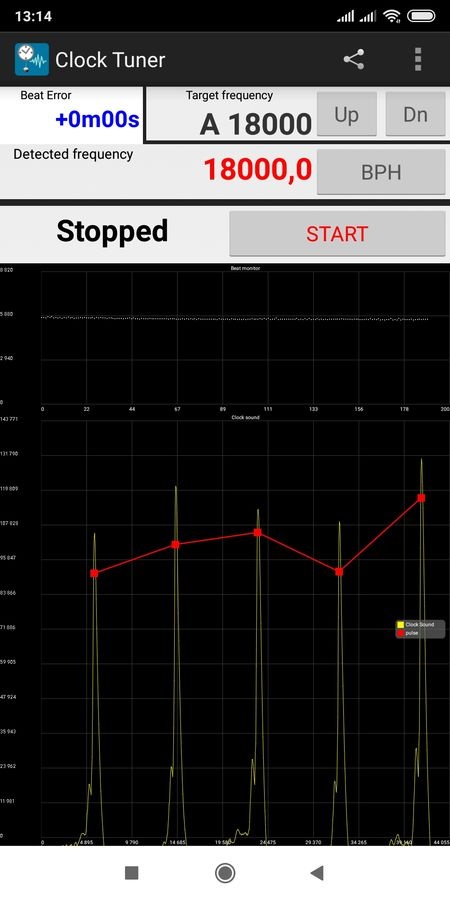
The timing results proved remarkable: approximately one minute per week deviation. For a movement last serviced in 1988, running on lubricants three decades degraded, this speaks to the fundamental soundness of the improved design. The shock protection preserved the pivots; the jeweled bearings maintained their precision despite neglect.
The Transitional Significance
The Raketa 2603 occupies a specific moment in Soviet watch caliber evolution. The K-26 foundation remained, but the most persistent criticisms had been addressed. Shock protection eliminated the fragile balance pivots that broke with every dropped watch. The jeweled center wheel bearing reduced the wear that required frequent service.
Yet this remained a transitional design. The later caliber 2609 would add a through-jewel in the main plate for the center wheel, further improving longevity. The 2609B and 2609HA would refine the architecture further still. The 2603 represents the first generation of a modernized K-26, not the final form.
For collectors of vintage Soviet watches, the 2603 offers an interesting combination: the classic K-26 architecture with meaningful improvements, often found in attractive early Raketa cases, and typically available at modest prices due to being overshadowed by later calibers. The specimens with careful finishing, like this Petrodvorets example, demonstrate that Soviet factories could produce genuinely attractive movements when priorities permitted.
This particular watch will return to service after a new crystal arrives. Perhaps a new-old-stock dial will surface eventually. The movement, at least, now runs as it should — carrying forward its small piece of horological history.
Comments
Write a comment