

Raketa 2628.H: Restoration of a Soviet Full Calendar Movement
"Every neglected timepiece carries potential beneath its accumulated grime..."
— Observations from the workbench
Certain watches arrive at the bench in condition that tests one's commitment to the restoration craft. The subject of this documentation presented initially as an unpromising mass of accumulated debris, its chrome surfaces obscured beneath years of environmental exposure and human contact. Yet experienced technicians recognize that external neglect frequently conceals internal preservation, particularly in well-sealed cases. The transformation that follows demonstrates both the resilience of Soviet engineering and the satisfaction inherent in returning a worthy caliber to service.
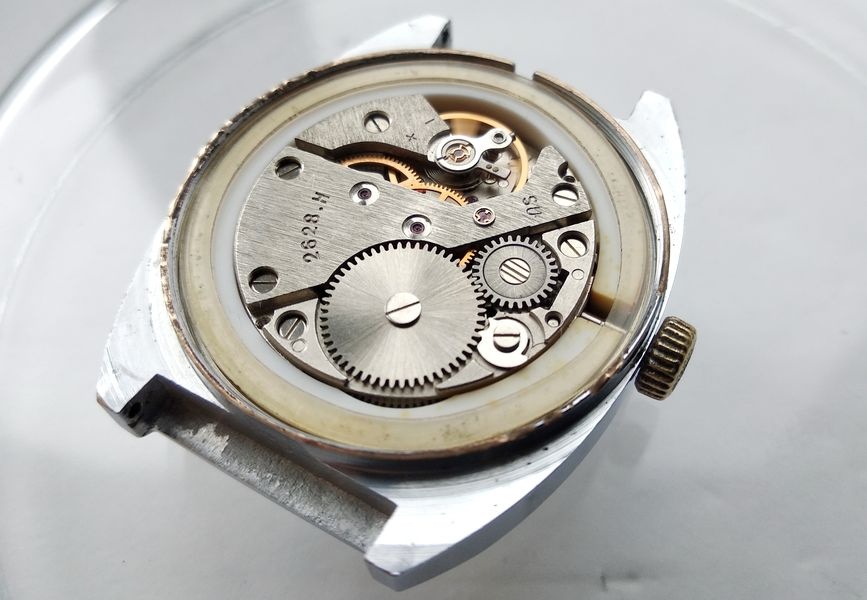
The movement within this battered case proved to be the Raketa 2628.H, one of the more sophisticated calibers produced by the Petrodvorets Watch Factory. This nineteen-jewel mechanism incorporates a complete calendar displaying both date and day of week, with instantaneous advancement of both indicators at midnight. The engineering required to achieve simultaneous instantaneous change of two calendar displays represents genuine technical accomplishment, making this caliber particularly worthy of careful restoration.
Initial Assessment and Disassembly
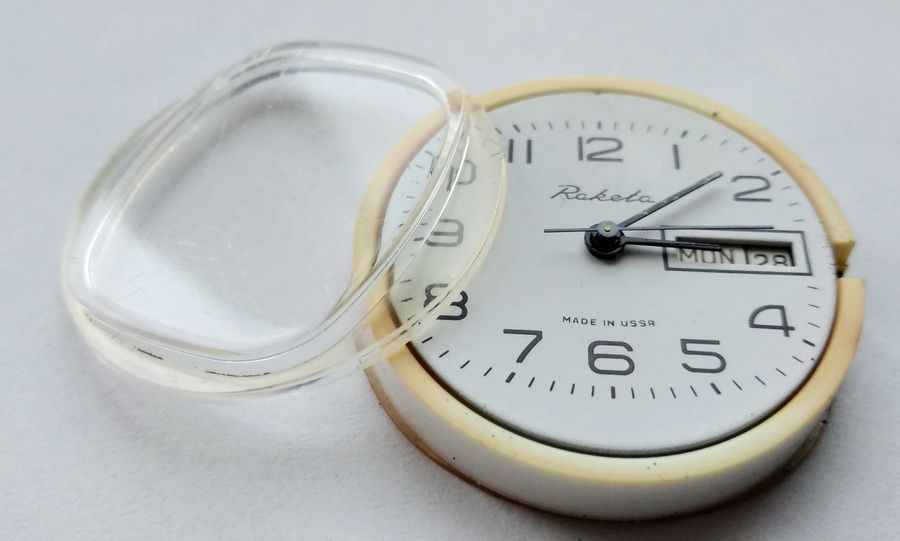
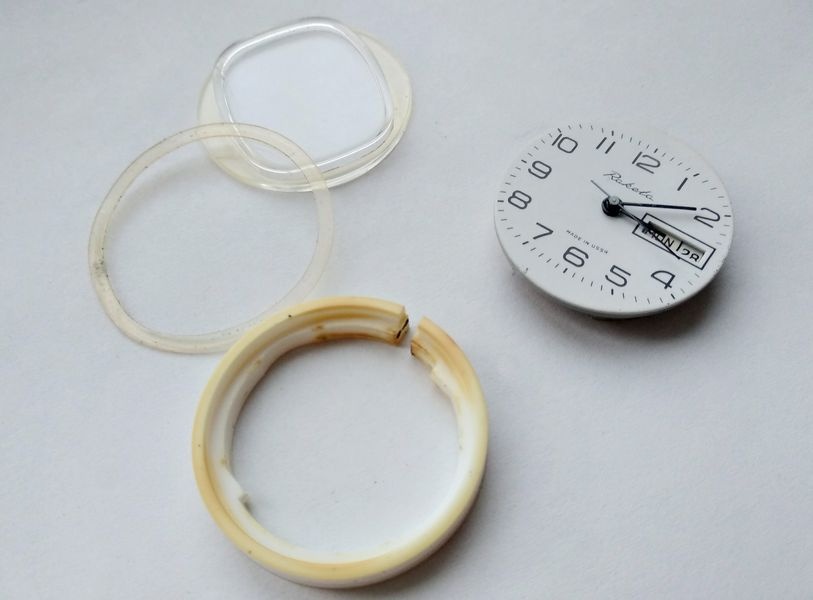
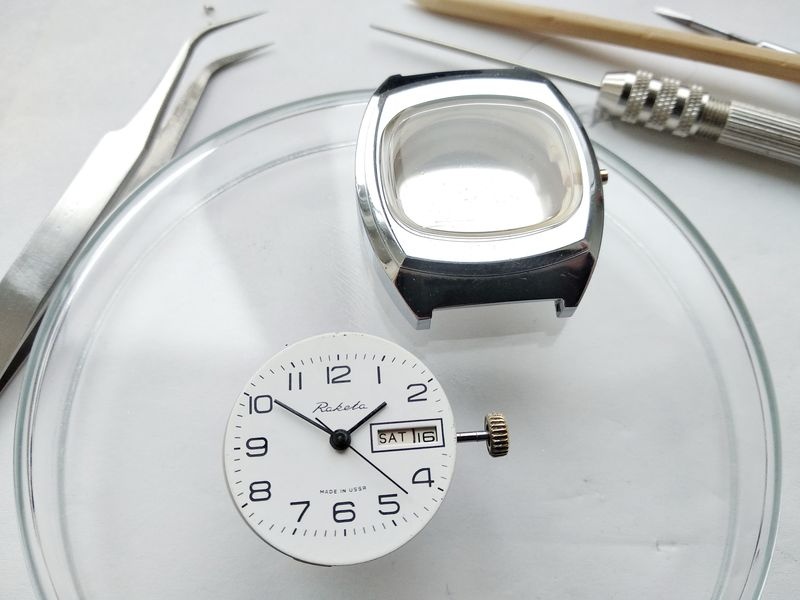
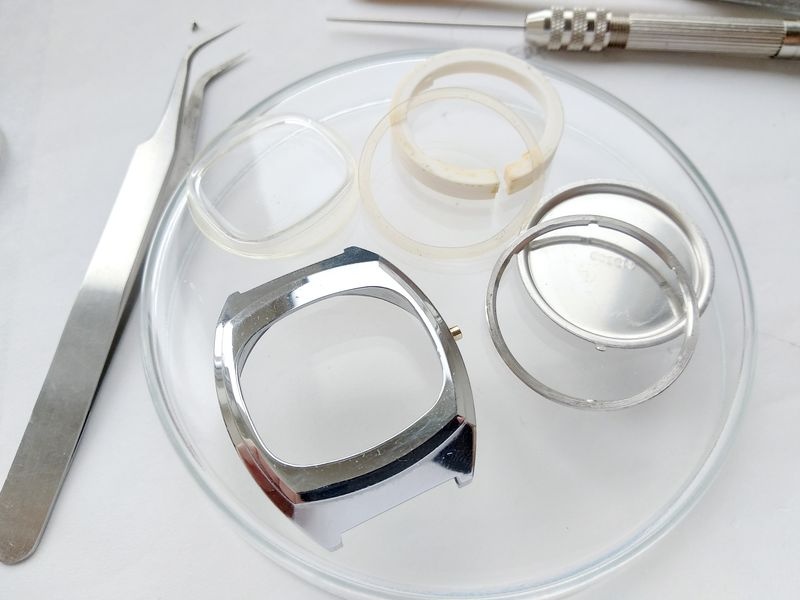
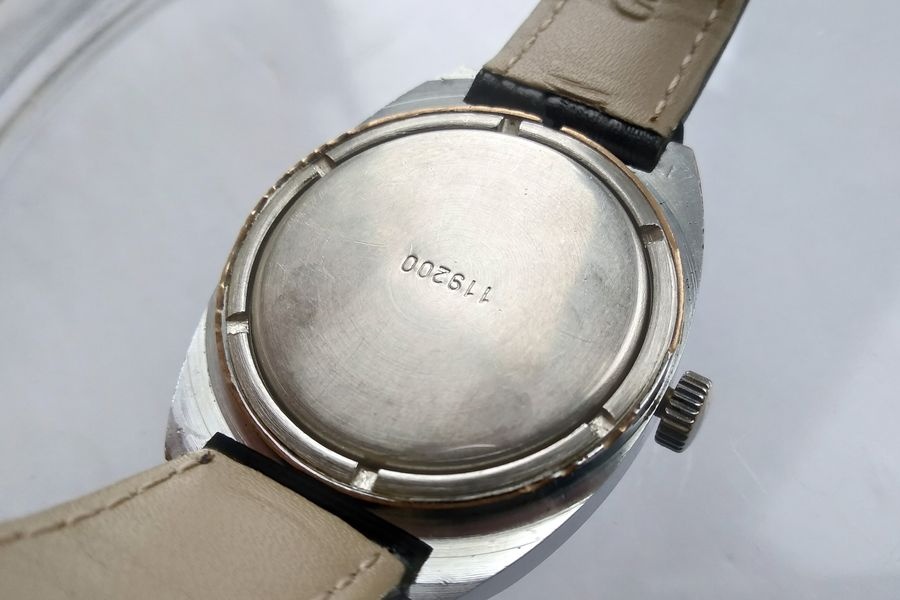
Preliminary examination revealed a case of considerable interest beneath its unappealing exterior. The construction employs a threaded ring securing the case back against a gasket, providing genuine dust resistance. The crystal mounting follows an unusual approach: the mineral glass rests directly against the case middle, held in position by the dial and movement assembly pressing from within. This arrangement, while unconventional, creates an effective seal when properly assembled.
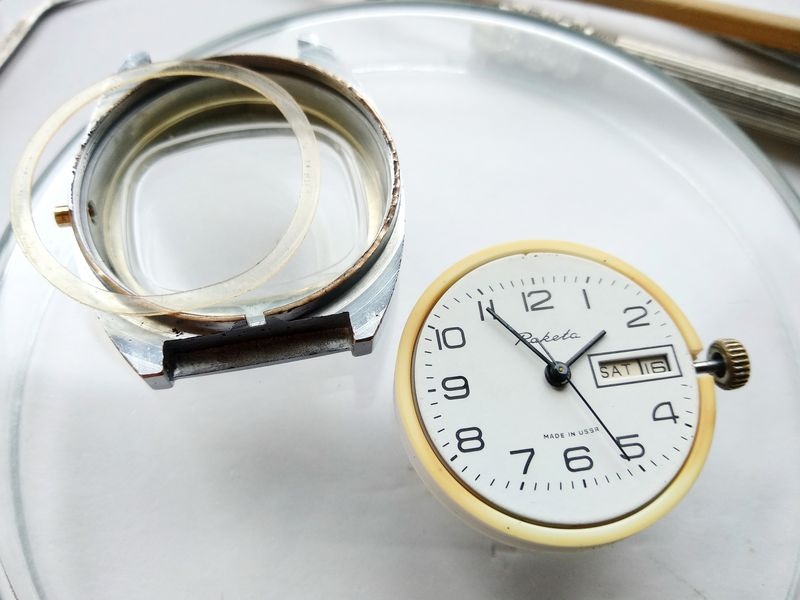
The movement mounts within a split nylon shock-absorbing ring, a period-appropriate solution for protecting the caliber from mechanical impact. These polymer rings occasionally become brittle with age, crumbling during disassembly, but this example retained adequate elasticity for continued service. The crown showed significant wear, necessitating replacement, but this represented the only component requiring substitution rather than mere cleaning.
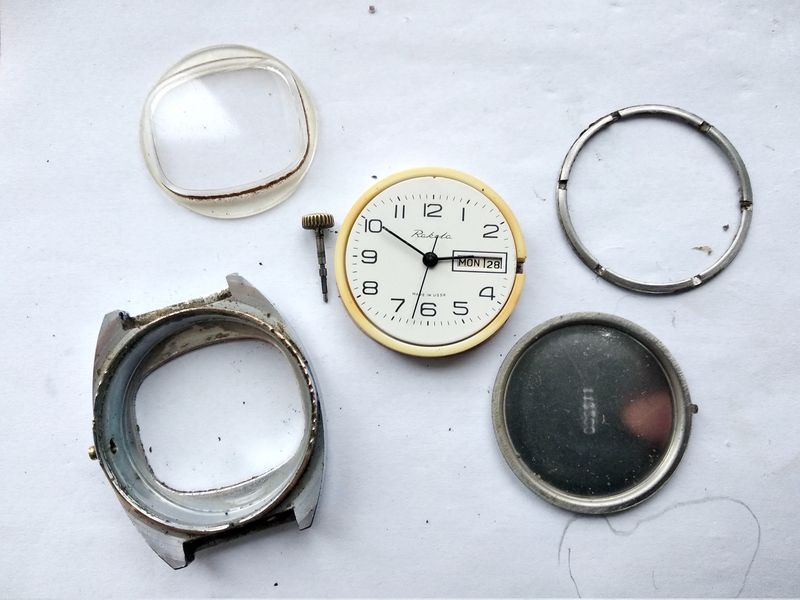
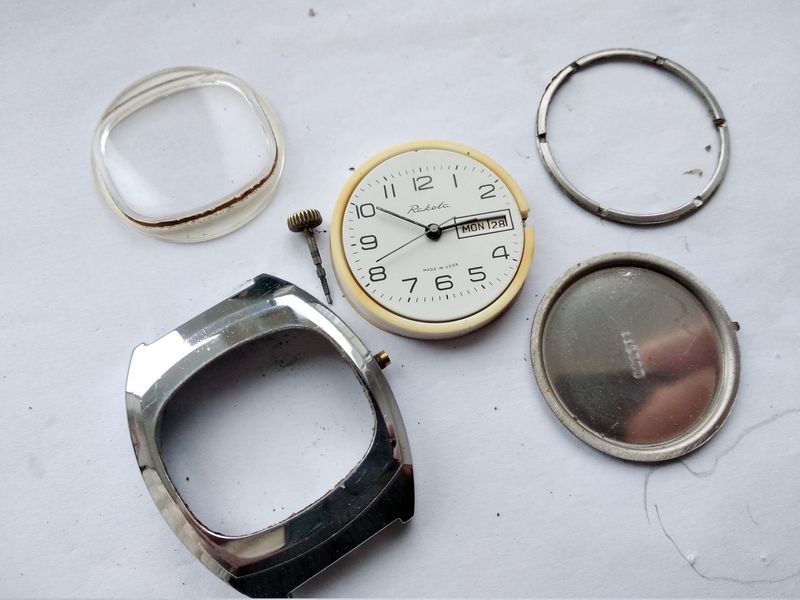
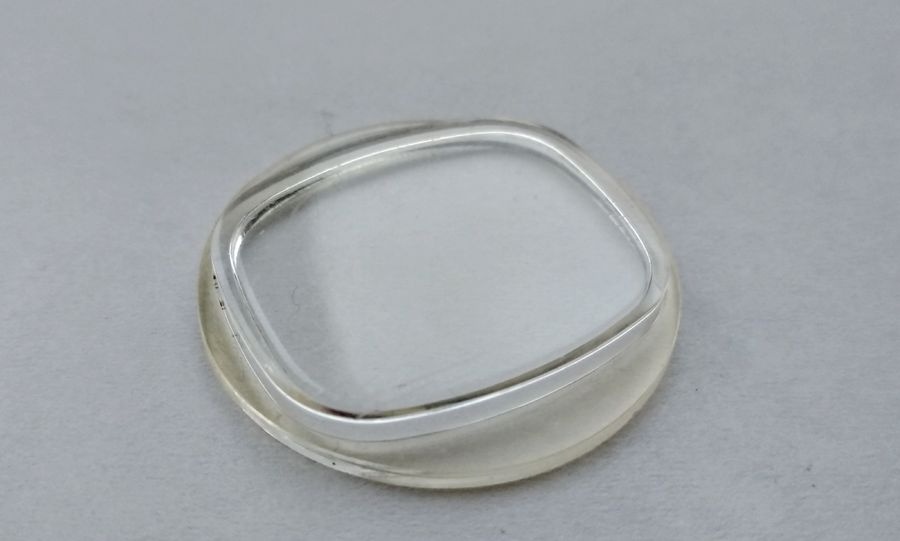
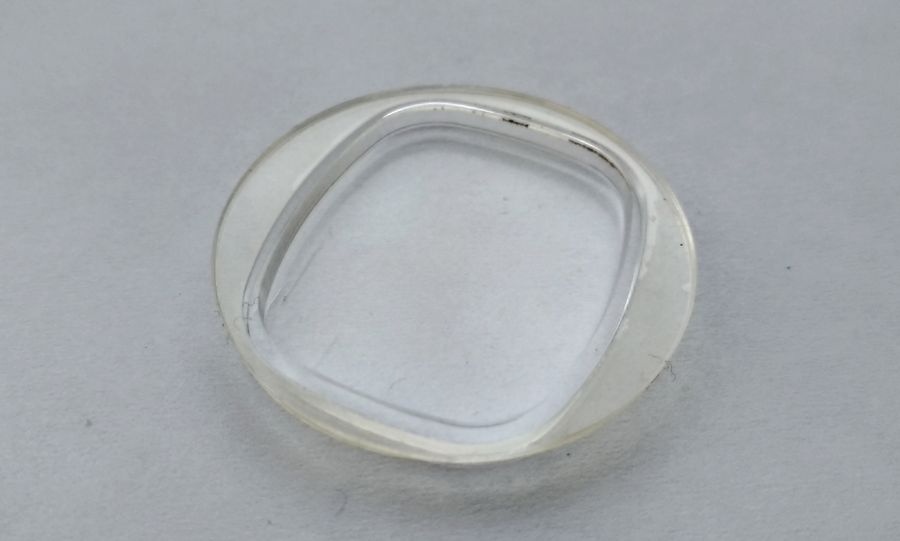
The crystal required careful handling given its distinctive character. One surface carries the watch's branding and graphic elements applied directly to the glass, making this component irreplaceable should damage occur during cleaning.
Movement Examination
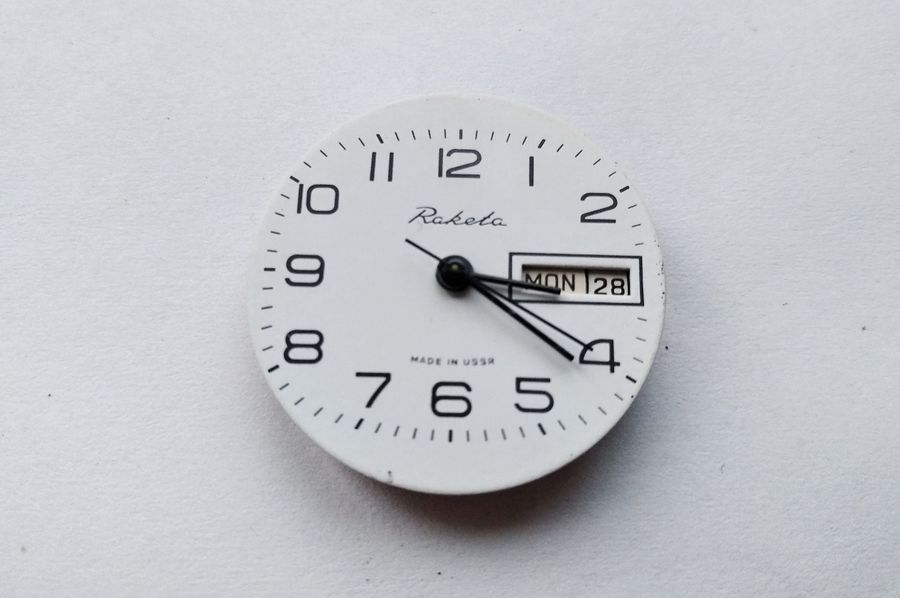
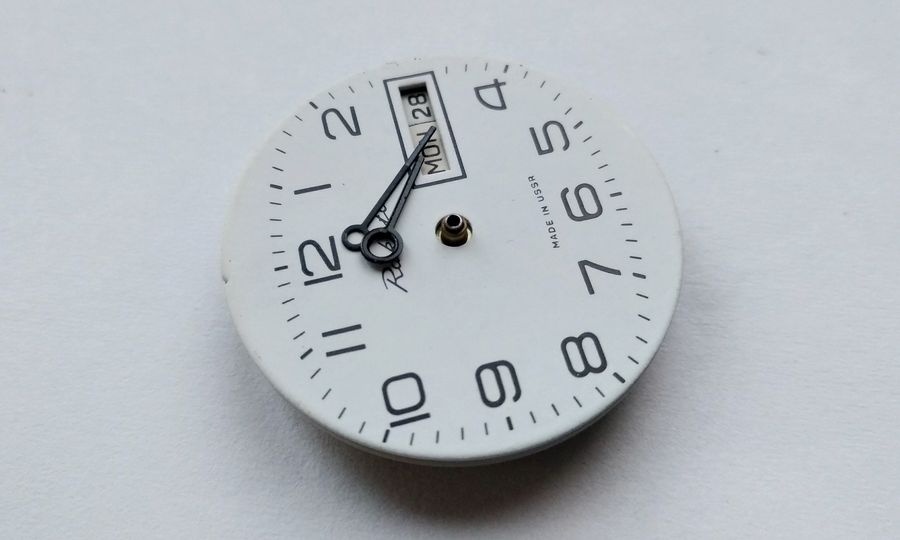
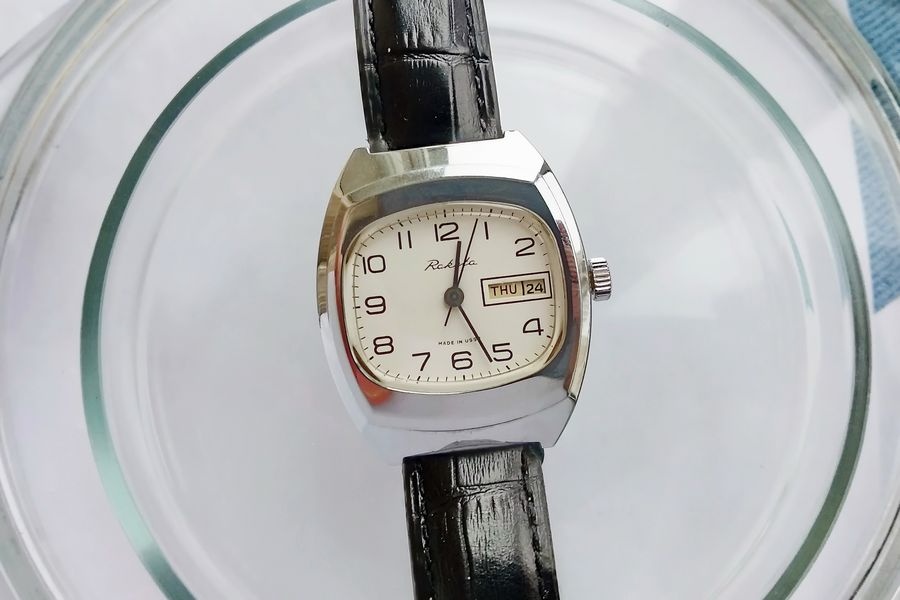
Removing the movement from its protective ring revealed the most encouraging discovery of the project. Despite the case exterior's deplorable condition, the dial remained in exceptional state, its surface unmarked by the contamination surrounding it. This observation confirms the case design's effectiveness: whatever moisture and particulate matter accumulated on external surfaces, the sealing system prevented ingress to the movement chamber.
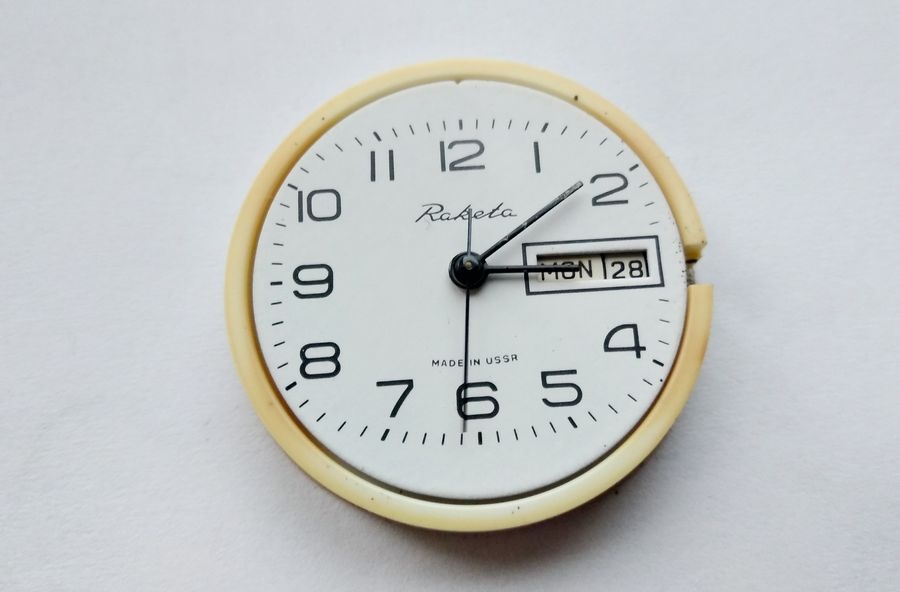
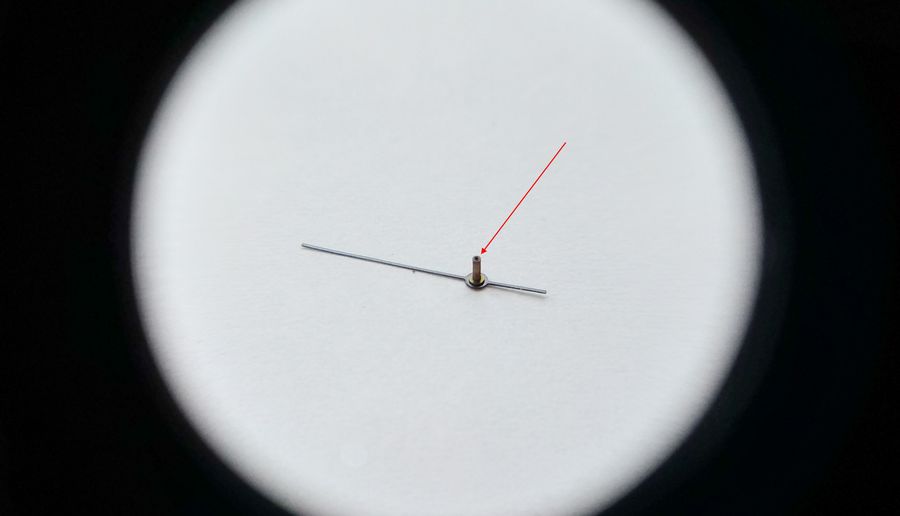
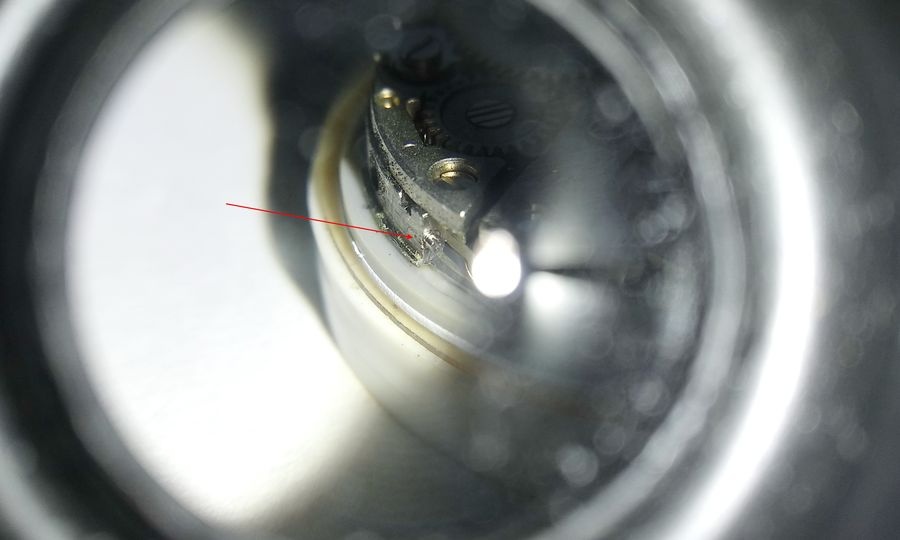
The seconds hand on Raketa calibers 2614 and 2628 presents a particular concern during service. These hands mount on an extended post requiring a specific fitting unavailable from standard parts sources. Losing or damaging this component effectively renders the watch incomplete, as replacements prove extremely difficult to source. Removal therefore proceeds with appropriate caution.
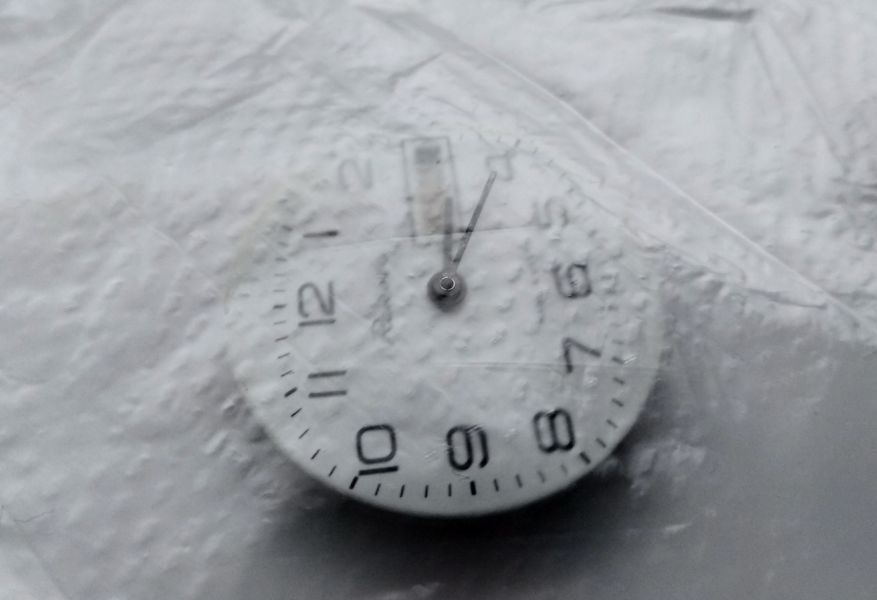
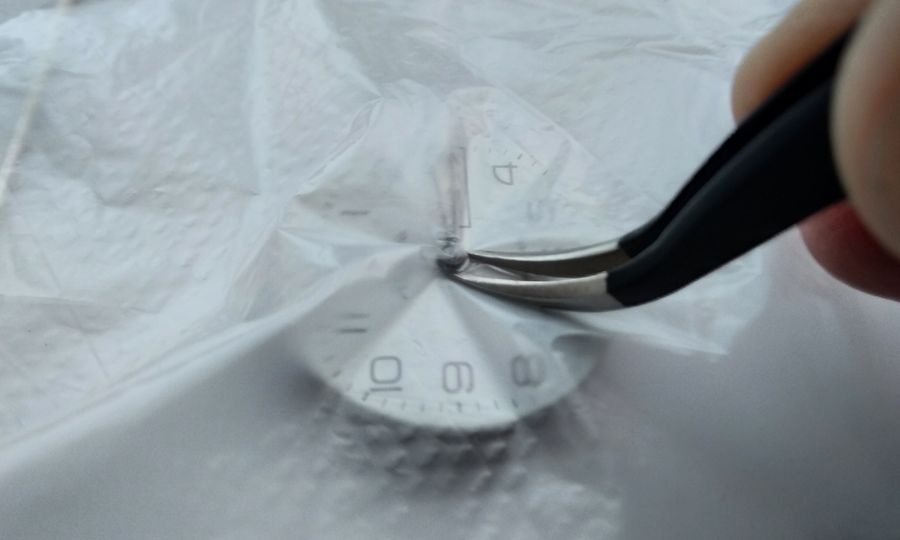
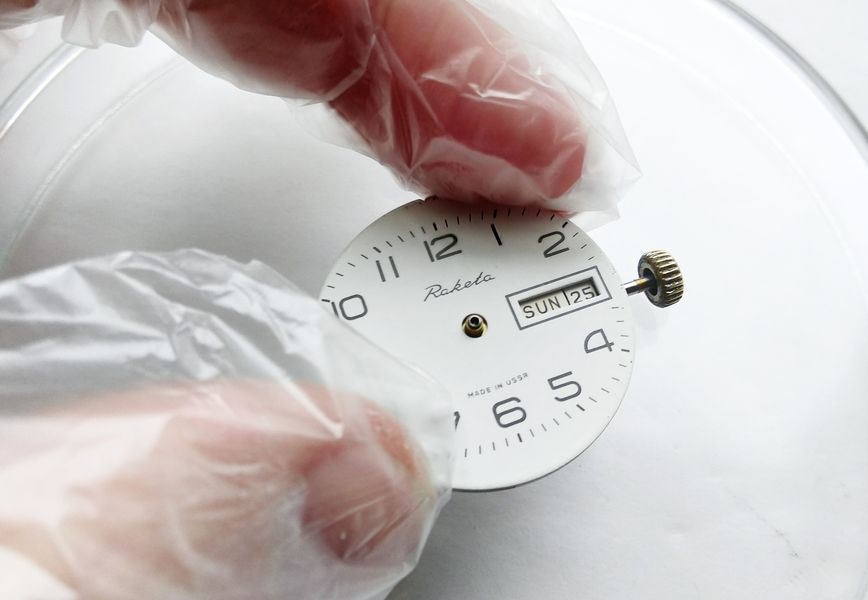
The main hands follow, employing a technique that simultaneously protects the dial and captures the hands against accidental loss. A thin film placed over the dial creates a barrier between the lifting tool and the delicate dial surface while preventing the hands from launching across the workbench when released from their friction fit.
Crystal Restoration
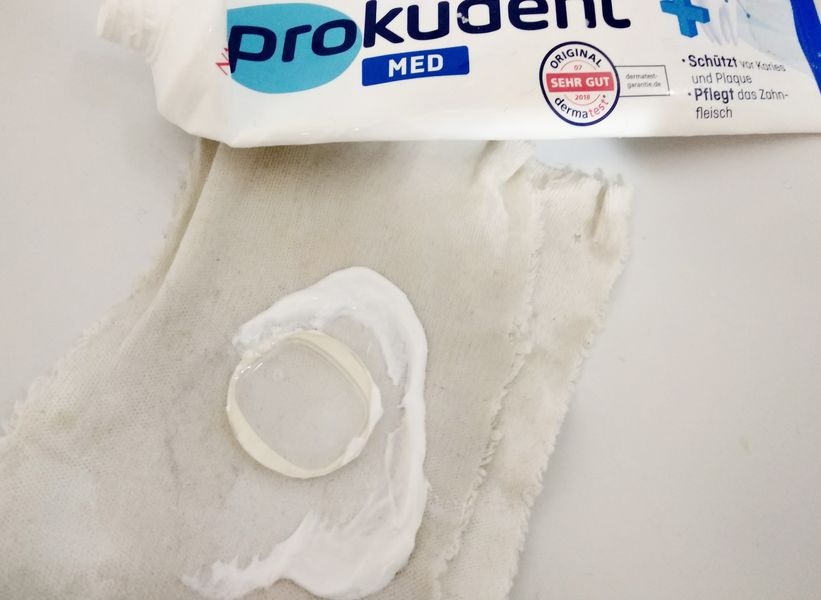
The acrylic crystal presented significant surface wear requiring polishing before reassembly. The technique employed involves a soft cloth dampened with water and common toothpaste, the mild abrasive action gradually removing accumulated scratches through patient repetition. Approximately fifteen hundred to two thousand strokes, representing perhaps fifteen minutes of consistent effort, typically restore optical clarity to acrylic crystals of this type. The process demands patience rather than skill, yielding results that justify the time invested.
The Raketa 2628.H Caliber
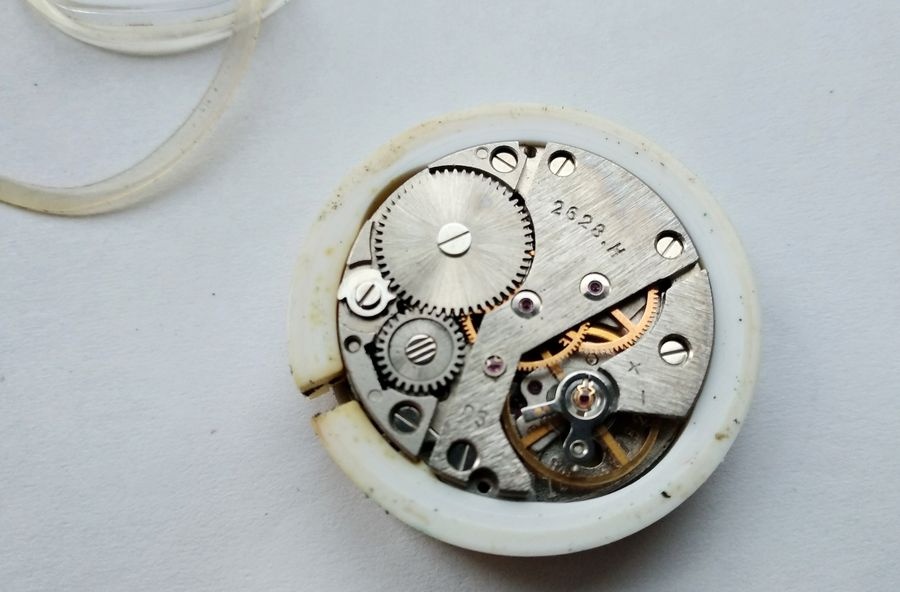
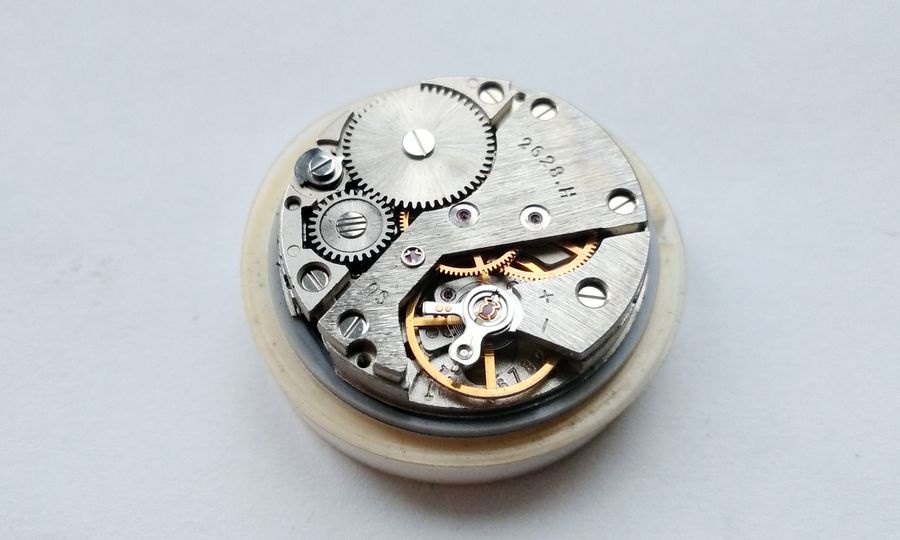
Following overnight soaking and ultrasonic cleaning, the movement components presented in excellent condition for reassembly. The caliber 2628.H represents one of the finest Soviet watch movements, incorporating features that commanded premium positioning in Western markets while remaining accessible domestically. The nineteen-jewel specification indicates comprehensive bearing support throughout the gear train and escapement.
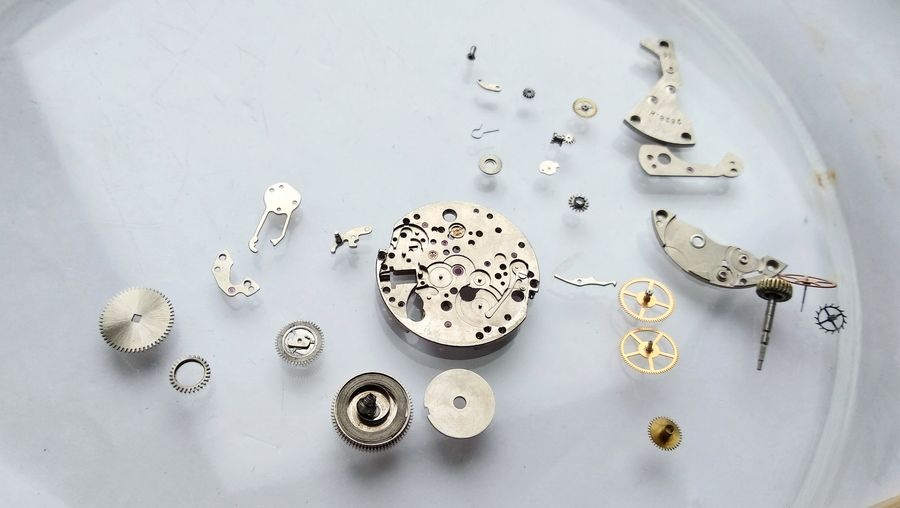
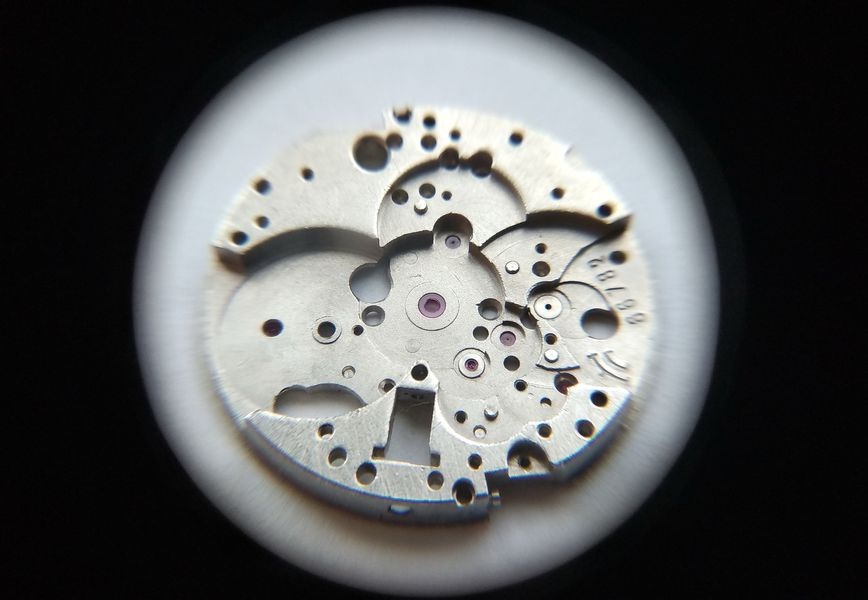
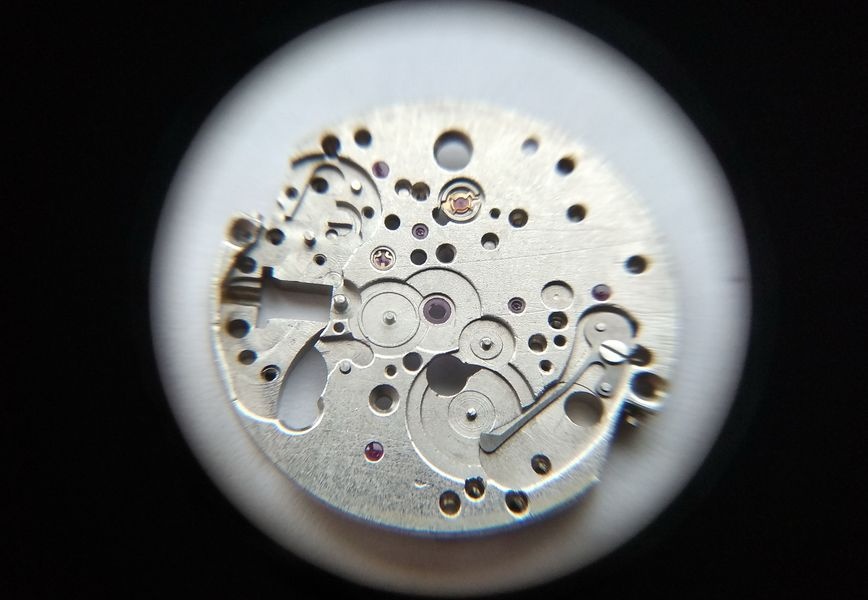
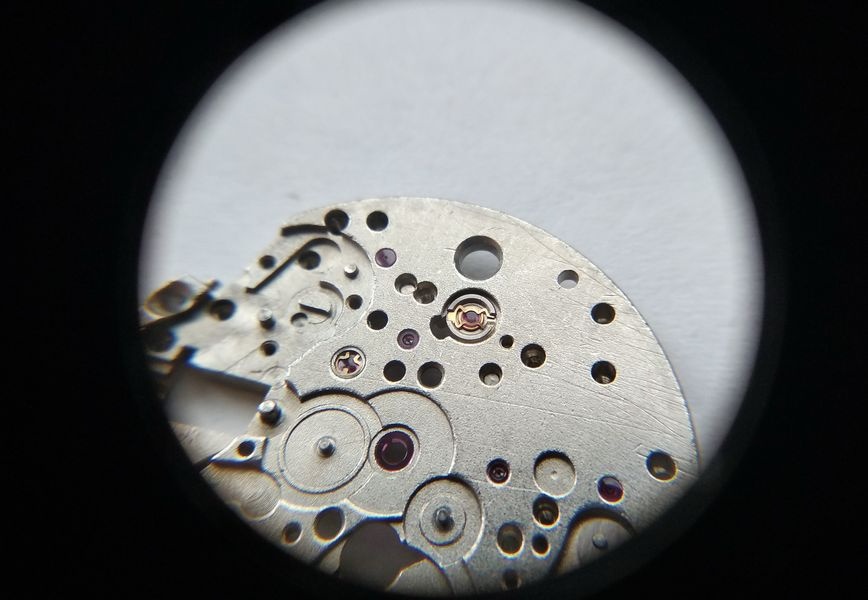
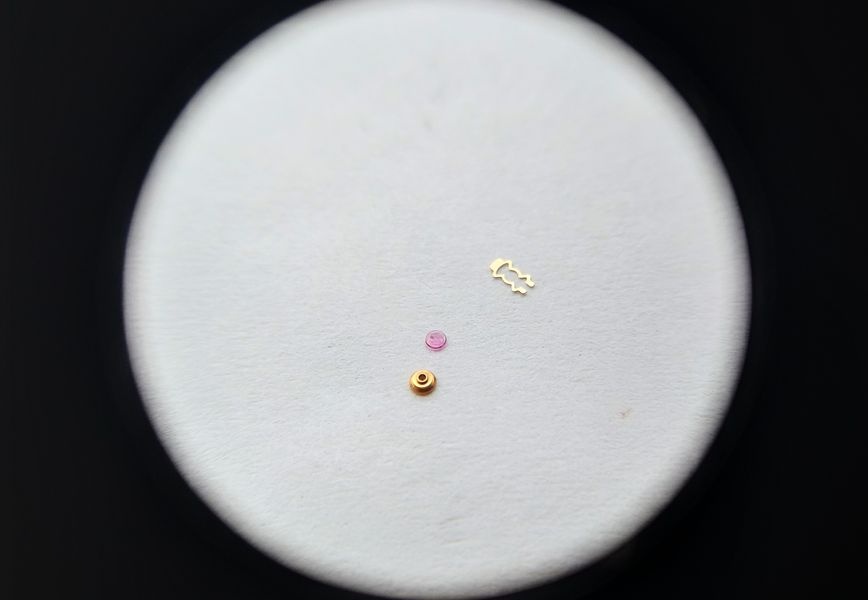
The shock protection system employs lyre-shaped retaining springs securing the balance cap jewels within sprung chatons. This assembly requires careful handling during service, with the components removed for cleaning and lubrication before reinstallation.
Reassembly Procedure
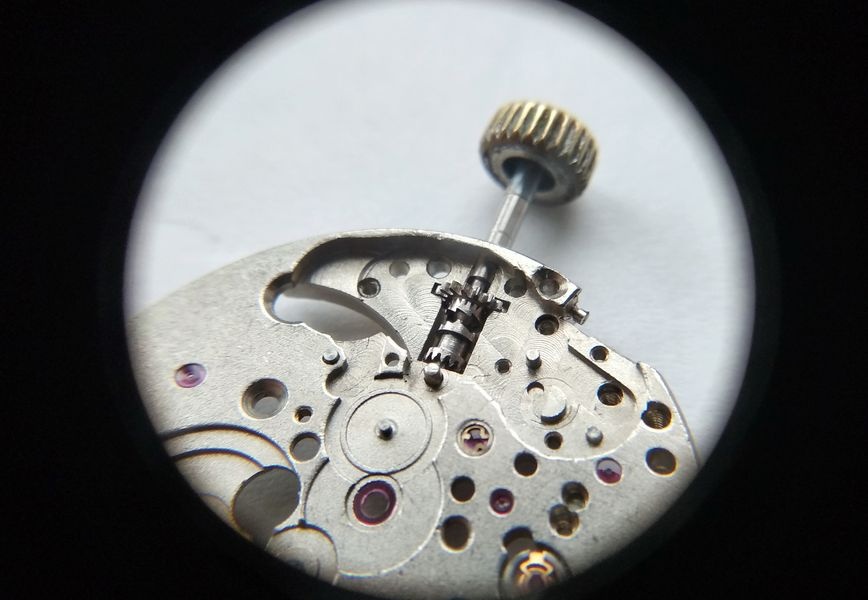
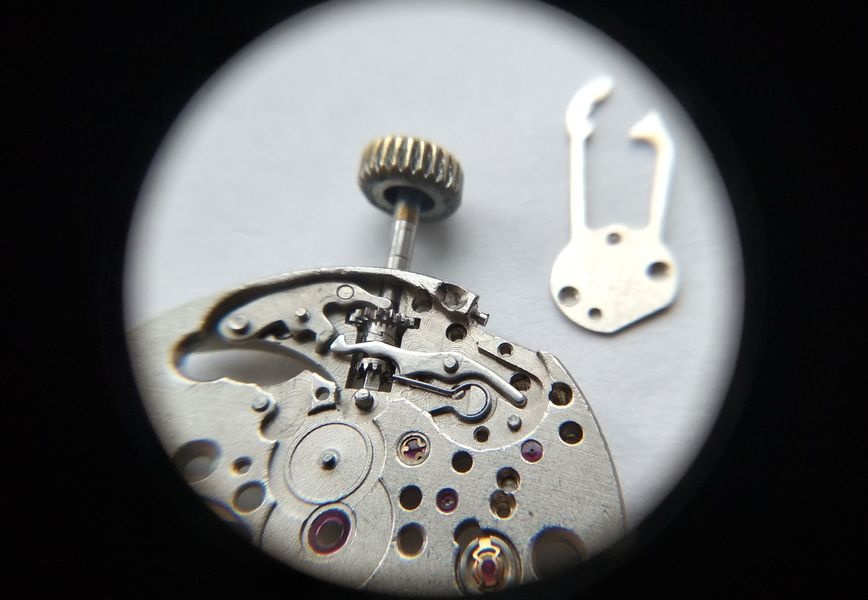
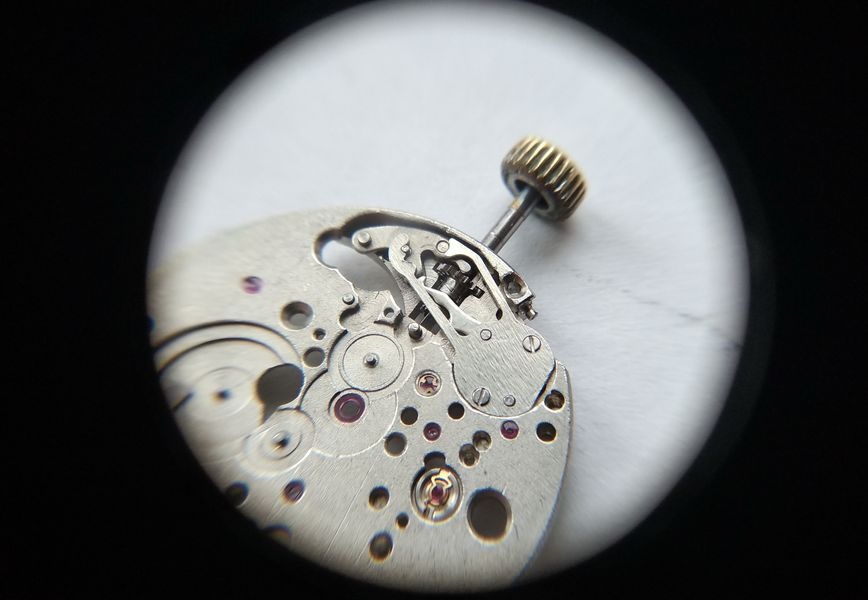
Reassembly begins with the keyless works, establishing winding and setting functions before other systems are installed. The clutch assembly and winding pinion mount first, followed by the setting levers and their associated spring.
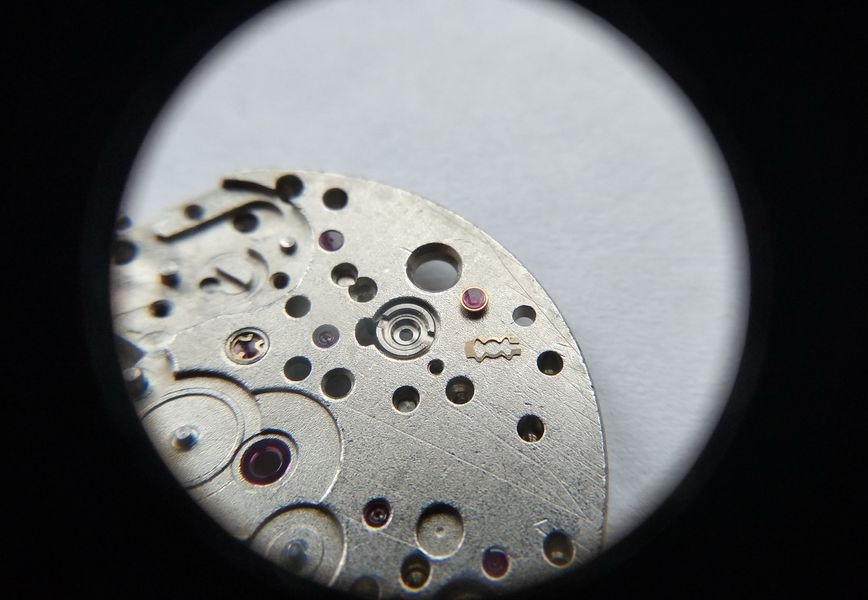
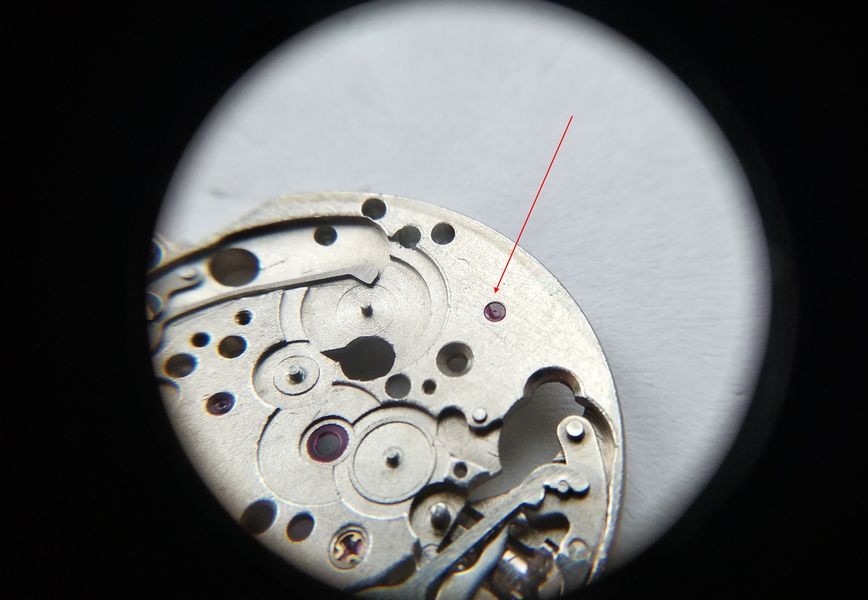
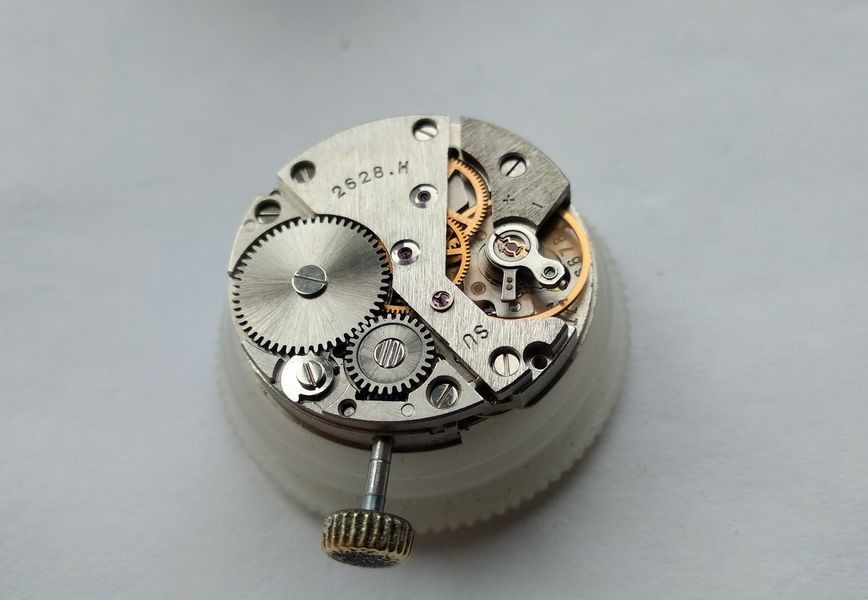
An interesting detail appears at this stage: one of three jewels visible in the plate serves as a bearing for the day-of-week disk rather than a functional movement bearing. The caliber actually contains twenty-two jewels total, but three qualify as non-functional under international standards because they support only the calendar disk rather than contributing to timekeeping accuracy. Official specifications therefore list nineteen jewels, though the additional three are physically present and clearly visible.
The gear train follows standard Soviet practice, with the center wheel receiving attention first. All jeweled bearings receive Moebius 8000 synthetic oil, while the mainspring and keyless works components use the heavier B-1 grease formulation appropriate for their higher-load applications.
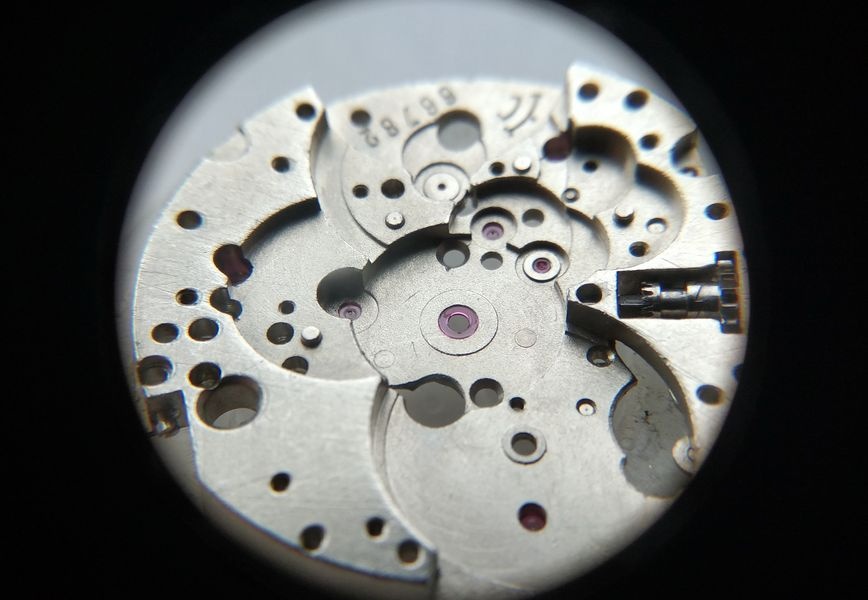
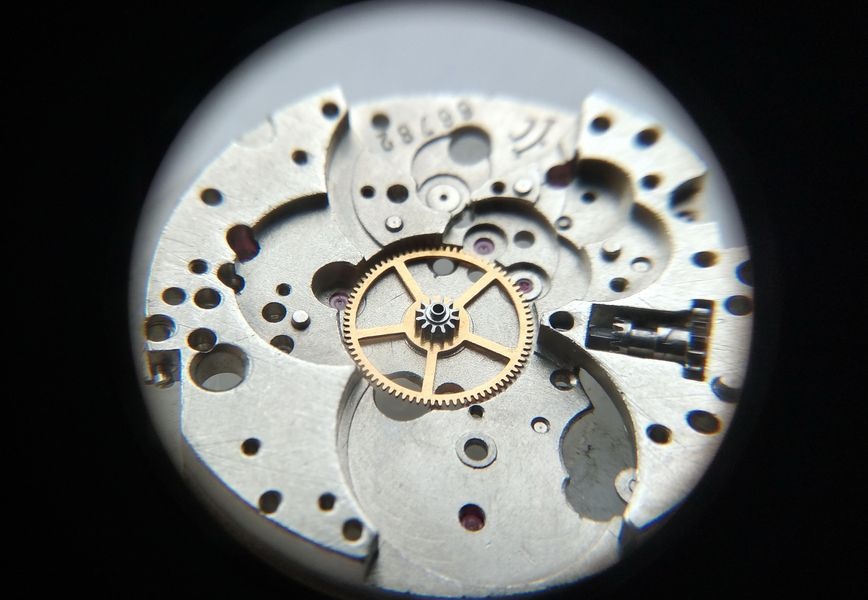
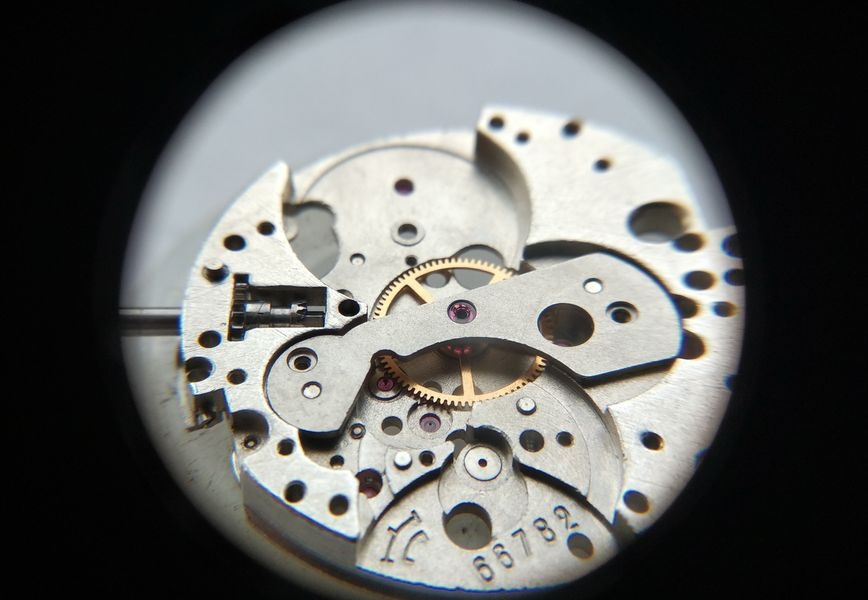
The mainspring barrel presents a notable detail. While the barrel arbor runs in a hardened metal insert on the bridge side, the plate-side bearing employs a brass bushing rather than a jewel. This represents a cost-reduction measure common in Soviet calibers of this grade, though the substantial construction of the plate hole minimizes the practical impact on service life.
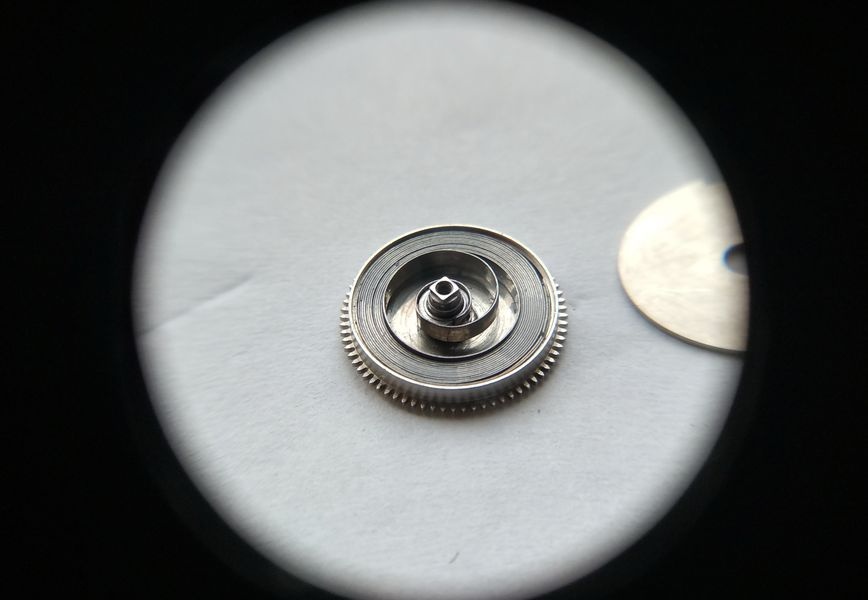
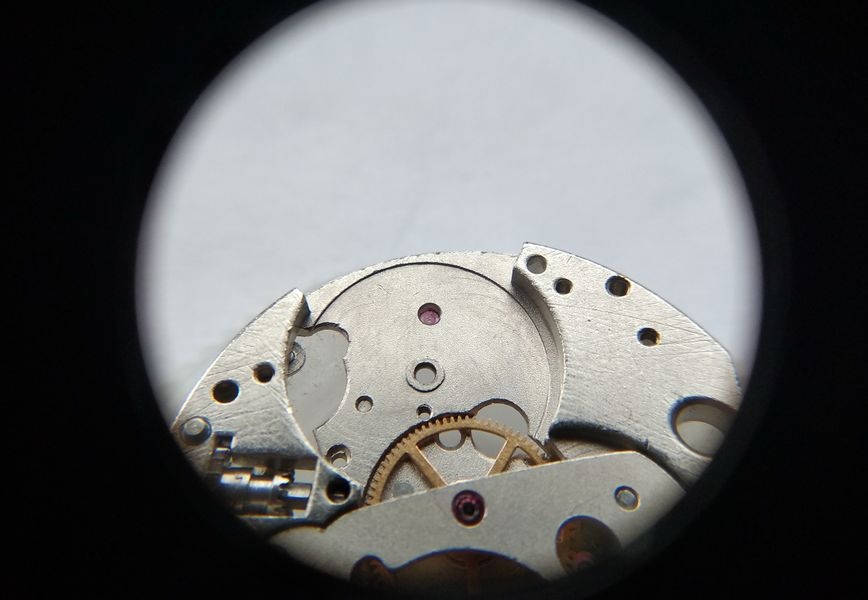
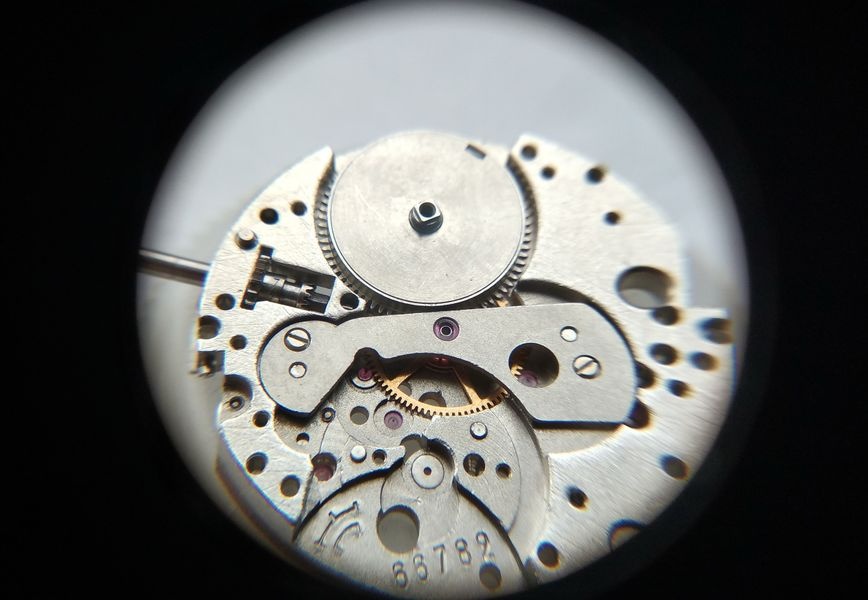
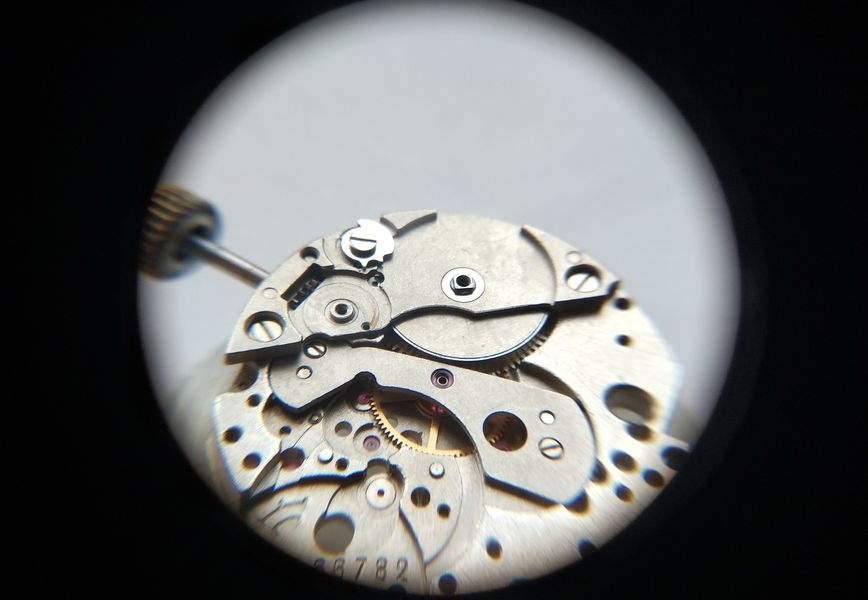
The remaining train wheels install in sequence, followed by the train bridge, pallet fork assembly, and finally the balance wheel. Each assembly step concludes with verification of free rotation before proceeding to the next.
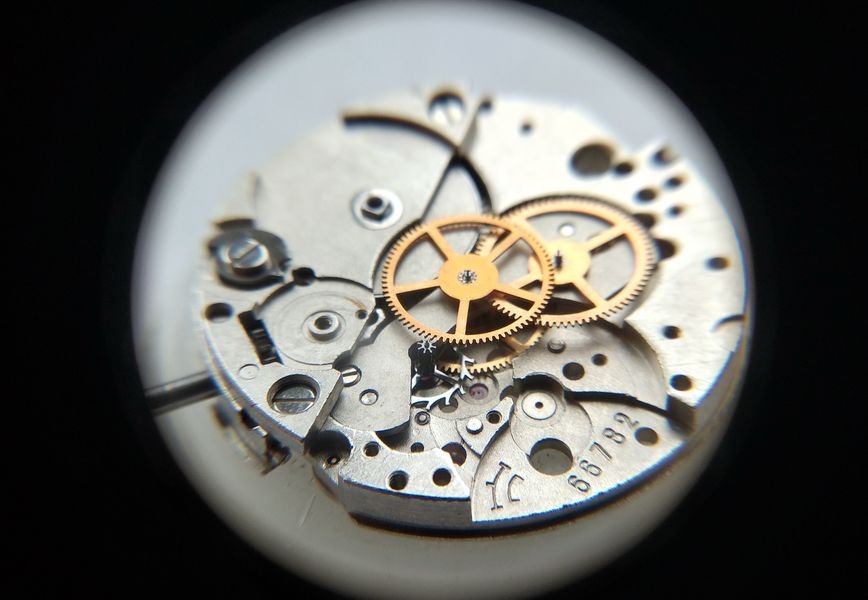
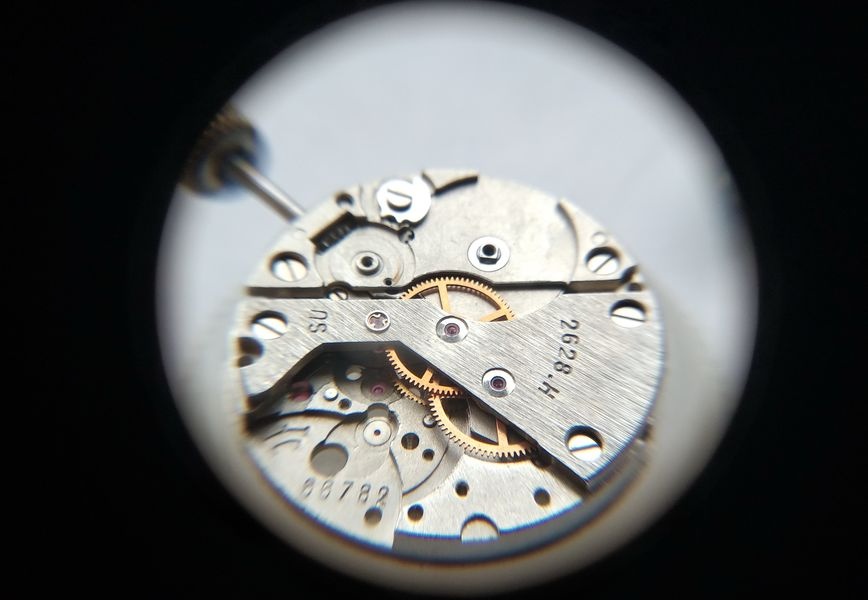
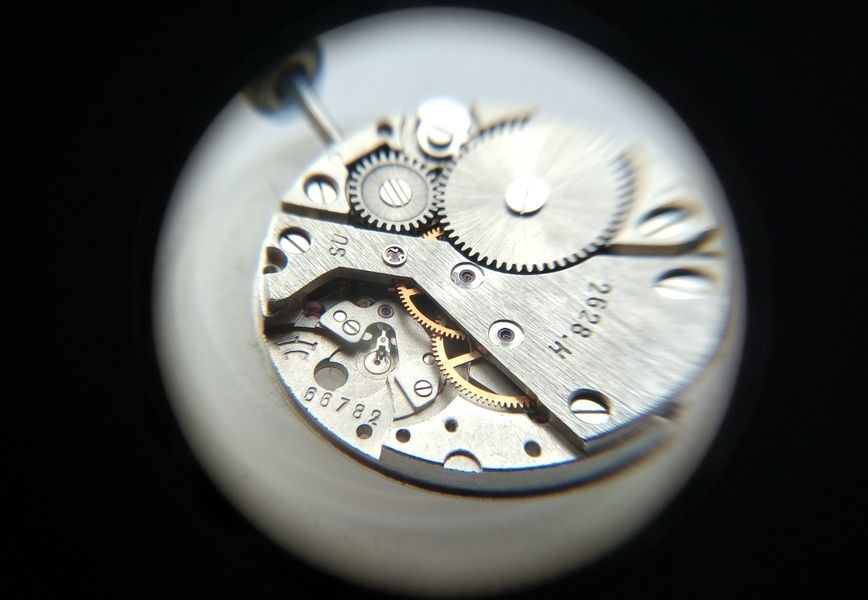
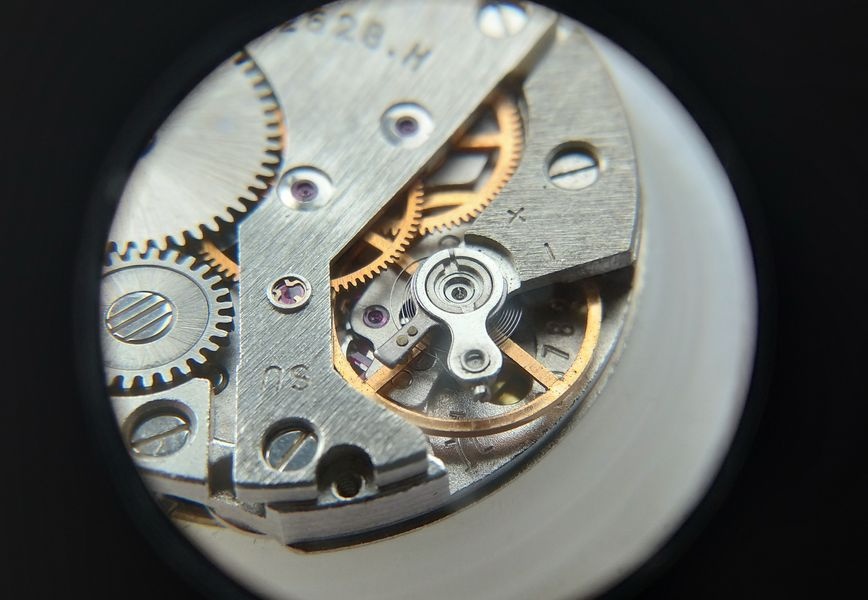
Calendar Assembly
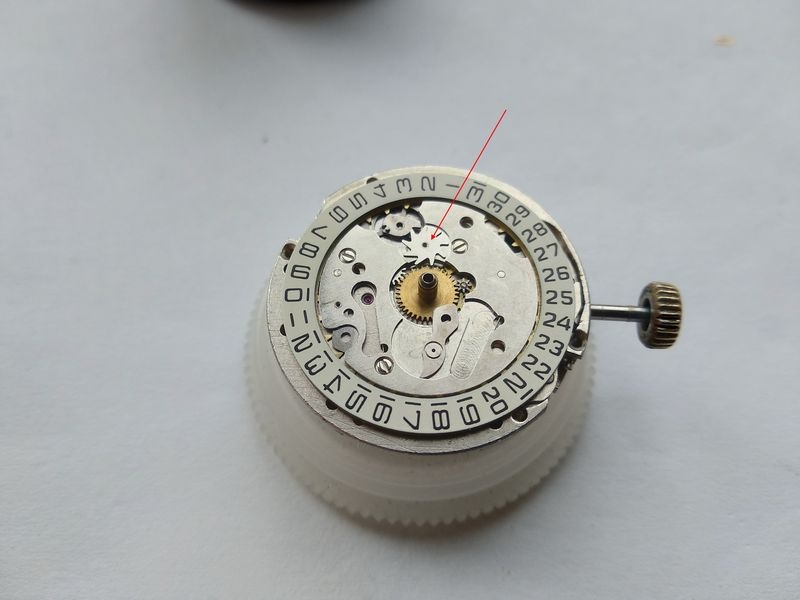
The calendar mechanism distinguishes this caliber from simpler date-only movements. A nine-pointed star wheel controls the day-of-week indication, its precise geometry ensuring clean single-step advancement with each daily cycle. This component demands careful handling, as any deformation of the star points compromises the mechanism's reliable function.
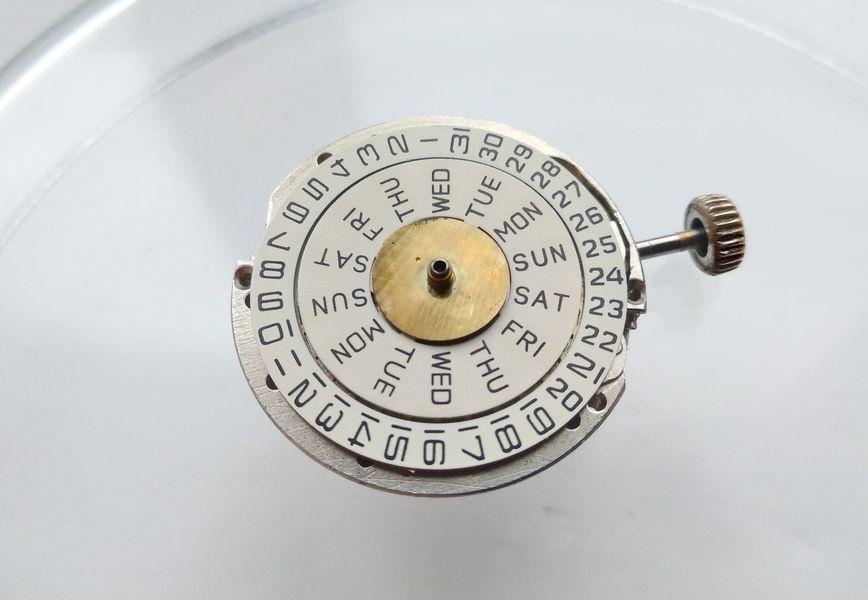
The dial returns following gentle cleaning with diluted shampoo and a soft brush, a treatment it tolerated without damage to its printed surfaces. Brief solvent contact also proved harmless, removing the slight yellowing that had developed during decades of storage. Hand installation concludes the movement work, with careful attention to synchronizing the hands with the calendar change position.
Case Restoration and Final Assembly
The case components, having soaked overnight in used solvent, emerged free of their accumulated grime. Light polishing with appropriate chrome-cleaning compounds restored surface luster without breaking through to the brass substrate beneath. The goal in such work is cosmetic improvement rather than aggressive material removal, preserving the remaining plating while eliminating surface oxidation and contamination.
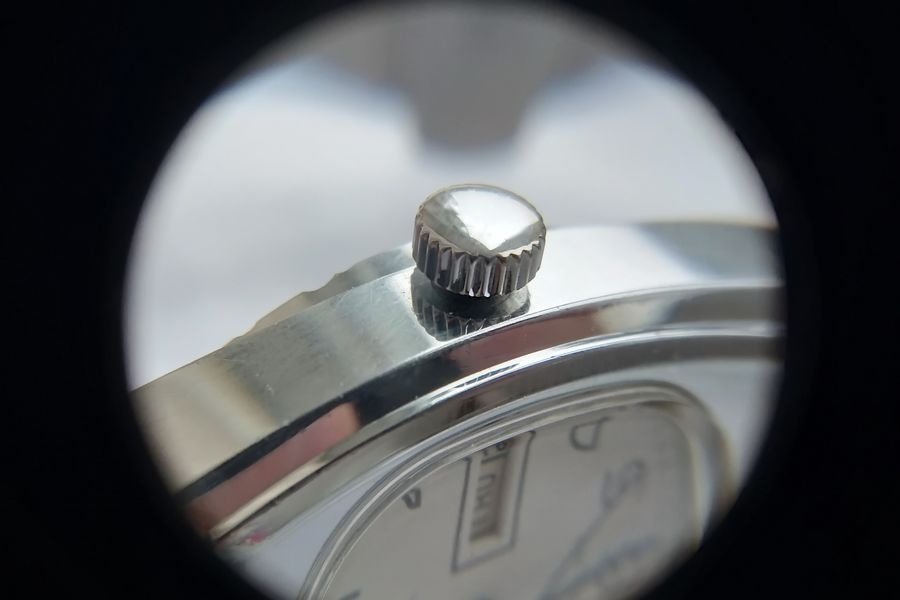
A replacement crown completed the external restoration, the original having worn beyond acceptable appearance. The new component harmonizes with the case finish while providing the positive engagement necessary for reliable winding and setting.
Results
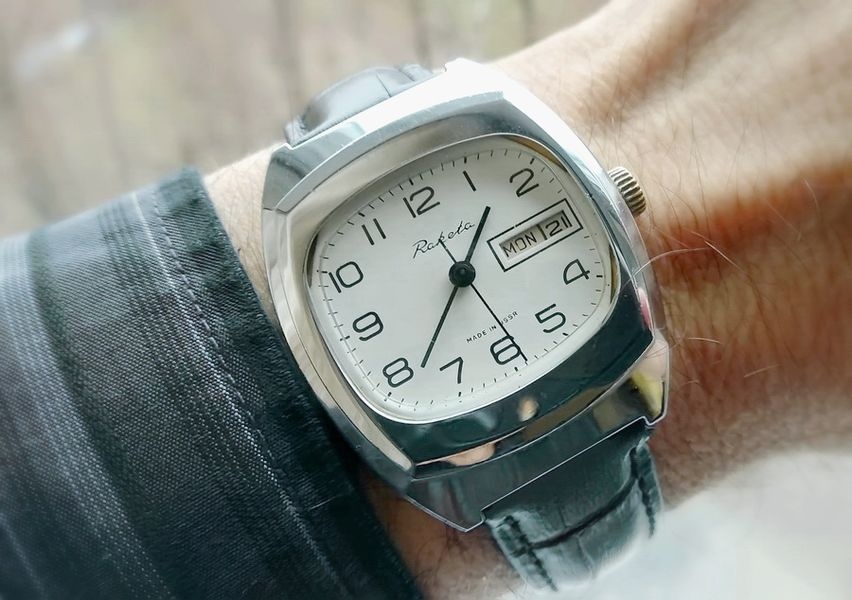
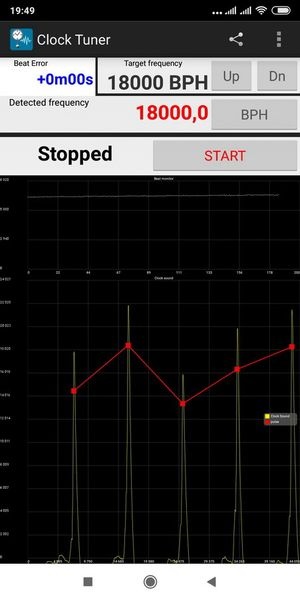
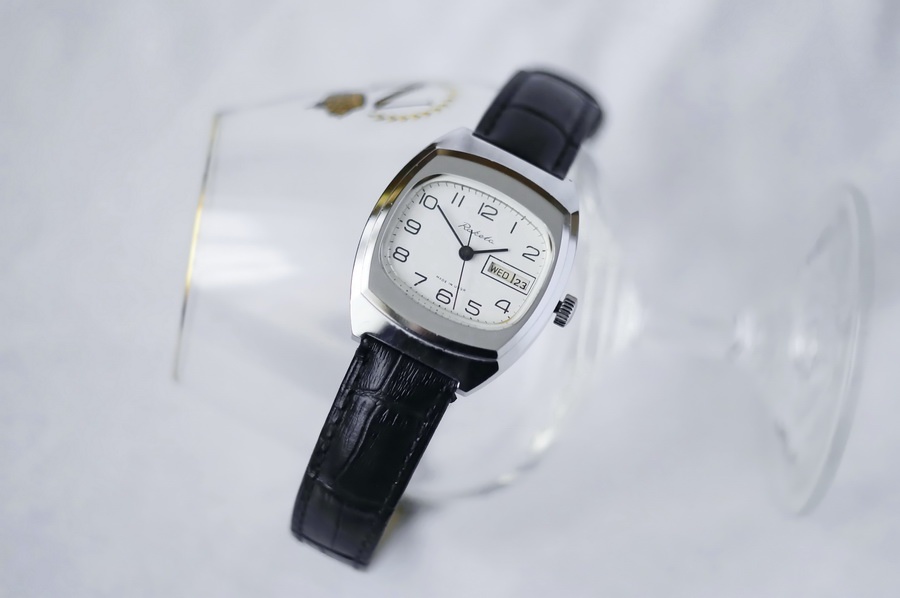
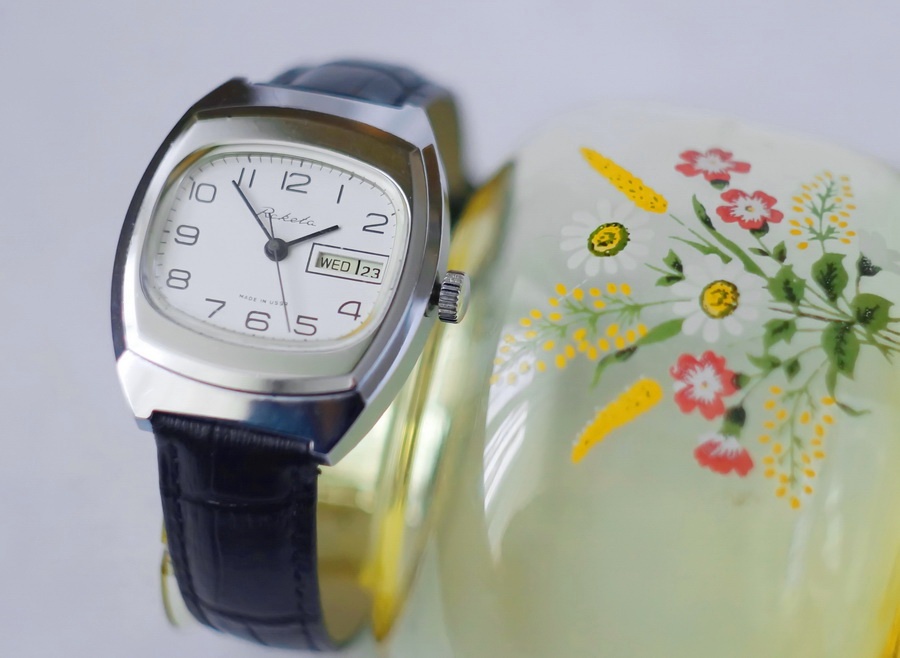
The completed restoration transformed an apparently hopeless specimen into a fully functional timepiece worthy of regular wear. Timing machine verification confirmed excellent performance, with the movement running well within acceptable parameters for a caliber of this specification.
Technical Notes
The Raketa caliber 2628.H merits recognition among the more accomplished Soviet movement designs. The full calendar with instantaneous advancement of both day and date indicators required sophisticated engineering to achieve reliable function. The nineteen functional jewels, supplemented by three non-functional calendar disk bearings, indicate comprehensive attention to friction reduction throughout the mechanism.
The case construction, while not claiming water resistance in any meaningful sense, provides excellent dust protection through its threaded back and gasket arrangement combined with the unusual crystal mounting system. The nylon shock ring offers additional protection appropriate for a watch intended for daily wear rather than specialized applications.
Restoration work on heavily soiled specimens requires patience during the cleaning phase but frequently rewards that patience with movements in better condition than external appearances suggested. The case protects its contents; accumulated external contamination often indicates effective sealing rather than internal degradation. This project exemplified that pattern, with the deplorable external condition concealing a dial and movement requiring only routine service rather than major intervention.
The replacement of worn components, in this case limited to the crown, represents standard practice when original parts have degraded beyond functional acceptability. Maintaining period-appropriate appearance while ensuring reliable operation requires balancing preservation instincts against practical necessity. A watch exists to tell time; non-functional originality serves no useful purpose.
Comments
Write a comment