

The Slava Caliber 2428: Unfading Glory with Full Calendar Indication - A Complete Service Guide
"Among Soviet horological achievements, the Slava 2428 stands as testament to engineering ambition — where complexity serves purpose and dual mainsprings power a calendar of remarkable sophistication..."
- From a watchmaker's journal
The Slava watch factory produced many remarkable calibers throughout its distinguished history, but few capture the imagination of collectors quite like the 2428. While enthusiasts often gravitate toward simpler Soviet movements for their accessibility and ease of service, today we venture into more ambitious territory — a movement that represents the pinnacle of Soviet calendar watch engineering. The 2428 features dual mainsprings, instantaneous date change, full day-and-date indication, and a sophisticated manual date correction system that was genuinely ahead of its time.
I find watches with calendars indispensable in daily life — dates simply refuse to stay fixed in my memory. And what better place to check the date than on your wrist? But beyond mere convenience, I prefer a dial large enough to read without reaching for spectacles, and calendar displays with numerals bold enough to see at a glance. One might assume such requirements demand specialized or oversized timepieces, yet the Slava 2428 delivers all this in a conventional wristwatch format. This comprehensive guide serves both as an introduction to this fascinating movement's technical architecture and as a detailed service manual for fellow horologists. Let us embark on this exploration of Soviet mechanical excellence!
Like any mechanical watch, the Slava 2428 requires periodic maintenance for reliable long-term operation. Today we'll perform a complete service while examining this remarkable mechanism and its ingenious instantaneous calendar system in detail. What makes this caliber particularly noteworthy is its dual-barrel construction — a relatively rare feature in Soviet watchmaking that provides extended power reserve and improved timing stability. But before we dive into the technical work, let me share some essential specifications.
Technical Specifications
The caliber 2428 presents an impressive array of features for a Soviet-era movement:
— Central sweep seconds hand
— Full calendar: day-of-week and date indication
— Instantaneous date change mechanism
— 46-hour power reserve
— 26 jewels
— Factory-rated accuracy: -25/+60 seconds per day
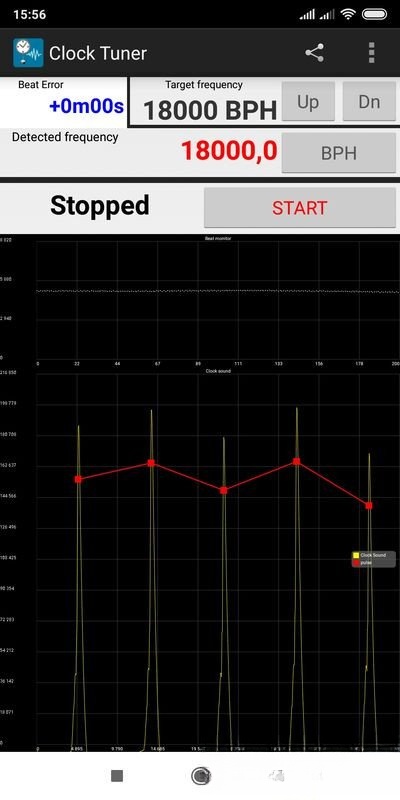
— Balance frequency: 18,000 vibrations per hour (2.5 Hz)
— Manual rapid date correction via pusher
— Dual mainspring barrels
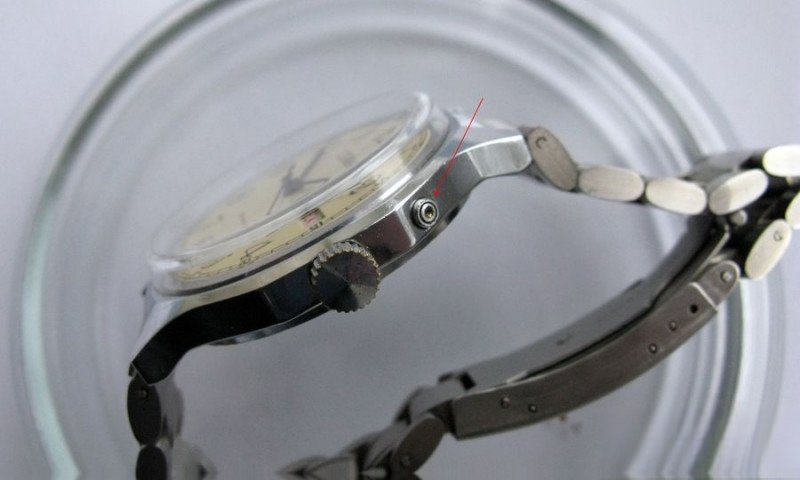
The first thing that catches attention is the date correction pusher — a feature that distinguishes this caliber from simpler calendar movements. The unusual crystal profile also merits notice, providing the depth necessary for the complex calendar mechanism beneath.
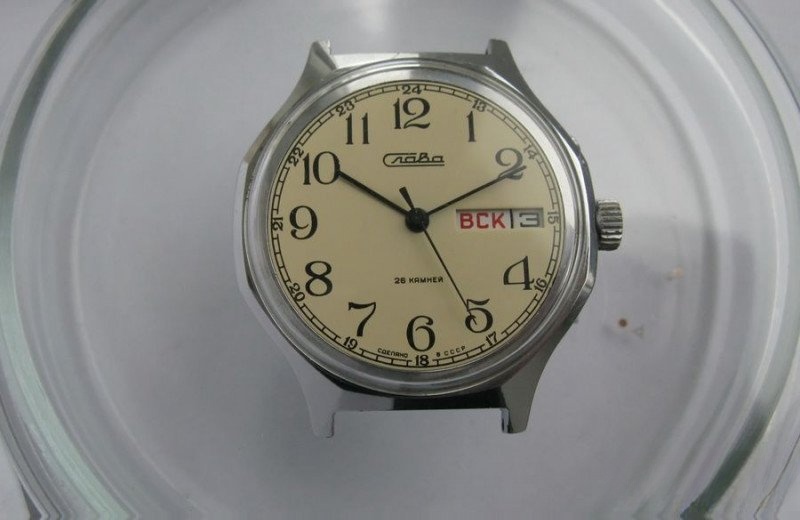
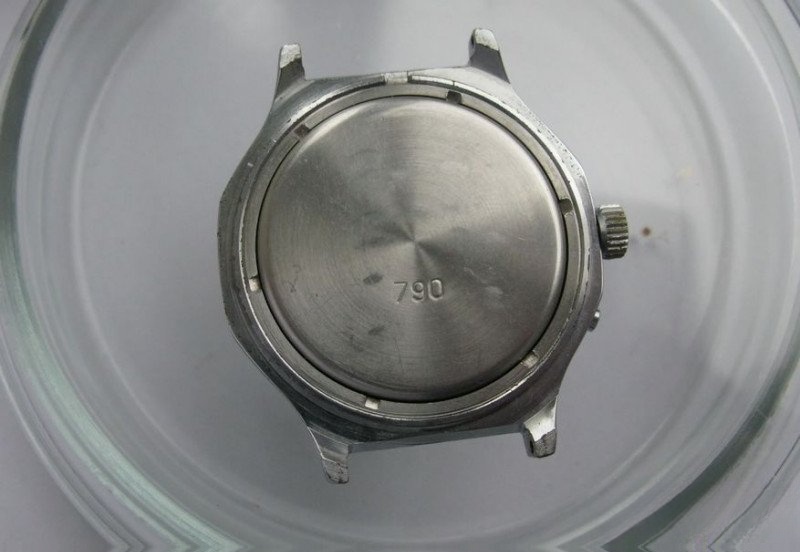
Before proceeding with disassembly, it's worth noting that the 2428 caliber was produced in several variants over its production run. These can be broadly categorized as early and late versions with notable differences in construction. Early calibers featured jeweled supports for the calendar disc, while later production eliminated these supports through "optimization" — a common euphemism for cost reduction. Interestingly, both variants claim the same 26-jewel count. The secret lies in horological convention: only functional jewels directly involved in the movement's operation are counted. Support jewels for calendar components don't qualify under traditional accounting. Some manufacturers, seeking marketing advantage, count all jewels regardless of function — hence movements claiming 36 or more stones. In the early 2428 variant, following this generous accounting method, the jewel count would reach 36.
The Disassembly Process
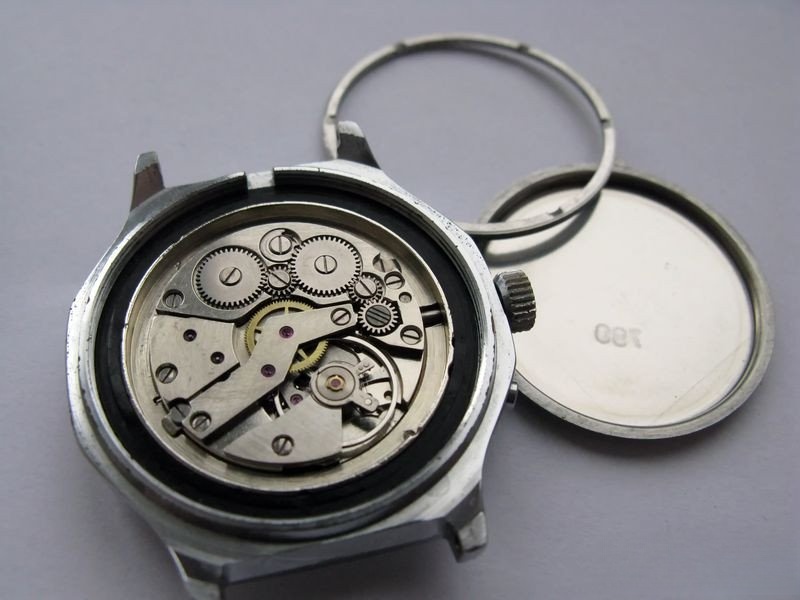
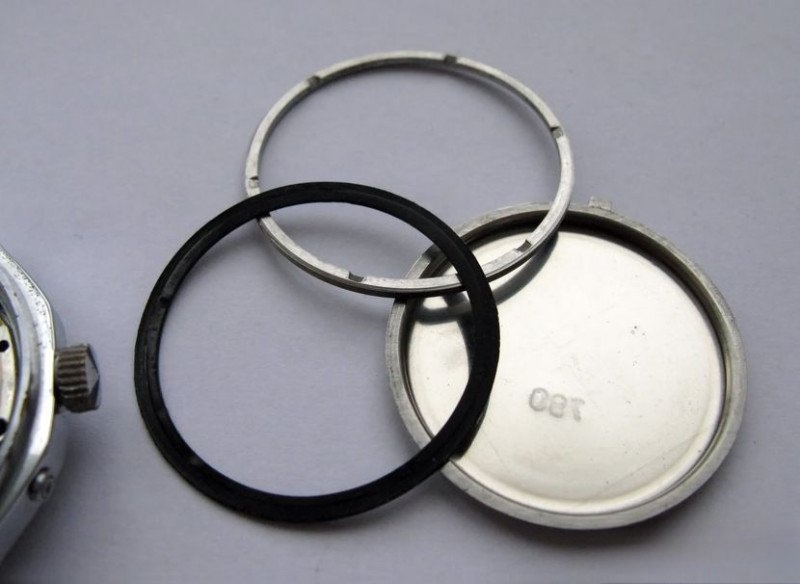
We begin by unscrewing the threaded retaining ring and removing the caseback. The rubber gasket becomes visible — during reassembly, we'll treat this with silicone lubricant to restore its elasticity and sealing properties.

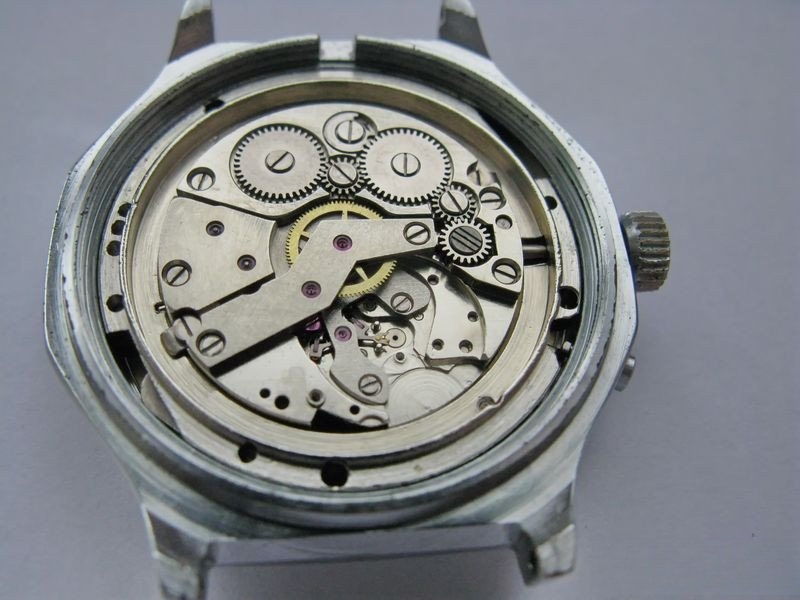
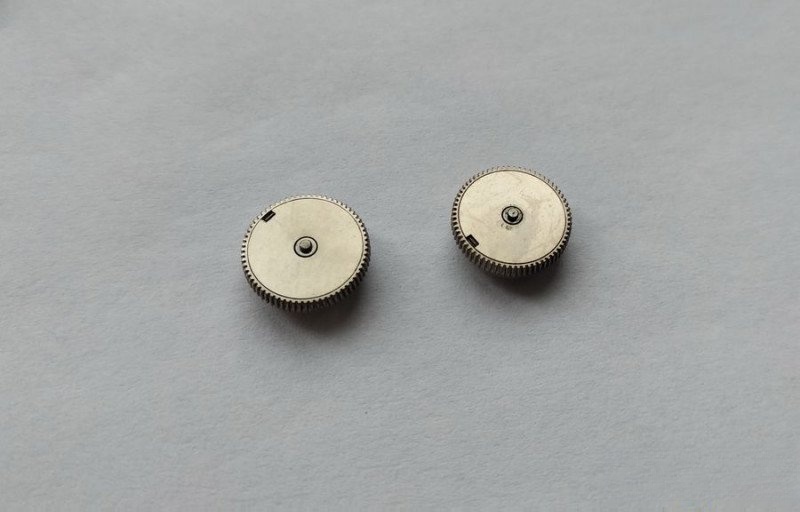
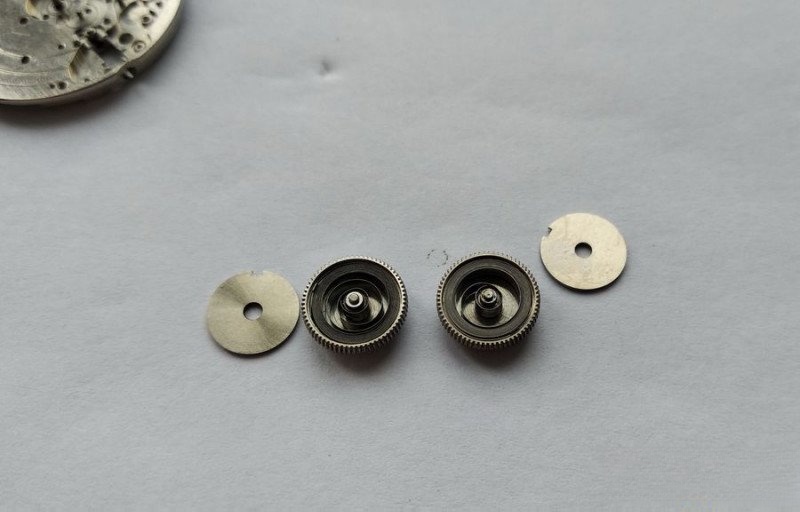
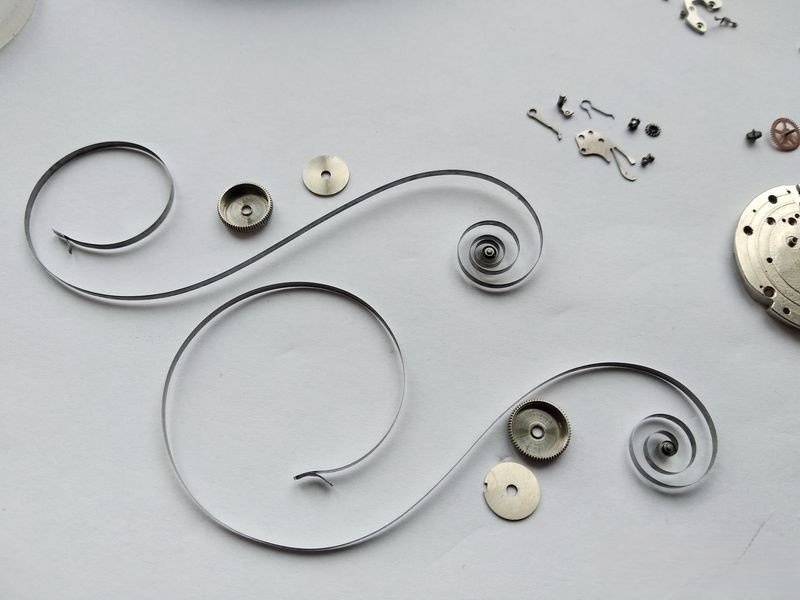
With the case open, the movement's most distinctive feature immediately commands attention: two mainspring barrels with their associated wheel train. Why two barrels? Several compelling reasons drove this design decision. Dividing one large mainspring into two smaller springs allows more compact arrangement of components, enabling denser packing on the main plate. This space efficiency freed room for a larger balance wheel, directly improving timing stability and accuracy. Additionally, the dual-barrel system extends the linear portion of the mainspring's torque curve, further benefiting precision. The practical result is an impressive power reserve of nearly two days from a single winding. Yes, this approach complicated the mechanism significantly, but the engineering benefits justified the complexity. Furthermore, the movement remains functional even if one mainspring fails — a notable reliability advantage.
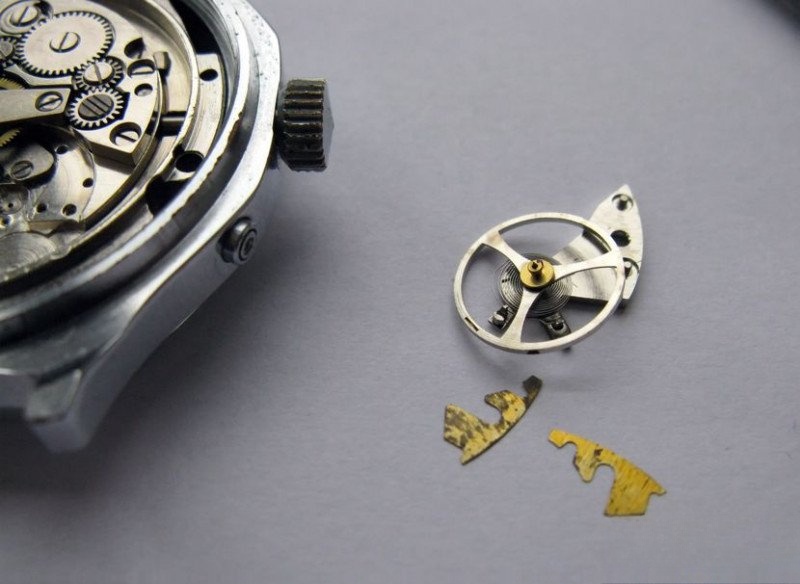
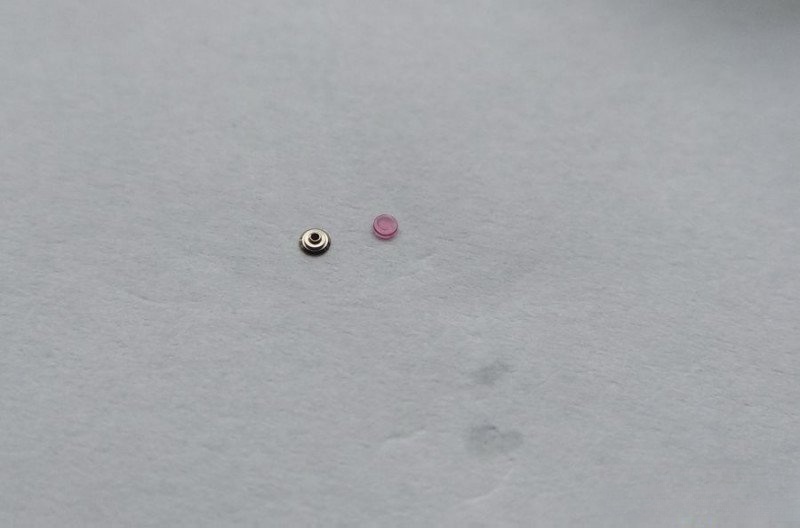
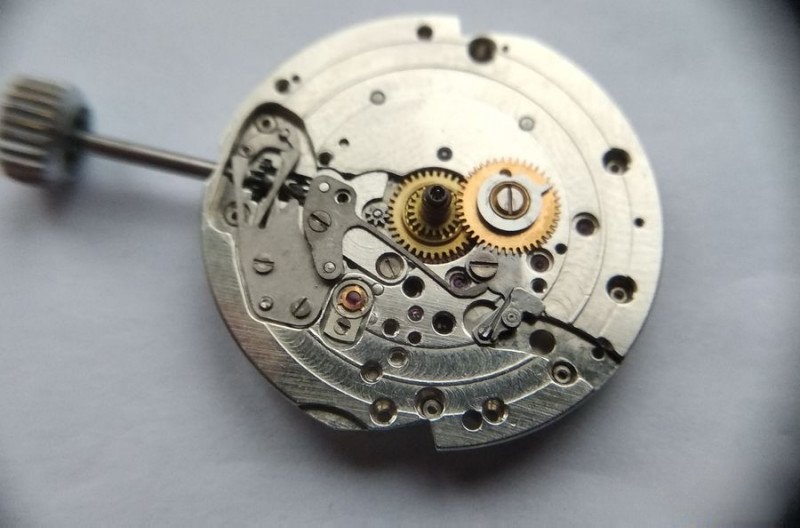
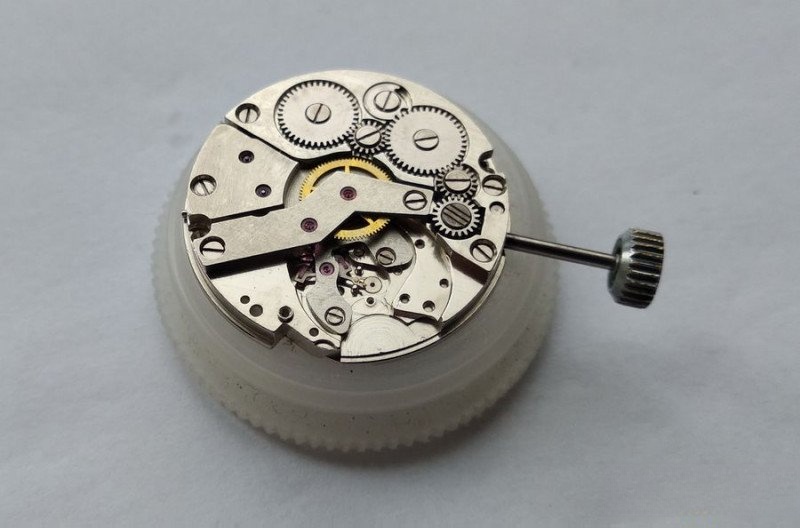
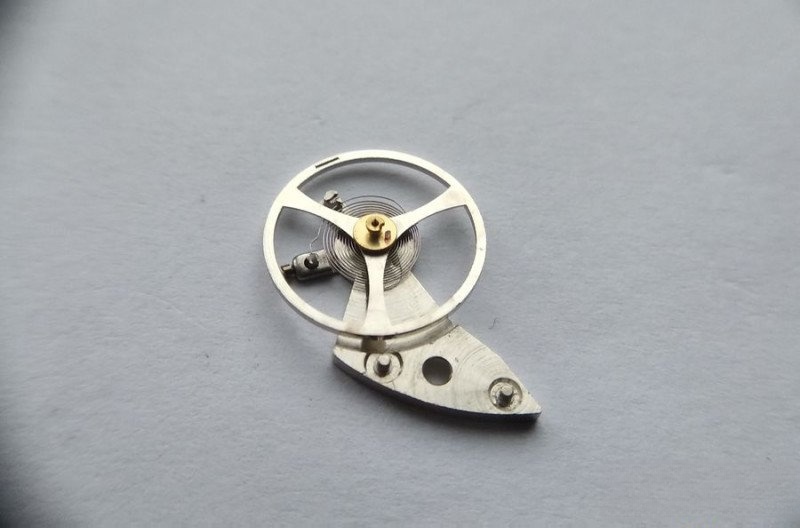
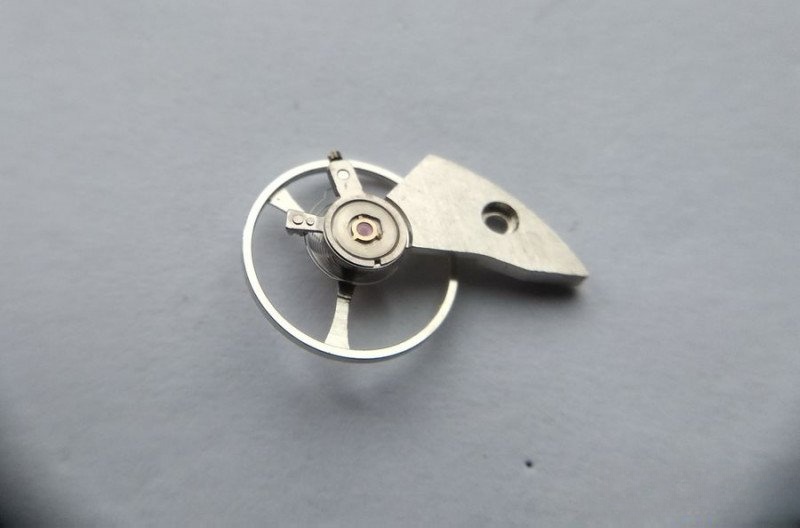
Before proceeding further, we must remove the balance assembly to protect its delicate pivots and hairspring from damage during subsequent work. The balance, along with two calibration shims, goes into a Petri dish covered with a lid. This component demands utmost care throughout the service procedure. We'll examine its interesting features in detail during reassembly.
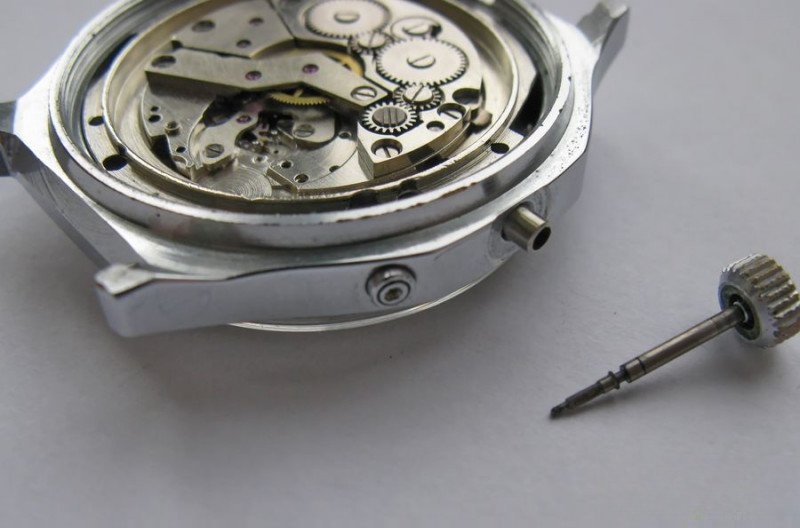
We press the stem release button and withdraw the winding stem from the movement, then simply turn the watch dial-up to allow the caliber to exit the case freely.
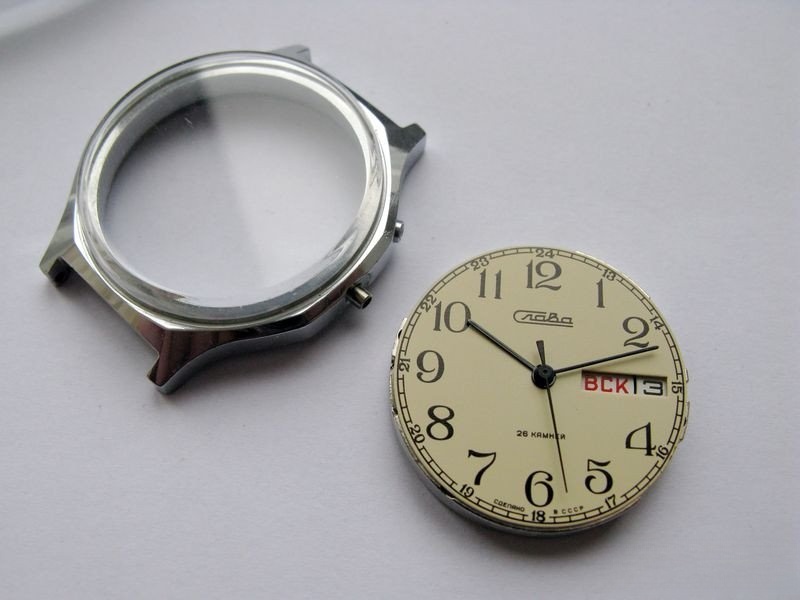
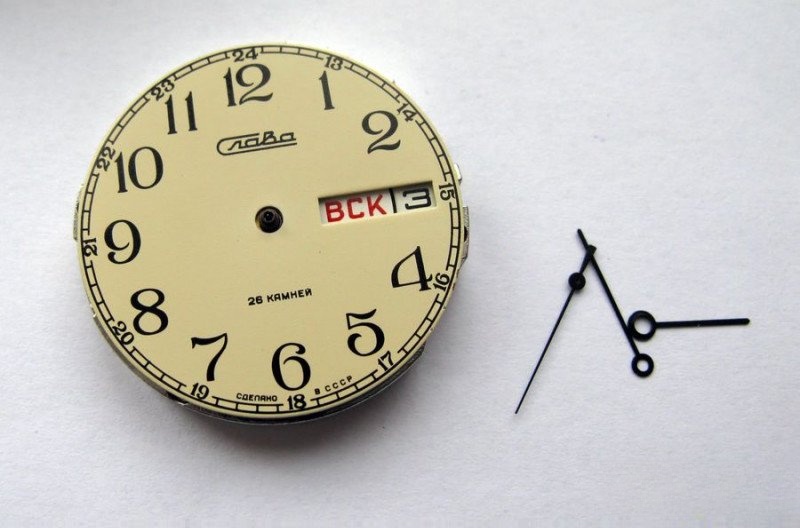
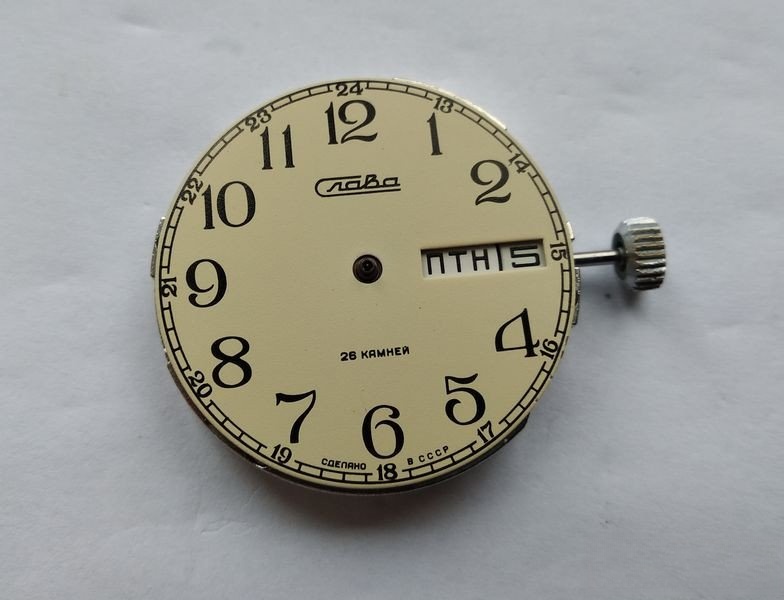
The hands come off carefully using appropriate hand-lifting tools. Proper technique requires protecting the dial surface — place either heavy paper or film beneath your tools to prevent scratching. With the hands safely removed, we turn attention to the dial itself.
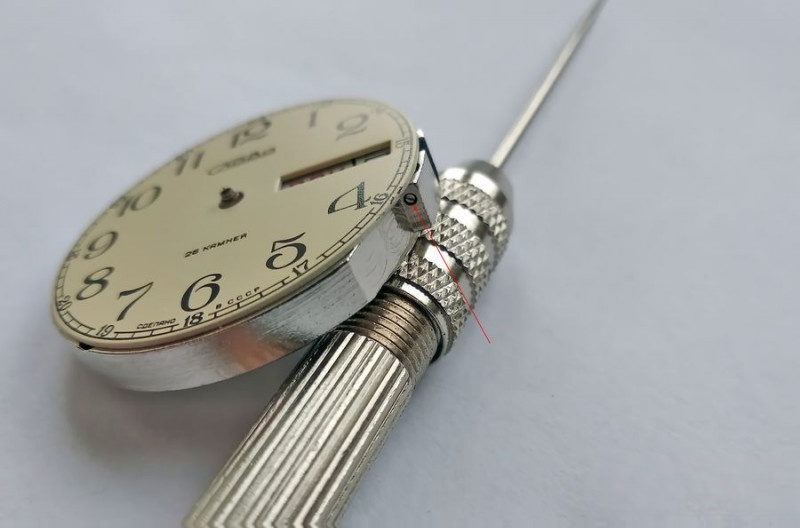
Two screws hidden in recesses on the movement's sides secure the dial feet. These need only 1.5 to 2 turns of loosening to release the dial. Once removed, screw them back into the movement to prevent loss.
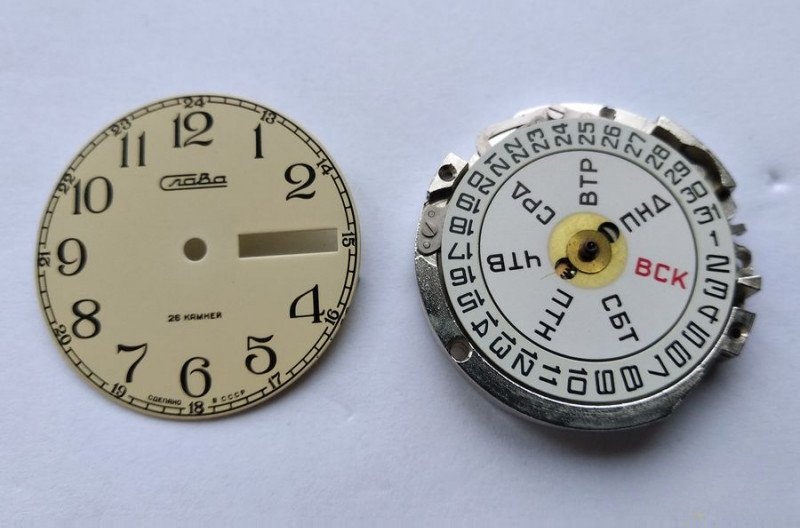
Calendar Mechanism Disassembly
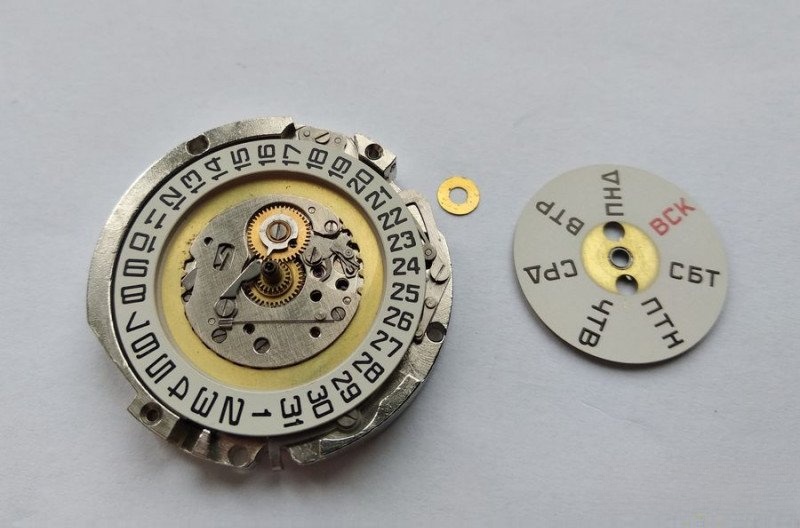
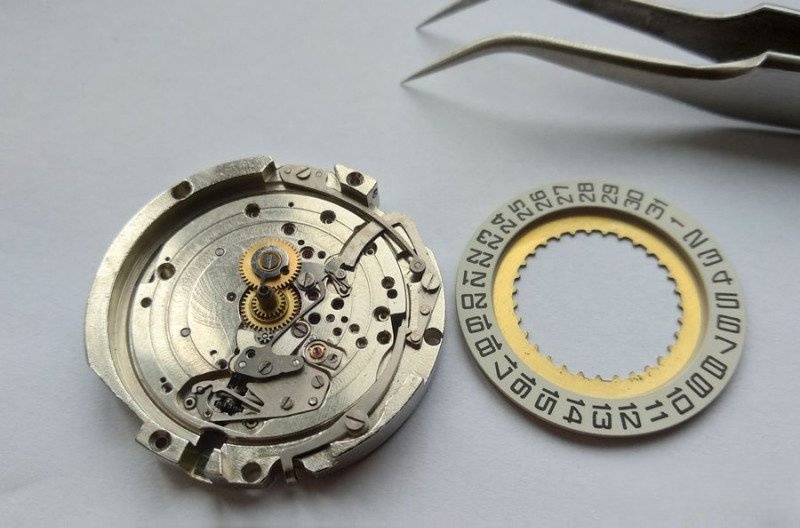
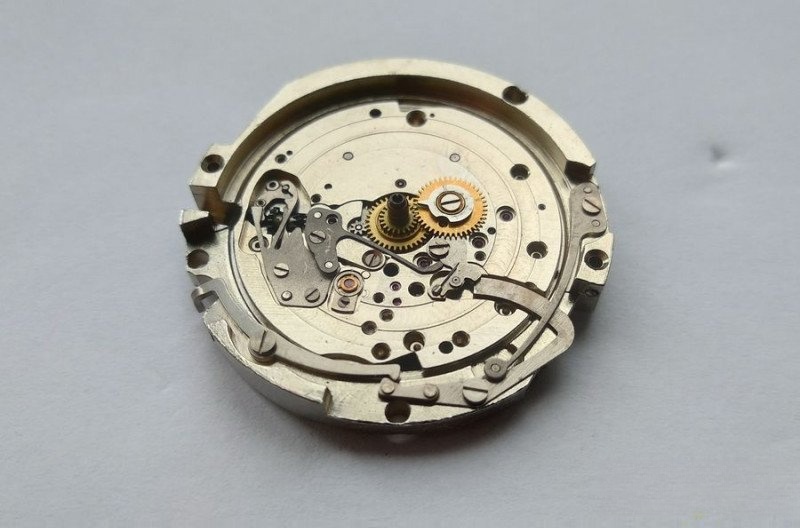
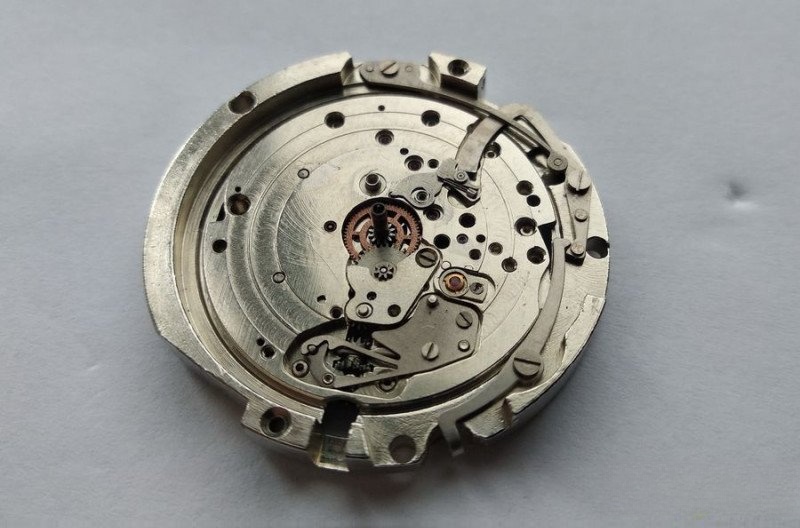
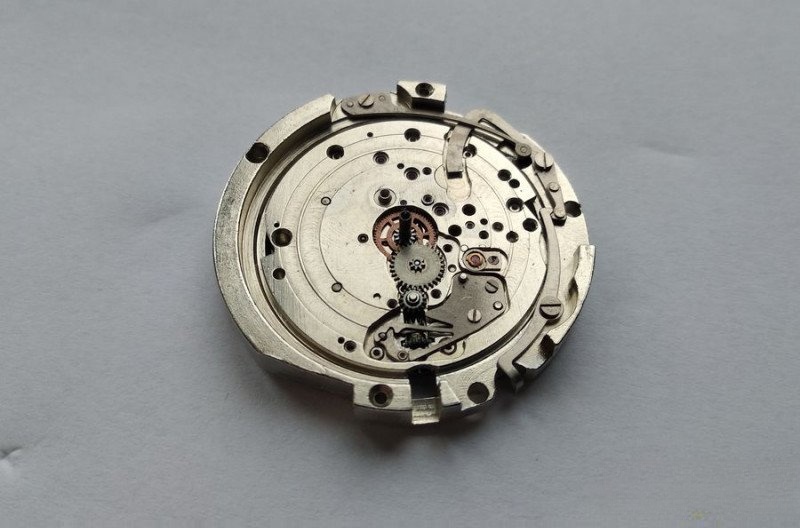
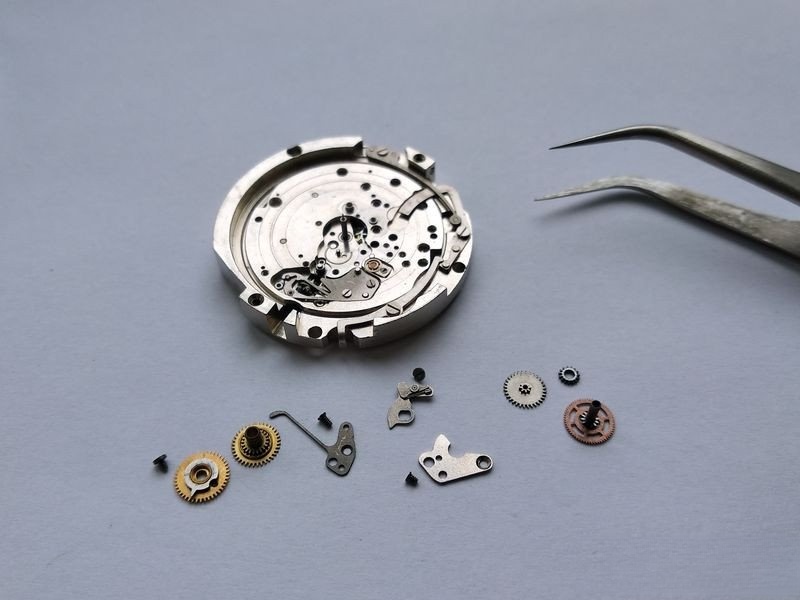
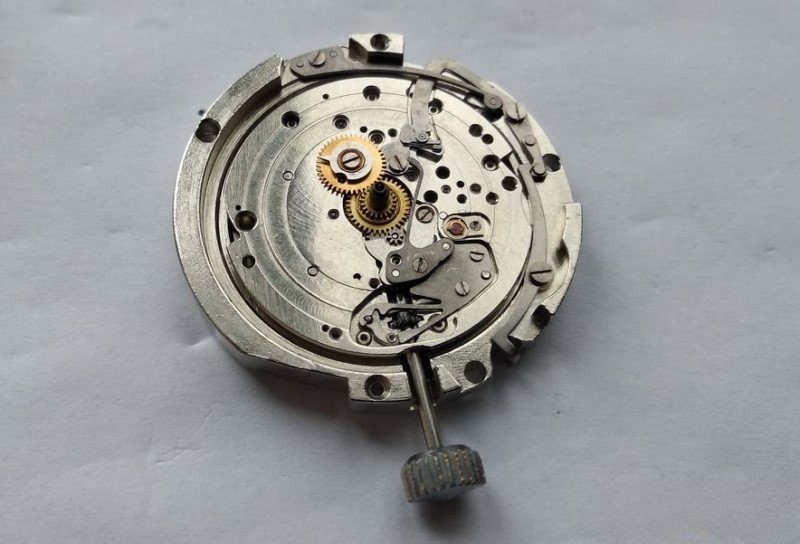
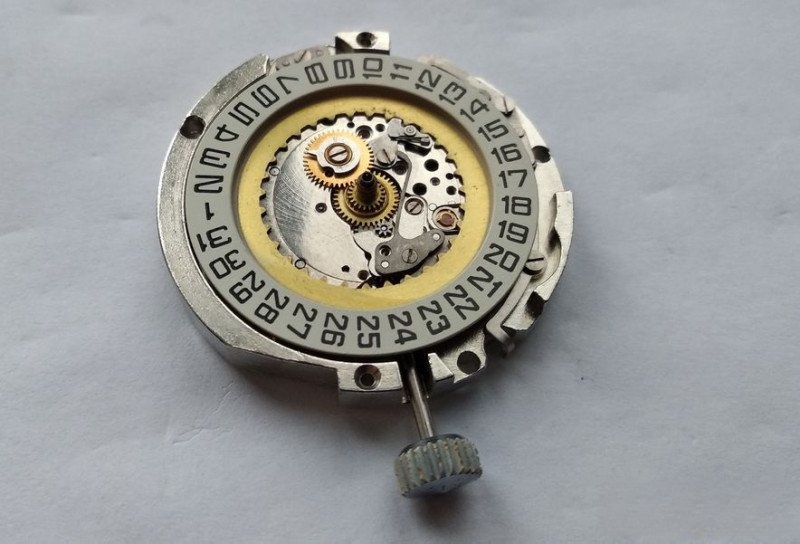
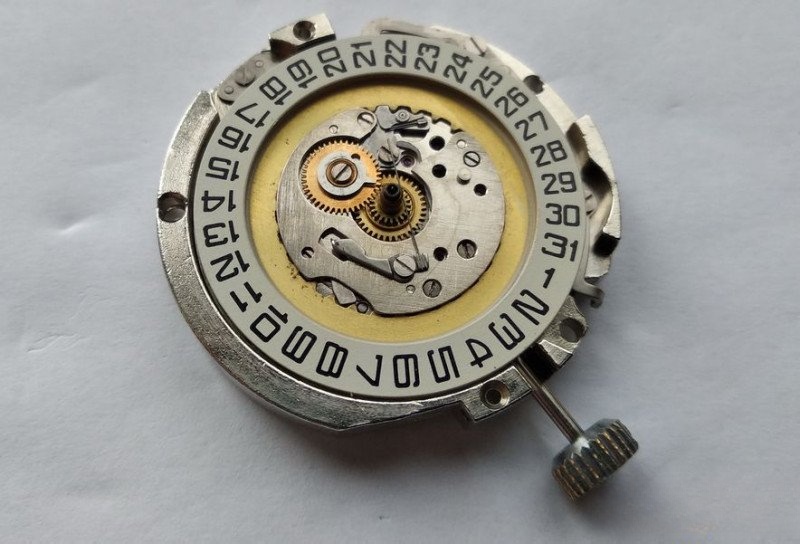
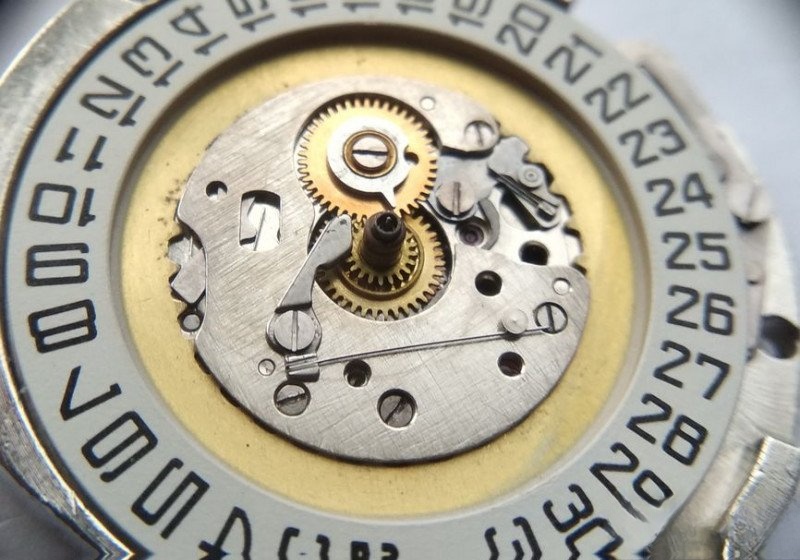
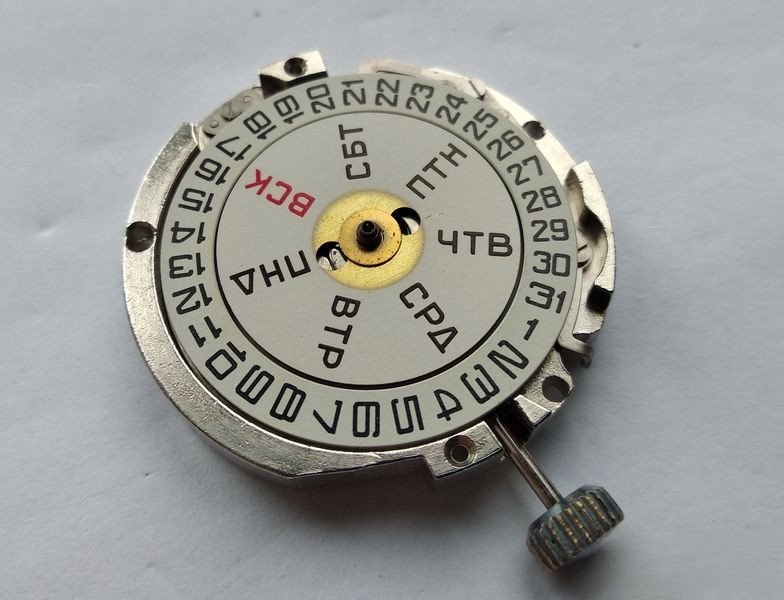
Removing the spring washer allows the day-of-week disc to lift away. While you can simply pull it upward, better technique involves gently deflecting the positioning lever through one of the two access holes visible in the disc — this allows nearly effortless removal without stressing the delicate positioning spring. With the disc and washer set aside, the calendar mechanism lies exposed: the command wheel, positioning lever plate, double-tier hour wheel, and part of the instantaneous date-change lever.
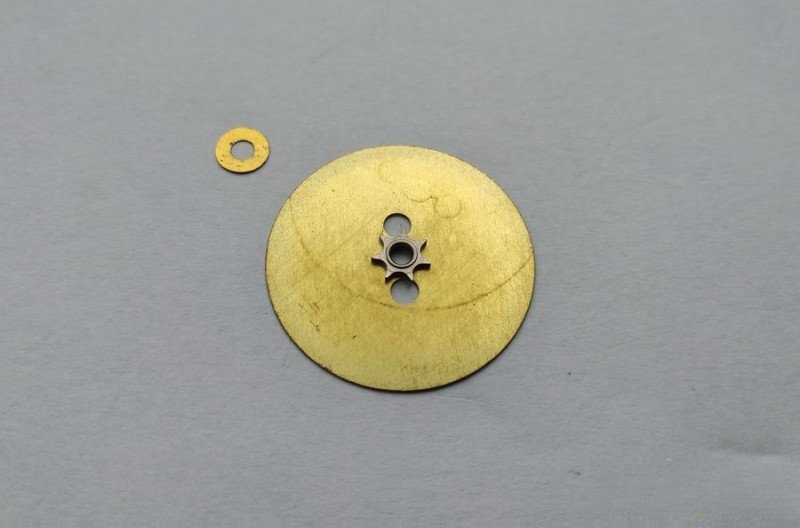
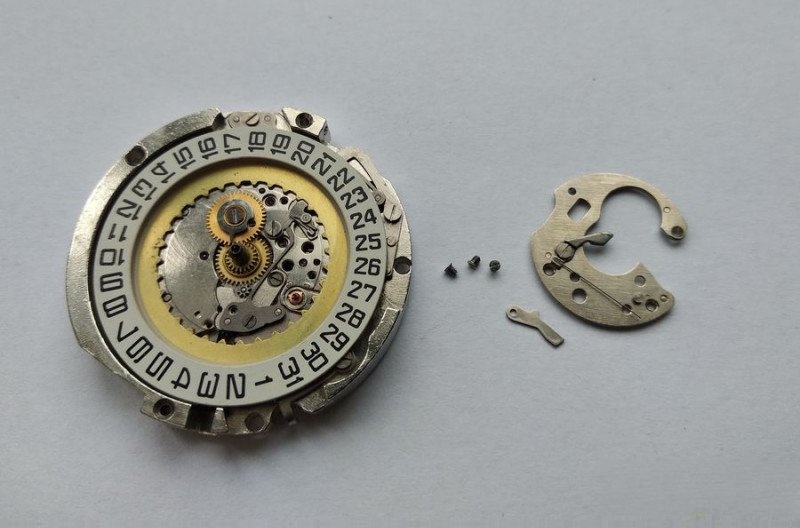
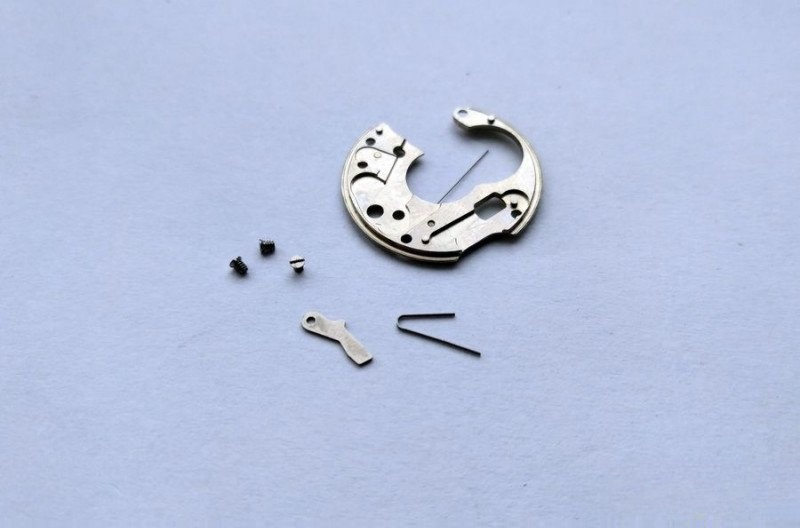
The positioning lever plate presents our first genuinely complex component. Understanding its function helps appreciate the engineering involved. The calendar discs must remain securely positioned until switching occurs — otherwise, they would drift randomly, displaying meaningless values. The positioning system employs precisely calibrated springs and levers. These springs are calculated for specific force values that determine the resistance to disc movement. Excessive force would prevent date changes; insufficient force allows drift. Therefore, we must never bend or deform these springs. Handle them with utmost care throughout the service.
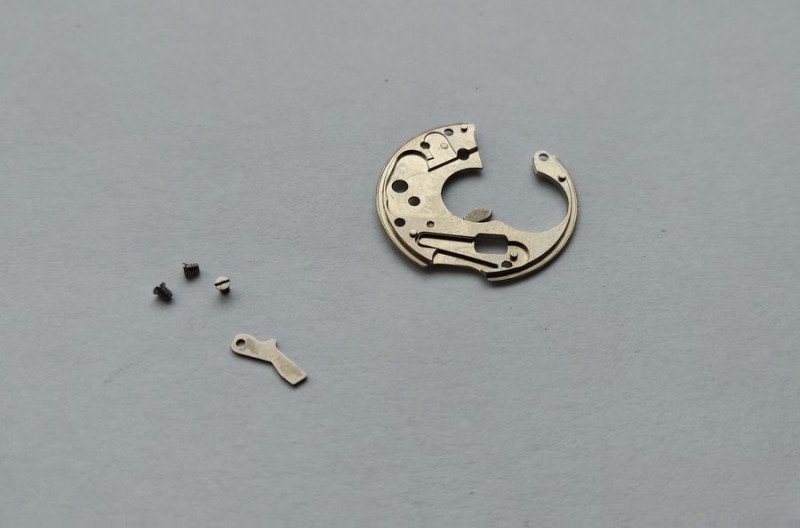
The Minute Pinion Friction System
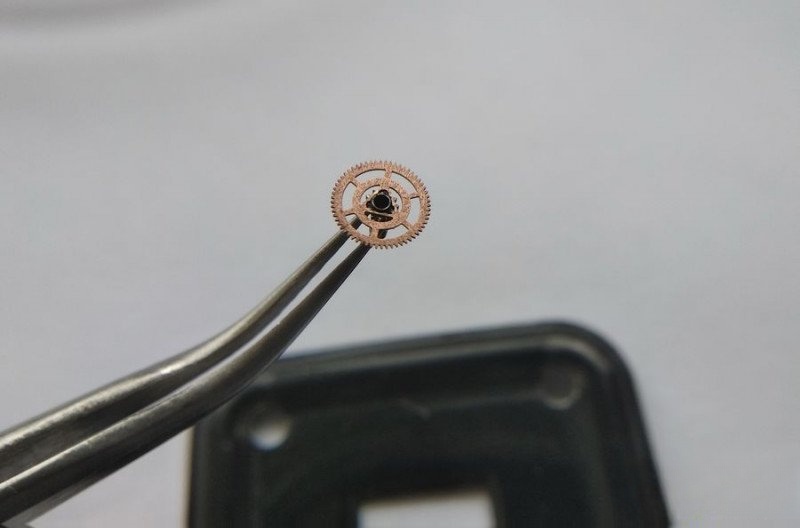
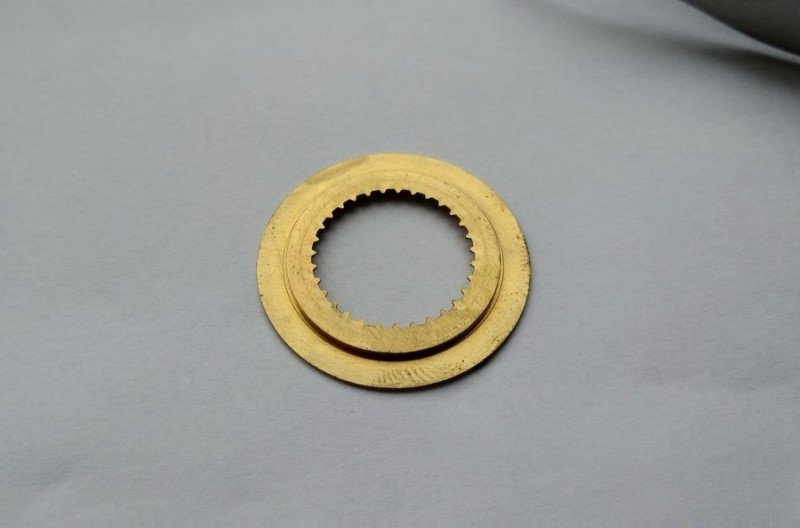
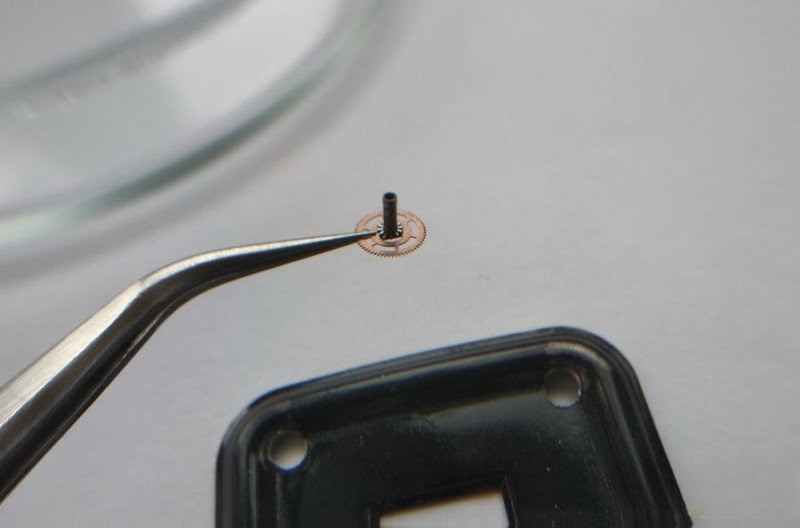
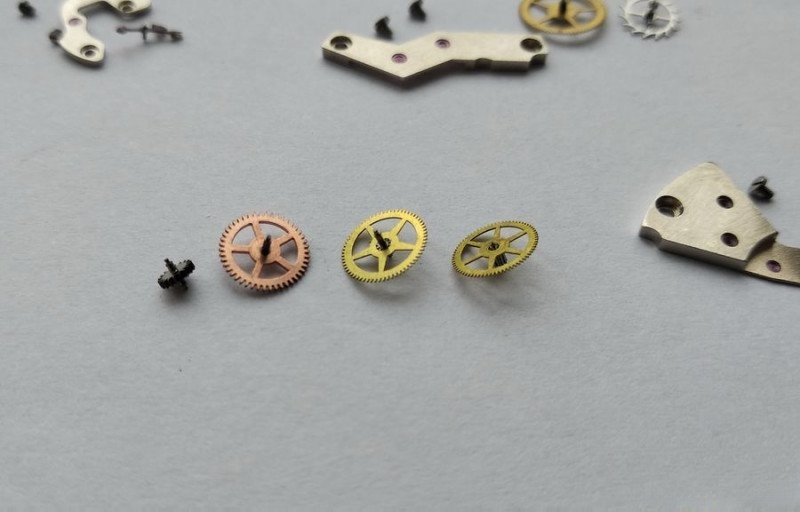
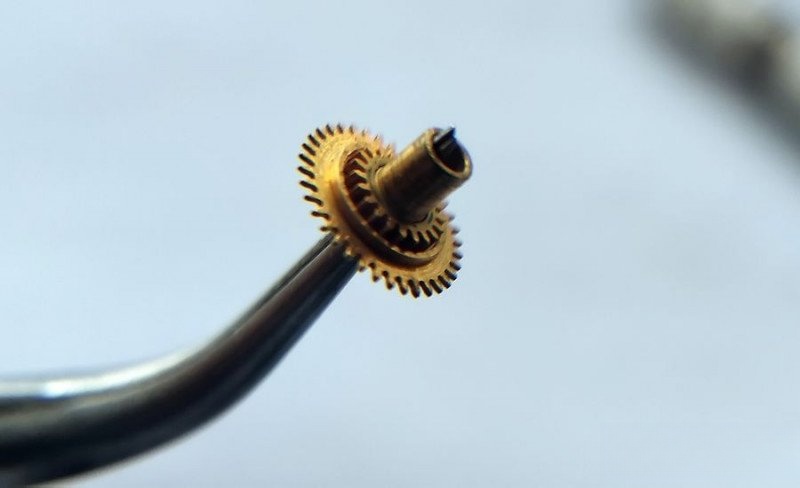
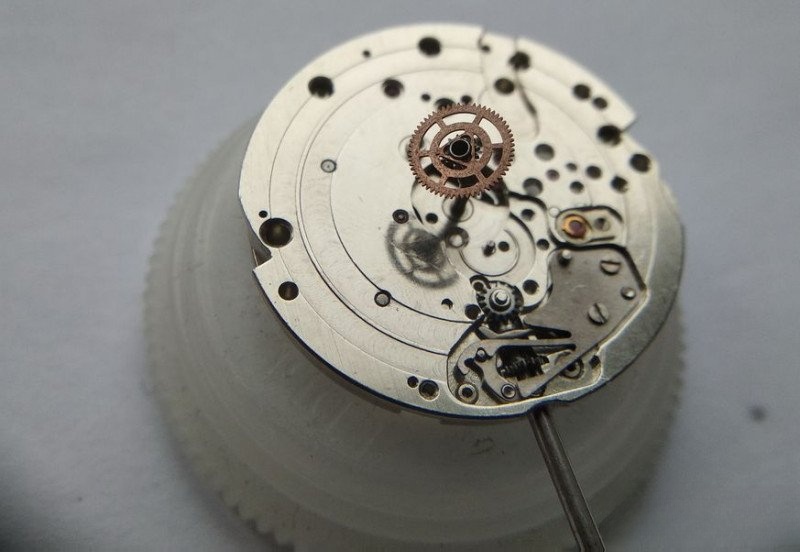
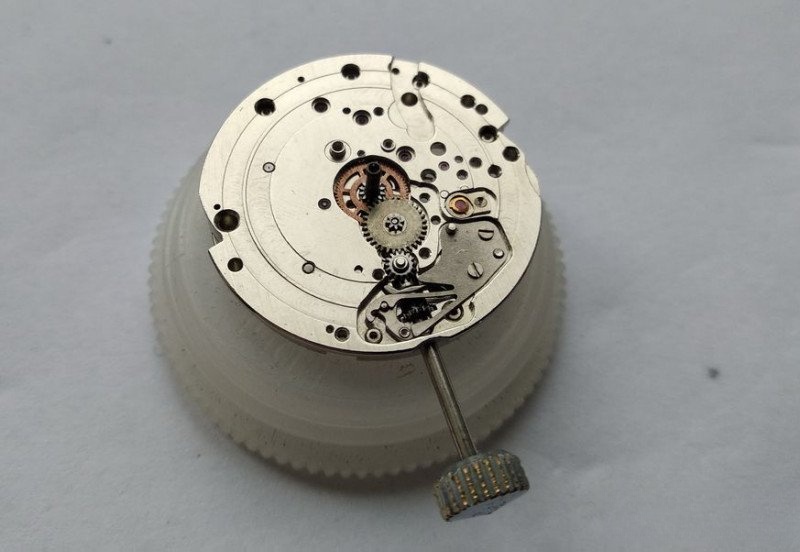
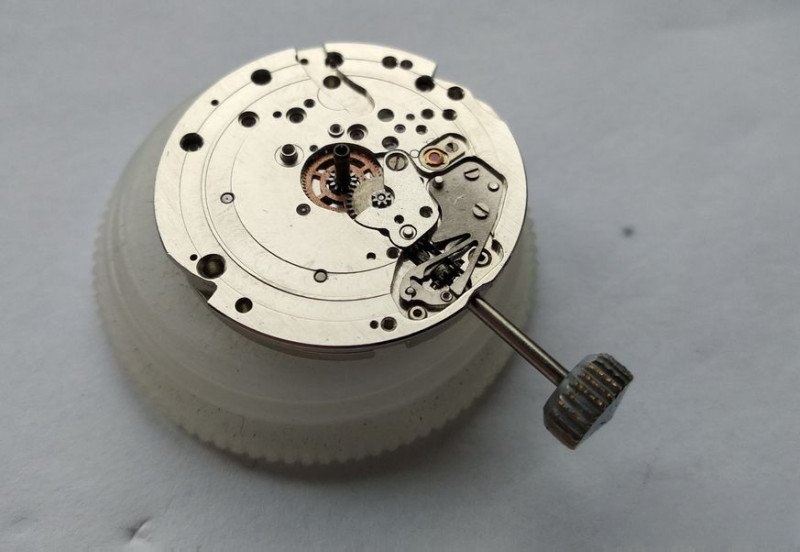
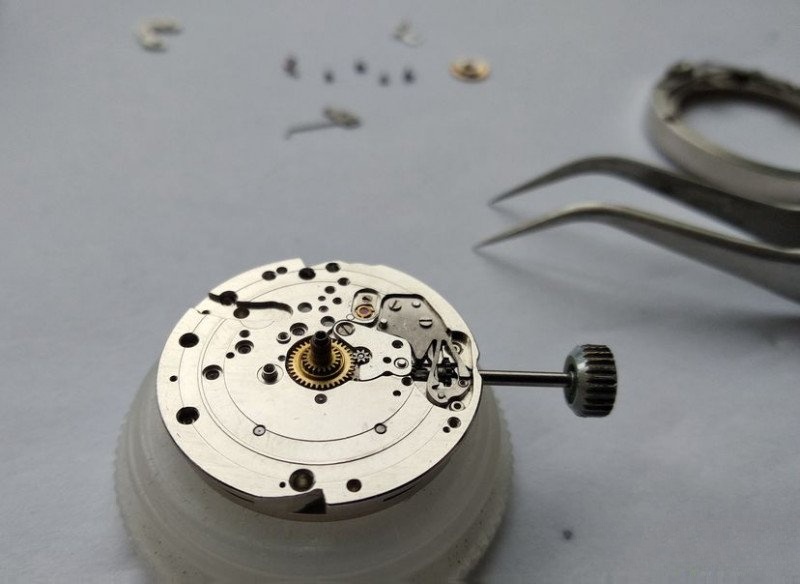
The minute pinion construction deserves special attention. Typically, watch minute pinions attach to the center wheel arbor through a simple friction fit — the pinion bore is pressed onto the arbor with calculated interference. This straightforward approach works reliably in time-only watches where hand-setting occurs infrequently. However, calendar watches require frequent hand manipulation for date correction, and simple friction fits would wear rapidly under such use. The 2428 employs a superior solution: a dedicated spring-loaded friction wheel rides in a groove on the pinion. This friction clutch mechanism provides far greater durability than conventional designs. The photographs below detail this clever construction.
The Manual Date Correction Mechanism
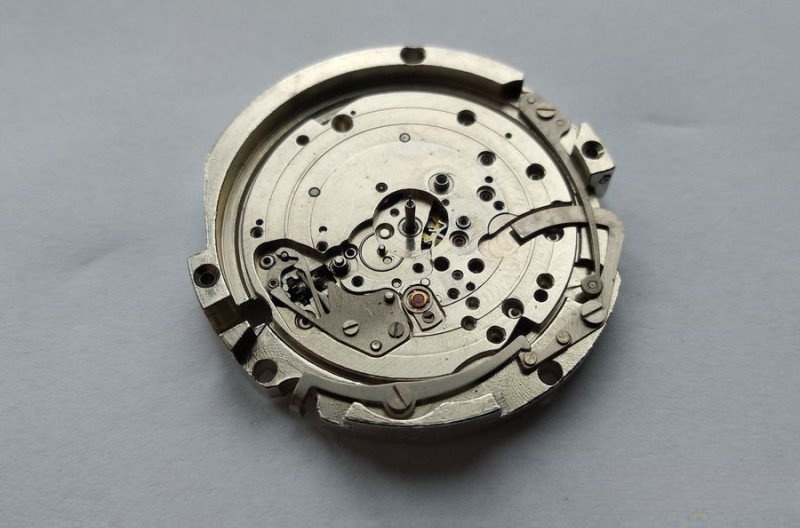
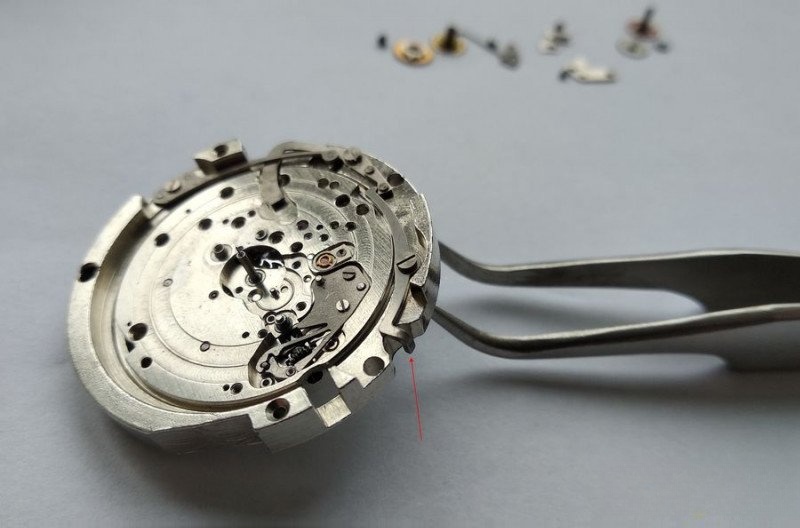
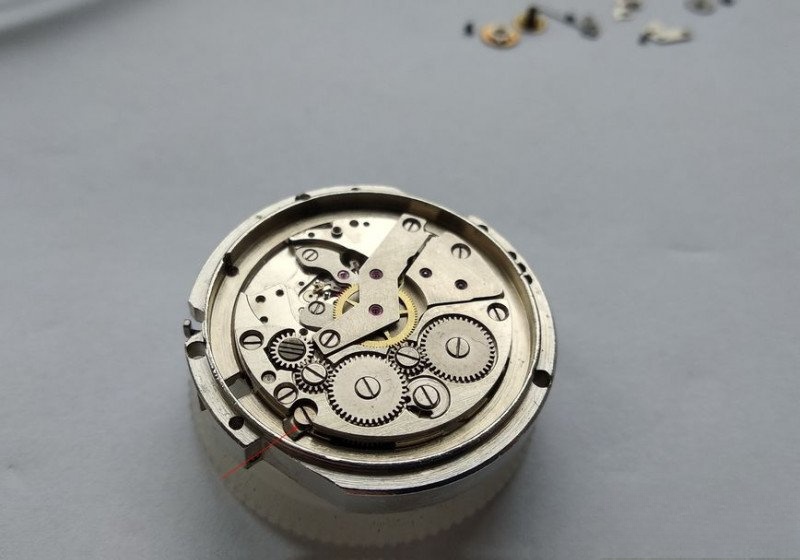
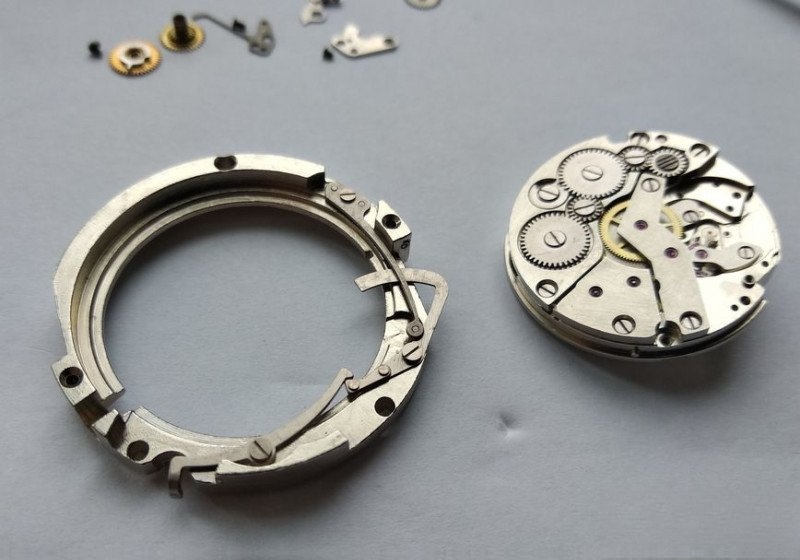
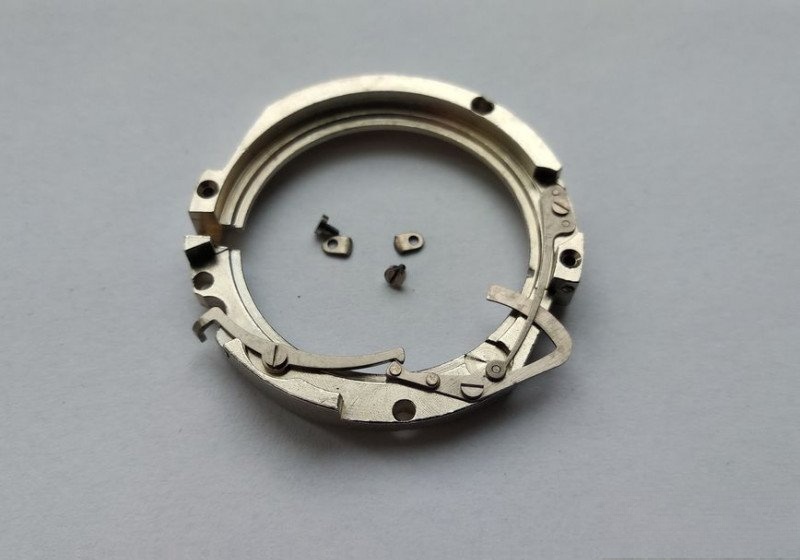
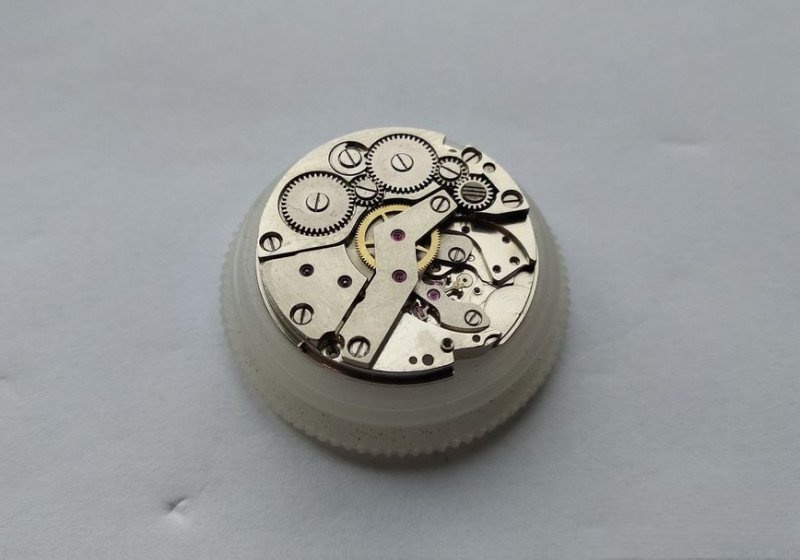
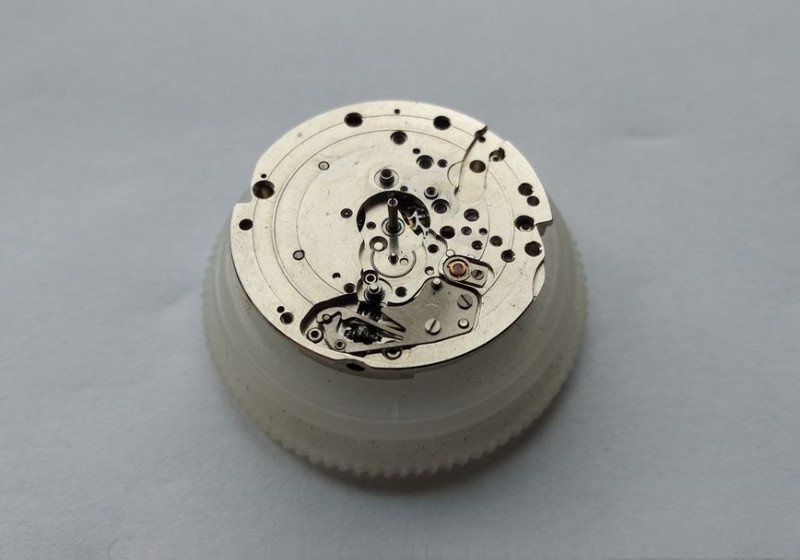
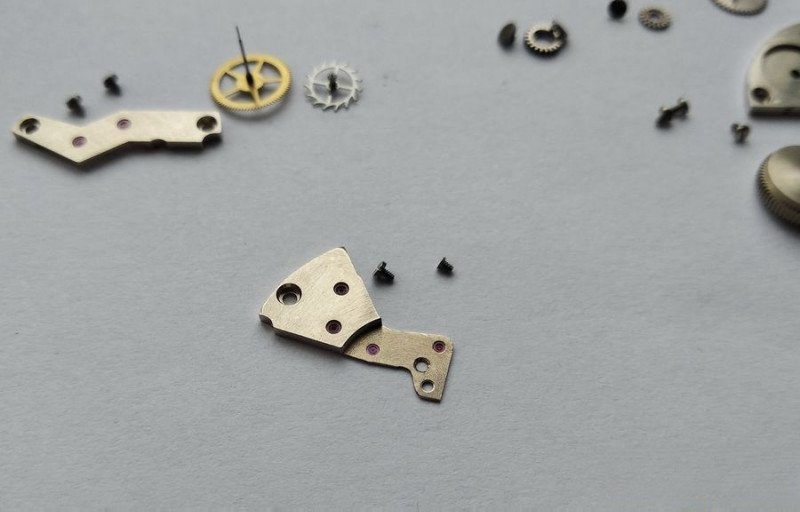
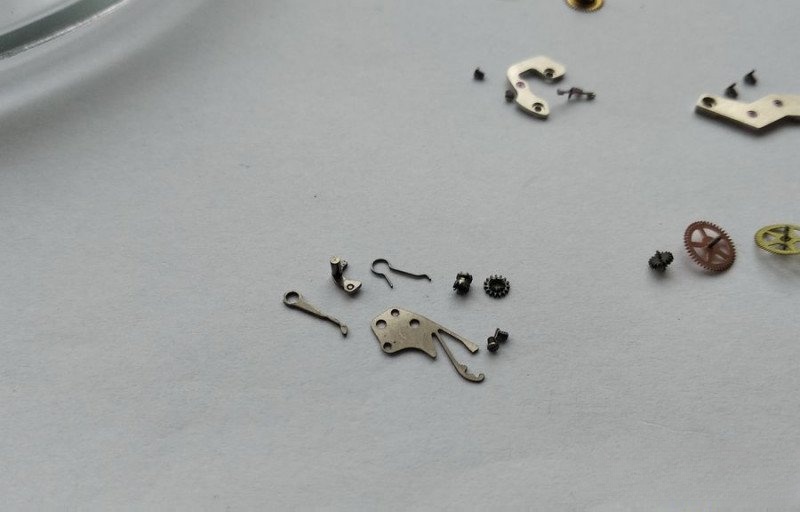
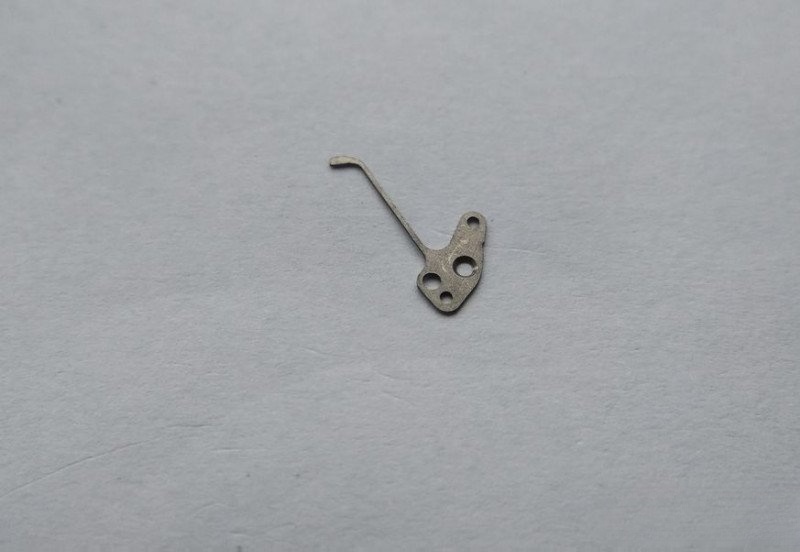
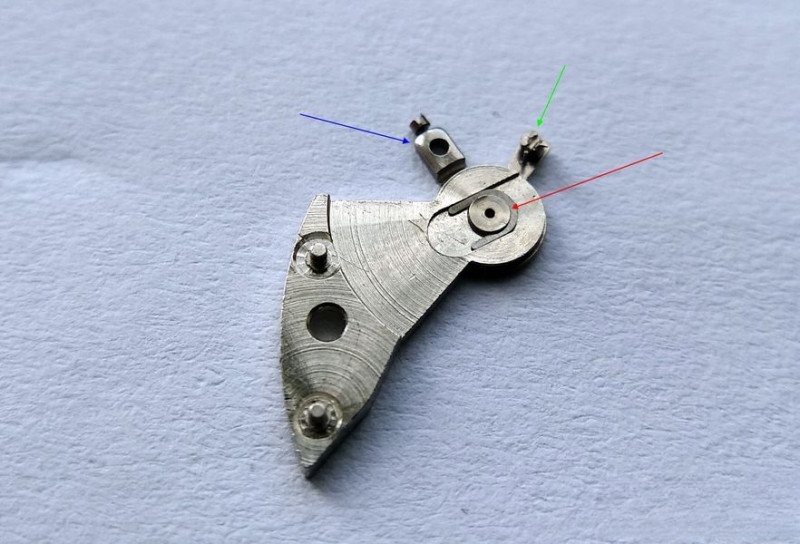
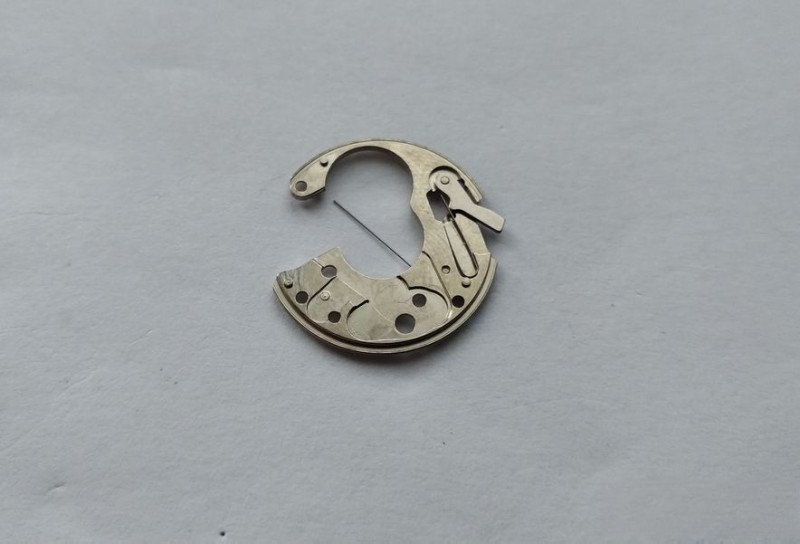
Here we encounter a mechanism exclusive to the Slava 2428: the manual date correction assembly. This mechanism constitutes a separate module housing the movement and provides the linkage between the date correction pusher and the date-change mechanism. The assembly contains two specially-shaped levers and a spring similar to the calendar accumulator spring. Remarkably, this mechanism accounts for nearly half the complete watch's weight and occupies roughly thirty percent of the case volume — a substantial investment for a single function, yet one that dramatically improves the watch's practical usability.
Gear Train and Power System Disassembly
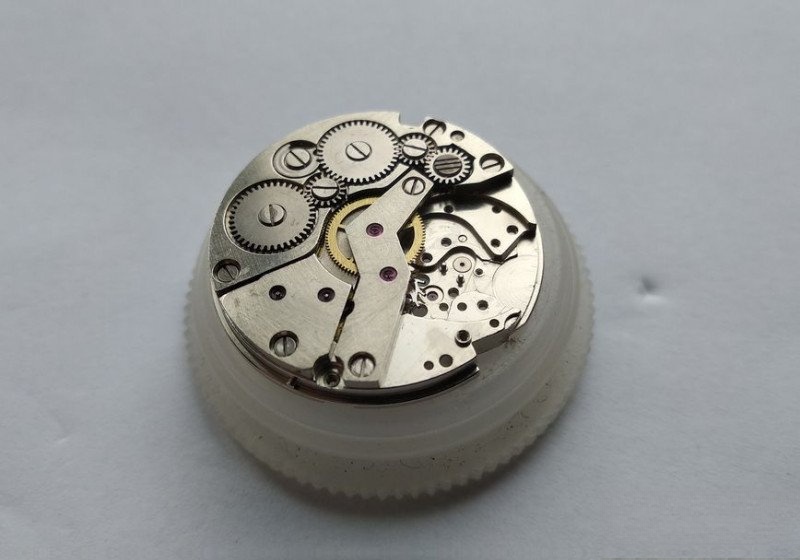
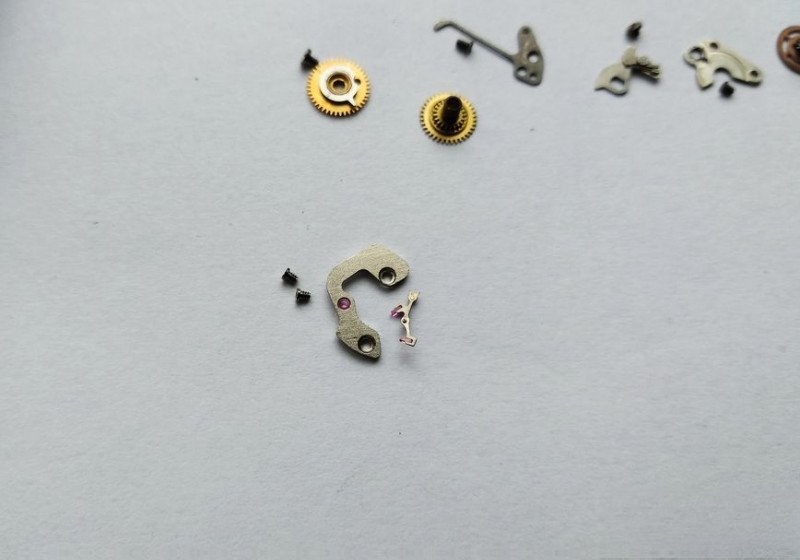
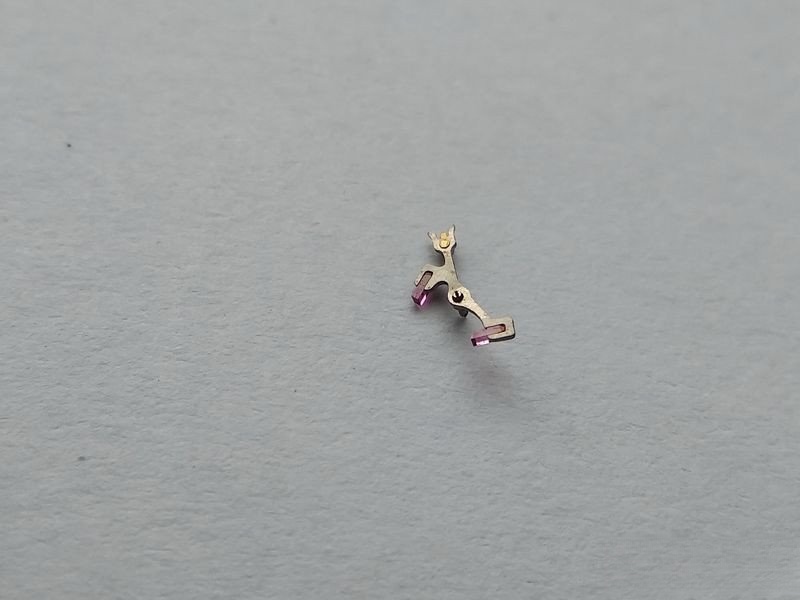
The pallet fork in the 2428 caliber displays a distinctive configuration. The fork horns and guard pin extend to one side rather than centrally, saving valuable space on the main plate. While this design complicates installation somewhat, the technique becomes routine with practice.
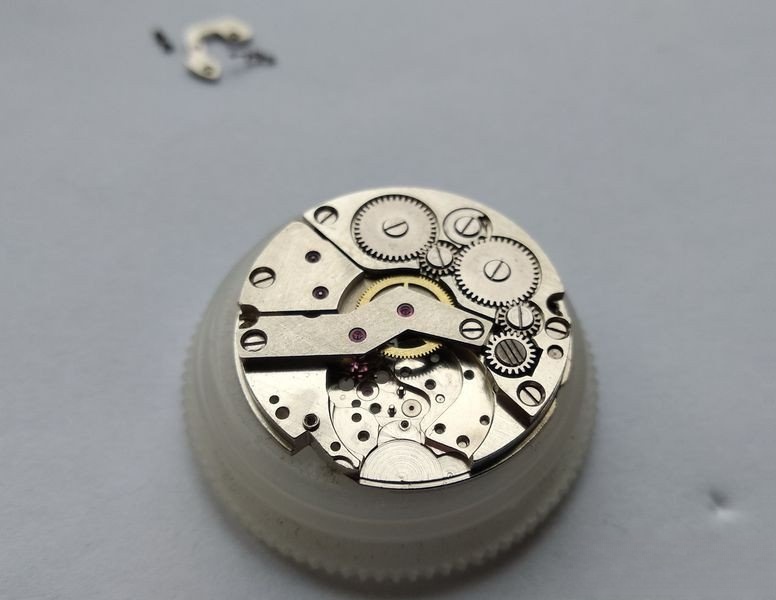
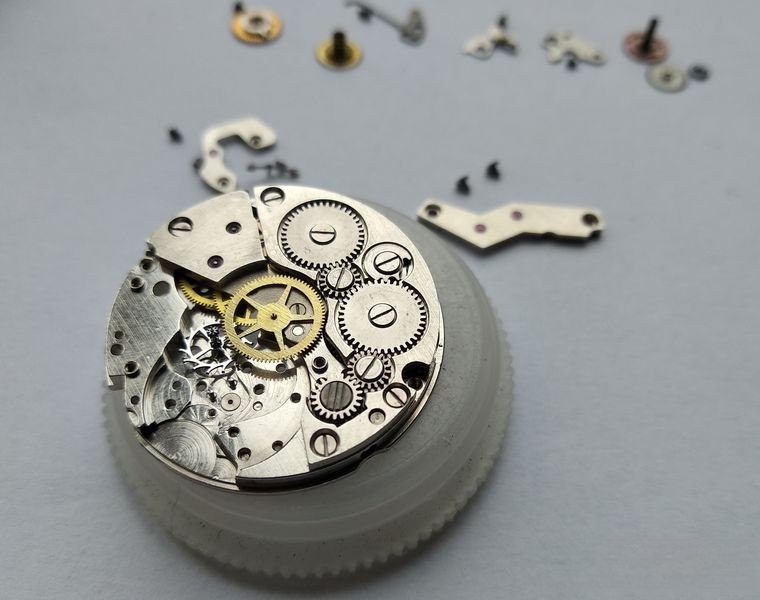
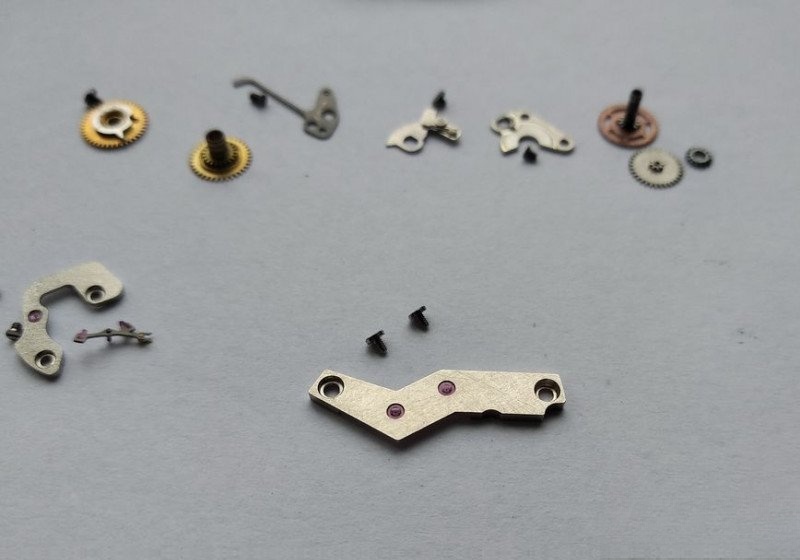
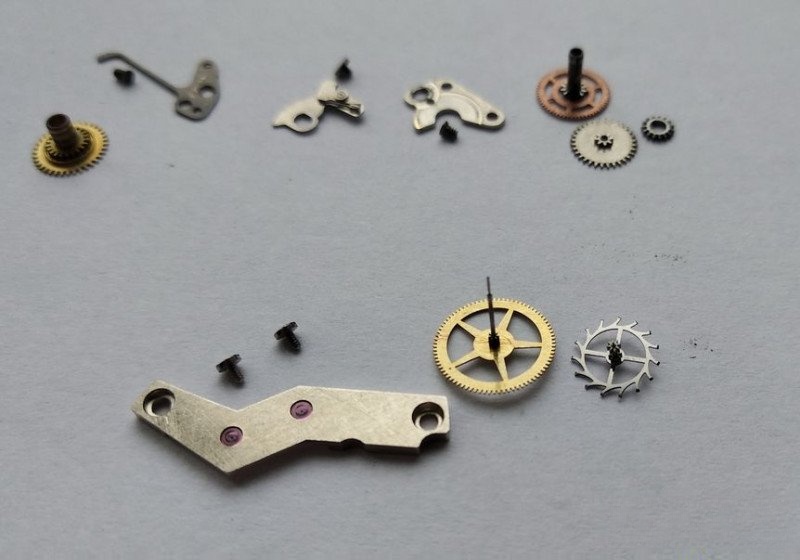
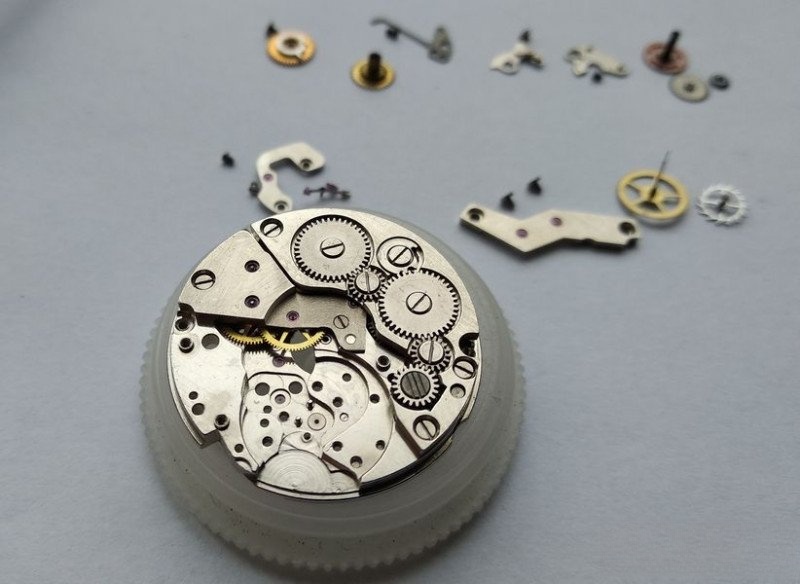
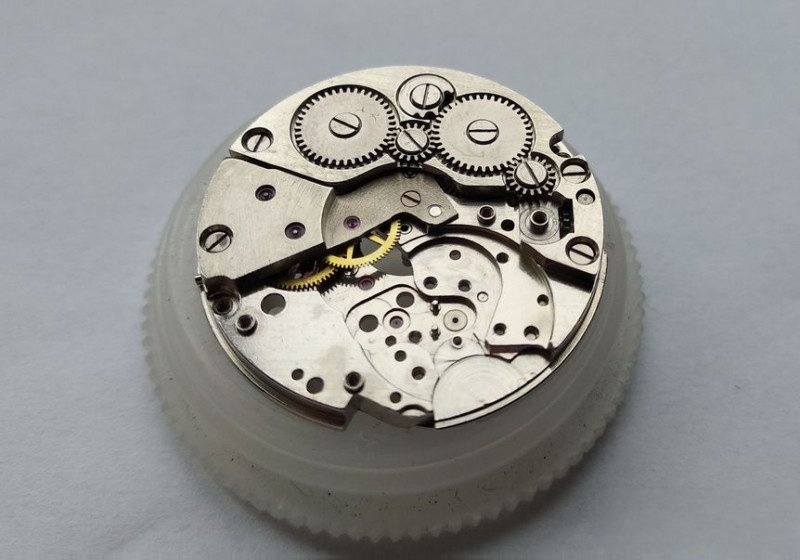
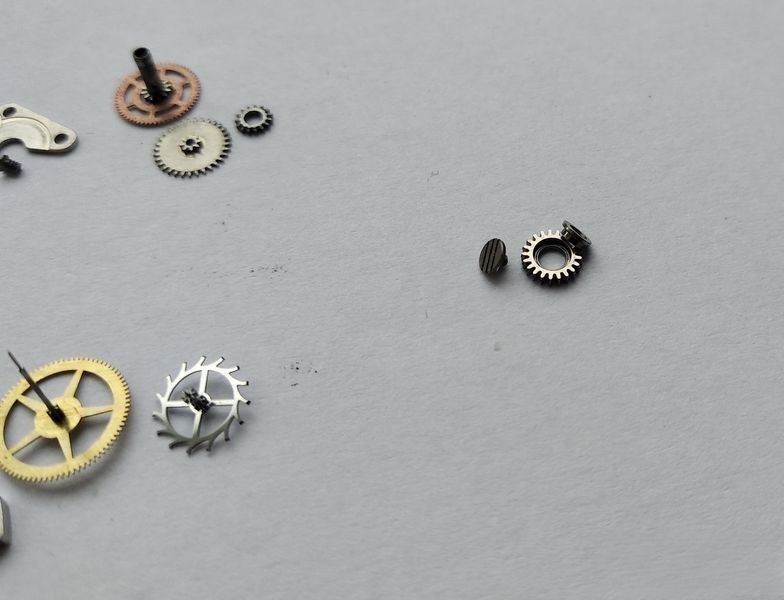
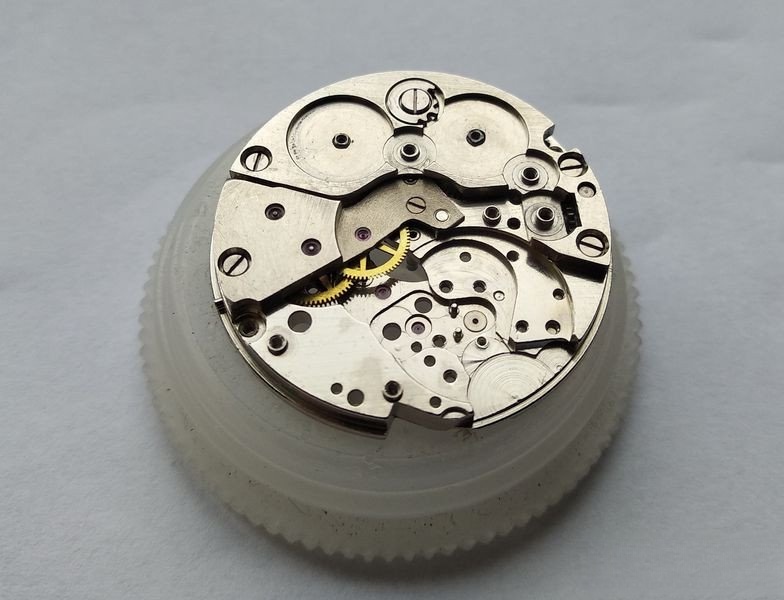
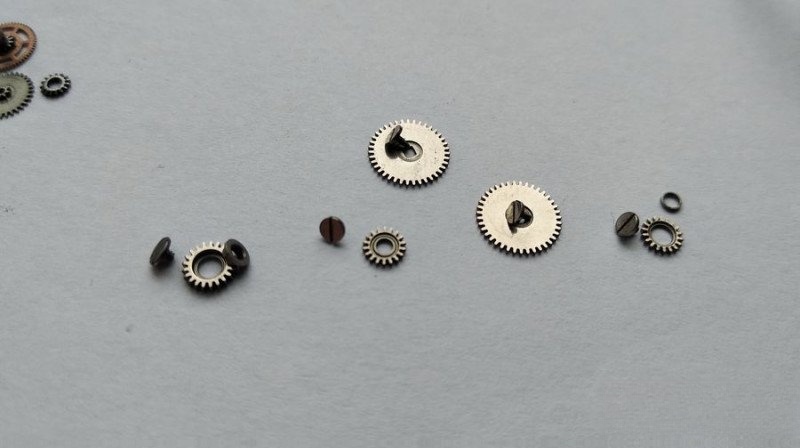
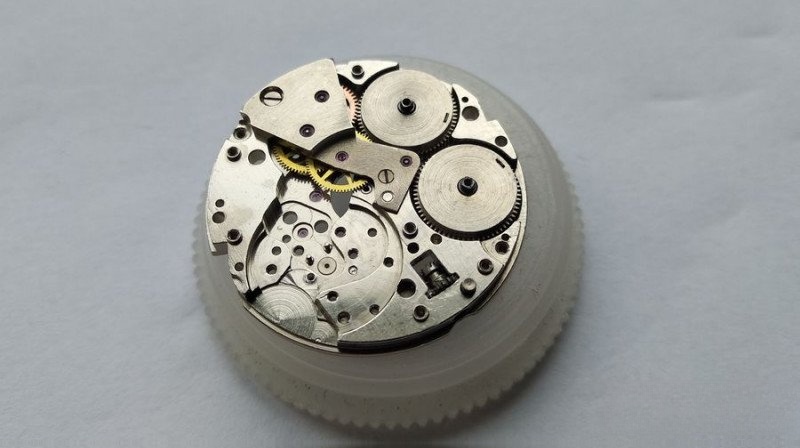
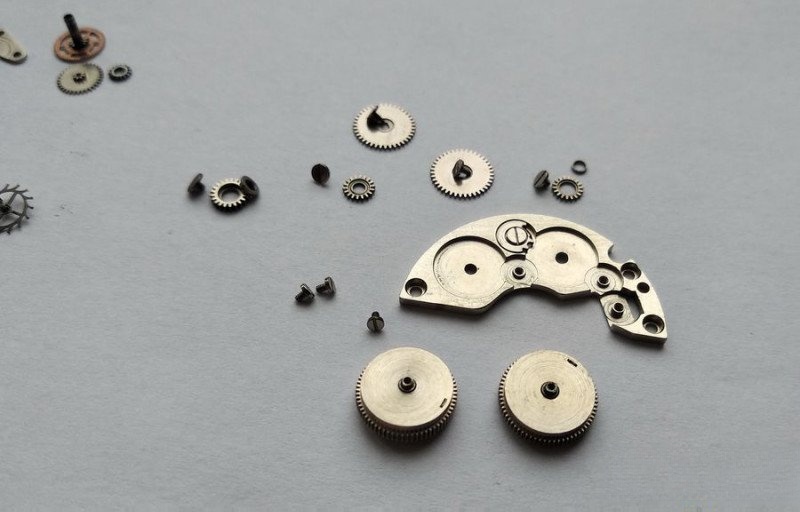
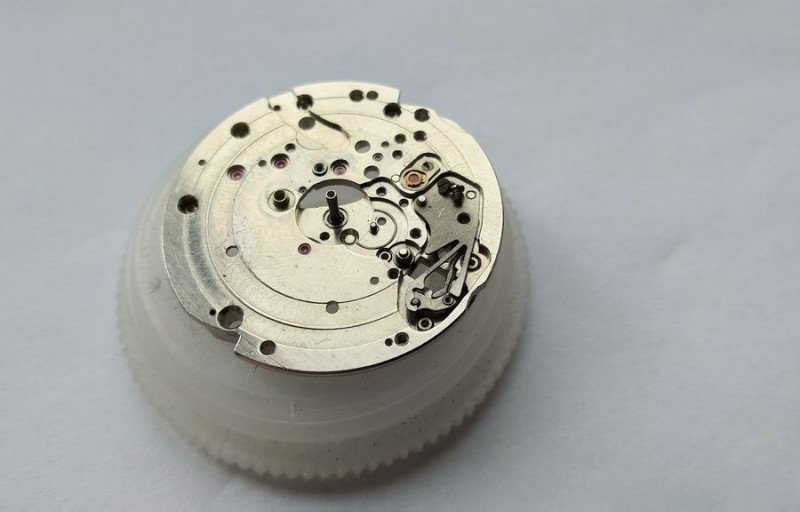
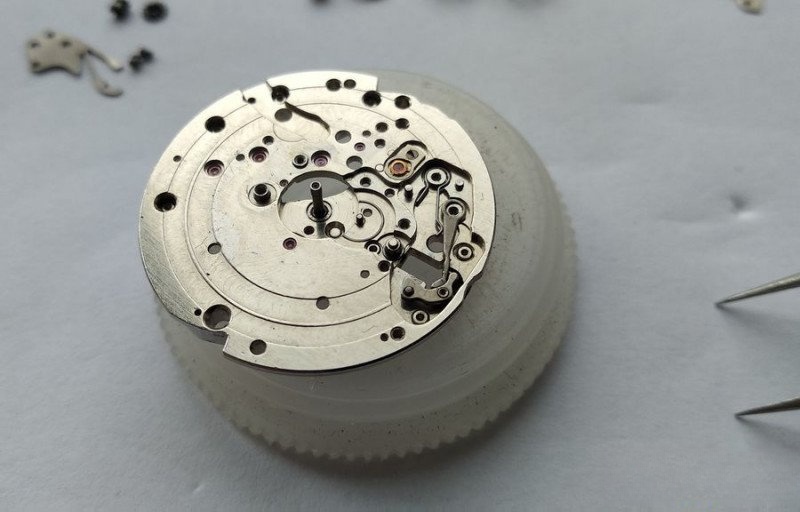
Every watch movement has its vulnerable areas, and in the Slava 2428, the barrel bridge represents perhaps the most critical concern. Unlike movements such as the Raketa 2628.HA, which feature jeweled or hardened steel barrel arbor bearings, the 2428's barrel bridge contains no jewels or wear-resistant inserts. Consequently, bearing wear in these locations becomes a common problem, particularly when regular maintenance is neglected. To minimize this issue, I recommend servicing the barrel system at least every two years with thorough cleaning and fresh lubrication.
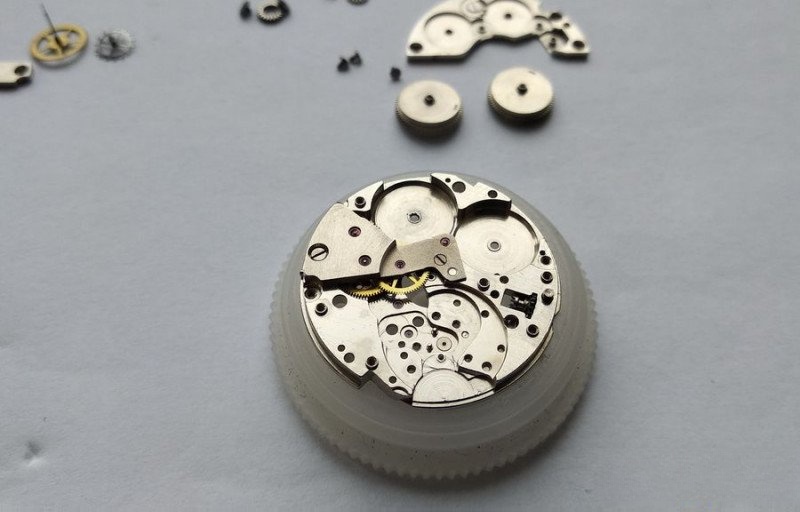
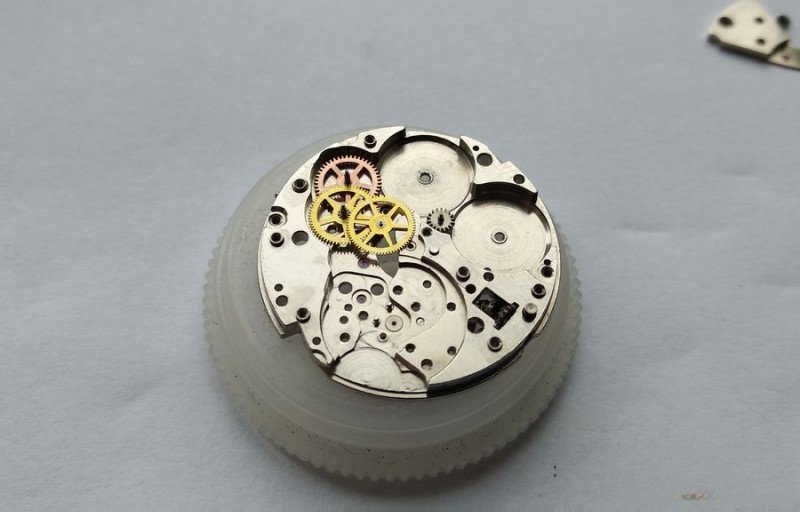
Keyless Works Disassembly
Mainspring Barrel Service
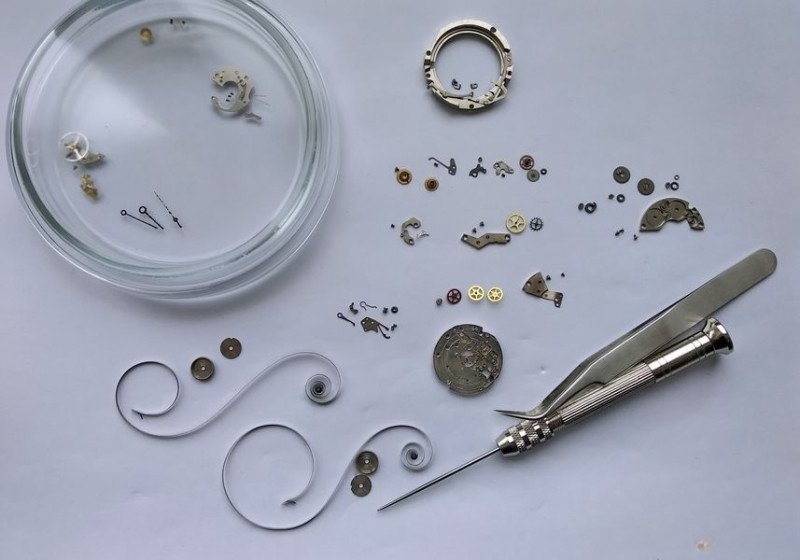
The Reassembly Process
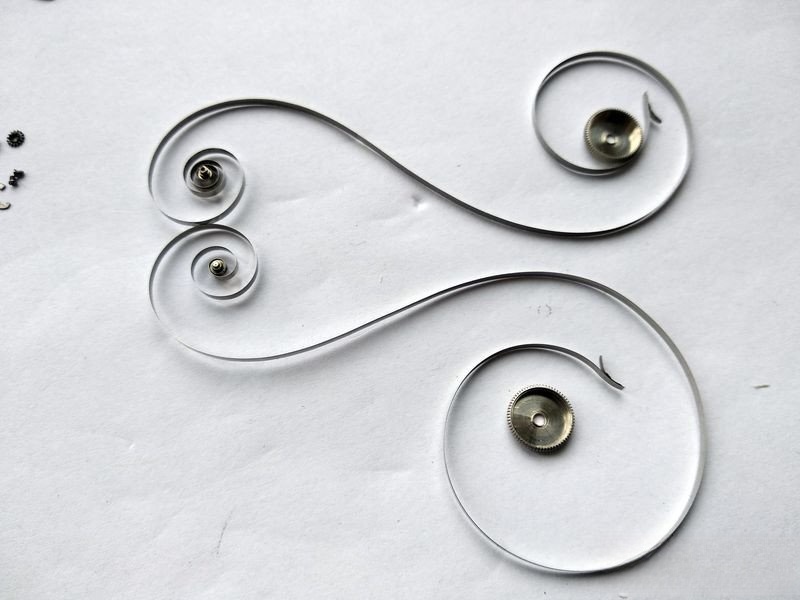
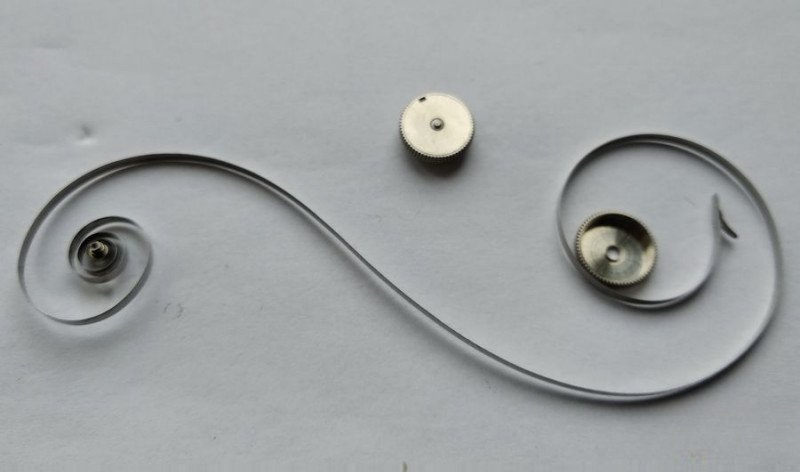
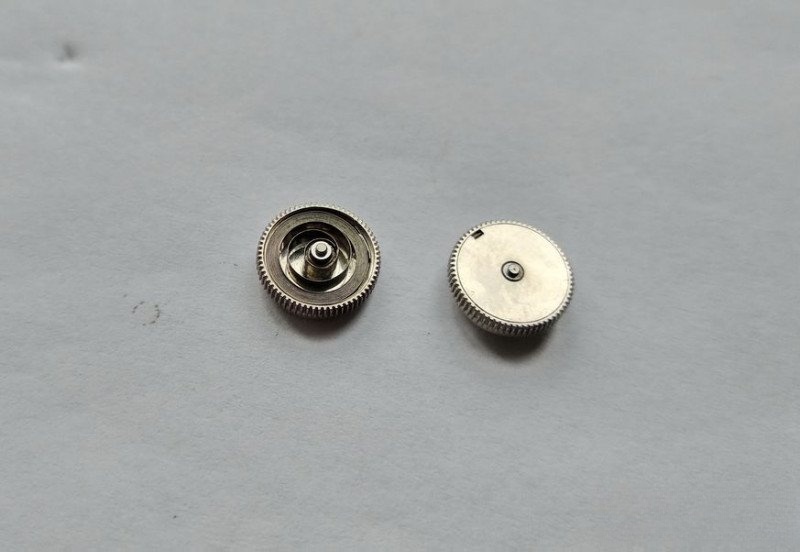
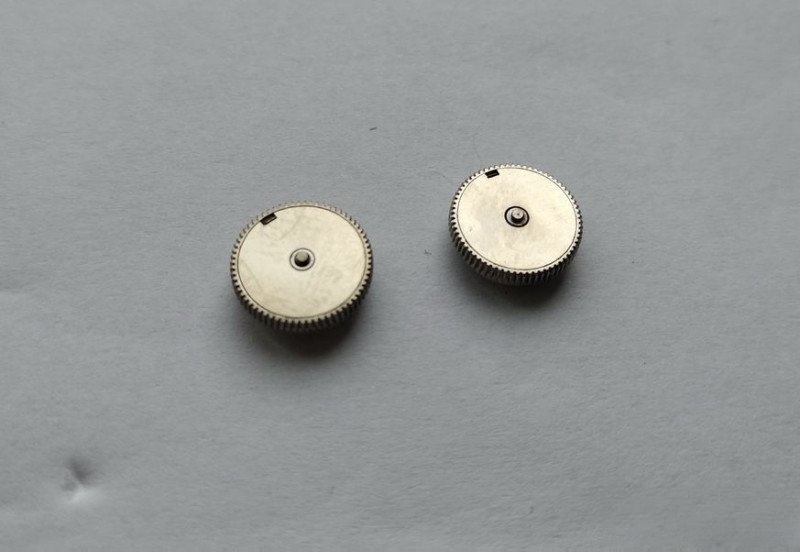
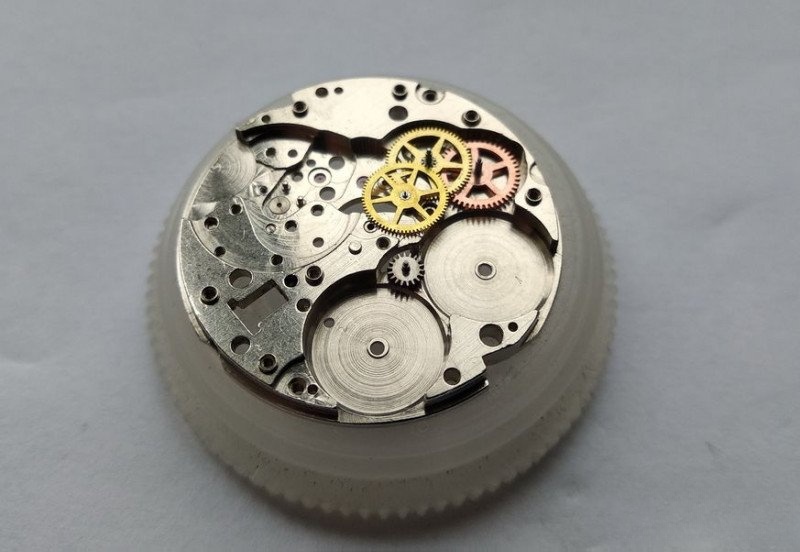
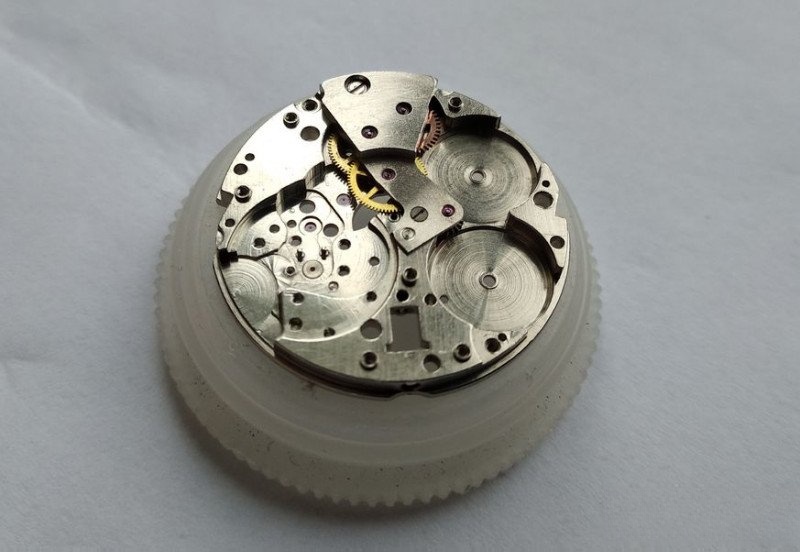
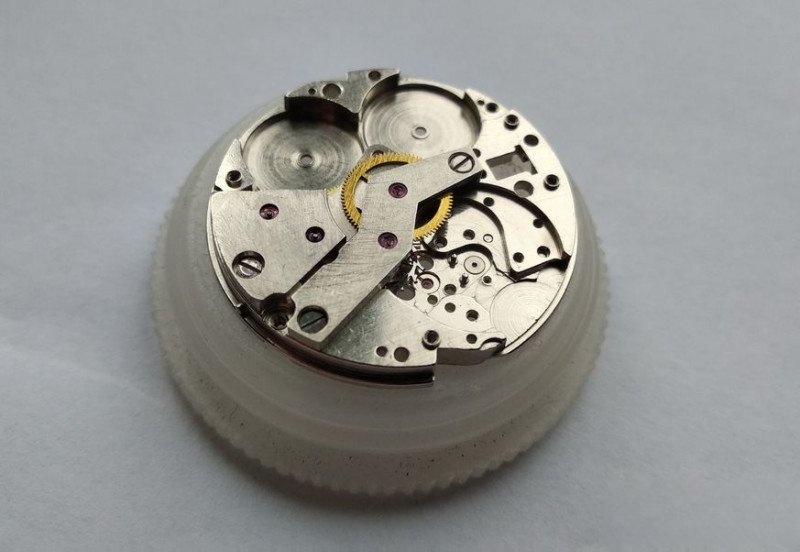
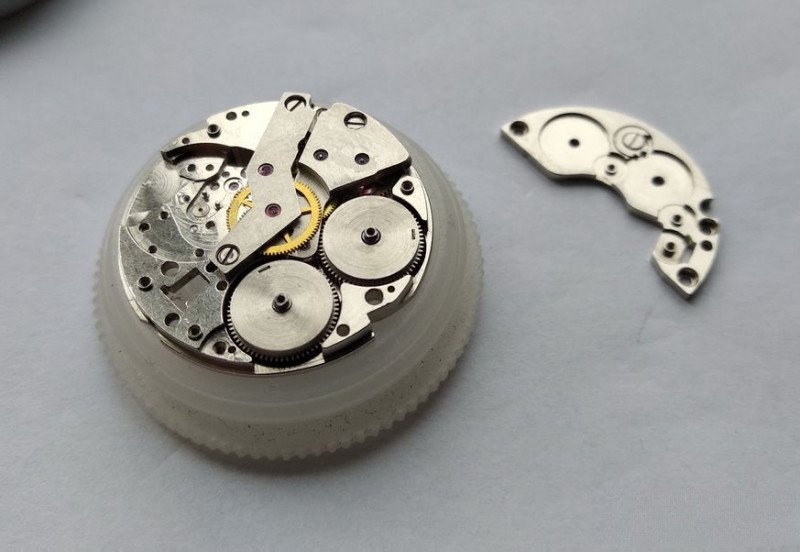
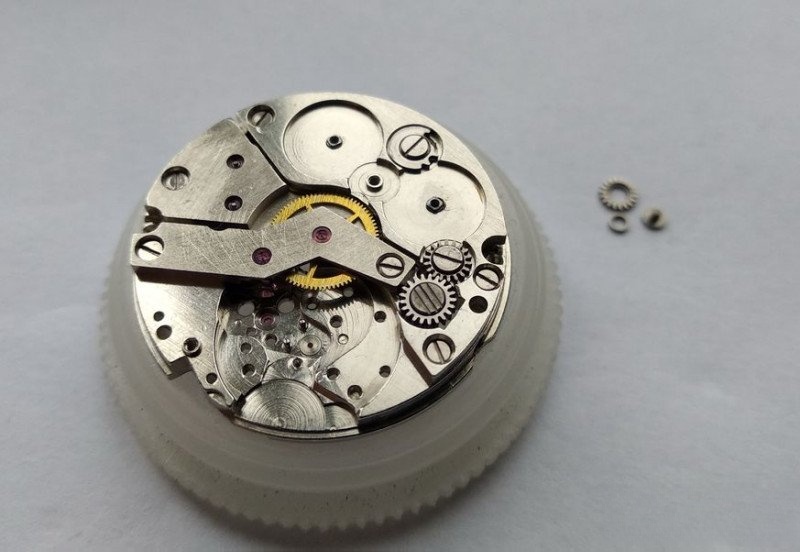
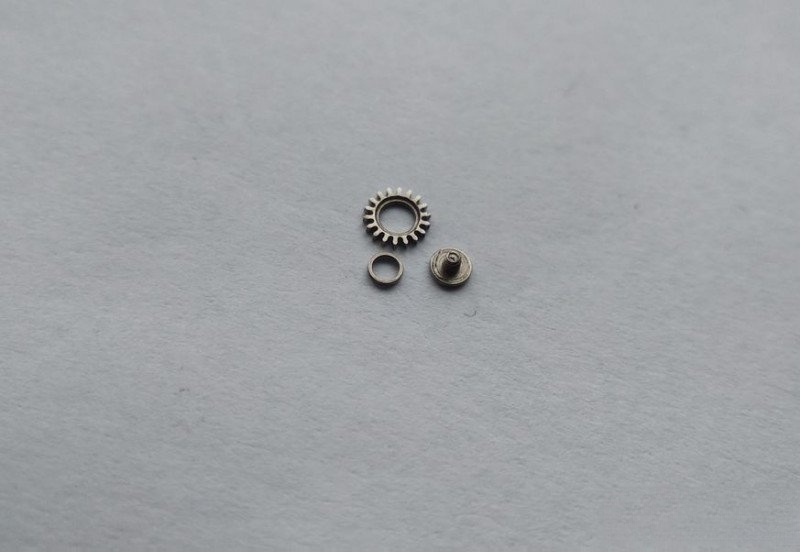
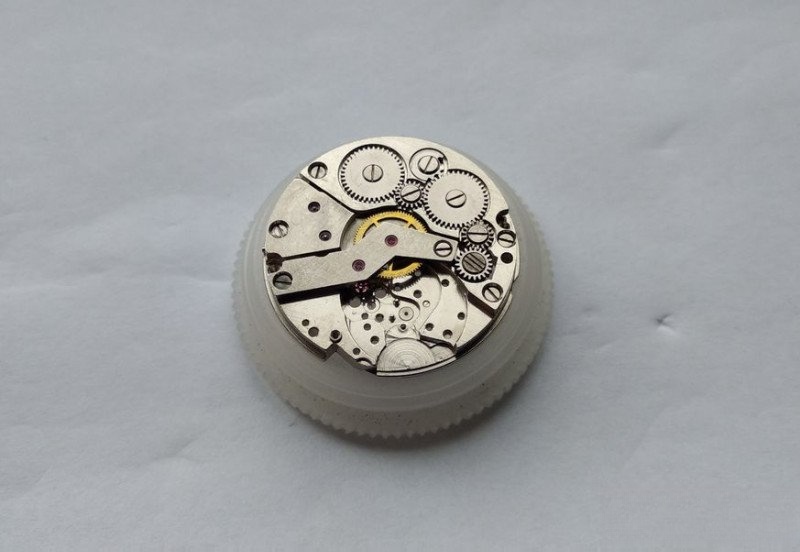
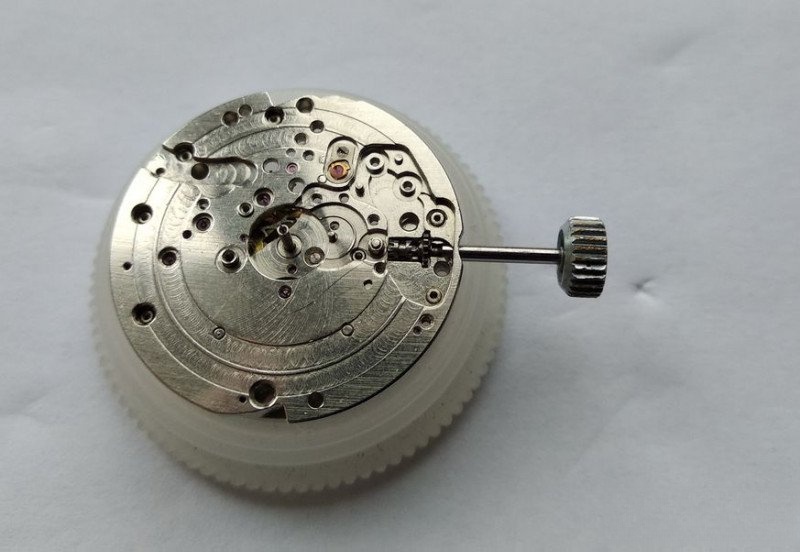
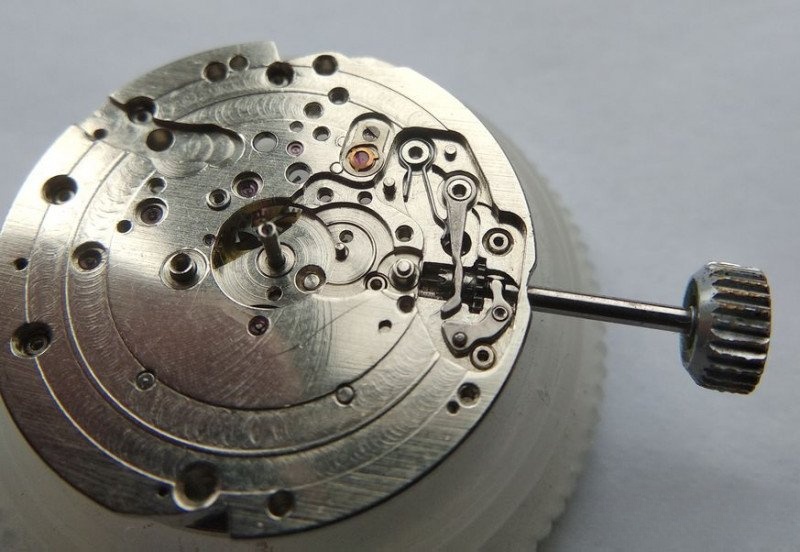
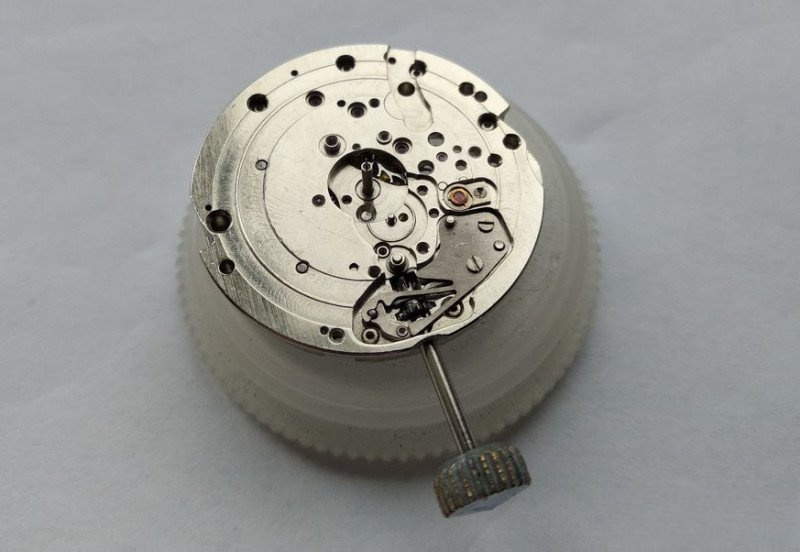
With the winding mechanism assembled, we can verify proper gear train function. Wind the mainspring two or three clicks, then observe wheel behavior. The wheels, uncontrolled by the escapement (pallet fork and balance), will spin rapidly. At some point, they pause and begin rotating backward. This backward motion confirms the wheel train is correctly assembled with minimal friction. Greater backward rotation indicates lower resistance and better efficiency. In this case, the fall shows excellent oscillating behavior — evidence of a well-made movement properly assembled.
Calendar Mechanism Assembly
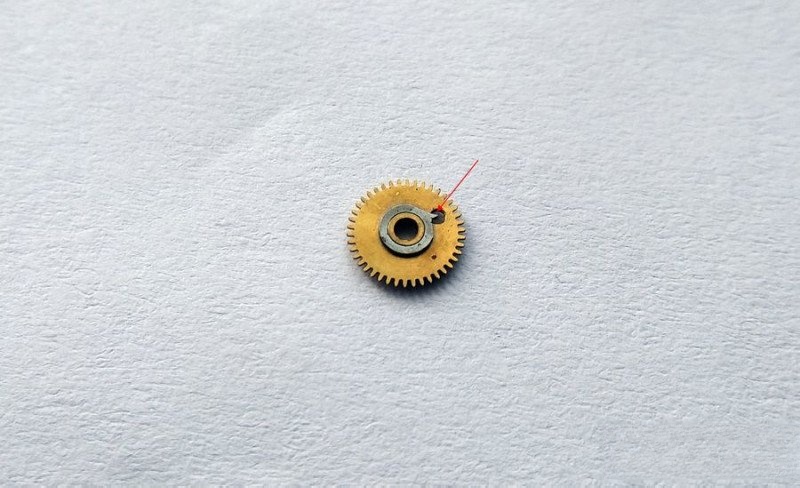
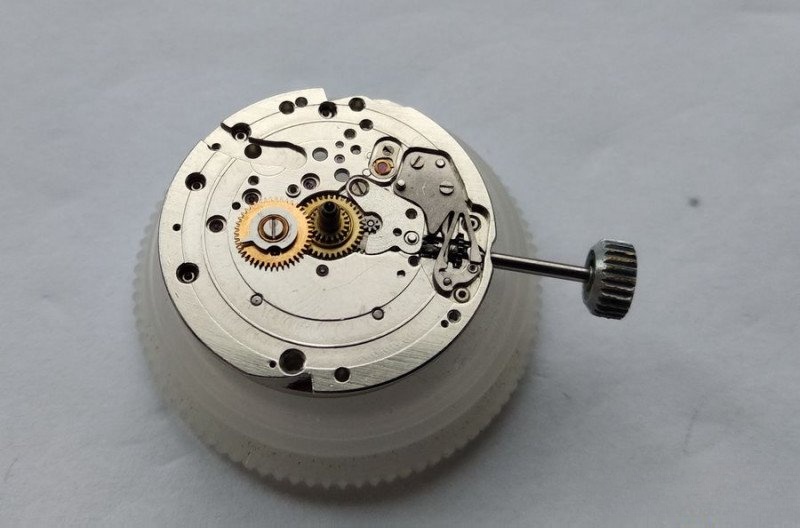
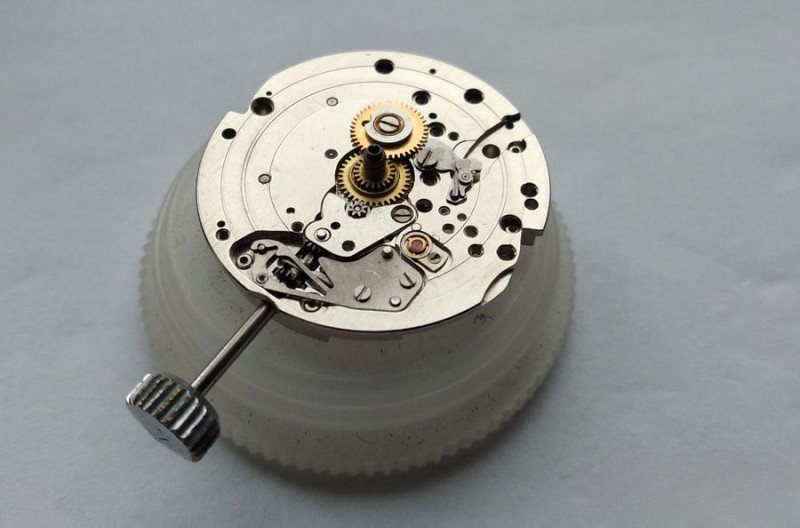
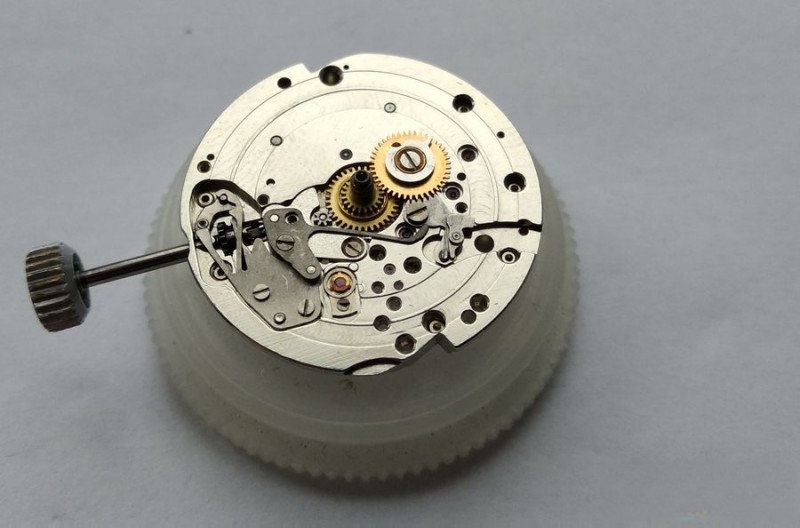
Before reassembling the calendar system, let's examine its key components more closely. The command wheel performs dual functions through its eccentric mechanisms. One finger advances the day-of-week disc progressively, while another triggers the instantaneous date change.
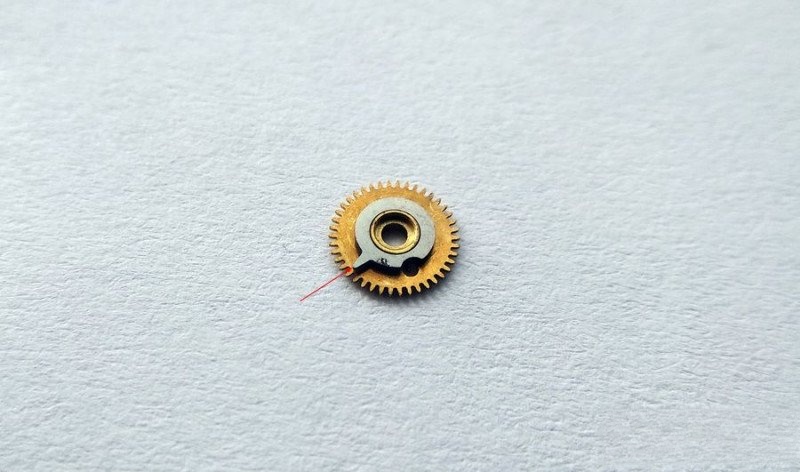
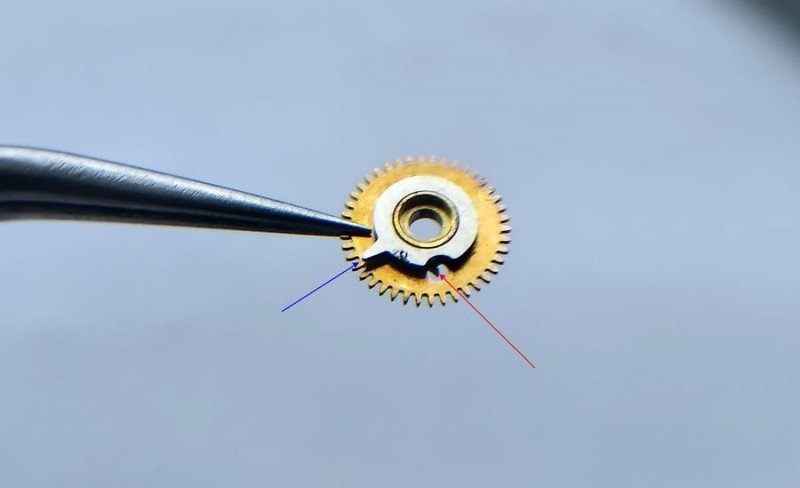
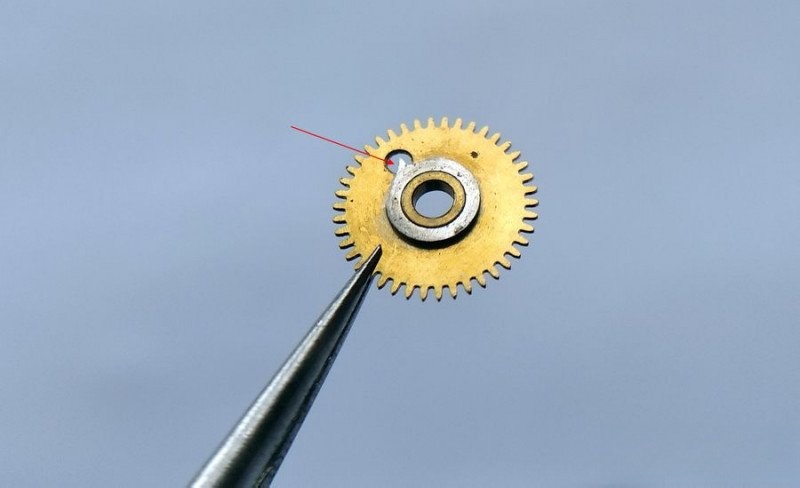
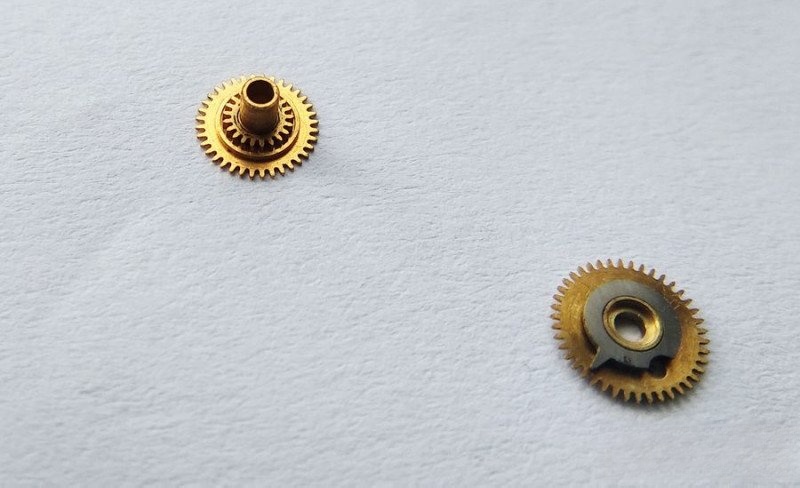
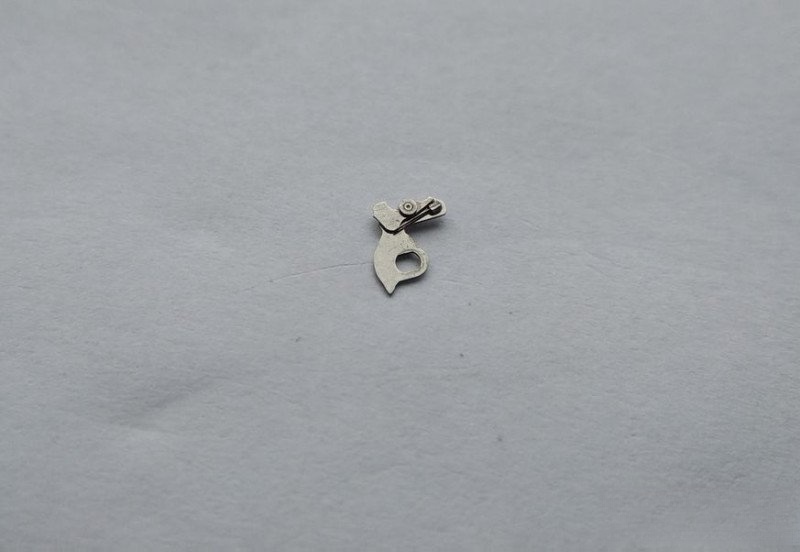
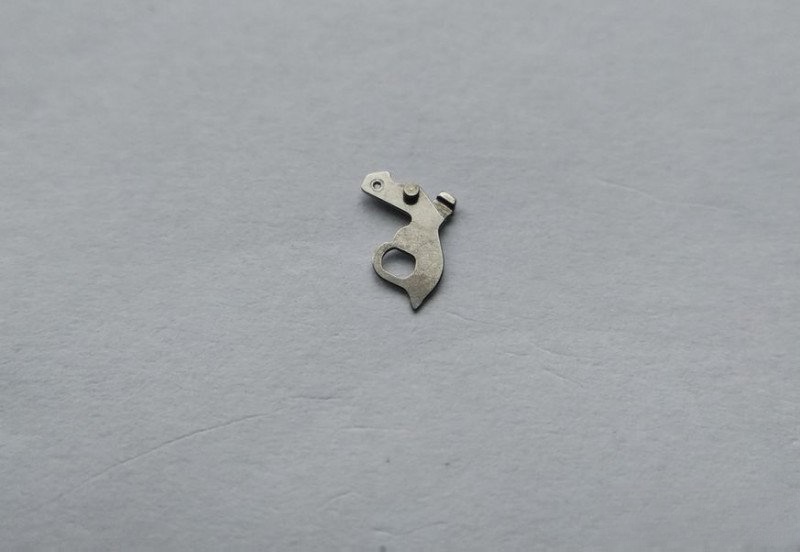
The date transfer lever represents sophisticated engineering. As the lever moves right to left, its pusher contacts a date disc tooth and advances it one step. When moving left to right during accumulator spring wind-up, the pusher mechanism collapses under spring pressure, passing over teeth without advancing the disc.
Balance Assembly Service
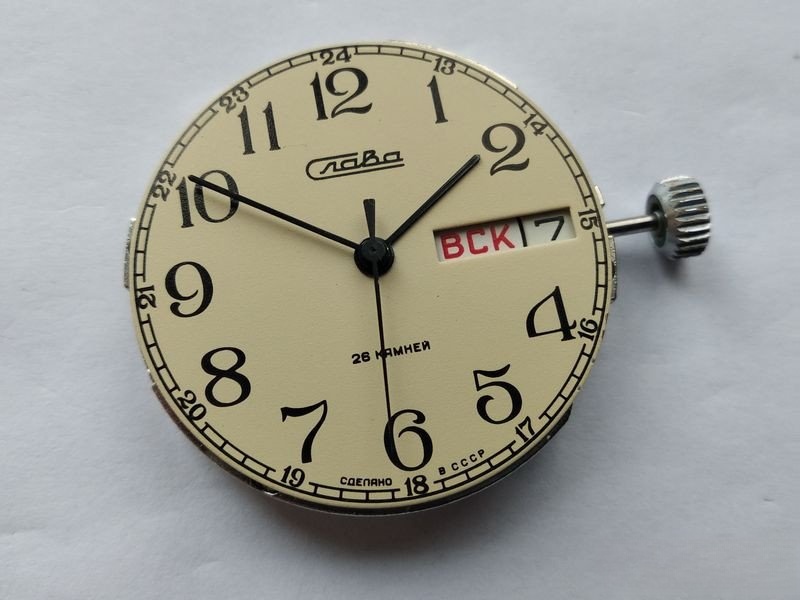
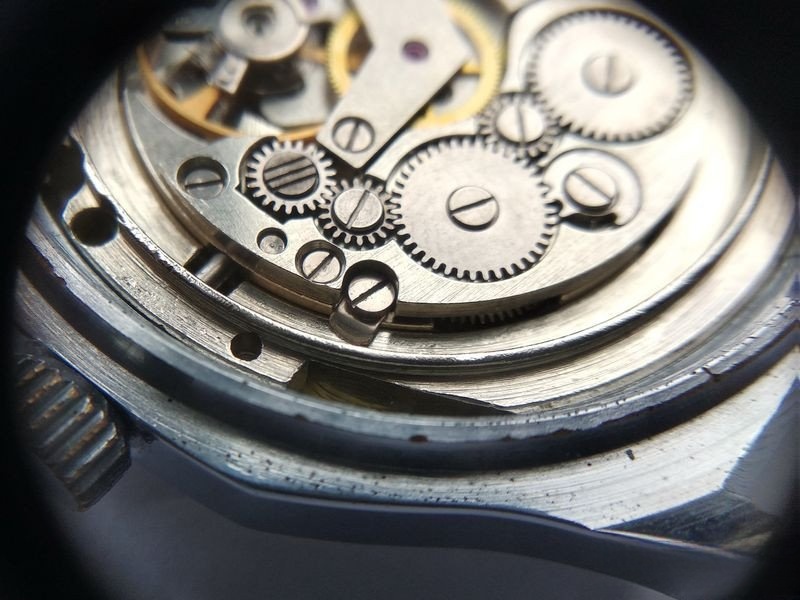
Final Assembly and Testing
At last we can breathe a sigh of relief. Lubricate the rubber gasket with silicone, close the caseback, and secure the threaded retaining ring. The watch is complete. The Slava 2428 demands considerable effort during service due to its complexity, but this remarkable mechanism — one of the finest Soviet watches ever produced — rewards proper care with reliable, accurate timekeeping for years to come.
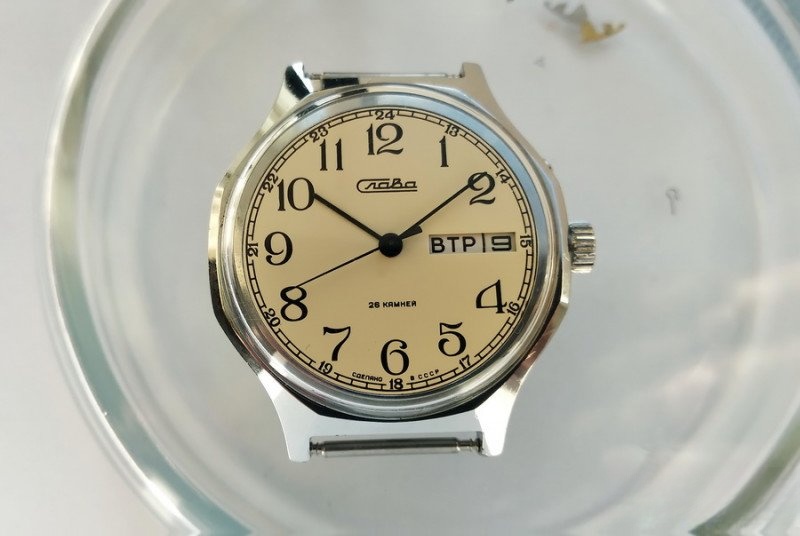
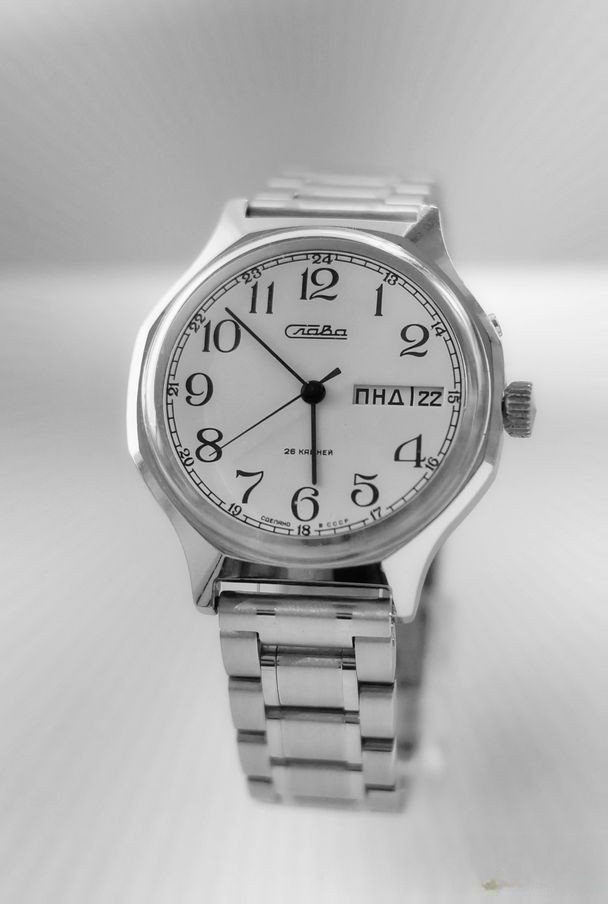
For reference, the dimensions of the Slava 2428 in its octagonal case:
— Dial diameter (crystal opening): 35 mm
— Case diameter: 40 mm
— Lug width: 18 mm
— Lug-to-lug length: 45 mm
— Thickness (at crystal): 10.5 mm

Reflections on the Slava 2428
Having completed this comprehensive service, the engineering philosophy behind the Slava 2428 merits deeper consideration. This was not a movement designed merely to function — it was engineered to excel within the constraints of Soviet production capabilities. The dual-barrel system, instantaneous date change, manual date correction, and sophisticated friction mechanisms represent genuinely ambitious design goals, successfully realized in a production watch.
The 2428 stands among the most complex Soviet calibers ever mass-produced. While it demands more patience and care during service than simpler movements, the satisfaction of restoring one to proper function justifies the effort many times over. These timepieces were built for daily wear, designed to serve their owners reliably for decades — and with proper maintenance, they continue fulfilling that purpose today.
For collectors of Soviet horology, the Slava 2428 represents essential territory. Its technical sophistication rivals contemporary Swiss and Japanese calendar movements, demonstrating that Soviet watchmaking could compete at the highest levels of mechanical complexity. The movement's idiosyncrasies — the offset pallet fork, the short Incabloc springs, the non-jeweled barrel bridge — remind us that every caliber reflects the specific circumstances of its creation, balancing engineering ideals against manufacturing realities.
Whether this is your first encounter with the 2428 or you're adding to years of experience with Soviet movements, I hope this guide provides both practical knowledge and renewed appreciation for these remarkable mechanisms. Each successful service ensures another vintage Soviet caliber continues marking time for its owner, carrying forward the legacy of Soviet horological achievement into another generation.
May your watchmaking endeavors bring the same satisfaction this work provides me — the deep contentment of mechanical systems restored to proper function, ticking steadily through the days ahead.
Comments
Write a comment