
Vostok Caliber 2605: Seventeen-Jewel Soviet Movement — Complete Service Guide

Vostok Caliber 2605: A Complete Bench Service for the Seventeen-Jewel Soviet Movement

Vostok Caliber 2605: A Complete Bench Service for the Seventeen-Jewel Soviet Movement

Vostok Caliber 2605: A Seventeen-Jewel Soviet Movement, Laughter Included

"The caseback is a sealed record. What is written inside is not always what you expect."
— From a watchmaker's bench notes

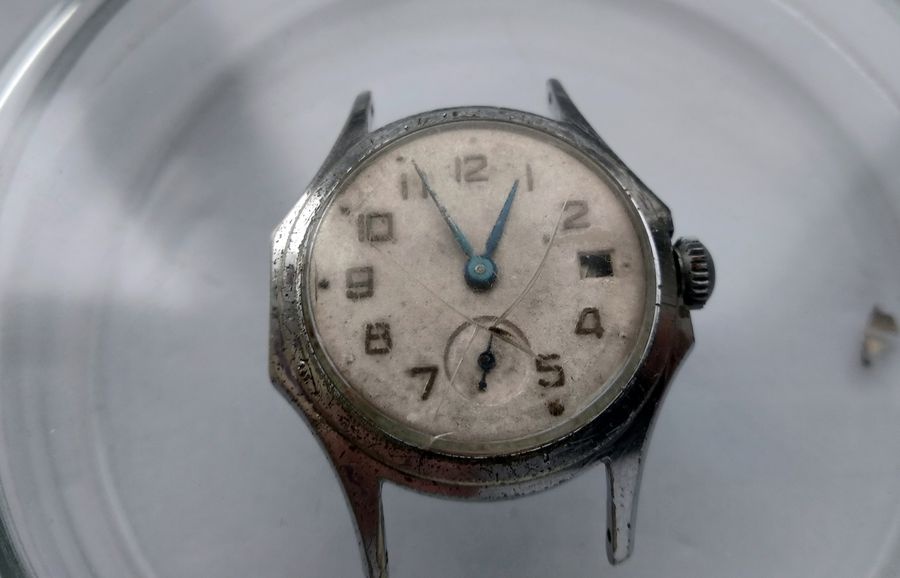
The Vostok caliber 2605 is not a movement one encounters every week. When a friend offered it — no interest in keeping it, take it or leave it — the answer was obvious. The external condition was thoroughly discouraging: shattered mineral crystal, a dial bleached past legibility, rust at the case seams. Something was faintly visible through what remained of the date aperture. Its nature would only become clear later, and it would provide occasion for genuine laughter.

A brief historical note before the tools come out. Soviet watch movements produced through the mid-1960s and somewhat beyond share a common ancestry that traces, without exception, to the French LIP 26 platform — known domestically as the Pobeda. The 2605 is a developed variant of the Pobeda 2600, carrying forward that base architecture while adding substantive refinements: a sealed case construction resistant to both dust and moisture, an anti-shock balance assembly, and — the detail that defines this caliber — two overlay jewels applied to the escape wheel pivot bearings. These additional jewels bring the total to seventeen and account for the engraving on the bridge. The caliber also carries a date mechanism. Or rather, it is supposed to.
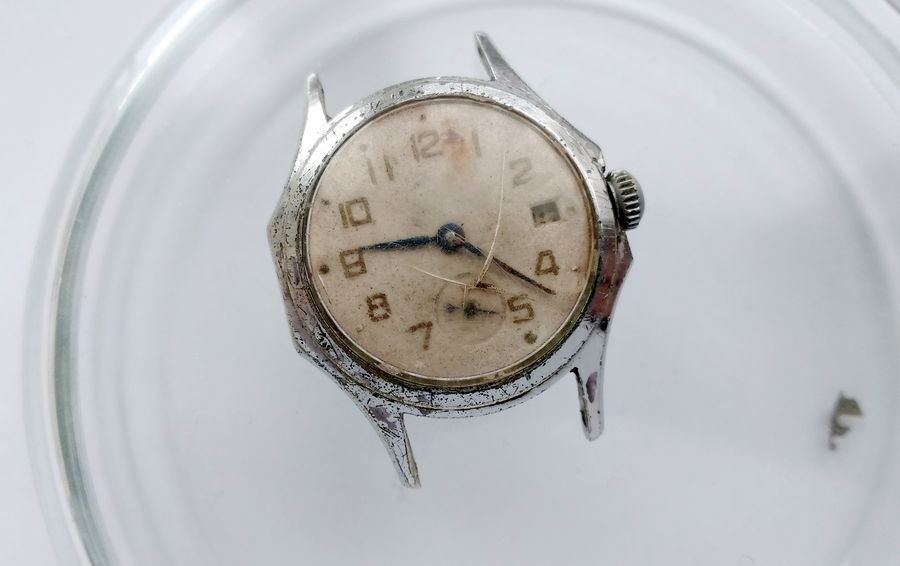
Vostok watch front view showing broken crystal bleached numerals rust at case seams and date aperture with something visible inside
Closer view of the front: broken crystal, sun-bleached dial, rust touching the case. Something is visible through the date aperture — its nature not yet clear. No cause for laughter yet; that comes later

Case Disassembly

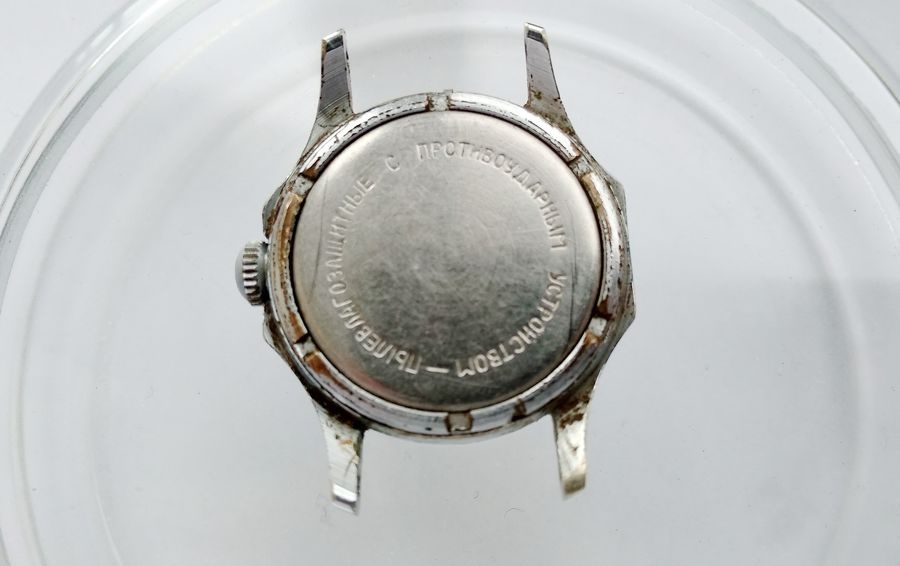
Vostok watch caseback showing Russian inscription confirming dust moisture resistance and anti-shock protection
The caseback inscription: dust and moisture resistant, with anti-shock device. Both are genuine engineering features of this caliber, not marketing language. The sealed case construction will prove its value during service

The threaded retaining ring is unscrewed and the caseback removed. Rust, as expected.
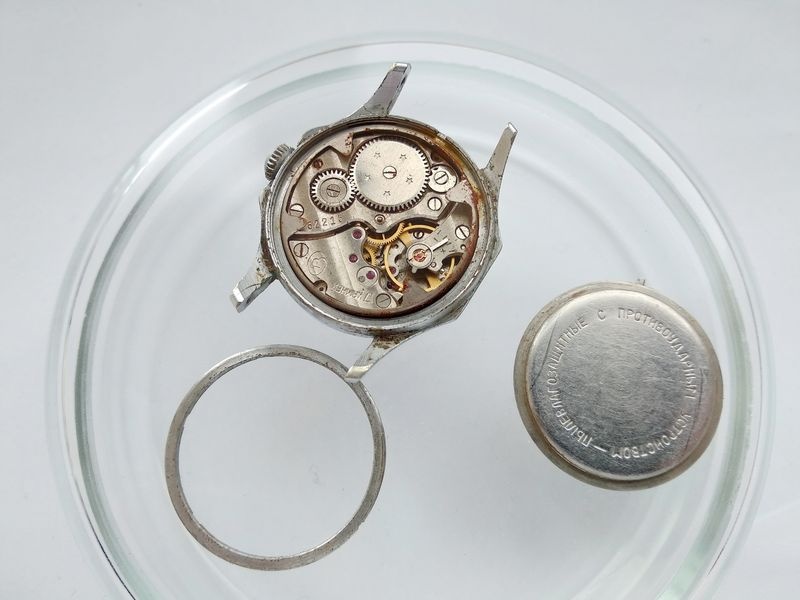
Vostok watch case opened showing rust at gasket seat with caseback and threaded retaining ring set aside
Case opened: rust at the gasket seat is immediately apparent. The threaded retaining ring that secures the caseback is set aside alongside the caseback itself. The gasket has hardened and will require replacement

The gasket ring is removed. With it out, the movement becomes visible — and the first impression is of something closely related to the Raketa 2603. The distinctions will emerge during disassembly.
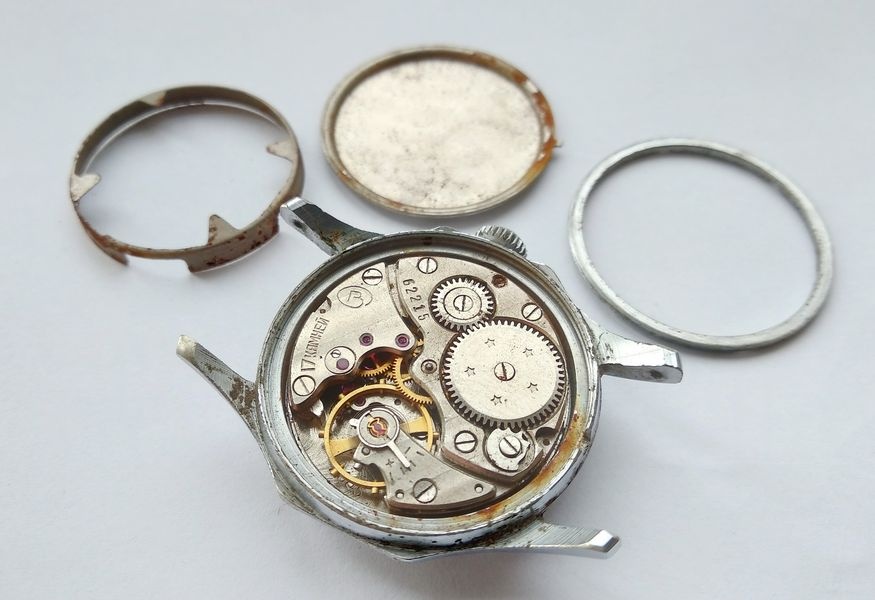
Vostok 2605 movement visible in case after gasket removal with threaded retaining ring and movement holder ring set alongside
Movement visible with the gasket removed — the resemblance to the Raketa 2603 is immediately apparent. The threaded retaining ring and the movement holder ring that keeps the caliber seated in the case body are laid out alongside the caseback. The differences from the Raketa will become clear once disassembly begins

The winding lever in this caliber is retained by a single screw — the simplest stem-release arrangement in the Soviet hand-wound family, requiring no secondary springs. The screw is rusty but releases without difficulty. Stem removed, movement lifted clear of the case.
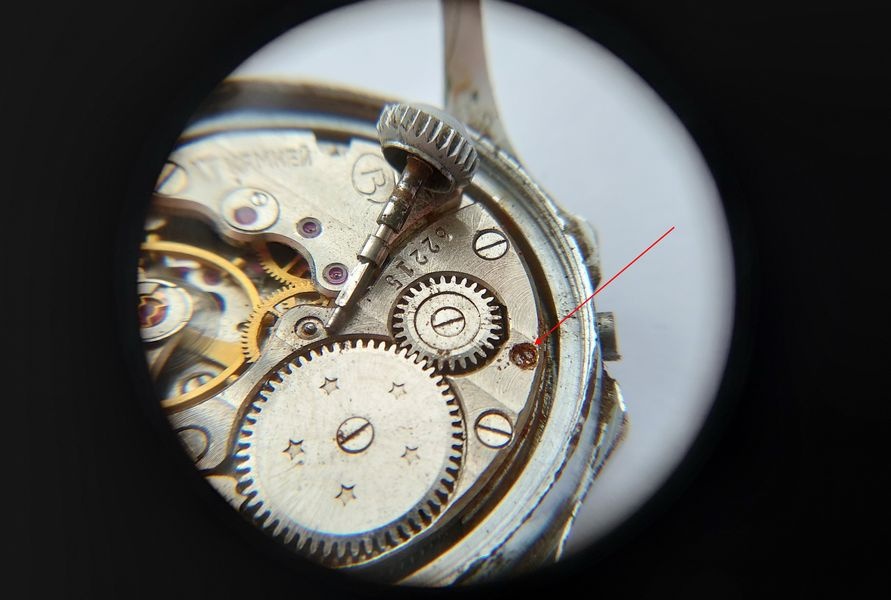
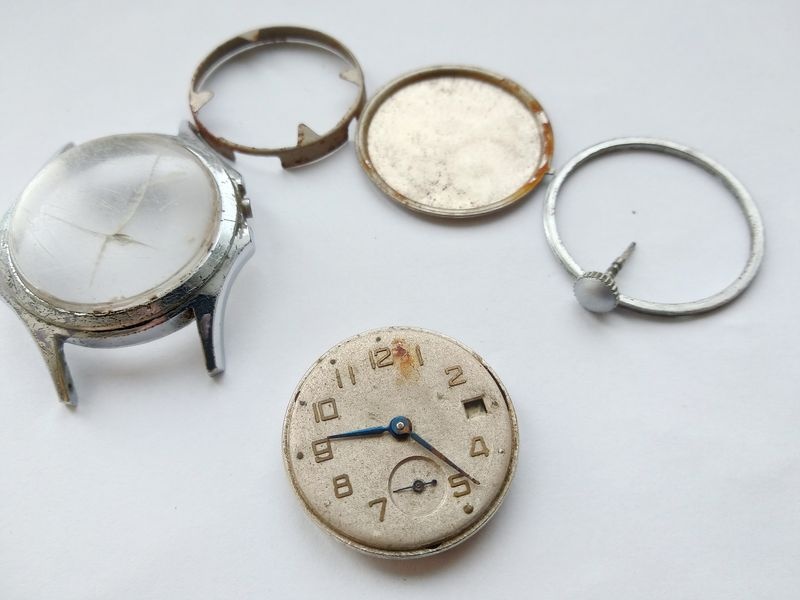
Vostok 2605 movement being extracted from case after winding lever screw released and stem withdrawn
Movement extraction: the winding lever is held by one screw — the most straightforward design of its type, with no additional springs in the release mechanism. The screw, despite rust, gives without trouble. Stem out, movement out
Vostok 2605 movement out of case viewed from dial side showing dial with hands and motion works all in place
Movement from the dial side: everything is in order. The dial, hands, and motion works are all present and undisturbed. Assessment continues from the other side
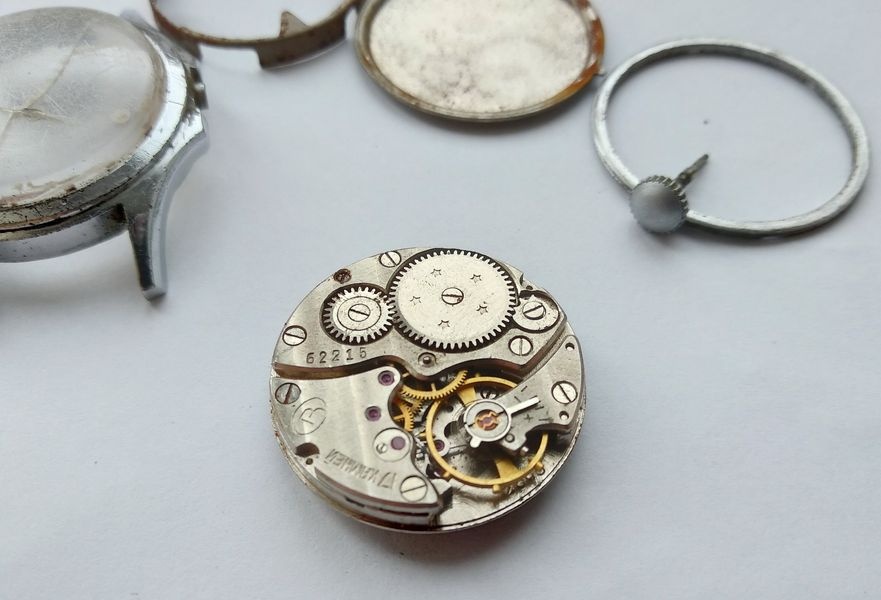
Vostok 2605 movement viewed from balance side showing gear train bridge Vostok logo serial number ratchet wheel
Movement from the balance side: equally intact. The Vostok factory logo, serial number, ratchet wheel, and barrel ratchet wheel are all legible on the bridge. The movement presents well at this stage

Hands Removal and Initial Movement Examination

Hands come off first.
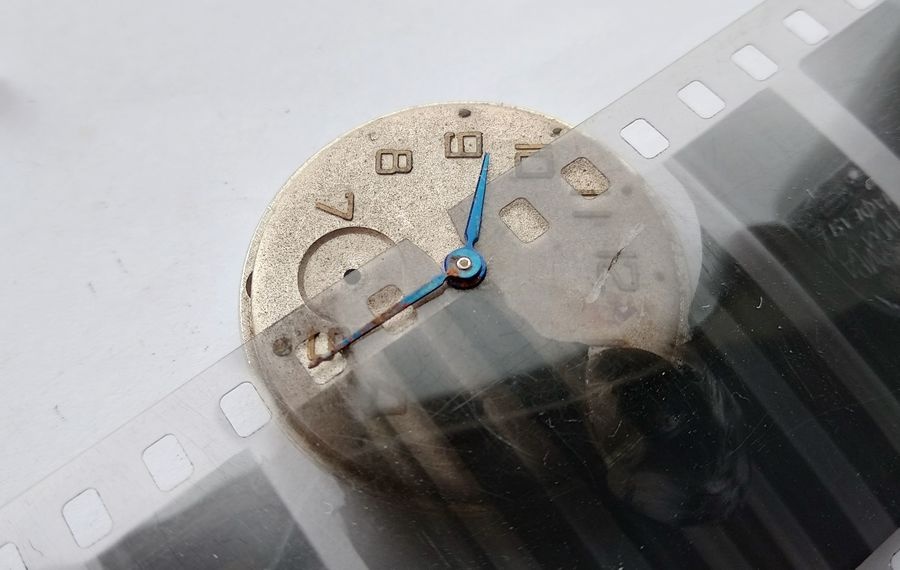
Vostok watch dial with hands photographed on 35mm film strip backdrop before hand removal
Dial and hands photographed on a 35mm film strip used as a backdrop — a reference shot before removal. The date aperture at three and the sub-seconds opening at six are both visible through the heavily bleached numeral surface
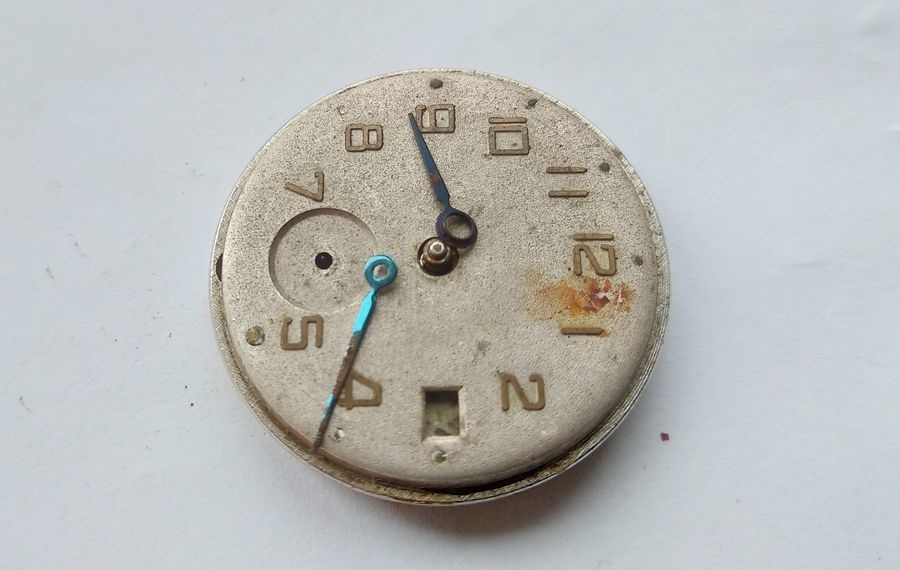
Vostok watch dial face with hands removed showing date window at three o'clock and sub-seconds opening at six
Hands removed. The dial face with both apertures now unobstructed — the full extent of the sun bleaching confirmed across the surface
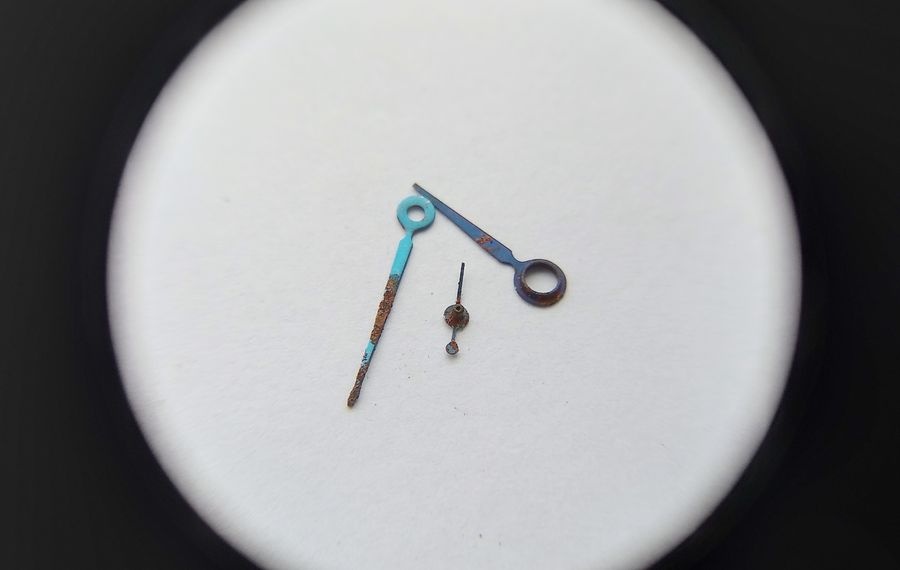
Three removed Vostok watch hands through loupe showing blue steel hour minute and seconds hands with surface oxidation
The three hands laid out: hour and minute hands in blue steel with surface oxidation, the seconds hand with its small counterweight at the tail end. Either refinished or replaced — the condition does not justify keeping them as-is

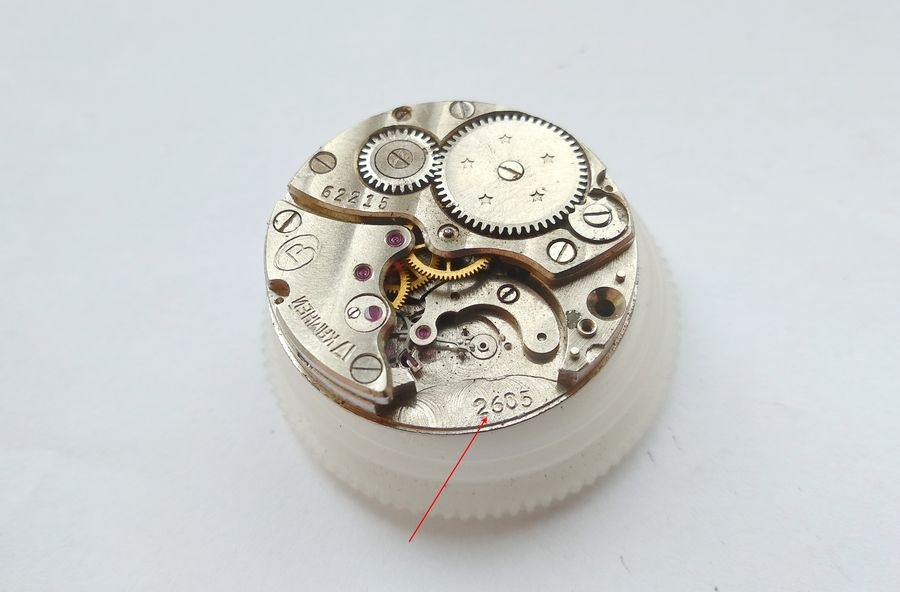
With the hands off, a closer look at the movement. The gear train bridge carries the Vostok factory logo. More significantly: the escape wheel runs on overlay jewels — a feature absent in both the Raketa 2603 and the Pobeda. These two additional jewels are precisely what justifies the "17 jewels" engraving on the bridge. The center wheel, by contrast, runs without jewels. The balance is anti-shock, using incabloc lyre springs — visible here on the bridge.
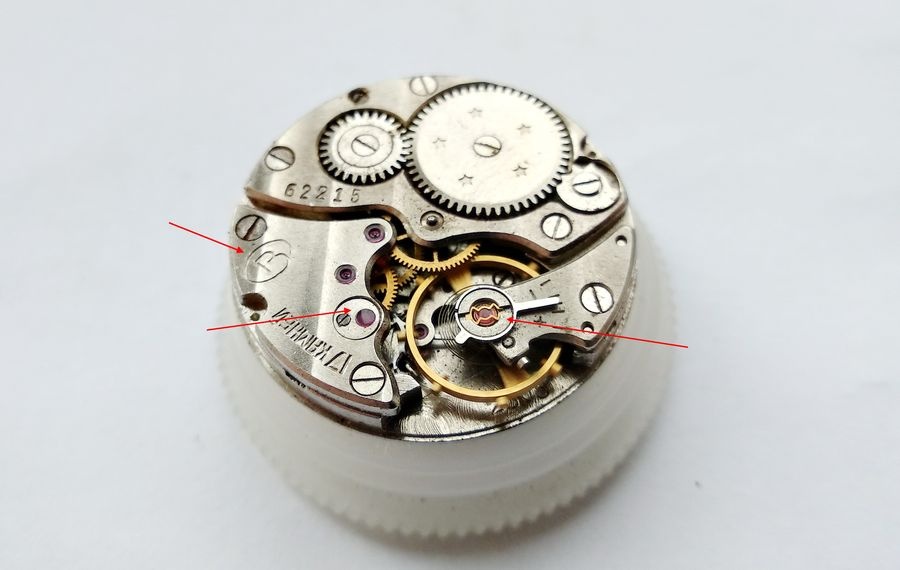
Vostok 2605 movement on holder bridge side with two red arrows indicating incabloc lyre spring and escape wheel overlay jewel
Bridge side with two annotations: the upper arrow indicates the incabloc lyre spring on the balance cock; the lower arrow points to the overlay jewel position at the escape wheel — the two jewels that distinguish this caliber from the fifteen-jewel Raketa 2603 and the Pobeda, and that earn the "17 камней" inscription

Balance and Pallet Fork Removal

Disassembly continues. The balance comes off next — screwed rim, anti-shock, non-Breguet hairspring. The bridge is very dirty. It will clean.
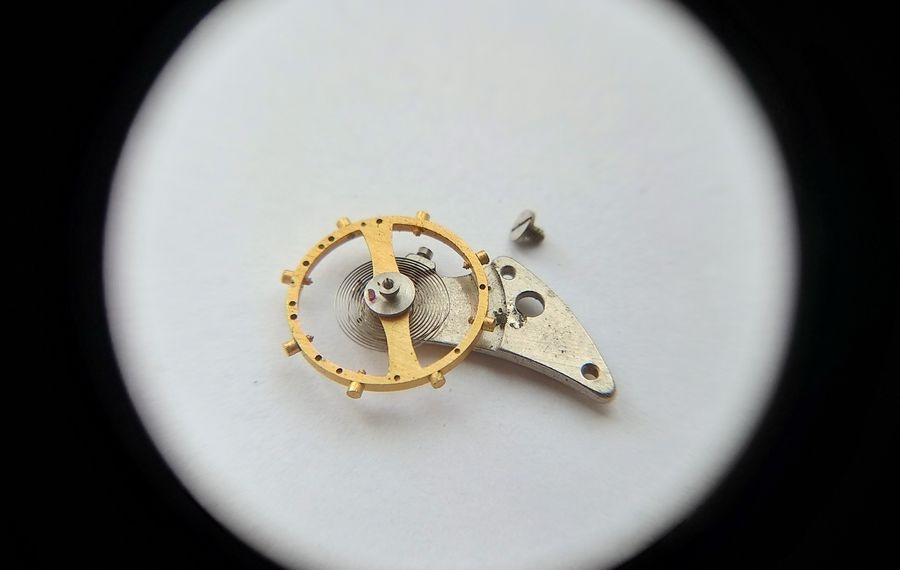
Vostok 2605 balance assembly removed showing screwed balance wheel flat hairspring and balance cock with incabloc seat
Balance removed: screwed rim, anti-shock construction, flat non-Breguet hairspring. The bridge is exceptionally dirty — accumulated contamination over an extended service interval. Nothing that cleaning will not address

A note on the lyre springs: in the Raketa 2603, the lyre springs are fixed in a way that the bouchon can be extracted without removing the spring. Here, as in the Raketa 2609, the springs are unfixed — they must be fully removed to access the bouchon beneath. This distinction directly affects the service procedure.
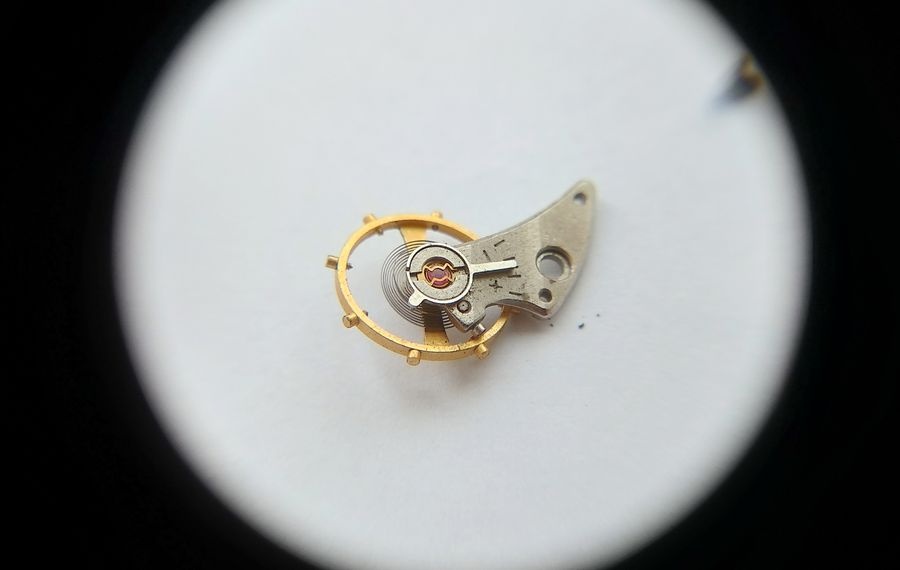
Vostok 2605 balance assembly from second angle showing incabloc lyre spring and bouchon detail in balance cock arm
Balance assembly from a second angle — the lyre spring and bouchon arrangement is clearer from here. Unlike the Raketa 2603, where the lyre spring stays in place during bouchon service, this caliber follows the Raketa 2609 pattern: the spring is not locked and must be fully removed. This will matter at reassembly
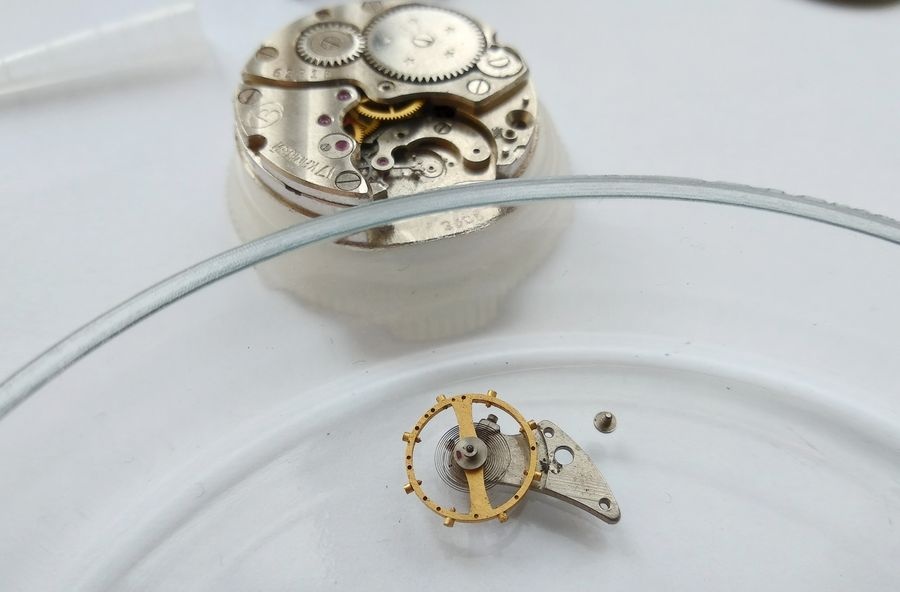
Vostok 2605 movement on holder with balance assembly removed and placed in watch glass Petri dish below
Balance set aside in a watch glass under its cover — it will wait there while the rest of the disassembly and cleaning proceeds. It is the last component to go back in at reassembly
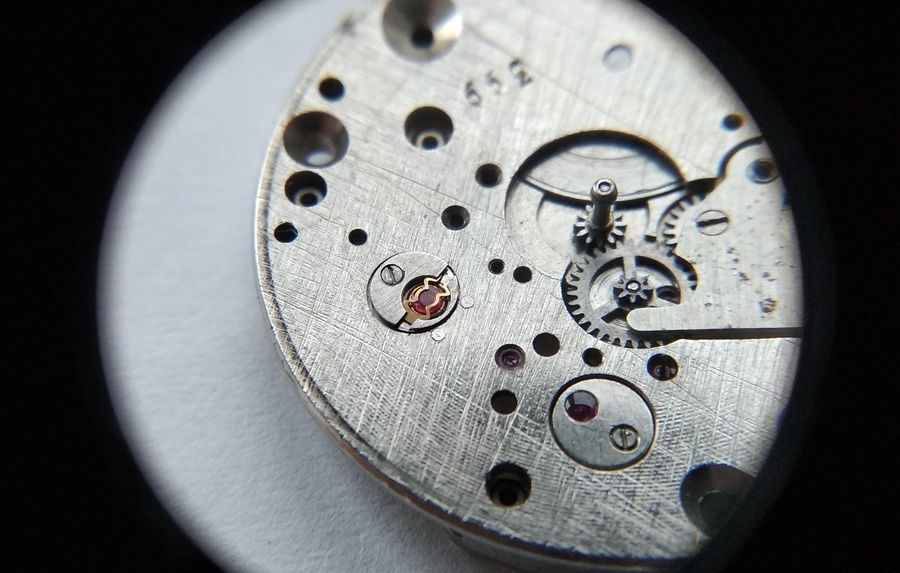
Vostok 2605 movement on holder with caliber 2605 marking visible on main plate beneath balance position
With the balance removed, the caliber designation "2605" stamped into the main plate is accessible and clearly legible — a useful confirmation when the movement identity needs to be established with certainty

Pallet fork removed. Moving to the dial side.
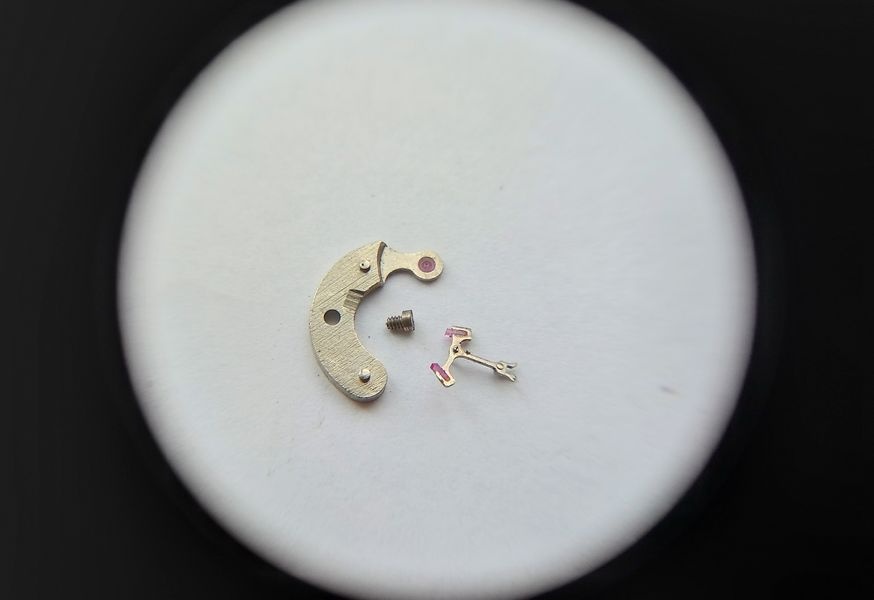
Vostok 2605 pallet fork and pallet fork bridge through loupe showing both pallet stones
Pallet fork and its bridge, through the loupe. Both pallet stones are visible. The fork comes off before moving to the dial side — standard sequence in this caliber family

Dial Removal and the Discovery

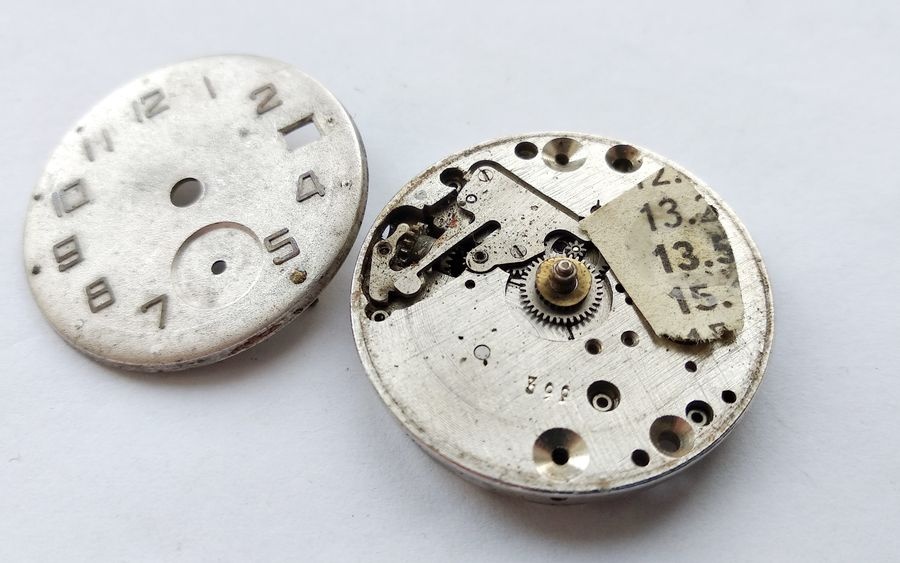
Two small screws retain the dial feet. The expectation: a calendar mechanism underneath. Release the screws, lift the dial — and there it is.
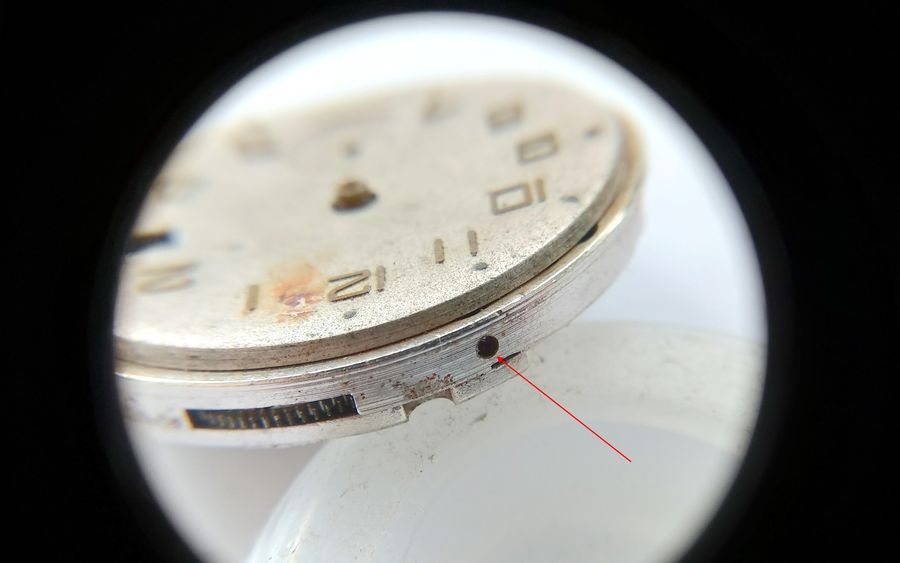
Vostok 2605 movement edge through loupe showing dial foot screw position with red arrow
The dial-foot screw location, indicated by the red arrow — these two screws are released before the dial can be lifted. Calendar mechanism expected beneath. The screws come out; the dial comes off
Vostok 2605 movement dial-side with newspaper clipping substituting missing calendar disc visible in calendar mechanism recess
The punchline: the calendar disc and its driving components are gone. In their place — a cut piece of newspaper bearing printed date numerals, laid flat over the calendar mechanism area so that numbers appeared in the date window. Viewed through the crystal, it passed for a working calendar. It was not. The paper goes in the bin; the calendar parts will need to be sourced separately

After a pause to collect composure: the decision is made to continue. Everything else in the movement is intact. This caliber is rarely encountered on the bench. The cosmetic condition will not be addressed — but the mechanism will be brought to working order.

Dial-Side Disassembly
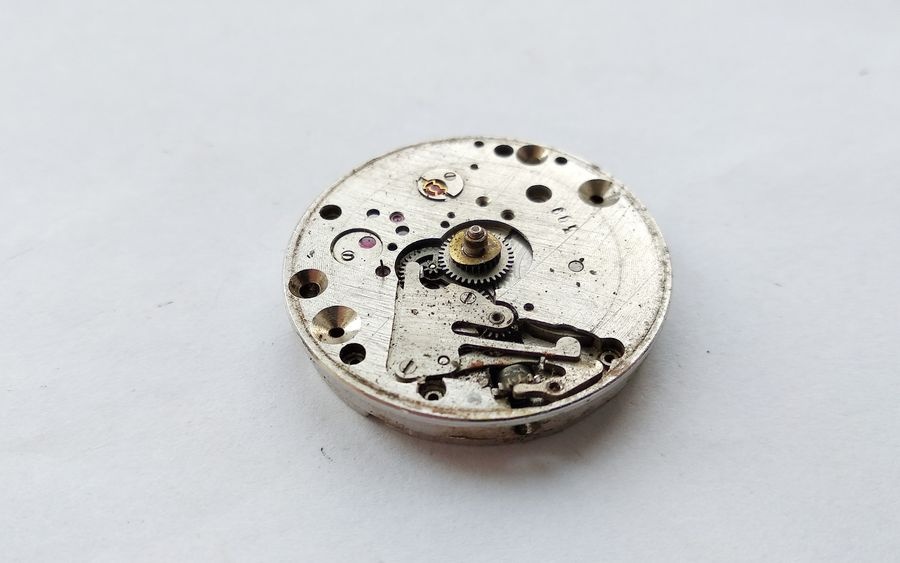
Vostok 2605 movement dial side after dial removal showing motion works hour wheel cannon pinion and keyless works
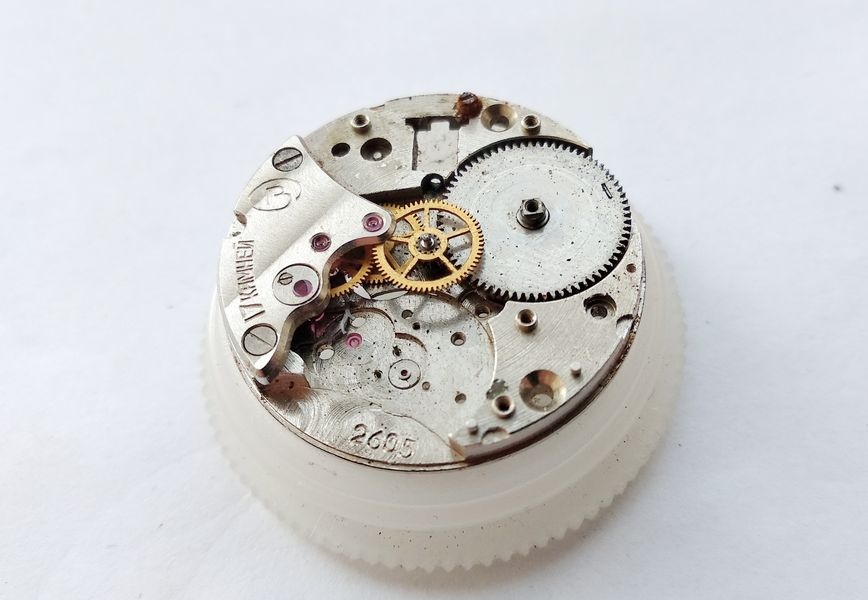
Movement dial side with the dial removed — everything else intact. The motion works and keyless works are all present. Disassembly of this side now proceeds

The hour wheel and its spring washer come off, followed by the cannon pinion. The hour wheel is two-tiered — a design intended to interface with the calendar mechanism that someone saw fit to remove.
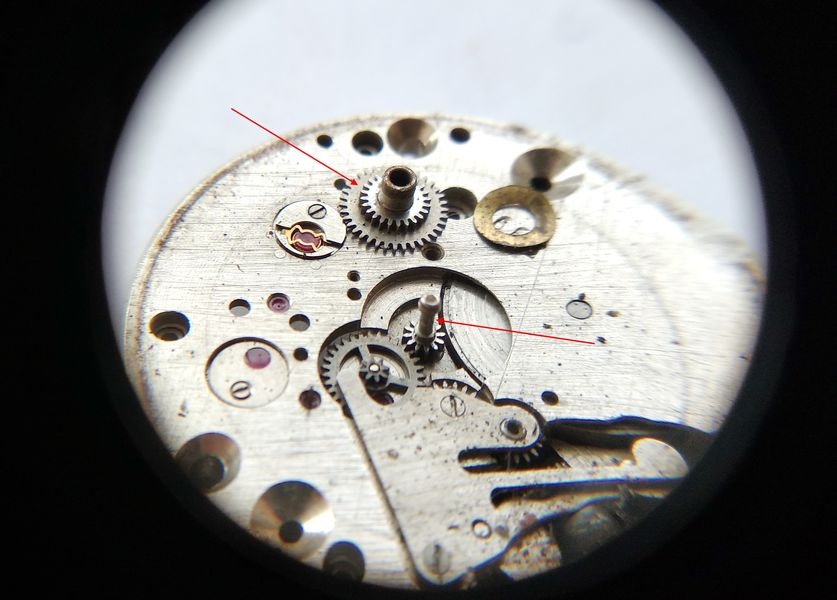
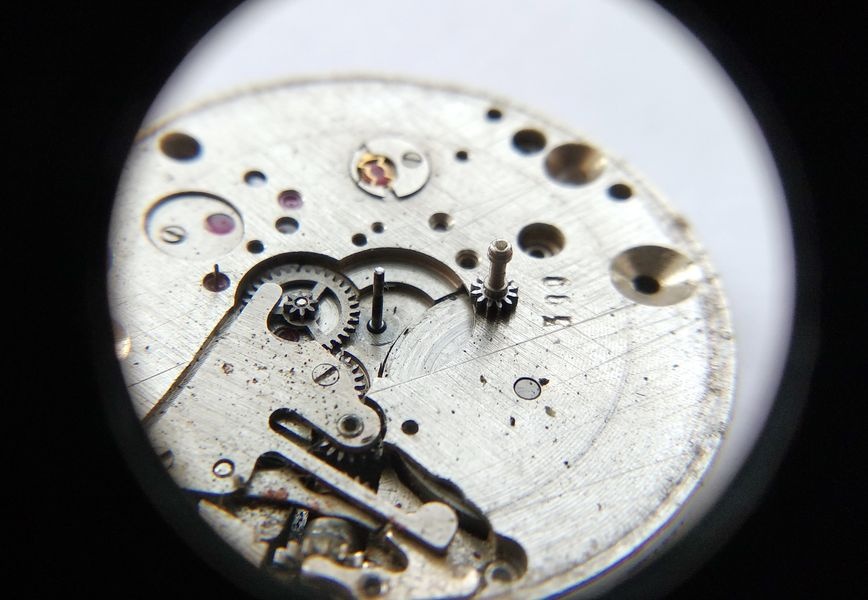
Vostok 2605 dial side through loupe showing two-tier hour wheel and cannon pinion being removed from motion works
Hour wheel and cannon pinion removed from the motion works. The hour wheel is two-tiered — its upper stage was designed to drive the date disc that is no longer there. The pinion comes off next
Vostok 2605 cannon pinion through loupe showing distinctively thin construction different from similar calibers
The cannon pinion through the loupe — notably thin in construction, a departure from the equivalent component in closely related movements. Worth noting for parts identification

The keyless works cover comes off. No unusual features in the mechanism itself — except that the small transfer wheel has been installed upside-down.
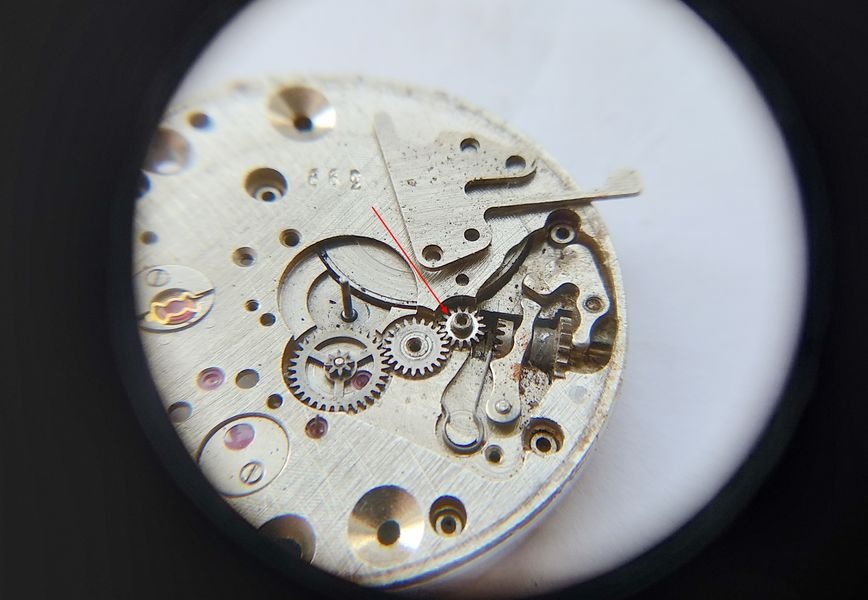
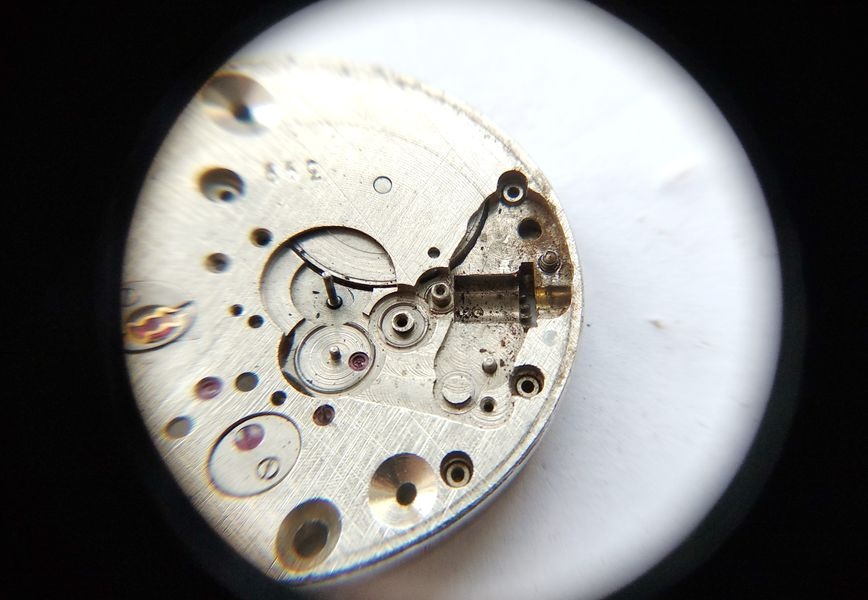
Vostok 2605 keyless works after cover removal through loupe showing transfer wheel installed upside down
Keyless works with the cover removed. Nothing unexpected — except the small transfer wheel, which is installed upside-down. The mechanism functioned regardless, but it is noted
Vostok 2605 keyless works disassembled through loupe showing heavy dirt contamination in components
Keyless works disassembled. Heavy contamination, as expected — there is always more accumulated dirt in the keyless works than anywhere else in the movement
Vostok 2605 all keyless works components laid out in pieces on workbench
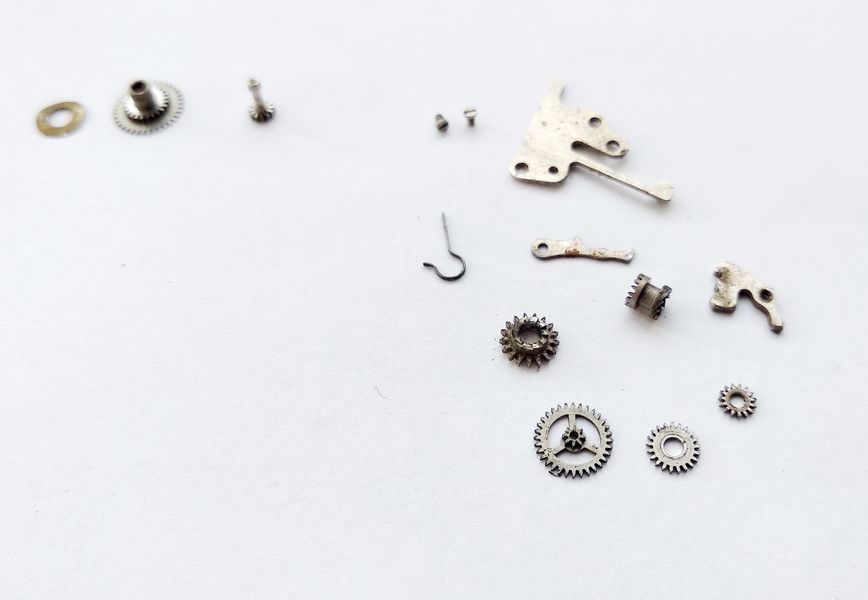
The complete keyless works in pieces, set aside. The disassembly of this side is finished; moving to the gear train bridge side

Gear Train Side Disassembly

Vostok 2605 movement on holder viewed from gear train bridge side showing bridge with Vostok logo and caliber markings
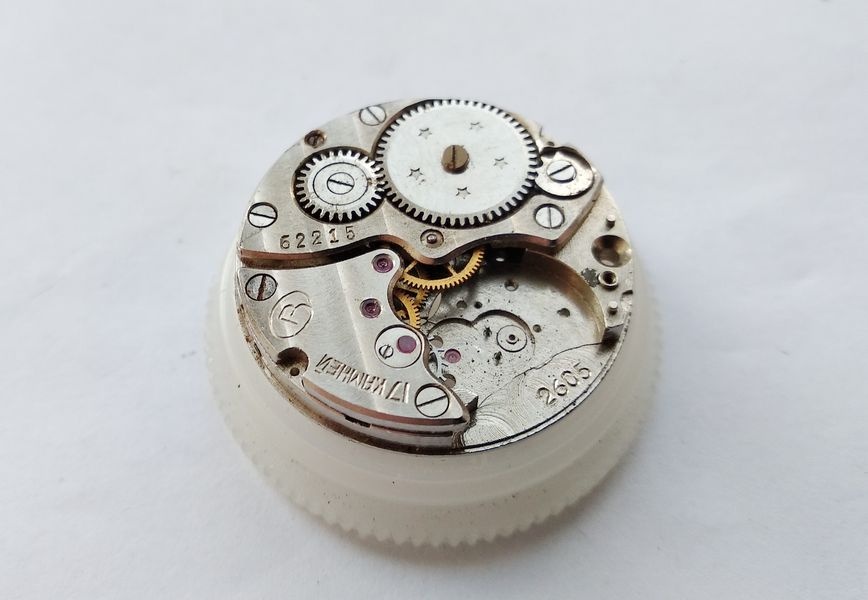
The gear train bridge side. The Vostok logo, serial number, and caliber designation are all engraved here. This is the side from which the going train is accessed

The barrel ratchet wheel is removed. The click mechanism here uses an older-production spring geometry — an interesting detail worth noting for those familiar with the evolution of this caliber family.
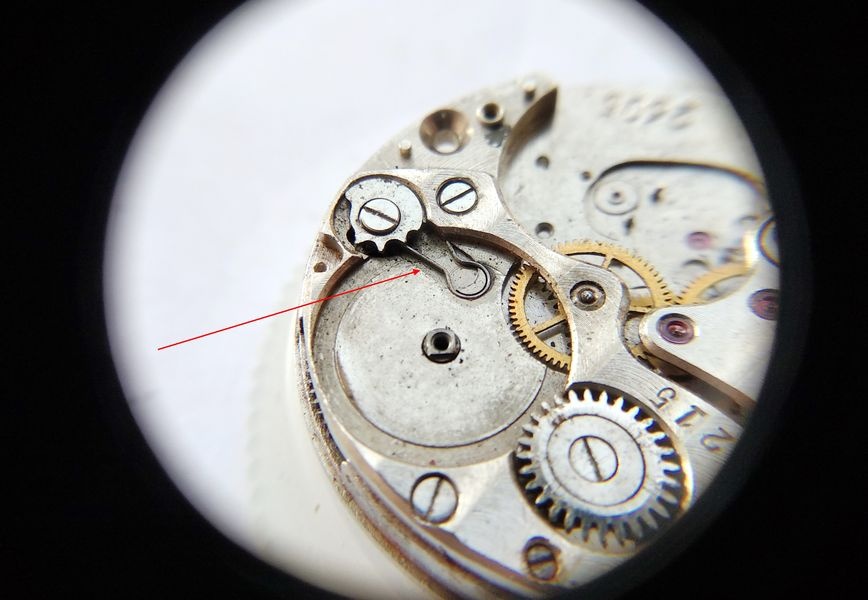
Vostok 2605 barrel area through loupe showing barrel ratchet wheel removed and old-style click mechanism with its spring
Barrel ratchet wheel removed — the click mechanism visible here uses an earlier-production spring form, distinct from later variants of this caliber family. An observable detail rather than a functional concern
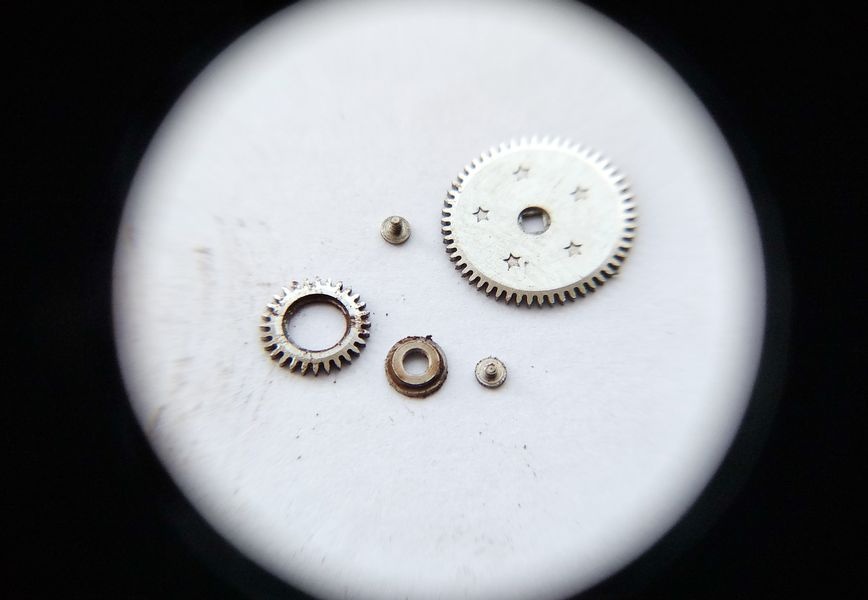
Vostok 2605 winding wheel system disassembled through loupe showing winding train components
The winding wheel system disassembled. Components set aside for cleaning along with the rest
Vostok 2605 movement on holder with barrel bridge removed and going train wheels visible with contamination
Barrel bridge removed, going train disassembled. Done with this side. The contamination state of the wheels is visible — degraded lubricant throughout
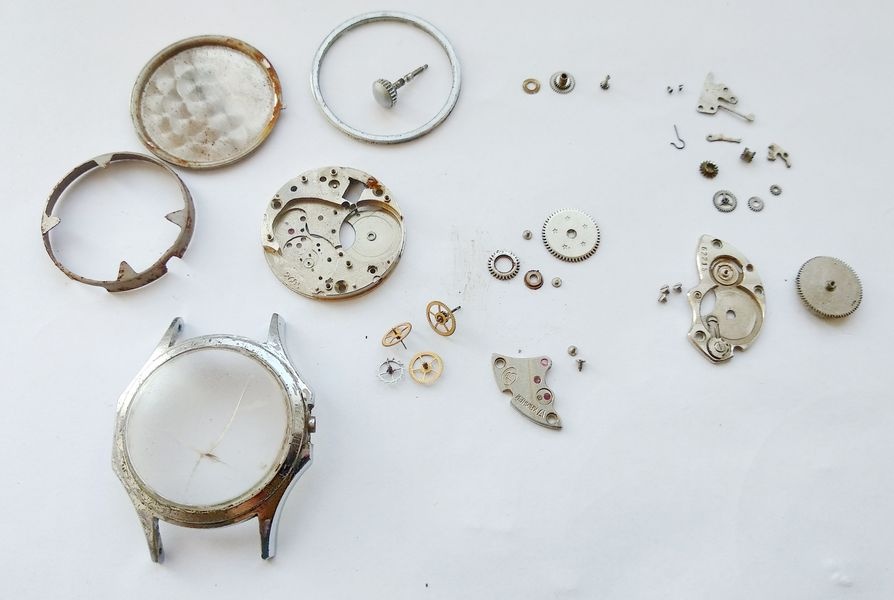
All Vostok 2605 components fully disassembled and laid out on workbench in groups
Everything in pieces. The movement is fully disassembled — case components, main plate, going train wheels, pallet fork assembly, barrel, and keyless works all laid out. Now for the barrel

Barrel

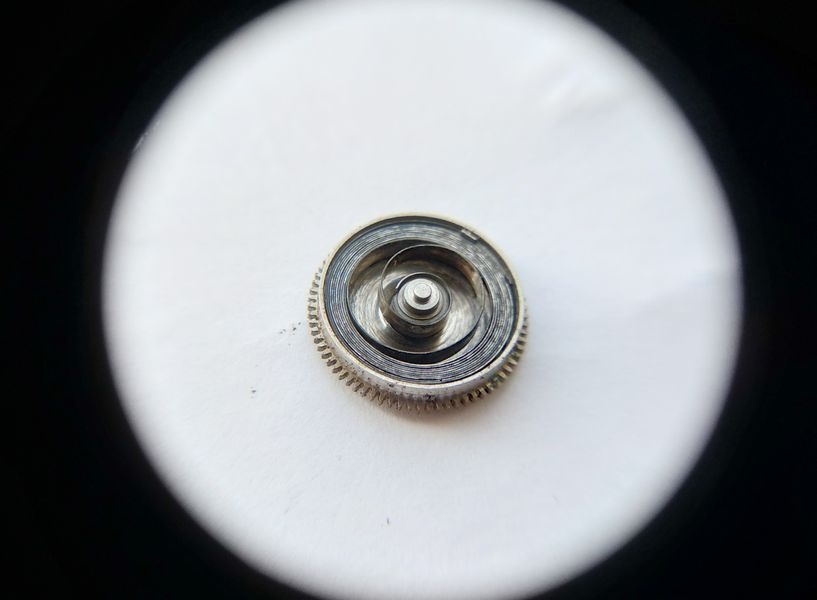
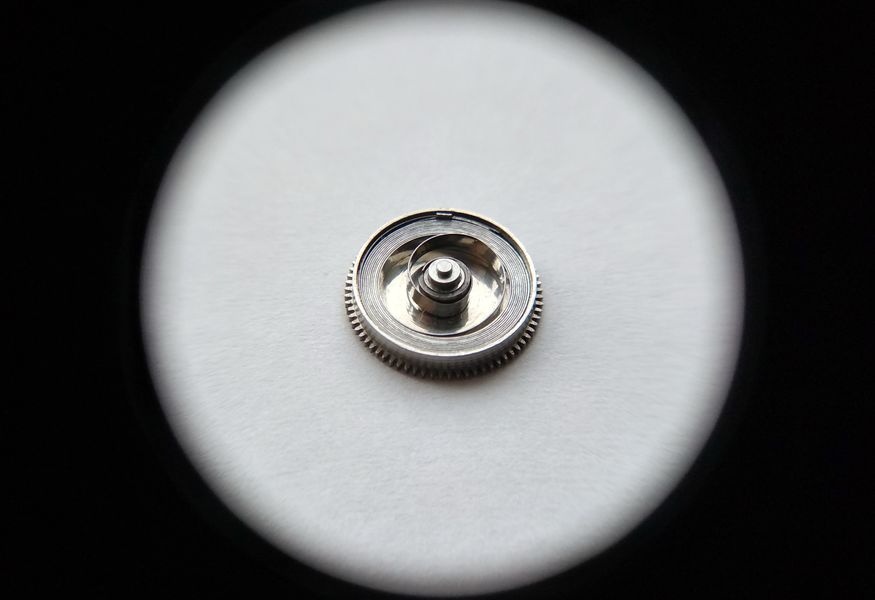
Vostok 2605 barrel opened through loupe showing mainspring coiled inside with dirt and degraded lubricant
Barrel opened — dirt inside, as expected. The mainspring is coiled in degraded lubricant. It comes apart for cleaning
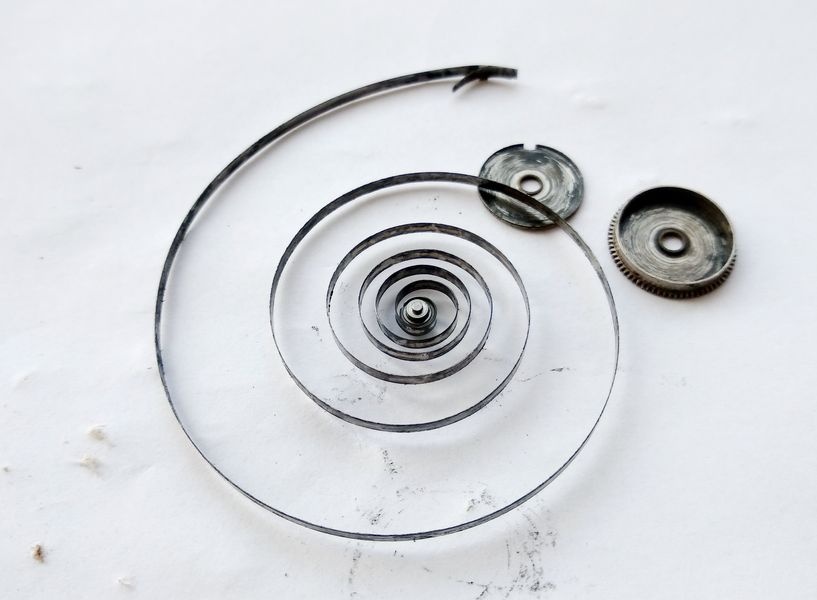
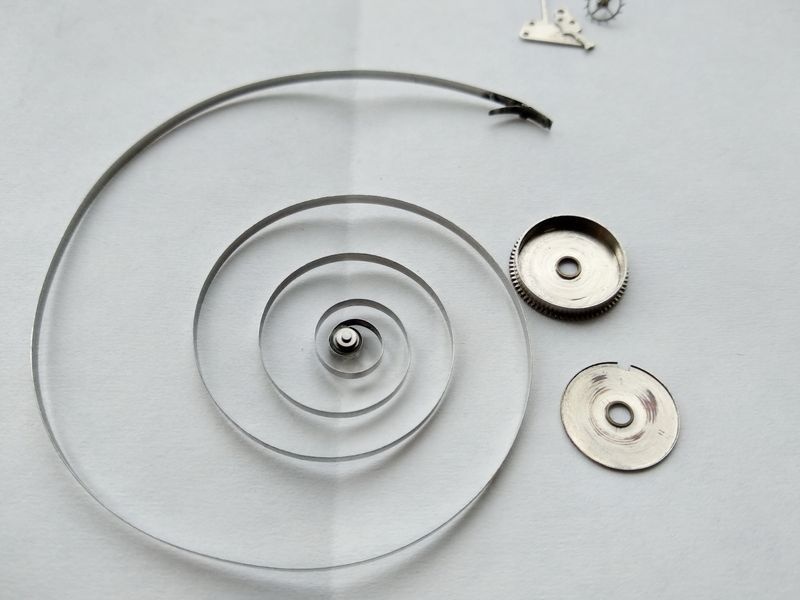
Vostok 2605 mainspring fully extended alongside barrel body and cover showing spring length and condition
Mainspring extracted and extended: an ordinary spiral spring. No fractures, no compression set. The barrel body is in decent condition. Both will clean up well

Cleaning

Everything goes into benzine and onto the balcony. The movement's surprises have taken some of the enthusiasm out of the session — let it soak. When the time comes, it will be assembled. Some time passes. A helpful reminder from a domestic partner that the balcony is not a permanent parts storage facility. The time has come.
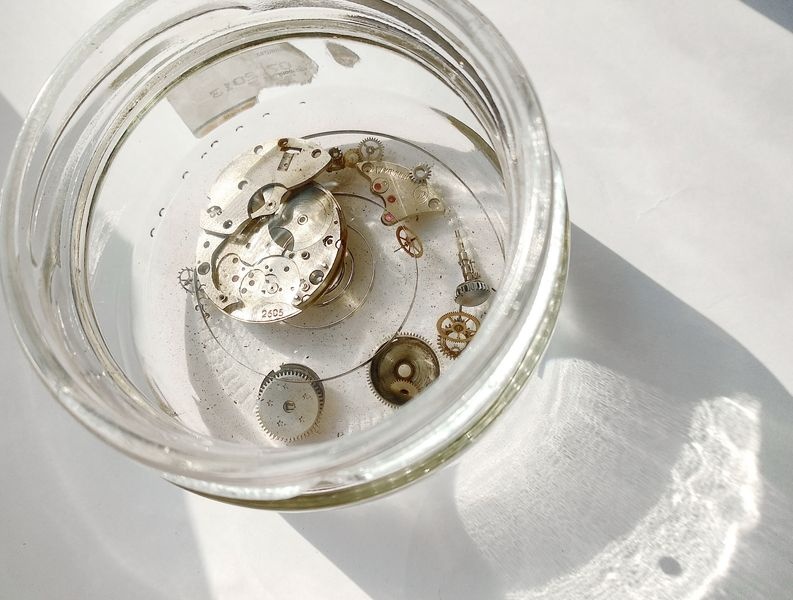
Vostok 2605 all movement components submerged in glass jar with benzine cleaning solvent on balcony
All components in the benzine bath, set on the balcony to soak. The calendar substitution has dampened the enthusiasm for this particular job. Distance from the bench helps

The parts soaked well. After additional cleaning with a brush, they look like new.
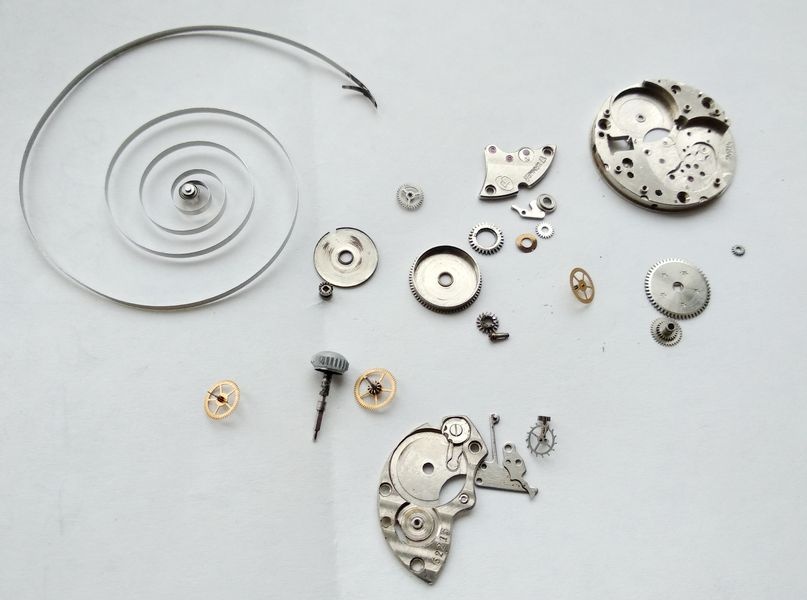
Vostok 2605 all components after cleaning laid out bright and clean showing contrast with pre-cleaning state
After soaking and additional cleaning: every component is bright and clean. The contrast with their pre-cleaning state is considerable. Reassembly begins

Reassembly: Barrel

Vostok 2605 cleaned barrel body and mainspring ready for reassembly
Starting with the barrel. Body and mainspring ready for reassembly — the spring's clean steel surface shows its condition clearly
Vostok 2605 mainspring being installed into barrel showing spring shining in sunlight
Mainspring going in — the clean steel catches the light noticeably. The spring is lubricated at the coil interfaces before the cover is fitted
Vostok 2605 barrel through loupe showing mainspring coiled inside after lubrication before cover installation
Mainspring lubricated and seated in the barrel, cover not yet installed. Lubrication confirmed. The barrel is ready to be closed
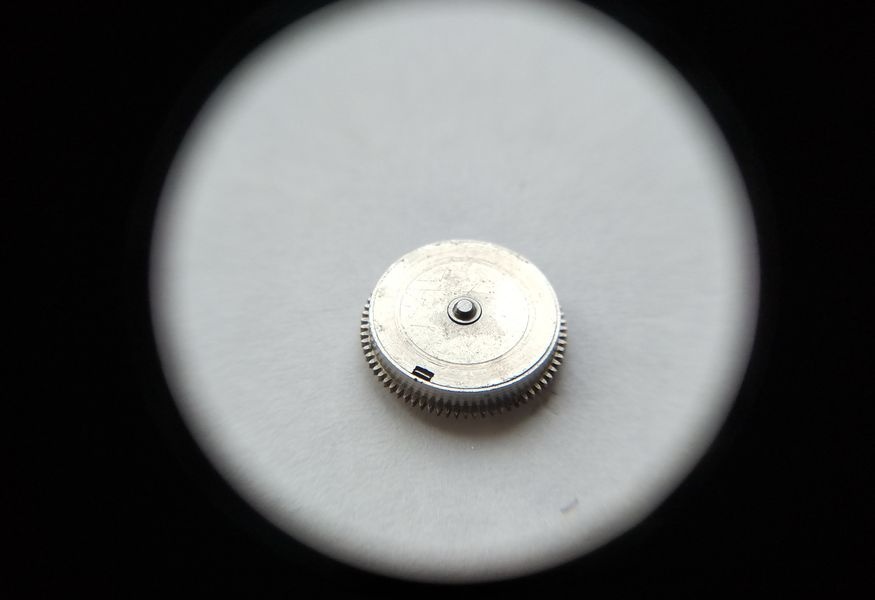
Vostok 2605 barrel through loupe with cover pressed into place and closed
Barrel cover pressed into place and closed. The retaining lip seats uniformly around the circumference
Vostok 2605 barrel through loupe from arbor side showing sword-shaped cover tabs seated in their slots
The tabs of the sword-shaped barrel cover are seated in their slots — the cover is correctly locked. Barrel complete

Reassembly: Going Train

A deliberate departure from the usual assembly sequence: the center wheel goes in first, rather than the escape wheel. The pinion is clean, the wheel is in excellent condition.
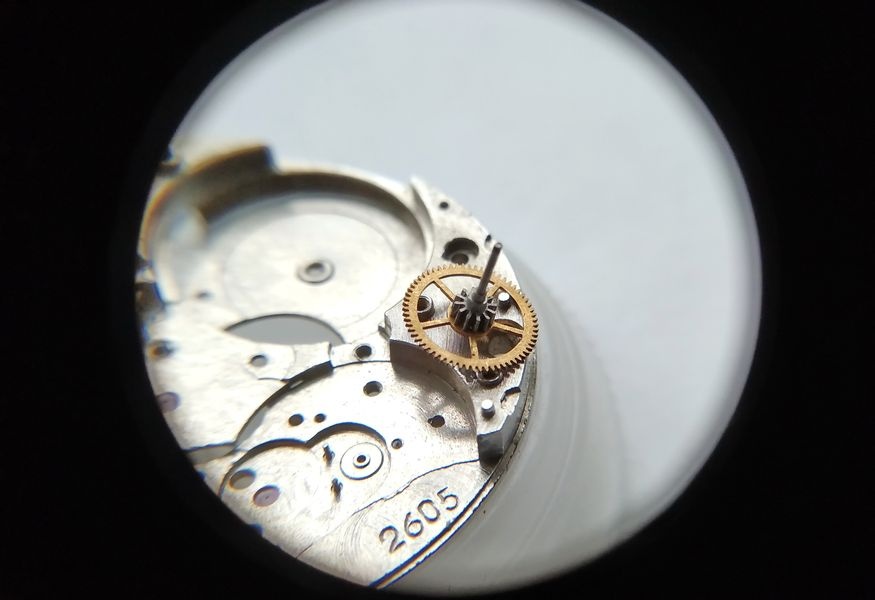
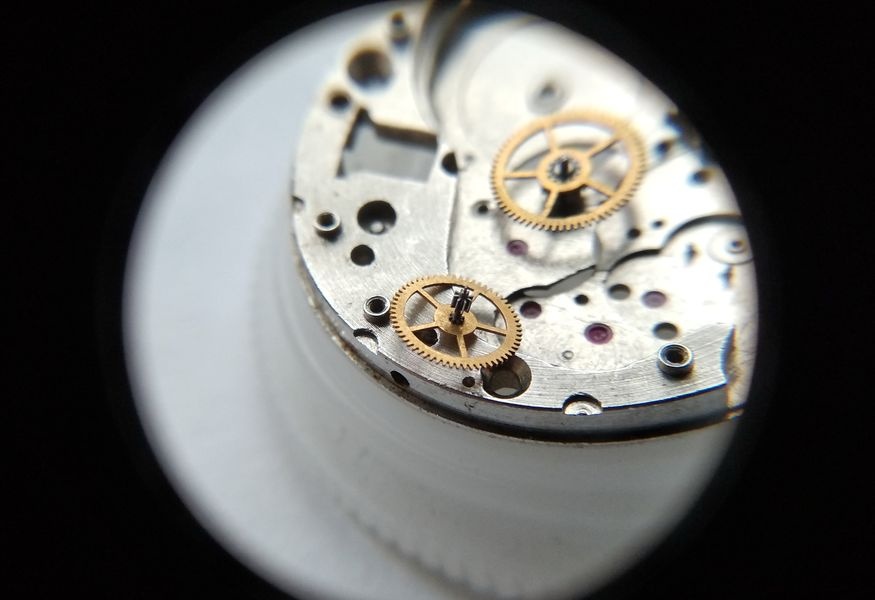
Vostok 2605 movement dial side through loupe with center wheel placed first in main plate departing from standard sequence
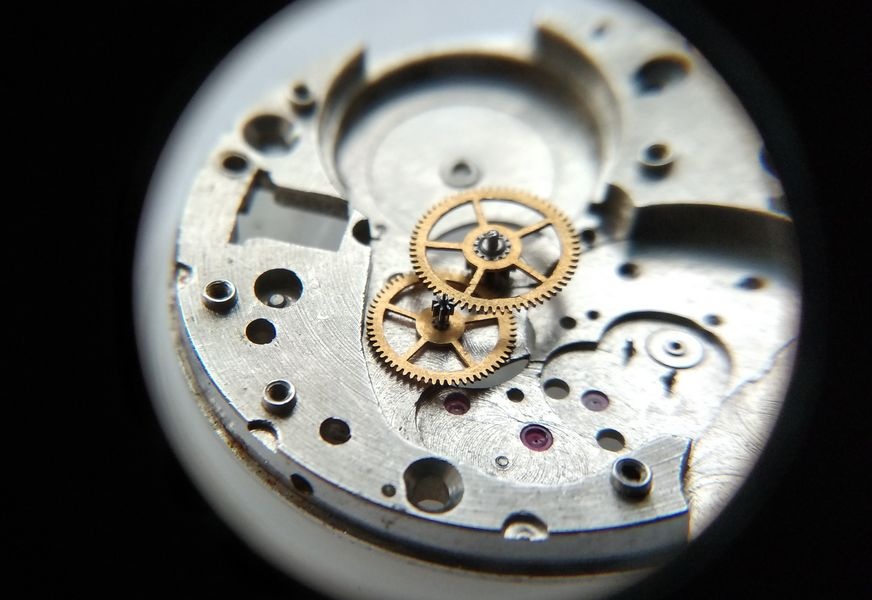
Center wheel placed first — a deliberate departure from the conventional sequence. The pinion leaves are clean, the wheel excellent. This is noted as the starting point; the remaining wheels follow in train order from here
Vostok 2605 movement dial side through loupe with intermediate wheel placed alongside center wheel in main plate
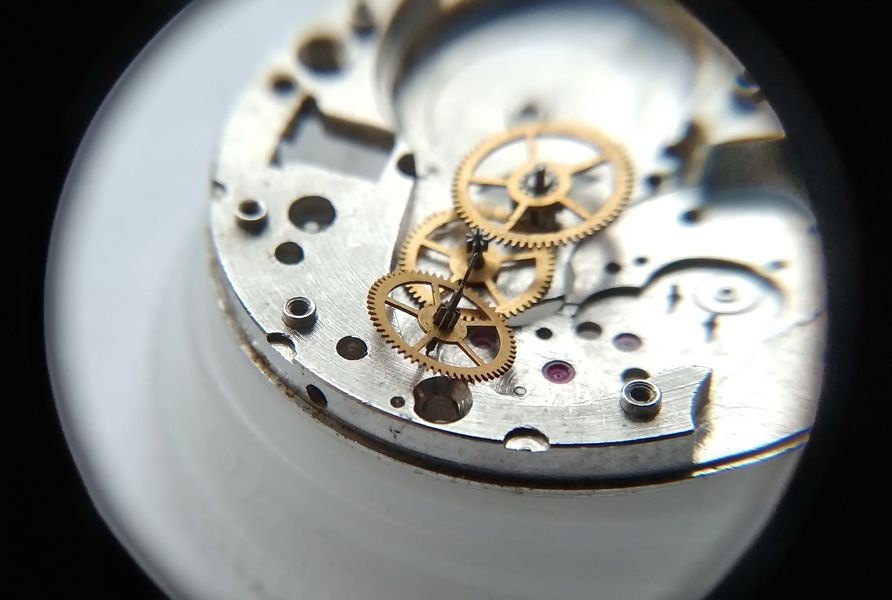
Intermediate wheel placed next — the going train builds outward from the center wheel
Vostok 2605 movement dial side through loupe showing intermediate wheel fitting beneath center wheel in main plate
The intermediate wheel tucks beneath the center wheel — the characteristic fitting of this caliber. Both are correctly meshed and seated
Vostok 2605 movement dial side through loupe showing seconds wheel with its characteristically long pivot in main plate
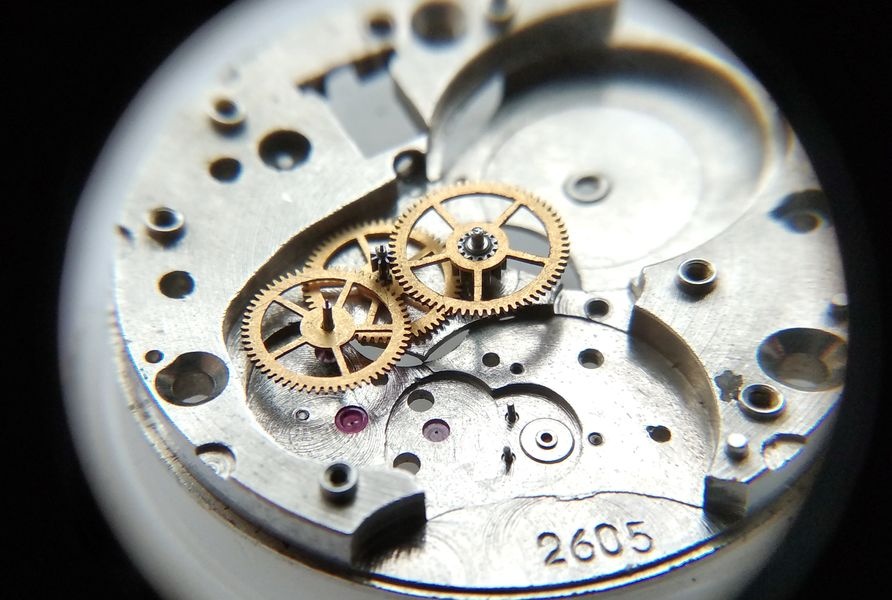
Seconds wheel — note the long pivot. The seconds hand mounts here, directly above the dial; the extended pivot length accommodates this. Center wheel, intermediate wheel, and seconds wheel are now seated; one wheel remains
Vostok 2605 movement dial side through loupe with seconds wheel long pivot being directed into its jewel seat
Seconds wheel pivot directed into its jewel seat — the long pivot must descend cleanly into the bearing. Seating confirmed before the final wheel is placed
Vostok 2605 movement dial side through loupe with escape wheel placed last completing the full going train
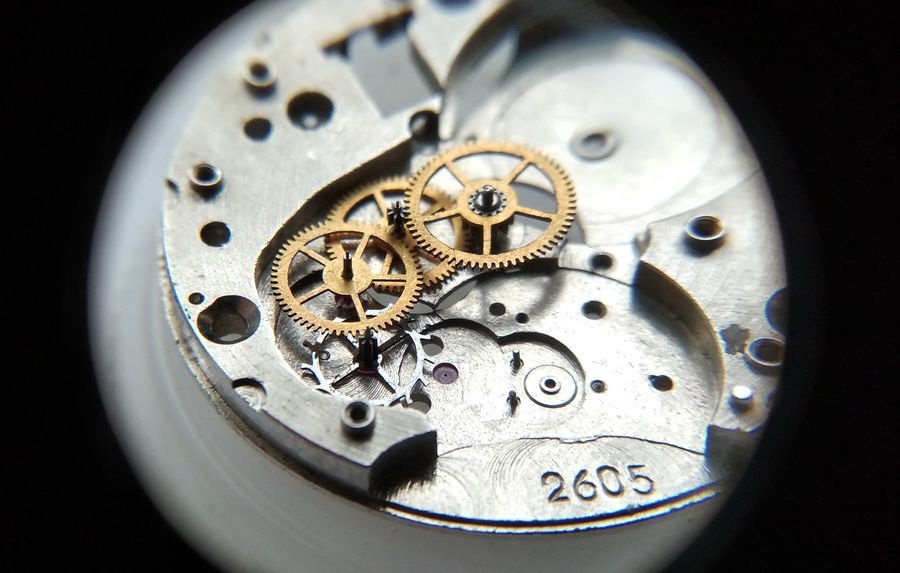
Escape wheel placed last — the whole company assembled. Center wheel, intermediate wheel, seconds wheel, escape wheel: the going train is complete. The gear train bridge can now be prepared for installation

Gear Train Bridge: Overlay Jewel Service

Before the bridge goes on, the overlay jewel of the escape wheel is removed and lubricated. Oil MBP-12. The oil drop is clearly visible on the jewel surface.
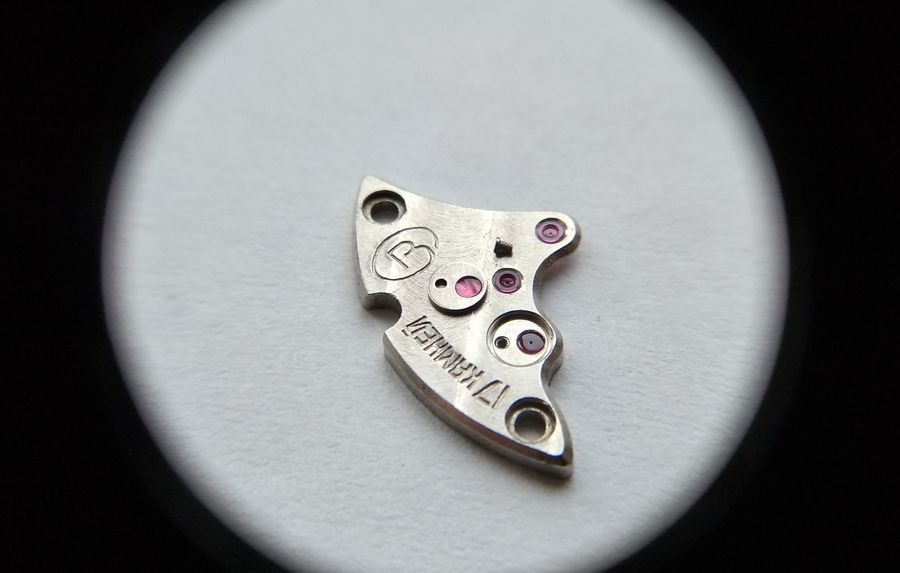
Vostok 2605 gear train bridge through loupe with overlay jewel of escape wheel removed and MBP-12 oil drop visible on jewel
Gear train bridge prepared for installation: the overlay jewel of the escape wheel has been removed and lubricated with MBP-12. The oil drop is clearly visible on the jewel surface. The bridge carries the Vostok logo and the "17 КАМНЕЙ" engraving

The jewel is returned to its seat and secured with its small retaining screw. Examining the jewel closely: a dark circular ring is visible where the overlay jewel contacts the through-jewel. This dark circle is formed by the lubricant at their contact interface. It serves as the standard verification that lubrication is present in the assembly — and also that the jewels are correctly parallel to one another. All correct.
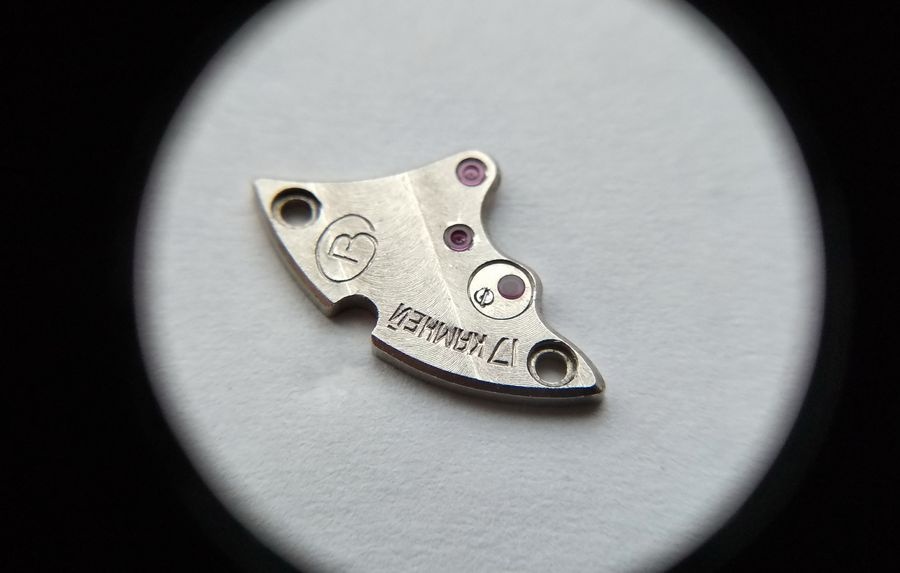
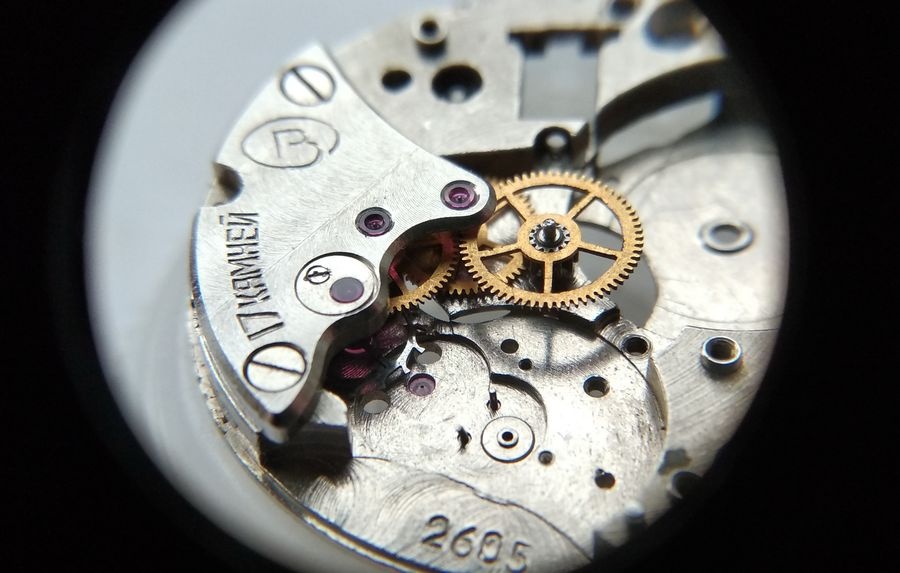
Vostok 2605 gear train bridge through loupe showing overlay jewel reinstalled with dark circular ring confirming lubrication and parallelism
Overlay jewel returned to its seat and secured. The dark circular ring where the overlay meets the through-jewel confirms: lubrication is present and the jewels are correctly parallel. This is the standard check for this type of jewel assembly. All correct
Vostok 2605 gear train bridge installed on movement through loupe showing all pivots seated
Gear train bridge installed — it seats easily onto the pivot ends without forcing. Screws engaged. The going train is secured

Barrel Installation and Bridge-Side Completion
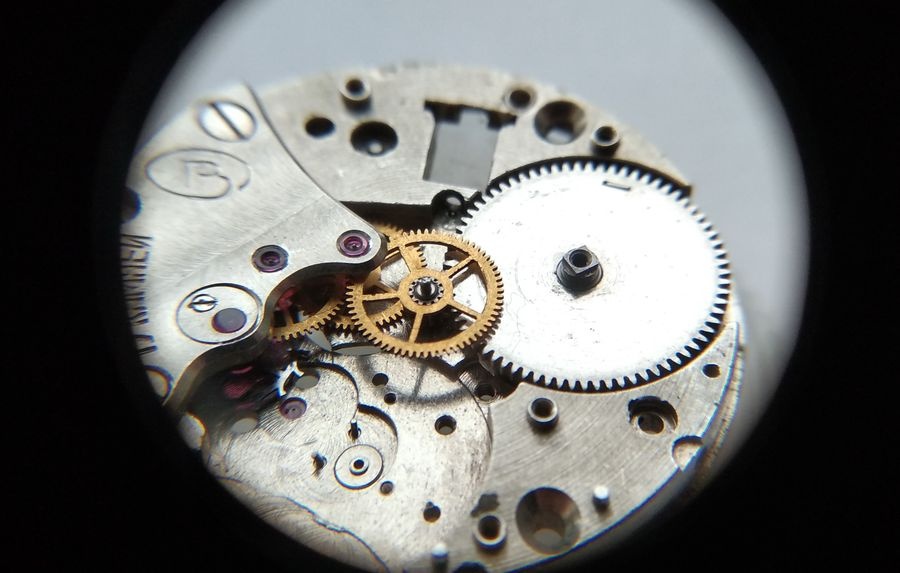
Vostok 2605 movement through loupe with barrel installed alongside gear train bridge ratchet wheel visible
Barrel installed. The ratchet wheel and going train are both in place on the bridge side

Critical detail: the winding lever screw must be returned to its position before proceeding. The rust was removed during cleaning, but corrosion has left its mark on the thread — it goes in carefully.
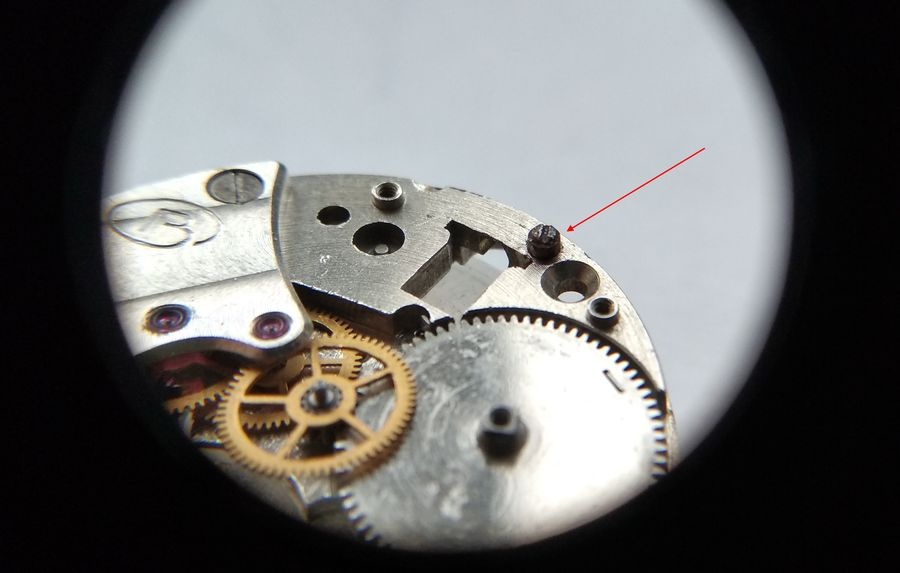
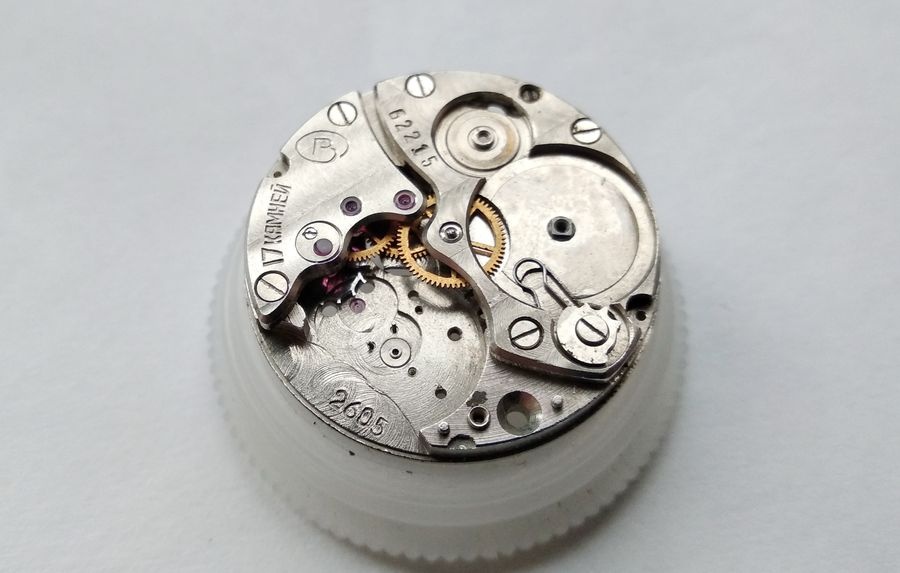
Vostok 2605 movement through loupe showing winding lever screw being returned to its position in winding lever
The winding lever screw returned to its seat — the most important detail not to overlook at this stage. Rust was cleaned away, but corrosion has reduced the thread. It is fitted carefully
Vostok 2605 movement on holder bridge side fully assembled with all bridges barrel and ratchet wheel in place
Bridge side complete: gear train bridge, barrel bridge, ratchet wheel all in place. The Vostok logo, "17 КАМНЕЙ," serial number, and caliber designation are all legible. This side is done — movement flipped

Dial-Side Reassembly

The cannon pinion is installed before the transfer wheel — the correct sequence. Installing the cannon pinion after the transfer wheel risks damaging the transfer wheel if the technique is not refined.
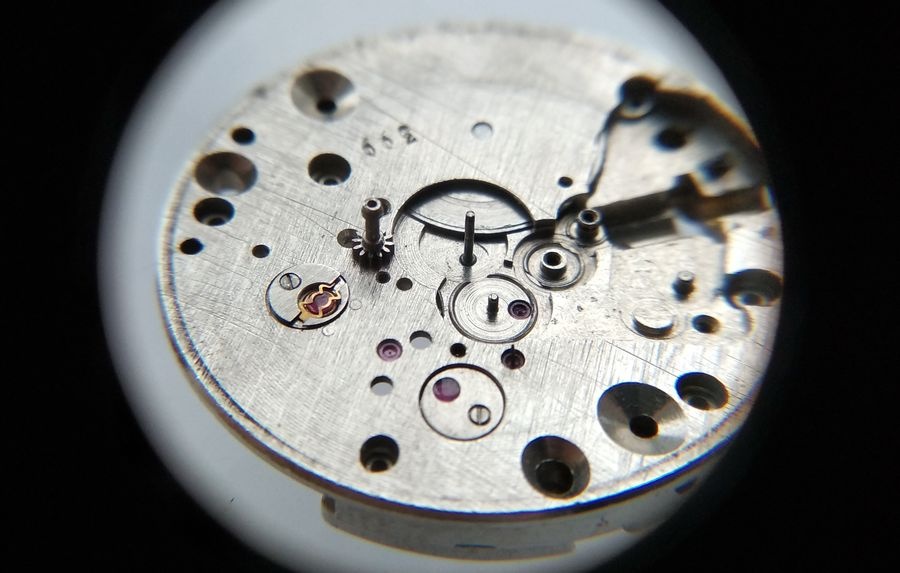
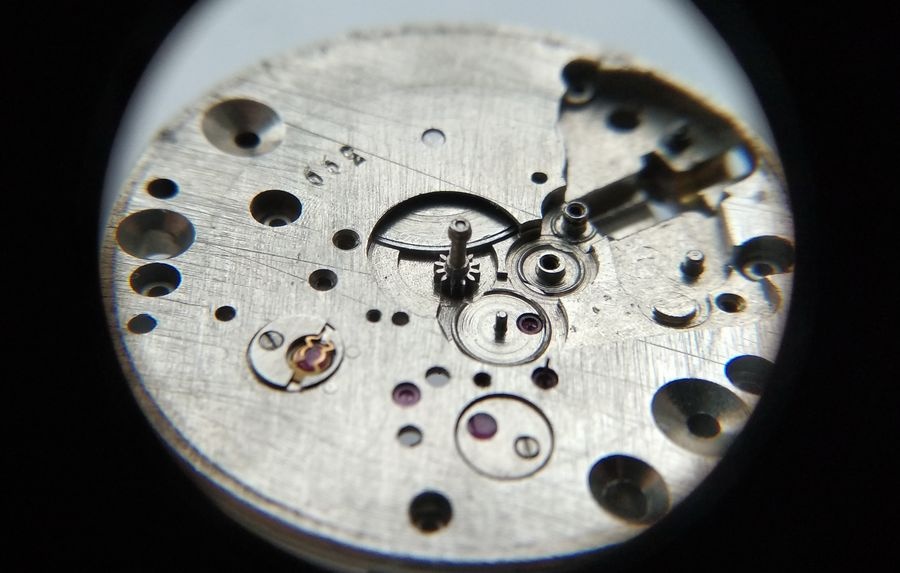
Vostok 2605 dial side through loupe with cannon pinion being prepared for installation on center wheel post before transfer wheel
Cannon pinion being prepared for installation — it goes on before the transfer wheel. Installing the pinion afterward, without adequate technique, risks damaging the transfer wheel. The correct sequence is: pinion first
Vostok 2605 dial side through loupe with cannon pinion fitted and secured on center wheel shaft
Cannon pinion fitted and secured on the center wheel shaft. The transfer wheel can now be installed without risk

Keyless works: assembly begins with the "shashlik" — winding pinion, cam coupling, and winding stem stacked together and installed as a unit. Components lubricated. At the same time, the jewel of the intermediate wheel, which sits in a recess within the transfer wheel area, is also lubricated — this is considerably easier to reach before the transfer wheel is in place.
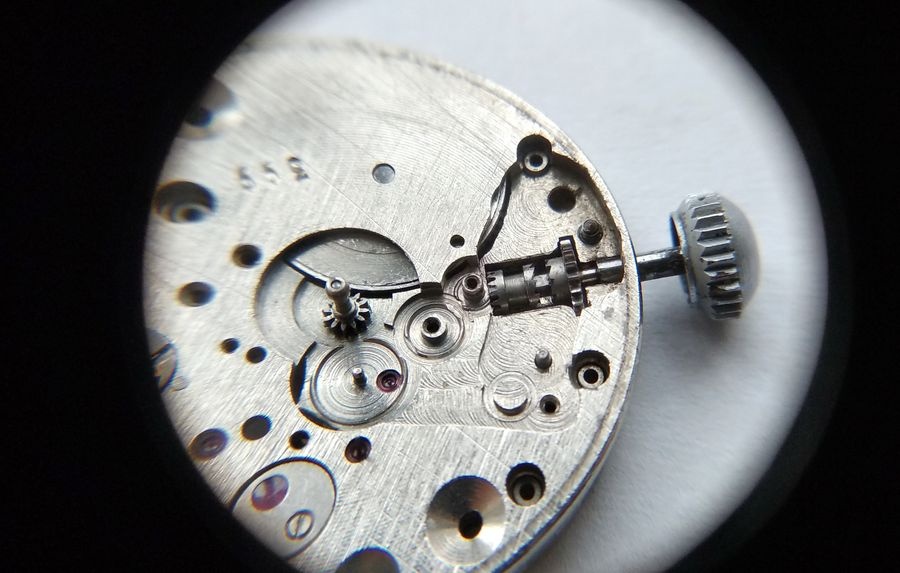
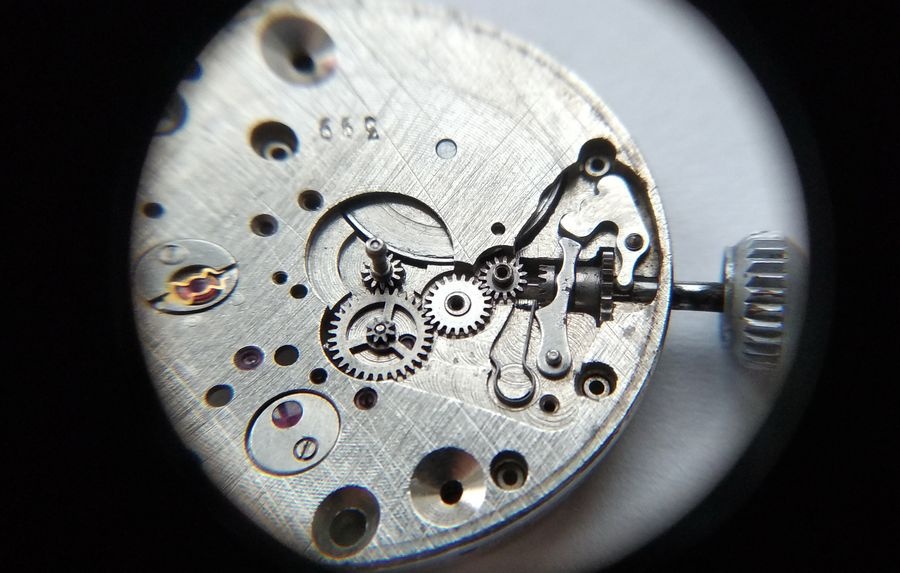
Vostok 2605 dial side through loupe with winding pinion cam coupling and stem installed and intermediate wheel jewel being lubricated
Keyless works assembly starts with the winding stack — pinion, cam coupling, stem — installed and lubricated. The intermediate wheel jewel in the transfer wheel recess is also lubricated at this stage: access to this position becomes awkward once the transfer wheel is installed
Vostok 2605 dial side through loupe with intermediate lever setting lever transfer wheel system and hour wheel assembled in keyless works
Intermediate and setting levers, transfer wheel train, hour wheel, and setting lever spring — all assembled. The keyless works are nearing completion on this side

Overlay Jewel Service — Dial Side

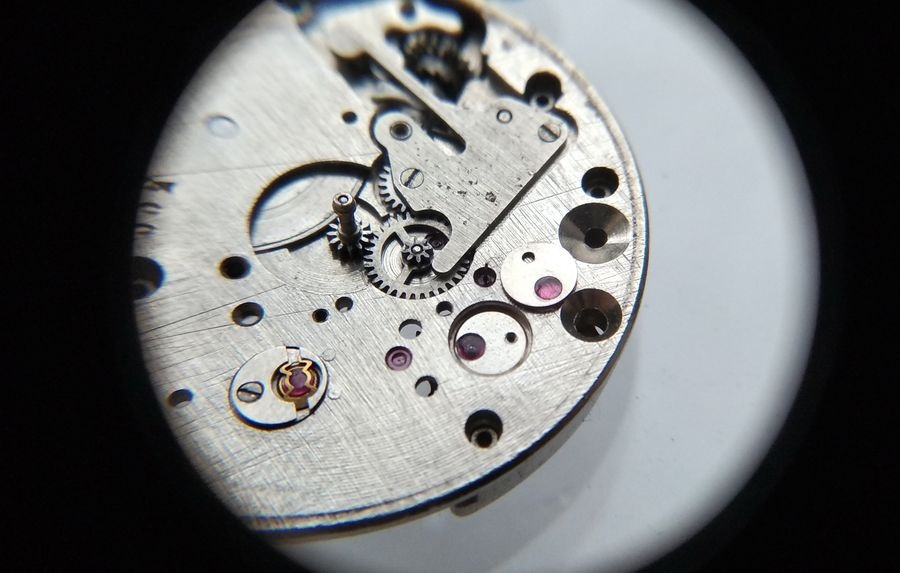
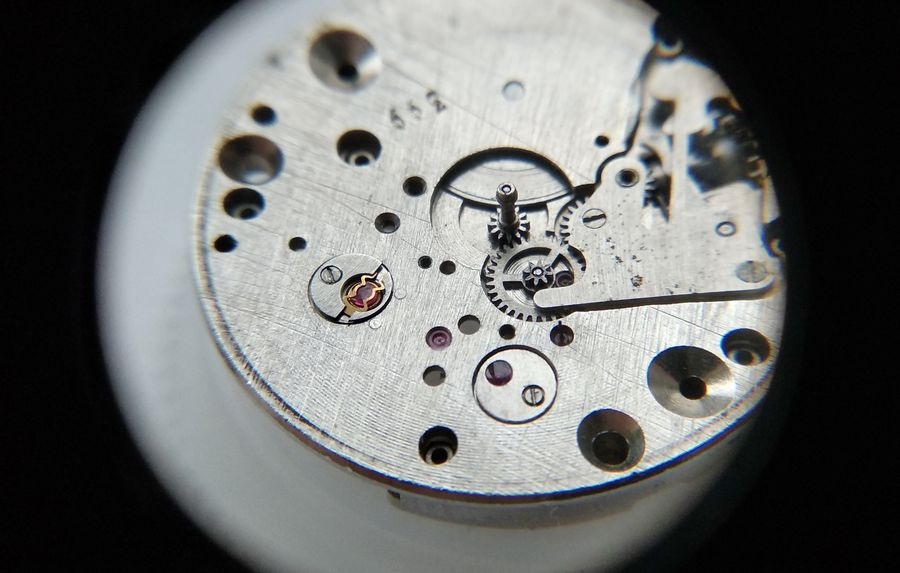
The keyless works spring cover is fitted. The overlay jewel of the escape wheel on this side of the movement is then serviced in exactly the same way as at the gear train bridge: removed, lubricated with MBP-12, returned to its seat.
Vostok 2605 dial side through loupe with keyless works spring cover installed and escape wheel overlay jewel being serviced with MBP-12
Keyless works spring cover fitted; overlay jewel of the escape wheel on this side removed and lubricated with MBP-12 — the same procedure as at the gear train bridge. The oil drop confirms correct application
Vostok 2605 dial side through loupe showing overlay jewel returned to keyless works cover with dark lubrication circle clearly visible
Overlay jewel returned to its seat. The dark circular ring at the contact point is clearly visible here as well — lubrication confirmed, parallelism confirmed. The same verification as at the bridge. Next: the balance bouchon

Balance Bouchon Service

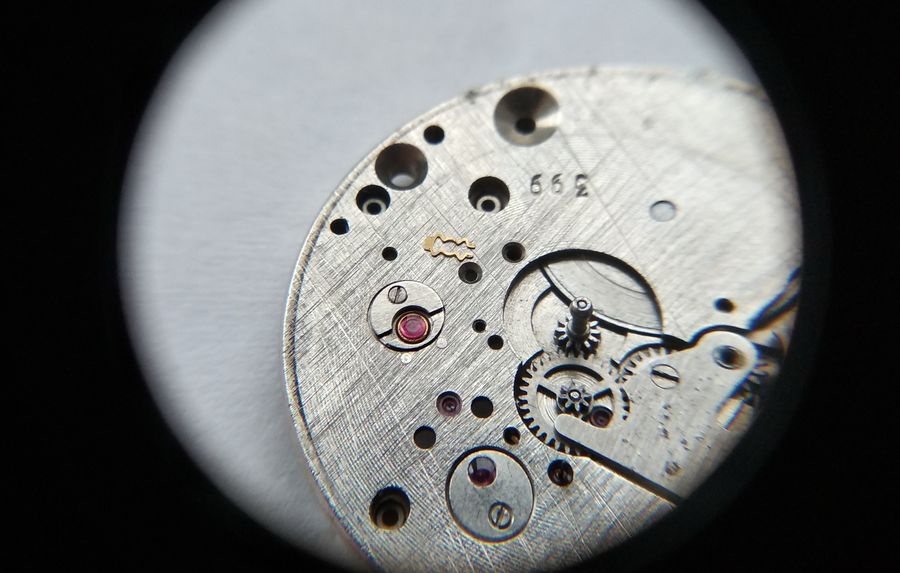
The lyre spring is removed first. As noted during disassembly, this spring is not locked in position — it must be fully lifted clear before the bouchon can be extracted.
Vostok 2605 dial side through loupe showing lyre spring being fully removed from main plate before bouchon can be extracted
Lyre spring fully removed — as stated during disassembly, this spring is not retained in a locked position and must be taken out completely before the bouchon beneath it can be lifted. This is the procedural difference from the Raketa 2603

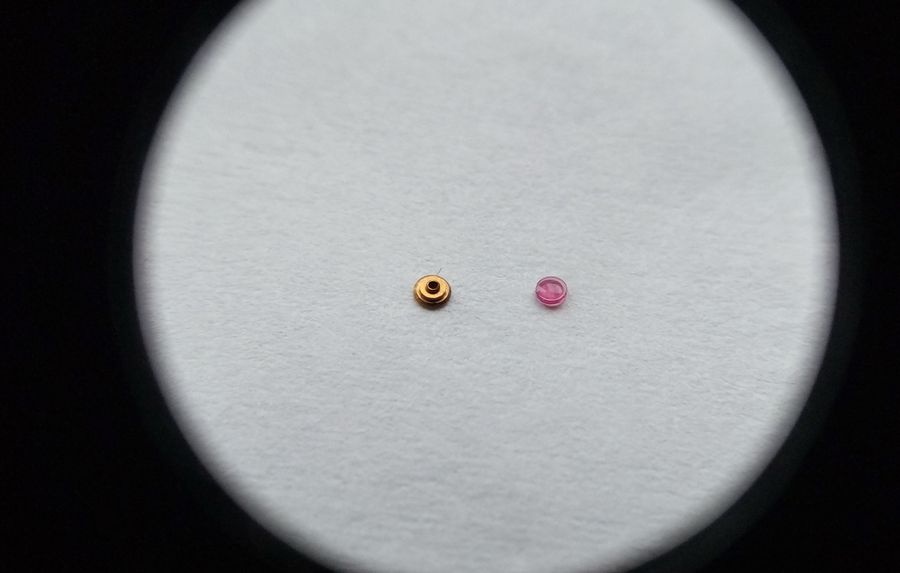
The bouchon is extracted and washed in benzine — waiting until the cap jewel floats free from its seat, then dried and cleaned with a putzholz. A drop of MBP-12 applied. The drop is clearly visible.
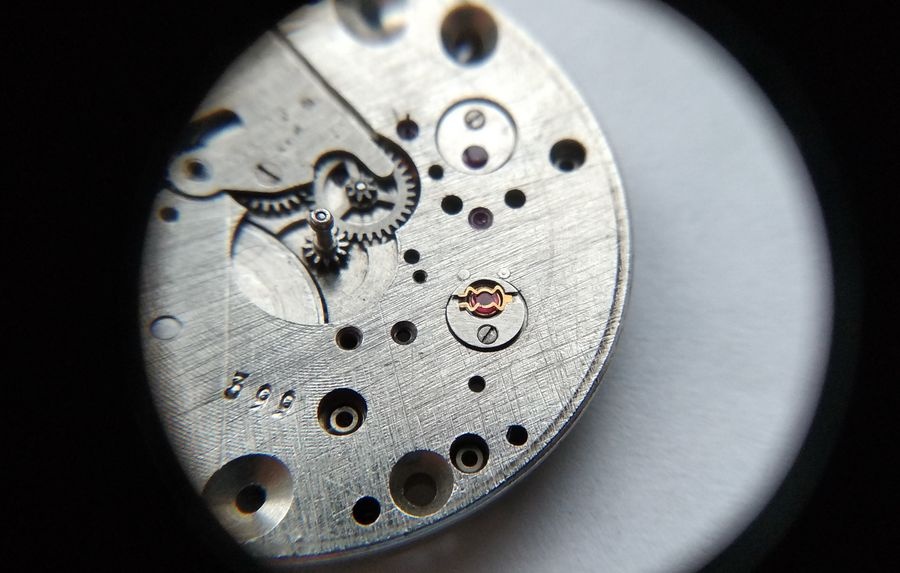
Vostok 2605 incabloc bouchon through loupe after cleaning with MBP-12 oil drop clearly visible on cap jewel
Bouchon after cleaning and lubrication — the MBP-12 drop is clearly visible on the cap jewel surface. The cleaning procedure: benzine bath until the cap jewel moves freely in its seat, full drying, putzholz cleaning, single drop of oil
Vostok 2605 dial side through loupe showing bouchon reinstalled in main plate with lyre spring tail in groove
Bouchon seated in the main plate, lyre spring tail inserted into its groove — the spring is being engaged from one end before the tips are locked down
Vostok 2605 dial side through loupe with lyre spring tips locked securing the bouchon in the main plate
Lyre spring tips locked. The lower bouchon is secured. Done with this assembly

Pallet Fork and Bridge

The draw is checked — it is excellent. The pallet fork is rinsed briefly in benzine and the pallet stone faces lubricated.

Vostok 2605 pallet fork prepared for installation after draw check benzine rinse and pallet stone face lubrication
Draw confirmed excellent. Pallet fork rinsed briefly in benzine — briefly, not soaked — pallet stone faces lubricated. The fork is ready to go in
Vostok 2605 pallet fork being installed into its recess in main plate with care not to contact escape wheel teeth or damage fork pivots
Pallet fork installed in its recess — the critical precautions here are to keep the pallet stones clear of the escape wheel teeth during placement, and not to damage the fork pivot on entry. Both observed
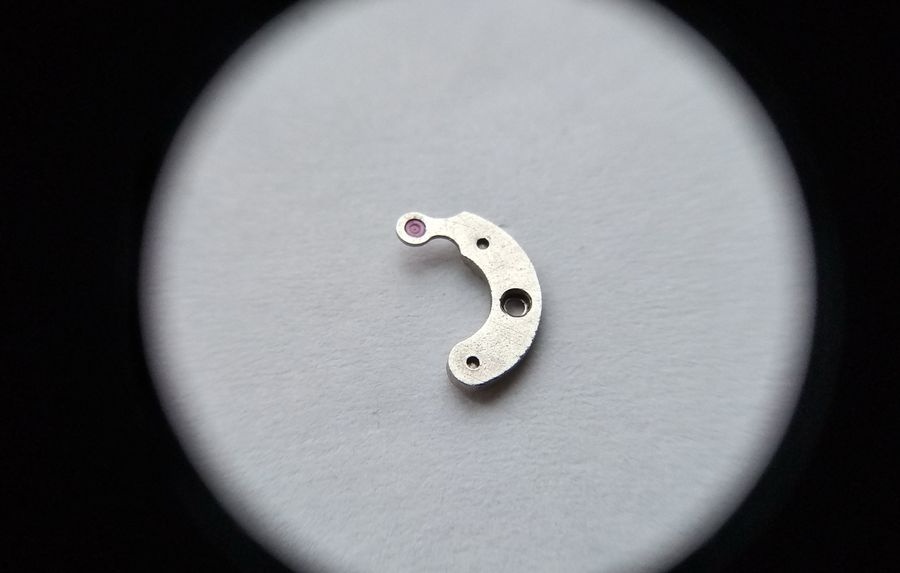
Vostok 2605 pallet fork bridge through loupe inner face showing jewel in arm and pivot hole prepared for installation
Pallet fork bridge prepared for installation — viewed from its inner face. The jewel in the bridge arm and the pivot hole are both visible. The bridge is clean and ready to seat
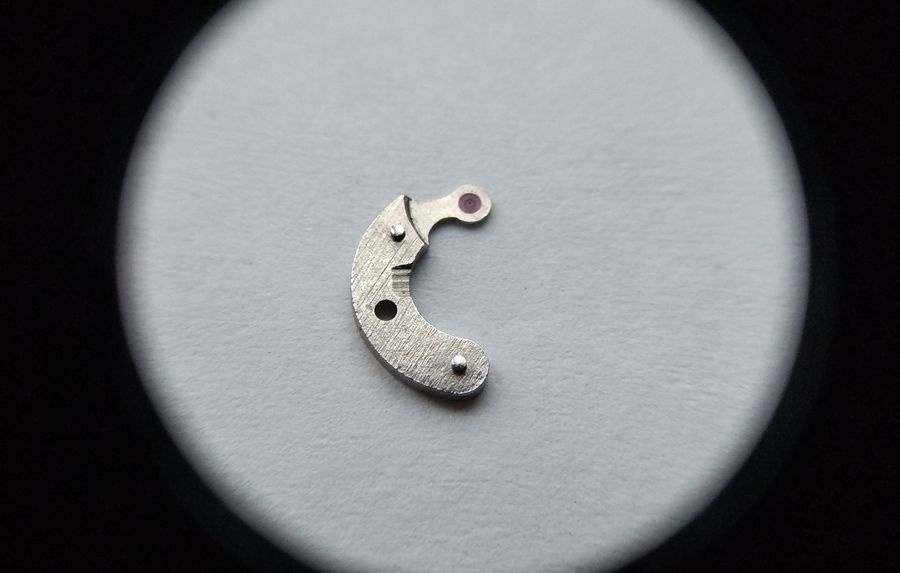
Vostok 2605 pallet fork bridge outer face through loupe showing mounting holes and jewel position
Pallet fork bridge from the outer face — mounting holes and the jewel in the arm are visible from this side as well. Viewed before installation to confirm no contamination remains

Balance Cock Bouchon Service and Balance Installation

Pallet fork bridge installed. Balance washed, cleaned, and placed in position. The upper bouchon — seated in the balance cock — now receives the same service as the lower one.
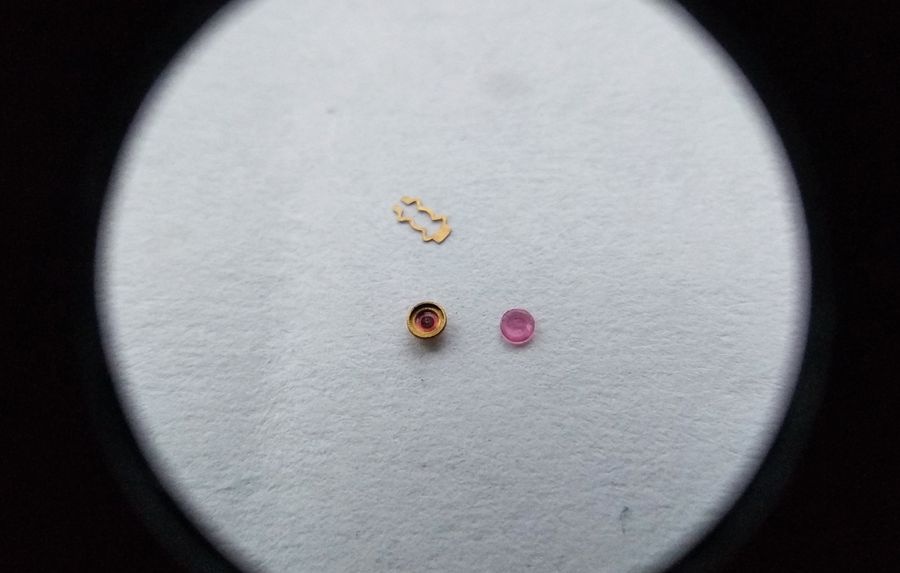
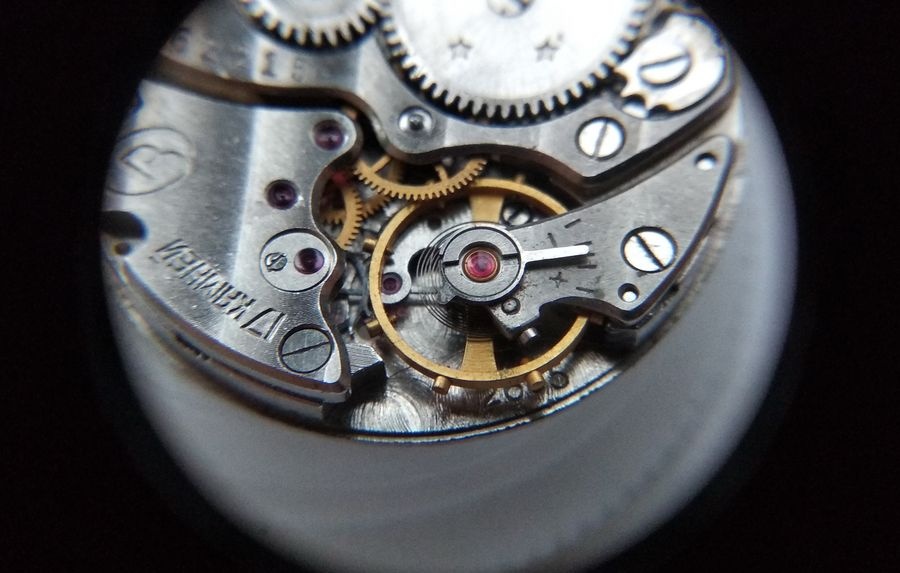
Vostok 2605 balance cock bouchon components through loupe showing lyre spring bouchon carrier and cap jewel laid out for service
Upper bouchon components laid out for service: lyre spring, bouchon carrier with its jewel, and the loose cap jewel. The same cleaning and lubrication procedure as the lower bouchon applies here — all three components must be cleaned, dried completely, and reassembled in correct order
Vostok 2605 balance cock cap jewel after cleaning with MBP-12 lubrication drop clearly visible before reinstallation
Upper cap jewel washed and lubricated — the MBP-12 drop is clearly visible on the jewel surface, identical to the result at the lower bouchon. Bouchon is reassembled and ready for installation in the balance cock
Vostok 2605 upper bouchon being installed into its seat in balance cock with red jewel visible in carrier
Upper bouchon being installed into its seat in the balance cock. The red cap jewel is visible in the carrier. The lyre spring will secure it once the bouchon is correctly positioned

Lyre spring locked. Mainspring wound. The movement starts immediately and runs without hesitation. For a mechanism that has been sitting undisturbed for decades, this is the right result. The calendar was mistreated; everything else is alive.
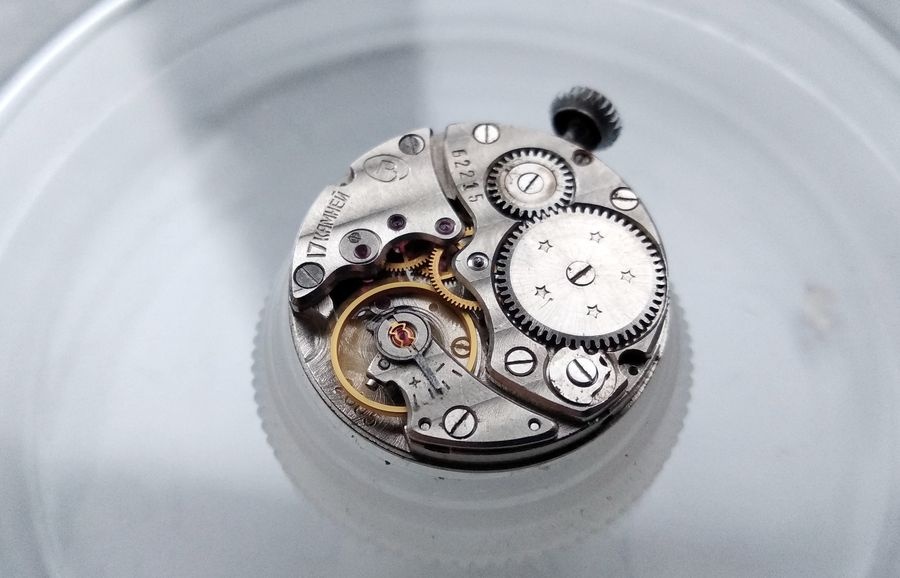
Vostok 2605 movement fully assembled and running with balance oscillating after mainspring wound
Lyre spring secured — mainspring wound — and off it goes. The movement runs without hesitation. Whatever was done to the calendar mechanism, the rest of this caliber has survived intact and in good order

Hands, Case, and Closure

Hands are tidied up and installed on their posts.
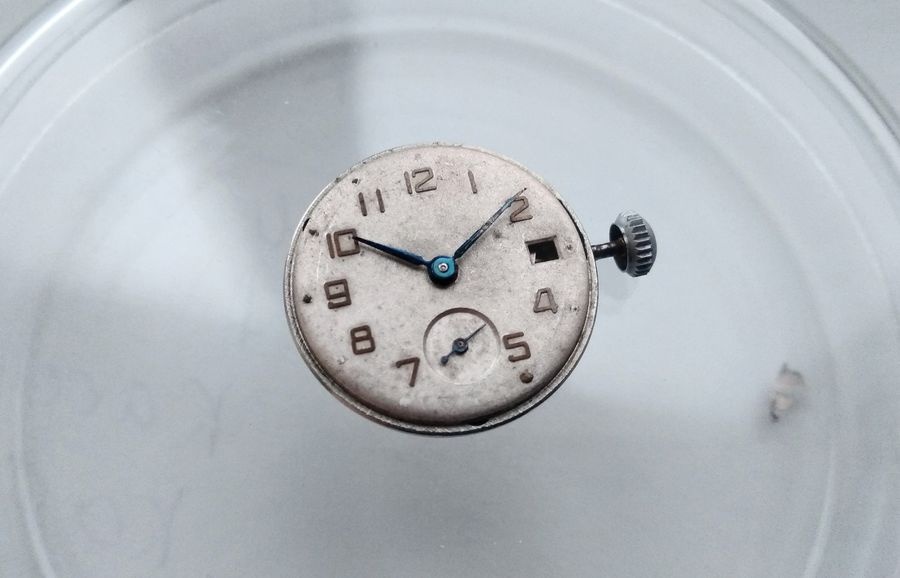
Vostok 2605 movement with dial and hands reinstalled and running showing Arabic numeral dial blue steel hands and empty date aperture
Dial and hands reinstalled, movement running. Arabic numeral dial, blue steel hour and minute hands, seconds hand at six — all correctly seated. The date aperture at three o'clock is empty, as it will remain until the calendar disc and its associated components are sourced

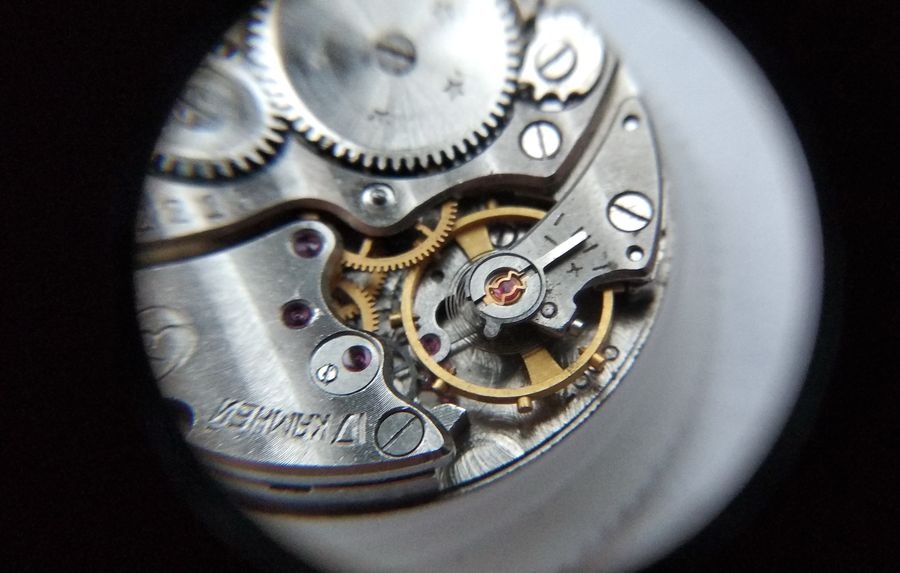
Movement goes into the case. The phone camera does not capture the texture of the Geneva stripes on the bridge — they are genuinely attractive here.
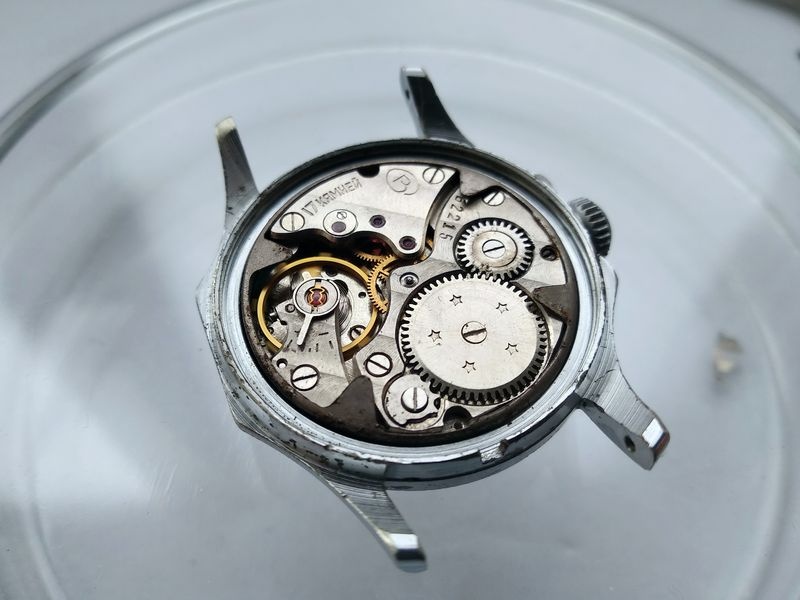
Vostok 2605 assembled movement installed in case with caseback open showing bridge side with Geneva stripes going train and balance
Movement installed in the case, caseback still open. The bridge side is visible — going train, balance, ratchet wheel all running. The Geneva stripe finishing on the bridge does not photograph well through a phone camera; in person it reads well
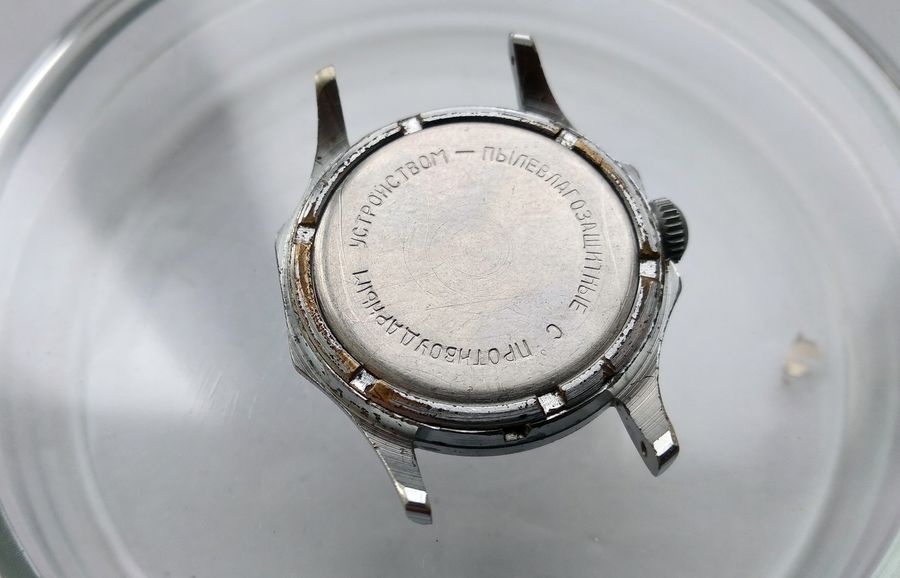
Vostok watch caseback closed showing Russian inscription confirming dust moisture resistance and anti-shock protection after service
Caseback closed with a new gasket. Dust and moisture resistant, anti-shock — as the inscription states. Both properties are now restored as functional realities. Without calendar, which is a pity
Vostok watch final condition from front showing aged dial blue steel hands running sub-seconds and empty date aperture without crystal
The watch in its current state: dial, hands running, sub-seconds at six, date aperture empty, no crystal. The right crystal was not on hand. Calendar parts will be located first — once those arrive, the crystal can be matched at the same time. For now, as it is

Rate Check

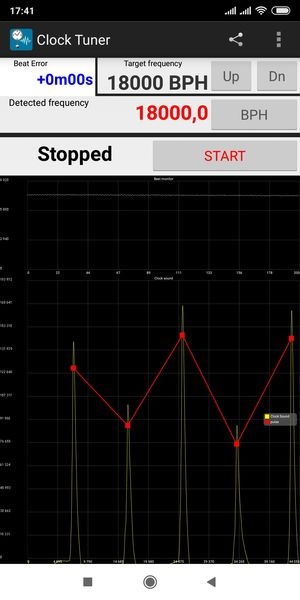
Clock Tuner smartphone application screenshot showing Vostok 2605 running at 18000 BPH with zero beat error
Clock Tuner reading at the conclusion of service: 18,000 BPH, beat error zero. See how it goes — a pleasure to watch. The movement is running correctly

Rate verification with a smartphone running Clock Tuner, microphone adjacent to the running movement. The 2605 operates at 18,000 vibrations per hour — 2.5 Hz — and this must be entered correctly in the application before the reading is meaningful. The result: correct frequency, zero beat error. The pallet fork is correctly banked; the impulse is symmetrical. Fine regulation was not the objective of this service. Mechanical soundness, cleanliness, and correct lubrication were. All three were achieved.

The movement runs correctly. The calendar is absent and will be addressed separately. The crystal is absent and will follow the calendar parts. The gasket is new. The Geneva stripes are underneath the caseback where they belong. That is the appropriate outcome of a bench service on a caliber that presented far more drama than its age would suggest.

Technical Notes for Reference

Several observations from this service are worth documenting for those who will encounter the 2605 at the bench.

The relationship to the Raketa 2603 is real and significant: both calibers share the same base plate geometry and going train architecture, inherited from the common Soviet standardized platform. The practical differences are three. First, the two overlay jewels on the escape wheel pivot in the 2605, which the 2603 does not carry. Second, the shock protection arrangement: in the 2605 the lyre springs are unfixed and must be fully removed to service the bouchon, while in the 2603 they remain in place. Third, the winding lever design: a single screw in the 2605. These differences affect service procedure and parts interchangeability.

The barrel pivot bearings are plain — no jewels at either the main plate or barrel bridge. This is appropriate for a movement at this grade. A caliber serviced within a reasonable interval will not develop barrel pivot wear in any practical service lifetime. One that runs for several decades without service, as this example had, may show measurable wear at the barrel pivot seats by the time it reaches the bench. This one showed the effects of the elapsed time in the lubricant condition rather than in the pivot surfaces themselves — a consequence of the sealed case having kept airborne contamination out throughout its service life.

The transfer wheel installed upside-down in the keyless works is noted without further explanation. The mechanism had functioned. It was corrected during reassembly.

Items remaining: a period-correct calendar disc with its intermediate driving components, and a replacement crystal in the correct diameter. Both are available through established Soviet parts channels. The calendar disc requires some attention to numeral font and print era — the correct match matters for a piece with a traceable production date. Neither item is urgent. The watch runs.

0
399
25 February, 2026
Comments0

Write a review

Note: HTML is not translated!
icon_whatsapp icon_mes icon_teleg icon_email icon_viber icon_callback