

The Function and Philosophy of Jewel Bearings in Mechanical Watches: A Technical Survey
"Understanding what lies beneath the dial requires patience, precision, and respect for the mechanics of time..."
— Notes from a service bench
In nearly every discussion surrounding mechanical timepieces, questions inevitably arise concerning jewels. What purpose do they serve? Why are they counted? How many does a proper movement actually require? These queries appear repeatedly in collector forums and workshop conversations, and while answers have been scattered across various publications, a consolidated examination of the subject remains valuable. The present article attempts to address these fundamental questions through both established technical principles and observations gathered from years of practical service work.
This is not a comprehensive treatise on tribology or materials science, but rather a working document for the serious enthusiast who wishes to understand what happens inside a movement and why certain design choices persist across generations of watchmaking. We will examine jewel types, their placement within the movement architecture, and the reasoning behind industry-standard jewel counts in calibers of various grades.
The fundamental challenge in any mechanical device involves managing friction. In electrical engineering, resistance opposes current flow; in mechanics, friction opposes motion. The engineer's task is to minimize these losses, thereby improving efficiency and extending the operational lifespan of moving components. In horology, this challenge is particularly acute given the minuscule forces involved and the precision required for accurate timekeeping.
Mechanical systems typically employ bearings to address friction at points where rotating or oscillating components interact with stationary structures. The two principal bearing types are rolling-element bearings, which use balls or rollers between races, and plain bearings, which rely on a lubricant film between sliding surfaces. Watch movements almost exclusively employ plain bearings, though their construction differs substantially from industrial applications due to scale and operational requirements.
Here the reader might conclude that watch jewels simply function as bearings, and this assessment would be partially correct. However, jewels in horology serve additional purposes beyond mere friction reduction, and not all jewels in a movement act as bearings at all. The situation requires more careful analysis.
Classification of Horological Jewels
International standards, including ISO documentation and various national specifications, divide watch jewels into two fundamental categories: functional jewels and non-functional jewels. This distinction is not arbitrary but reflects how jewels are counted in official caliber documentation and certification.
Functional Jewels
Functional jewels directly participate in the movement's operation by supporting rotating components, controlling oscillations, or transmitting force. The standards recognize several subcategories:
Jewels with holes serving as radial or axial bearings constitute the largest group. These include stationary jewels with moving arbors, as encountered throughout the gear train, and moving jewels with fixed arbors, found in certain specialized mechanisms.


Jewels without holes serving as thrust bearings represent another category. These flat or slightly concave stones limit axial movement of pivots and are commonly termed endstones or cap jewels.
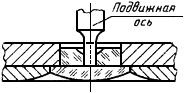
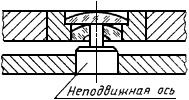
The standards also recognize jewels intended for force or motion transmission, exemplified by pallet stones and impulse jewels in the escapement. Additionally, assemblies containing multiple jewels, such as ball bearings in automatic winding systems, are counted as single functional units for certification purposes.
Non-Functional Jewels
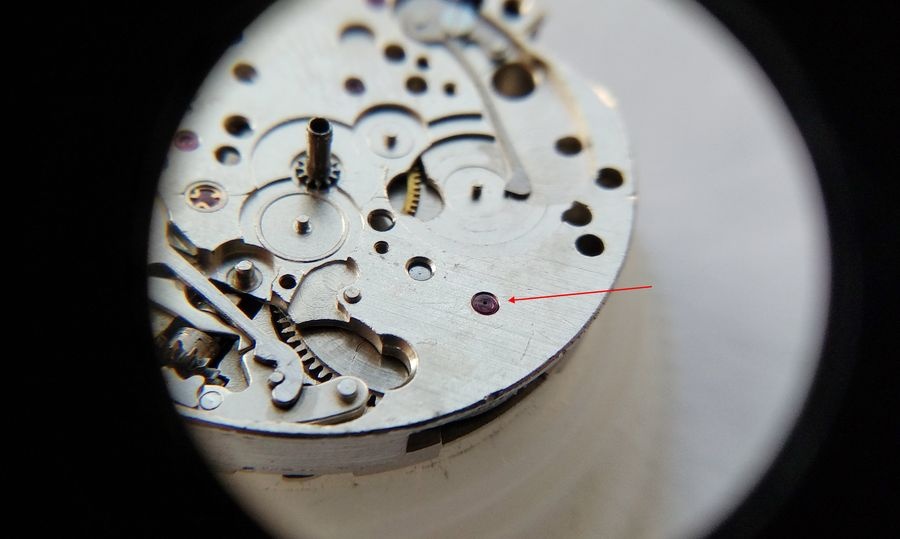
Non-functional jewels do not contribute directly to the movement's timekeeping operation. This category includes decorative stones, jewels closing existing holes but not serving as bearings, jewels supporting non-critical components such as calendar disks, and jewels limiting incidental movements of various mechanism parts.
The practical significance of this distinction becomes apparent in caliber specifications. For instance, certain calendar-equipped movements may contain twenty-two total jewels, but only nineteen receive official recognition in the specification because three stones supporting the date disk qualify as non-functional under the standards.
Material Properties and Manufacturing
The material universally employed for horological jewels is synthetic corundum, chemically aluminum oxide. Corundum appears in nature as ruby and sapphire, with color variations resulting from trace impurities. Before synthetic production became economically viable in the early twentieth century, watchmakers experimented with various hard materials including natural gemstones, glass, and garnet. Systematic study established that the steel-corundum contact pair approaches an ideal tribological combination, offering extremely low friction coefficients and exceptional wear resistance.
Modern synthetic rubies are grown through flame-fusion or hydrothermal processes, then cut, shaped, drilled, and polished to precise specifications. The resulting jewels feature surfaces smooth enough at the microscopic level to maintain thin lubricant films under the extremely light loads found in watch movements. This surface quality, combined with corundum's hardness, allows jewel bearings to function effectively for decades with appropriate service intervals.
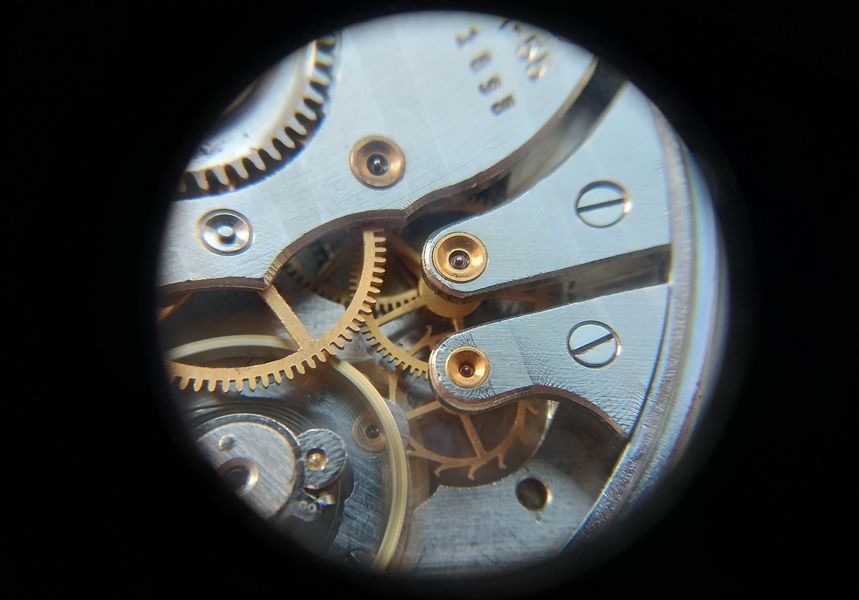
Installation methods vary with caliber design and production era. In larger movements, particularly older pocket watch calibers, jewels often sit in separate metal settings called chatons, which are then secured to the plate or bridge. This approach facilitates replacement of damaged jewels without disturbing adjacent components. In modern wristwatch calibers, direct press-fitting into appropriately shaped recesses has become standard. These recesses feature carefully calculated profiles ensuring secure retention while allowing deliberate removal during service.
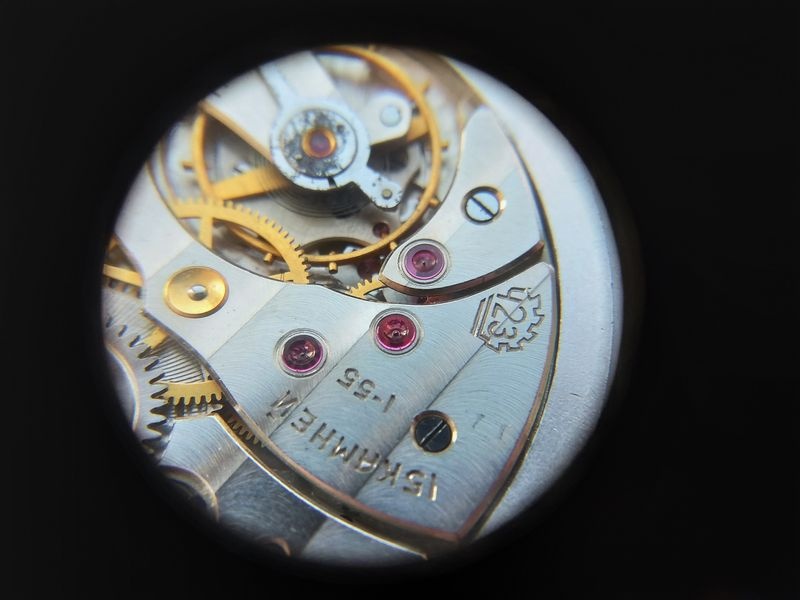
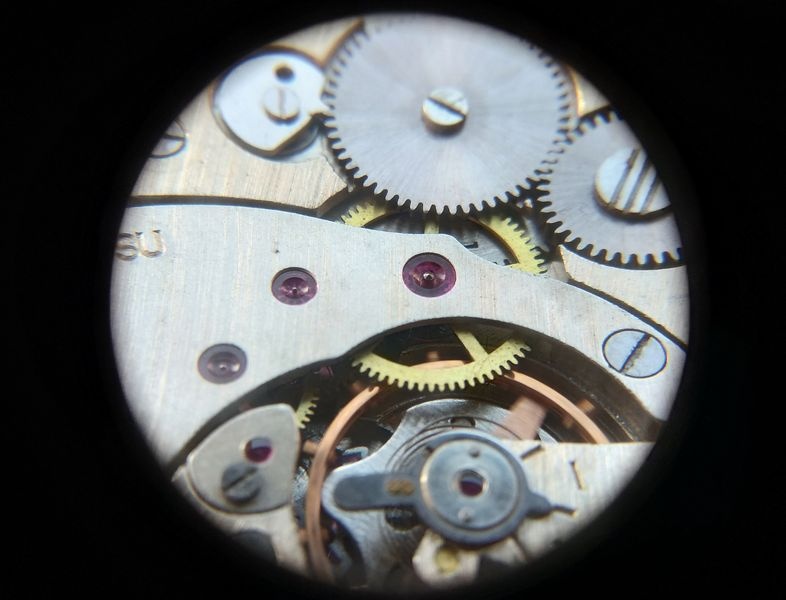
Hole Jewels in the Gear Train
The gear train, or going train as it is traditionally termed, comprises the wheels transmitting power from the mainspring barrel to the escapement. Each wheel rotates on an arbor with pivots at either end, and these pivots require support within the movement structure. Hole jewels provide this support.
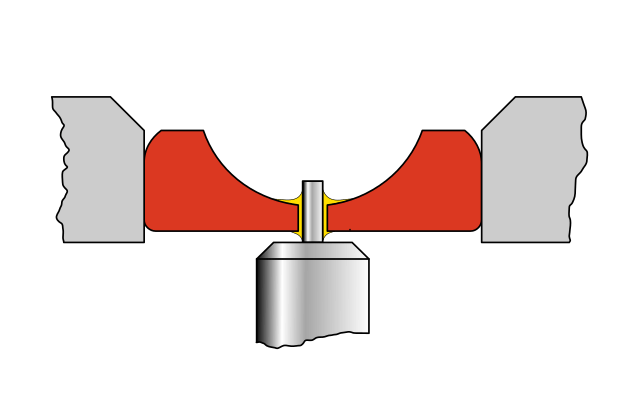
A hole jewel functions as a plain bearing. The cylindrical jewel bore accepts the pivot, with a controlled clearance between the two surfaces filled by lubricant. The pivot essentially floats on an oil film, reducing metal-to-stone contact to negligible levels during normal operation. This configuration dramatically reduces friction compared to pivots running directly in metal holes, as was common in early clockwork.
The jewel geometry includes more than a simple cylindrical bore. A spherical depression called the oil sink surrounds the pivot hole on the outer face of the jewel. This reservoir retains lubricant through surface tension, ensuring the bearing remains properly oiled over extended periods. Without this feature, lubricant would migrate away from the critical contact zone, leading to accelerated wear once the oil film breaks down.
Axial positioning of each wheel is controlled by shoulders on the arbor, where the pivot diameter steps up to the main arbor diameter. These shoulders bear against the inner face of the jewel, preventing excessive endshake while allowing free rotation.
The Balance Bearing System
The balance wheel presents unique bearing requirements that cannot be addressed by simple hole jewels. As the regulating organ of the movement, the balance must oscillate with minimal friction loss while remaining securely located. Any energy consumed by pivot friction directly degrades timekeeping accuracy and reduces amplitude, making the balance bearing system critically important to movement performance.
To minimize friction, balance pivot jewels employ a modified geometry. Rather than the straight-walled bore used in train wheel jewels, balance hole jewels feature a curved profile resembling an olive, hence the traditional term "olivage" for this shape. The corresponding balance pivots terminate in radiused ends rather than flat faces. This geometry reduces the contact area between pivot and jewel to a small region, dramatically decreasing frictional resistance.
However, the olivage bearing alone cannot fully locate the balance axially. Without additional constraint, the balance would slide along its axis whenever the watch orientation changed. This is addressed through cap jewels, or endstones, positioned above and below the balance wheel. The rounded pivot tips bear against flat or slightly concave endstone surfaces, establishing axial location while maintaining minimal contact area.
The combination of hole jewel and endstone at each end of the balance staff creates an assembly traditionally termed a "bouchon" or jeweled bearing unit. This four-jewel arrangement, two hole jewels and two cap jewels, represents the minimum requirement for a properly functioning balance system. In larger movements such as pocket watches, slight axial clearance is deliberately maintained, and the balance can sometimes be heard clicking against the endstones when the watch is shaken along its axis.
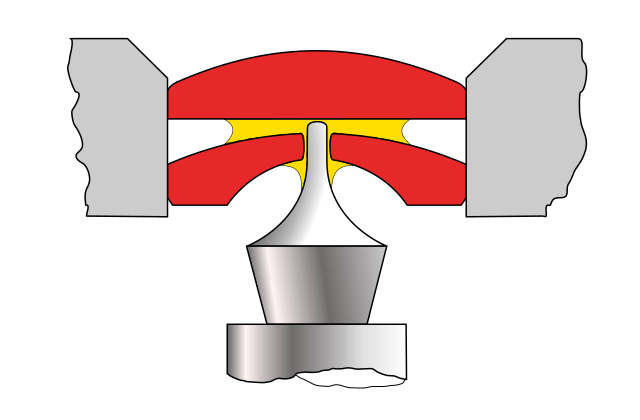
The endstone serves another crucial function beyond axial location. Together with the hole jewel, it creates an enclosed chamber that retains lubricant far more effectively than an open bearing. This oil pocket maintains the pivot in a controlled lubrication environment, extending service intervals and protecting against the rapid degradation that would occur if the bearing ran dry.
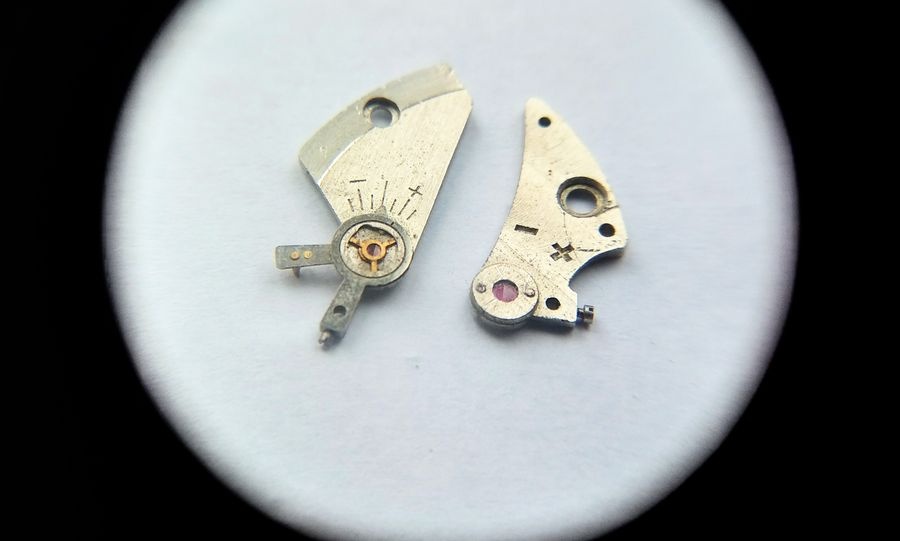
Modern movements typically incorporate shock protection systems, where the balance jewels and endstones are mounted in sprung settings rather than being rigidly fixed. When the watch experiences sudden acceleration, these settings allow limited displacement, absorbing energy that might otherwise fracture the delicate balance pivots. Various proprietary systems exist, including Incabloc, Kif, and numerous others, but all operate on this fundamental principle of controlled compliance.
Endstones Beyond the Balance
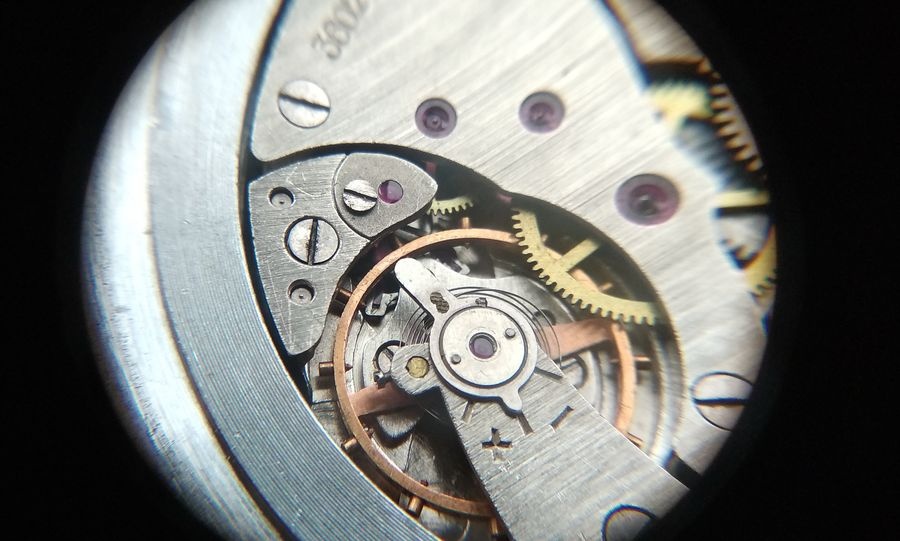
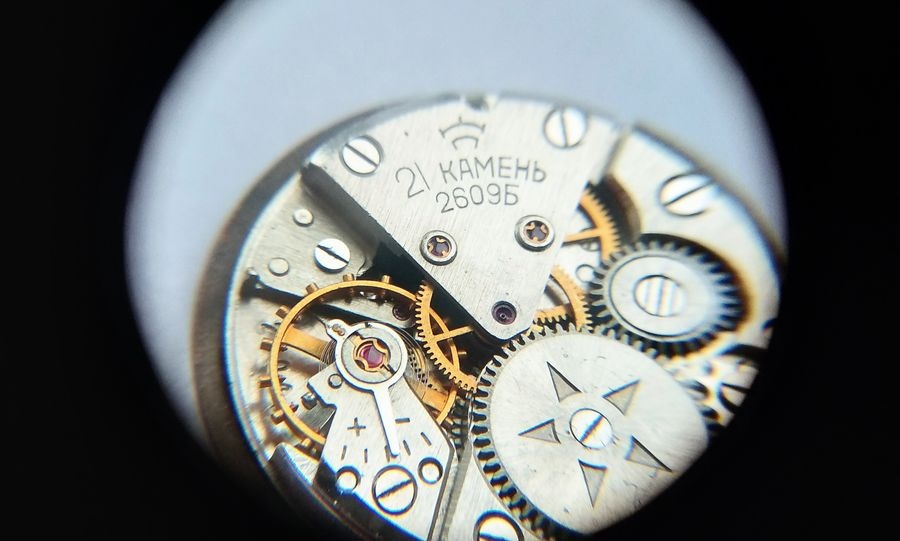
While the balance system universally requires endstones, other components may also benefit from this treatment. The escape wheel, which operates under significant and cyclical loading, commonly receives endstones in better-quality movements. The resulting enclosed oil pocket and reduced axial play improve positional timing and extend service intervals.
Some high-grade movements extend endstone treatment to additional train wheels. This practice substantially increases the total jewel count and manufacturing cost but provides measurable improvements in lubrication retention and long-term stability. Movements of this construction typically exhibit more consistent timekeeping performance across service intervals compared to their less-jeweled counterparts.
Escapement Jewels: Pallet Stones and Impulse Pin
The escapement represents the interface between the gear train's continuous rotation and the balance wheel's oscillation. This mechanism controls energy release from the mainspring while simultaneously maintaining the balance in motion. The jewels employed here differ fundamentally from bearing jewels, as they must transmit force rather than merely support rotating components.
The lever escapement, standard in virtually all mechanical wristwatches, employs two pallet stones mounted in the pallet fork. The French term "palette" indicates a brick or bar shape, accurately describing these rectangular jewels. The pallet stones engage with the escape wheel teeth in a complex interaction involving both impact and sliding contact.
During operation, each escape wheel tooth first strikes the impulse face of a pallet stone, halting the wheel's rotation. As the balance wheel continues its arc, it displaces the pallet fork, causing the engaged tooth to slide along the pallet stone's impulse face. This sliding action transmits energy from the escape wheel to the pallet fork, and through it to the balance. The mechanical events occur in rapid succession, with the complete cycle repeating at rates typically between eighteen thousand and thirty-six thousand times per hour.
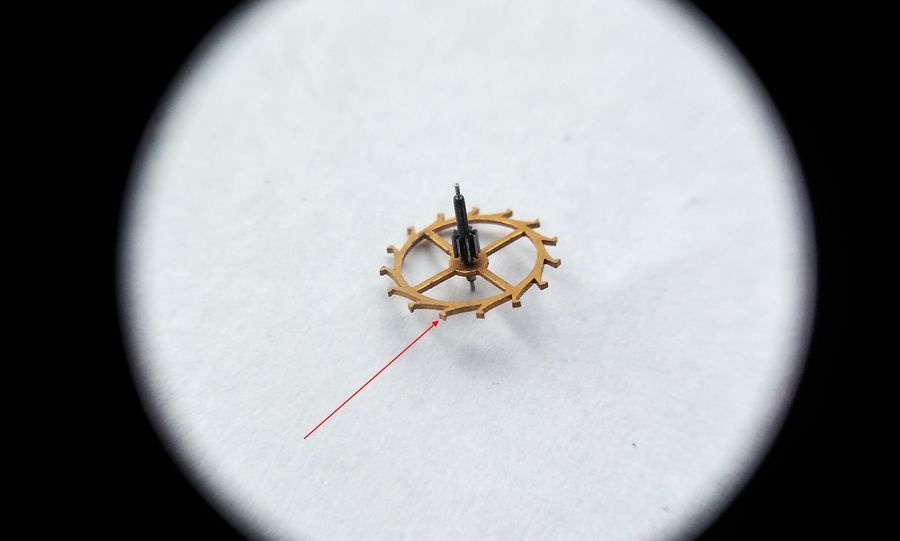
The two pallet stones are designated entry and exit pallets, referring to their position relative to the escape wheel's rotation. These stones require different impulse face angles and mounting orientations, making them non-interchangeable. Their synthetic ruby construction provides the hardness and smooth surface necessary to withstand continuous impact loading while maintaining consistent engagement geometry over years of service.
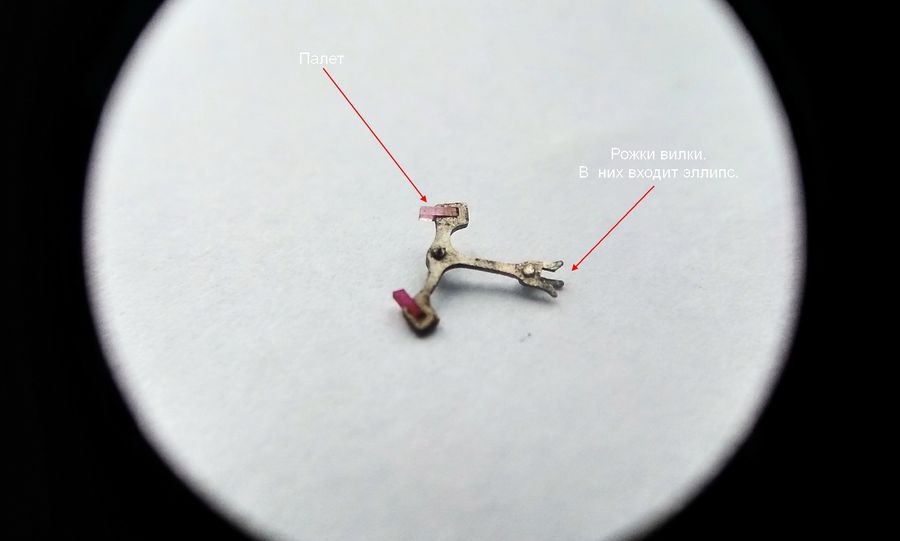
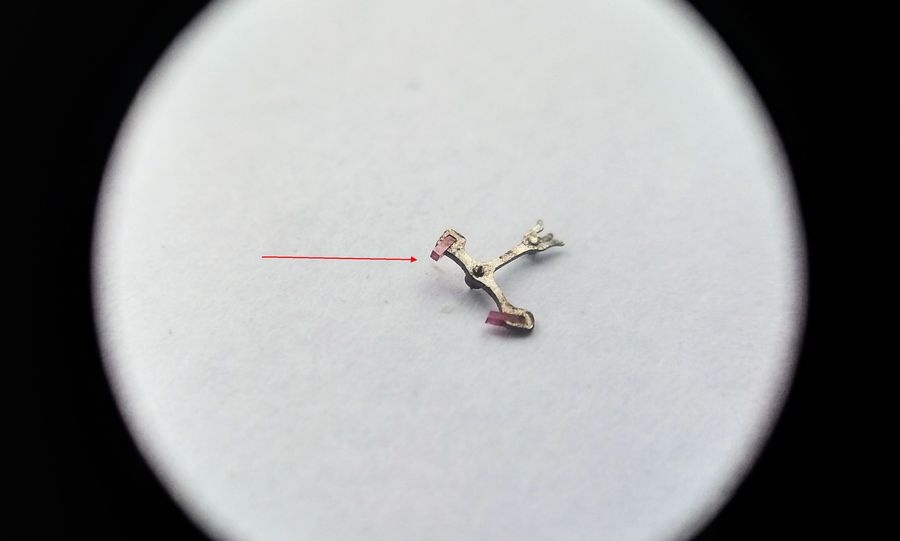
The pallet stones are always paired, contributing two jewels to any movement's total count.
Connecting the balance wheel to the pallet fork requires one additional jewel: the impulse pin, traditionally called the ellipse or roller jewel. This small, distinctively shaped stone is mounted on the balance staff's roller and engages with the fork horns of the pallet fork during each balance oscillation.
The impulse pin's interaction with the fork horns involves both impact and sliding contact, similar to the pallet stones' engagement with the escape wheel. The jewel's particular geometry, roughly D-shaped in cross section, enables proper entry into and exit from the fork slot during the balance's arc. Unlike bearing jewels, the impulse pin receives no lubrication, as any oil would attract dust and eventually impede the delicate engagement sequence.
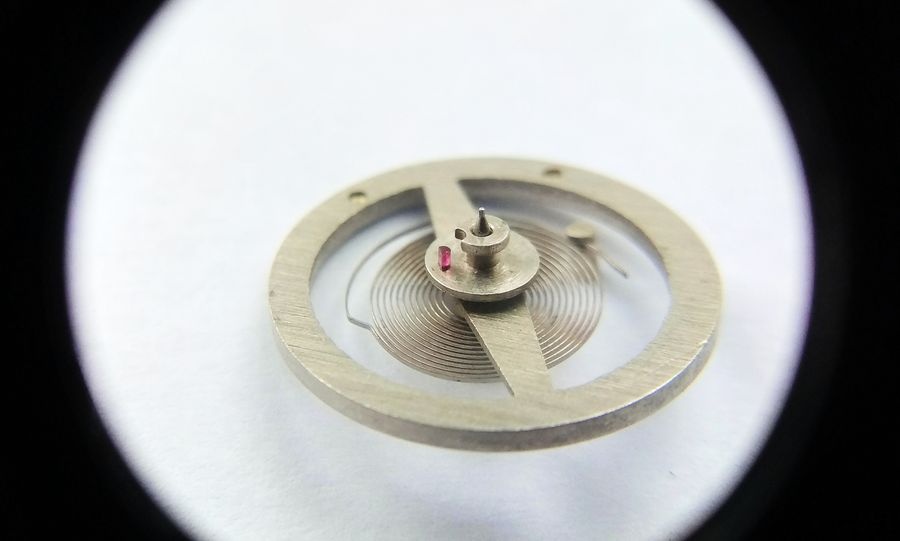
Because the impulse pin is a single component, its presence contributes one jewel to the total count. This explains why functional jewel counts in standard movements are typically odd numbers: the single impulse pin added to the paired jewels elsewhere produces totals like fifteen, seventeen, or twenty-one.
The Question of Minimum Jeweling
With the various jewel types now established, we can address the practical question of how many jewels a functional movement actually requires. The answer depends on what one considers acceptable performance and longevity, but certain minimums emerge from mechanical necessity.
The balance system absolutely requires jeweling. The combination of high oscillation frequency, minimal available driving force, and the need for positional consistency makes metal-in-metal bearings impractical. At minimum, this means four jewels: two olivage hole jewels and two cap jewels. Some historical pin-lever movements operated with exactly this configuration, but these represent the lowest tier of mechanical horology rather than any reasonable standard.
A proper Swiss lever escapement adds five more jewels: two pallet stones, one impulse pin, and two hole jewels for the pallet fork arbor. The escapement operates under significant mechanical stress with tight tolerances, making jeweled bearings essential for consistent performance.
The gear train presents more flexibility. Historically, many movements operated with unjeweled train wheels, the pivot holes machined directly into brass plates. This construction works acceptably in short-term use but degrades predictably as the harder steel pivots wear into the softer brass. Wear opens the holes, introducing increasing play that eventually causes tooth interference, amplitude loss, or complete stoppage.
Adding hole jewels to the escape wheel, fourth wheel, and third wheel prevents this degradation path. These six jewels, counted as two per wheel, bring the total to fifteen. This represents the traditional threshold for what the industry historically considered a fully-jeweled movement. Many respected calibers from various manufacturers operated successfully at this level, including numerous Soviet-era calibers and certain Swiss movements positioned for everyday use rather than precision timekeeping.
The center wheel presents an interesting case. Many fifteen-jewel calibers operate this wheel in plain brass bushings rather than jewels. The center wheel rotates slowly, making one revolution per hour, so wear accumulates gradually. Nevertheless, movements with unjeweled center wheels do eventually develop problems. After decades of service, worn center wheel holes manifest as inconsistent timekeeping, hand wobble, or dial-side binding. Adding two jewels for the center wheel produces a seventeen-jewel movement, a configuration representing excellent practice for standard manual-wind calibers.
Some manufacturers pursued alternative jeweling strategies. Certain calibers added a center wheel endstone and escape wheel endstones while omitting center wheel hole jewels entirely, producing eighteen-jewel totals with different distribution than the seventeen-jewel standard. Each approach represents a engineering judgment about where additional jeweling provides the greatest benefit for the available budget.
Movements Without Proper Jeweling
Understanding proper jeweling becomes clearer when examining movements where it was omitted. Economic pressures have repeatedly produced watches with inadequate jewel counts, and the long-term consequences are instructive.
Historical examples include certain East German calibers that operated with minimal or no train jewels. These movements functioned adequately when new but exhibited dramatically shortened service lives. A watch lasting months rather than years before requiring major work represents poor value regardless of initial purchase price.
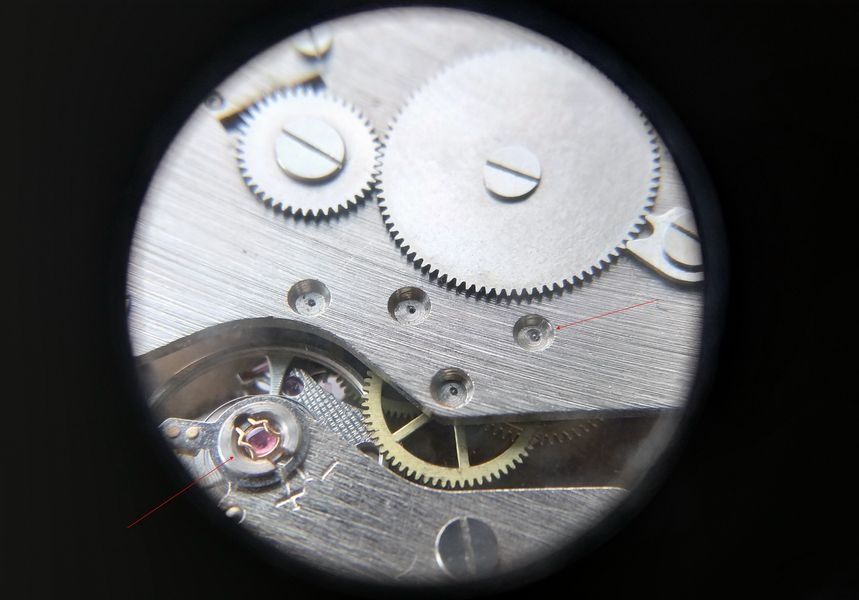
More troubling examples emerged from various periods of economic disruption, when established manufacturers substituted metal bushings or omitted components to reduce costs. These movements appear superficially normal but reveal their deficiencies upon inspection. Missing balance endstones, absent train wheel jewels, or substituted metal components invariably produce the same outcome: premature wear, degraded performance, and eventual failure.
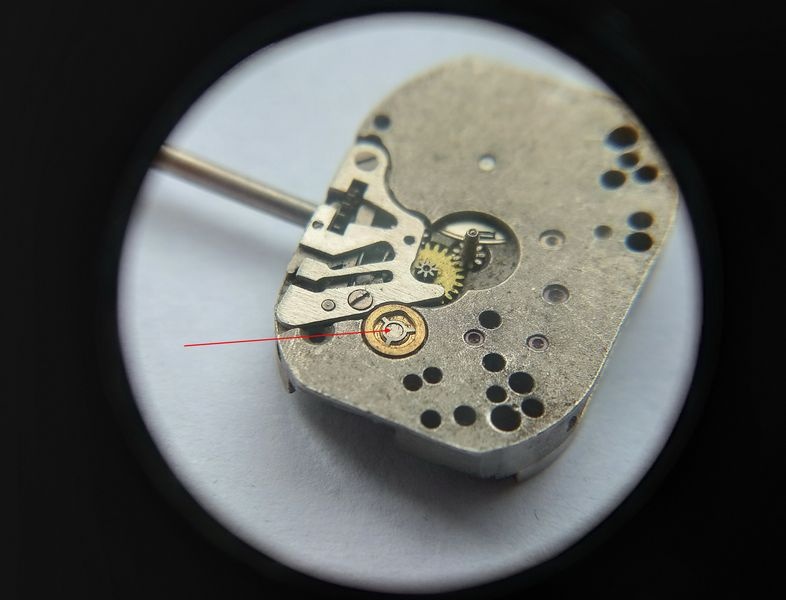
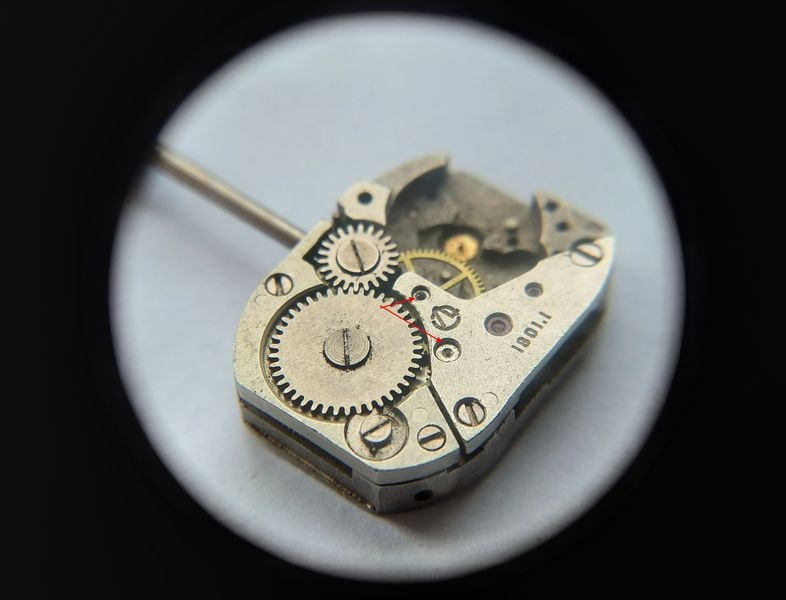
Such movements still appear in the repair trade, often brought by owners unaware of their fundamental limitations. The honest assessment involves explaining that restoration requires more than cleaning and lubrication: it requires addressing fundamental design deficiencies that the original manufacturer chose to accept.
Quartz Movements and the Jewel Question
The discussion so far has addressed mechanical movements, but quartz calibers deserve mention given their prevalence. The jeweling requirements for quartz movements differ dramatically from mechanical ones, reflecting fundamental differences in operating principle.
Mechanical movements maintain constant pressure throughout the gear train whenever the mainspring contains energy. Every wheel continuously drives against its successor, every pivot constantly bears load. This continuous loading demands the friction-reducing properties of jewel bearings and the lubrication retention they enable.
Quartz movements operate inversely. The gear train remains stationary except during the brief moments when the stepper motor advances. No continuous loading exists; the pivots experience only momentary forces during each stepping event. This reduced duty cycle dramatically decreases bearing requirements. The visible symptom is the slight hand flutter observable in many quartz watches, a consequence of clearances that would be unacceptable in a mechanical movement but cause no functional problems in the intermittent-motion quartz context.
Given these reduced requirements, most consumer quartz movements omit jewels entirely from the gear train, reserving them only for components where their properties remain essential. Quality quartz calibers may incorporate between one and ten jewels, typically at the stepper motor rotor and any metal-on-metal contact points where some benefit remains. The marketing claims occasionally seen on inexpensive quartz watches touting high jewel counts should be viewed skeptically, as such jewels often qualify as non-functional under any reasonable standard.
Practical Guidance for the Collector
The foregoing analysis permits several practical conclusions for those evaluating movements or considering purchases.
Fifteen jewels represents the minimum acceptable count for a traditional manual-wind caliber intended for regular use. Movements at this level, from reputable manufacturers, offer adequate service life with appropriate maintenance intervals. However, expect eventual center wheel bearing wear in movements with unjeweled center wheels.
Seventeen jewels indicates better practice, with the center wheel properly supported in jeweled bearings. This configuration represents the standard for quality everyday movements and offers excellent long-term durability. The additional two jewels provide substantial benefit relative to their modest cost increment.
Eighteen jewels typically indicates seventeen-jewel configuration plus one additional endstone, often at the escape wheel. This modest enhancement improves escapement lubrication retention without fundamentally changing the movement's character.
Higher jewel counts, twenty-one and above, indicate additional endstones throughout the train or jeweled automating winding systems in self-winding calibers. These movements offer theoretical advantages in lubrication retention and positional stability, though practical differences may be subtle in normal use.
Jewel count alone provides incomplete guidance. A seventeen-jewel movement from a quality manufacturer with proper finishing and adjustment will outperform a twenty-one-jewel caliber of inferior construction. The jewel count indicates one aspect of the movement's specification, not its overall quality level.
Finally, remember that fancy jewel counts matter only in mechanical movements. Quartz calibers operate under different principles where excessive jeweling provides no benefit and may actually indicate marketing excess rather than engineering substance.
Concluding Observations
The jewels within a mechanical watch serve purposes both practical and symbolic. Practically, they reduce friction, retain lubrication, and enable the precision required for accurate timekeeping. Symbolically, they represent the watchmaker's commitment to longevity over expedience, to engineering quality over mere function.
Understanding jewel function enriches the collector's appreciation of mechanical horology. The ruby glimpsed through an exhibition caseback is not merely decoration but a functional component with specific geometric requirements and a definite purpose in the movement's operation. Each jewel position reflects decisions made by movement designers balancing performance, cost, and manufacturing complexity.
This knowledge also enables more informed evaluation of movements encountered in collecting or service work. Recognizing proper jeweling allows identification of quality calibers; spotting missing or substituted jewels reveals cost-reduction measures that may affect long-term reliability. The educated eye sees beyond surface appearance to the engineering substance beneath.
The mechanical watch persists in an era of electronic alternatives precisely because it offers something those alternatives cannot: a tangible connection to centuries of horological development, expressed through components whose function and purpose remain comprehensible to patient observation. The jeweled bearing represents one element of this tradition, a solution to fundamental mechanical challenges refined through generations of practice. Understanding it deepens appreciation for the remarkable devices that measure our days through purely mechanical means.
Comments
Write a comment