Cart
Your shopping cart is empty!
It's never too late to make things right :)


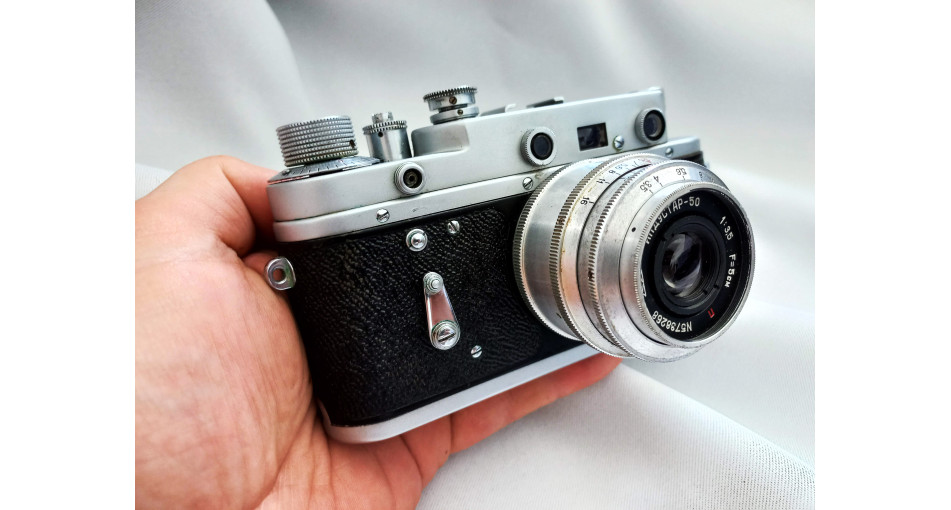
Explore the history of the Zorki camera series, a Soviet adaptation of the Leica that became a symbol of innovation and durability. Learn why Zorkis are prized by photographers today.
The world of photography boasts a rich history filled with iconic cameras that revolutionized the way we capture moments. Among these, the Soviet Zorki series holds a unique place.
The Zorki's story begins after World War II. The Soviet Union, eager to develop its domestic camera industry, looked towards the pinnacle of rangefinder cameras at the time: the German Leica II. The resulting Zorki, meaning "sharp-sighted" in Russian, was heavily inspired by the Leica, so much so that it was essentially a copy. This wasn't uncommon - many countries took inspiration from established leaders in various industries. However, the Zorki took this inspiration and made it accessible to a new generation of photographers behind the Iron Curtain.
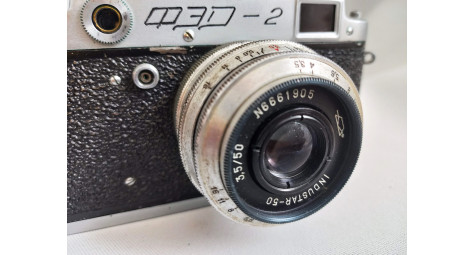
Produced from 1948 to 1978 by the Krasnogorsk Mechanical Factory (KMZ), the Zorki became a long-running and diverse camera line. The first iteration, simply called the "Zorki" or "Zorki-1," featured a collapsible 50mm f/3.5 Industar-22 lens, a Soviet take on the Zeiss Tessar design. While it lacked the Leica's prestige, the Zorki offered a competent and affordable alternative for aspiring photographers in the USSR and Eastern Bloc countries.
The success of the Zorki-1 led to a range of Zorki models, each with its own variations and improvements. The Zorki-2 offered flash synchronization, the Zorki-3 brought a self-timer, and the Zorki-4 became the first Zorki to be widely exported to the West. These later Zorkis often sported the Jupiter-8 lens, a fast and well-regarded optic that rivaled similar offerings from Western manufacturers.
While undoubtedly inspired by the Leica, the Zorki wasn't a mere copy. Soviet cameras were known for their solid build quality and resilience. Built to endure the harsher conditions of the USSR, Zorkis were often heavier and less refined than their German counterparts. However, this also made them incredibly durable companions for photographers working in demanding environments. Where a Leica might falter in the Siberian tundra, a Zorki would keep on clicking.
Today, Zorki cameras hold a special place among vintage camera enthusiasts. Their affordability, rugged build, and historical significance make them attractive to collectors and photographers alike. The rangefinder shooting experience, where you focus through a separate viewfinder window, offers a unique and engaging way to compose photographs. Unlike modern autofocus cameras, this manual process forces a photographer to slow down and consider the frame more deliberately.
Another advantage of Zorki cameras is their versatility. Thanks to their Leica-thread mount (M39), Zorkis are compatible with a wide range of lenses from various manufacturers. This opens up a world of creative possibilities for photographers. You can experiment with vintage Soviet glass like the aforementioned Jupiter-8, or adapt modern lenses with the right adapter. This degree of flexibility makes the Zorki system surprisingly relevant for contemporary photography.
If you're looking for a camera that's steeped in history and offers a unique shooting experience, a Zorki might be the perfect choice. With a little practice, you can capture stunning images with this piece of Soviet photographic heritage. Finding a Zorki is relatively easy, with many available online and in second-hand camera stores at reasonable prices. Be sure to research the specific model you're interested in, as there are variations and condition can greatly affect value. Some popular options include the Zorki-1, a great starting point for beginners, or the Zorki-4, known for its excellent Jupiter-8 lens.
The Zorki series is more than just a nostalgic reminder of the past. It's a testament to the ingenuity and determination of Soviet engineers who adapted existing technology to create a camera line that served their nation's photographers well. Zorkis played a significant role in capturing everyday life, journalism, and artistic expression in the USSR. So, if you ever come across a Zorki, take a moment to appreciate its history and the photographic potential it still holds today. With a roll of film and a creative eye, you can breathe new life into this Soviet legacy.