
Field report
Soviet Magazines and Newspapers: A Collector's Guide to Vintage USSR Print Culture
Reviewed
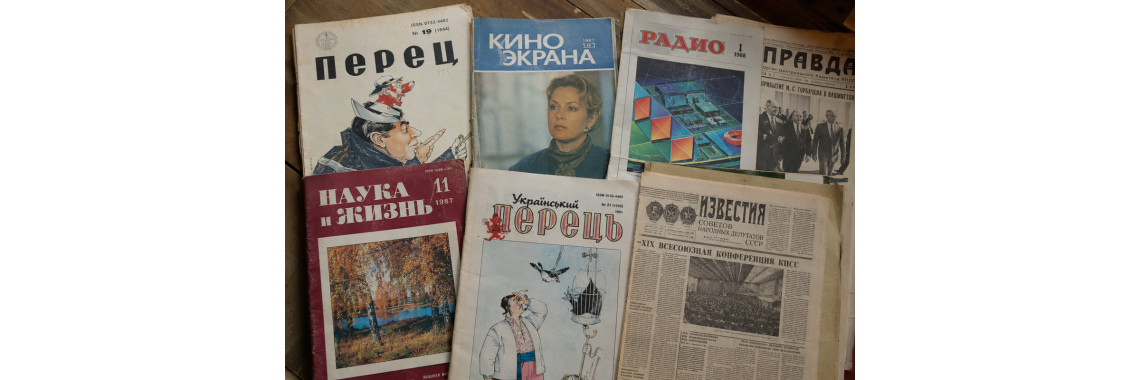
Soviet Magazines and Newspapers: A Collector's Guide to Vintage USSR Print Culture
Vintage Soviet magazines and newspapers are much more than old pieces of paper. They are original documents of their time — combining history, photography, graphic design, illustration, journalism, technical knowledge, popular culture, satire, and everyday life.
For collectors of Soviet memorabilia, original periodicals offer a unique opportunity to own something that was created for people who actually lived in the Soviet era. A vintage magazine can preserve the visual language of a particular decade, the subjects that interested its readers, the technology of its time, and the way writers, artists, photographers, and journalists communicated with the public.
But Soviet magazines are interesting far beyond collecting. Historians can use them as primary sources. Designers can study their typography and page layouts. Illustrators can examine caricatures and graphic techniques. Photographers can explore historical approaches to visual storytelling. Writers and journalists can study the language and editorial style of different periods. Engineers and electronics enthusiasts can discover technical articles and circuit diagrams that were originally published for readers who built and repaired equipment themselves.
At Soviet Box, our growing collection of vintage Soviet magazines and newspapers brings together original printed materials representing different aspects of Soviet culture and life. From satire and caricature to cinema, photography, radio engineering, and Ukrainian print culture, each publication has its own character and historical atmosphere.
Why Are Soviet Magazines and Newspapers Worth Collecting?
A vintage magazine can be interesting for many different reasons. Sometimes it is the publication itself that matters. Sometimes it is a particular issue, year, cover, article, photograph, illustration, or technical project.
Unlike a modern reproduction, an original periodical is a physical object that existed in its historical environment. The paper, printing quality, typography, illustrations, photographs, and even the natural signs of age are part of its story.
Soviet magazines can appeal to:
- Collectors of Soviet memorabilia looking for authentic original objects from the USSR;
- Historians and researchers studying Soviet society, culture, media, and everyday life;
- Graphic designers interested in typography, composition, layout, and historical visual styles;
- Illustrators and artists studying Soviet drawing, caricature, and graphic techniques;
- Writers, journalists, and publicists researching language, rhetoric, journalism, and editorial styles;
- Photographers and filmmakers interested in historical photography and visual storytelling;
- Engineers and electronics enthusiasts interested in historical technical publications and radio circuits;
- Film researchers and cinema enthusiasts exploring Soviet cinema and its cultural history;
- Educators and students using original periodicals as historical and visual reference material;
- Museum professionals and cultural researchers looking for authentic printed context for historical objects and exhibitions.
This wide range of possible uses is one of the reasons Soviet periodicals remain fascinating today. They can be simultaneously a collectible, a historical document, a visual archive, and a source of inspiration.
Krokodil: The Classic Soviet Satirical Magazine
Krokodil is perhaps the best-known name in Soviet satirical publishing. The magazine began in 1922 and became an important part of Soviet satirical journalism. It published humorous and satirical texts, caricatures, illustrations, and commentary on social and political subjects. The publication was issued by the newspaper Pravda for much of the Soviet period and reached very large circulations, especially in the 1980s. :contentReference[oaicite:2]{index=2}
For collectors, Krokodil magazines are particularly interesting because the illustrations often communicate an idea immediately. A single caricature could combine exaggeration, symbolism, visual metaphor, and humor in a way that remains understandable even decades later.
For designers and illustrators, Krokodil provides a rich archive of Soviet graphic satire. The magazine can be studied for its use of caricature, expressive characters, visual metaphors, composition, and the relationship between text and image.
At the same time, Krokodil should be understood in its historical context. It was not an independent underground publication; it operated within the Soviet media system and its editorial and censorship environment. That context is an important part of what makes original issues historically interesting.
Today, a vintage Krokodil issue can therefore be viewed from several perspectives: as a collectible, as an example of Soviet graphic art, as a document of its time, or as a source for studying the history of satire and mass media.
Perets: Ukrainian Satire With Its Own Character
Perets occupies a special place in the history of Soviet-era Ukrainian print culture. The Ukrainian satirical magazine is particularly interesting because it developed its own identity within the broader Soviet publishing landscape.
For collectors, Perets magazines offer something that is difficult to find in a general collection of Soviet memorabilia: Ukrainian-language satire combined with caricature, humor, and a distinctly Ukrainian cultural atmosphere.
The very name Perets, meaning "pepper" in Ukrainian, is an appropriate metaphor for the character of the publication. Its satirical tone can feel sharp, lively, and biting. Compared with the more widely known all-Union Krokodil, Perets can be perceived as more local, more culturally specific, and, to many readers, sharper and bolder in its satirical flavor. This is best understood as a difference in character and atmosphere rather than a simple objective ranking between the two publications.
This distinction is part of the appeal. Krokodil represents a major all-Union tradition of Soviet satire, while Perets gives collectors an opportunity to explore Ukrainian-language satirical publishing and its particular visual and cultural identity.
For historians and researchers, Perets can be especially valuable as material for studying Ukrainian print culture. For artists and illustrators, the magazine offers examples of caricature and satirical drawing. For collectors, each original issue is also a small piece of Ukrainian publishing history.
There is a different atmosphere when reading an old Perets issue. The language, humor, illustrations, and cultural references create a character that is distinct from Russian-language Soviet satirical publications.
RADIO: Soviet Electronics, Radio Engineering, and Technical Knowledge
Among Soviet periodicals, the magazine RADIO is particularly interesting because its value extends far beyond nostalgia.
The publication has a long history connected with radio amateurs and technical creativity. The official archive of the magazine contains historical issues and technical materials covering radio receivers, antennas, transceivers, electronic circuits, and other practical subjects. :contentReference[oaicite:3]{index=3}
For a collector interested in technology, an old RADIO magazine can be a fascinating technical time capsule. Its pages can contain circuit diagrams, construction projects, descriptions of electronic devices, practical instructions, and articles about radio engineering and electronics.
One particularly famous example is the Soviet amateur computer Radio-86RK. A series of articles describing the computer was published in the magazine RADIO in 1986. The project became an important part of the history of Soviet home computing and amateur electronics. :contentReference[oaicite:4]{index=4}
This illustrates why old technical magazines can be so valuable to collectors. They do not simply describe technology from the past — they preserve the original technical knowledge that readers of the period could use to build, modify, repair, and experiment with equipment.
A vintage RADIO issue may therefore appeal to:
- radio amateurs;
- electronics enthusiasts;
- engineers and technicians;
- collectors of Soviet technical memorabilia;
- researchers studying the history of electronics;
- computer history enthusiasts;
- designers interested in vintage technical illustrations and diagrams.
For someone interested in the history of Soviet technology, a technical magazine can sometimes be as informative as the physical equipment itself. A Soviet radio receiver tells you what was manufactured. A magazine such as RADIO can show you what technically minded people were reading, building, repairing, and experimenting with.
Novyny Kino Ekranu: Soviet Cinema Through a Ukrainian Lens
Novyny Kino Ekranu is particularly interesting for anyone fascinated by cinema, photography, film history, and Ukrainian cultural life.
The publication was a monthly illustrated film magazine published in Kyiv from 1961 to 1993, with the title appearing as Novyny Kinoekrana during part of the 1980s and early 1990s. It covered Ukrainian cinema as well as cinema from other Soviet republics and abroad. The magazine published film news, critical articles, and creative portraits of cinematographers and filmmakers. :contentReference[oaicite:5]{index=5}
For collectors, the appeal of these magazines lies in their connection to the world of film. Original issues can preserve photographs of actors and filmmakers, film-related imagery, critical writing, and contemporary perspectives on cinema.
For film enthusiasts, a vintage issue provides a way to explore how movies and filmmakers were presented to audiences at the time. For photographers and graphic designers, the magazine can also be interesting as a historical example of editorial photography and visual presentation.
For anyone researching Ukrainian cinema, Novyny Kino Ekranu is particularly valuable because it provides a direct connection to the Ukrainian film press of its period.
Ogonyok: Photography, Illustration, and the Visual Record of an Era
Ogonyok represents another important tradition in Soviet illustrated publishing.
The magazine was a weekly illustrated publication covering social and political subjects as well as literature and art. Its long publishing history makes it interesting to collectors who want to explore Soviet visual culture across different periods. :contentReference[oaicite:6]{index=6}
For collectors, Ogonyok magazines can be especially appealing because of their combination of text and imagery.
Historical photographs can show cities, public figures, cultural events, industry, and everyday life. Magazine covers and layouts can reveal changing approaches to graphic design and editorial presentation.
For photographers and visual researchers, old illustrated magazines can function as a kind of visual archive. They show not only what was photographed, but also which images were considered important enough to publish and how those images were presented to readers.
For collectors interested in the late Soviet period, Ogonyok issues from the era of perestroika can be particularly interesting because the magazine became one of the prominent publications associated with the changing media environment of the late 1980s. :contentReference[oaicite:7]{index=7}
Other Soviet Magazines: A World Beyond the Famous Titles
The world of Soviet periodicals was enormous. Satire, cinema, technology, photography, science, literature, sports, art, and many other subjects were covered by specialized publications.
This diversity is important when building a collection. A collector does not necessarily need to focus only on the most famous titles. An unusual specialized magazine can sometimes provide a more detailed view of a particular aspect of Soviet life.
A technical publication can reveal how people approached electronics and engineering. A cinema magazine can preserve the visual culture surrounding films and actors. A satirical publication can show how humor and caricature were used to comment on social life. An illustrated magazine can document the people, places, architecture, and events that editors considered important.
That is why a collection of Soviet periodicals can become much more than a group of old magazines. Together, different publications create a multi-layered picture of the Soviet era.
Vintage Soviet Magazines as Primary Historical Sources
One of the most important qualities of old Soviet periodicals is that they are primary historical sources.
Of course, every publication must be interpreted in the context in which it was produced. Soviet magazines operated within a specific political, cultural, and media environment, and editorial policies and censorship influenced what could be published.
But this does not make the publications less interesting. On the contrary, the editorial choices themselves can become part of historical research.
A researcher can examine:
- which subjects received attention;
- how historical events were described;
- which photographs were selected;
- how people and places were represented;
- what language and terminology were used;
- how political and social themes were discussed;
- how visual design changed over time;
- how science and technology were presented to the public.
Original magazines can therefore provide information that is difficult to obtain from modern summaries alone. They allow researchers to see historical material in the form in which it was originally presented to contemporary readers.
A Visual Archive for Designers, Artists, and Illustrators
Vintage Soviet magazines are also a rich source of visual inspiration.
Graphic designers can study typography, page composition, geometric structures, illustration, and the relationship between headlines and images.
Illustrators and caricaturists can examine how artists created expressive characters, visual metaphors, exaggeration, and humor. Satirical publications such as Krokodil and Perets are particularly interesting in this respect.
Photographers can explore historical approaches to portraiture, documentary photography, architecture, industrial photography, and editorial storytelling.
Artists and art historians can examine the relationship between text and image and study how visual culture changed across different decades.
Film designers and filmmakers can find historical references in cinema publications, film photography, typography, and editorial layouts.
For these audiences, the value of an old magazine is not necessarily its rarity. Sometimes the most interesting feature is a particular illustration, photograph, typeface, composition, or technical diagram that provides a direct reference to the visual culture of the past.
A Resource for Writers, Journalists, and Publicists
Printed periodicals can also be valuable to people who work with words.
Writers, journalists, and publicists can study historical vocabulary, headlines, article structures, editorial language, and rhetorical techniques.
Comparing magazines from different decades can reveal how terminology and public discourse changed over time. A publication from the 1930s, 1950s, 1970s, or late 1980s can have a noticeably different tone, vocabulary, and editorial style.
For researchers of journalism and mass communication, these differences can be as important as the actual subject matter of the articles.
How to Collect Soviet Magazines
There is no single correct way to collect Soviet periodicals. Different collectors choose different approaches.
Collect One Publication
Some collectors focus on a single title and try to find issues from different years. This allows them to follow the evolution of a publication over time.
A collection of Krokodil, for example, can demonstrate how Soviet satire and graphic design changed across different periods.
Collect by Subject
Another approach is to focus on a specific topic.
A collector interested in technology might look for RADIO and other technical publications. Someone fascinated by cinema might focus on film magazines such as Novyny Kino Ekranu. Another collector might concentrate on satire and build a collection around Krokodil and Perets.
Collect by Historical Period
Some collectors choose a specific decade or historical period and collect different publications from that time. This makes it possible to compare how different magazines presented the same era from different perspectives.
Collect for Visual Inspiration
Designers and artists may choose magazines because of their covers, illustrations, typography, photography, or technical drawings.
In this case, the visual content itself becomes the main reason for collecting.
Collect for Research
Researchers may search for publications connected with a particular subject, city, language, profession, or historical event.
This approach can turn a personal collection into a specialized archive of original period material.
What Makes an Old Soviet Magazine Interesting?
The appeal of a vintage magazine depends on many factors.
- The publication: Some titles have a strong historical or cultural identity.
- The year: Certain periods may be particularly interesting because of historical events or cultural changes.
- The specific issue: An individual issue may contain a notable article, photograph, illustration, or technical project.
- The condition: Physical condition is important for collectors of original printed material.
- The visual design: Covers, typography, illustrations, and photographs can be collectible in their own right.
- The historical context: A magazine connected with an important period or subject can have special research value.
- The language: Ukrainian-language and other Soviet publications can offer perspectives that differ from the dominant Russian-language press.
- The technical content: For publications such as RADIO, original circuit diagrams and construction articles can be of particular interest.
Historical importance and market value are not always the same. A relatively common magazine can still be extremely valuable to a researcher, designer, artist, or collector interested in a particular subject.
Original Soviet Magazines vs. Modern Reproductions
For collectors of historical memorabilia, authenticity matters.
An original vintage magazine contains physical evidence of its age: the paper, printing process, typography, photographs, illustrations, and natural signs of use and preservation.
A modern reproduction can recreate the appearance of an old publication, but it cannot replace the experience of owning an original historical object.
When choosing a vintage magazine or newspaper, collectors should pay attention to the publication title, date, issue number, condition, photographs, and product description.
For researchers and creative professionals, it is also useful to consider exactly what the issue contains. A technical magazine may be interesting because of a particular circuit or article. A cinema magazine may contain photographs or film criticism. A satirical magazine may feature particularly strong caricatures or illustrations.
Building a Collection With Soviet Box
The collection of Soviet magazines and newspapers at Soviet Box is continuously expanding.
Our goal is to bring together original Soviet-era printed materials representing different aspects of the publishing culture of the USSR and its republics.
Among the publications and subjects you can explore are:
- Krokodil and the tradition of Soviet satirical caricature;
- Perets and Ukrainian-language satirical print culture;
- Ogonyok and the tradition of illustrated Soviet journalism;
- Novyny Kino Ekranu and the history of Ukrainian and Soviet cinema publications;
- RADIO and the world of Soviet radio engineering, electronics, circuits, and amateur technical creativity;
- other vintage Soviet periodicals and newspapers representing different areas of culture and everyday life.
Whether you are a collector looking for an original Soviet publication, a historian researching the 20th century, a designer studying vintage graphic language, an illustrator interested in caricature, or an electronics enthusiast fascinated by historical technical projects, Soviet periodicals offer many different ways to explore the past.
Why Soviet Print Culture Still Matters
In the digital age, original printed publications have gained a special appeal.
A vintage magazine is something physical that once belonged to a particular moment in history. It was printed, distributed, purchased, read, and preserved. Today, it allows us to look back at the past through the original medium of the period.
Soviet magazines and newspapers preserve more than words. They preserve visual styles, photographic approaches, graphic techniques, technical knowledge, humor, language, and cultural perspectives.
A single issue of RADIO can preserve a technical project or circuit from the history of Soviet electronics. A Perets issue can reveal the atmosphere of Ukrainian satire and humor. A Krokodil issue can demonstrate the visual language of Soviet caricature. An issue of Novyny Kino Ekranu can open a window into the world of cinema and Ukrainian film journalism. An Ogonyok issue can preserve photographs and illustrations that document the visual culture of its era.
Together, these publications form a remarkable printed archive of the 20th century.
Explore Vintage Soviet Magazines and Newspapers
Whether you are an experienced collector or just beginning to explore Soviet memorabilia, vintage magazines and newspapers are an excellent place to start.
They can be collected for their historical value, studied for research, appreciated for their graphic design, used as inspiration by artists, or simply enjoyed as authentic objects from another era.
From the sharp caricatures of Krokodil and the distinctive Ukrainian character of Perets to the world of cinema in Novyny Kino Ekranu, the illustrated pages of Ogonyok, and the technical world of RADIO, each publication offers a different way to discover Soviet print culture.
Each original issue is a small piece of history. Together, they create a fascinating picture of the people, technology, art, media, humor, and visual world of the Soviet era.
Explore the growing collection of vintage Soviet magazines and newspapers at Soviet Box and discover an authentic piece of USSR print history for your collection, research, or creative inspiration.
Frequently Asked Questions About Soviet Magazines and Newspapers
Are Soviet magazines collectible?
Yes. Vintage Soviet magazines are collected by historians, memorabilia enthusiasts, researchers, graphic designers, artists, engineers, and collectors interested in 20th-century history and print culture.
What Soviet magazines are popular with collectors?
Collectors are interested in many different types of Soviet periodicals. Satirical publications such as Krokodil and Perets, illustrated magazines such as Ogonyok, cinema publications such as Novyny Kino Ekranu, and technical magazines such as RADIO can all appeal to different audiences.
Why is Krokodil magazine interesting?
Krokodil is known for its satirical texts, caricatures, illustrations, and humorous treatment of social and political subjects. Its original issues are interesting as examples of Soviet graphic satire and as historical documents of their period.
What makes Perets different from Krokodil?
Perets has a distinct Ukrainian cultural and linguistic identity. While Krokodil was a major all-Union satirical publication, Perets developed its own Ukrainian character. Its satire can feel sharper and more locally rooted, giving the magazine a different atmosphere and personality.
Why are old RADIO magazines interesting?
RADIO magazines can contain technical articles, radio and electronics projects, circuit diagrams, and practical information for radio amateurs. Some historical issues are connected with important technical projects, including the publication of material about the Radio-86RK amateur computer in 1986.
Why collect Novyny Kino Ekranu?
Novyny Kino Ekranu is particularly interesting for collectors of cinema memorabilia and researchers of Ukrainian film culture. The magazine covered Ukrainian cinema, cinema from other Soviet republics, and foreign cinema, publishing film news, critical articles, and portraits of filmmakers.
Can designers and artists use Soviet magazines as inspiration?
Yes. Vintage Soviet publications can provide references for typography, composition, illustration, caricature, photography, page layout, and visual storytelling. They can be especially interesting for designers, illustrators, comic artists, and artists researching historical visual styles.
Are Soviet magazines useful for historical research?
Yes. Original magazines and newspapers can serve as primary sources for studying historical events, public discourse, visual culture, journalism, graphic design, photography, cinema, technology, and everyday life.
How should I store vintage Soviet magazines?
Vintage magazines should ideally be kept in a cool, dry environment away from direct sunlight and excessive humidity. Handle old paper carefully and avoid unnecessary folding, adhesive tape, or other materials that could damage the original publication.
Are old Soviet newspapers valuable?
The interest and value of an old Soviet newspaper can depend on its date, condition, rarity, and historical context. Newspapers connected with important events may be particularly interesting to collectors and researchers.
Where can I buy vintage Soviet magazines?
You can explore the growing selection of original Soviet-era magazines and newspapers in the Soviet Box collection. The selection includes different publications and subjects, with new items added as the collection expands.
Discover the Soviet Print Collection
Visit the Soviet Magazines and Newspapers collection at Soviet Box to explore original vintage publications and discover the stories, photographs, technical knowledge, artistic styles, and visual culture preserved inside the pages of Soviet-era print.
Political education department
The Study Continues
More restoration diaries and service guides in the reading room.
All ArticlesFeedback from comrades
Comments
Write a comment