Cart
Your shopping cart is empty!
It's never too late to make things right :)


"The details that disappear from a movement often reveal more about an era than those that remain..."
— Notes on Soviet horology
The classification of jewels in mechanical watches distinguishes between functional and non-functional stones. Functional jewels directly contribute to timekeeping through bearing support and force transmission. Non-functional jewels serve auxiliary purposes: supporting calendar disks, providing decorative elements, or addressing secondary mechanical requirements. International standards exclude non-functional jewels from official counts, yet their presence or absence profoundly affects movement quality.
The Slava caliber 2428 presents an instructive case study in this distinction. This full-calendar movement underwent significant modification during its production life, with non-functional jewels eliminated in later versions while the official twenty-six jewel count remained unchanged. Comparing early and late examples reveals how cost reduction measures, implemented under the Soviet economic reforms of the 1980s, affected genuine mechanical quality while preserving marketing specifications.
This examination also carries contemporary relevance. Various enterprises currently produce watches using new-old-stock Soviet movements in newly manufactured cases, marketed as heritage revivals at premium prices. Understanding which caliber variants these projects might employ informs purchasing decisions for collectors considering such offerings.
The early 1980s represents a watershed moment in Soviet manufacturing philosophy. The economic slogan of that era, emphasizing efficiency above all else, manifested in subtle but consequential changes across industrial production. Watch movements proved no exception, with modifications implemented that maintained specification compliance while reducing actual quality.
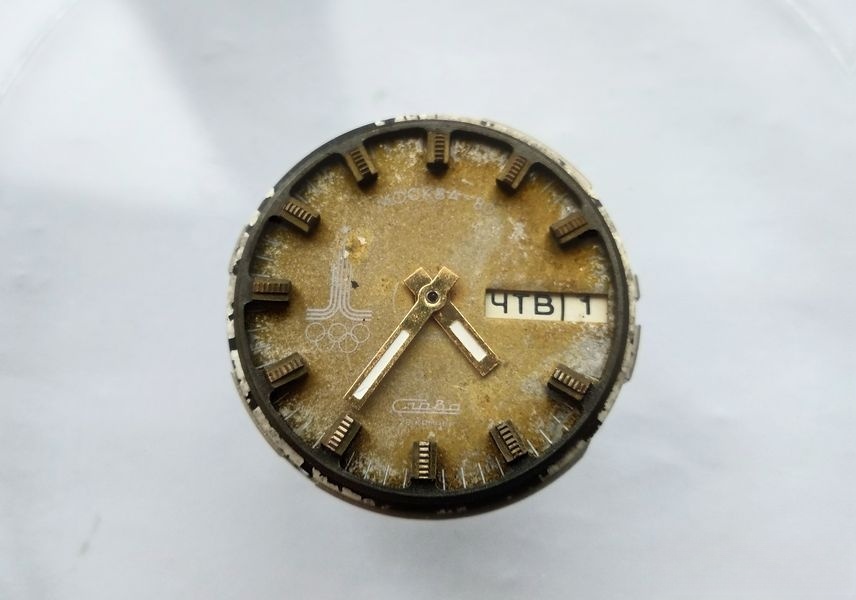
The specimen selected for detailed examination bears unmistakable evidence of pre-1980 manufacture. Its dial carries Olympic symbolism from the 1980 Moscow Games, establishing a firm production date boundary. While the dial itself shows considerable wear, its presence confirms the movement's vintage.
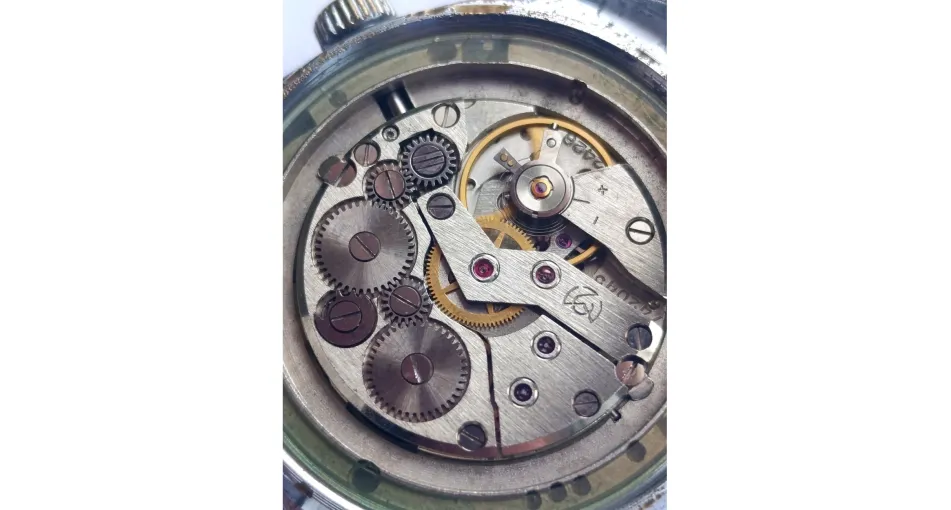
Several visual indicators distinguish early from late production. The presence of chamfered edges on bridges indicates hand assembly methods employed before automated production lines were introduced. These bevels, removed in later production because they interfered with automated handling equipment, represent one reliable dating marker.
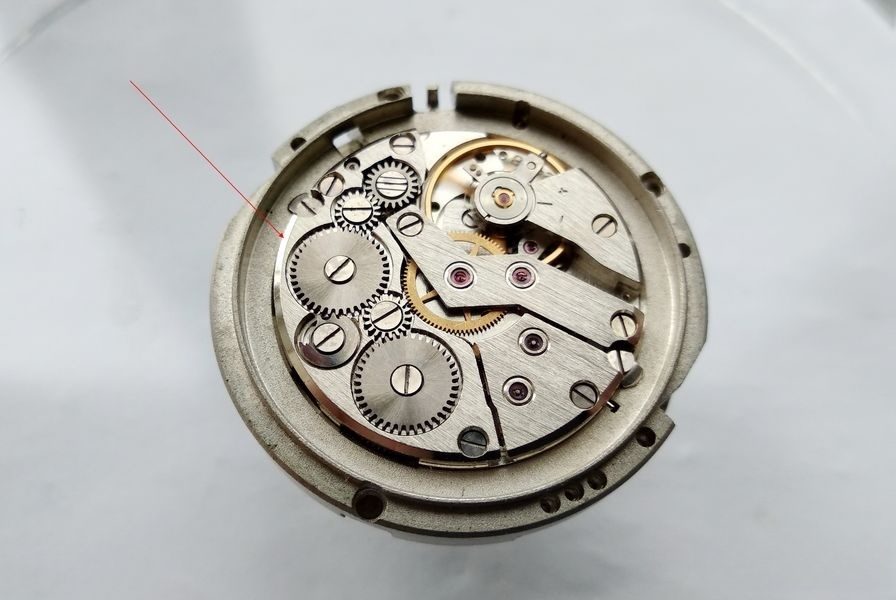
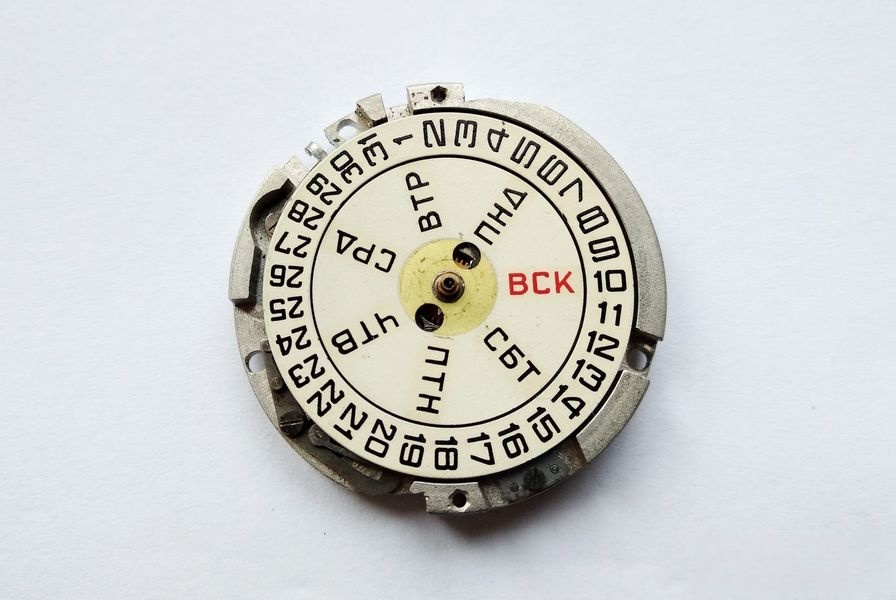
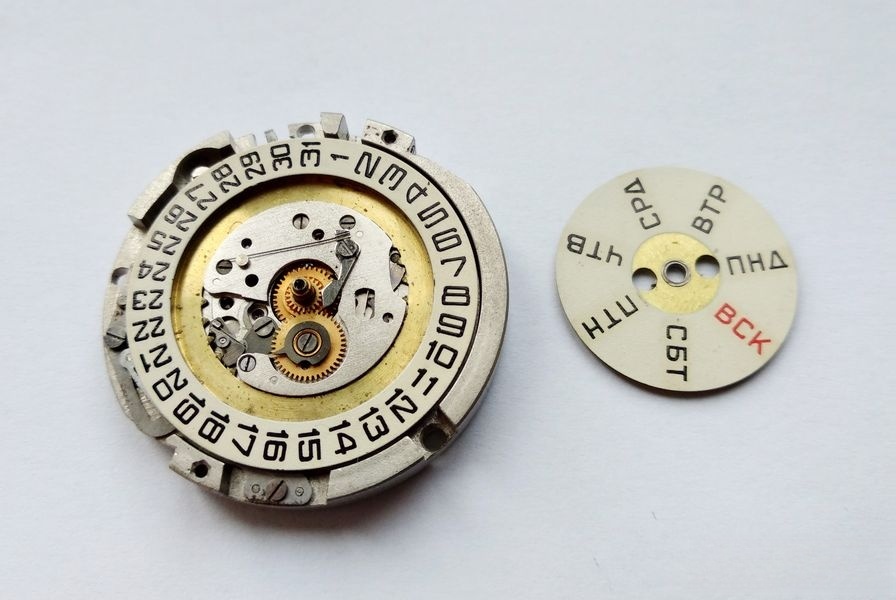
The balance wheel assembly reveals significant quality variations between production eras. Early movements employed yellow-metal balance wheels with carefully finished components throughout. The shock protection springs received proper forming, and the hairspring exhibited precise curvature where it passed under the regulator index.
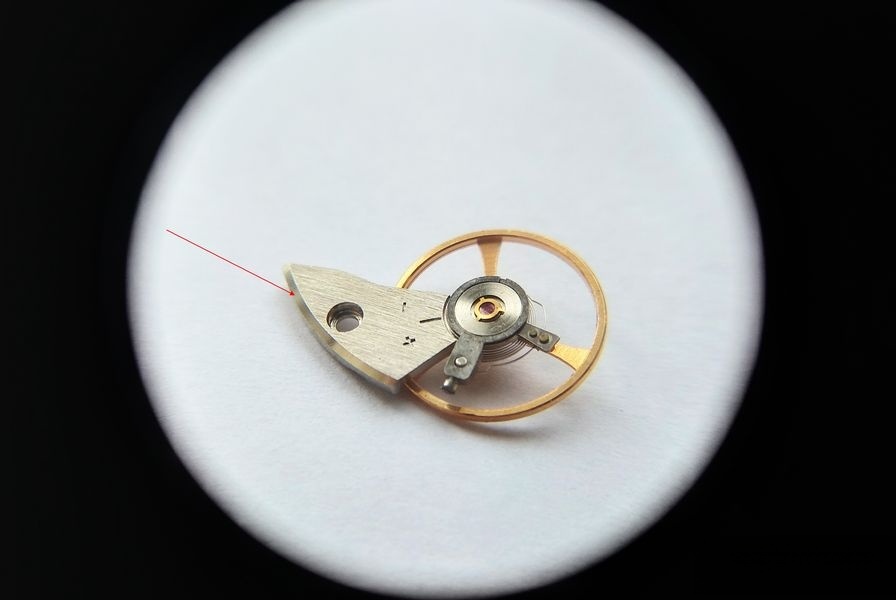
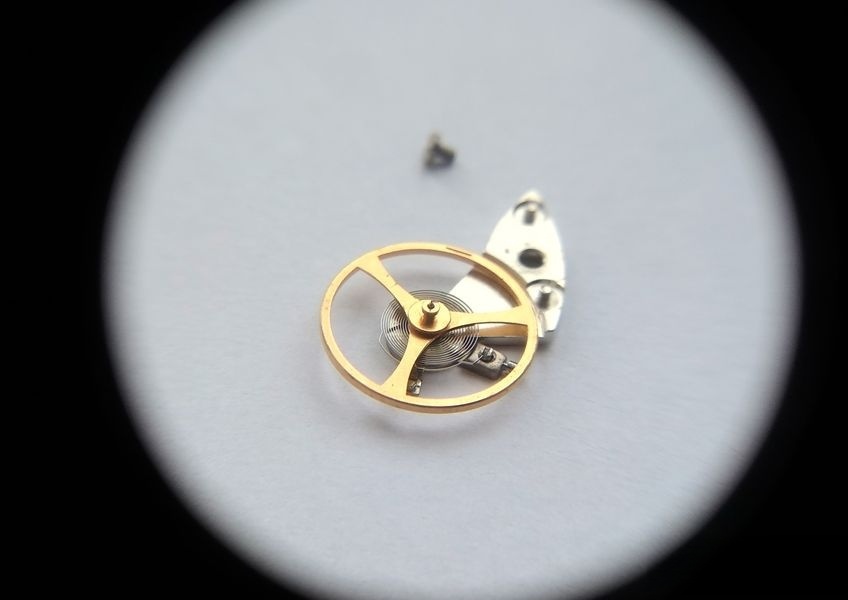
Late production balances substituted white-metal wheels and exhibited notably inferior finishing. More significantly, these later balances frequently present positional timing errors that prove difficult or impossible to correct fully during service. The manufacturing tolerances apparently degraded along with the visible quality indicators.
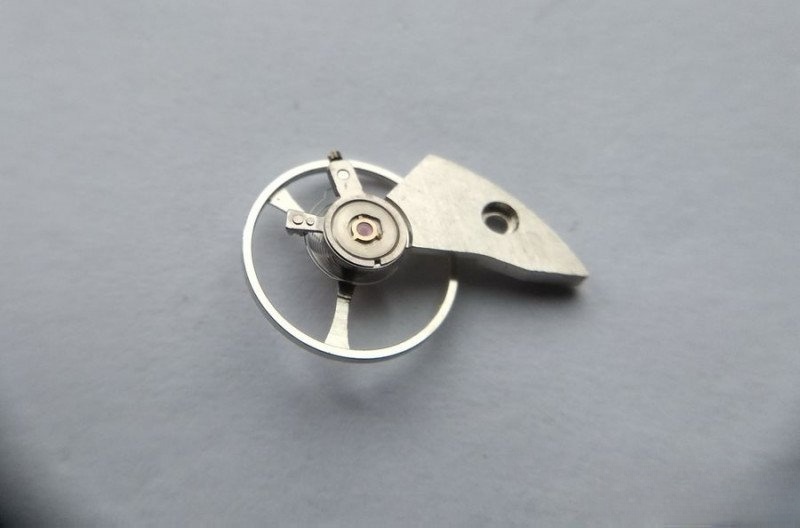
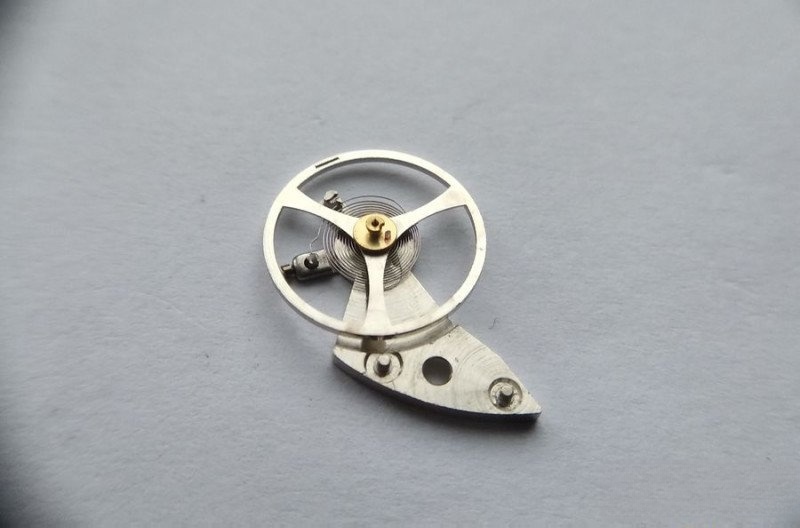
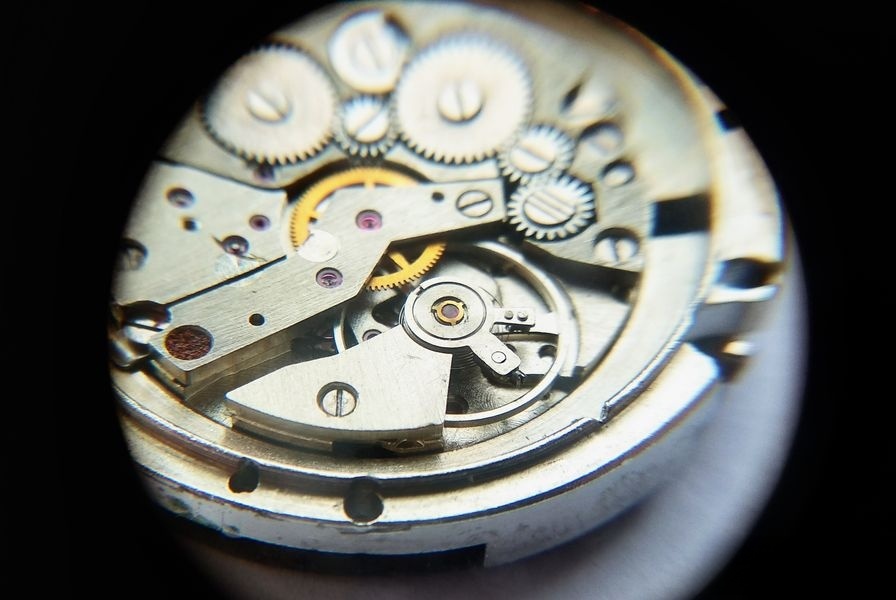
The shock protection springs themselves underwent material changes that affected function. Later white-metal springs exhibit increased stiffness compared to their yellow-metal predecessors, reducing shock absorption effectiveness while simultaneously complicating service procedures. Installing these stiffer springs during cap jewel service requires additional patience and risks component damage.
Examination of the gear train bridges reveals another consequential difference. Early production bridges incorporate circular grooves surrounding each jewel, machined into the bridge surface. These channels serve as oil barriers, preventing lubricant migration away from bearing surfaces. The feature improves lubrication retention, extends service intervals, and reduces contamination as migrating oil collects dust particles that would otherwise be drawn into the bearings.
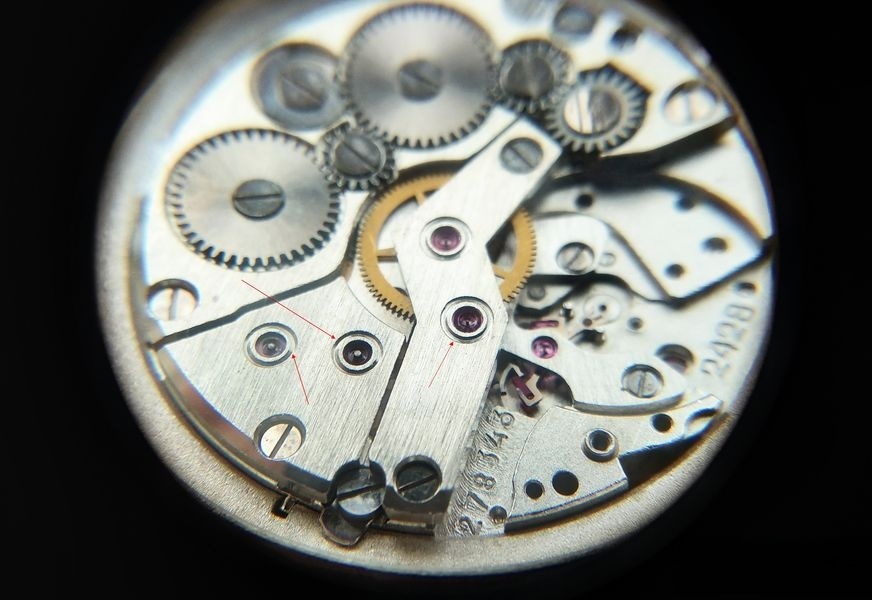
Late production bridges omit these grooves entirely, the jewels pressed directly into plain surfaces. The manufacturing operation that created the grooves was apparently deemed an unacceptable expense. Oil applied to these bearings migrates freely across the bridge surface, reducing effective lubrication duration and potentially contaminating other movement areas.
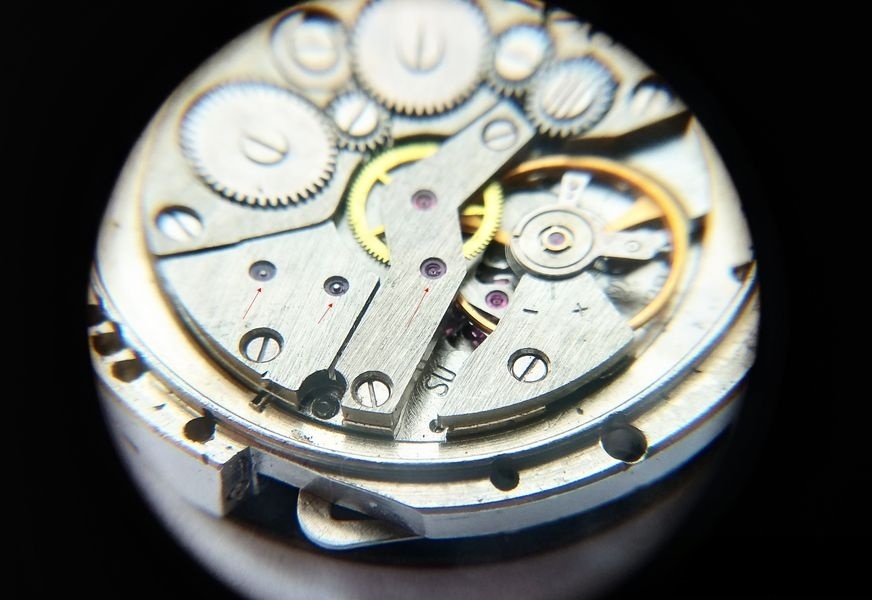
The "SU" marking visible on late bridges provides another dating reference, this designation appearing only after the 1980 production changes were implemented.
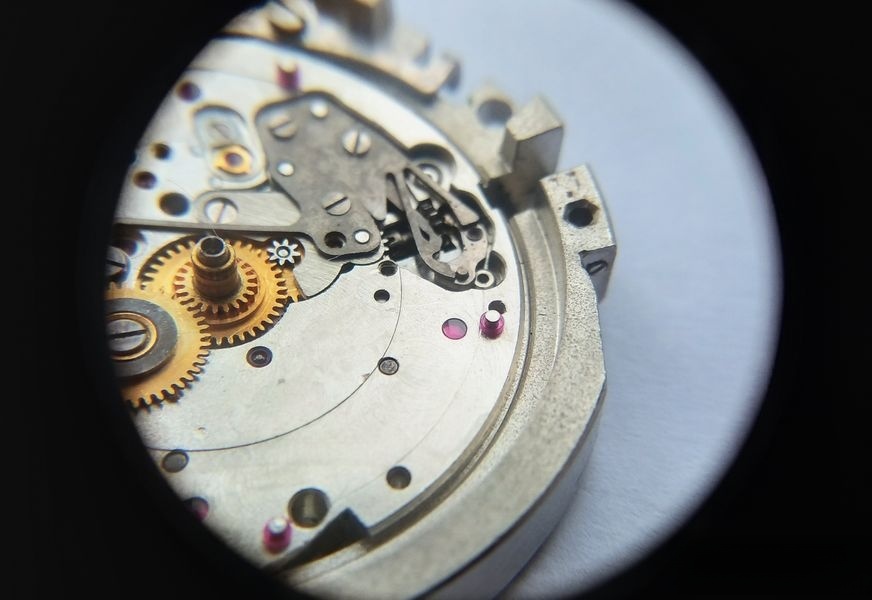
The most dramatic difference between early and late production concerns the date disk support system. Early calibers mount the date disk on an elaborate jeweled bearing arrangement comprising nine non-functional stones. Five cylindrical ruby posts provide lateral positioning, preventing side-to-side displacement. Four lenticular jewels create the bearing surface upon which the disk rotates, the curved stone profiles minimizing friction during date changes.
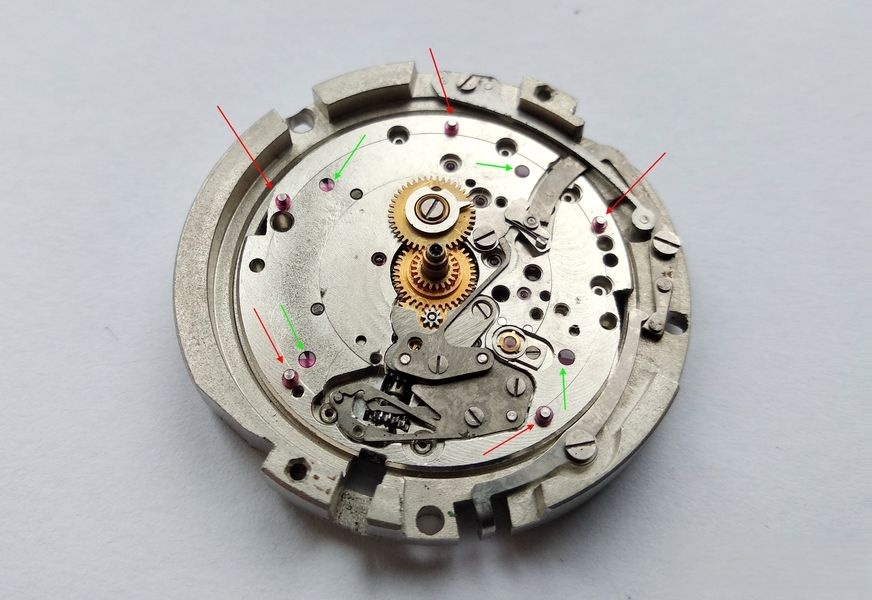
This construction creates what amounts to an air bearing effect, the date disk floating on polished ruby surfaces with minimal friction. Calendar changes operate quietly and smoothly, and the mechanism resists the binding and jamming issues that plague lesser constructions.

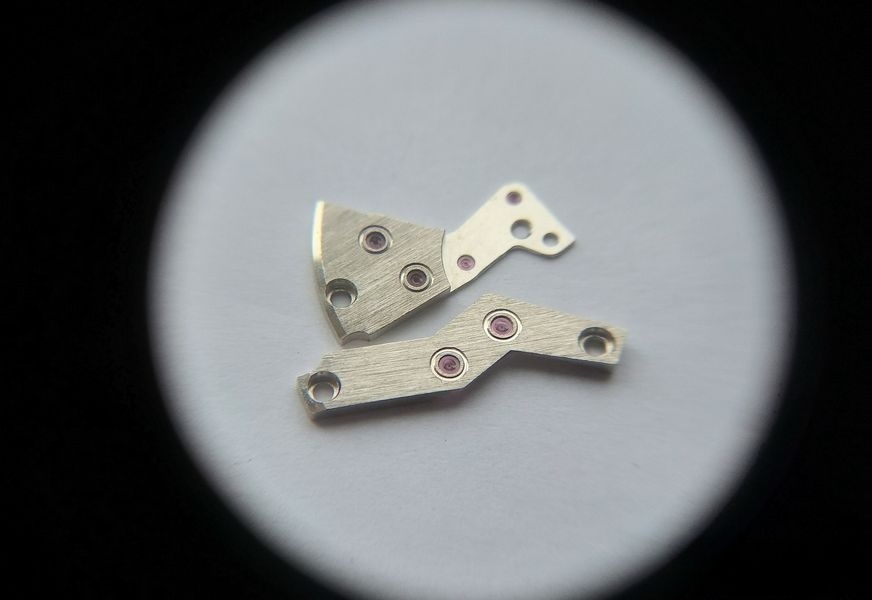
Late production eliminated this entire system. The nine jewels disappeared, replaced by simple machined rails in the main plate. The date disk now rides directly on metal surfaces rather than polished synthetic ruby.
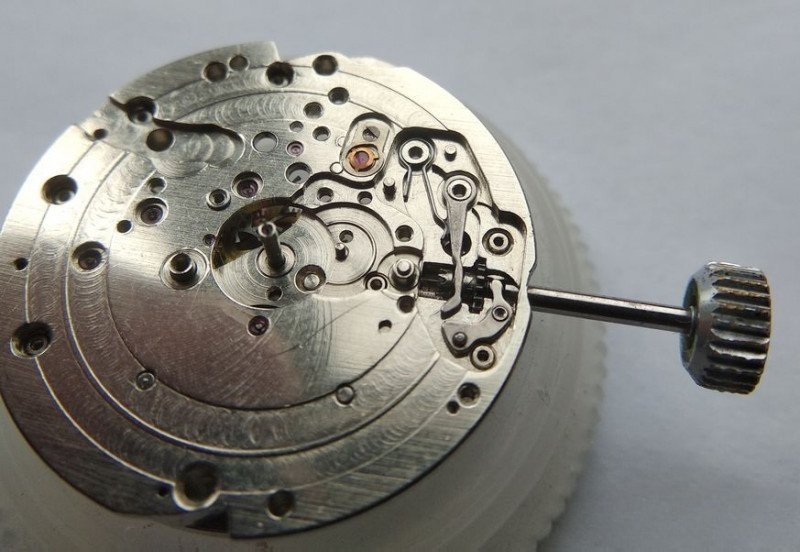
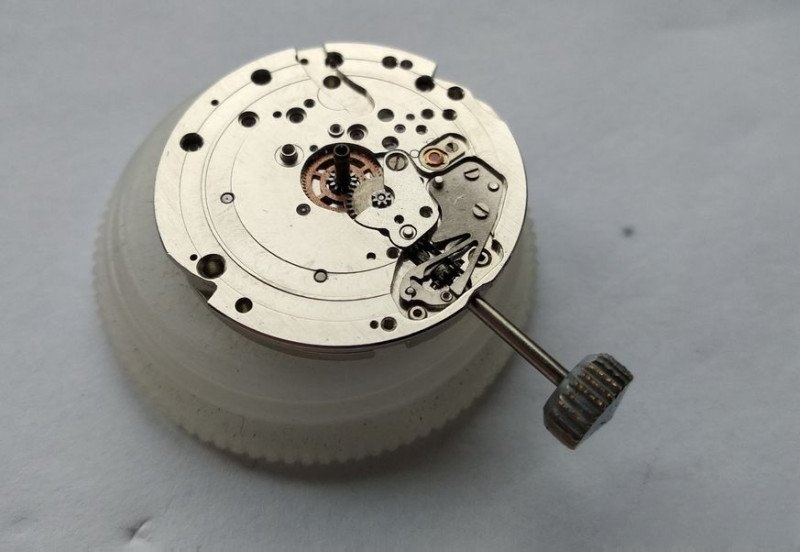
The official jewel count remained twenty-six throughout production because non-functional jewels are excluded from specifications under international standards. A buyer examining only the stated jewel count would see no difference between early and late movements, yet the actual construction differs fundamentally.
The calendar mechanism's reputation suffered accordingly. Complaints about unreliable Slava calendars trace primarily to post-reform production, where the metal-on-metal date disk bearing generates increased friction, accelerated wear, and the binding issues absent from jeweled examples.
With differences documented, the early movement proceeds through service. The main plate, cleaned and inspected, displays its full complement of calendar jewels gleaming in their settings.
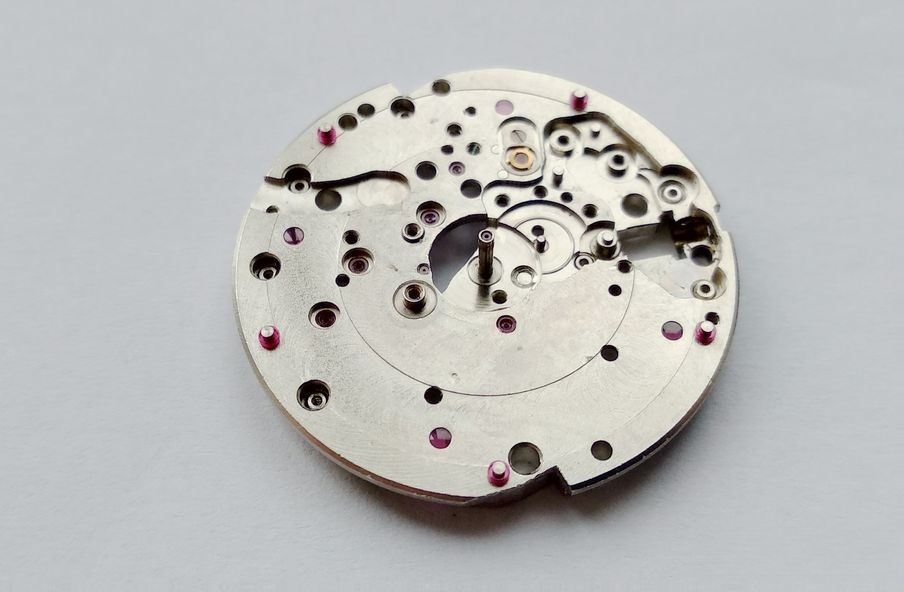
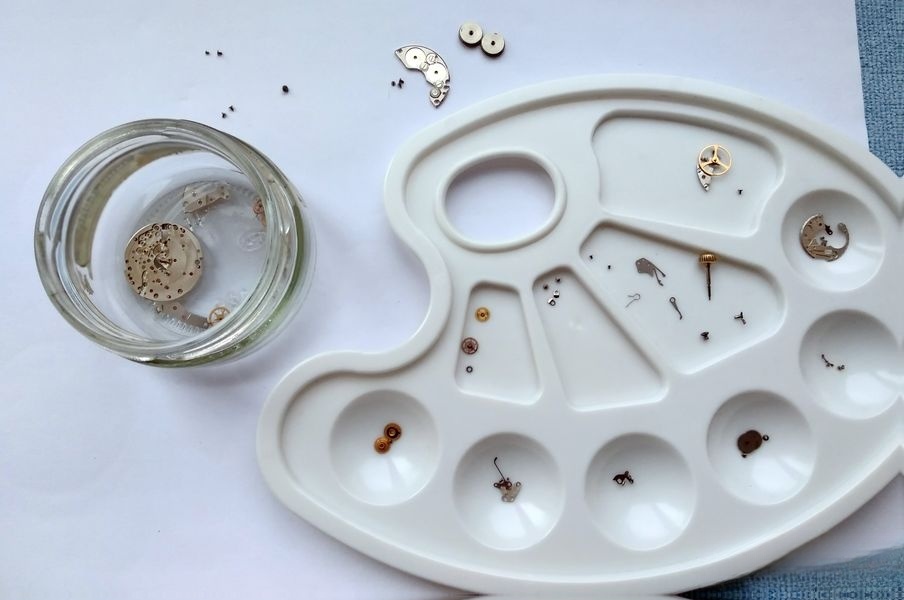
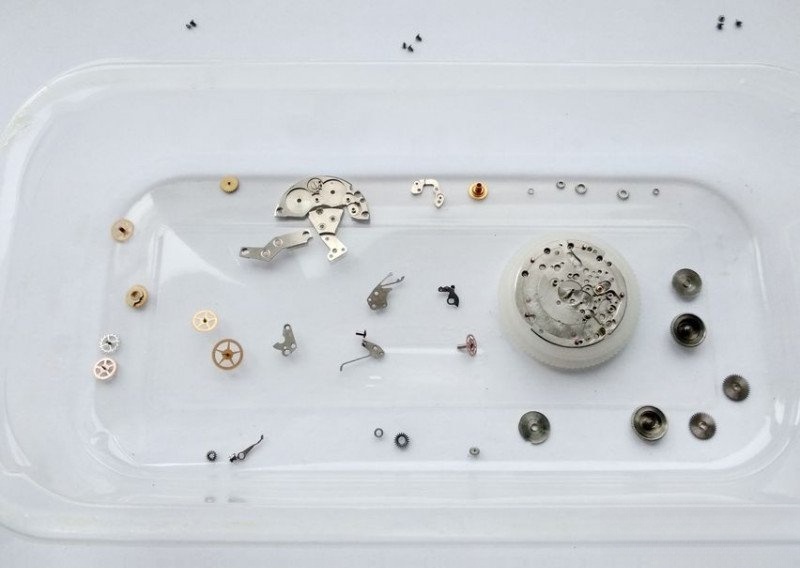
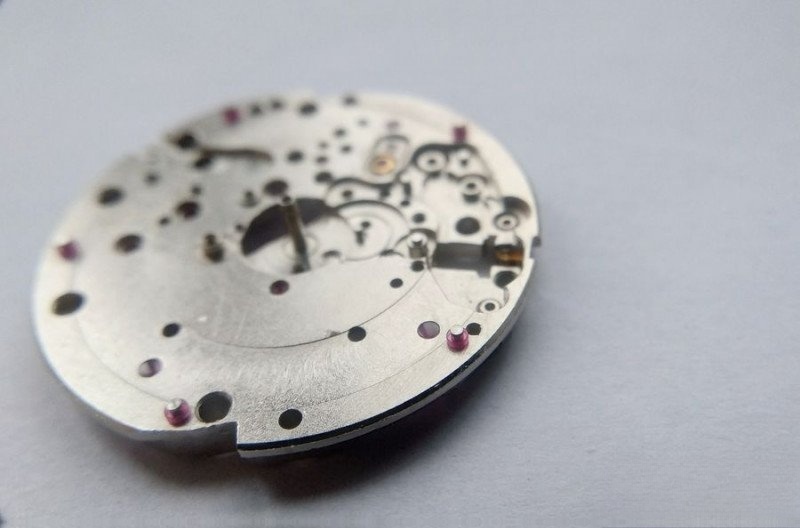
The keyless works and calendar driving mechanism install first. These components remained unchanged across production periods, the date advance system employing command wheel, accumulator spring, and transfer lever regardless of manufacturing date.
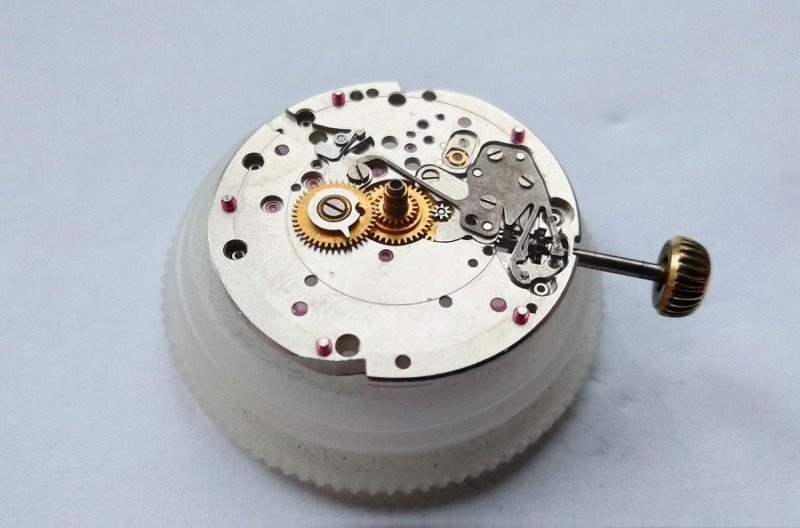
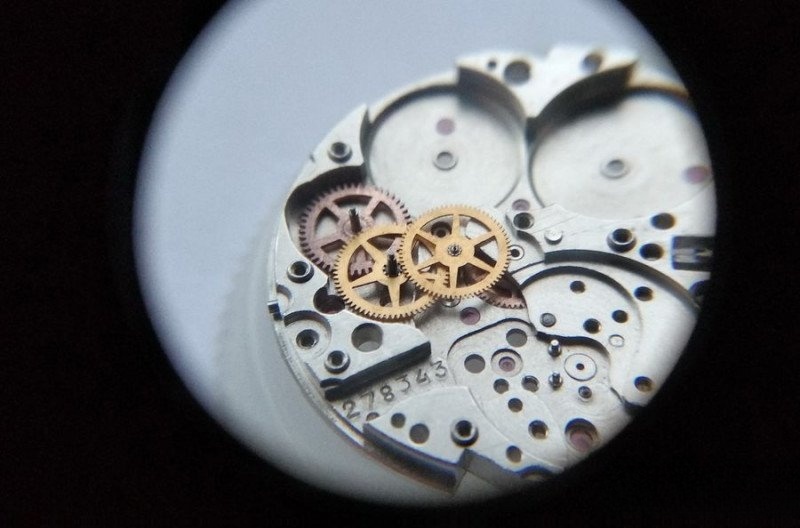
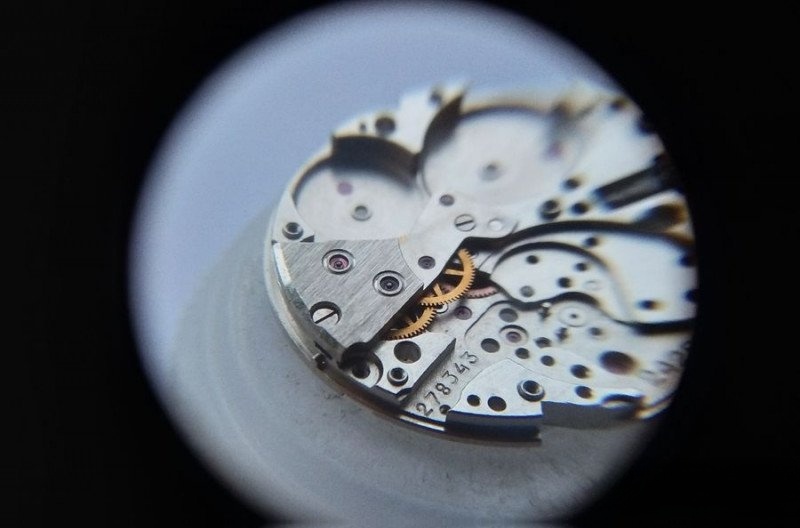
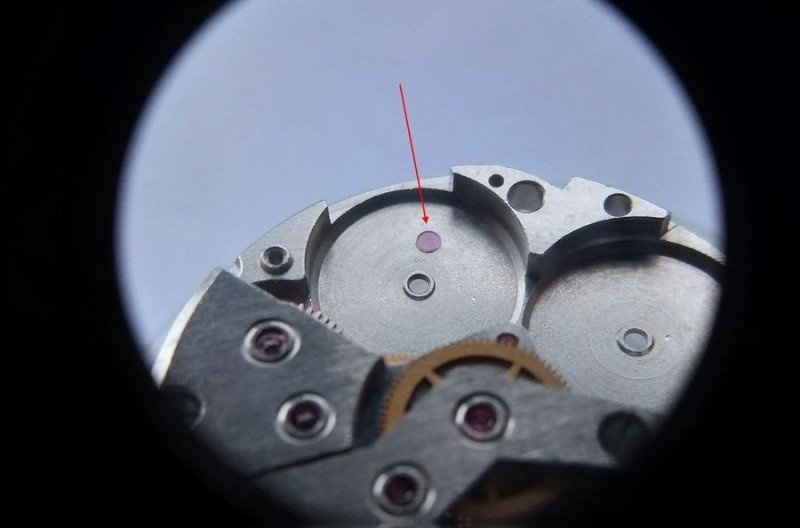
The barrel recesses provide another view of the lenticular calendar jewels, their presence confirming early manufacture.
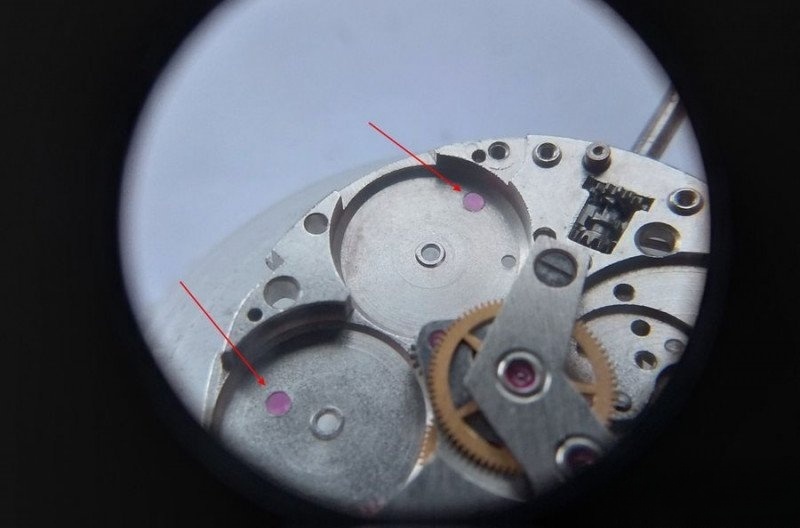
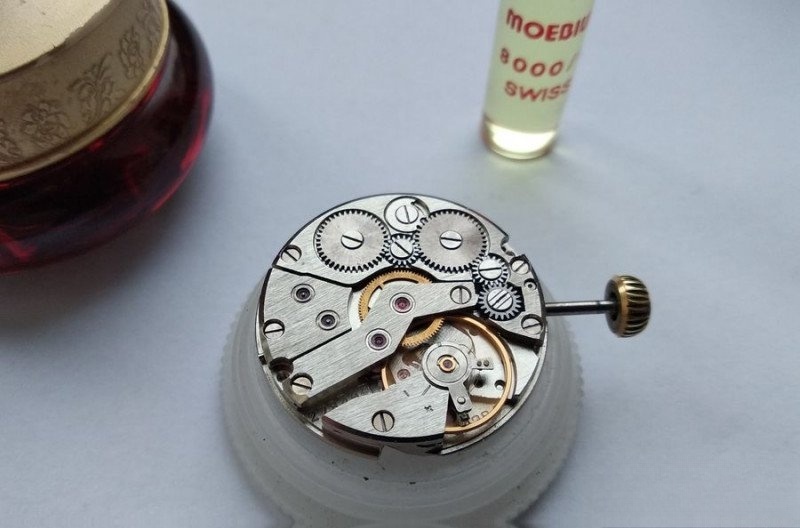
Calendar assembly proceeds with the date disk mounting on its jeweled bearings. The non-functional stones, soon hidden beneath the disk, deserve a moment's appreciation before disappearing from view.
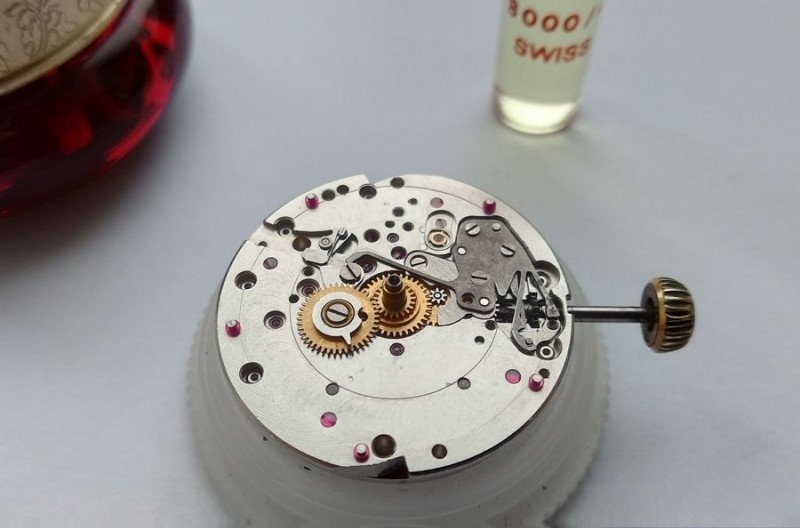
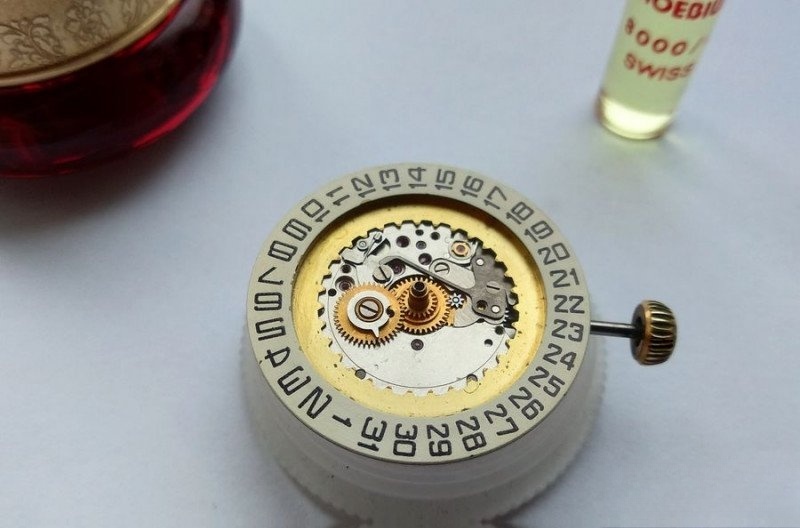
The calendar bridge assembly presents challenges unchanged across production periods. The detent spring and positioning lever lack retention during installation, tending to separate when the assembly is inverted for mounting. This design oversight frustrates technicians servicing any 2428 variant.
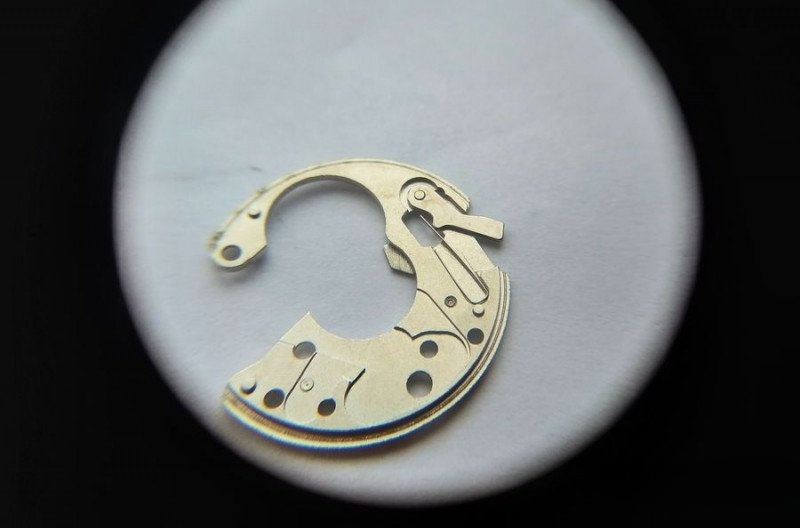
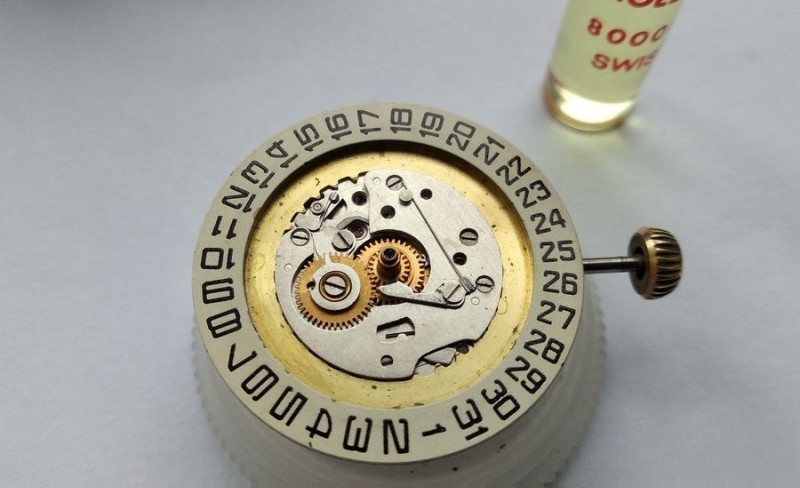
The complete caliber now mounts into the rapid-set mechanism, a separate assembly that increases the effective diameter from twenty-four to thirty-two millimeters. This dimensional sleight-of-hand allowed the caliber designation to suggest a smaller size than practical installation requires.
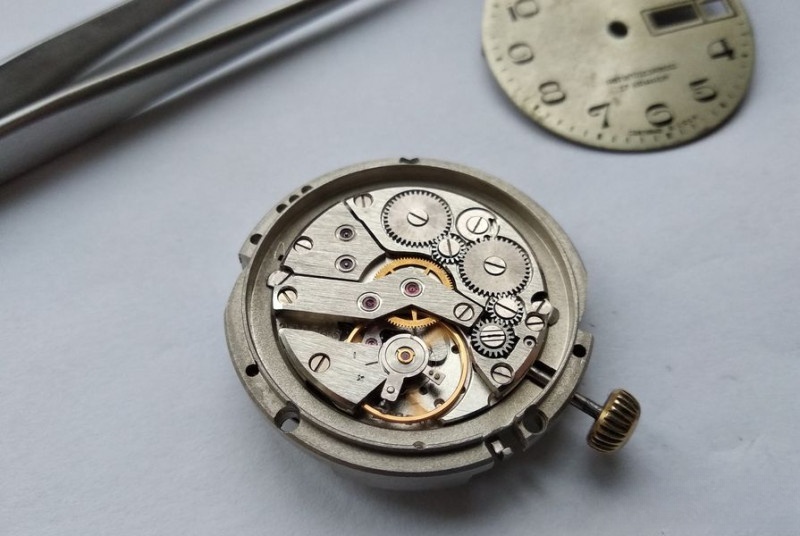
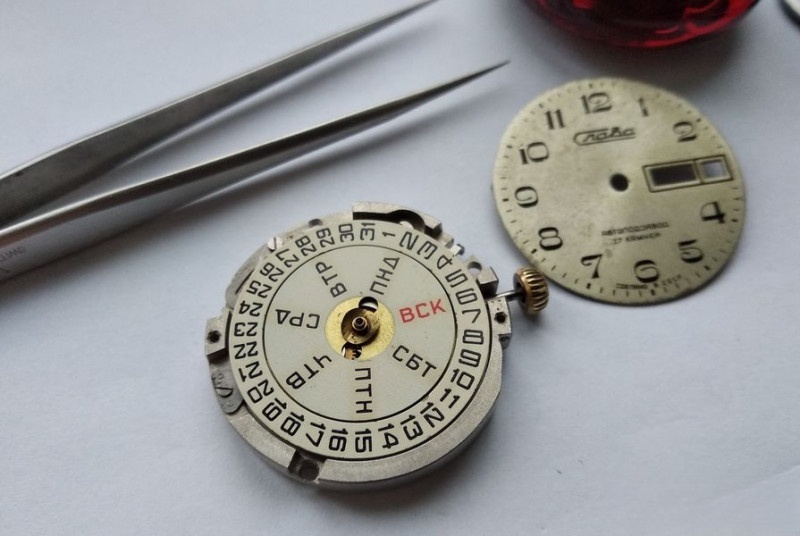
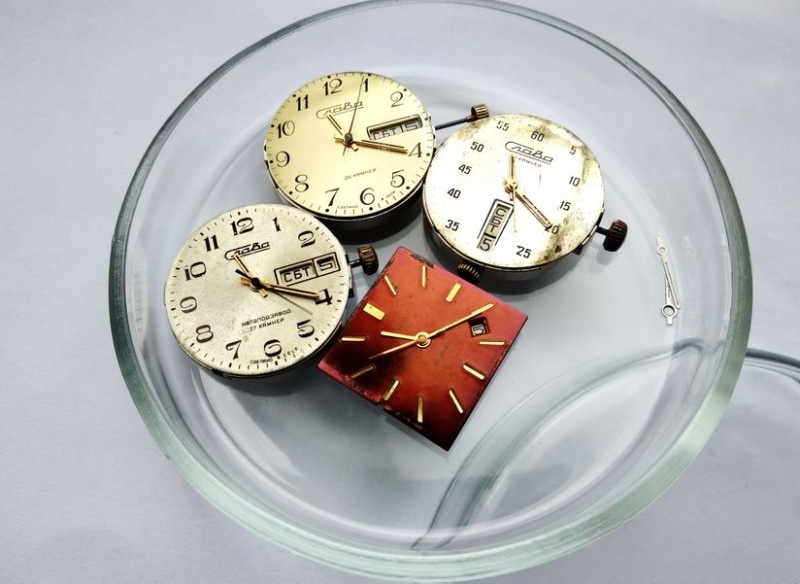
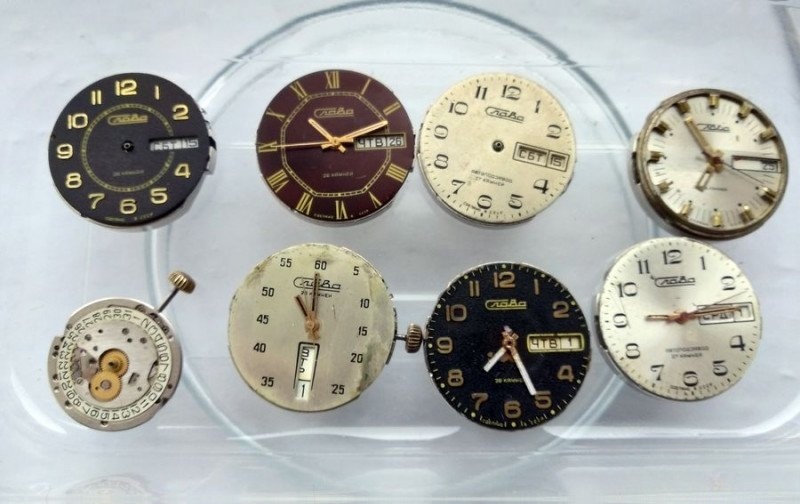
Production changes rarely occur instantaneously across an entire manufacturing operation. Examination of multiple calibers reveals transitional examples where some but not all modifications appear. One such specimen retains the cylindrical positioning posts while lacking the lenticular bearing jewels, apparently produced during the period when cost reduction proceeded incrementally.
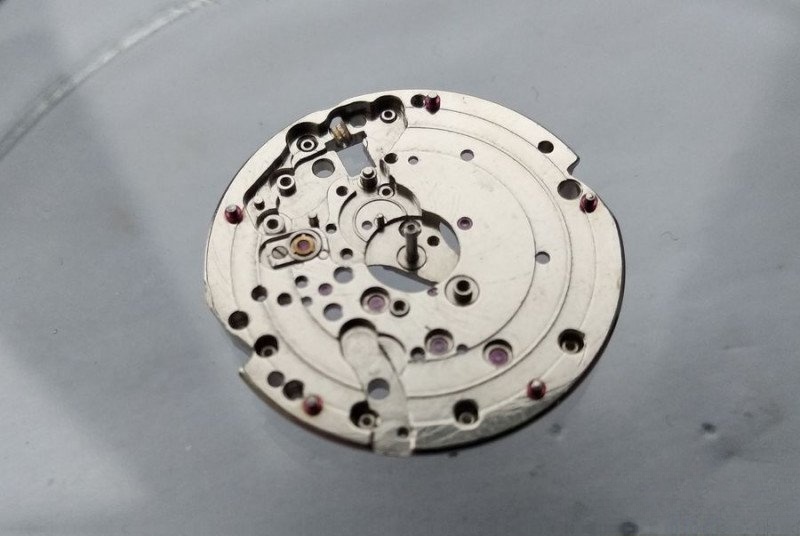
The Slava 2428 comparison demonstrates how specification compliance can mask genuine quality differences. Both early and late movements legitimately claim twenty-six jewels under international counting standards. Both incorporate the same calendar complications and overall functionality. Yet the early movement represents substantially superior construction through features invisible to specification review: oil retention grooves, properly finished balance components, and the elaborate jeweled calendar bearing system.
For collectors considering vintage Slava timepieces or modern productions using new-old-stock movements, this analysis suggests clear preference for pre-1980 calibers. The visual indicators outlined here, chamfered bridges, yellow-metal balance components, absence of "SU" markings, and most definitively the presence of calendar jewels, enable identification of superior examples.
The calendar mechanism's reputation for unreliability stems primarily from late production examples where metal-on-metal bearing surfaces replaced jeweled construction. Early movements with their ruby calendar bearings operate smoothly and reliably, their quiet date changes contrasting sharply with the grinding resistance of cost-reduced successors.
The broader lesson extends beyond this specific caliber. Jewel counts and specification sheets tell incomplete stories. The details that standards exclude from official counts, the non-functional jewels, the oil retention features, the finishing quality, often determine actual ownership experience more than the numbers that marketing emphasizes. Understanding what to examine beyond specifications enables more informed collecting decisions.