
Soviet Movie cameras
This collection presents authentic Soviet-era motion picture cameras, manufactured during the golden age of amateur and semi-professional filmmaking in the USSR. Each camera here is an original vintage item, representing decades of Soviet optical and mechanical engineering dedicated to bringing cinema technology to the masses.
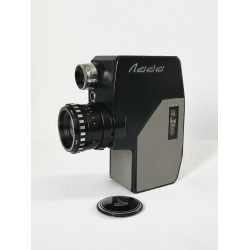
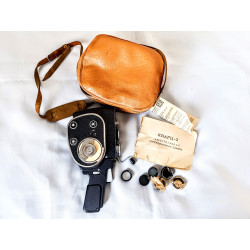
Soviet Film Movie Cameras
The Soviet Cine Camera Tradition
Beginning in the 1950s, Soviet factories developed a comprehensive range of film movie cameras intended for amateur filmmakers, educational institutions, and documentary production. State-supported manufacturing allowed for wide distribution of these cameras across the Soviet Union, making motion picture filming accessible to ordinary citizens. The result was a rich heritage of well-engineered, durable equipment that continues to function reliably today.
Soviet cine cameras were produced primarily at the Krasnogorsk Mechanical Works (KMZ) and the Arsenal factory in Kyiv, the same facilities responsible for legendary still photography equipment. These manufacturers applied their expertise in precision optics and mechanical engineering to create motion picture cameras that earned respect both domestically and abroad.
Formats and Notable Models
Our collection includes cameras in two primary amateur and semi-professional formats:
- 8mm cameras — Compact, accessible devices designed for home movies and amateur use. The Quartz (Кварц) series became the most widely recognized Soviet 8mm camera family, offering reliable mechanical operation and surprisingly capable optics for personal filmmaking.
- 16mm cameras — More advanced equipment favored by serious amateurs, film schools, and documentary crews. The Krasnogorsk-3 (K-3) remains the most celebrated Soviet 16mm camera, valued internationally for its robust construction, accurate registration, and compatibility with high-quality interchangeable lenses.
Other notable models include the Lada series and various Kiev-branded cine cameras, each offering distinct characteristics suited to different filming requirements.
Soviet Cine Optics
Many Soviet film cameras feature interchangeable lens mounts, allowing cinematographers to select optics suited to their creative vision. Renowned Soviet cine lenses include:
- Meteor — Zoom lenses commonly found on Krasnogorsk cameras, offering versatile focal length ranges with smooth mechanical operation
- Jupiter — Fast prime lenses adapted from still photography designs, prized for their rendering and low-light capability
- Mir — Wide-angle options providing expanded field of view for documentary and environmental shooting
Engineering and Construction
Soviet film movie cameras embody a philosophy of mechanical reliability over electronic complexity. Most models feature fully mechanical or hybrid mechanical-electric drive systems, manual exposure control, and spring-wound or battery-powered motors. Bodies are constructed primarily from metal, providing durability that has allowed many examples to survive decades of use.
The precision required for motion picture registration demanded exacting manufacturing standards. Soviet engineers developed cameras capable of steady, consistent film transport essential for professional-quality results.
Contemporary Use and Collecting
Today, these vintage Soviet cine cameras serve multiple purposes. Experimental filmmakers and analog cinema enthusiasts continue shooting on 8mm and 16mm film, appreciating the organic aesthetic that only photochemical processes can provide. Collectors value these cameras as functional artifacts of Soviet industrial design. Museums and private collections display them as examples of mid-century optical engineering.
Every camera in our inventory undergoes careful inspection for mechanical function, optical clarity, and completeness. We document condition accurately and note any signs of age or previous use. These are authentic vintage items with genuine history, selected for collectors and filmmakers who appreciate original Soviet craftsmanship.