
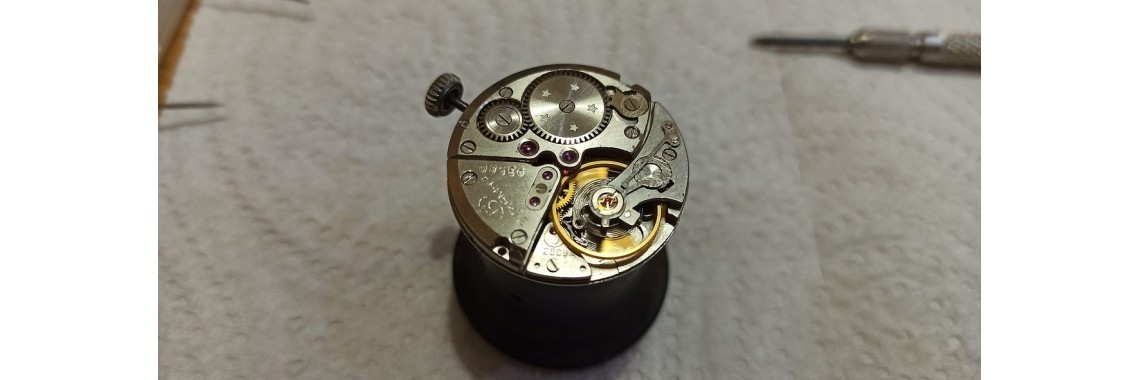
Vostok 2809 — Servicing a Soviet Precision Caliber Descended from the Zenith 135
"A large balance keeps its own counsel. Give it clean jewels and a measured drop of oil, and it will hold the line long after lesser movements have wandered."
— Igor
Among the calibers built at the Chistopol Watch Factory between 1957 and 1973, the 2809 occupies a quiet but important place. It belongs to the factory's precision family — the movements built to chronometer ambitions rather than to a production quota. When the small-seconds 5NKh-1M was retired, the 28-line plate was kept in service for the precision watches, this time carrying a central seconds hand. The result is a movement that looks, at first glance, like an ordinary Soviet workhorse and behaves like something considerably more refined.
The architecture is not native to Chistopol. The 2809 traces its lineage to the Zenith 135, the Swiss chronometer caliber that dominated observatory timing trials in the 1950s. Zenith's design philosophy — an oversized balance, a low train, and an off-center layout that gave that balance room to breathe — survived the journey east. Soviet engineers did not merely copy it; they reworked it for serial production and, in several details, improved on it. What follows is a full service of one such movement, undertaken because the watch arrived missing a jewel and ended as an exercise in appreciating a genuinely interesting design.
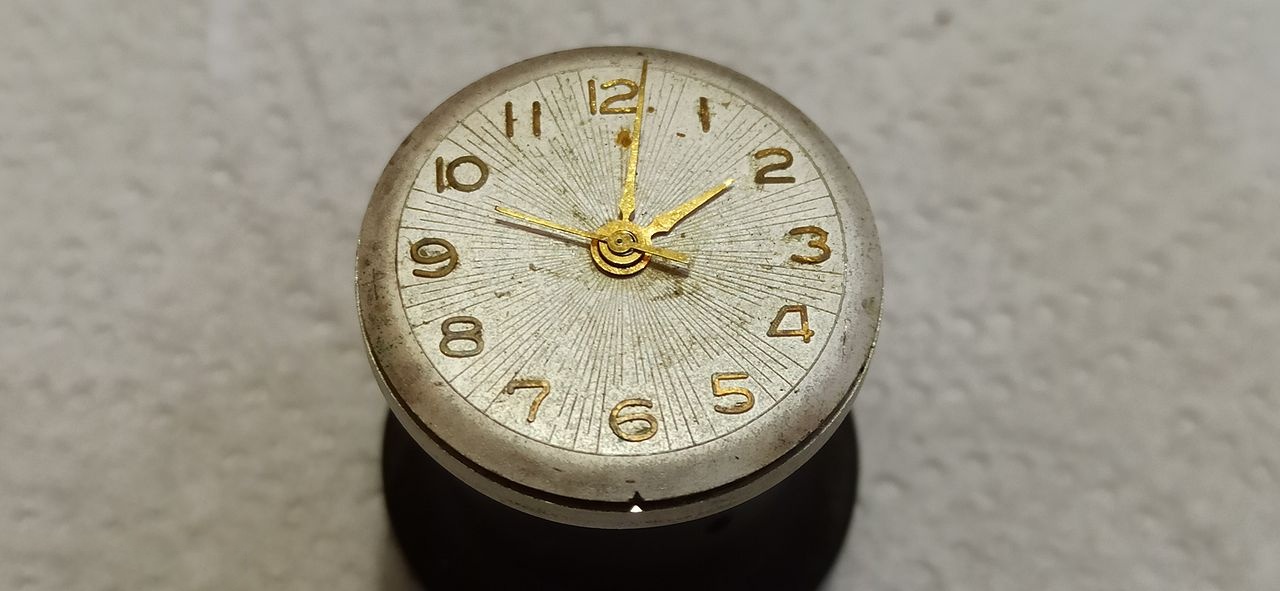
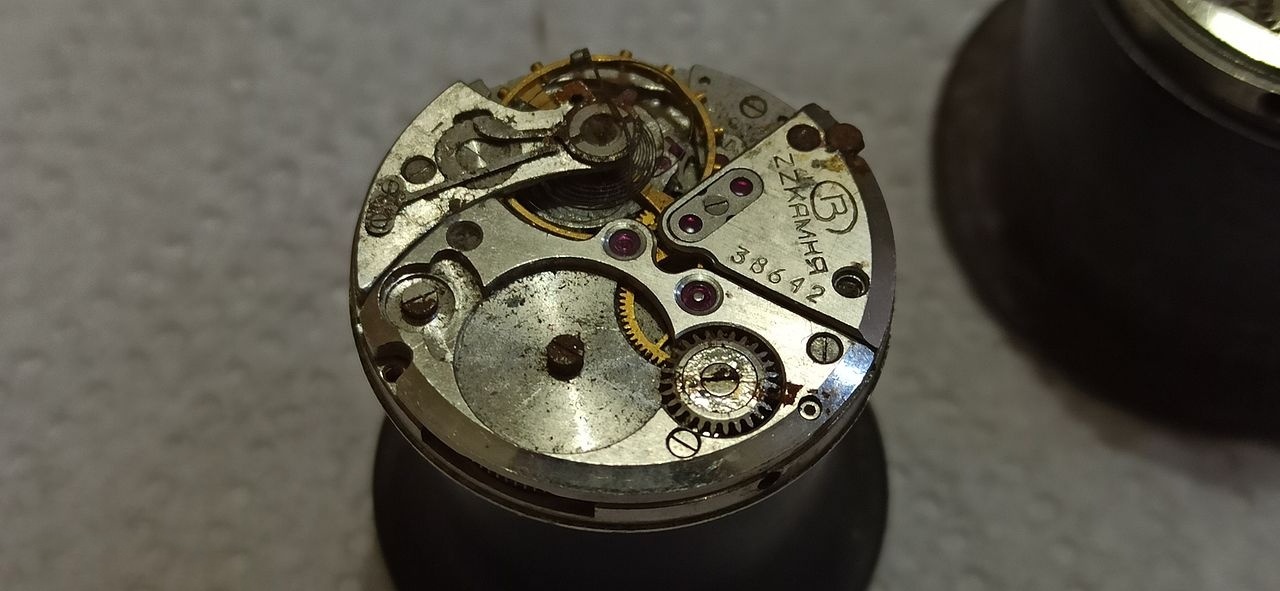
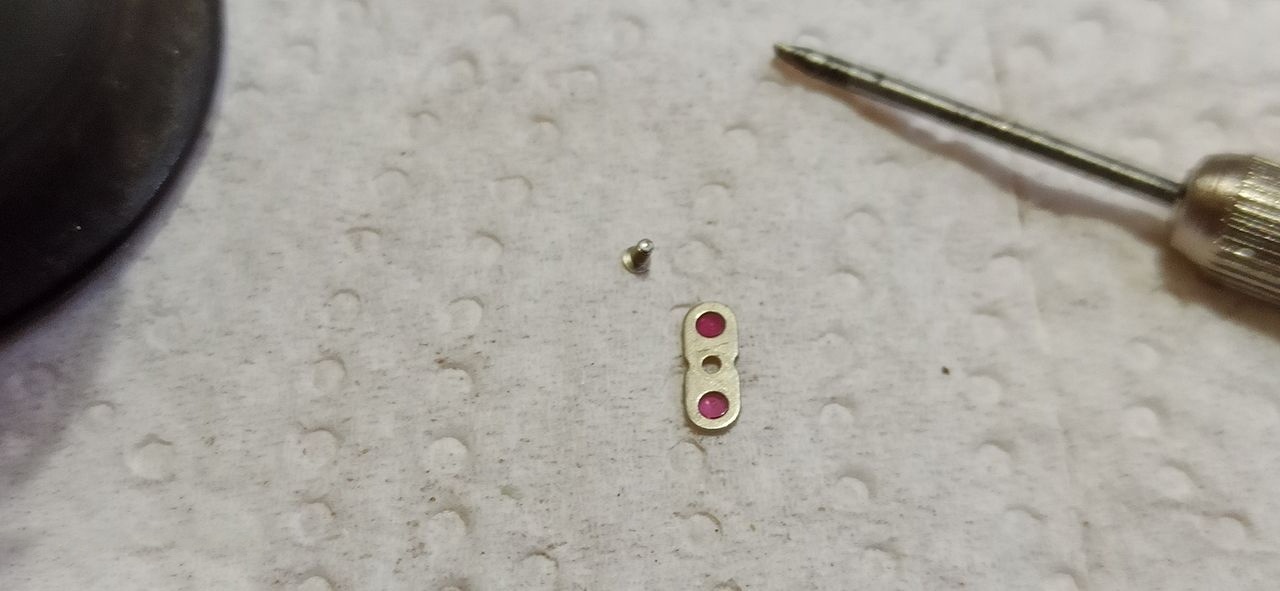
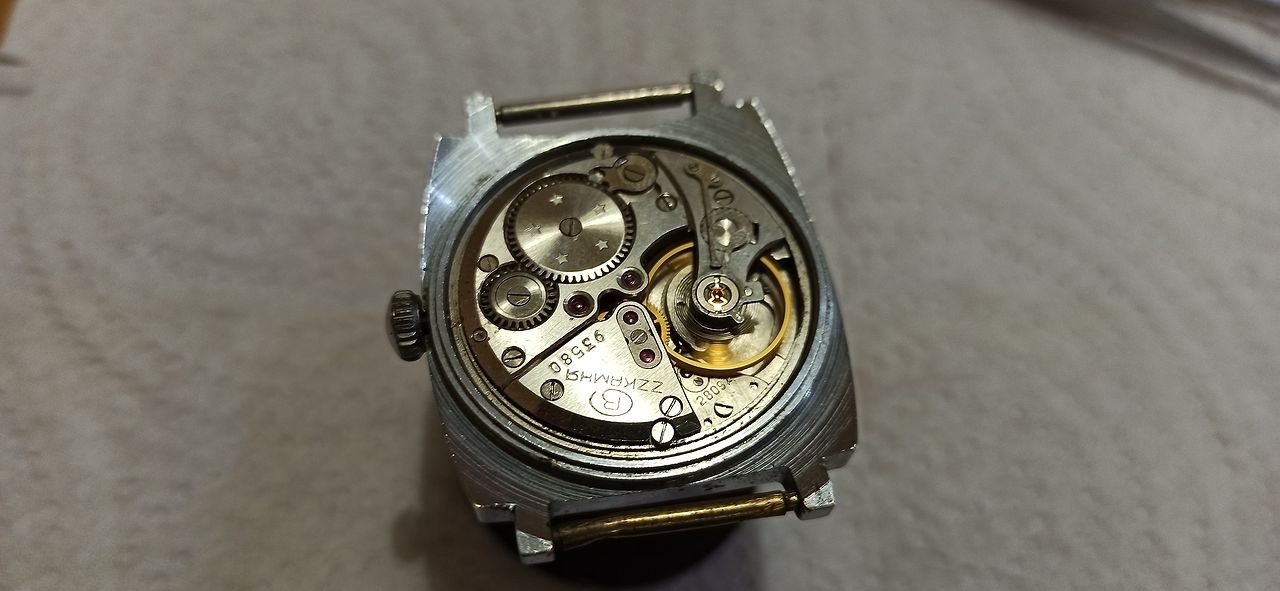
The first inspection found the fault that had brought the watch in. The seconds jewel was simply gone — not cracked, not loose, but absent, leaving an open hole where the pivot should have run in a stone. A precision movement cannot earn its name running a pivot in bare metal, so a donor would be needed.
The Patient and the Donor
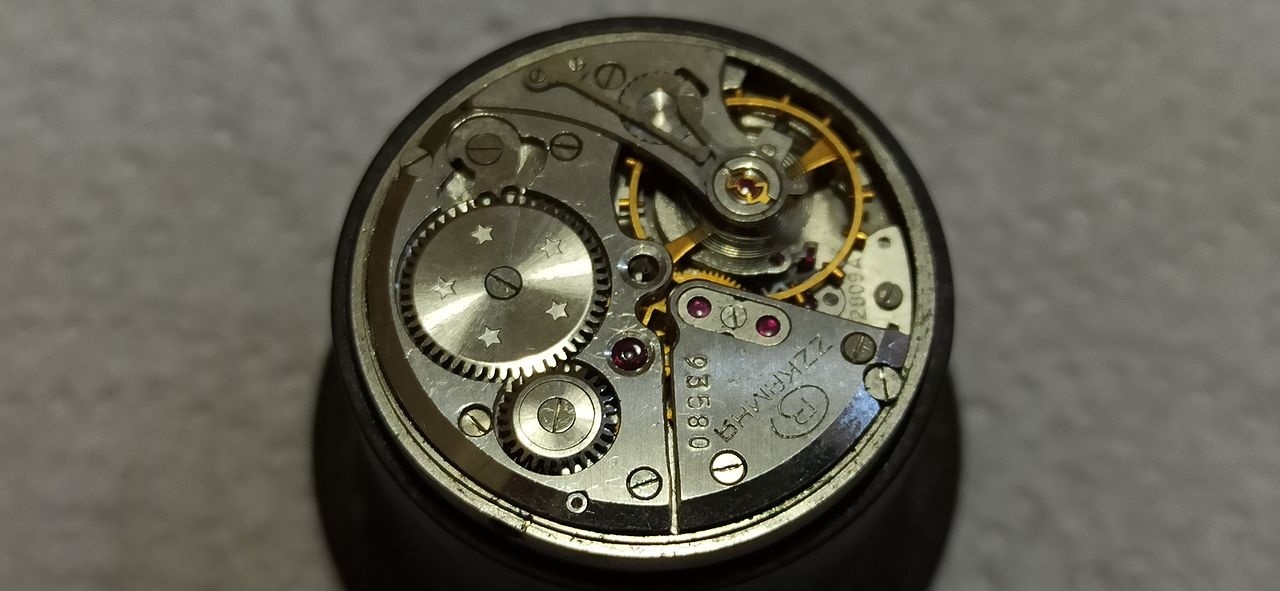
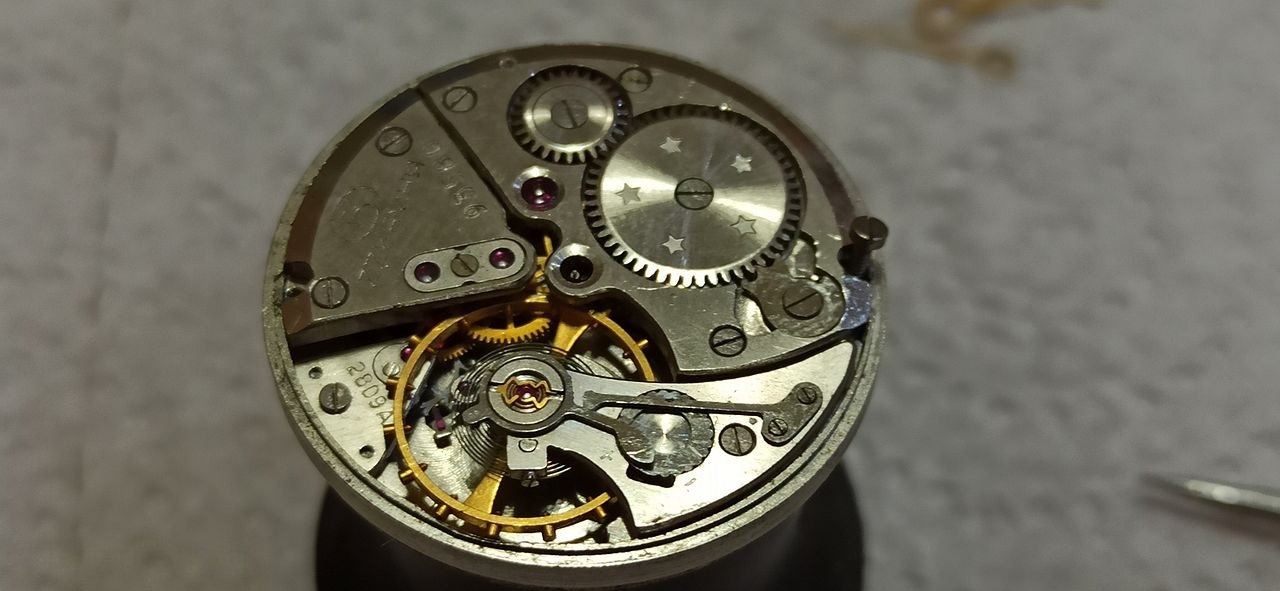
A second 2809 was acquired specifically for parts. Cosmetically it was in poor shape, but mechanically it was complete: every jewel present, including the seconds stone that the first movement lacked. That is the practical reality of servicing scarce Soviet precision calibers — the cleanest path to a missing component is often a sacrificial movement of the same family.
An Oversized Balance
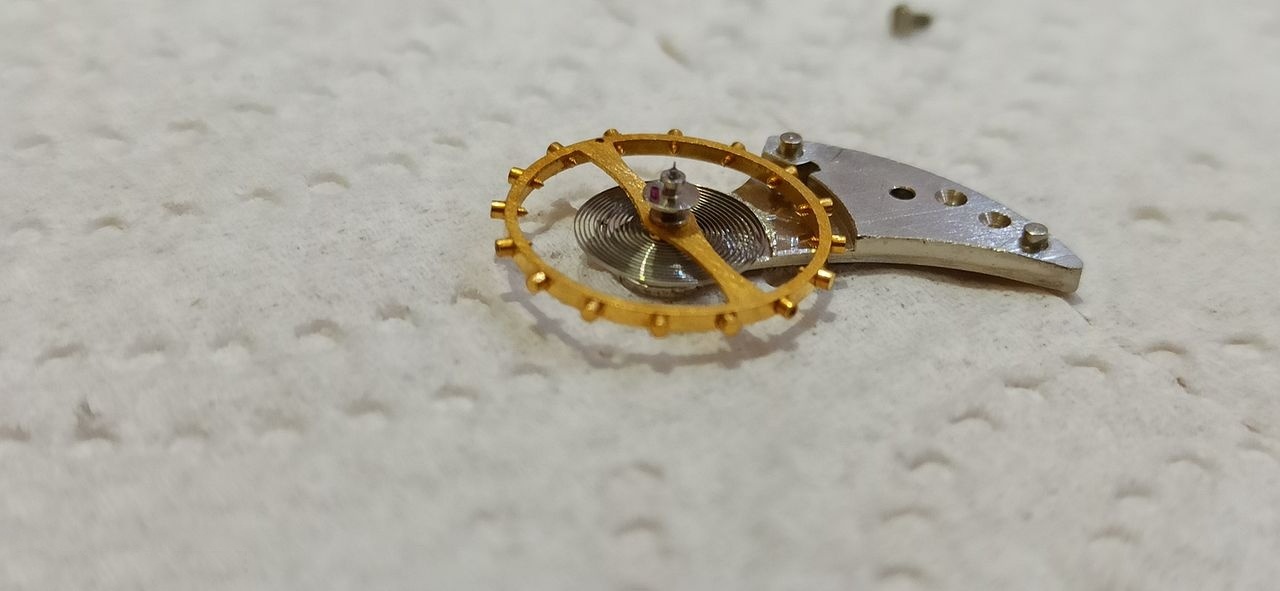
Disassembly begins, as it should, with the balance. There is no understating the impression it makes. The balance wheel is enormous and genuinely heavy, and the staff is unusually long — long enough that reinstalling it would later feel like setting a pencil upright in a tall glass, the pivots reaching for their jewels through an uncomfortable amount of free space. This is the heart of the design. A large balance carries more rotational inertia, and inertia is stability; at a relatively leisurely 18,000 beats per hour the heavy rim resists the small disturbances that nudge a lighter balance off rate. Paired with a hairspring of a special low-expansion alloy, far less sensitive to temperature swings than ordinary spring steel, the result is a movement that holds its rate remarkably well.
Stripping the Train
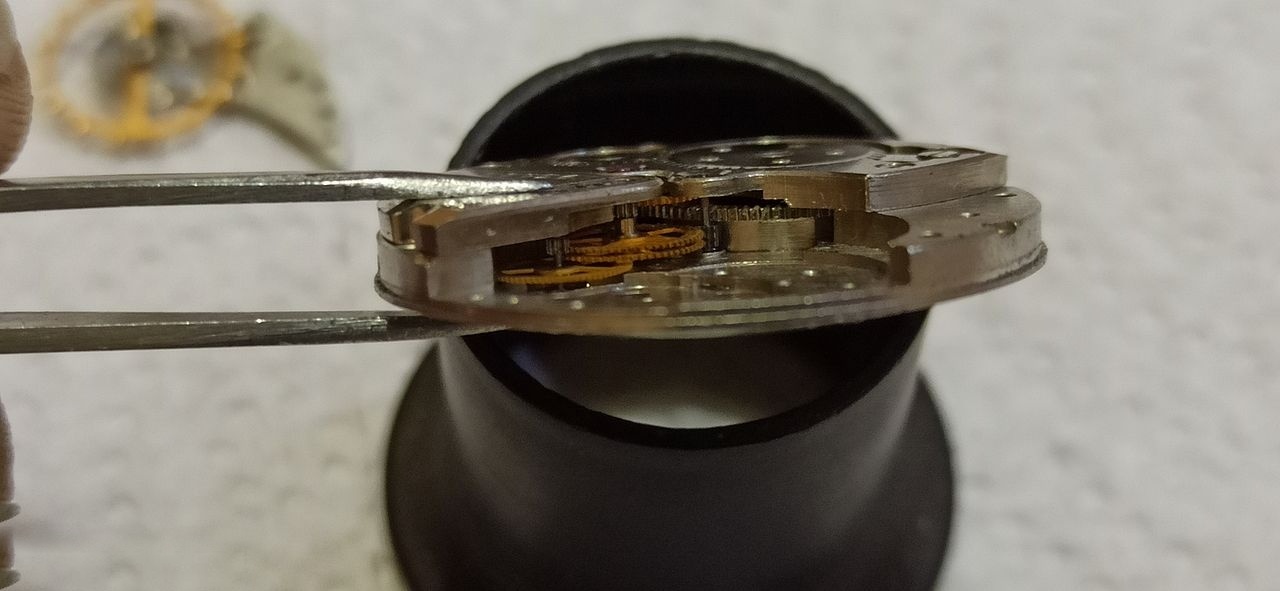
With the balance safely set aside, the bridges come off. The pallet-fork cock and the escape-wheel cock had already been removed; next are the barrel bridge and the train bridge. The gear train sits low and exposed once the upper plates are clear, the gilt wheels catching the light.
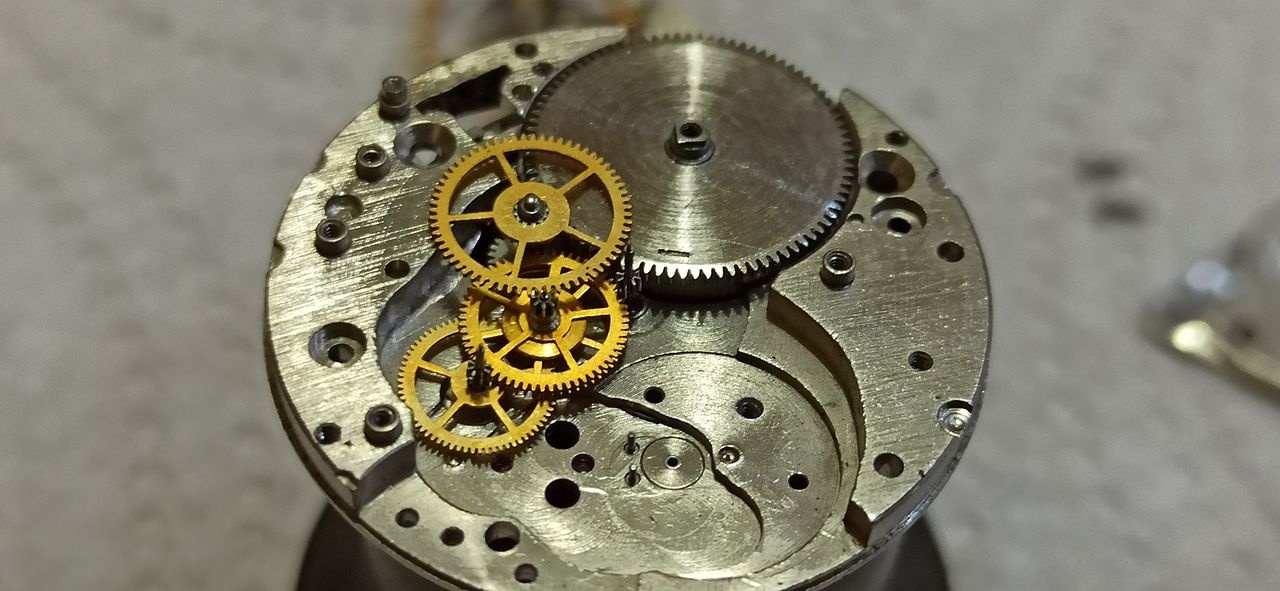
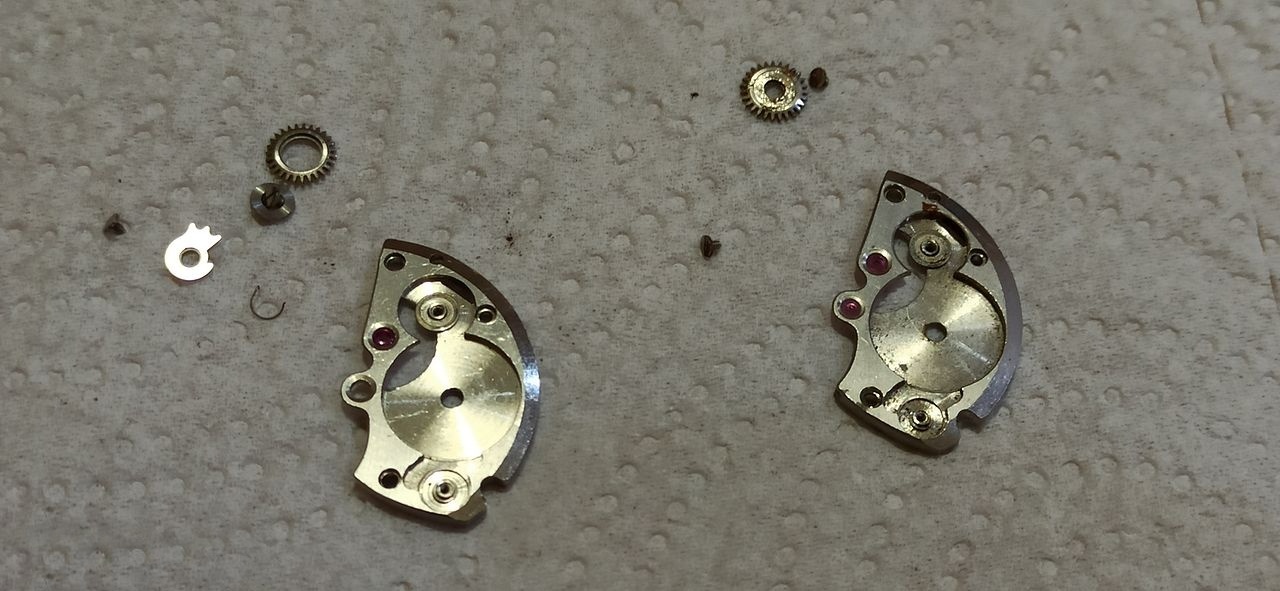
The wheels and the smaller components go into a benzine bath while attention turns to the barrel bridge. Everything mounted on the bridges is stripped, and the donor's barrel bridge joins the rest of the parts to be cleaned.
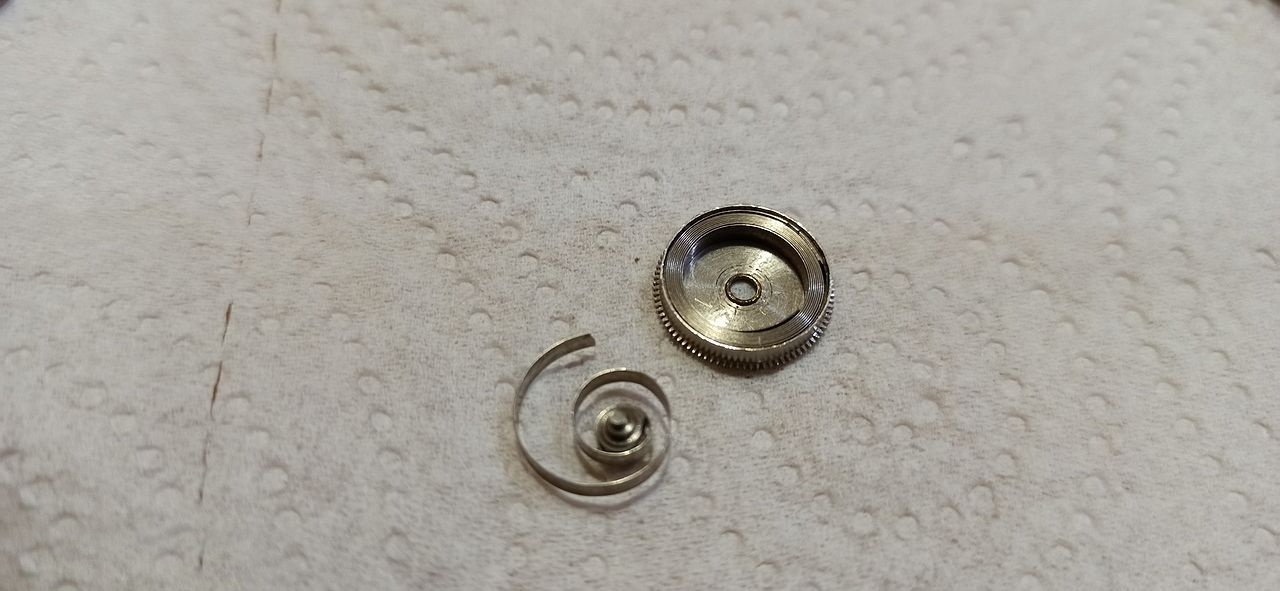
Then the mainspring. Opening the barrel produced the second unwelcome surprise of the job: the spring was broken. Here the donor earned its keep a second time, supplying a sound mainspring to replace the failed original.
Cleaning and Reassembly
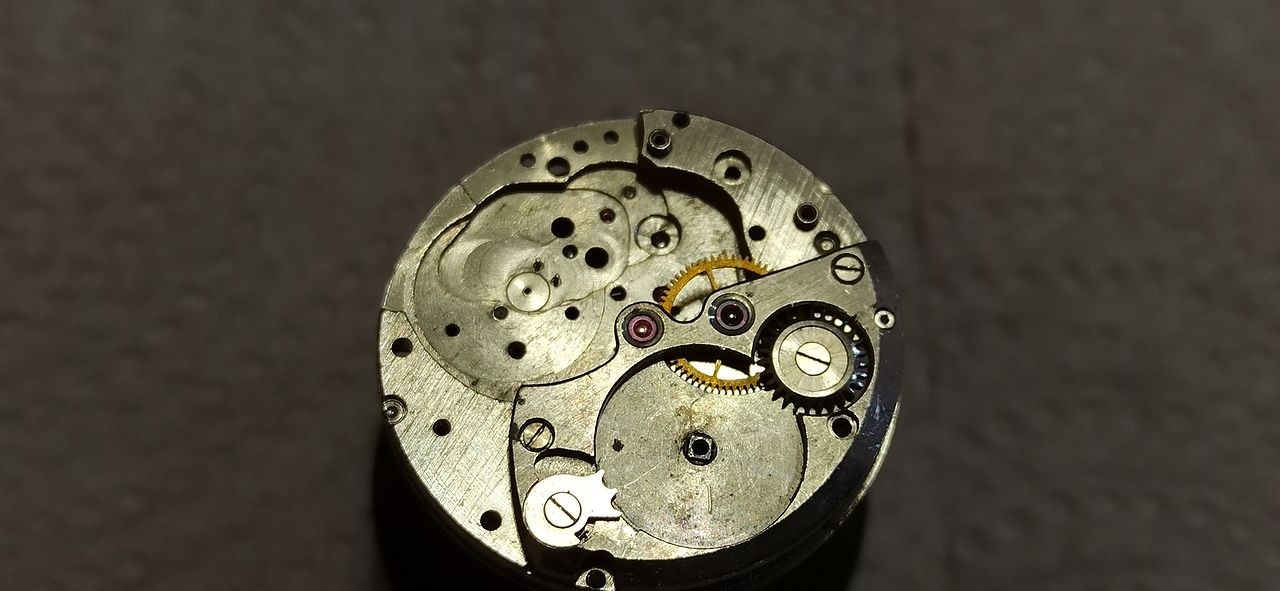
After the benzine bath and a thorough run in the ultrasonic cleaner, the wheels and bridges were dried and assembly began. The 2809 has a particular quirk on the way back together: a single bridge caps the barrel, the central wheel — which, despite the name, sits well off the geometric center of the plate — and the seconds arbor all at once. It is an arrangement that rewards patience and punishes haste. On the first attempt the seconds arbor was, predictably, left out, which meant lifting the bridge and starting that step again.
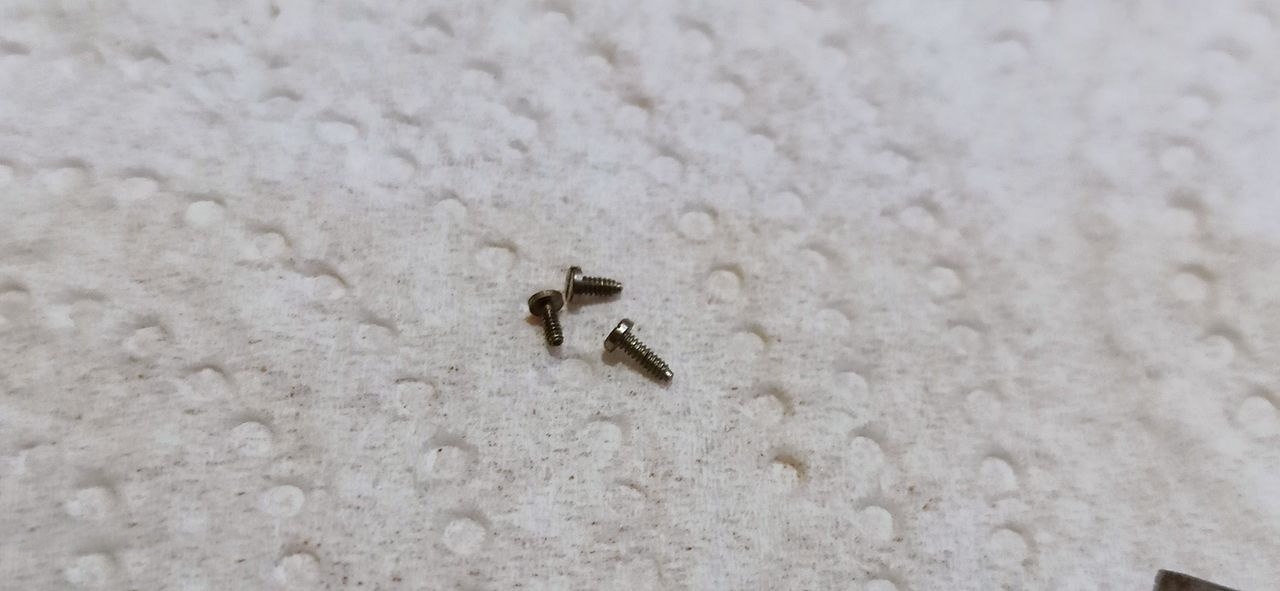
A small but worthwhile warning concerns the barrel-bridge screws. There are three, and the middle one is longer than the others. They are not interchangeable, and they are easy to confuse on a cluttered bench.
Assembling the going train itself is straightforward in principle, but the long pivots make it a test of nerve in practice. Coaxing even two of those tall arbors into their bridge jewels simultaneously is no small feat, and the full set demands a steady hand and good light.
Cap Jewels in Abundance
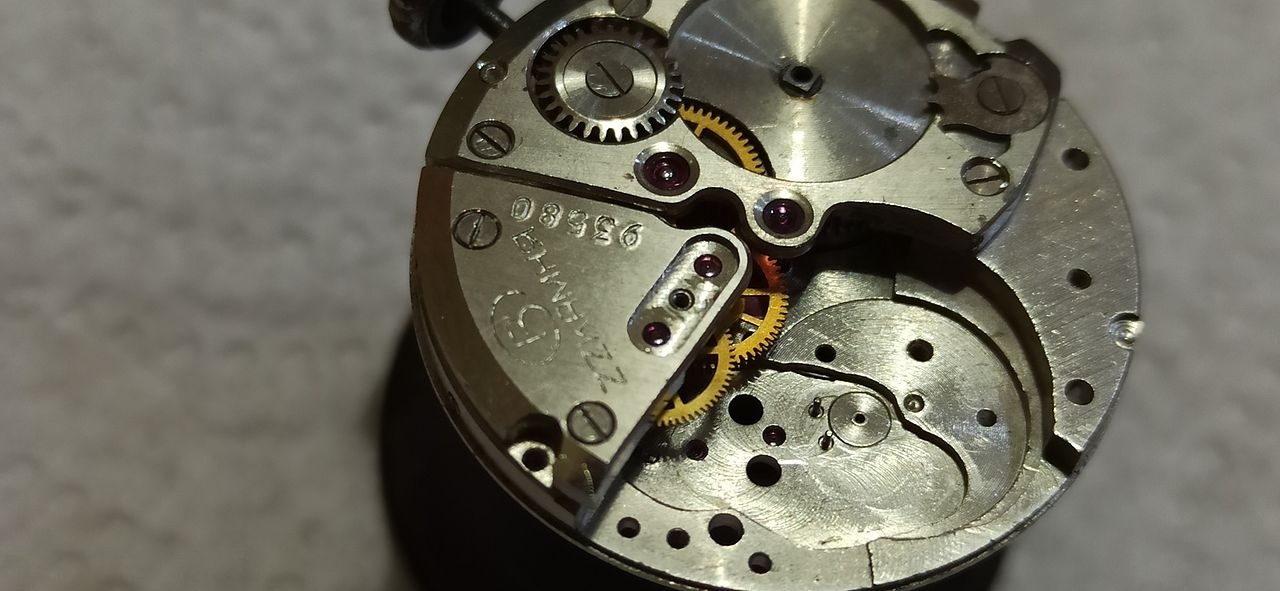
One of the pleasures of this caliber is its generous use of cap jewels. They reduce friction at the pivots and, just as importantly, allow precise dosing of oil, holding the lubricant where it belongs. They are also a delight to service: easy to lift, easy to clean, and clean jewels are the foundation of a good rate. It is worth noting that the cap jewels appear on the train bridge but not on the main plate — an economy explained by the fact that a wristwatch spends most of its life either dial-up or resting on its side, so the bridge side is where the protection counts.
Escapement and Balance
With the train running freely, the escape wheel and pallet fork go back in place, followed by the balance and its cock. This is the moment the long staff makes good on its earlier threat, but seated correctly the movement came to life at once — and briskly at that.
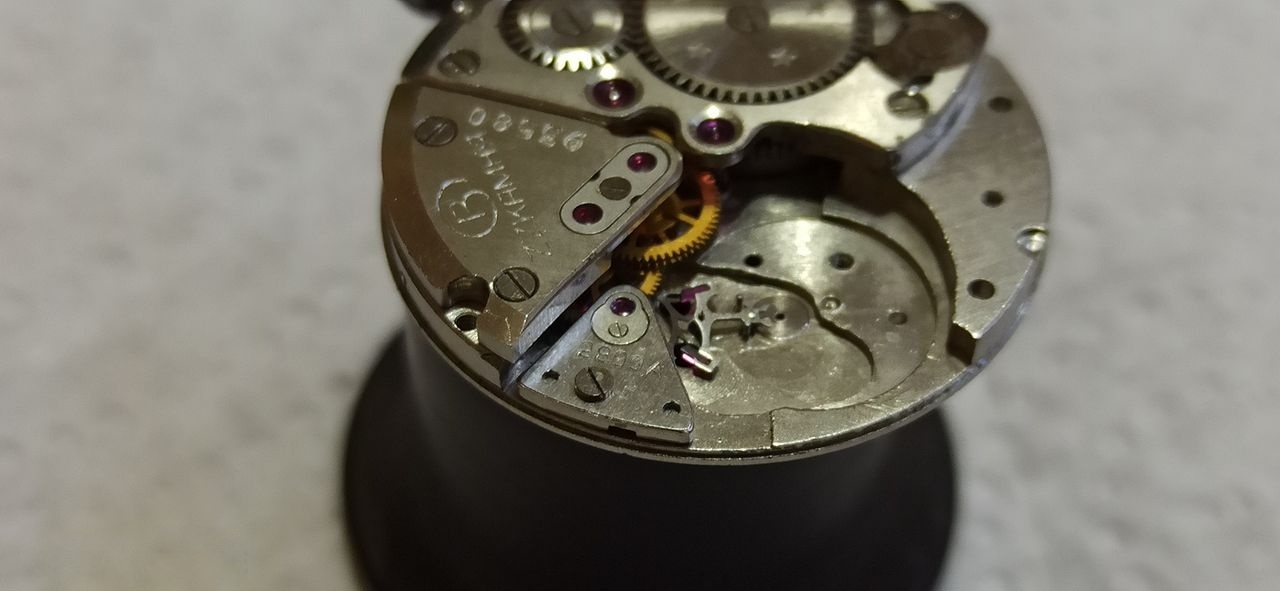
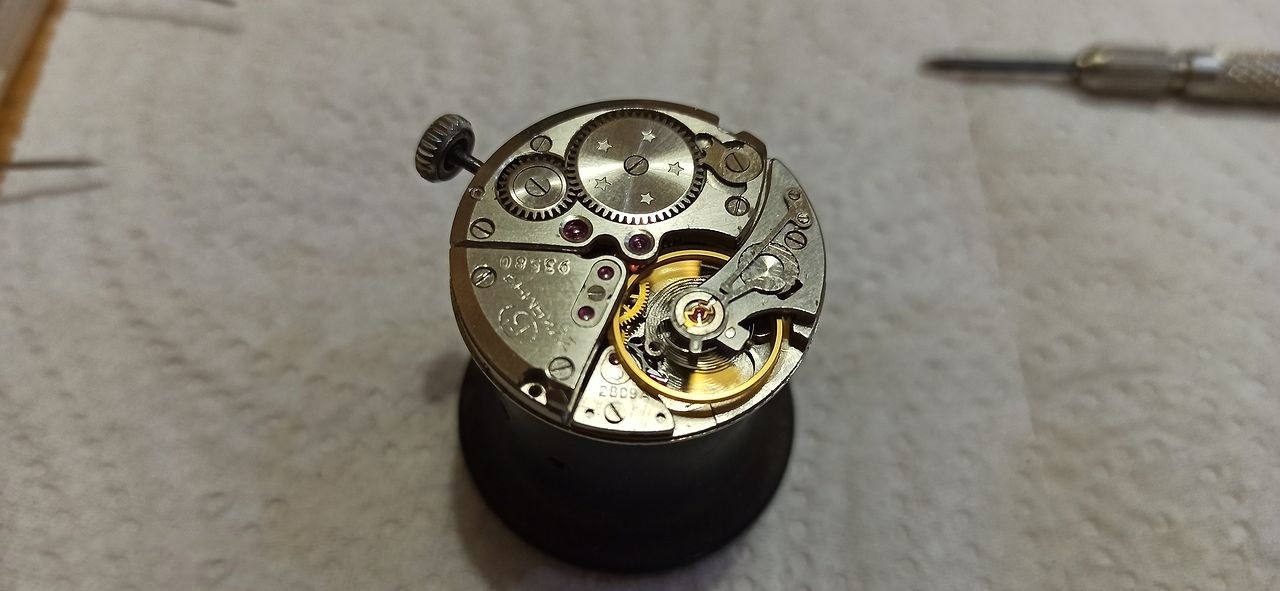
Curiosity prompted a trial fitting into a Pobeda case. It did not go well: the movement floated even with its original spacer ring, and a proper fit would have meant fabricating an additional spacer. The dimensional mismatch is fundamental — the movement is a 22 mm caliber, while a Pobeda case is built for 26 mm. There is a further cosmetic obstacle, too: the Vostok dial is domed, and dropping it into a Pobeda case leaves an unsightly gap between dial and case. The idea was set aside, pending a flat dial from a central-seconds Pobeda that might suit it better.
An Unusual Motion Work
The most distinctive engineering in the 2809 is how it drives the hands. The following two images come from outside sources and illustrate the point better than a movement on the bench can. Drive to the hands is taken directly from the central wheel to the intermediate wheel — there is no conventional cannon-pinion friction coupling in the path.
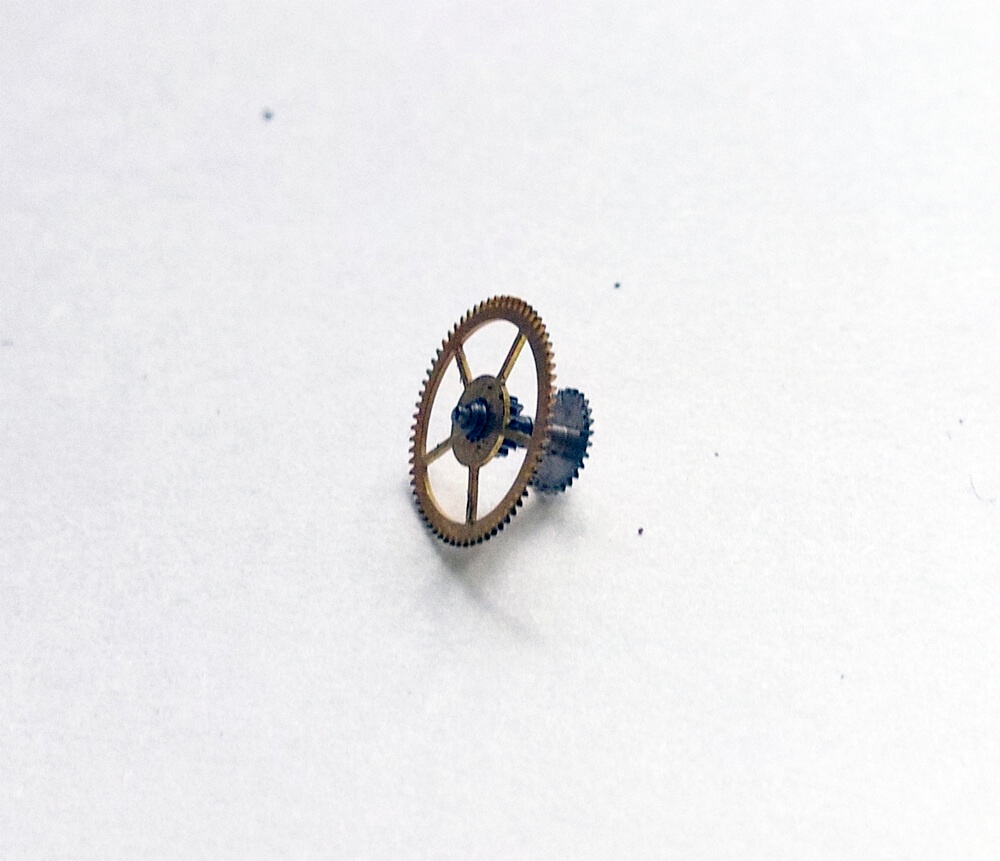
There are no friction pairs anywhere in the hand drive. A single intermediate wheel turns both the minute wheel and the hour wheel, with the wheels simply mounted on their pinions rather than relying on a slipping clutch. There is nothing for the hands to skip against. It is an elegant solution, though not without consequence — over time the intermediate wheel in this series can tend to sit askew, which is the design's principal long-term weakness.
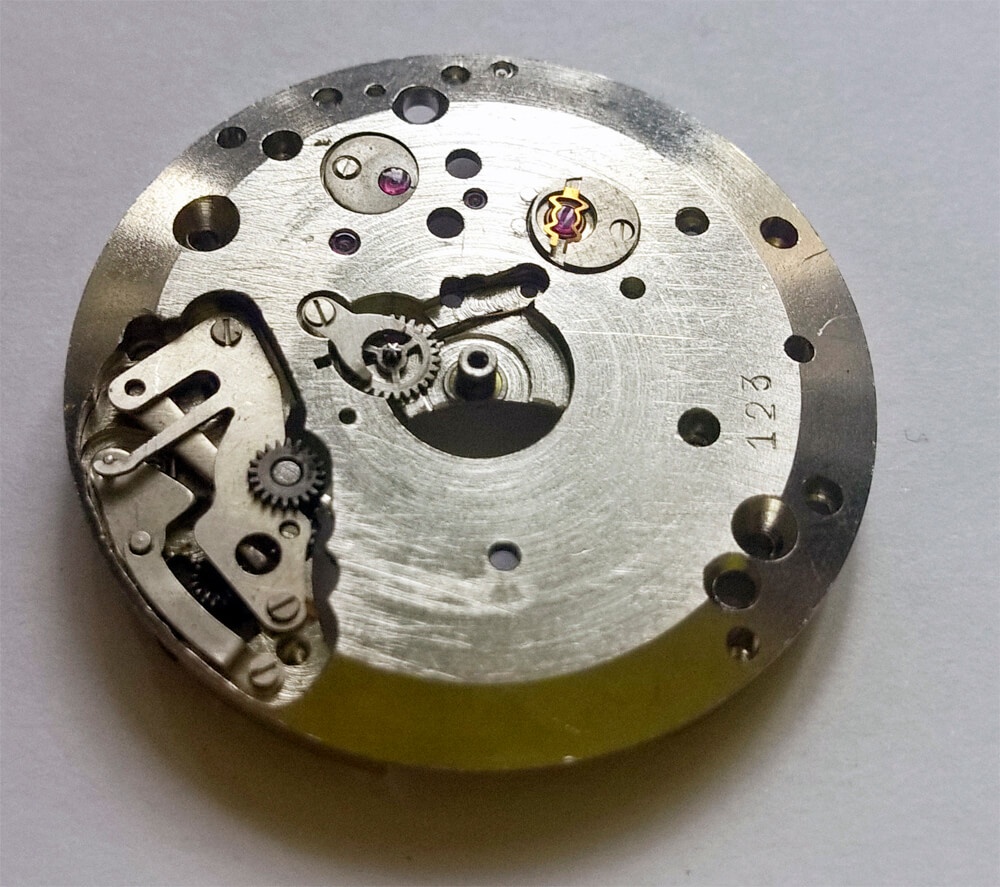
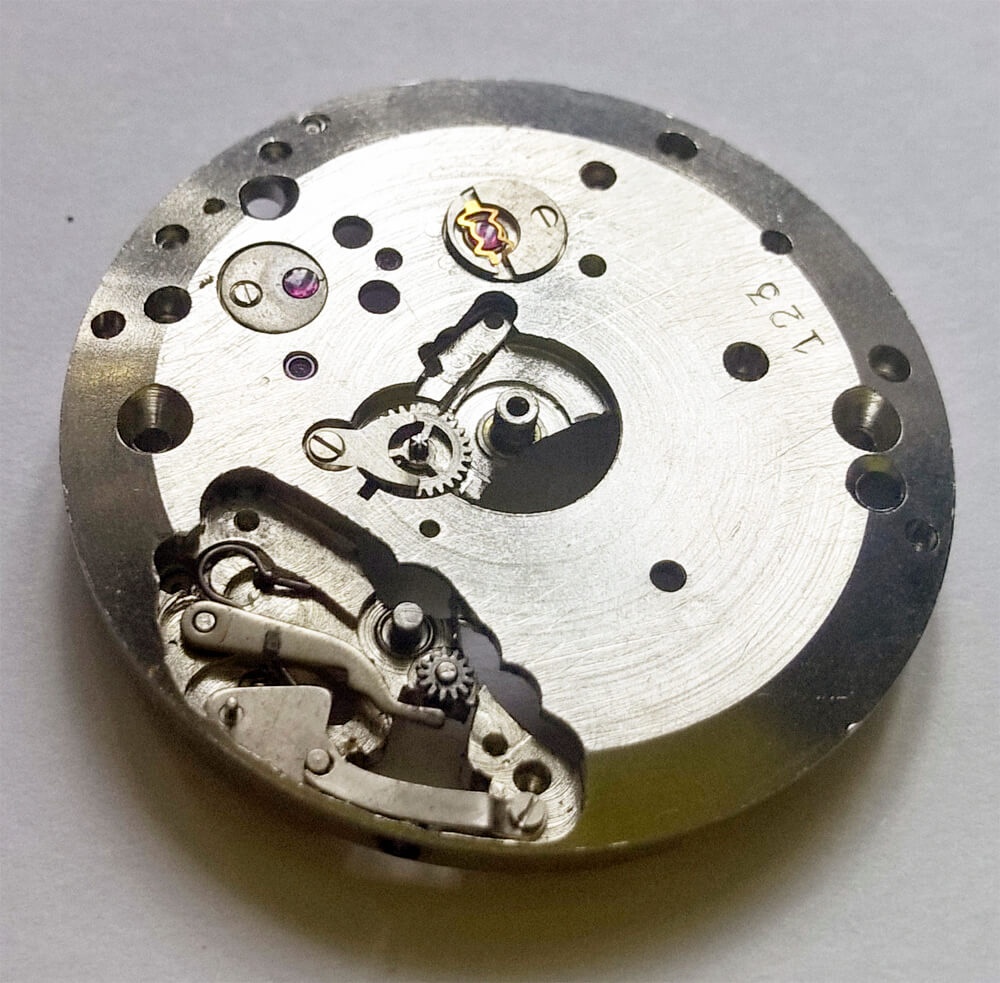
The keyless works are unfamiliar in layout compared with a garden-variety Soviet caliber, but they present no real difficulty in either disassembly or reassembly once their logic is understood.
Regulation and Result
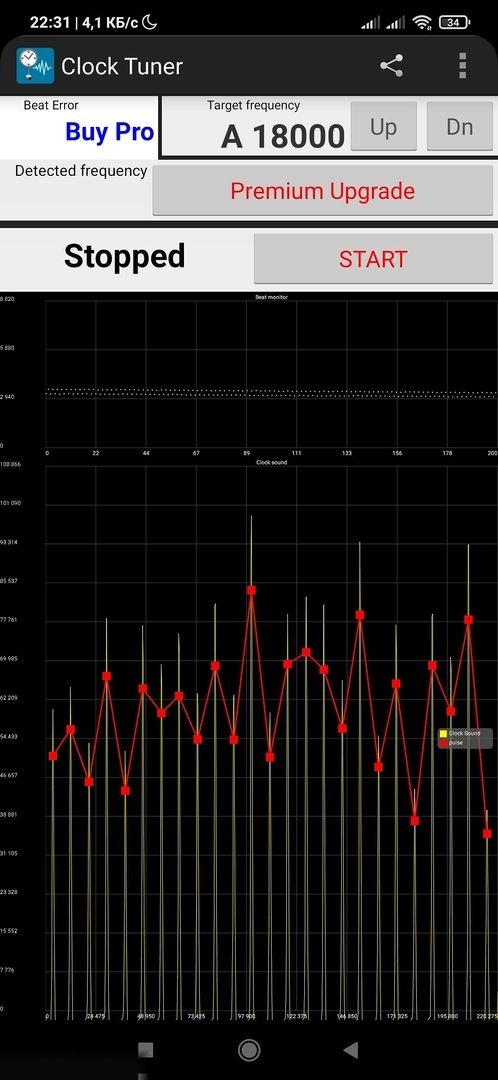
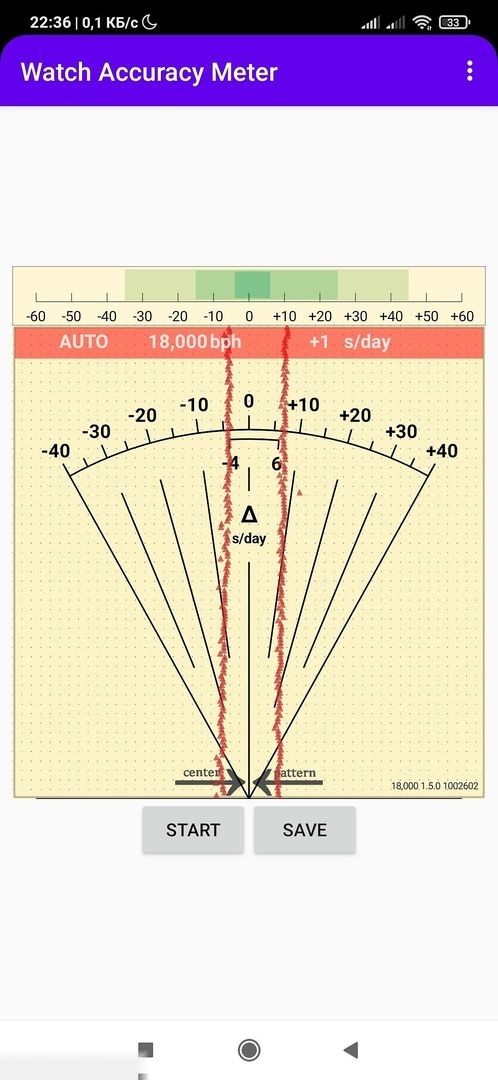
The caliber regulates beautifully. The micrometric regulator allows the rate to be brought almost to zero — but, honestly, only in a single position. That is no indictment of the design so much as an acknowledgment of age: this movement is more than fifty years old, and pinning down a tighter figure across positions is asking a great deal of any veteran. The numbers on the timing apps tell the story plainly enough.
Legacy of a Precision Caliber
To sum up: this is a genuinely interesting movement. The abundance of cap jewels lowers friction and makes precise lubrication possible, and because the stones are easy to clean during service, they help the watch keep good time for the long run. The hairspring of its special alloy resists temperature far better than ordinary steel, and the large, high-inertia balance contributes its own measure of stability despite the modest beat rate. The Swiss laid down an exceptionally clever caliber in the Zenith 135, and Soviet engineers refined it and brought it close to ideal.
Its influence did not end with the 2809. A great many of its solutions carried forward into the later Vostok 2209, and from that base came the 2214 with its calendar and the 2234 with both calendar and stop-seconds — the latter the legendary movement on which the history of the Komandirskie watches began. For a movement that arrived on the bench missing a single jewel, the 2809 turned out to be a fine reminder of how much serious horology can hide inside an unassuming Soviet case.
Comments
Write a comment