

Servicing the Yunost on the Zarya 2008 Caliber: A Soviet Youth Watch and Its Intermediate Shock System
"The most ordinary watch often hides the most instructive engineering. You only have to open it and look without prejudice."
— Igor
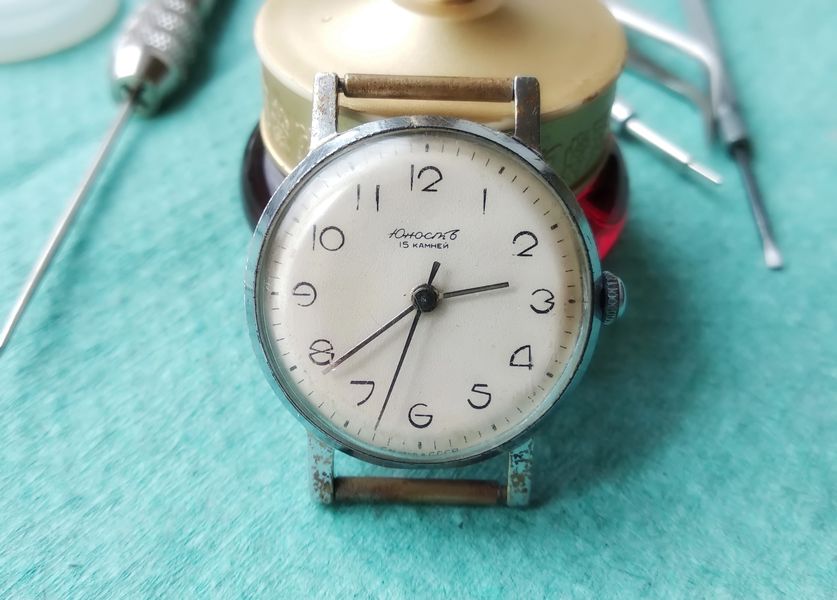
Few Soviet watches were taken less seriously than the ones marked Yunost — literally "Youth." They were inexpensive, utilitarian timepieces, the kind handed to a student or a young worker as a modest gift, worn hard, and rarely cared for. Yet the movement inside this particular example, a Zarya caliber 2008, is far more interesting than its humble reputation suggests. The GOST designation that ends in "08" is usually read as shorthand for a center-seconds movement without shock protection — no Incabloc, in other words. As we shall see, that reading is not quite the whole truth, and the reason lies in the unusual construction of the balance bushings, which we will examine in detail once the watch is on the bench.
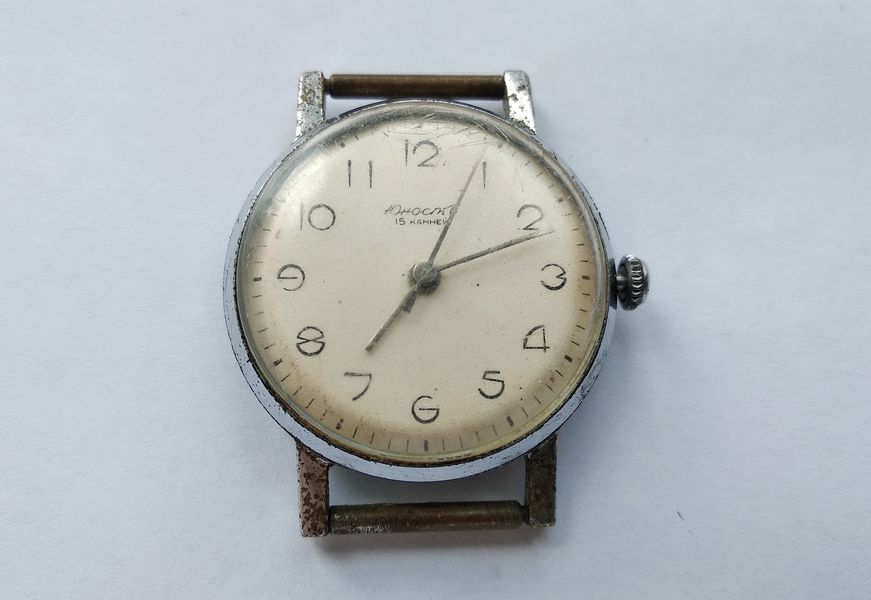
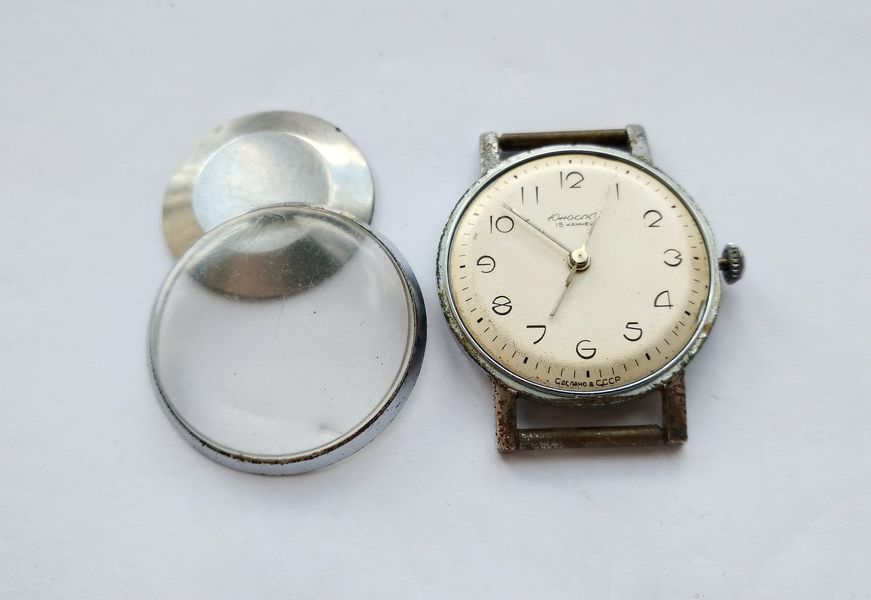
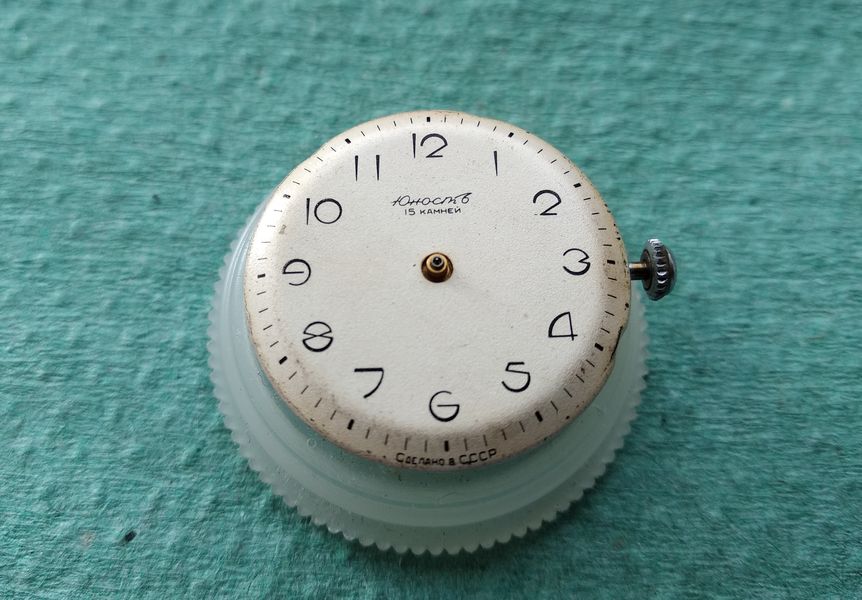
The dial survived surprisingly well. The case did not. This is the typical fate of these watches: the movement is sound and the face is presentable, while the plating has flaked down to the brass. None of that matters for what we are here to do, which is to take the movement completely apart, clean it, replace a broken component, and put it back together with proper lubrication.
A Humpbacked Movement in a Domed Case
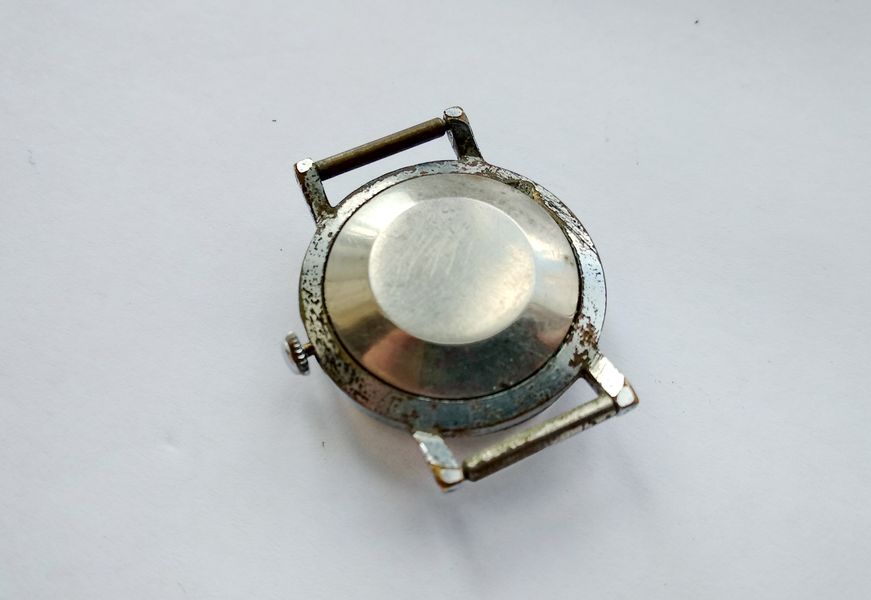
The back of the watch is closed by a convex snap-on cover — a "clapper" back, in the workshop slang. The dome is not decorative. It is there because the movement underneath is what watchmakers of the period called "humpbacked," tall enough that a flat back simply would not clear it.
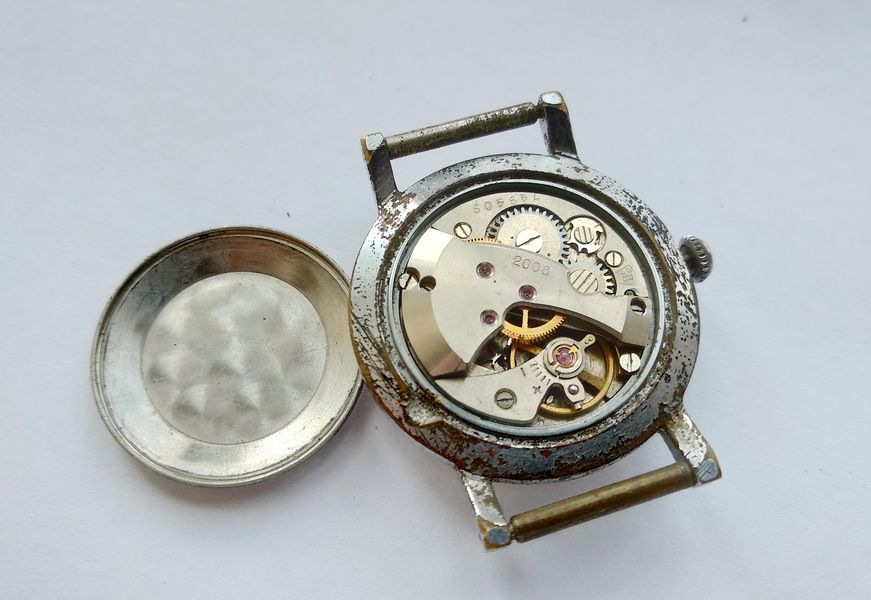
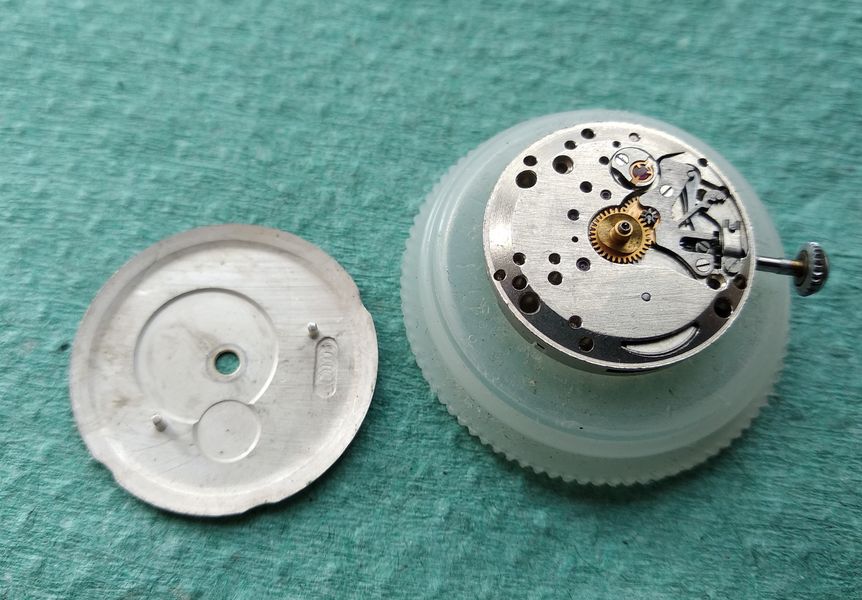
Pry the cover off and the reason becomes obvious. The gear-train bridge rises into a pronounced hump, the highest point of an unusually multi-tiered layout.
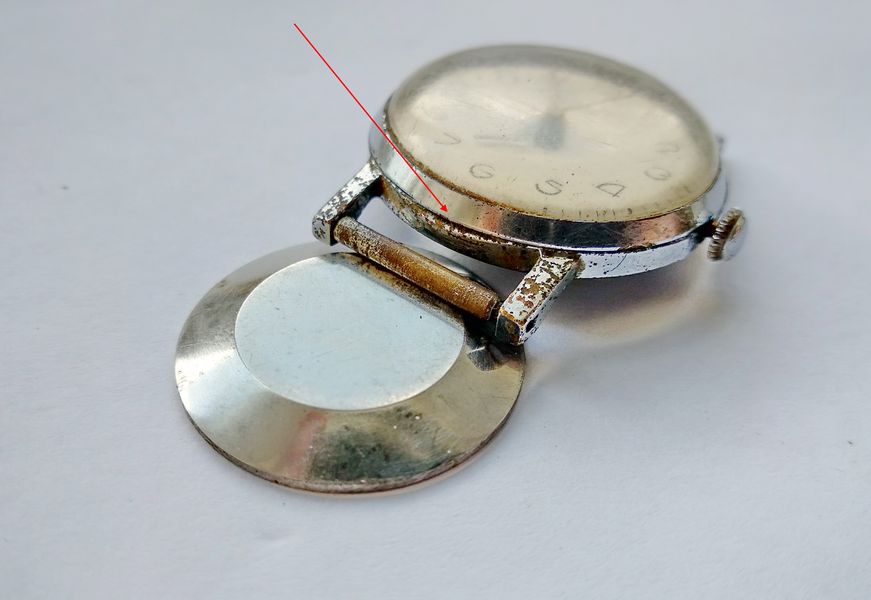
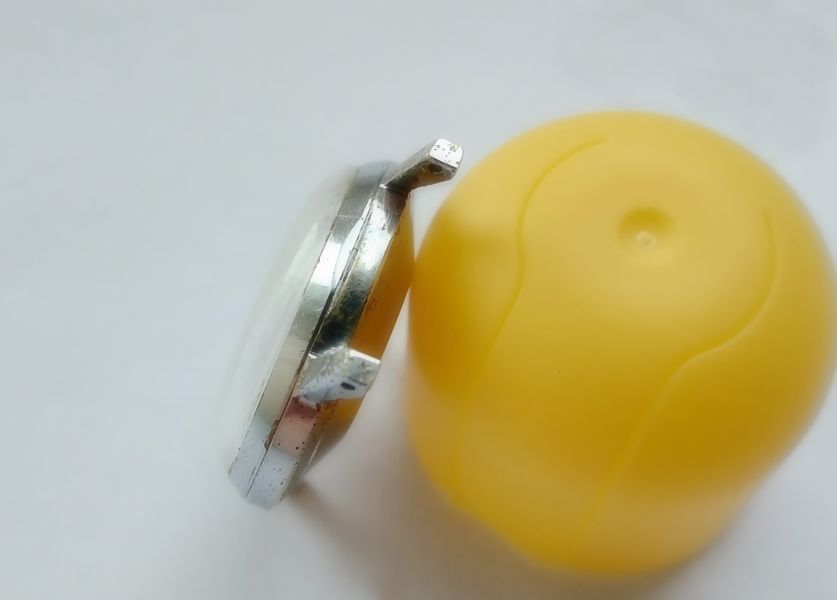
Before disturbing the movement, a small detail of the case deserves notice. The glass bezel carries a flat — a deliberate facet ground into the rim — and it is positioned directly beneath the lower lug.
The bezel lifts away together with the crystal. The acrylic is badly scuffed but salvageable; we will polish it later. The dial, by contrast, is a pleasant surprise.
Two case screws hold the movement captive. Back them out and the movement is free to leave through the front.
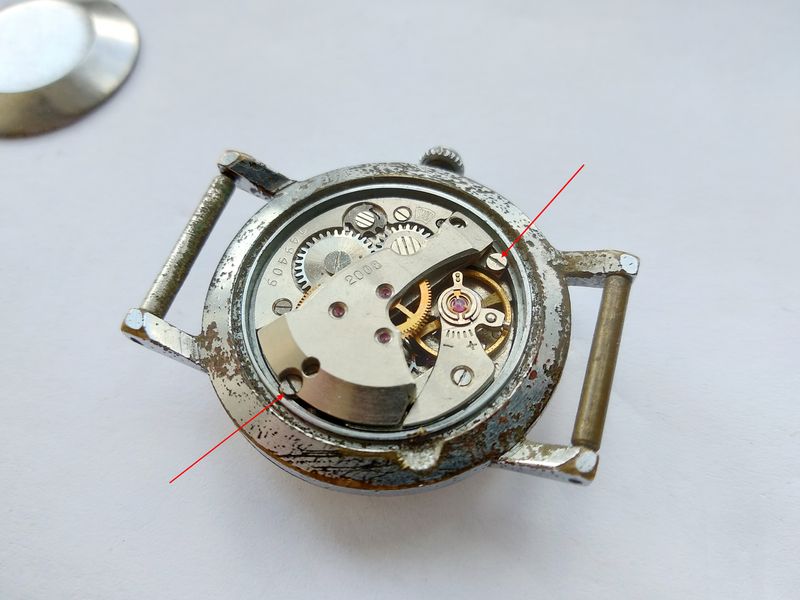
Releasing the stem is the only mildly awkward step. The setting-lever release is tucked into a deliberately inconspicuous spot — but a hidden button is no match for someone who knows where to press.
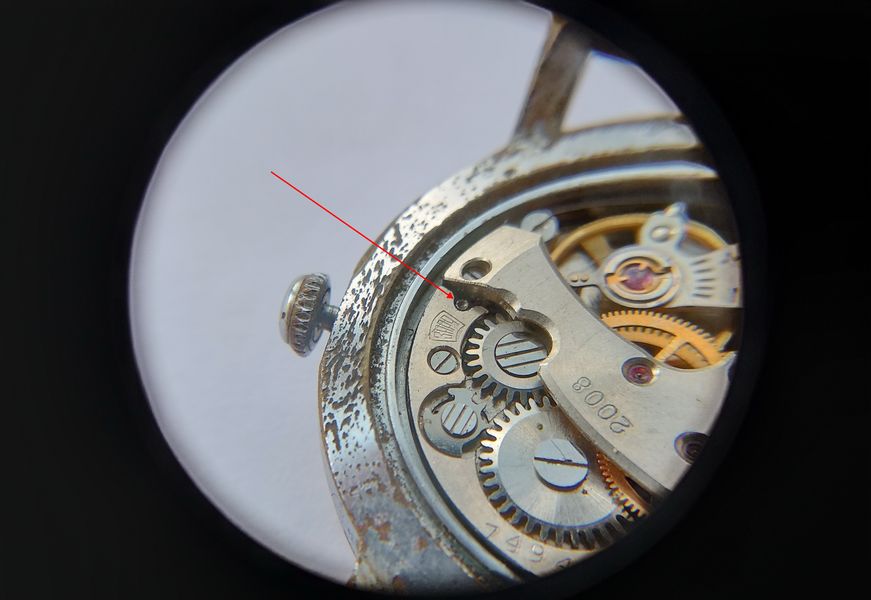
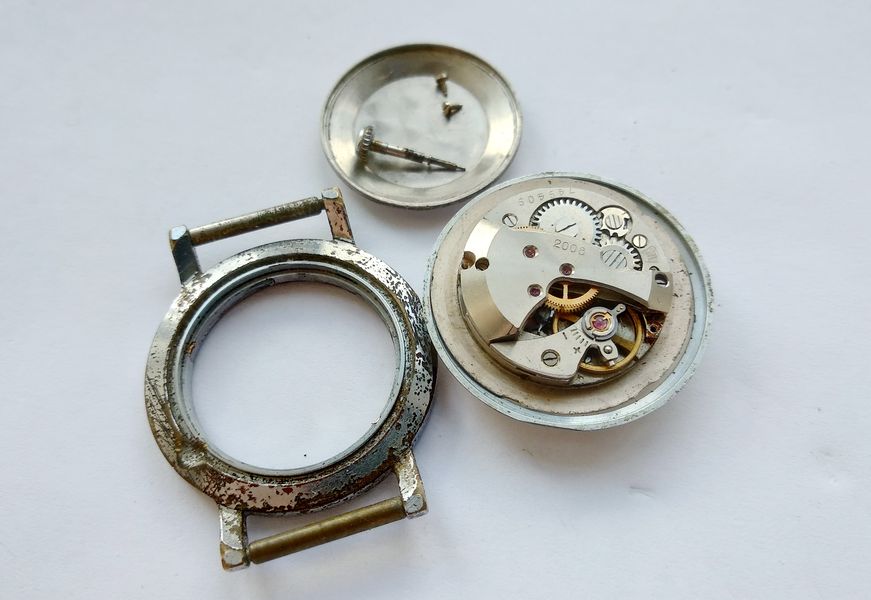
With the screws out and the stem pulled, the movement comes out of the case without a fight. So far the disassembly is going exactly to plan.
Removing the Hands and Dial
To lift the hands without scarring the dial, the whole dial is first covered with a sheet of thin film. This is an old and reliable trick.
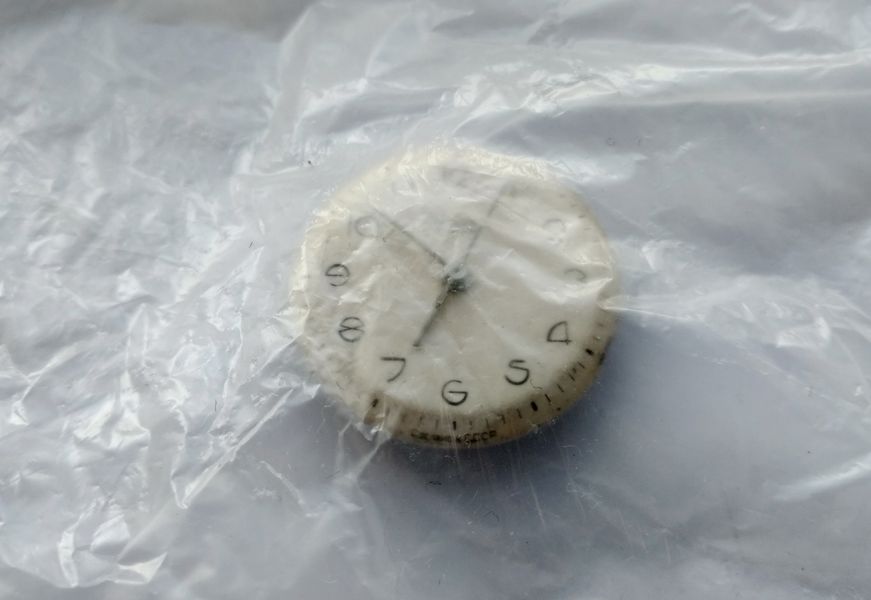
The hands are then levered up through the film with tweezers. The point of the method is that the hands do not spring off across the bench — they stay trapped under the film, exactly where you can find them.
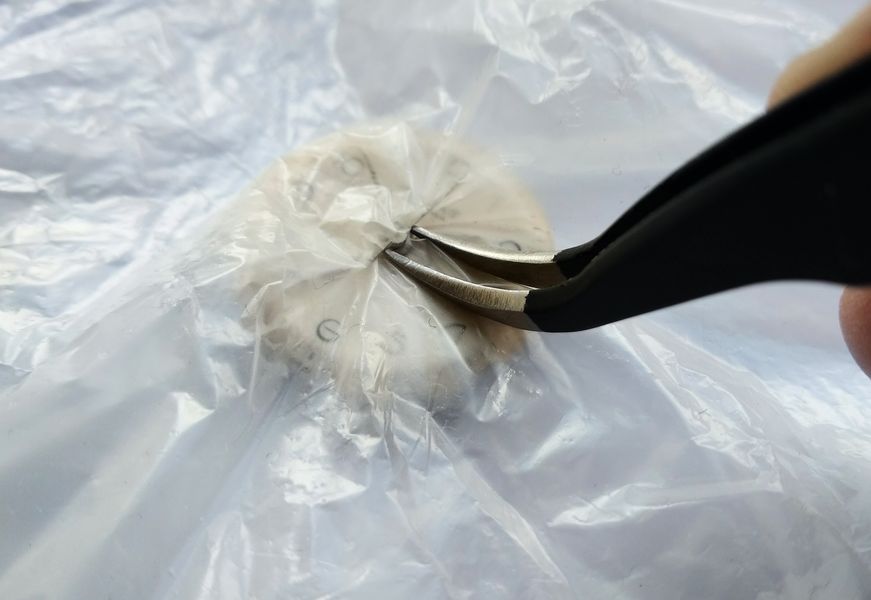
And that is the result: three hands lifted, none lost, the dial untouched.
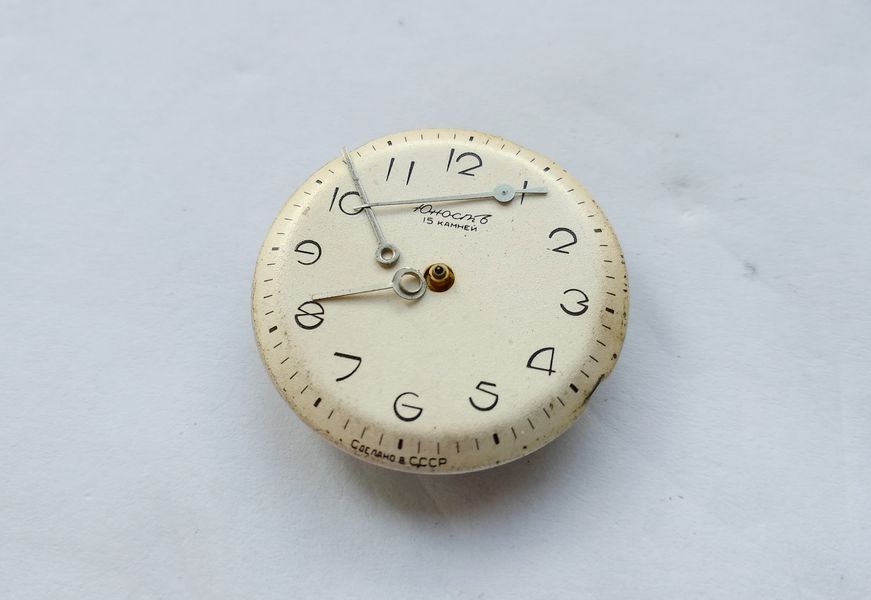
Now the dial itself. It is held by dial-foot screws on the side of the movement.
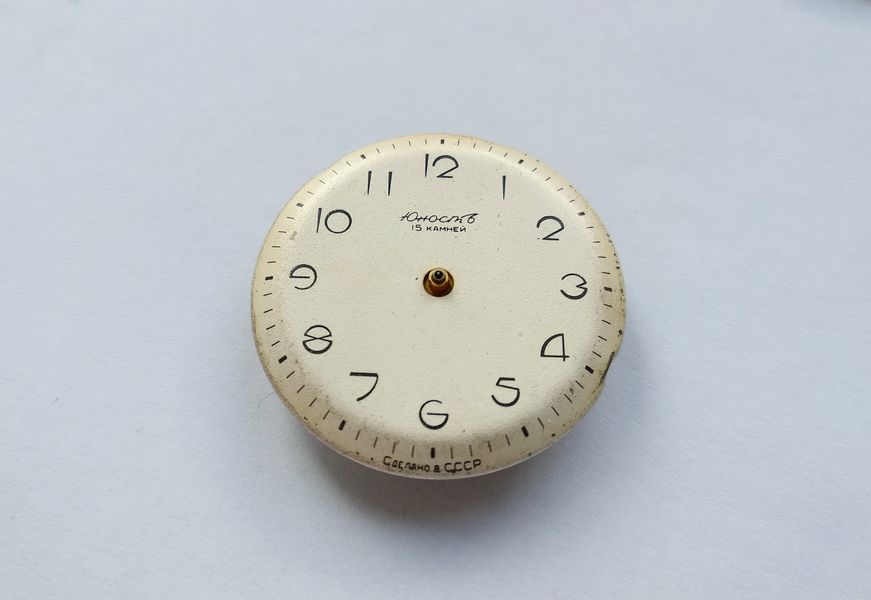
The dial-foot screws on the flank of the movement only need to be loosened, not removed entirely. Once the dial is off, they are simply driven back in so they cannot be lost.
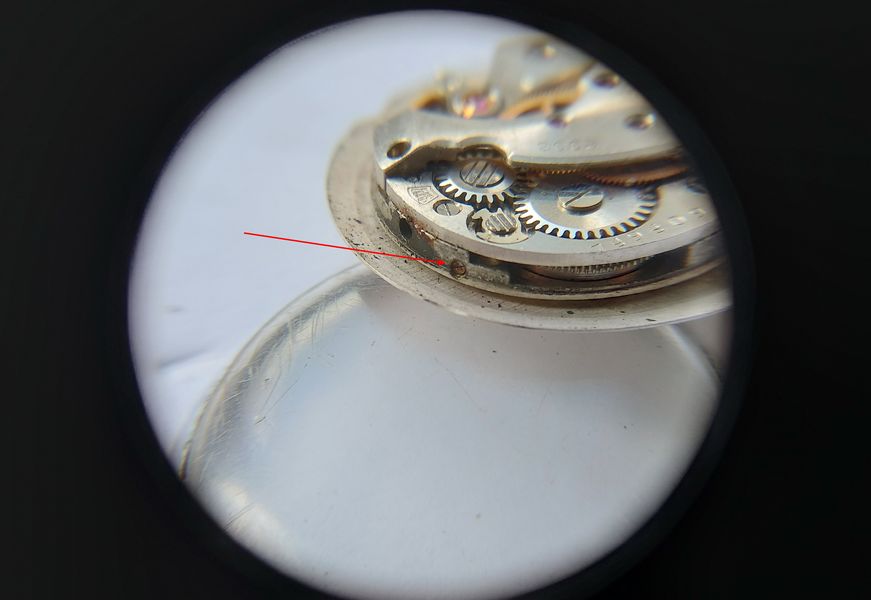
With the dial off, the dial-side condition is reassuring. The silvered dial will clean up beautifully. The first real trouble, however, is right here.
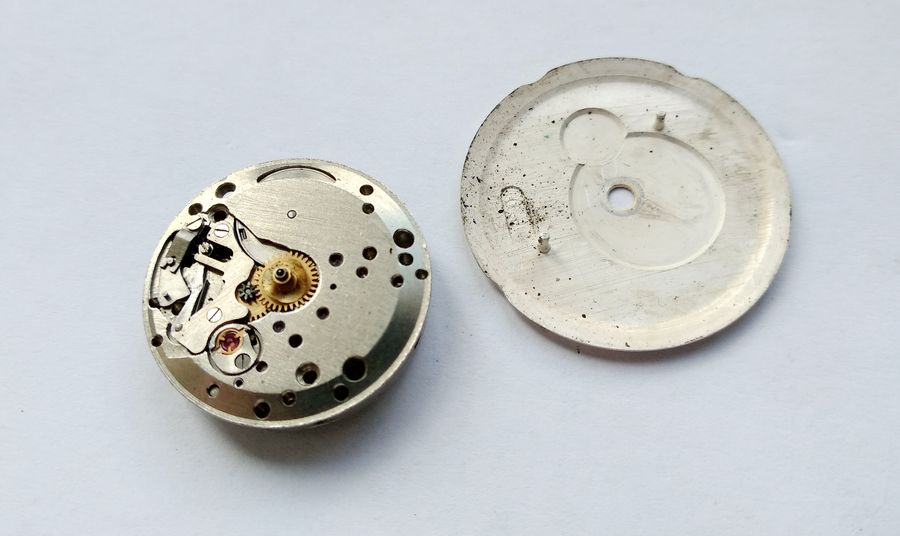
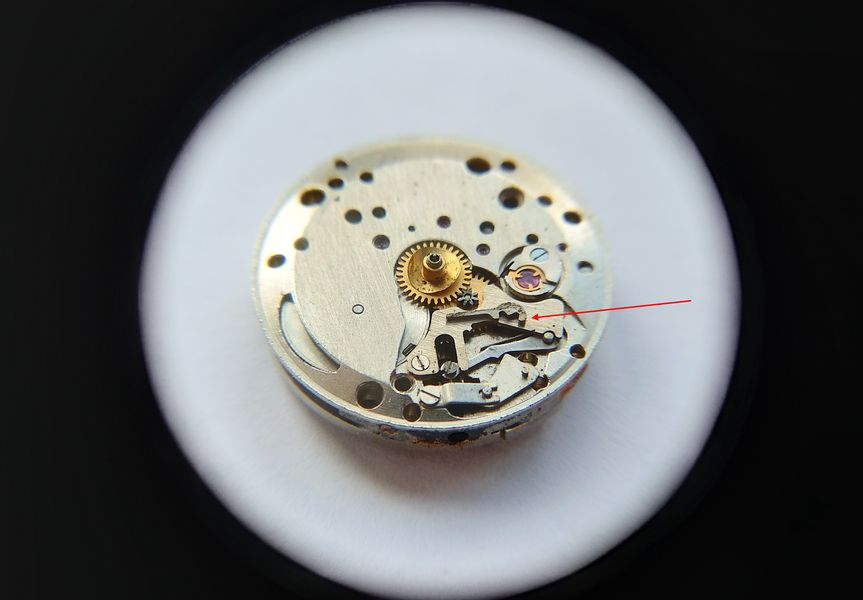
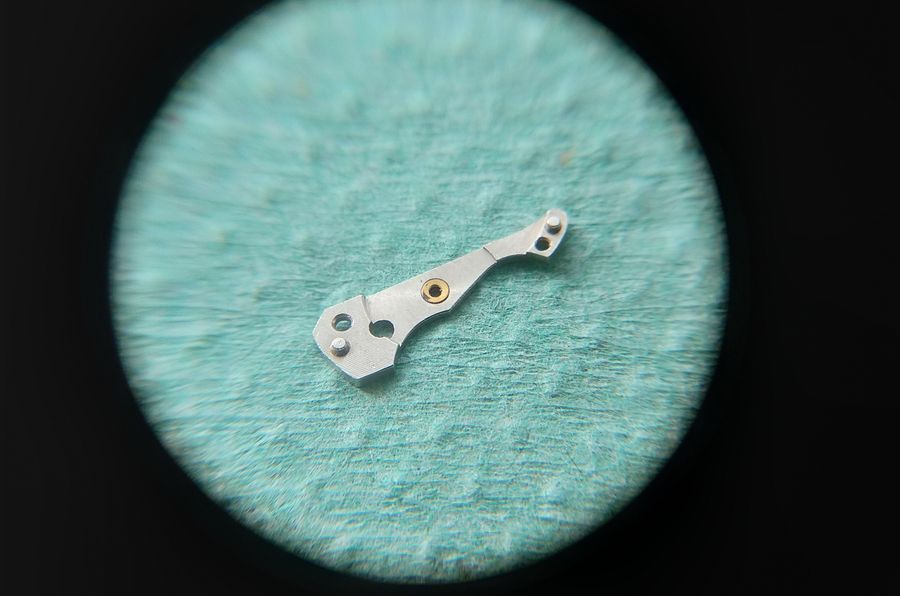
The retaining spring for the intermediate setting lever has snapped. There is no repairing a broken leaf of this kind; it has to be replaced. Fortunately, a small box on the shelf holds odds and ends accumulated over years. We will dig through it when reassembly comes around.
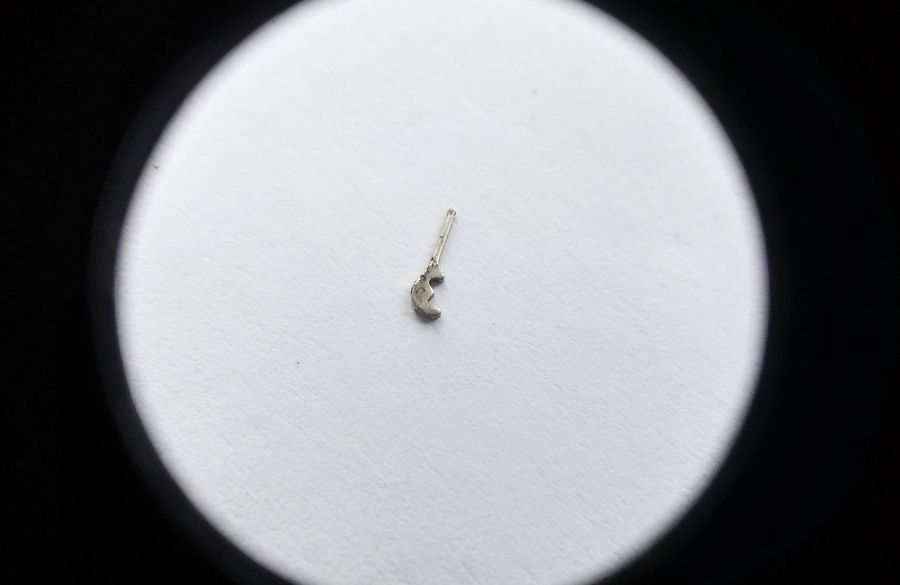
Here is the broken leaf itself, the snapped tongue of the spring.
Stripping the Slow Side
Since the movement is already lying dial-side up — the slow side, in workshop terms — that is where the teardown begins. First off is the hour wheel with its spring washer.
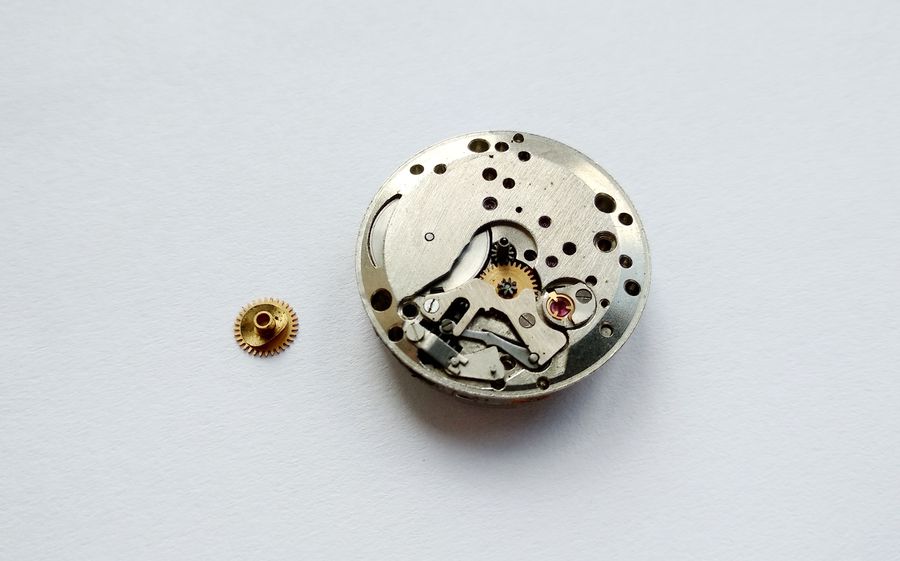
Next, without delay, the cannon pinion. This is the classic friction-fit arrangement — a cannon pinion gripping the center arbor by interference.
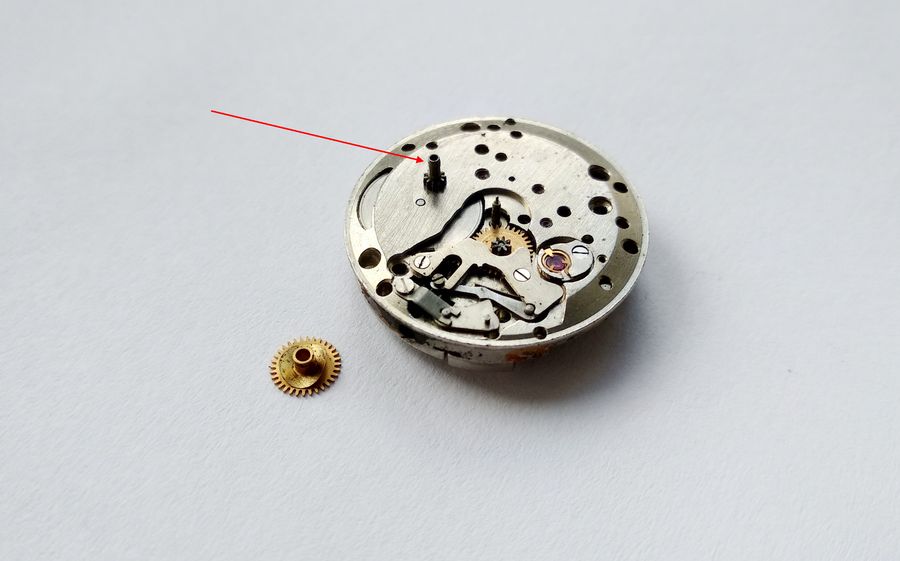
The Balance and Escapement
Now the movement is turned over to the bridge side, and the balance is lifted out.
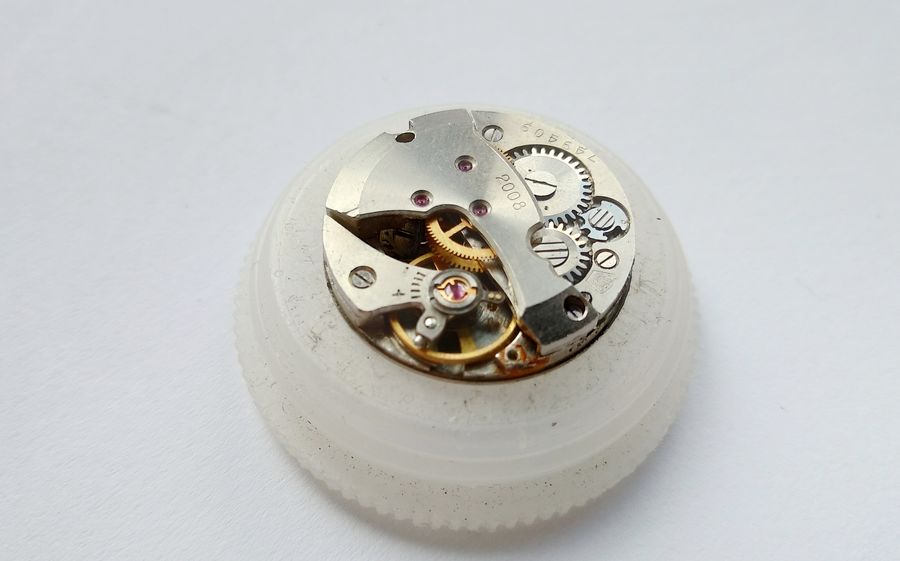
The balance is screwless. The stud carrier is fixed, the regulator is present with its pins captive at the index, and there is a gasket beneath the balance cock. What immediately draws the eye, though, is the unusual shape of the bushing spring. It is precisely this bushing construction that earned the movement its "08" classification under GOST — but the details will wait until we reach the bushing service, with a good deal of work still to do before then.
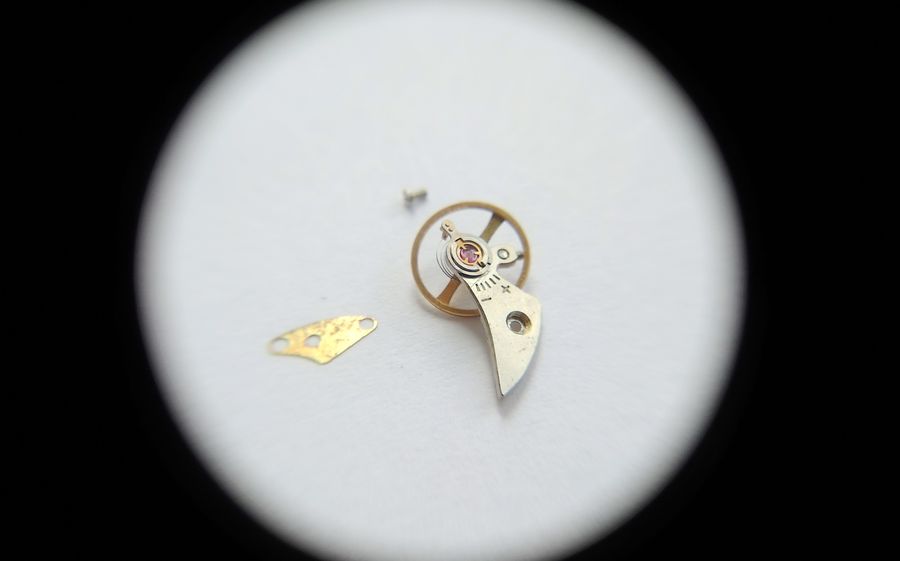
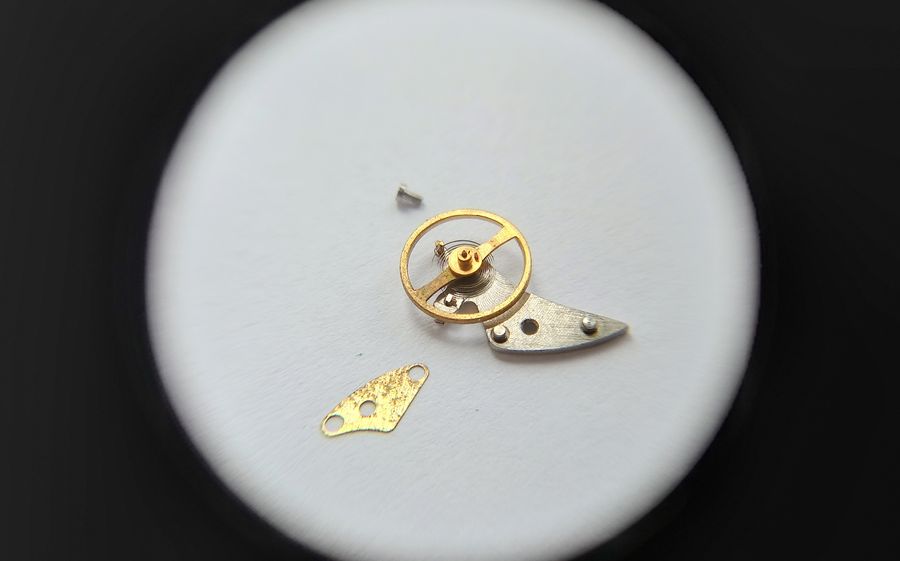
The underside of the balance holds no surprises: a double roller, an ellipse for an impulse jewel, and the staff with its pivot.
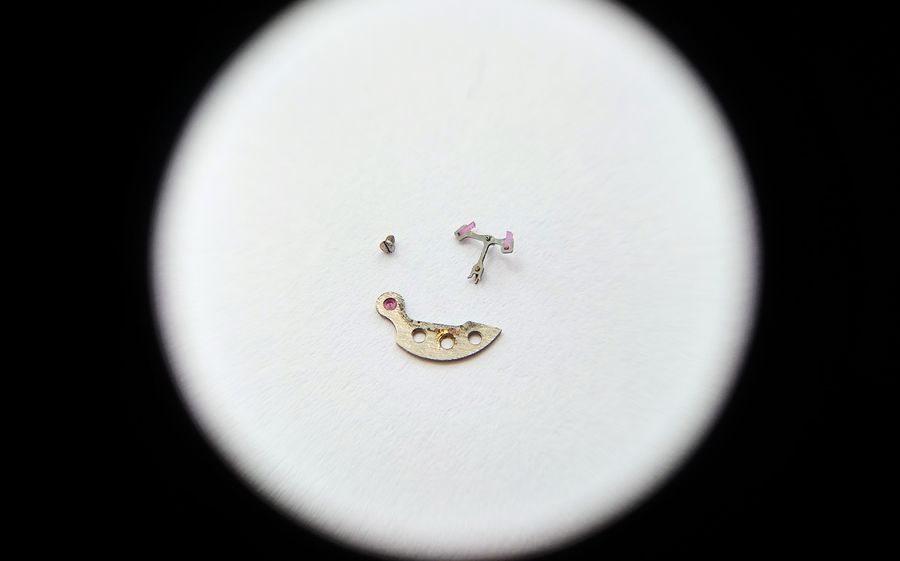
The pallet fork is equally conventional. Its bridge locates on two guide pins and is held by a single screw.
Gear Train, Center Wheel, and Barrel
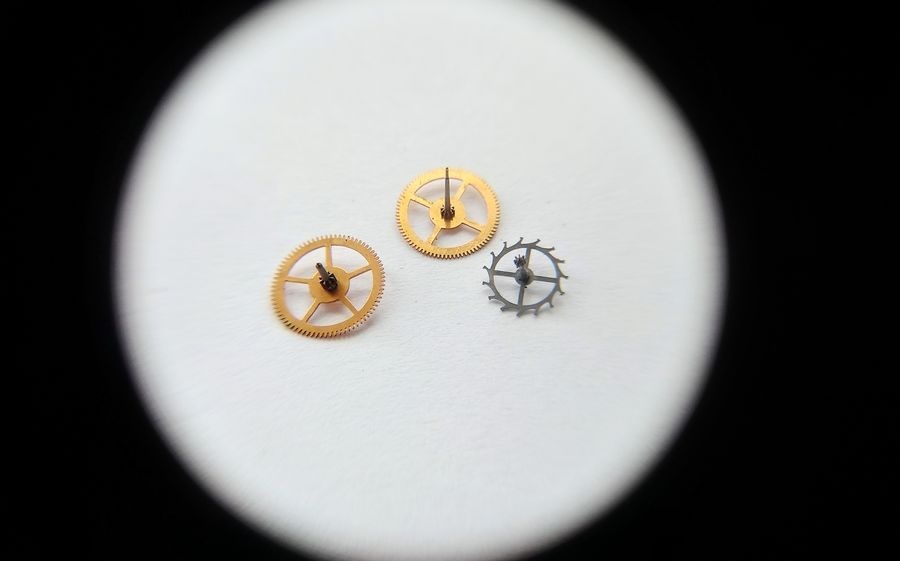
Now the train. The gear-train bridge comes off first. Because of the movement's multi-storey construction it sits high — the very feature responsible for the domed case back. With the bridge removed, the seconds, intermediate, and escape wheels lift out.
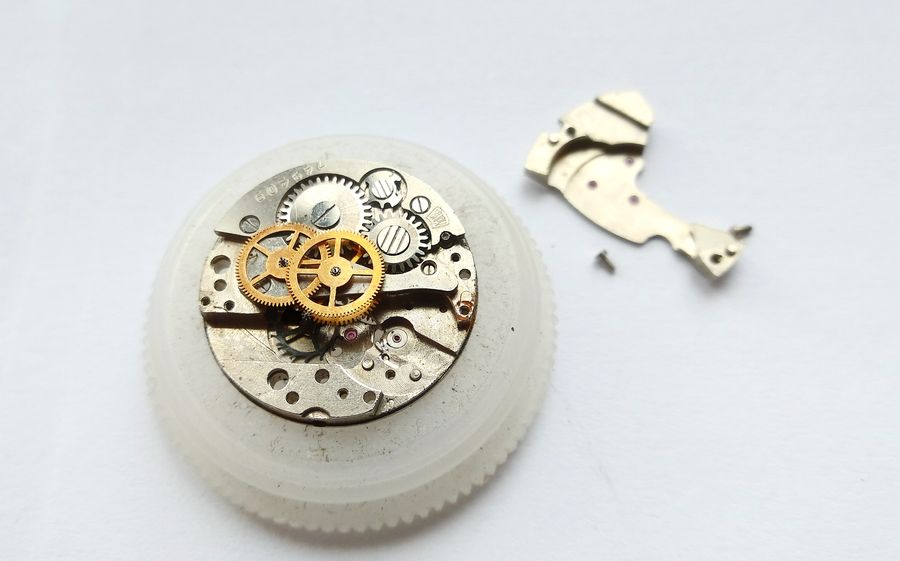
That leaves only the center-wheel bridge and the center wheel itself still in place.
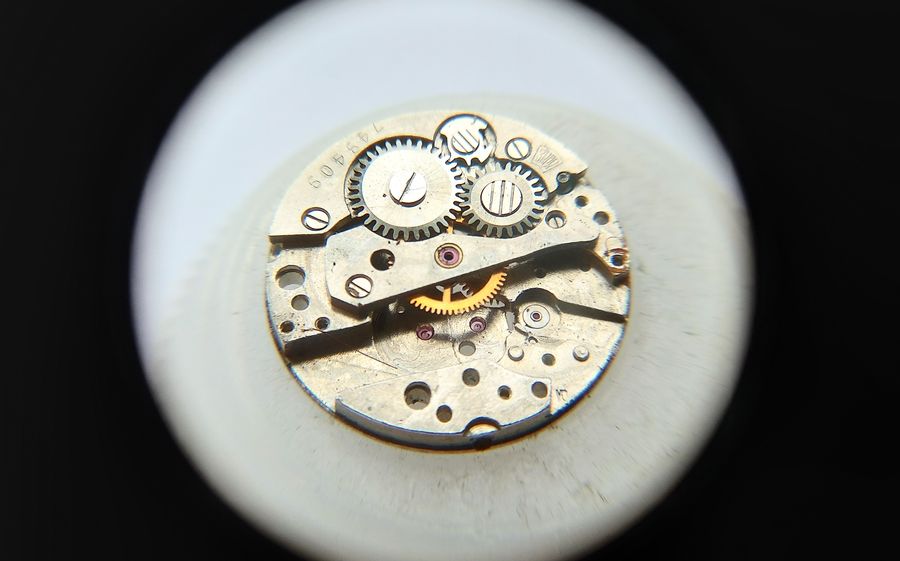
Here is the dismantled wheel set laid out together.
Next the center-wheel bridge. Seen from its inner face, it looks ordinary enough.
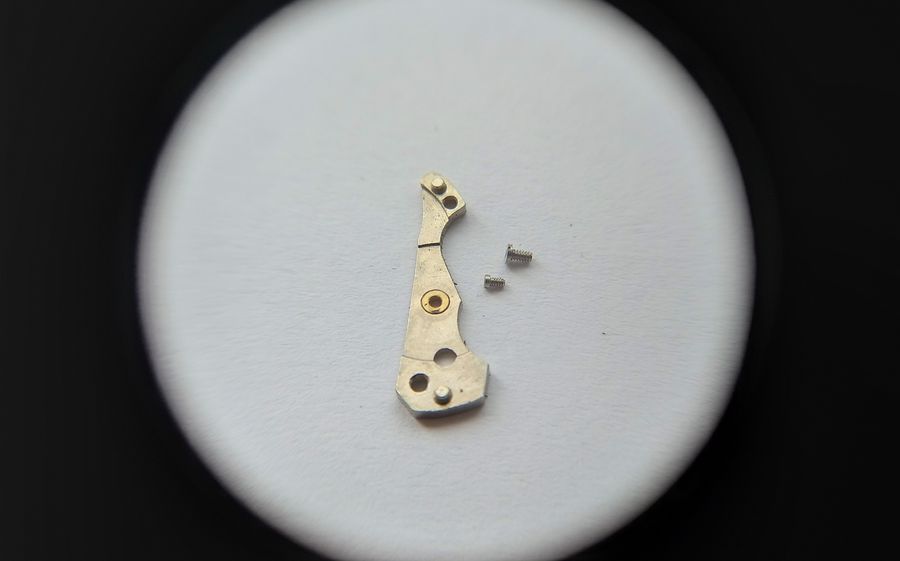
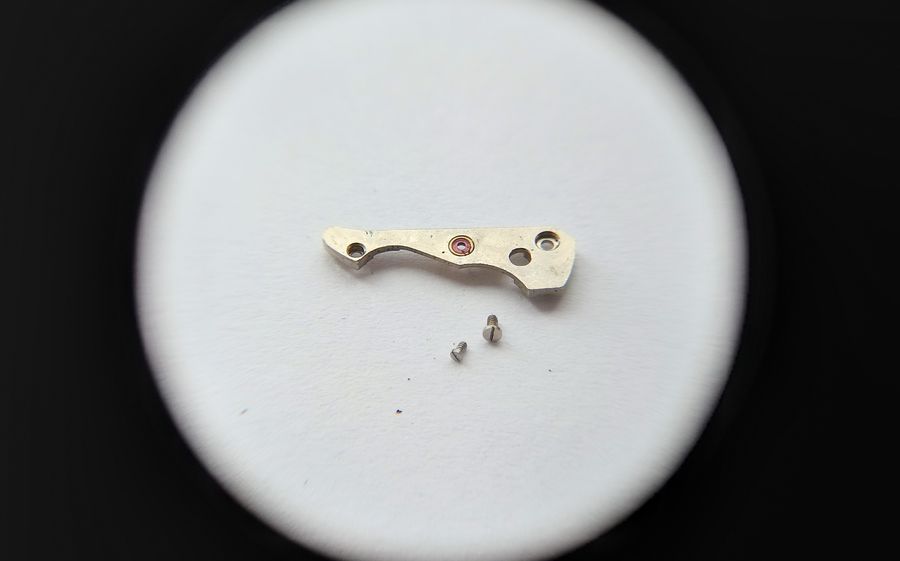
Turn the bridge over and the construction of the center-wheel bearing reveals itself. The jewel is mounted in a dedicated chaton, which makes for a combined bearing: the wheel rests on a brass shoulder while its arbor turns in the jewel.
To get the center wheel out, the winding wheels of the mainspring motor have to come off first. In hindsight that should have preceded removing the center-wheel bridge, but no harm is done. Off come the winding wheels.
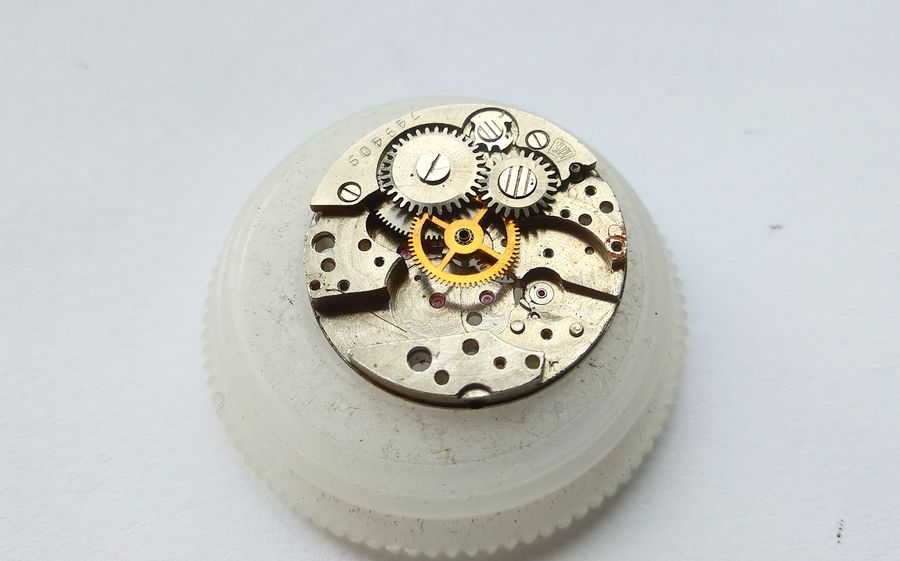
Now, at last, the center wheel can be lifted out.
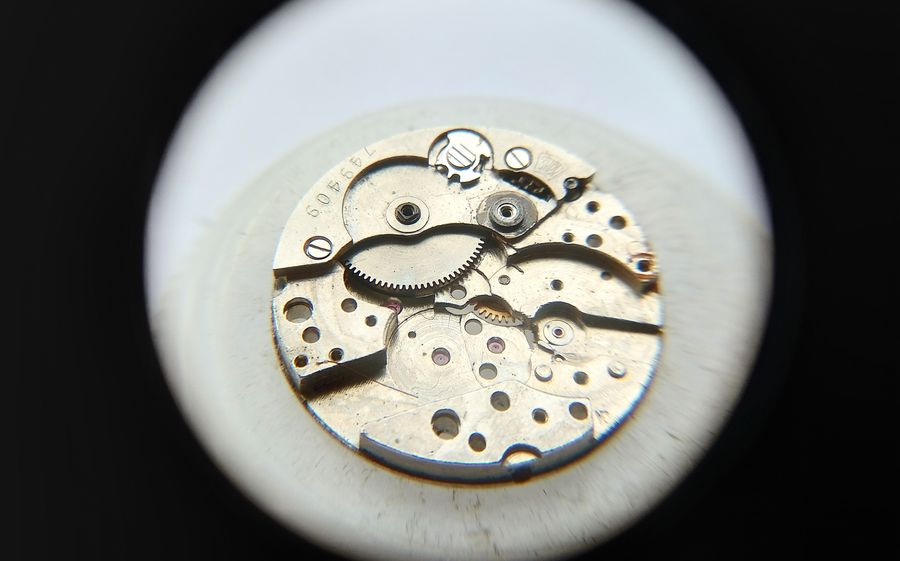
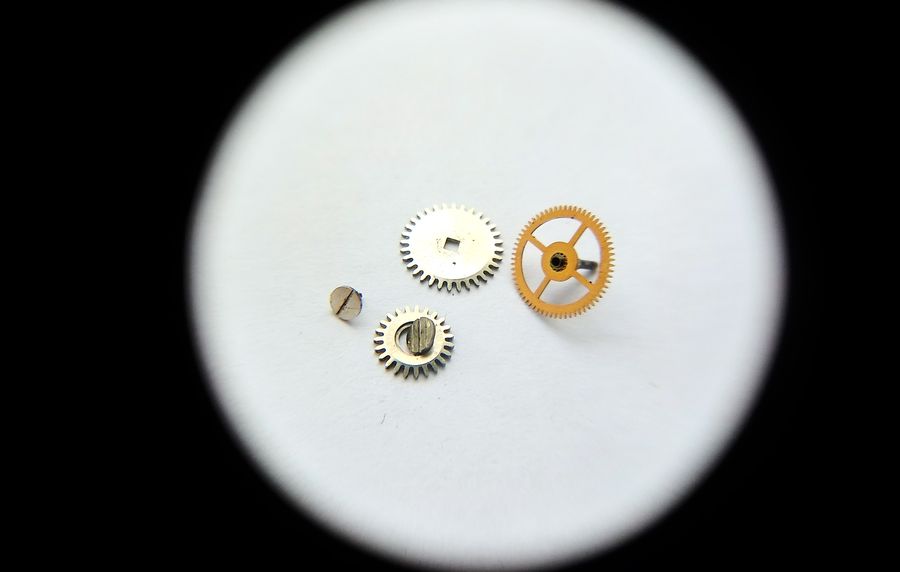
There they are together: the winding wheels and the center wheel.
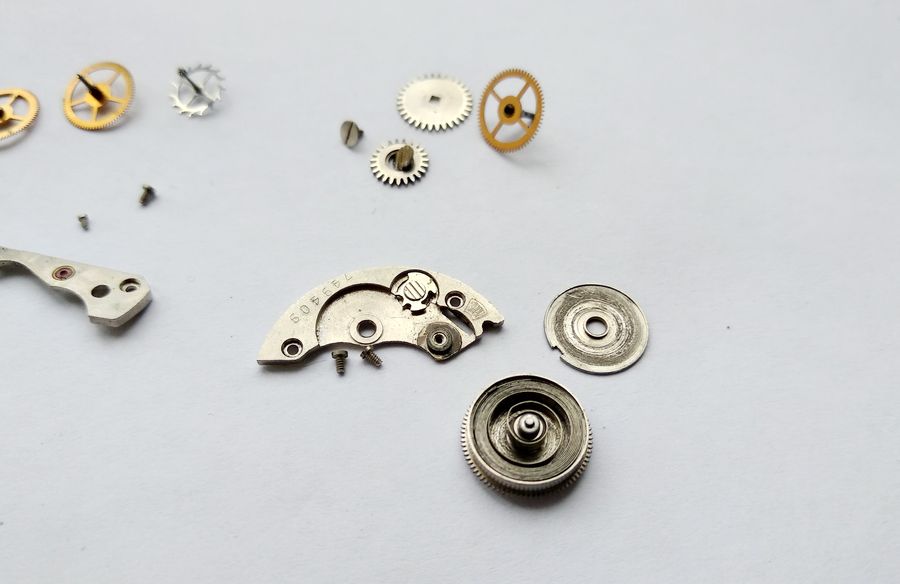
The barrel bridge, the barrel, and the barrel itself come next. The barrel lid is removed — but, to be honest, the mainspring is staying put. It will be cleaned in place.
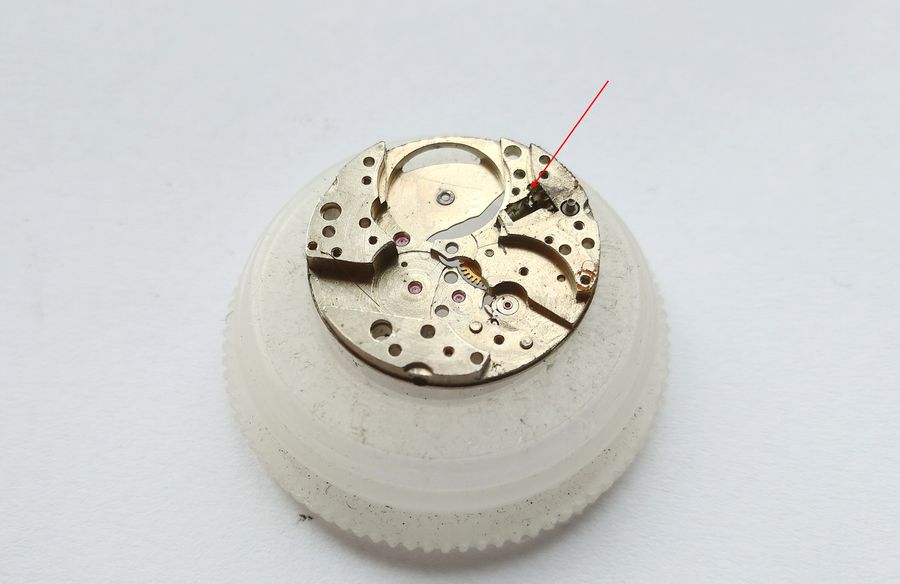
With the fast side stripped, the now-open window in the plate gives access to the sliding clutch and the winding pinion of the keyless works, which are drawn out.
The keyless works is then fully taken apart. Here are its components; their arrangement on the plate will be shown during reassembly. There is no point photographing the parts grimy, and while we are in here the broken spring will be swapped for a sound one.
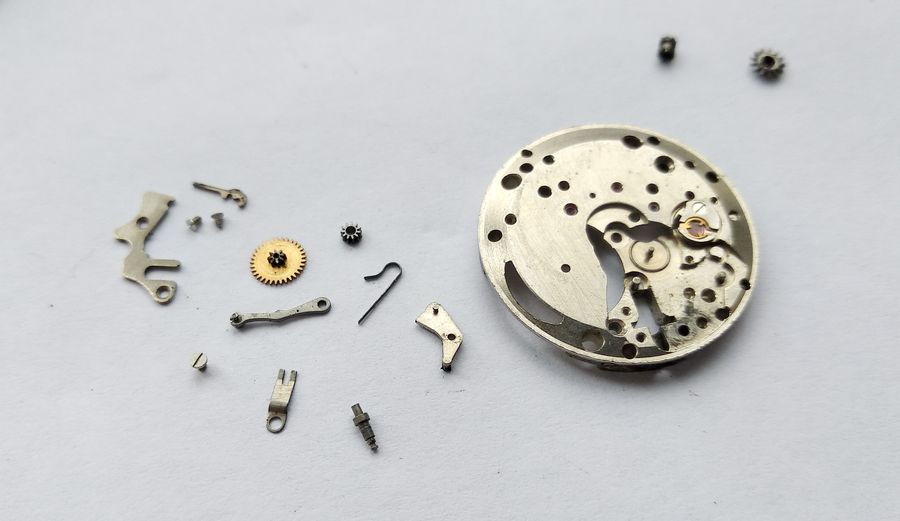
The Removable Balance Bushings
Now to the defining feature of this movement — the balance bushings. Here they are made removable. So we take the bushing off the plate and send it to soak, letting it sit in benzine to loosen the grime.
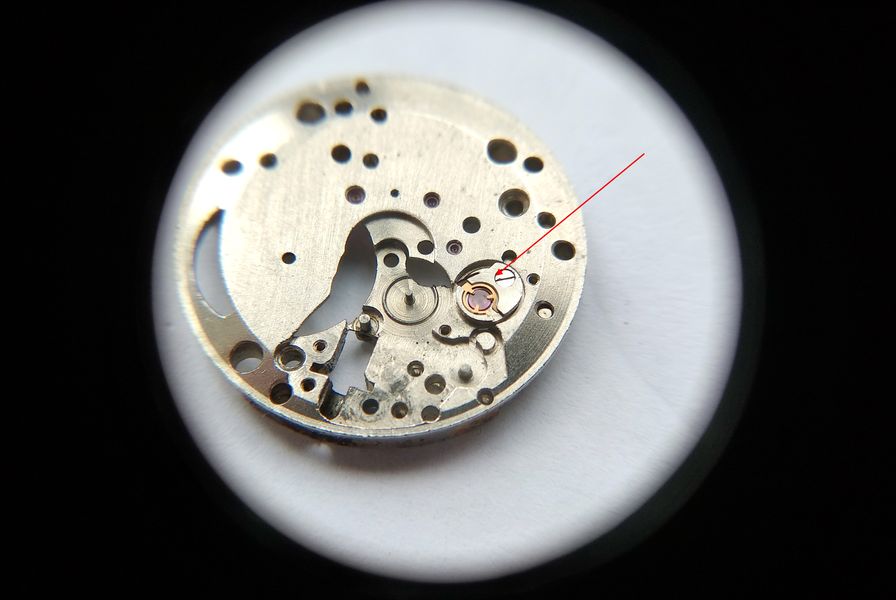
A single retaining screw frees it.
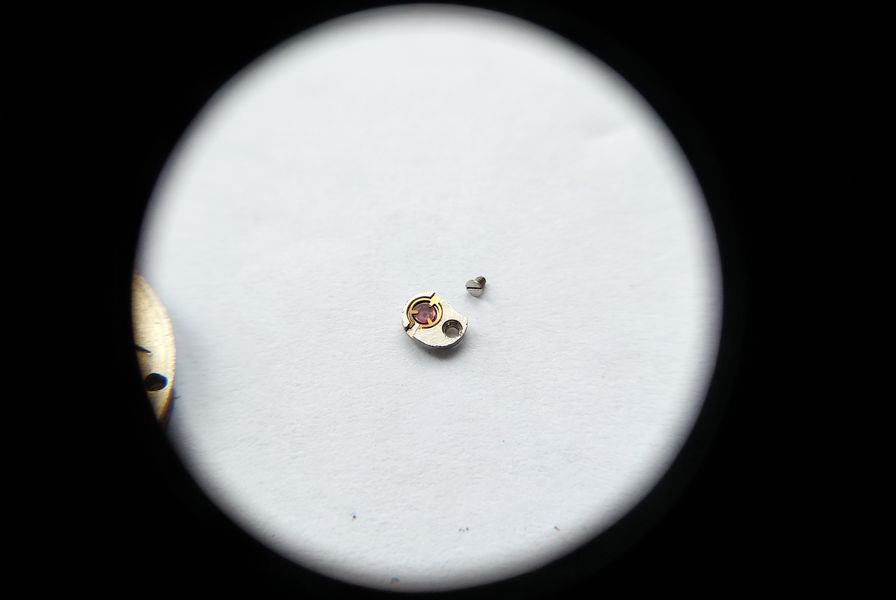
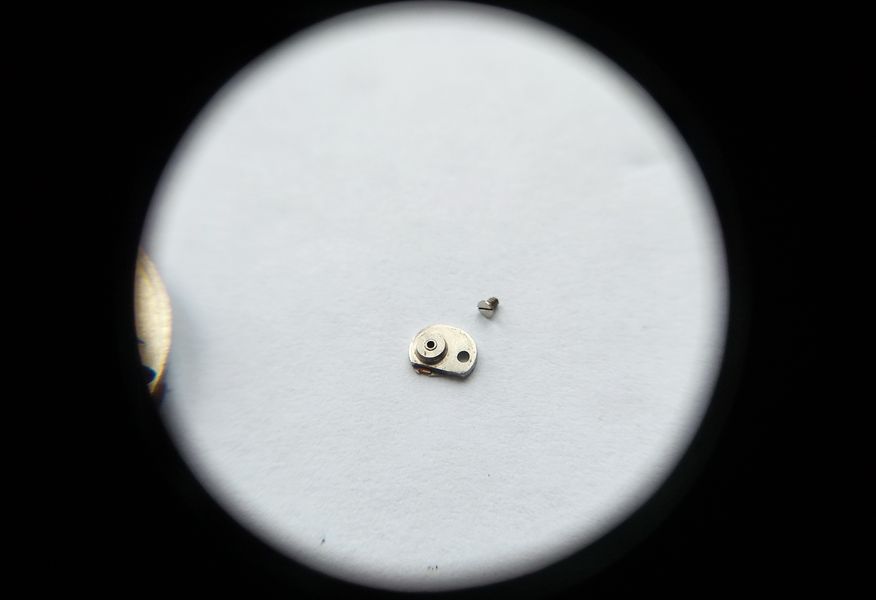
And this is its reverse face. It will be cleaned and then taken apart during installation, where its construction can be studied properly.
And so, to borrow and bend the words of a well-known Soviet children's song — what, then, is our Yunost made of? Here it all is, spread out.
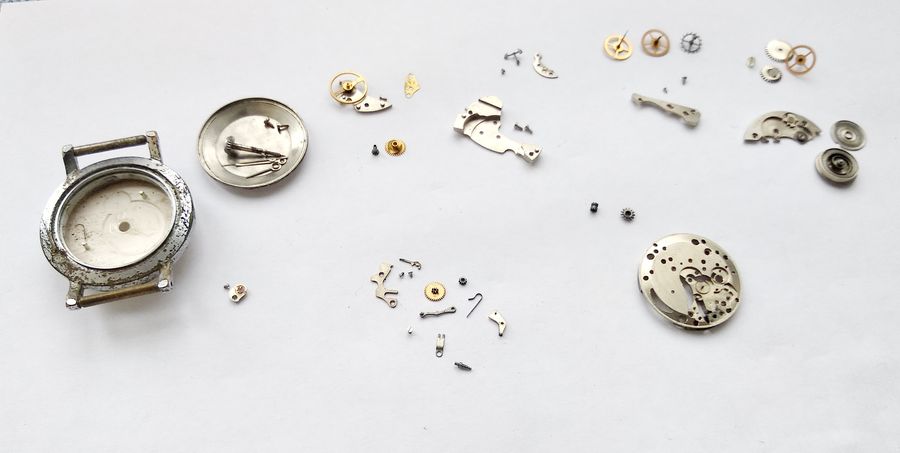
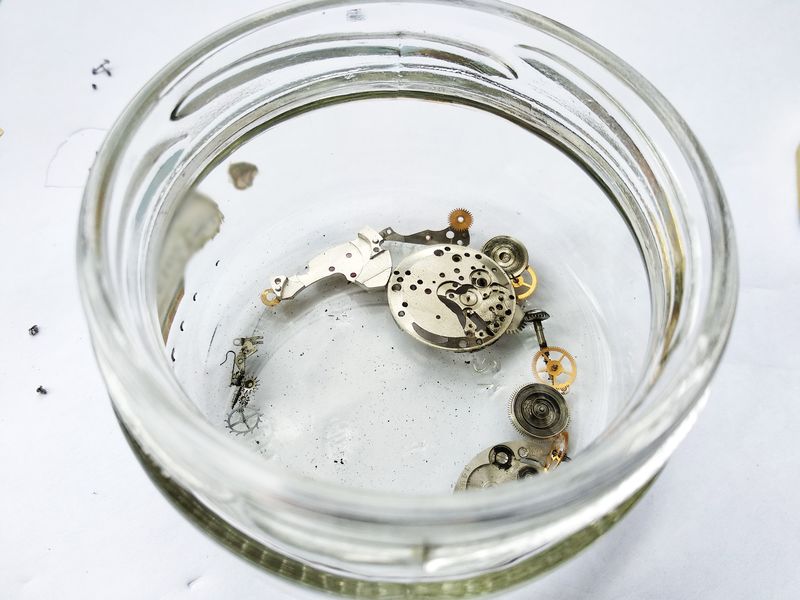
The parts are gathered and sent into benzine to soak. While they sit, the coffee maker is signaling — so a cup of coffee, then brushes and an old toothbrush will bring everything back to a respectable state.
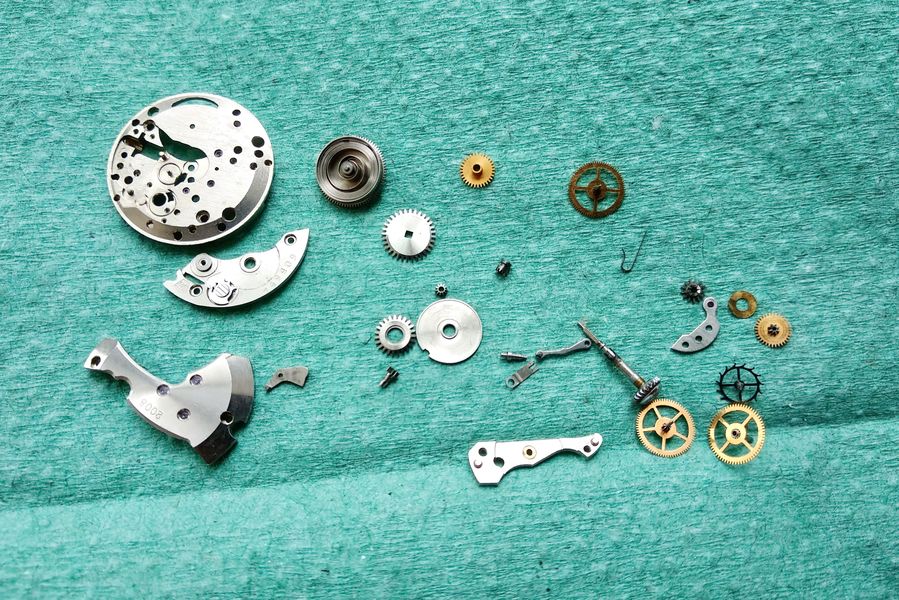
Coffee drunk, cleaning done, the parts are arranged on a blotter. We will try working on it.
Reassembly: Center Wheel and Barrel
The main plate is prepared and set on its holder.
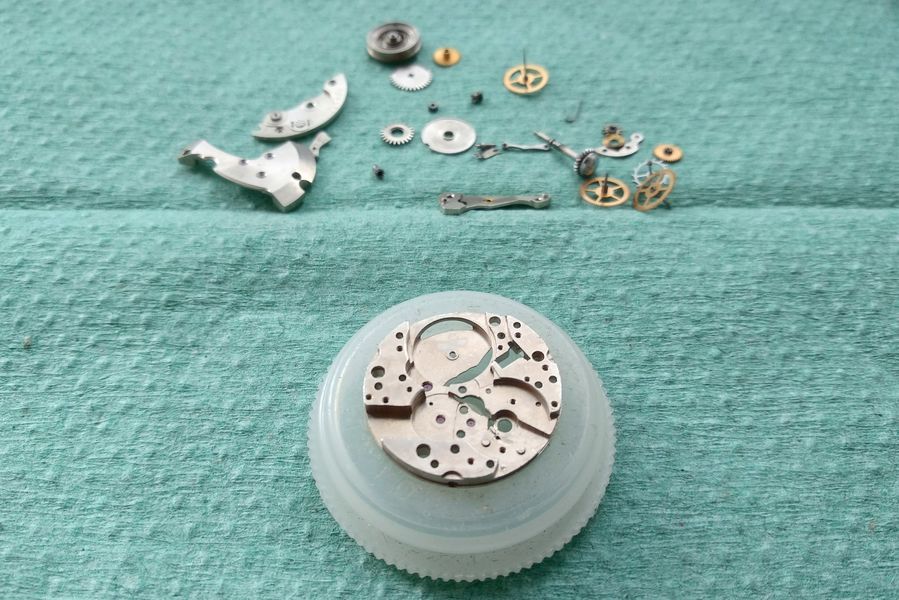
And we begin with the center-wheel assembly. As noted, there is no jewel under the center wheel — fifteen jewels in total. The closely related Zarya 2009 carries seventeen, but not because a jewel is added to the center arbor: that bearing is identical. The extra two jewels in the 2009 are cap jewels placed over the train's through-jewels on the plate side. Economy being what it was, there always had to be room left for "rationalization" and future improvement. So: a drop of oil into the hole for the center-wheel arbor.
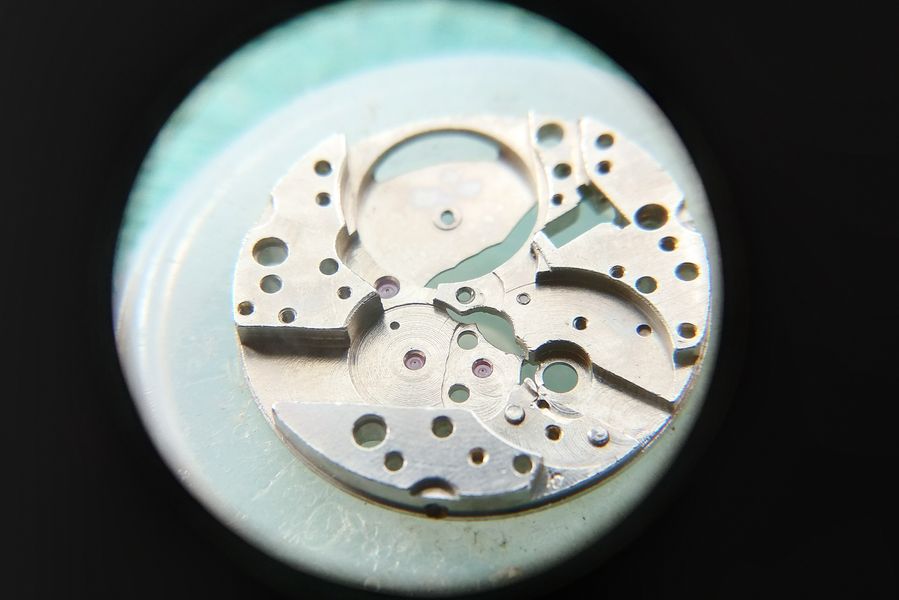
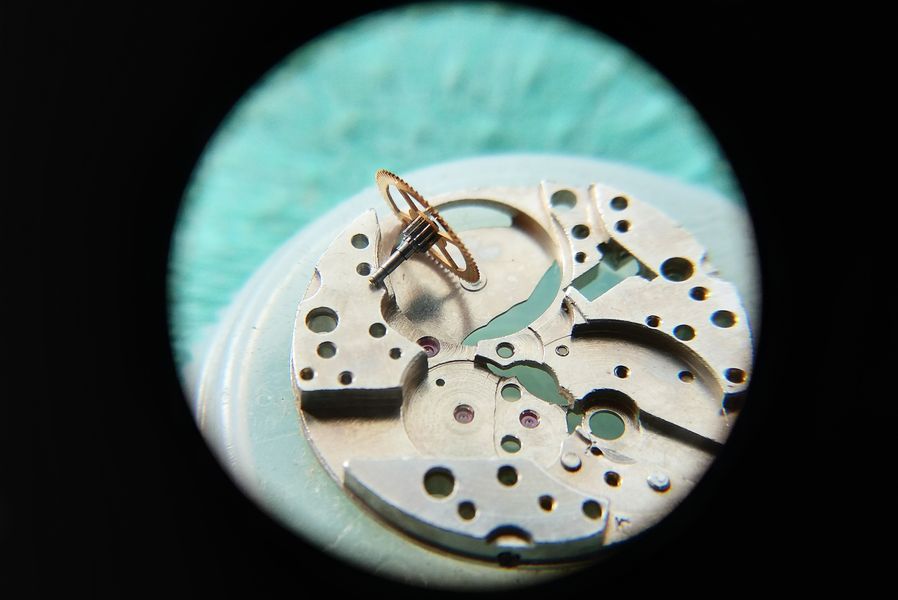
The center wheel goes onto the plate.
The jewel of the center-wheel bridge is lubricated with MBP-12.
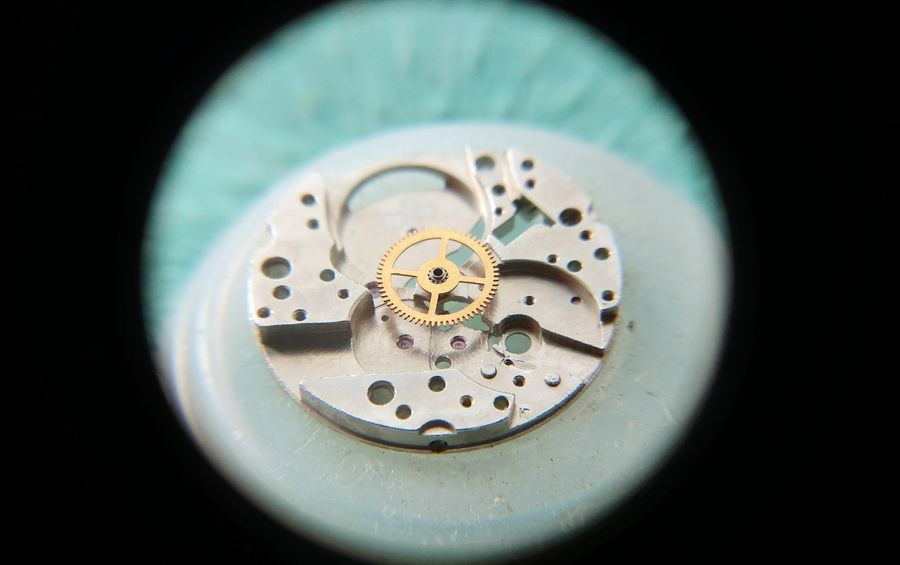
The center-wheel bridge is fitted. The wheel turns freely. Excellent.
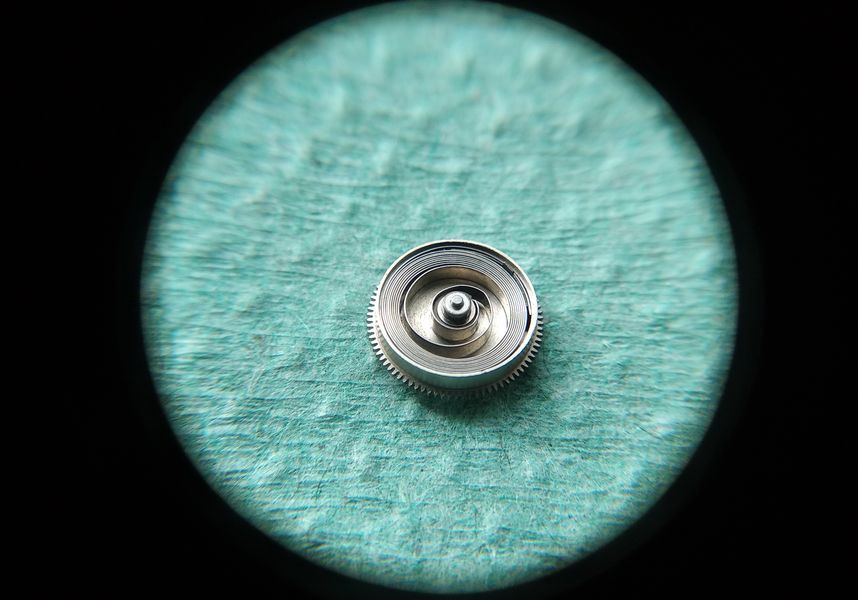
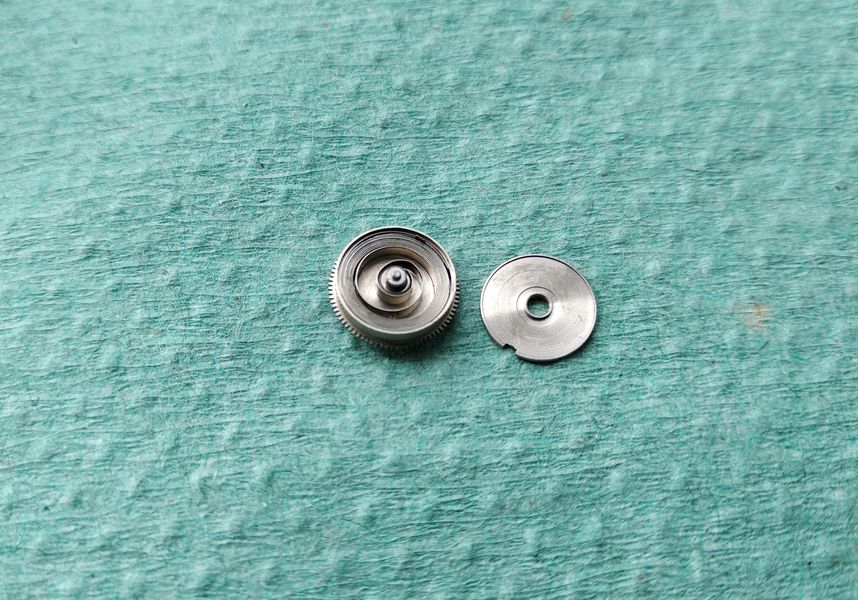
Now the barrel, washed and free of every trace of old grime. Look how clean it is. The mainspring is given several drops of precision-mechanism oil.
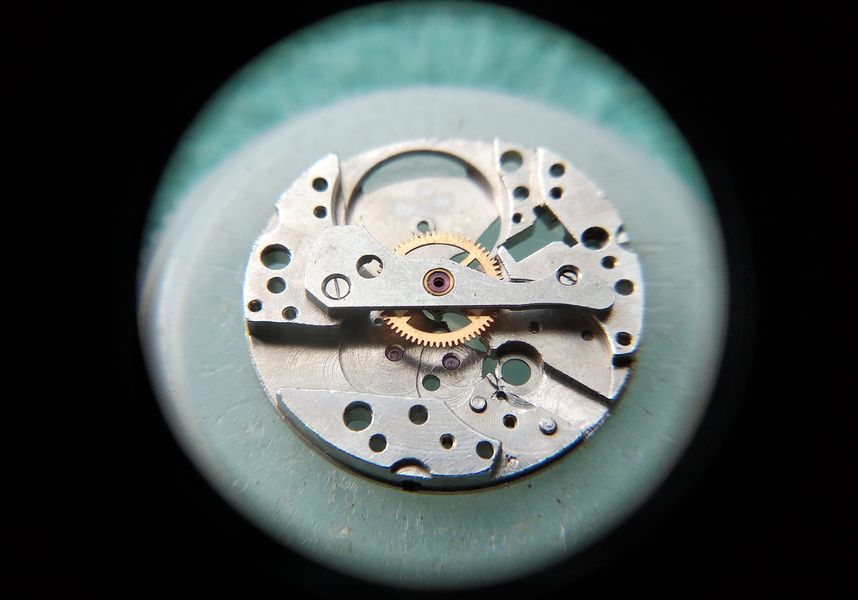
The barrel lid is pressed home.
And the barrel is set on the plate, its arbor oiled beforehand. There are neither jewels nor hardened inserts in the plate or in the barrel bridge, but both carry substantial bosses — and so the seats show no wear.
The seat in the barrel bridge is oiled.
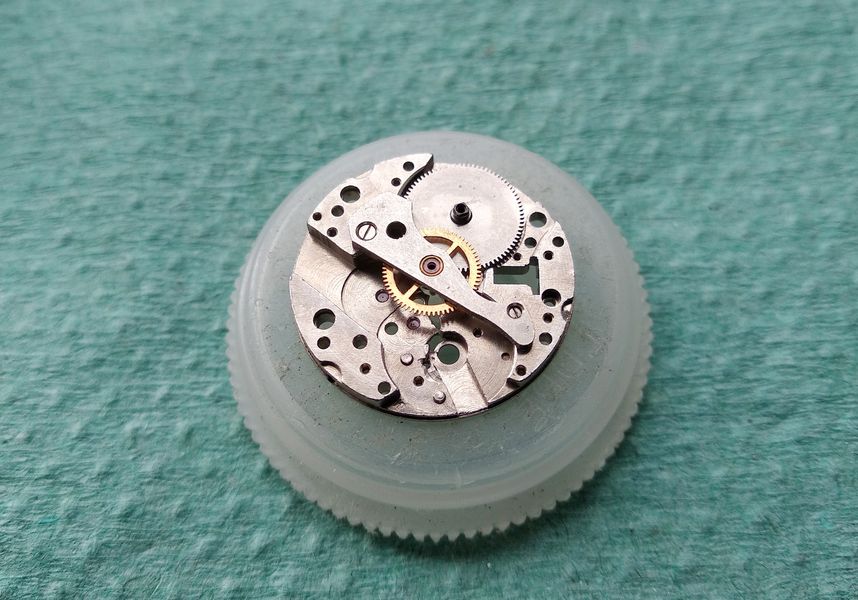
An important reminder before the barrel bridge goes on: do not forget to set the stem-release button of the keyless works in place.
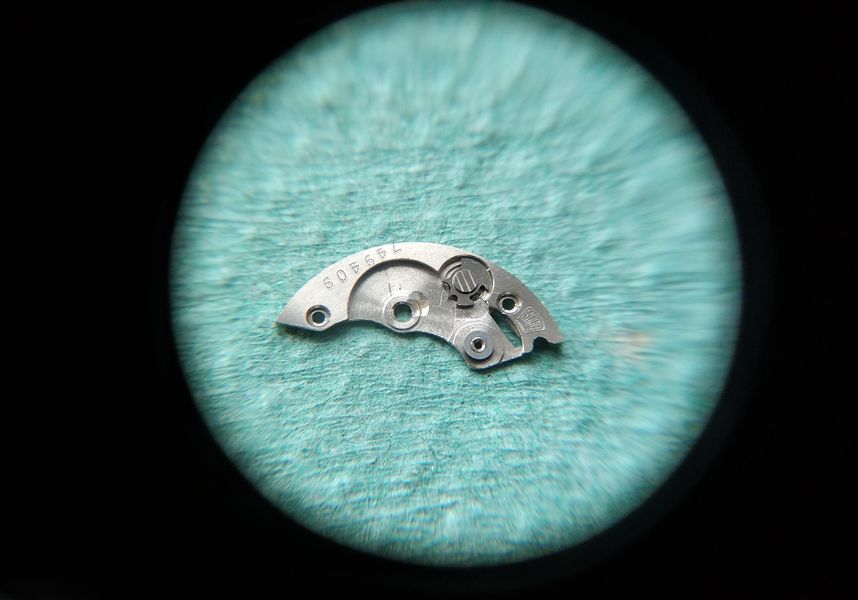
Now the barrel bridge is returned to its place and the train of winding wheels is installed. As a reminder, the crown wheel is secured by a left-hand-thread screw — note the three slots in its head. That is the one.
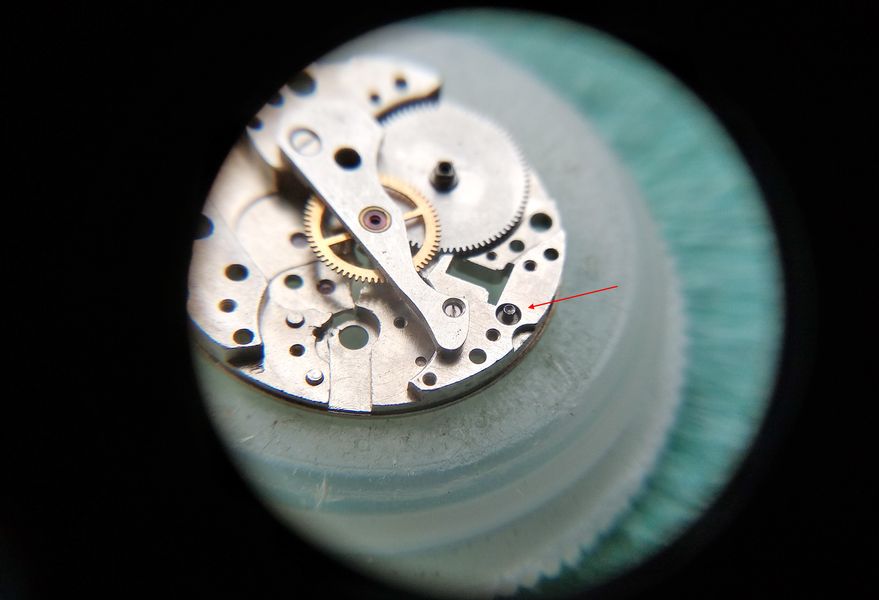
Reassembly: The Slow Side and Keyless Works
The movement is turned over and assembly of the slow side begins.
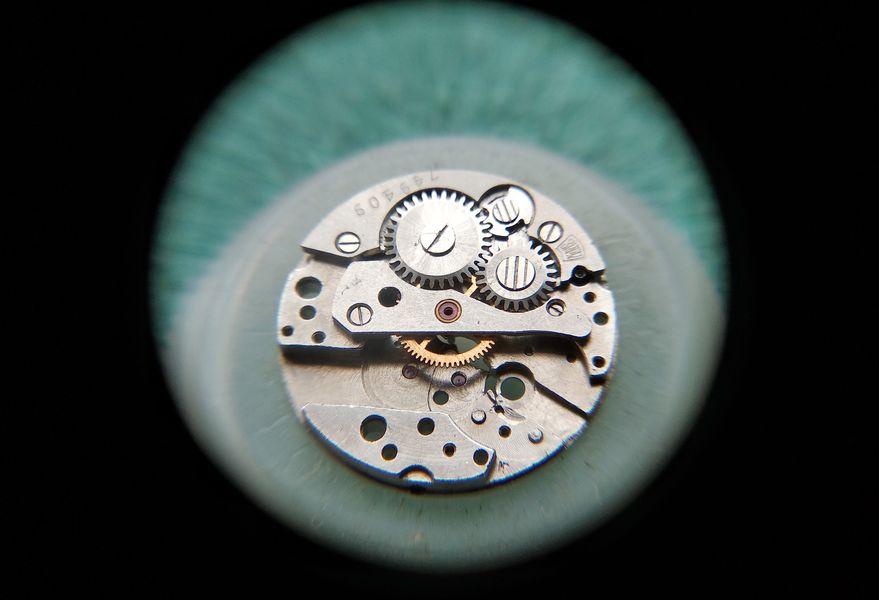
First on this side goes the cannon pinion, fitted before anything else so the minute wheel cannot be damaged later in the build.
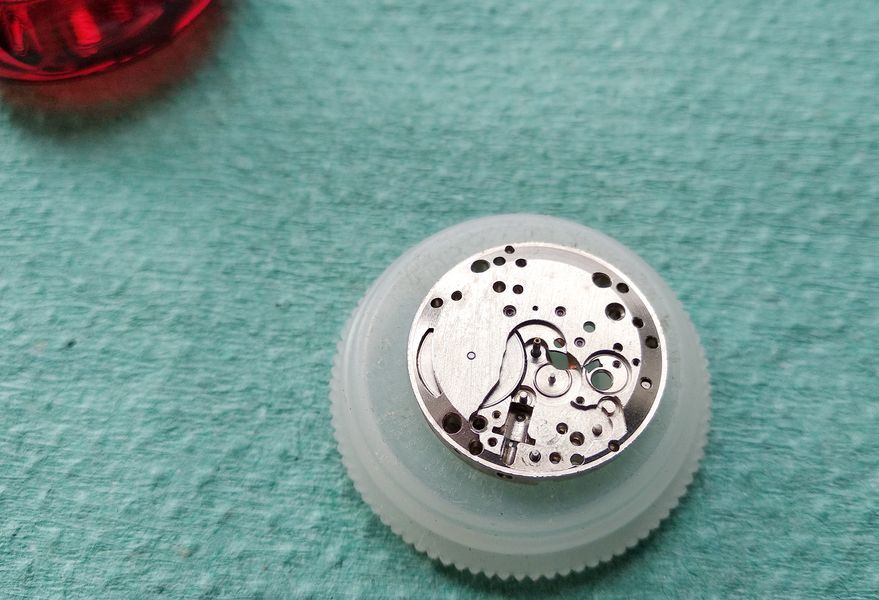
Now the small setting wheel — and here there is a subtlety. Look at its end face. On this side it is perfectly flat, machined square at ninety degrees.
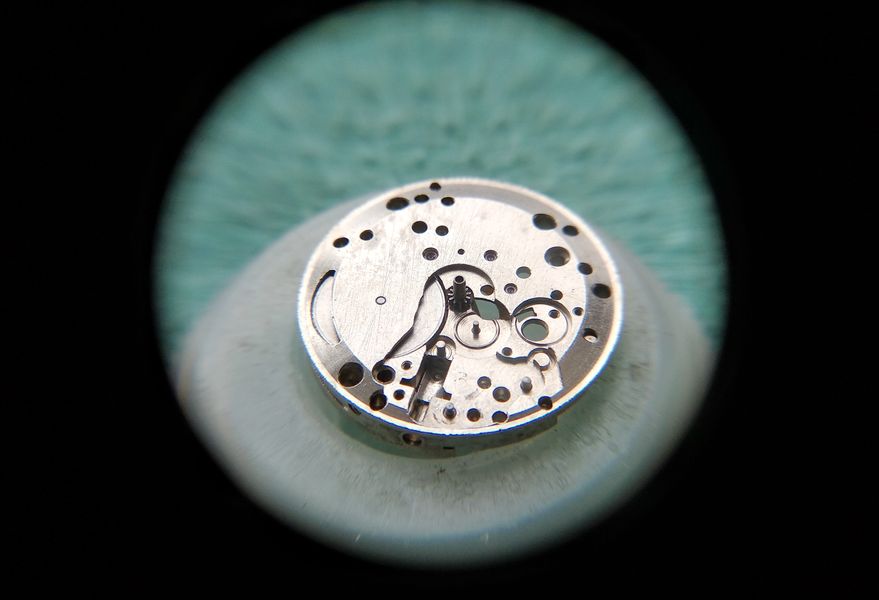
On the other side that same face is machined at an angle, as a chamfer. Why? Because it is this chamfered edge that engages the teeth of the sliding clutch when the hands are set by hand. The setting wheel must therefore go in with the chamfered side facing the sliding clutch — which, in this movement, means facing down toward the plate. This, incidentally, holds true for most movements; it is a point I had long overlooked and never mentioned in earlier accounts.
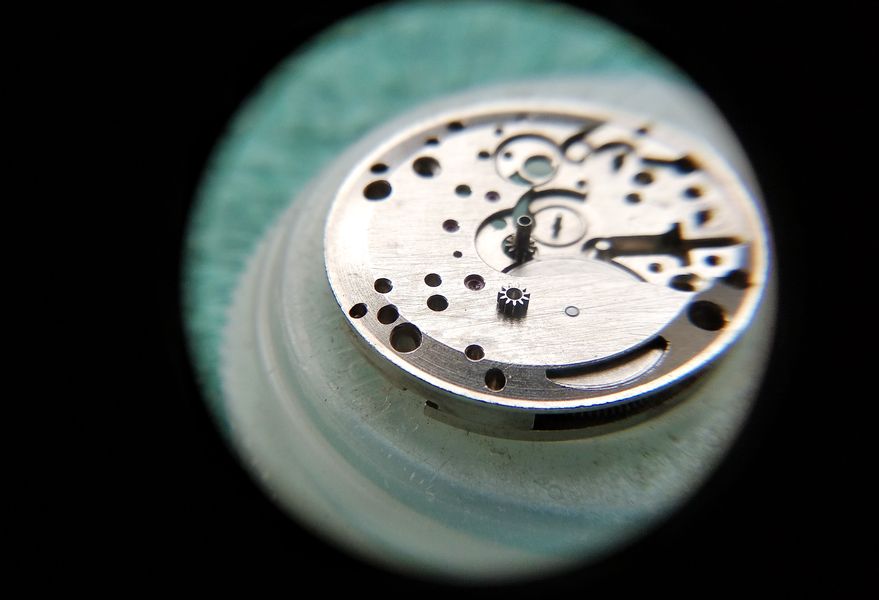
The keyless-works parts are returned to their places. Here is the assembly in the photograph. It only remains to lubricate it and cover it with its spring plate — and yes, a sound replacement plate was tracked down in the spares. It is remarkable what turns up when you scrape the bins and rummage the shelves.
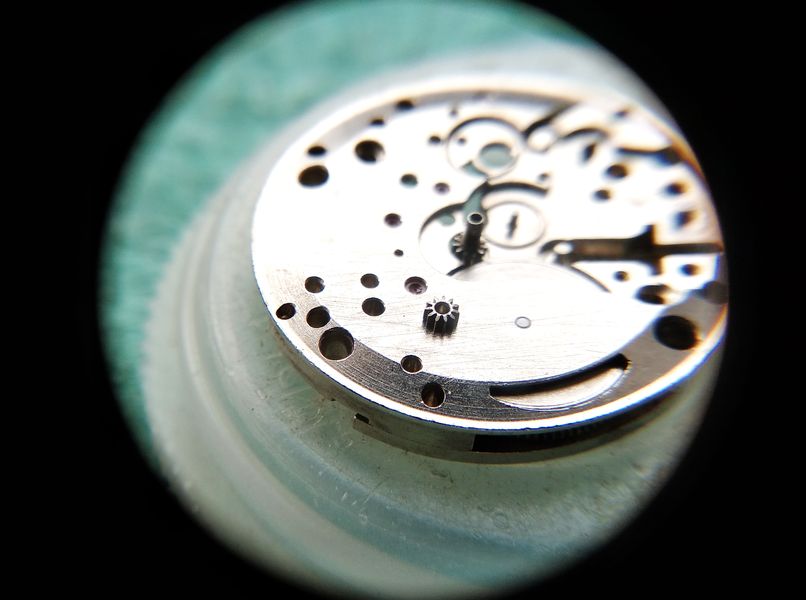
And the keyless works is covered. With nothing more to do here for now, we move to the fast side to build up the train.
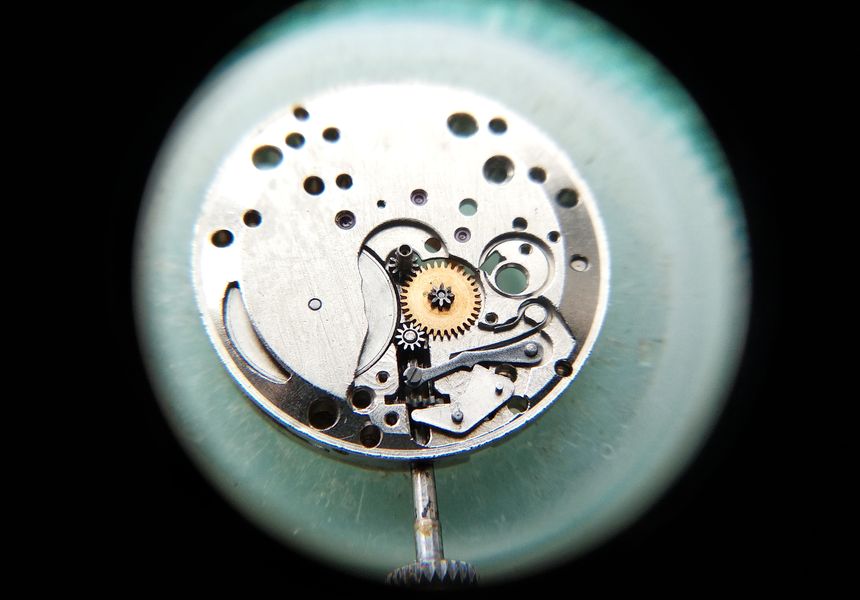
Reassembly: The Going Train
What is left here is to set the train wheels, the gear-train bridge, the pallet fork, and the balance.
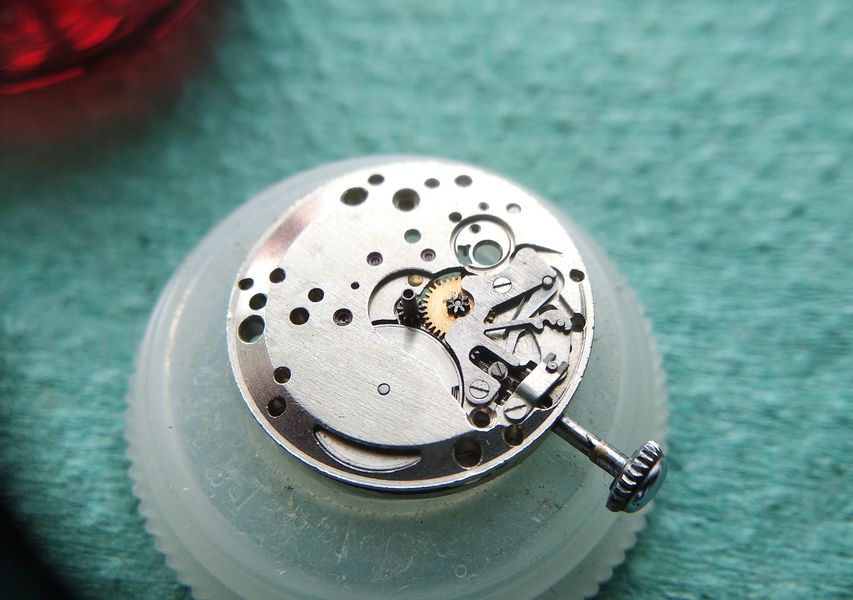
The wheels go in starting with the escape wheel, then the intermediate wheel, and finally the seconds wheel.
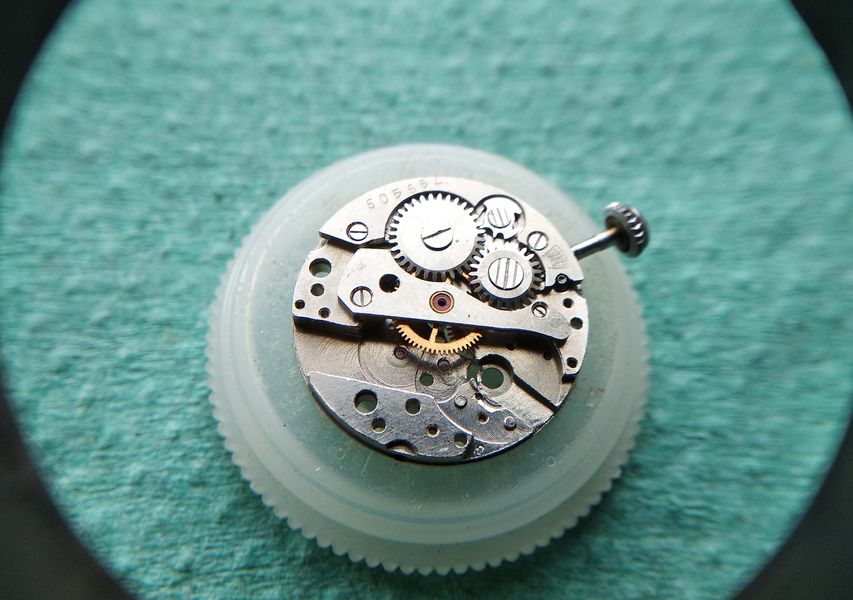
The gear-train bridge is fitted over the train and the jewels are oiled.
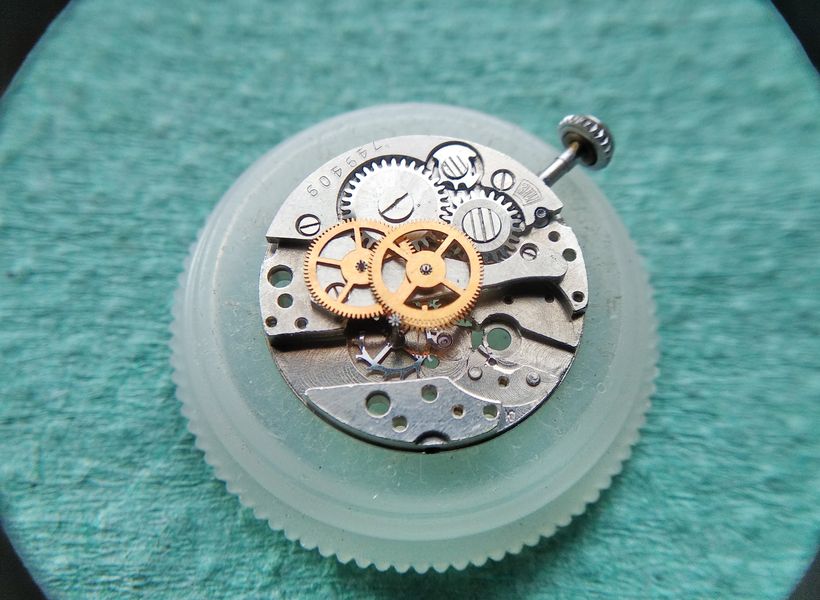
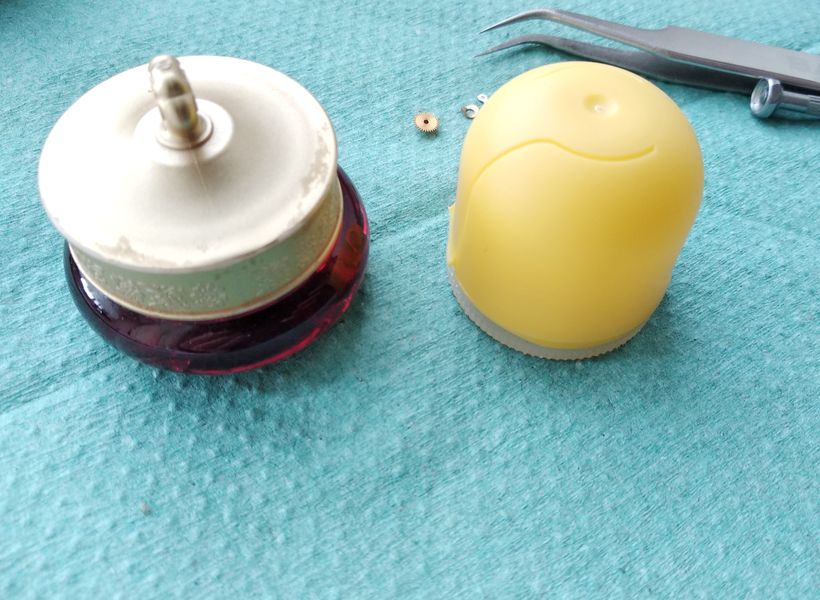
A word on procedure here. Once the movement has been oiled it should not be left open for long, because dust will settle onto the lubricant — and that does no good at all. If the work has to be interrupted, the movement should be covered. For this I have pressed a Kinder-egg capsule into service; it fits just right. A short break, and we continue in half an hour.
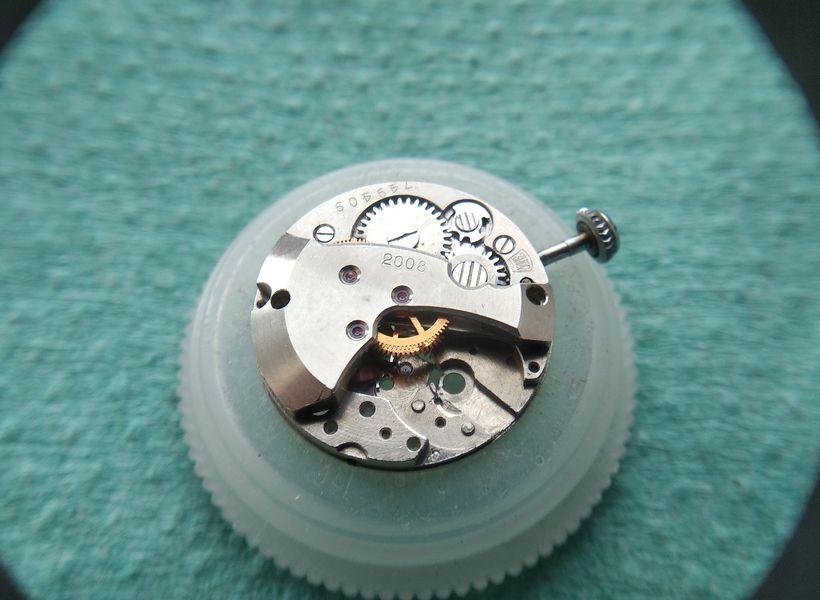
Continuing. First the run-down is checked, and it is superb — the train coasts back some twenty turns. Then the pallet fork is installed; the mainspring is wound a couple of turns and the impulse tested by nudging the fork, which should snap smartly to its banking on its own. The impulse is checked in both directions. All good.
The Bushings Explained, and the Balance Refitted
And so to the bushing. First it is set on the plate and secured with its screw.
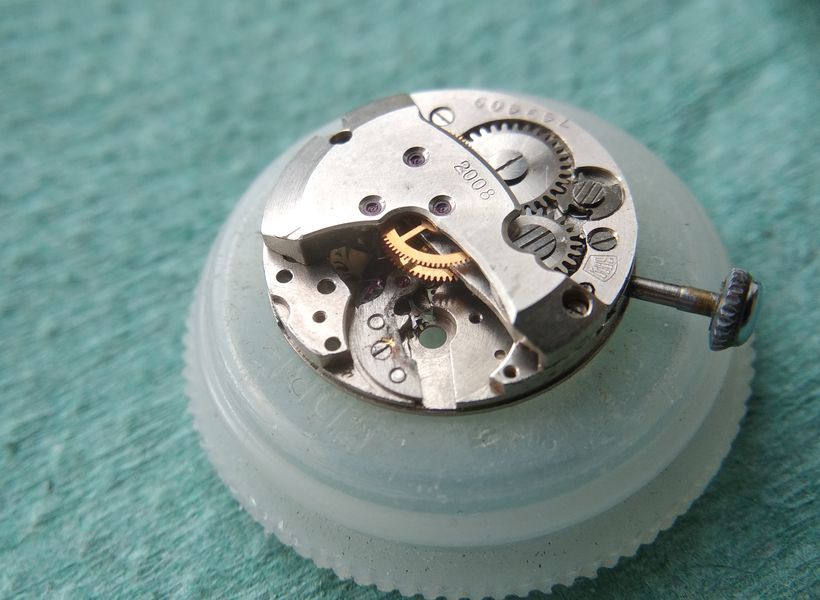
Now the spring that retains the cap jewel is swung aside. As you can see, it is captured in its frame and will not fall out as you work.
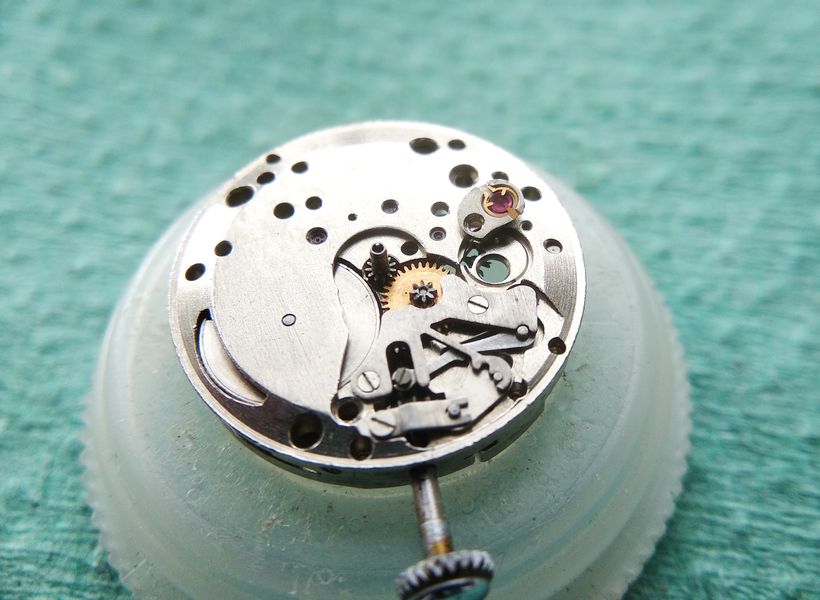
Out comes the cap jewel. There — and now look closely at how this differs from the Incabloc of the "09" calibers. In an Incabloc, the block is autonomous, with every degree of freedom: the through-jewel and cap jewel sit together in a separate chaton that can shift within its seat. In this movement — the 2008 — the through-jewel is fixed rigidly, and only the cap jewel sits under the spring. That places the design in an intermediate position between a fully shock-protected balance and an unprotected one. Vertical displacement of the balance is absorbed to some degree; lateral displacement is not. But the arrangement should, in principle, prevent the "mushrooming" peen on the balance pivot — that classic ailment of the Pobeda, the Molnija, and their kin. Hence the "08." A step forward all the same.
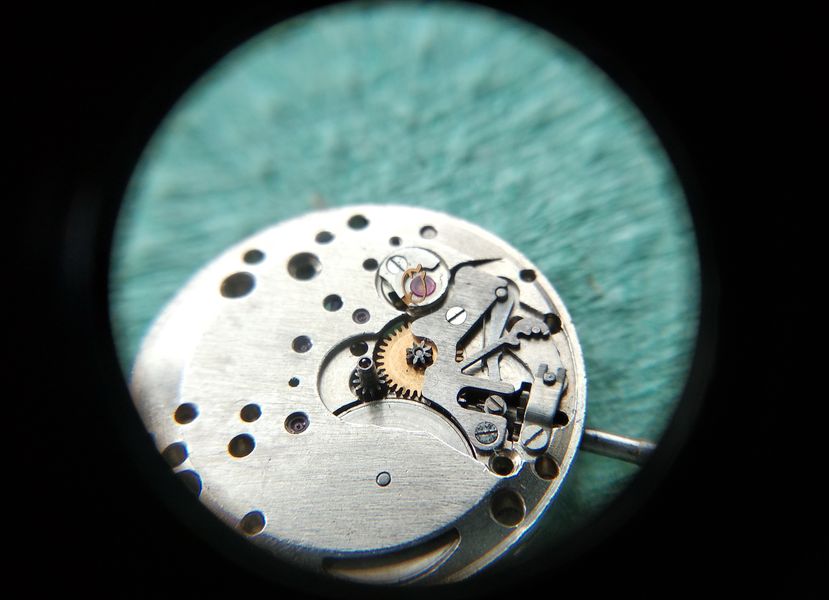
Carrying on, the cap jewel is oiled. The rule was stated earlier — a droplet covering sixty to seventy percent of the surface.
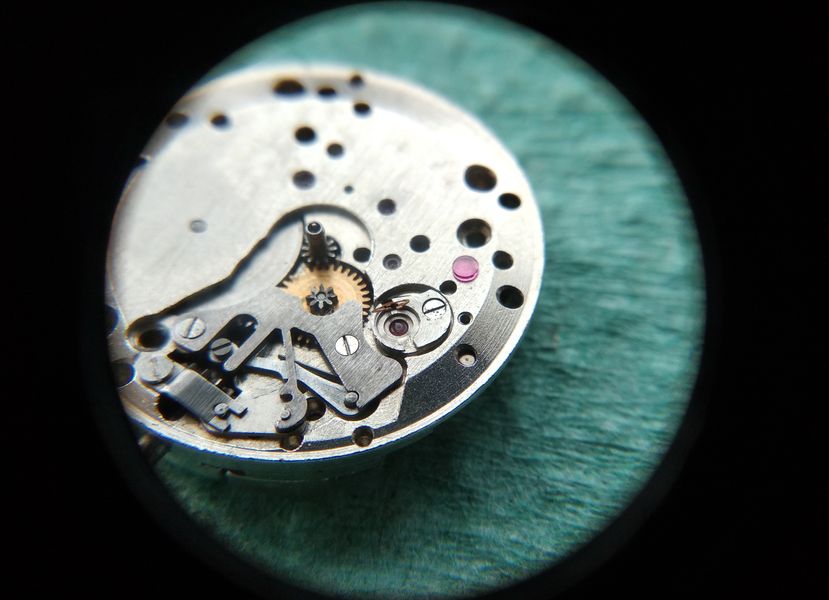
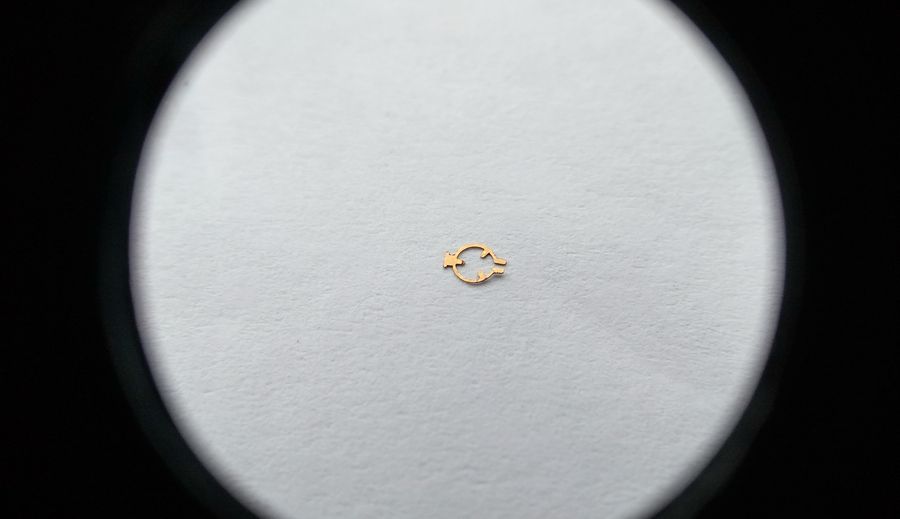
Let us look at the bushing spring more closely. The small ears by which it is anchored are clearly visible. These ears act as pivots: the spring swings open on them to give access to the cap jewel, yet never parts company with the bushing.
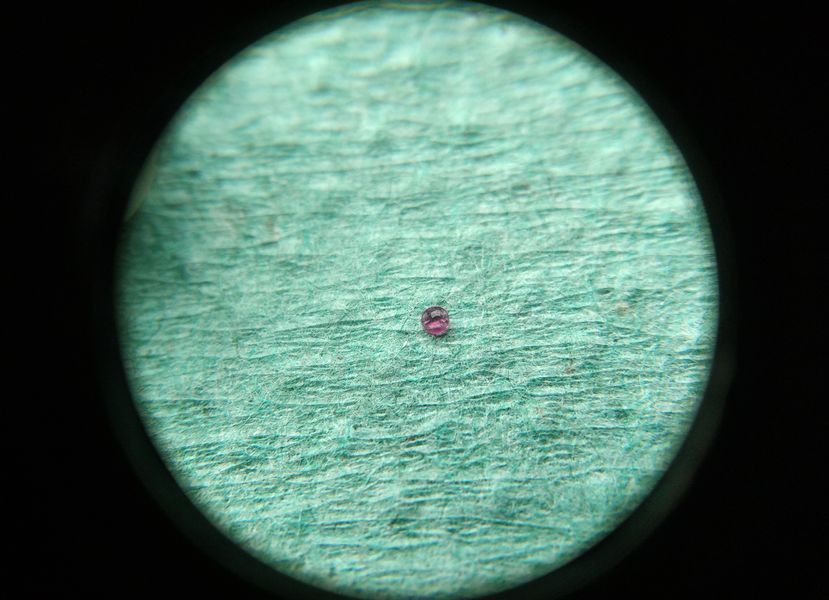
Done. The unit is serviced. The balance can go in.
With the balance installed, the same procedure is repeated on the upper bushing. Open the spring.
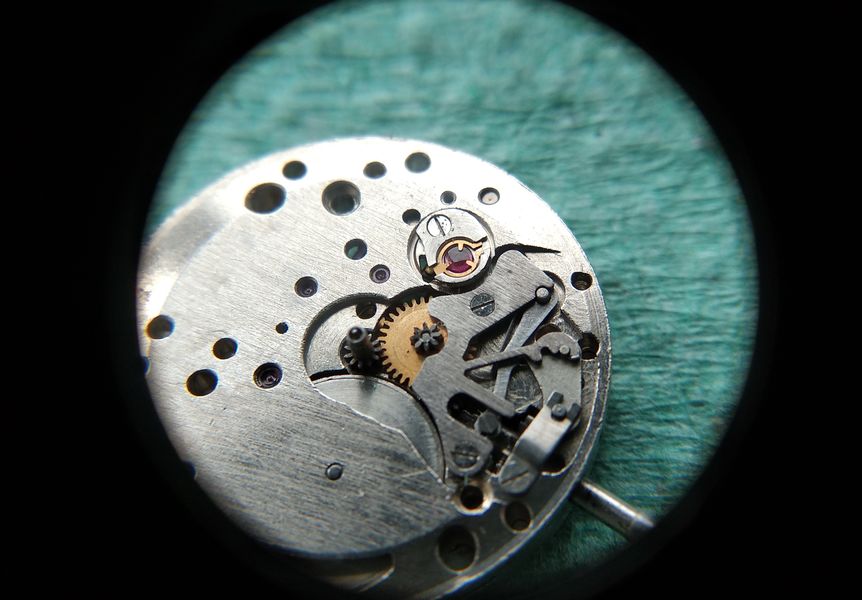
The cap jewel is cleaned and oiled.
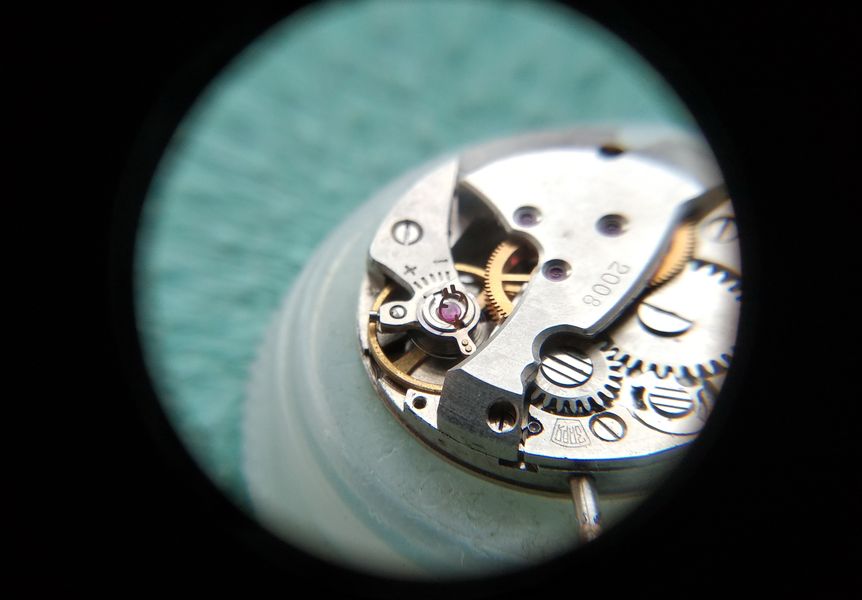
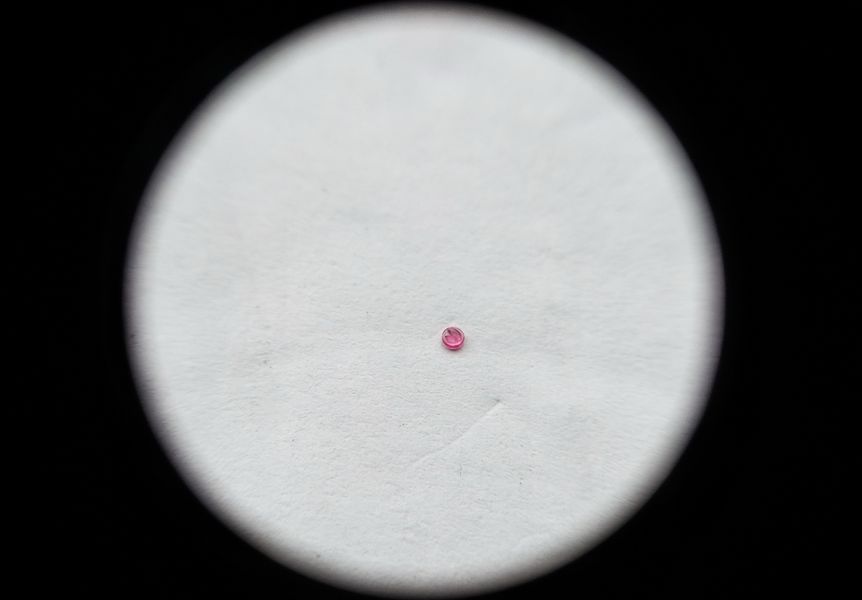
The through-jewel hides down in its seat; the oiled cap jewel is returned over it.
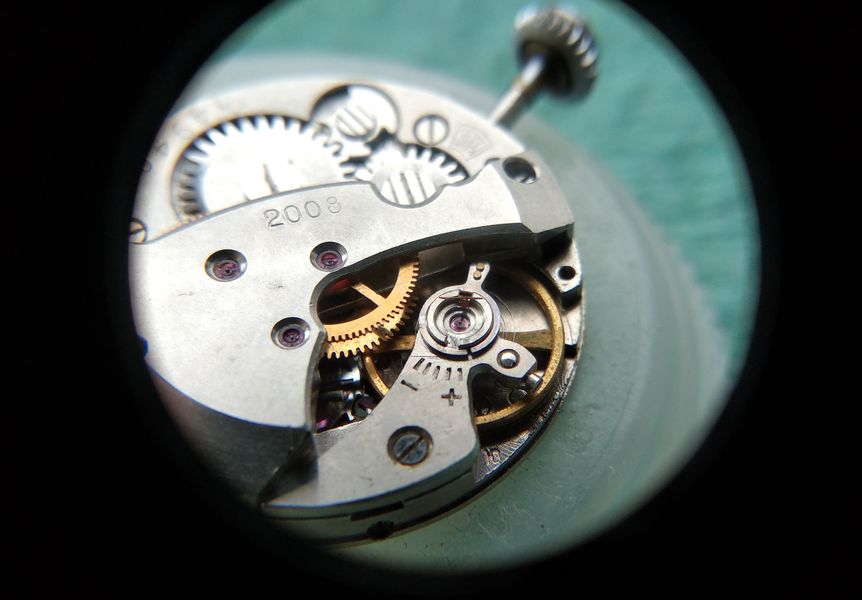
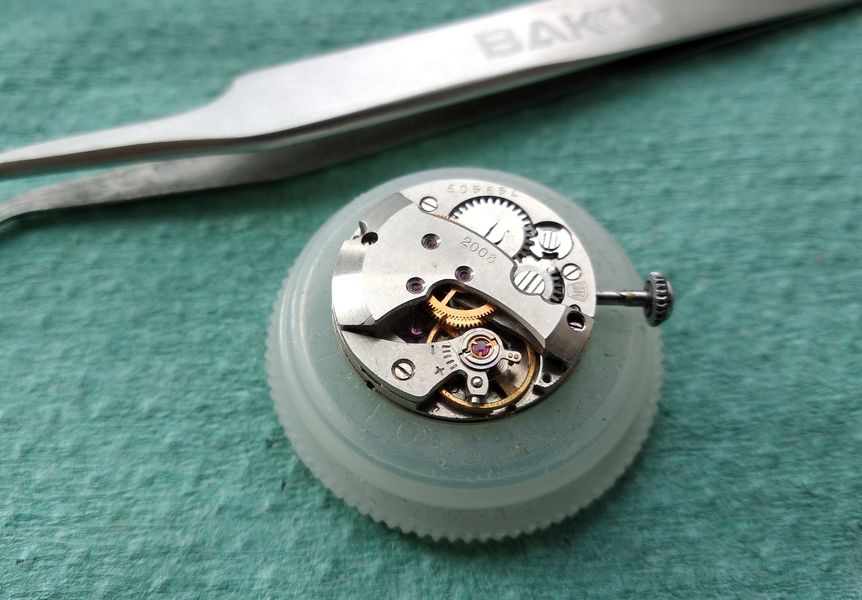
Done — and the watch is running.
Casing Up
Now the "trim." The cleaned dial is fitted back onto the movement.
Like so.
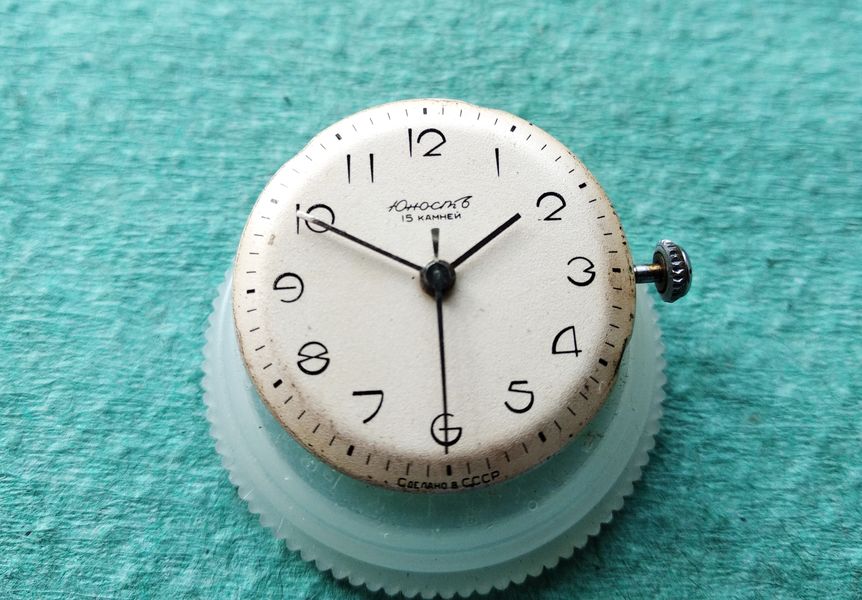
The hands are set back in place.
As for the case, there is no bringing it to wearable condition at home. It has been cleaned as far as that is possible. But as a curiosity — a movement unlike the others — it is perfectly suited to a collection. Not many people, I suspect, know about these little tricks of the trade.
The movement is installed back into the case.
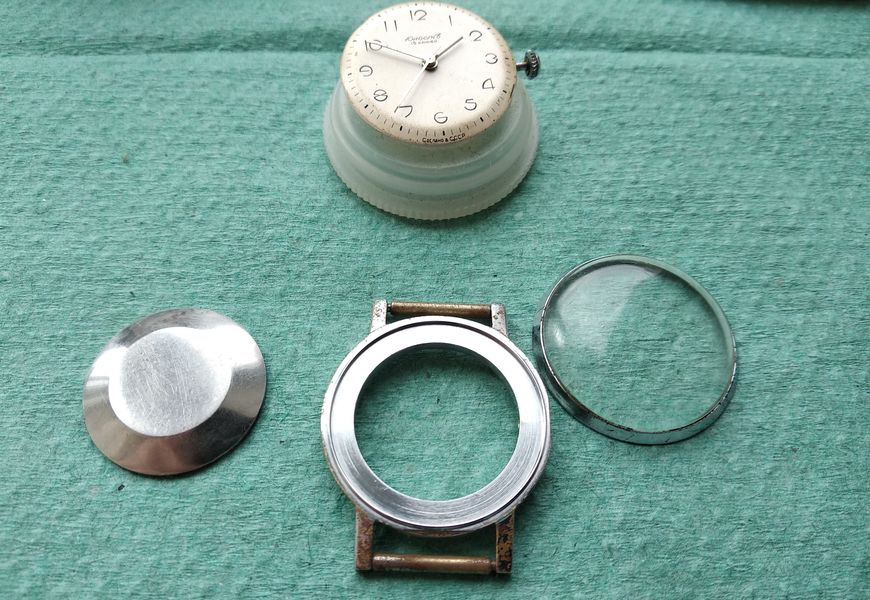
The crystal, for its part, polished out nicely.
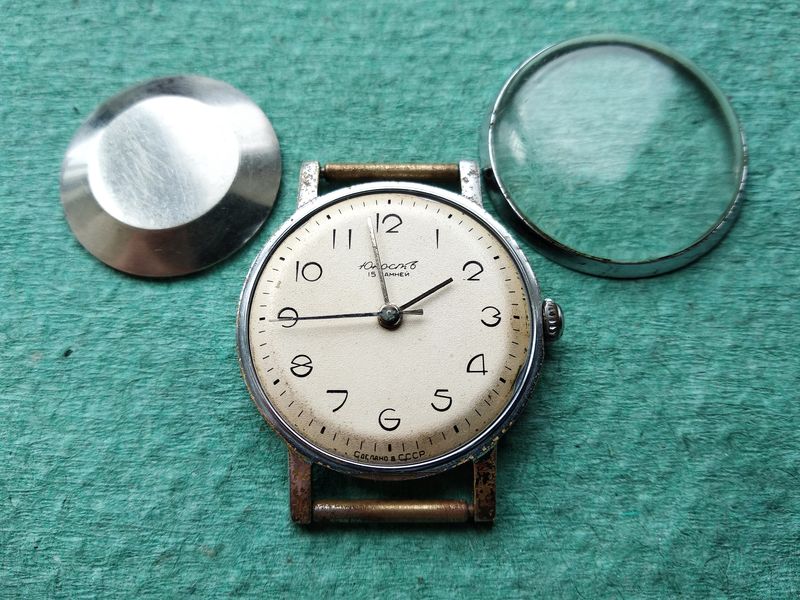
The case back is snapped closed.
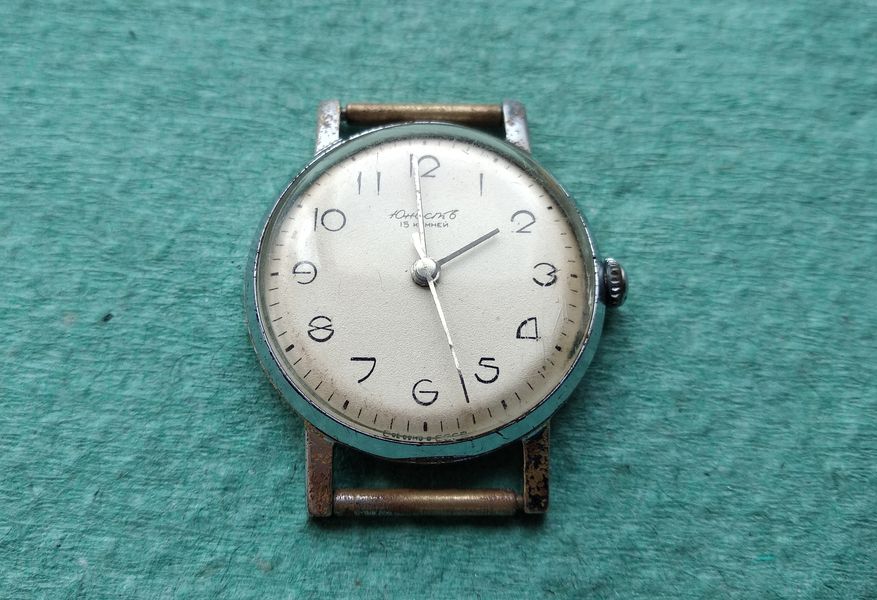
Like this.
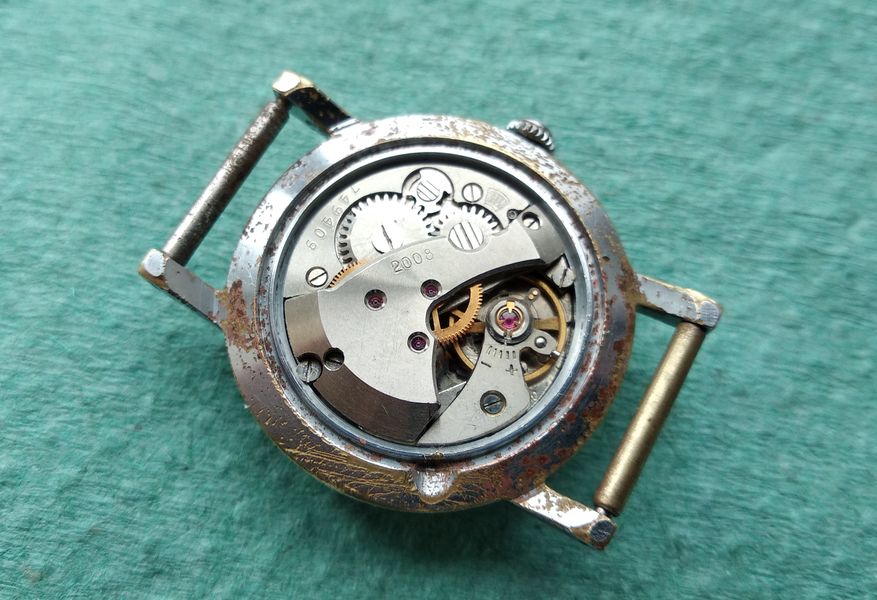
And here is the flat on the crystal bezel — far easier to make out now that the case has been cleaned.
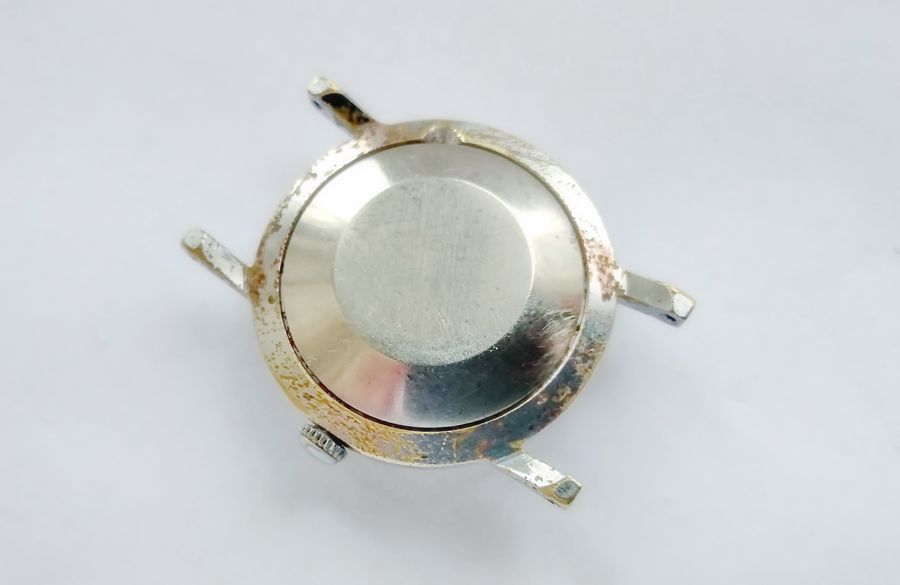
And that is all.
An ordinary youth's watch, then — and an extraordinarily instructive one. The Yunost on the Zarya 2008 looks like nothing special, yet it preserves a genuine moment in the history of Soviet horological engineering: the cautious, half-step solution to shock protection, captured in a removable bushing with a captive cap-jewel spring. The factories would soon resolve the question fully with the Incabloc-equipped "09" calibers, but the logic is all here on the bench, plain to read. Ah, the Yunost.
Comments
Write a comment