

Overhauling the Pobeda 2602 — A Full Strip-Down of a 1955 Soviet Fifteen-Jewel Caliber
"A movement that has served more than seventy years and still keeps these numbers is already a small miracle. The rest is just understanding why it wore where it did."
— Igor, watchmaker
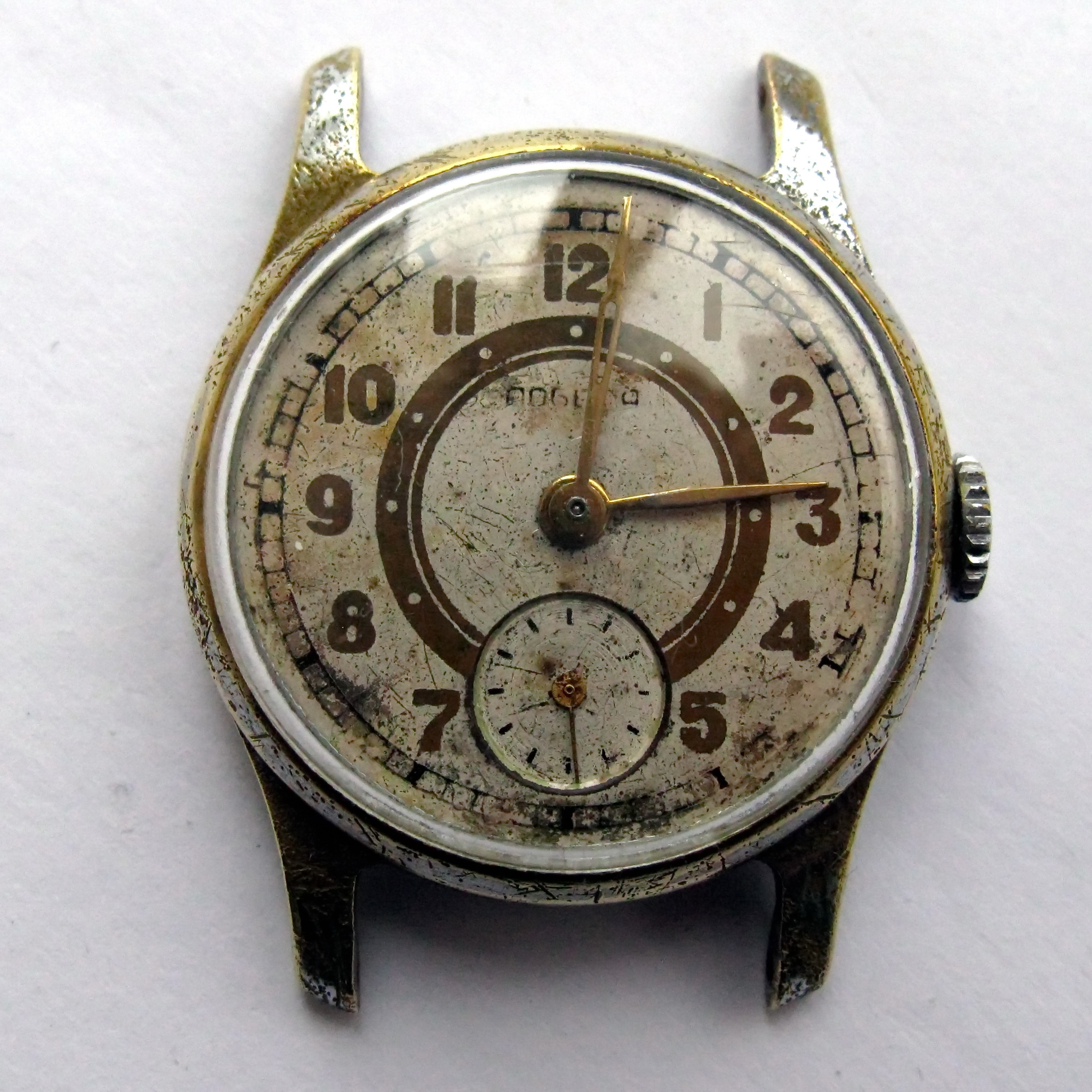
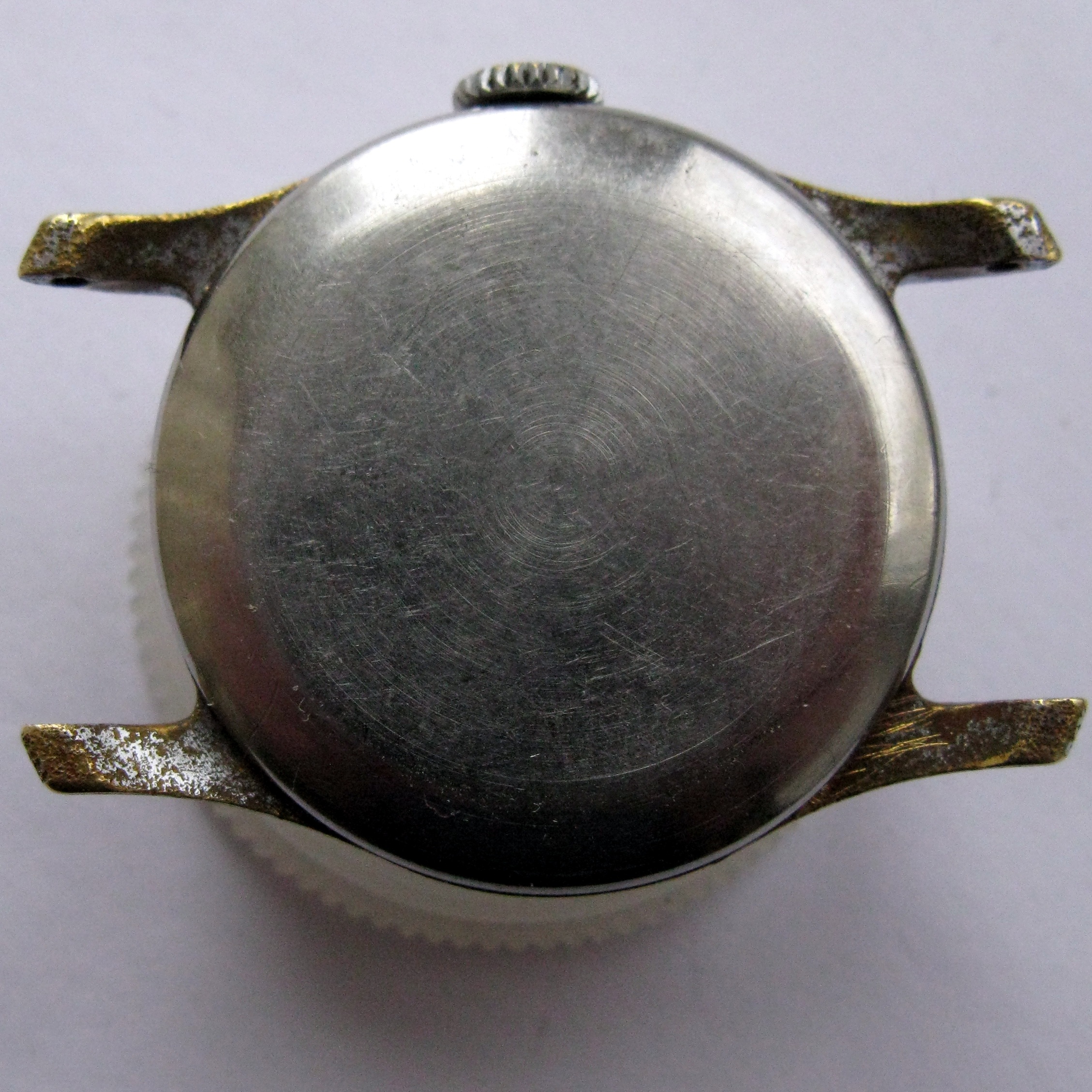
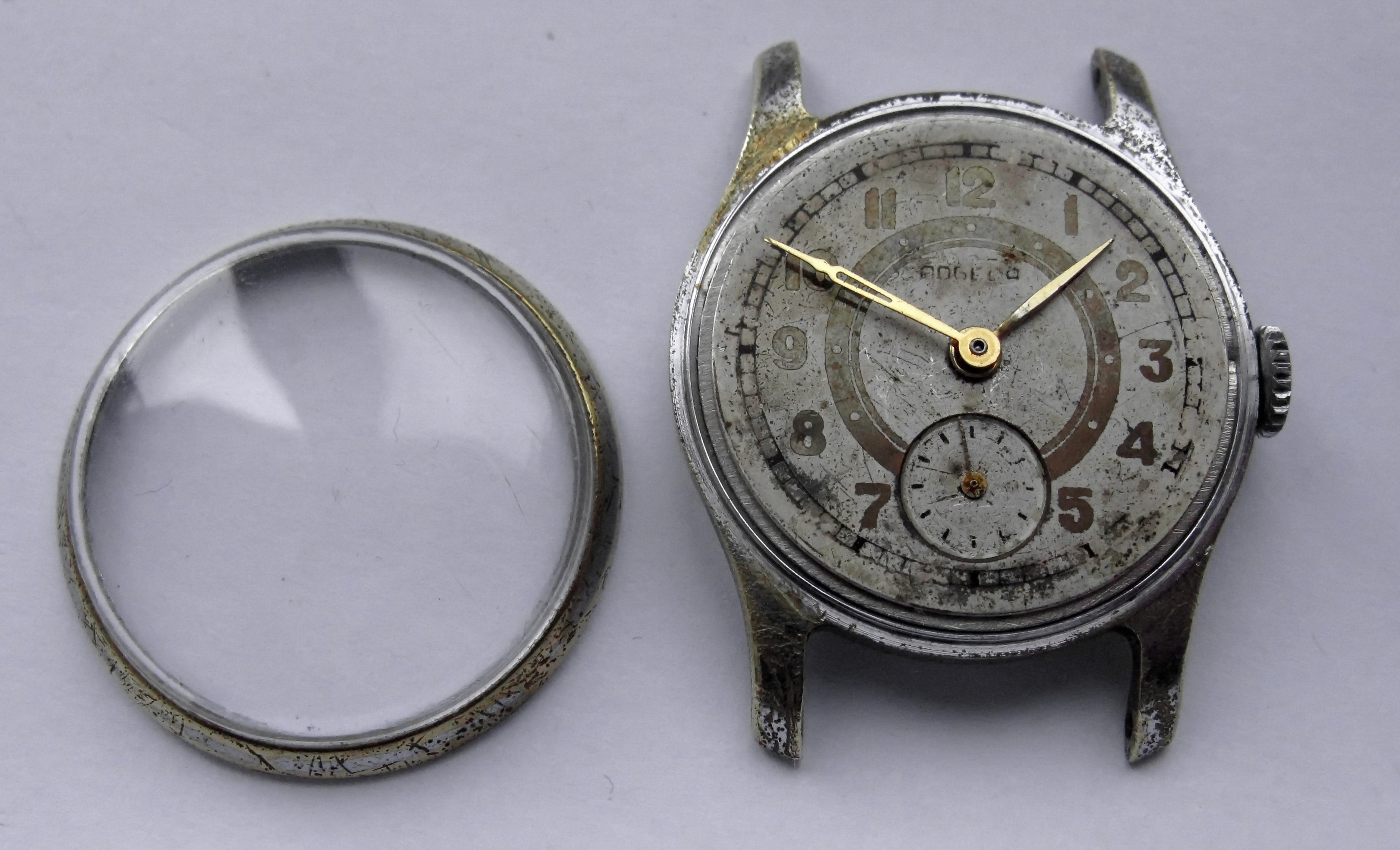
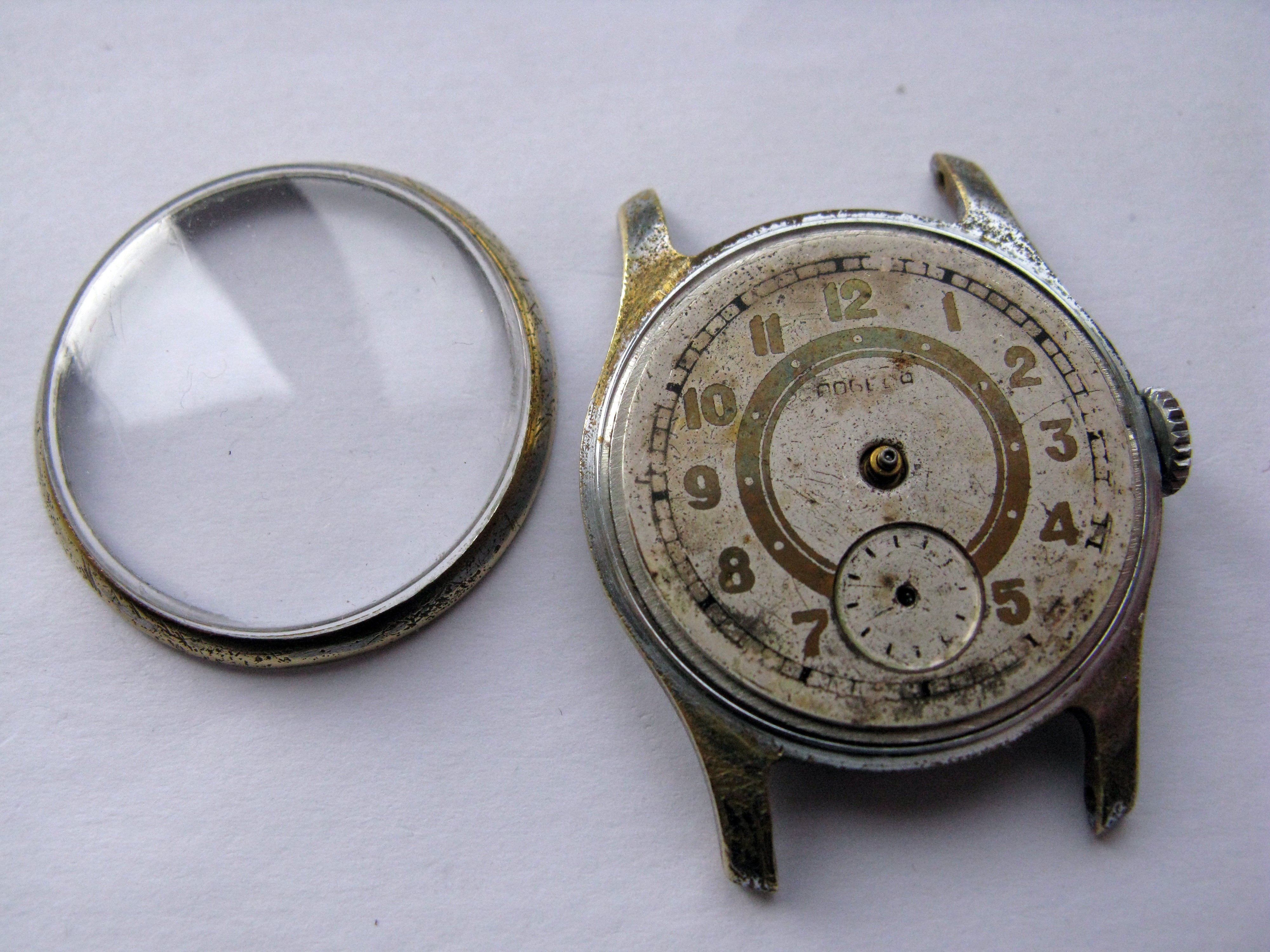
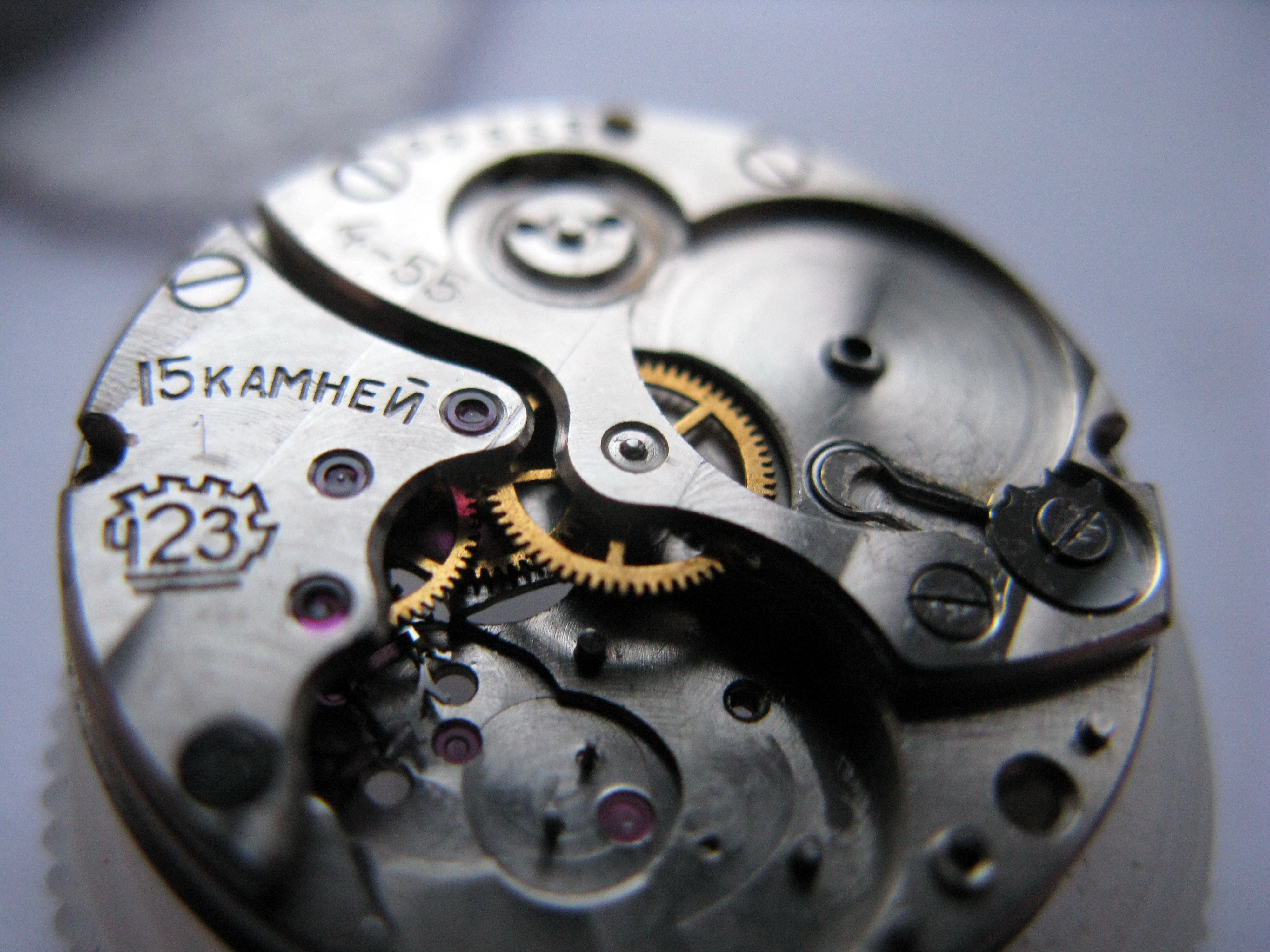
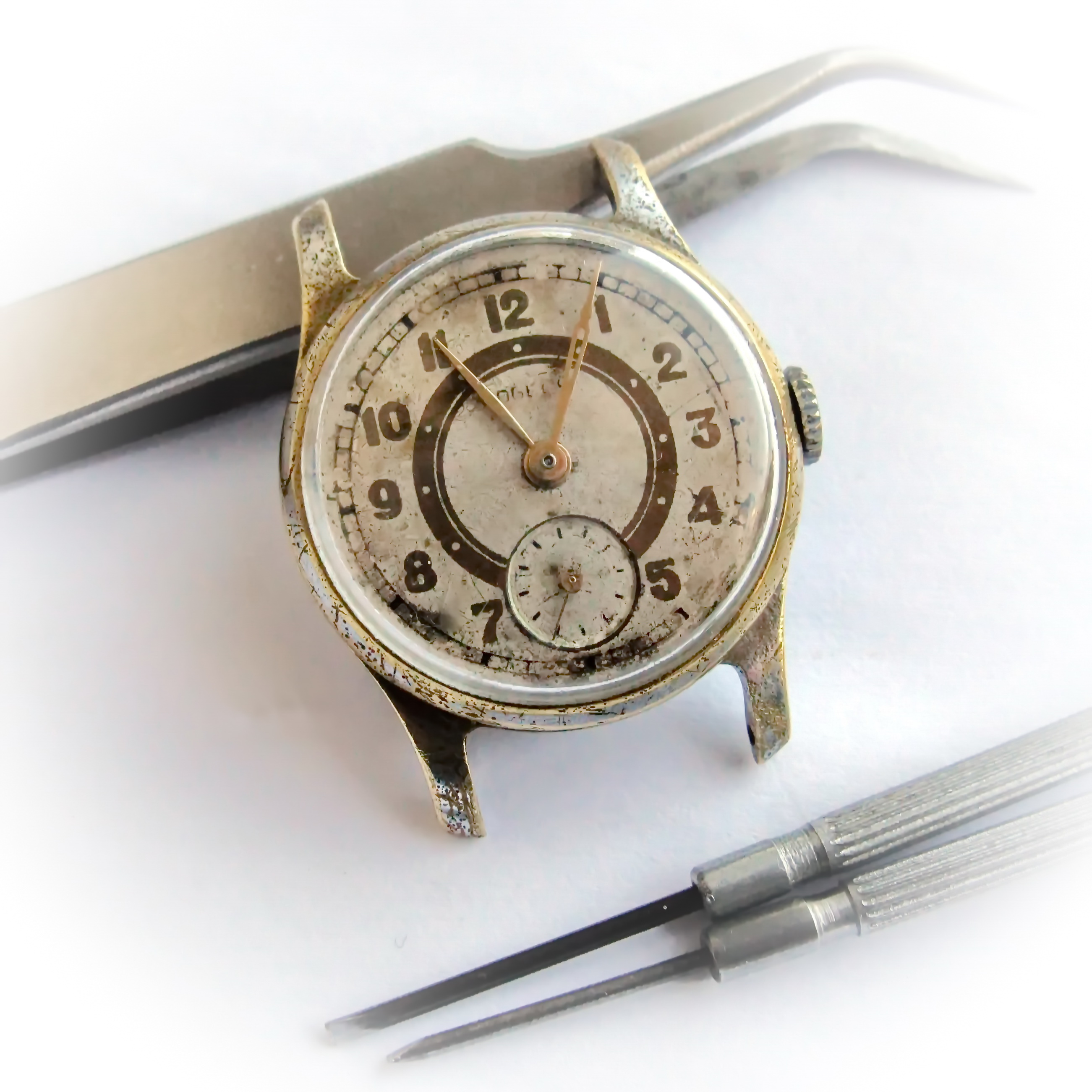
This is a complete service of a Pobeda on the 2602 caliber, built in 1955 at the Second Moscow Watch Factory. Unlike a focused look at a single sub-assembly, the goal here is the whole machine: strip it down to the last screw, clean it, lubricate it correctly, and put it back together so that a watch of more than seventy years runs as it was meant to. The example chosen was deliberately one of the rougher ones — worn, repeatedly opened over the decades, and visibly tired. That makes it the most honest teacher.
The Movement in the Open
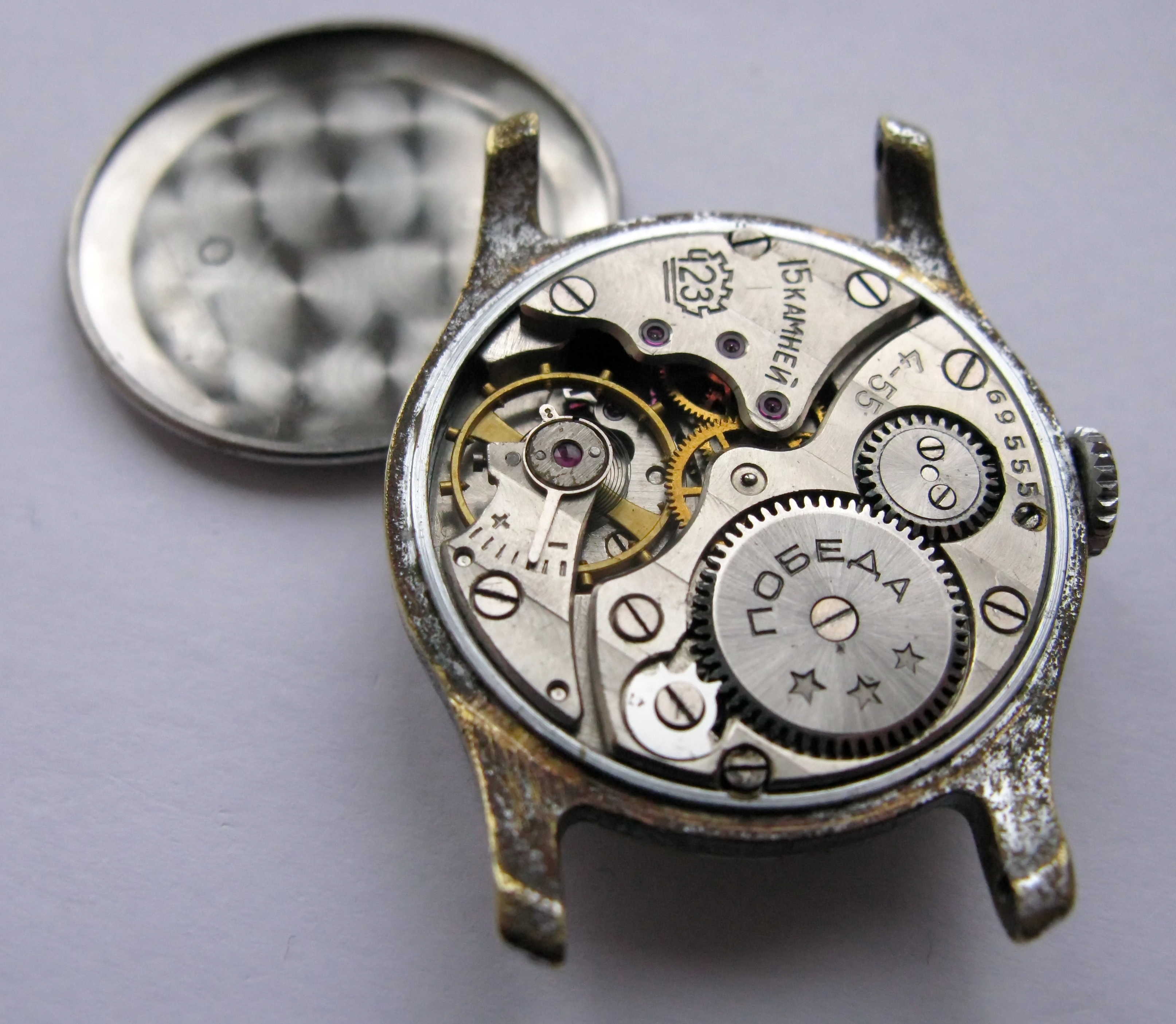
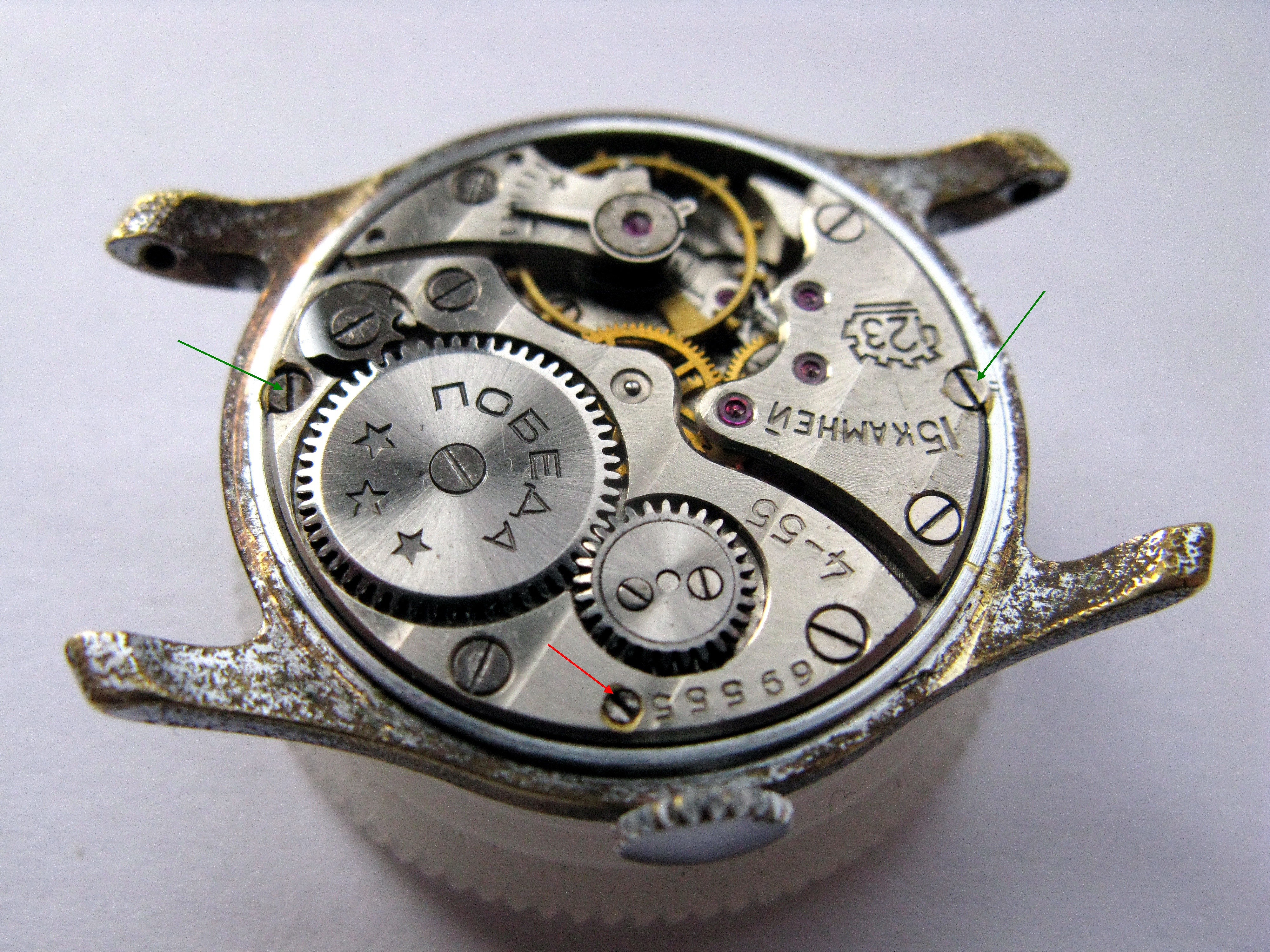
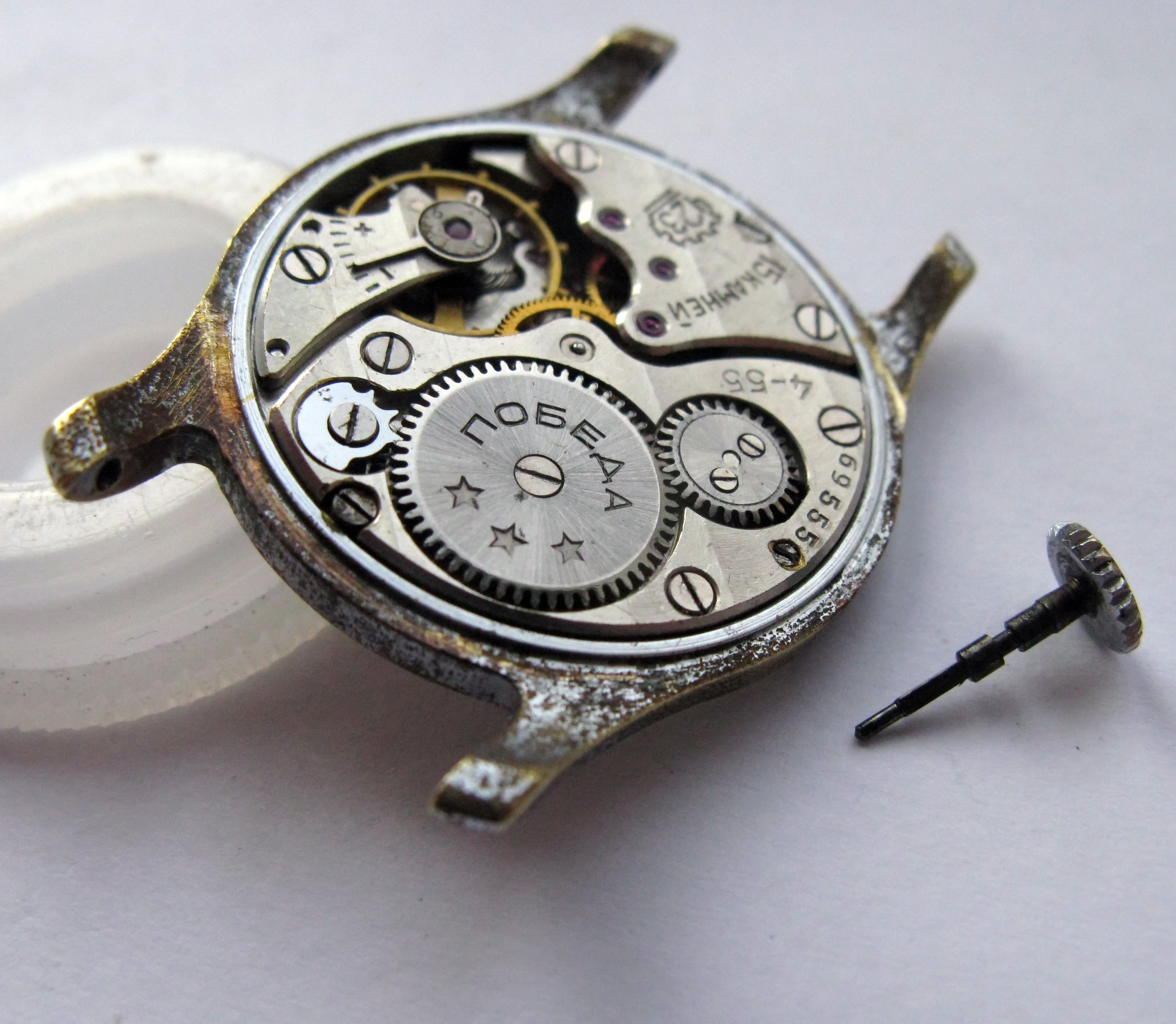
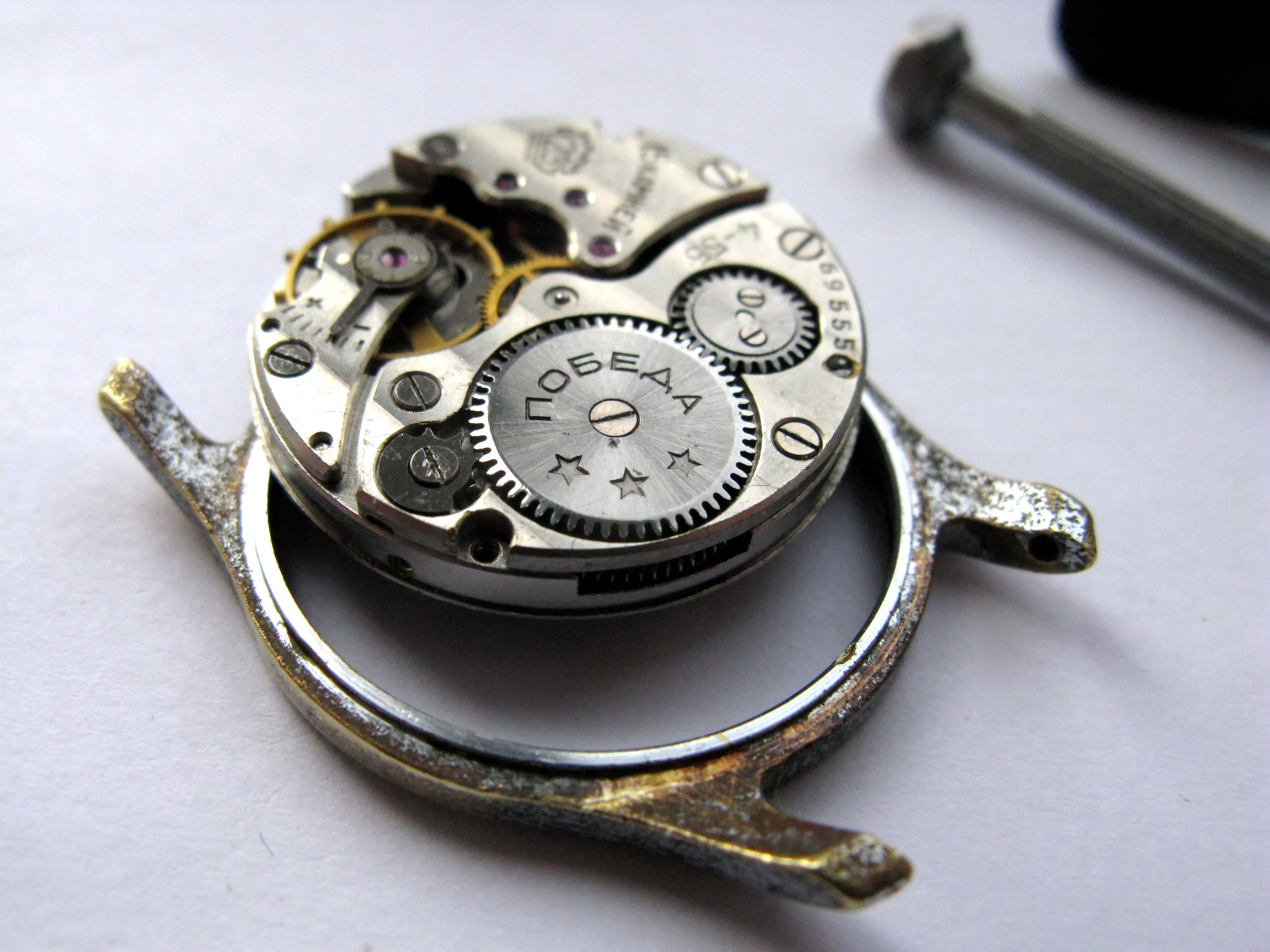
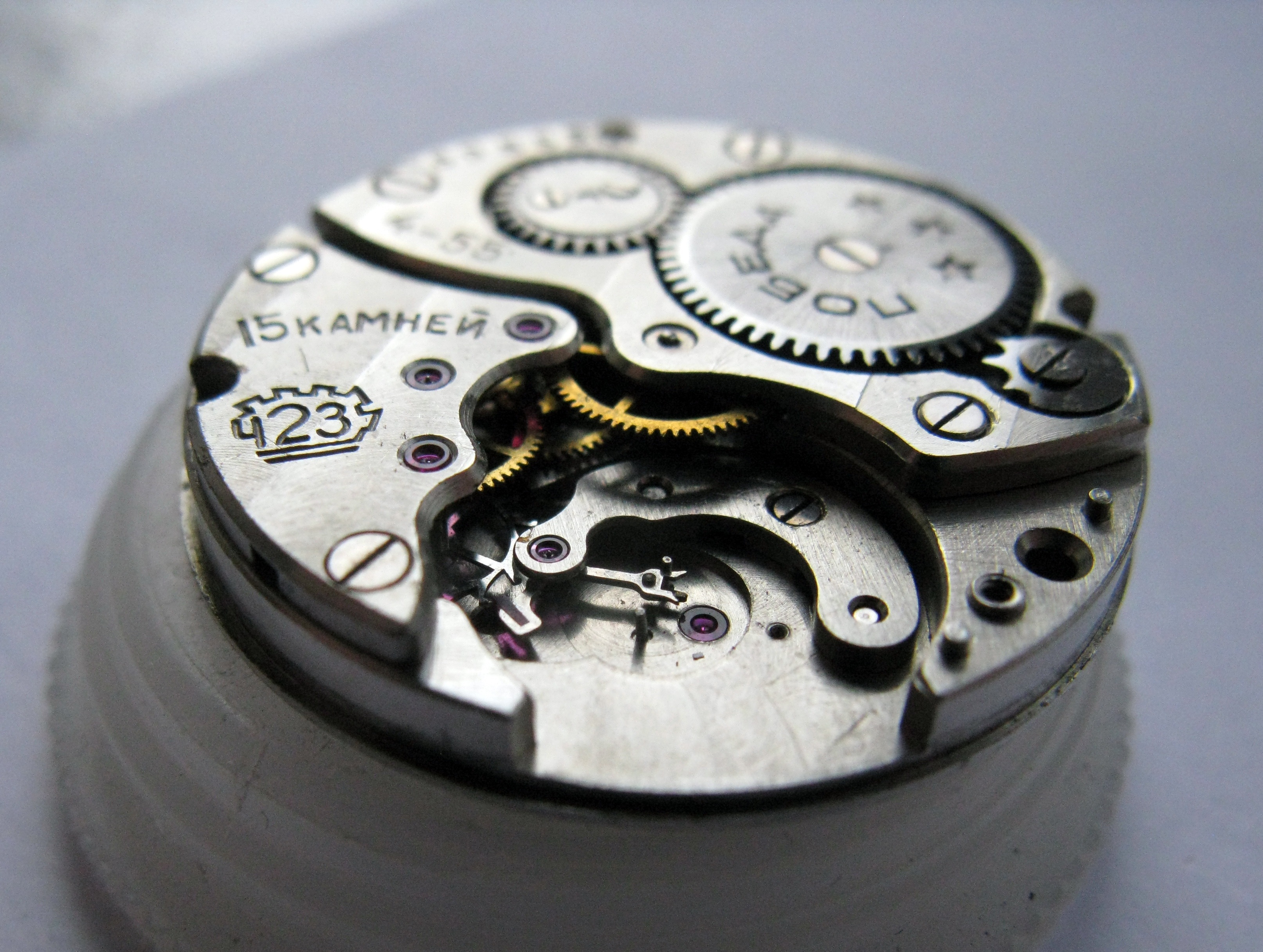
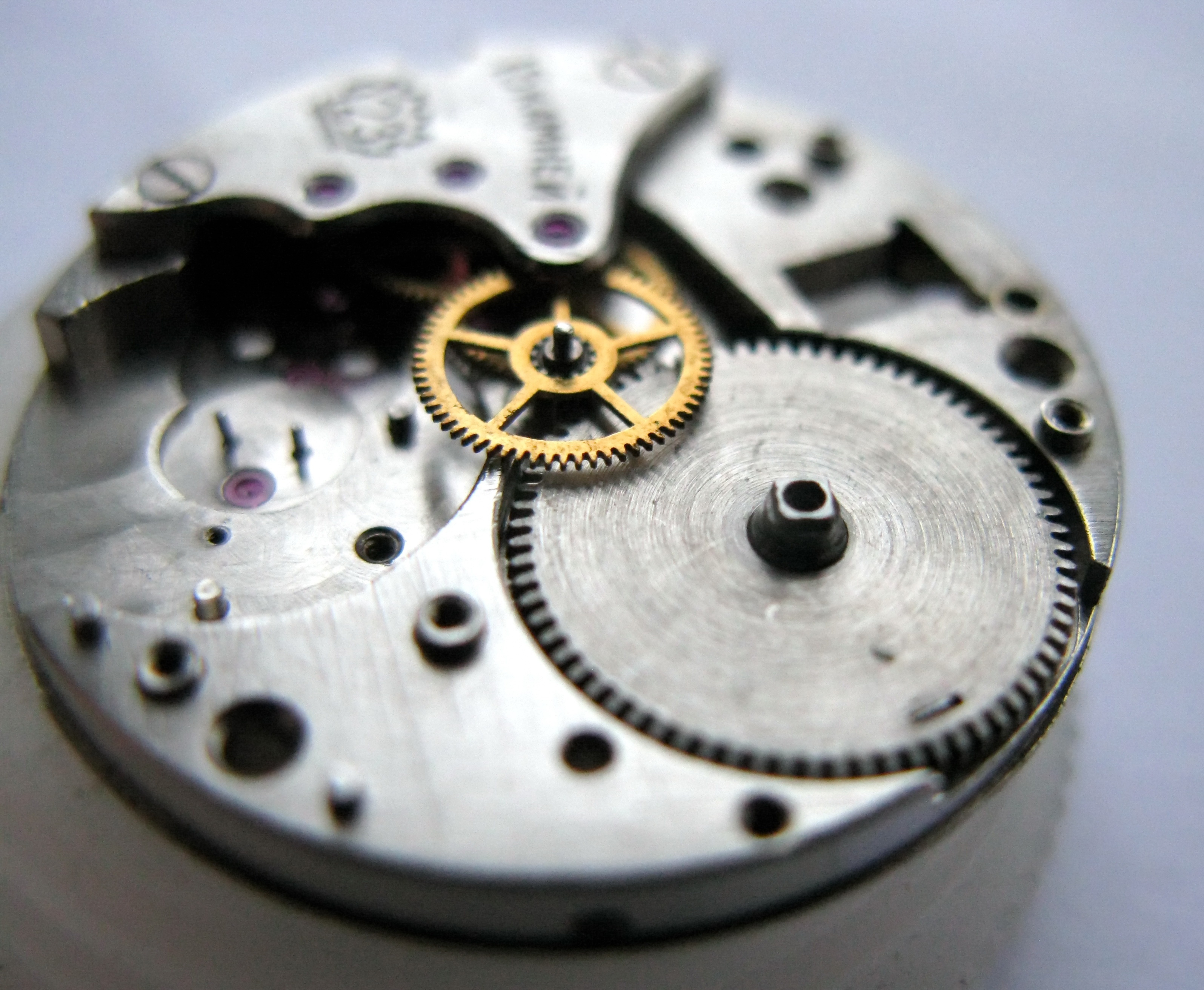
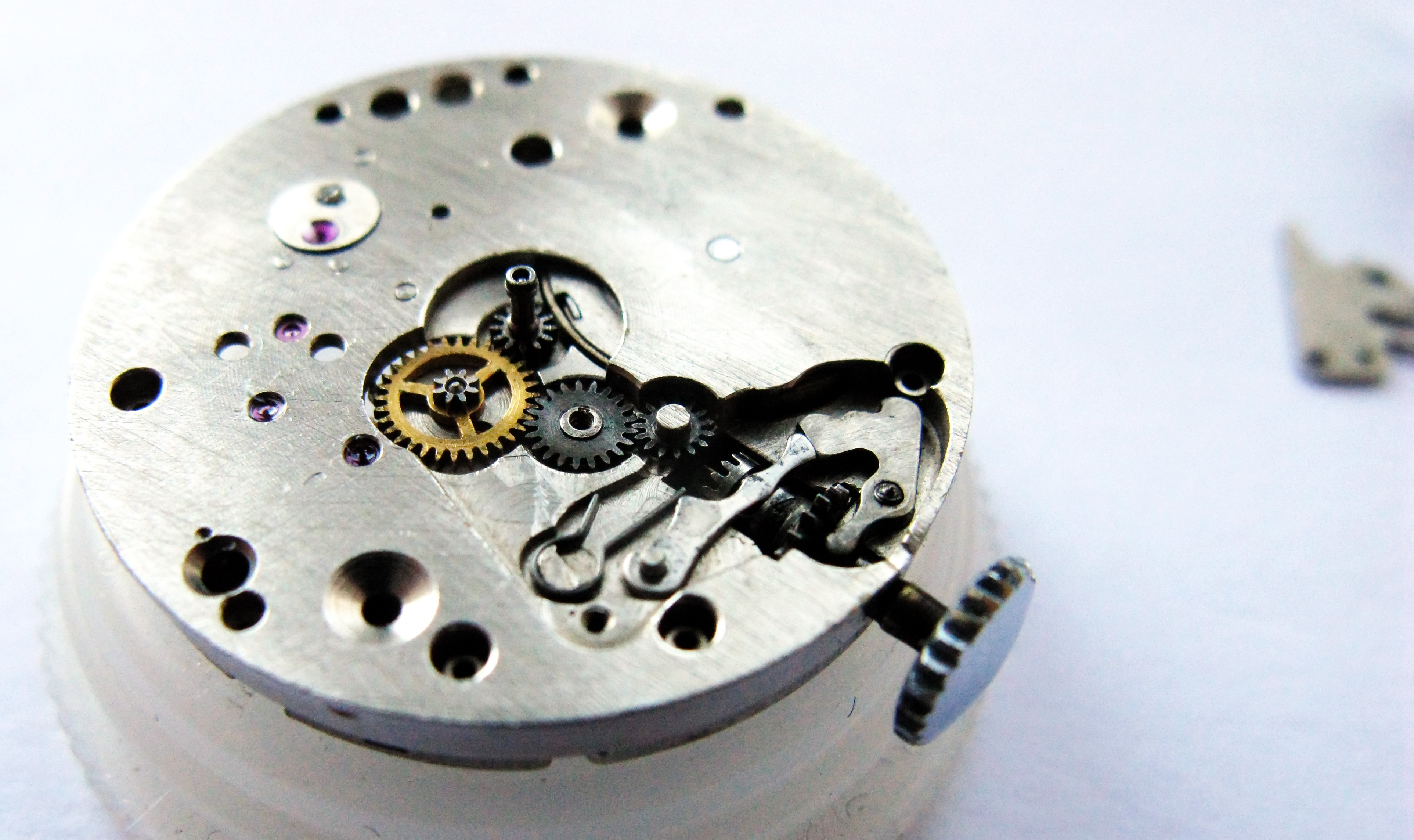
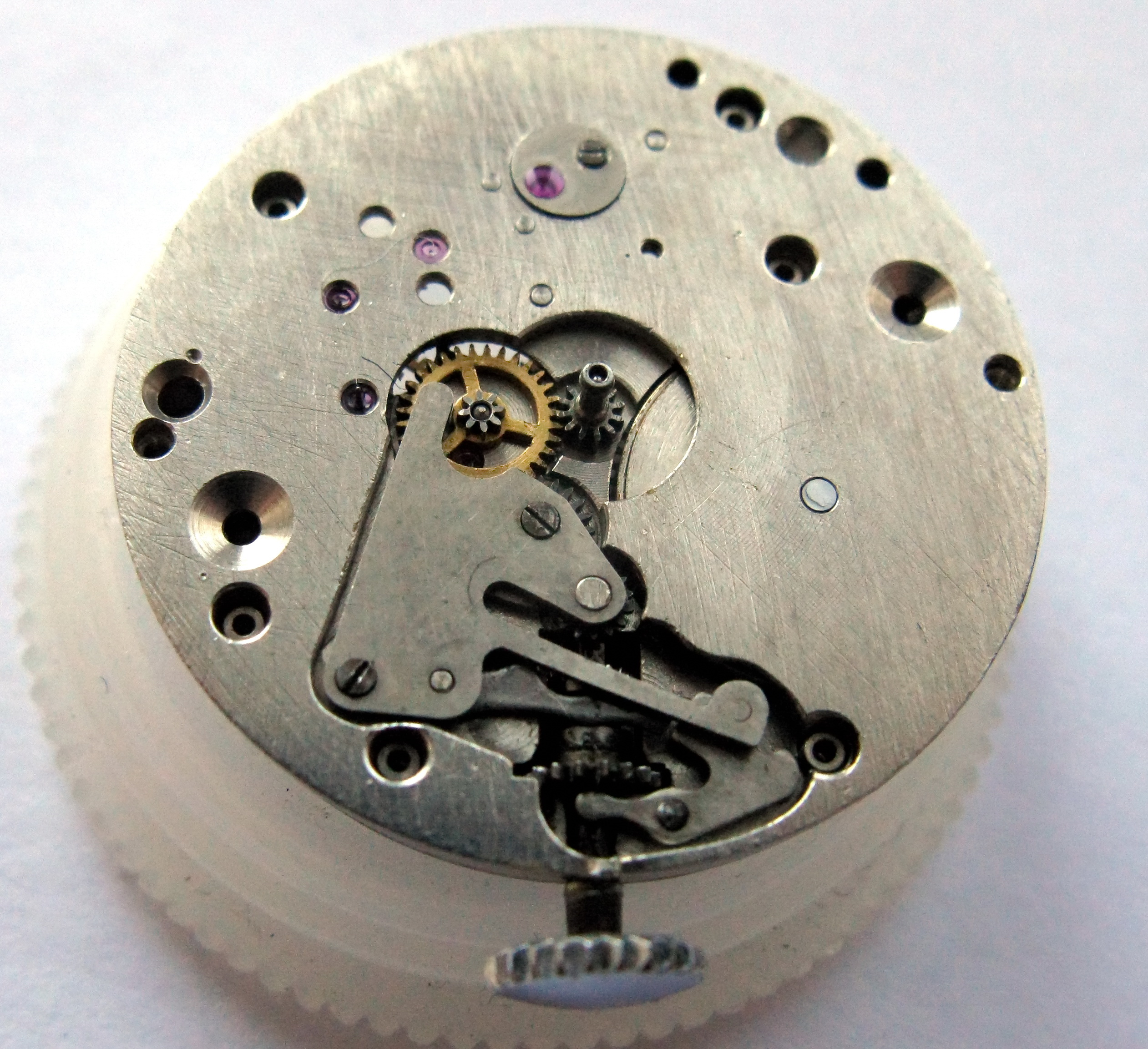
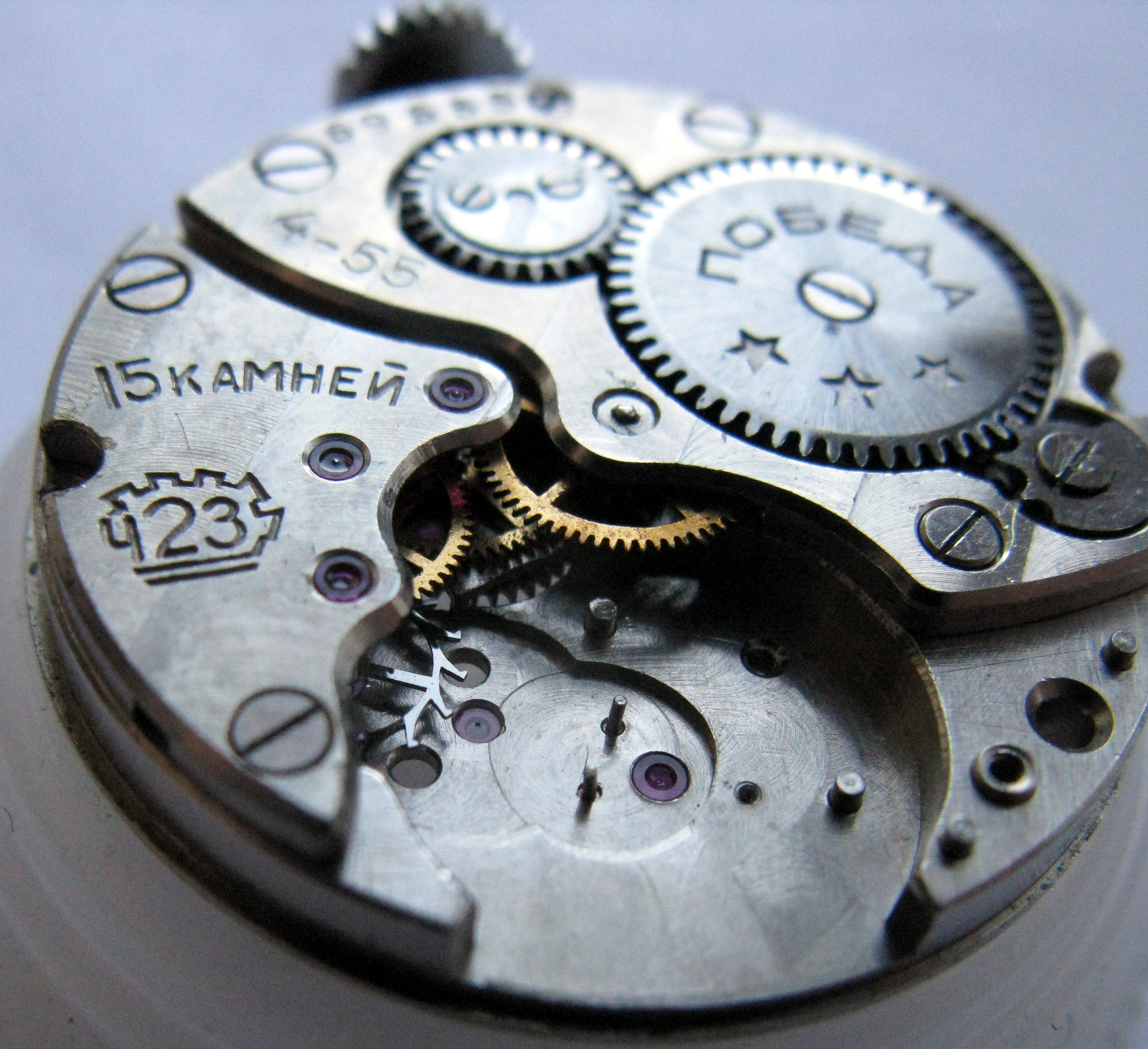
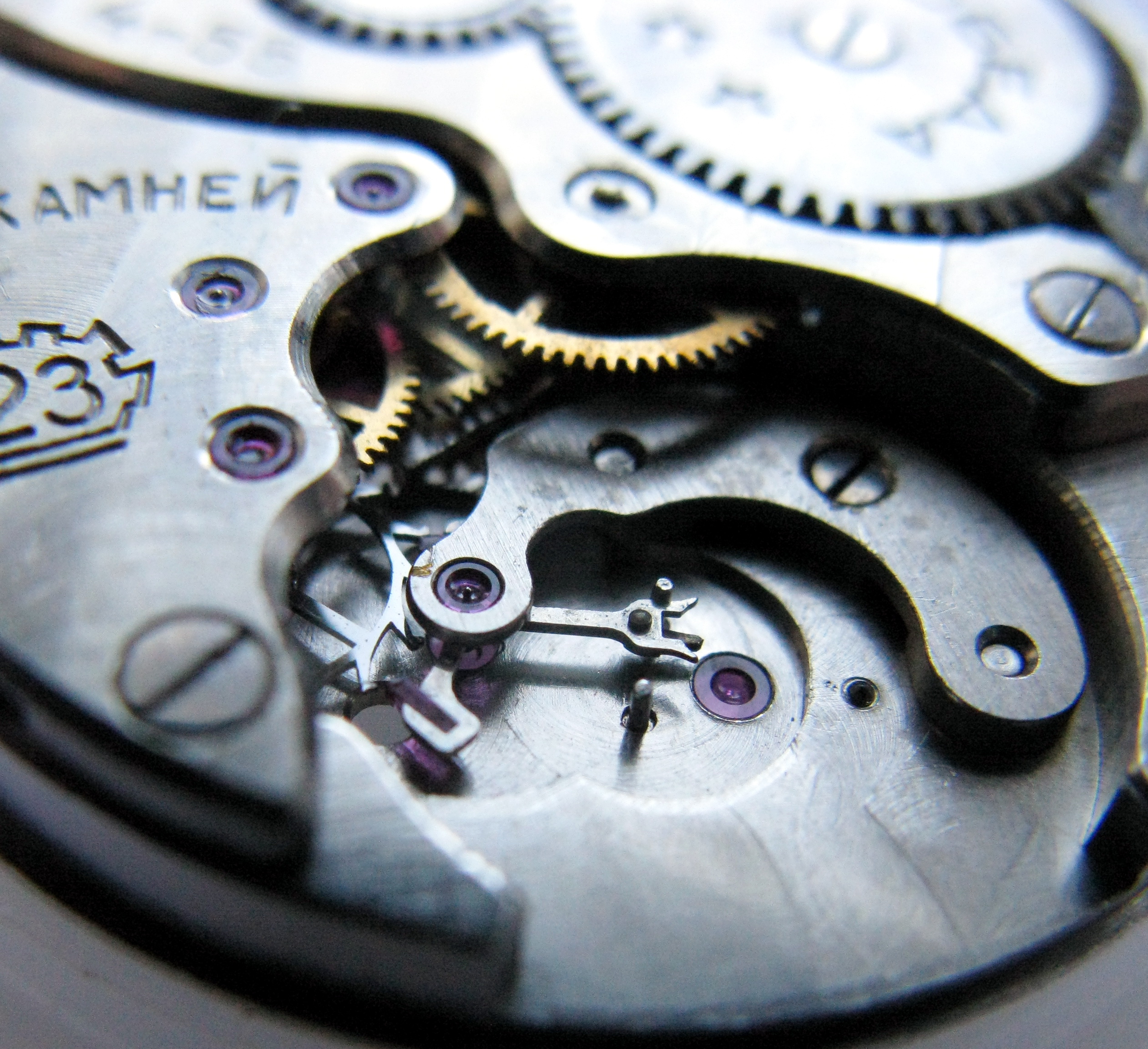
Free of its case, the caliber shows itself in full, including the Côtes de Genève striping across the bridges — finishing that the camera struggles to do justice. The architecture here is the classic Pobeda layout: a screwed balance with a fixed balance stud, no shock protection, a regulator index but no fine beat-error adjuster. It is plain, it is honest, and as we will see at the end, its simplicity comes at a price.
The Balance and Its Breguet Hairspring
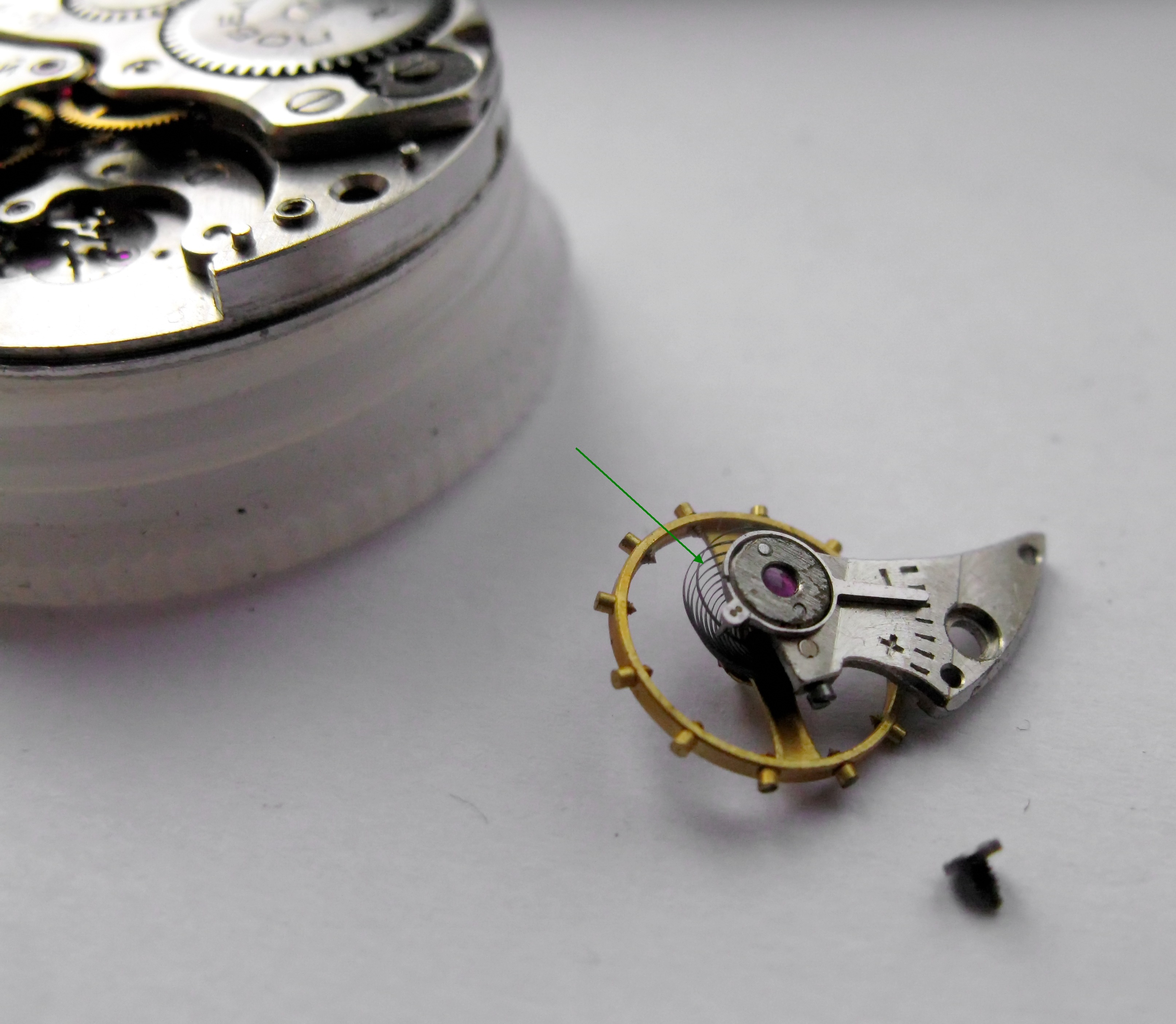
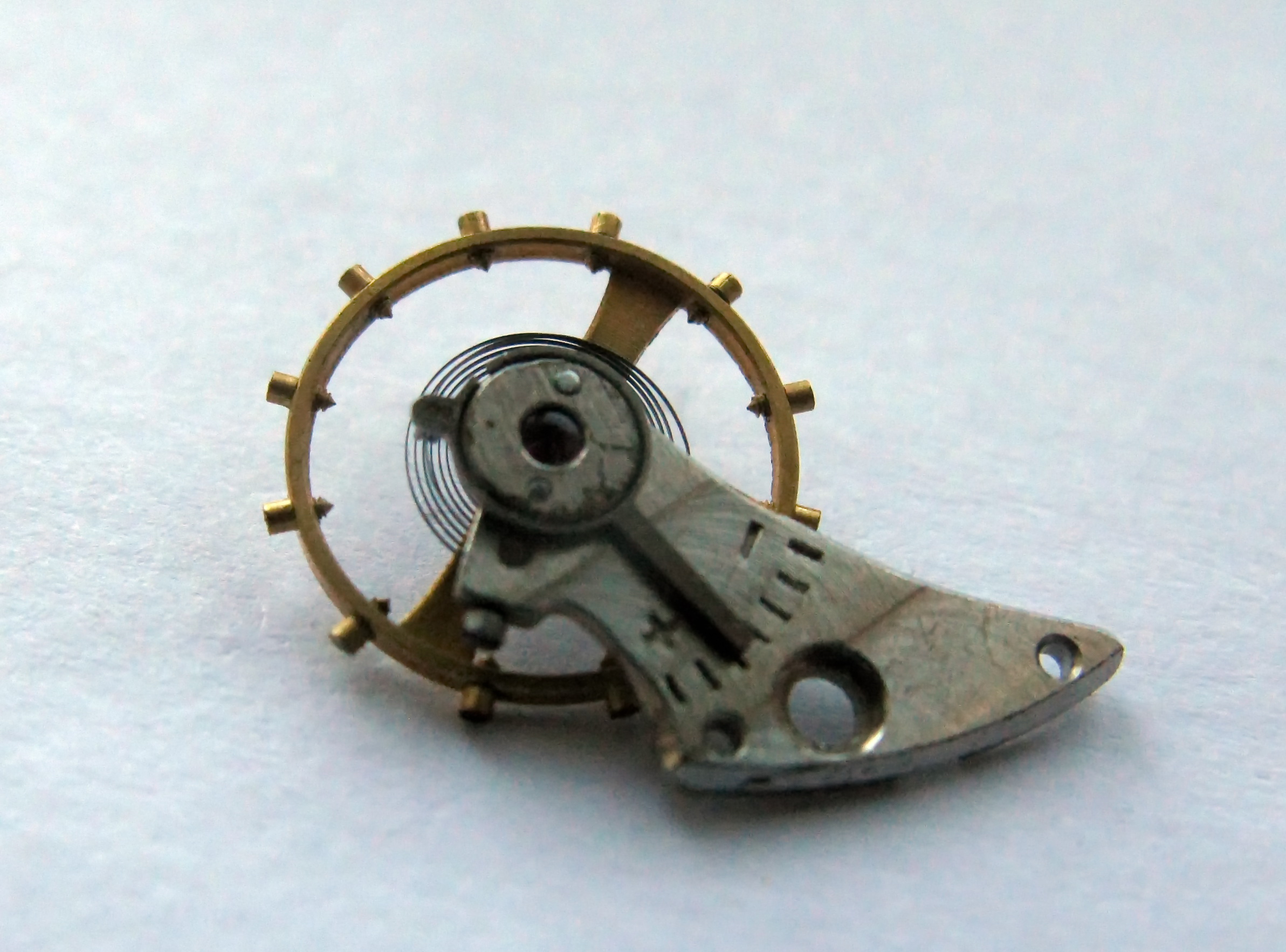
The first thing off is the balance, lifted together with its cock. This is a screwed balance running against a fixed stud, with no shock protection at all. There is a regulator index, but no fine beat regulator. One detail deserves a pause: look at the single turn of the hairspring that rides higher than the rest. That is a Breguet overcoil, named for its inventor, shaped so that the period of the balance-and-spring system is independent of amplitude. The technology migrated to wristwatches from pocket watches. Its one drawback is that it adds height, which is why thin calibers avoid it — but where thickness is not critical, the overcoil earns its keep. The balance is set aside in a Petri dish under glass to keep dust off; we will return to it later, in depth.
Taking Down the Motor
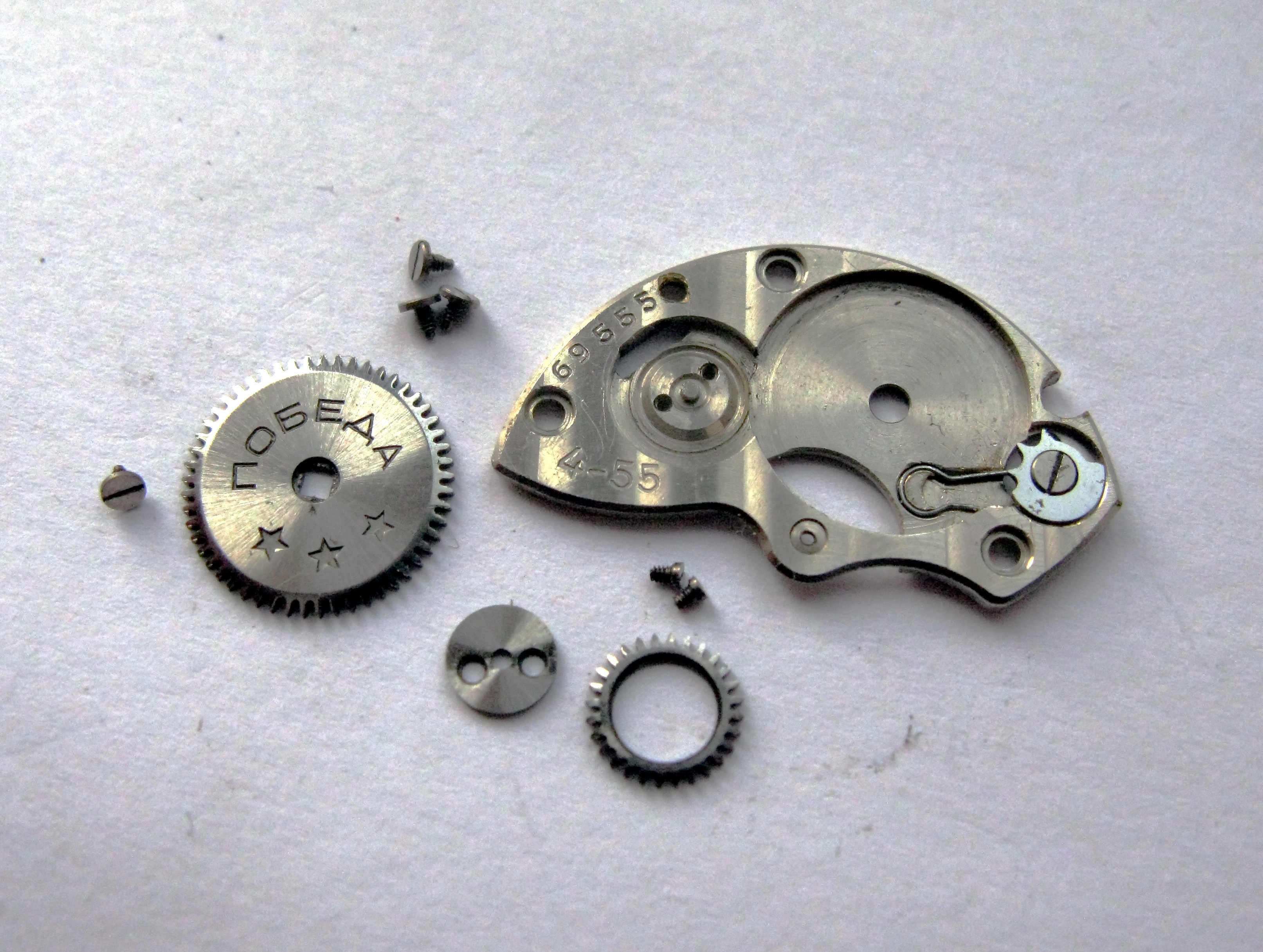
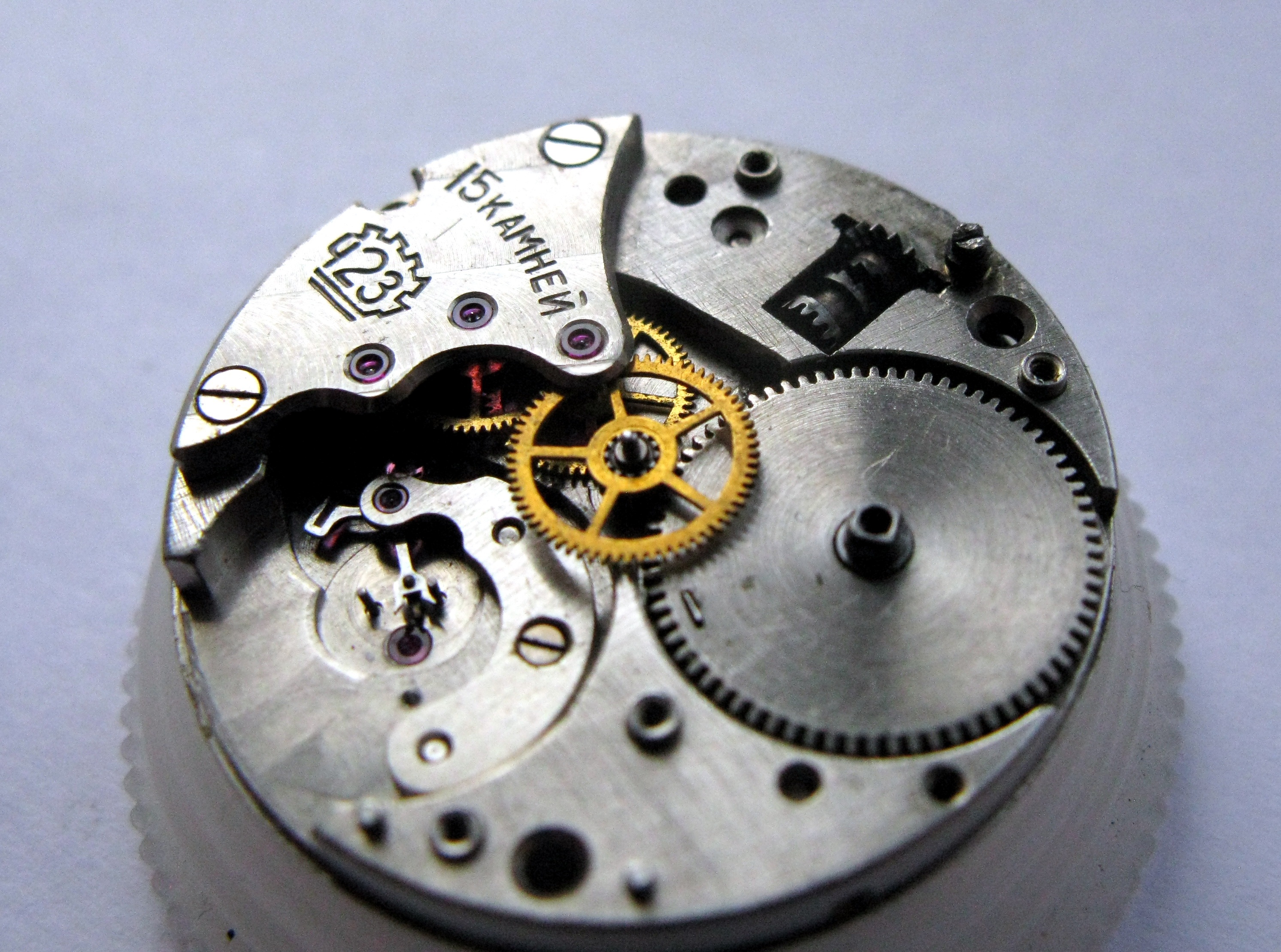
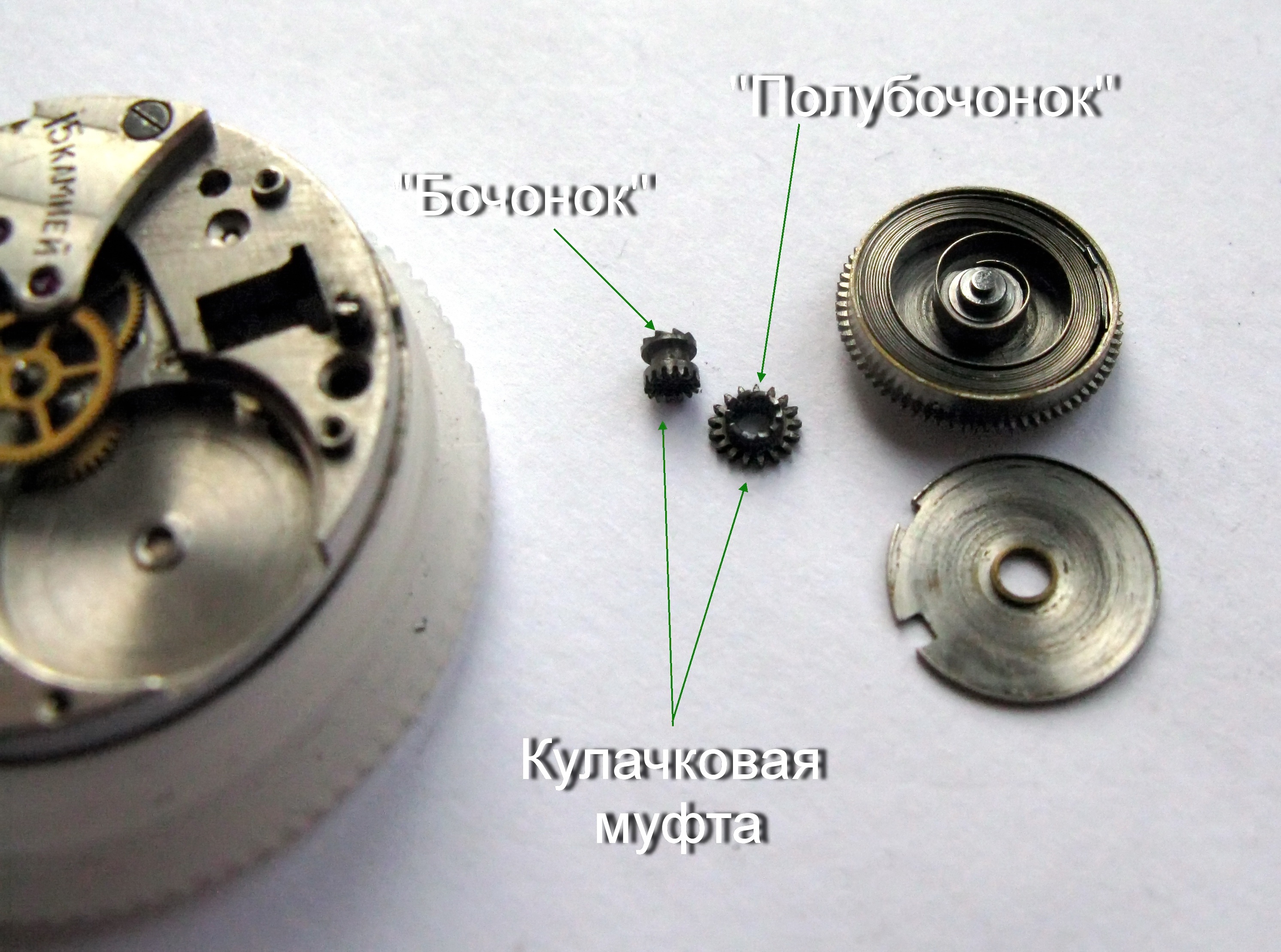
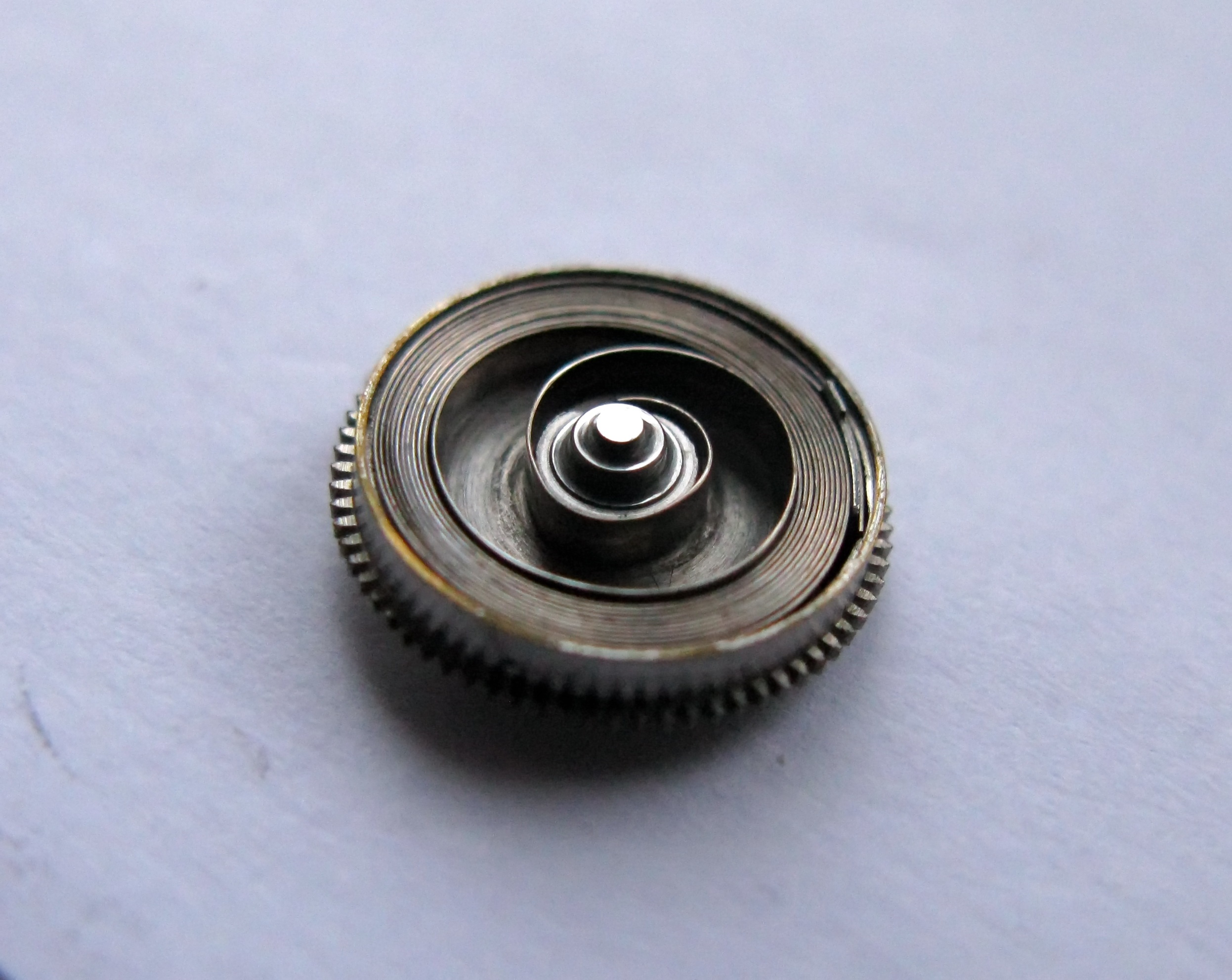
Now the motor. The ratchet wheel, the barrel bridge and the barrel come off, the sliding cam clutch is extracted, and the barrel is opened. Note how the barrel click spring is made in this caliber: the stiff R-shaped spring is what gives these watches their slightly harsh winding feel. Later production replaced it with a soft, thin spring. This particular sub-assembly is left intact — refitting that spring afterwards is more trouble than it is worth, and it will wash perfectly well together with its bridge.
Pallet Fork and Going Train
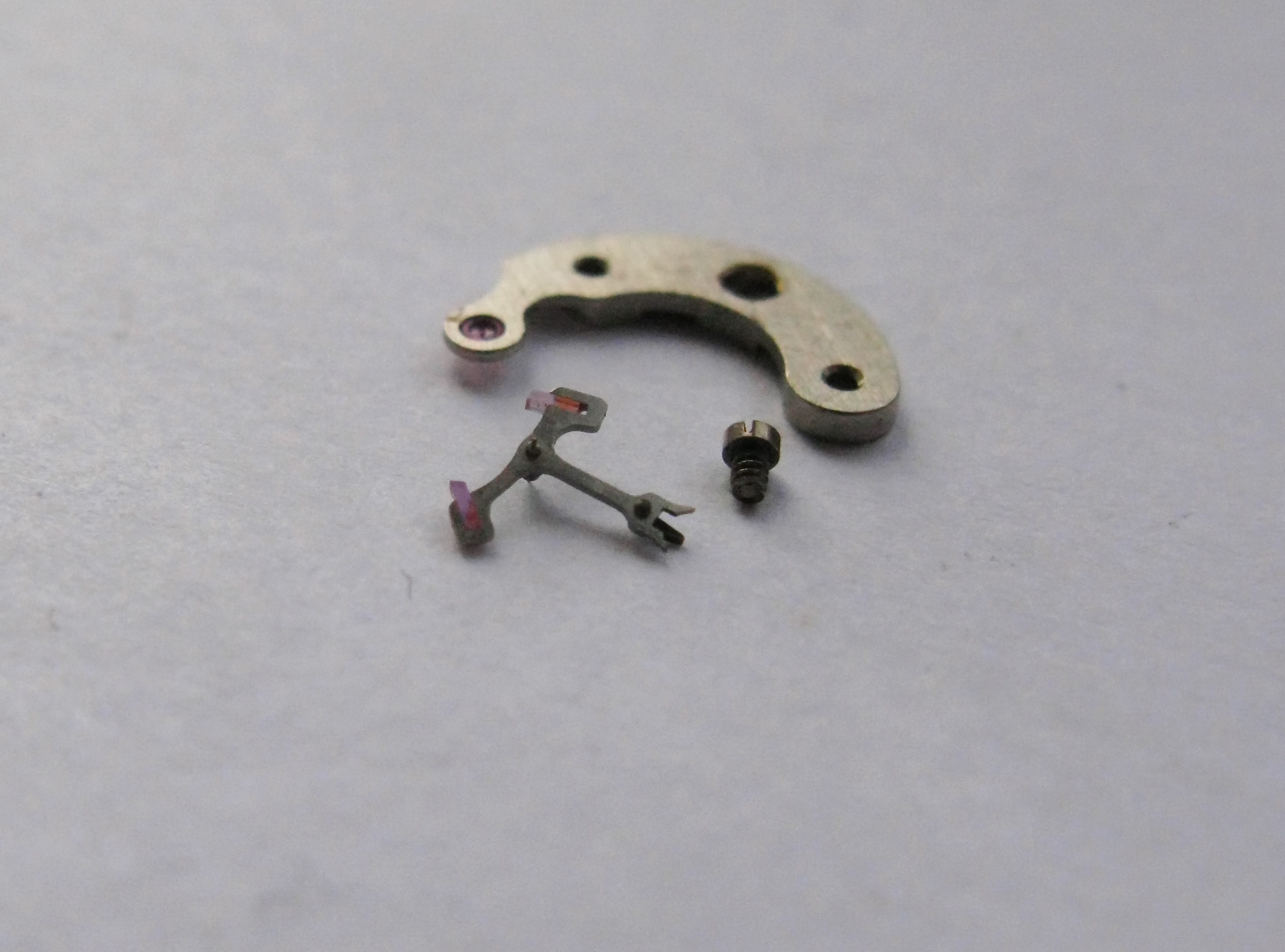
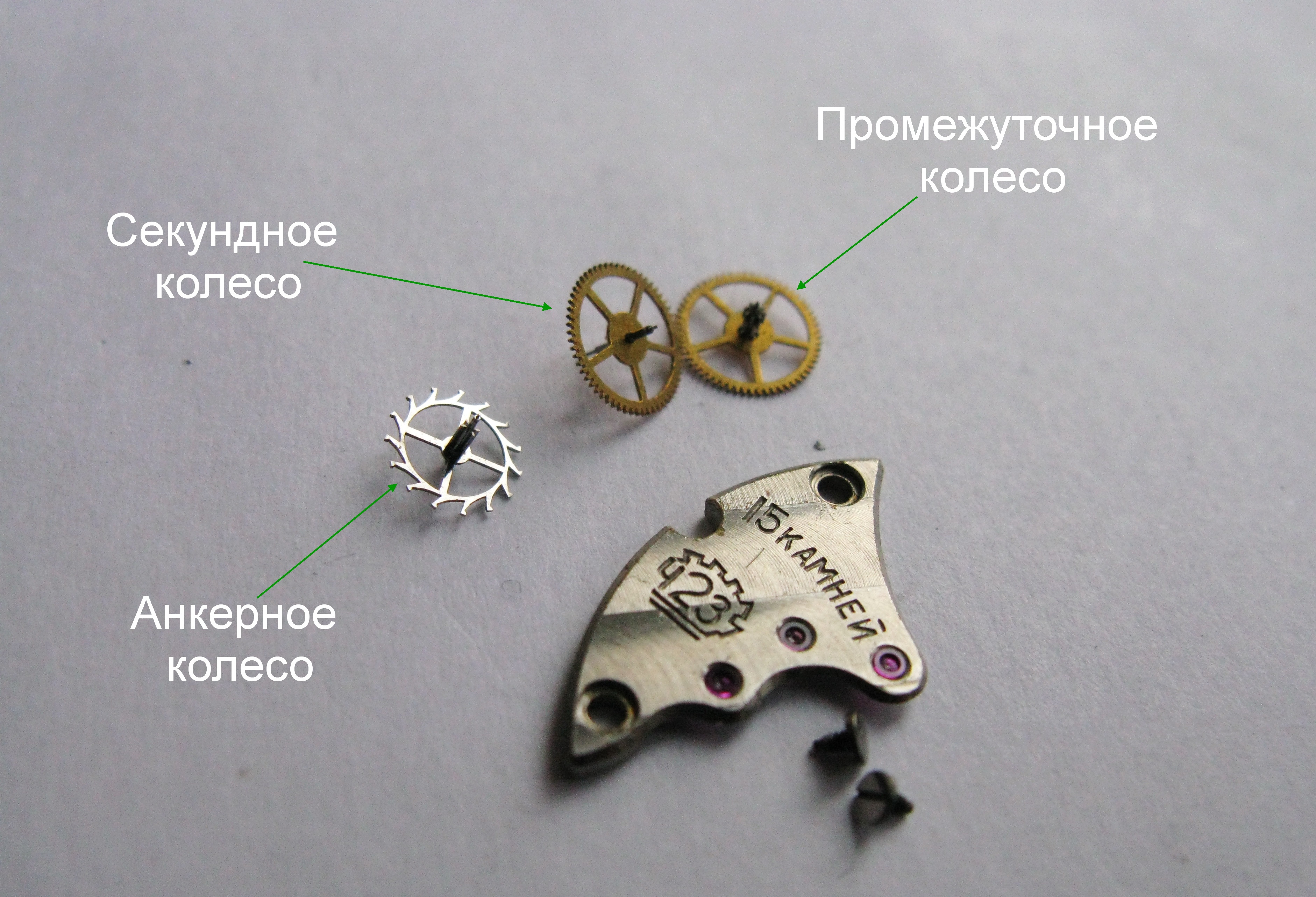
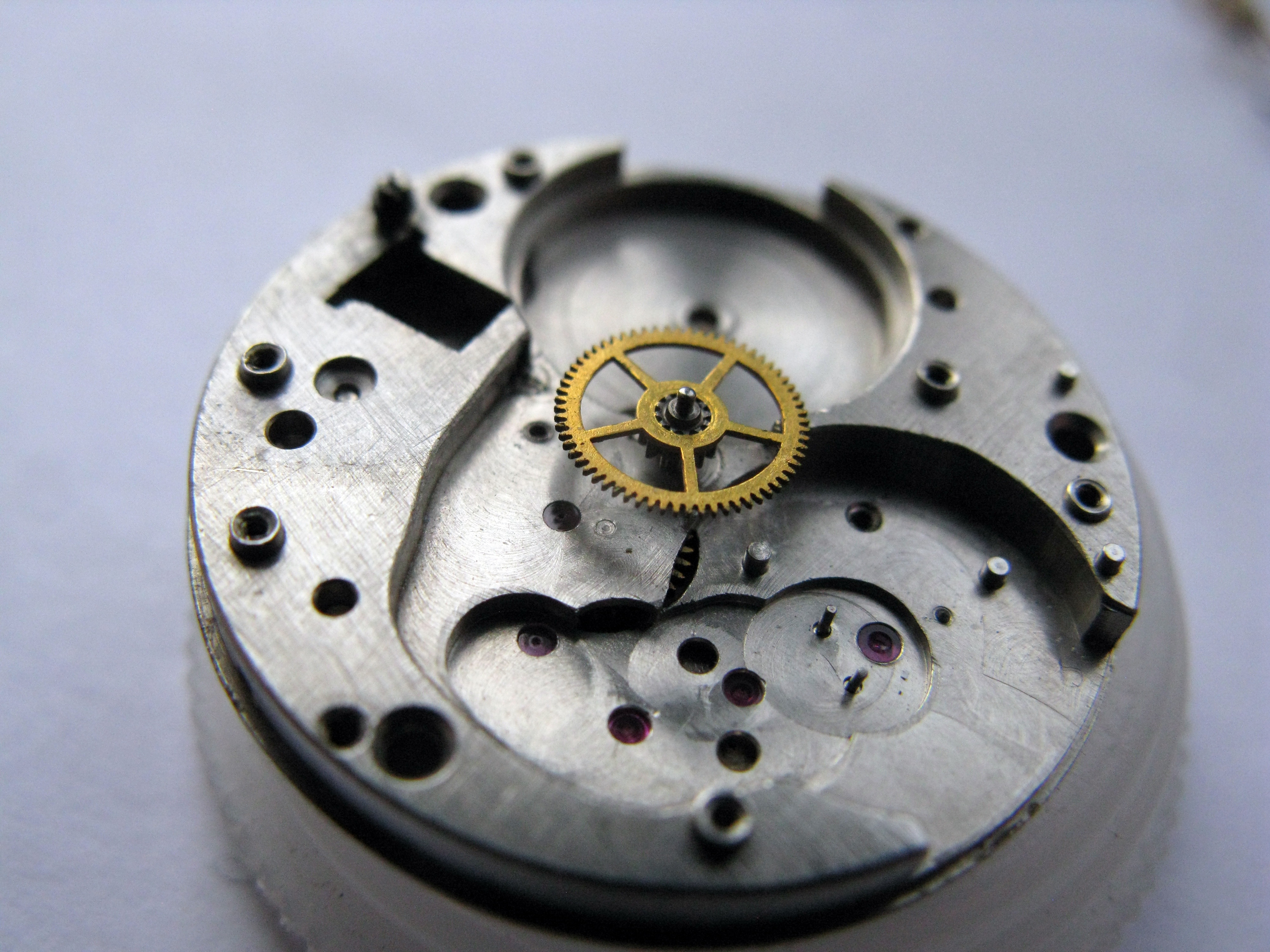
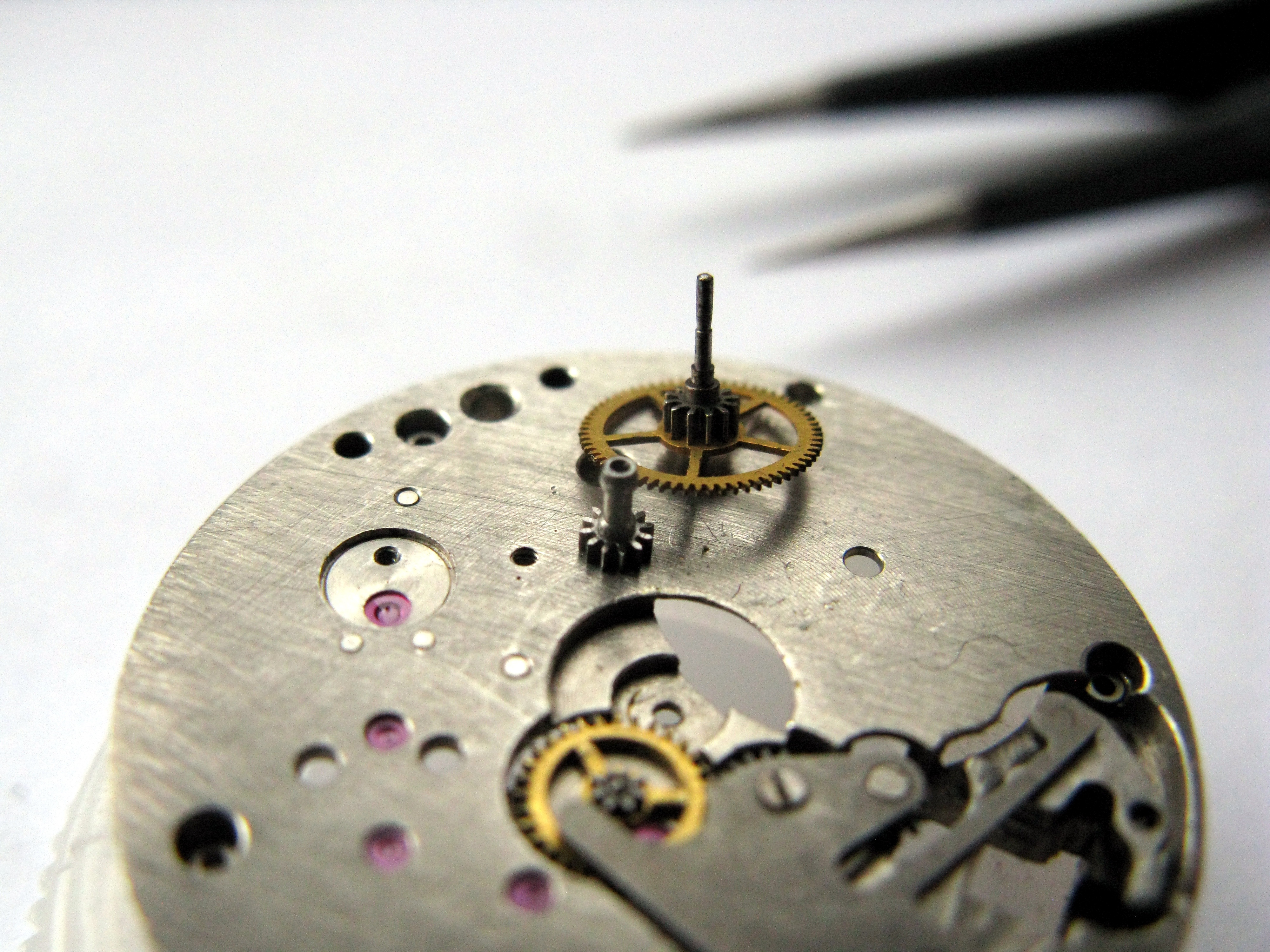
The pallet fork and the going train come next, and there is nothing unusual here — the bridges lift off and the wheels come out in turn. What remains is the center wheel, and to free it the minute pinion must first be drawn off its arbor, which means crossing over to the slow side, under the dial.
Under the Dial: the Slow Side
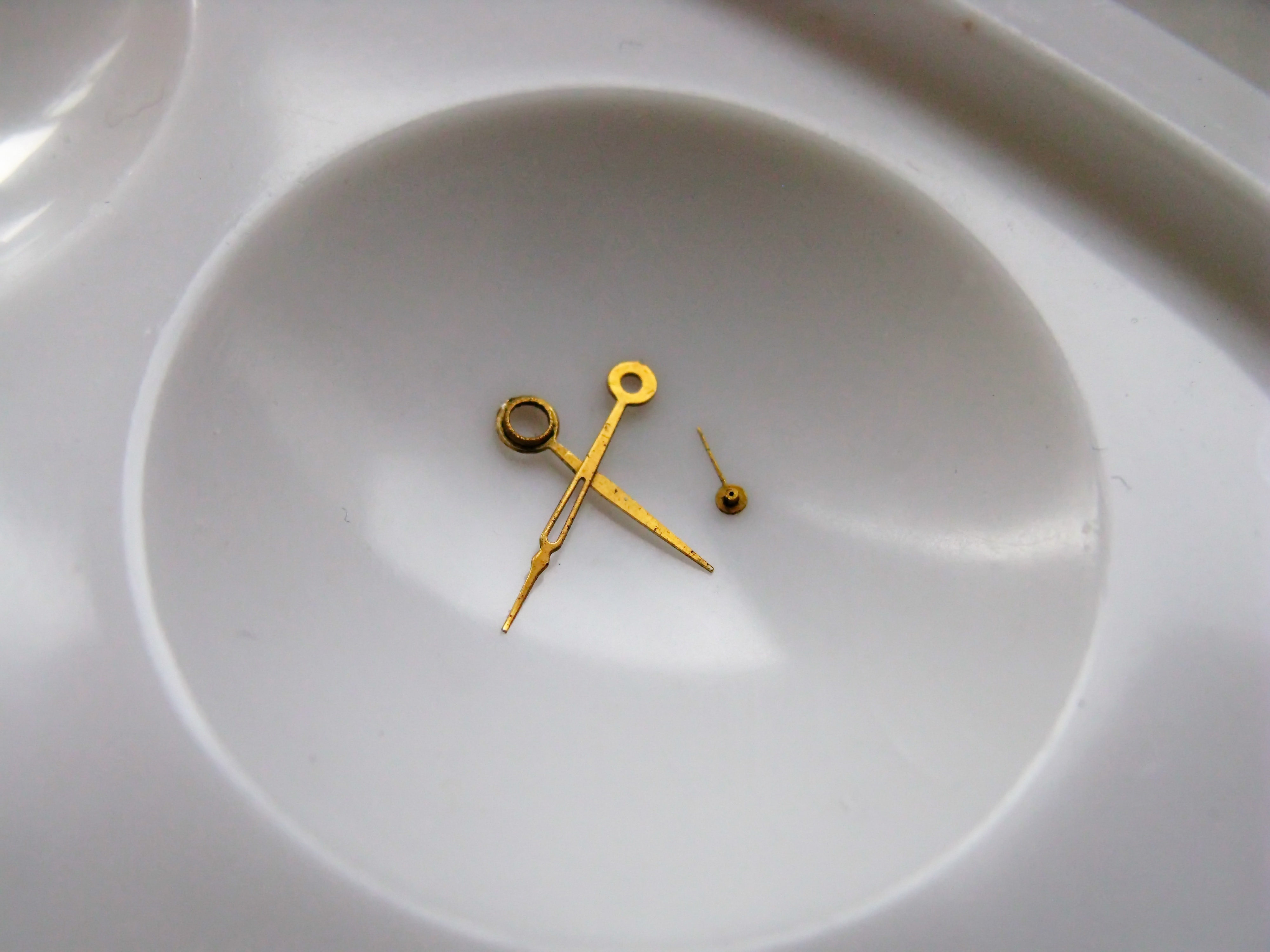
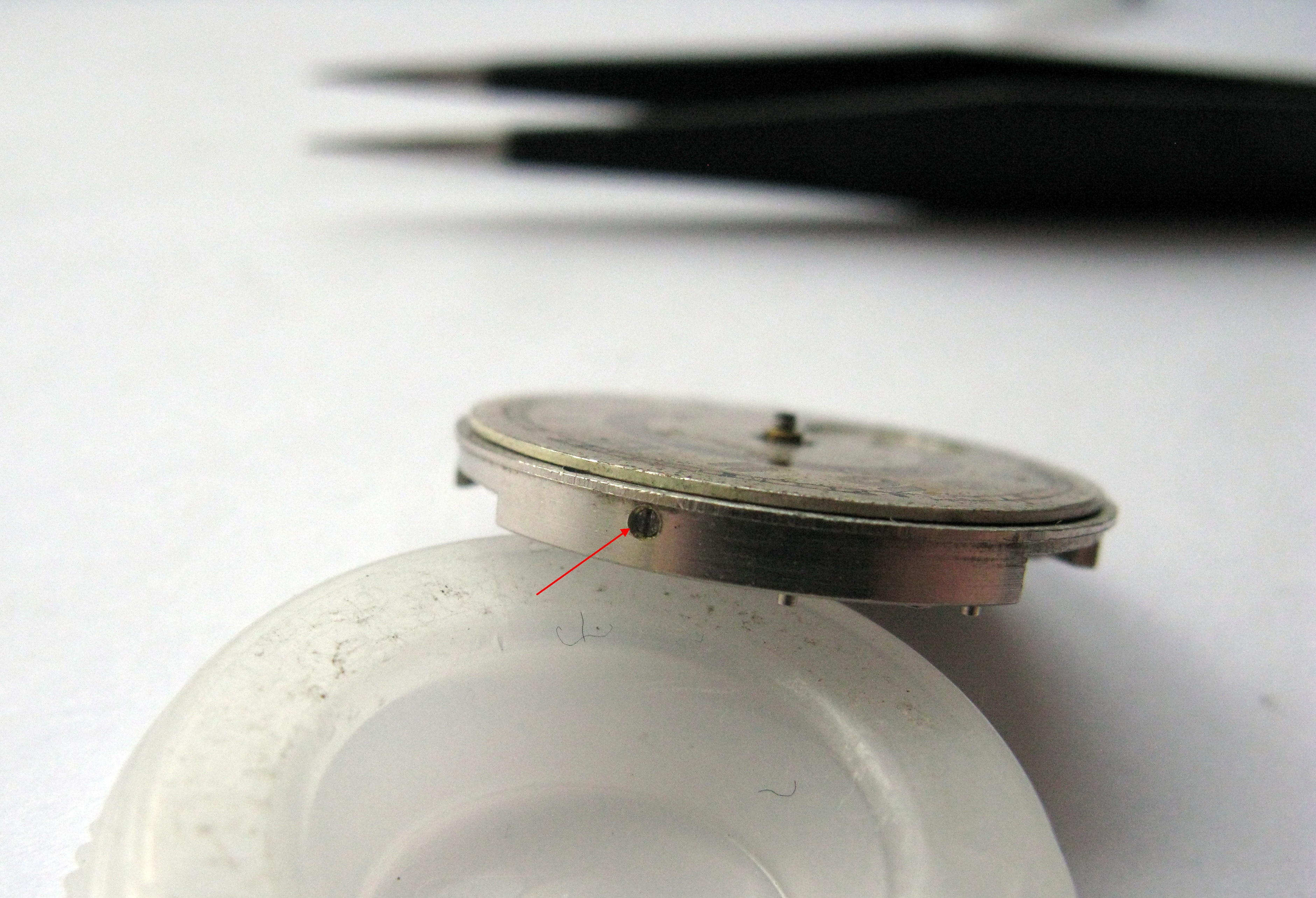
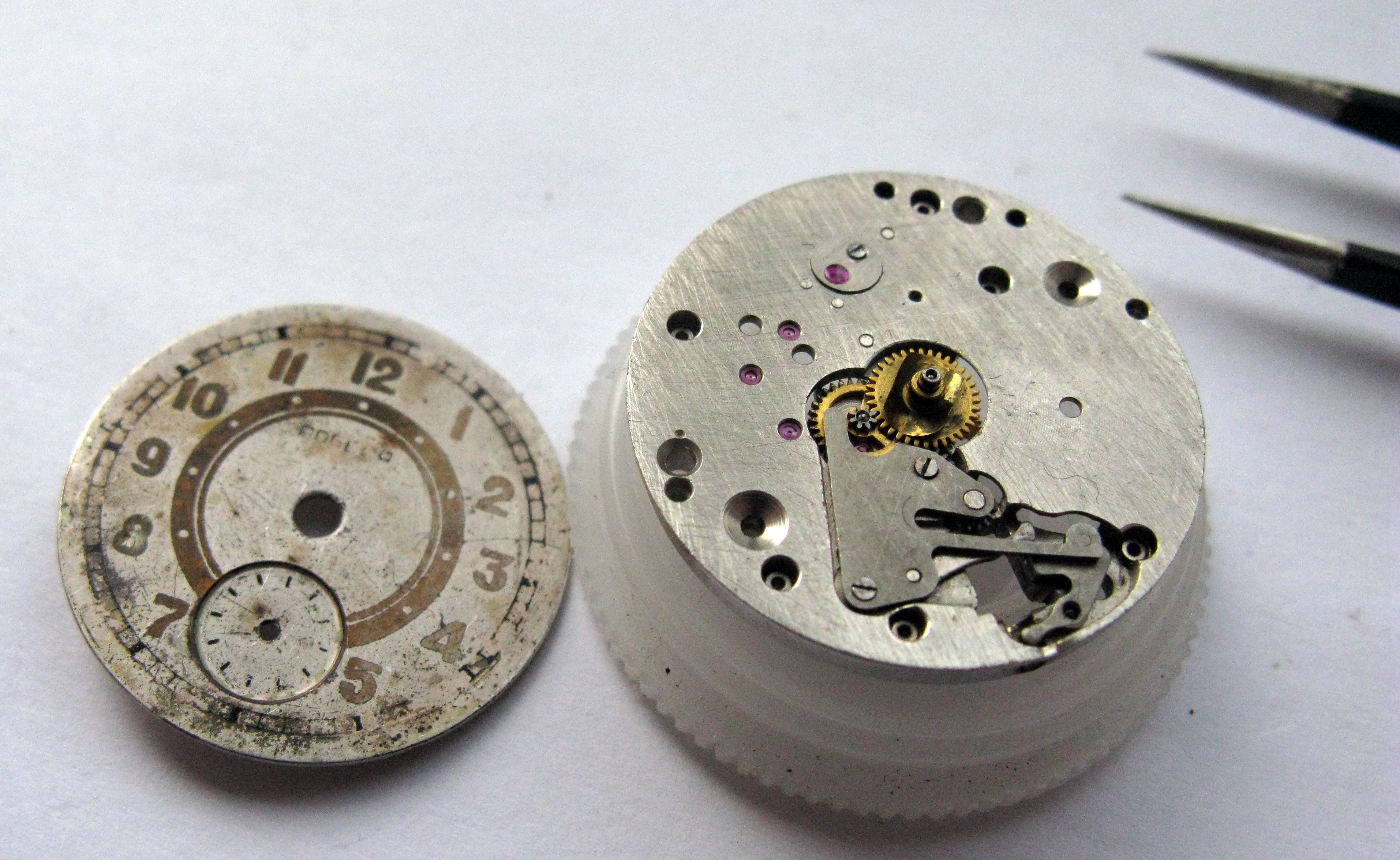
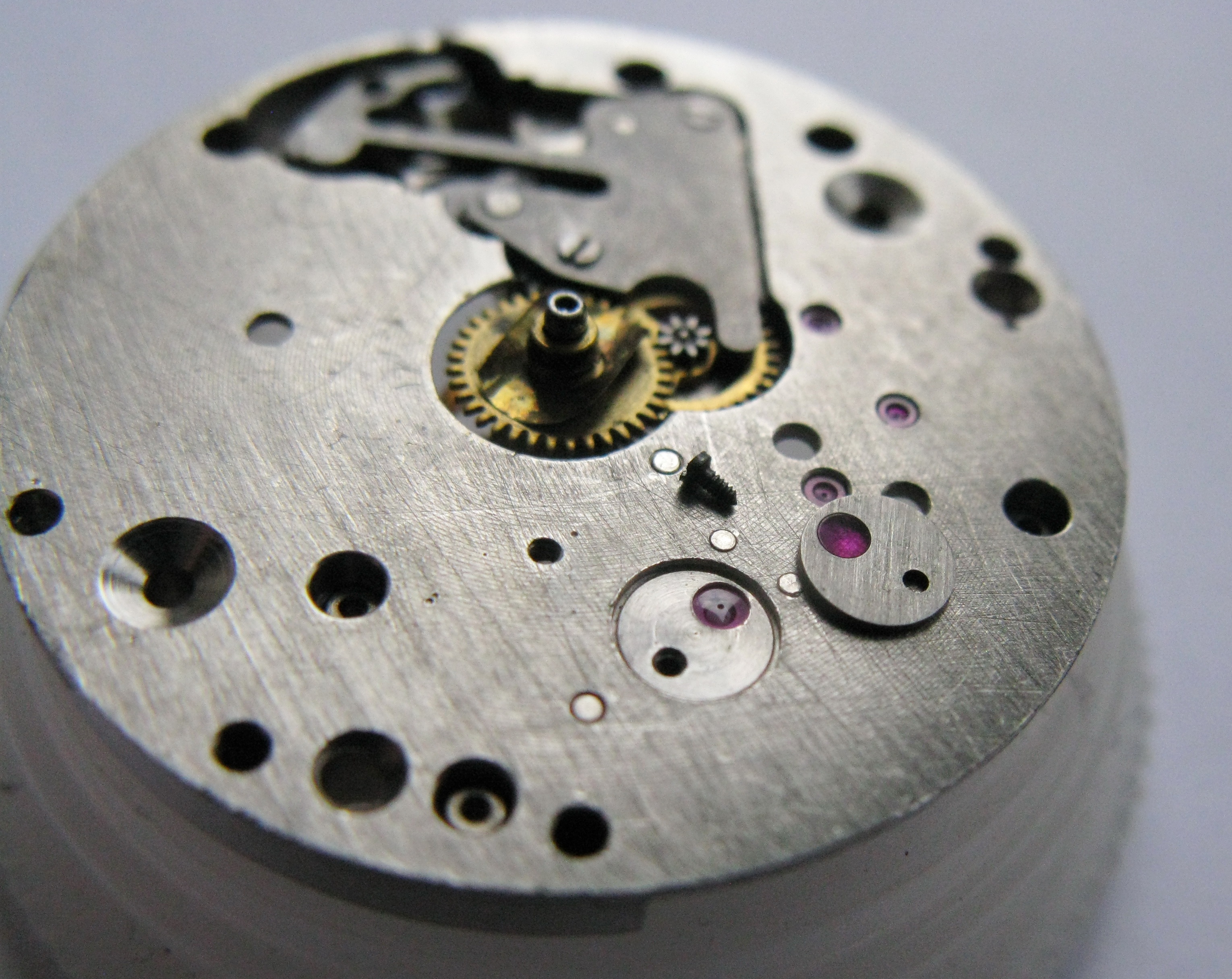
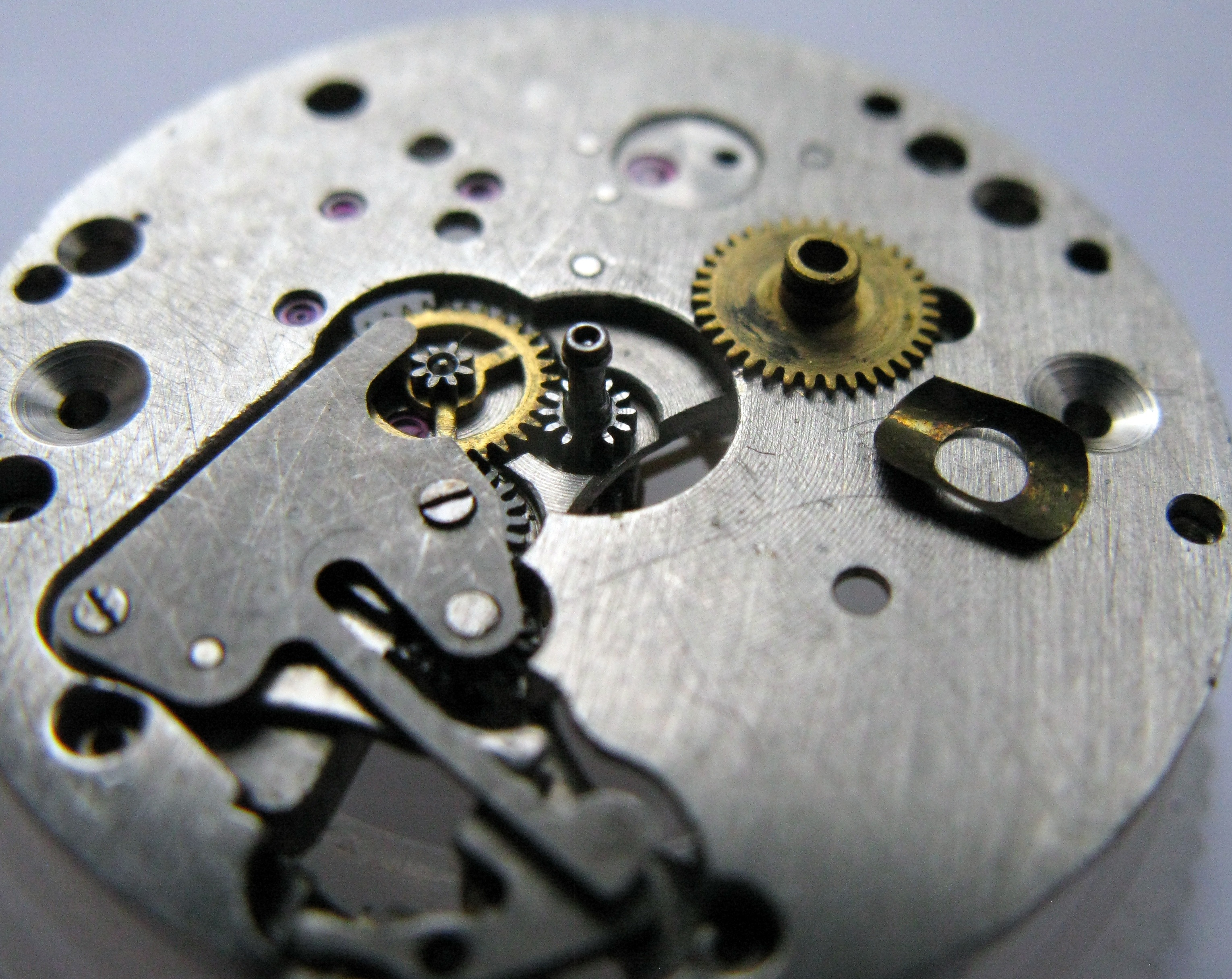
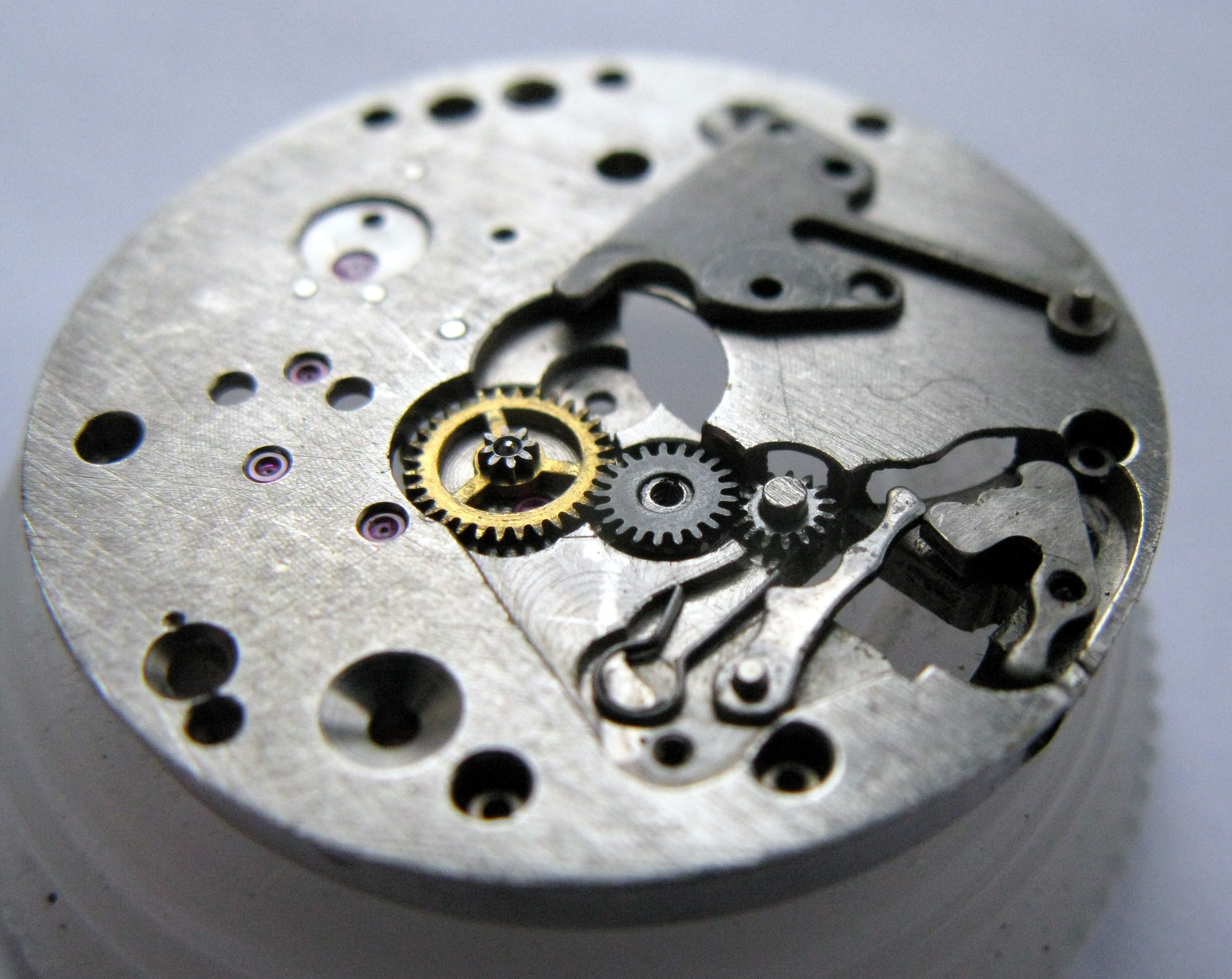
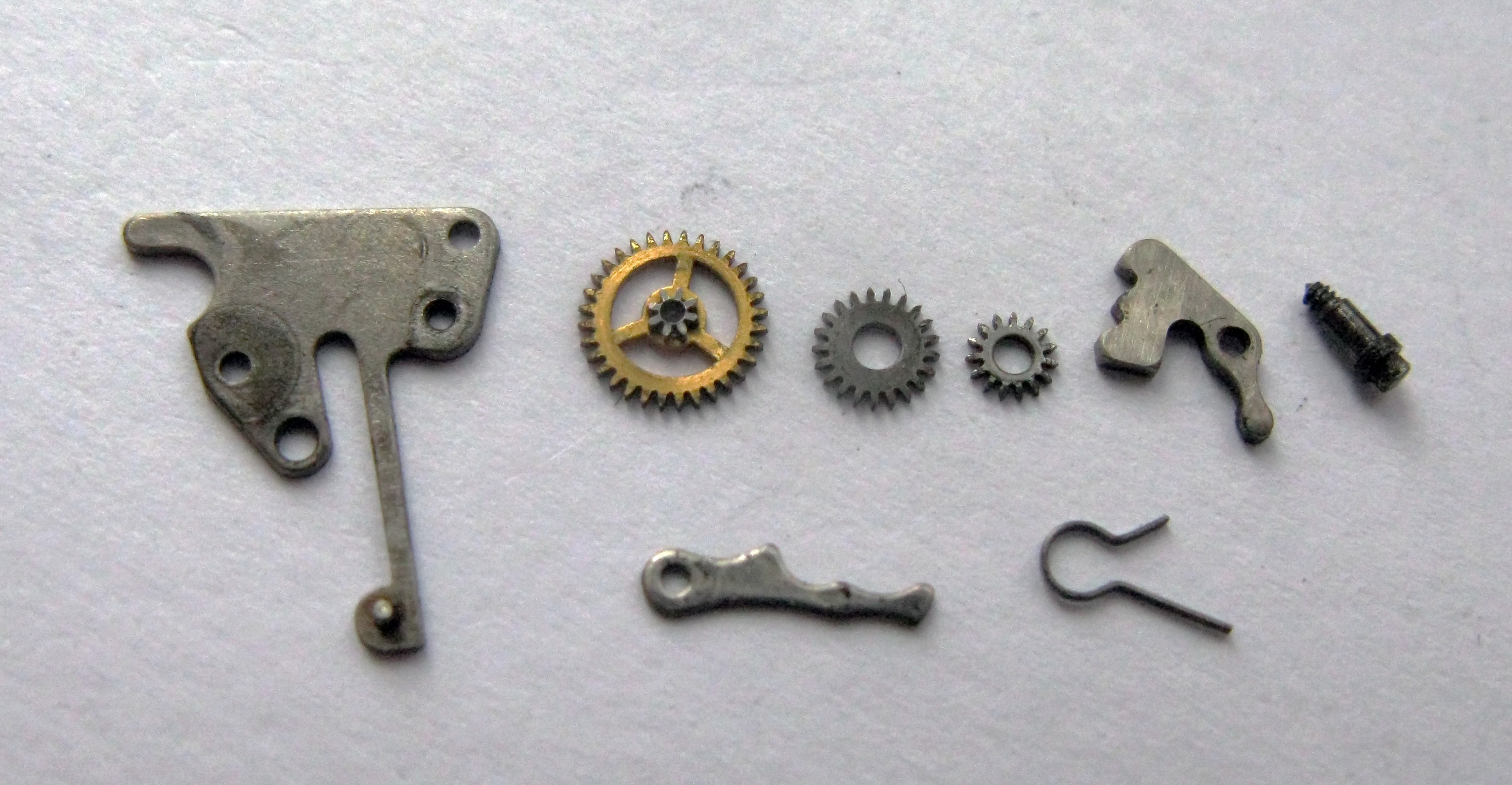
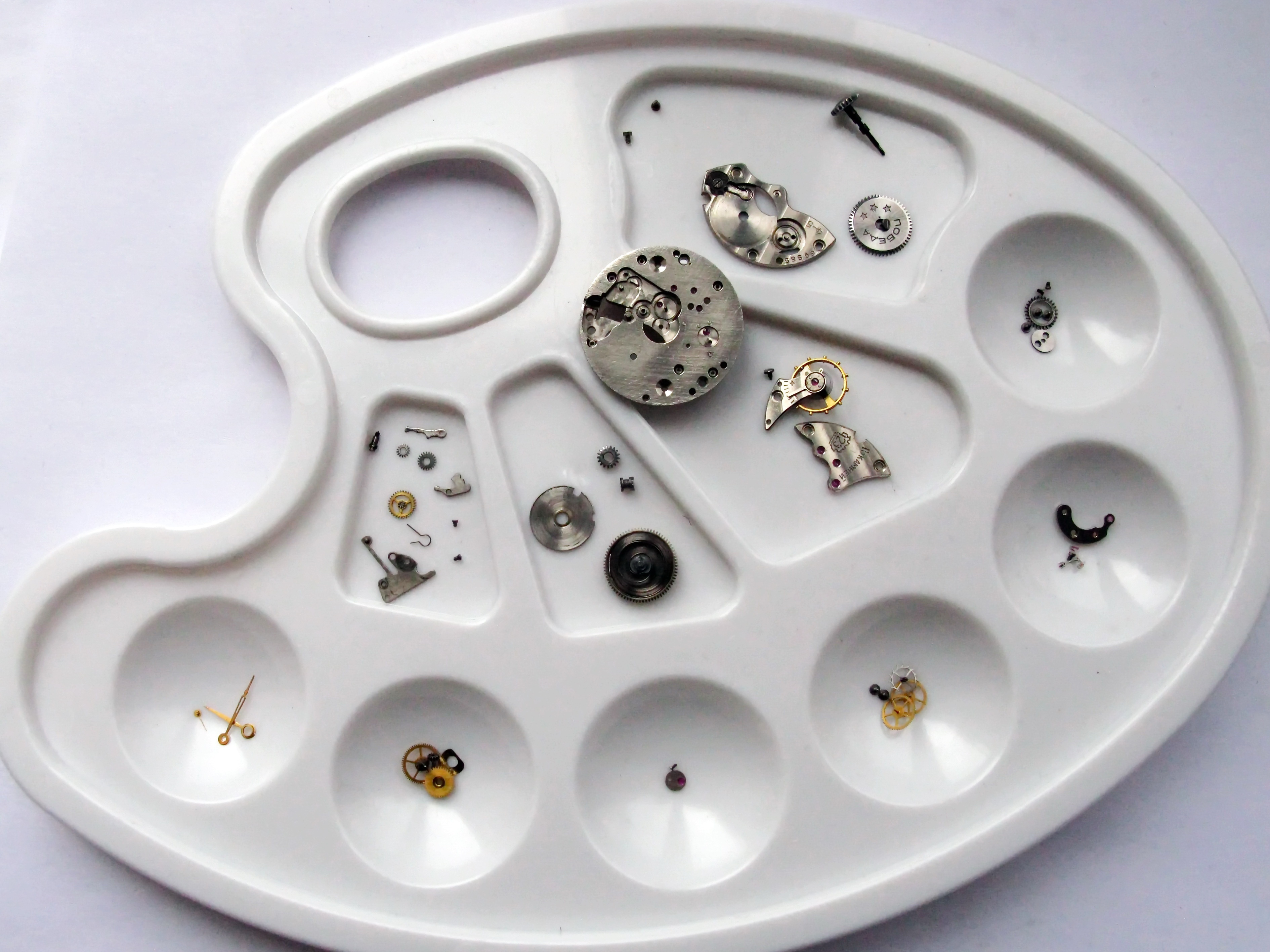
At last we reach the dial. The screws on the edge of the mainplate are loosened, the dial comes away, and the slow side is dismantled. Here sit the motion work, the balance cap jewel, the hour wheel with its spring washer — which must not be forgotten on reassembly — and the keyless works.
Reassembly and Lubrication
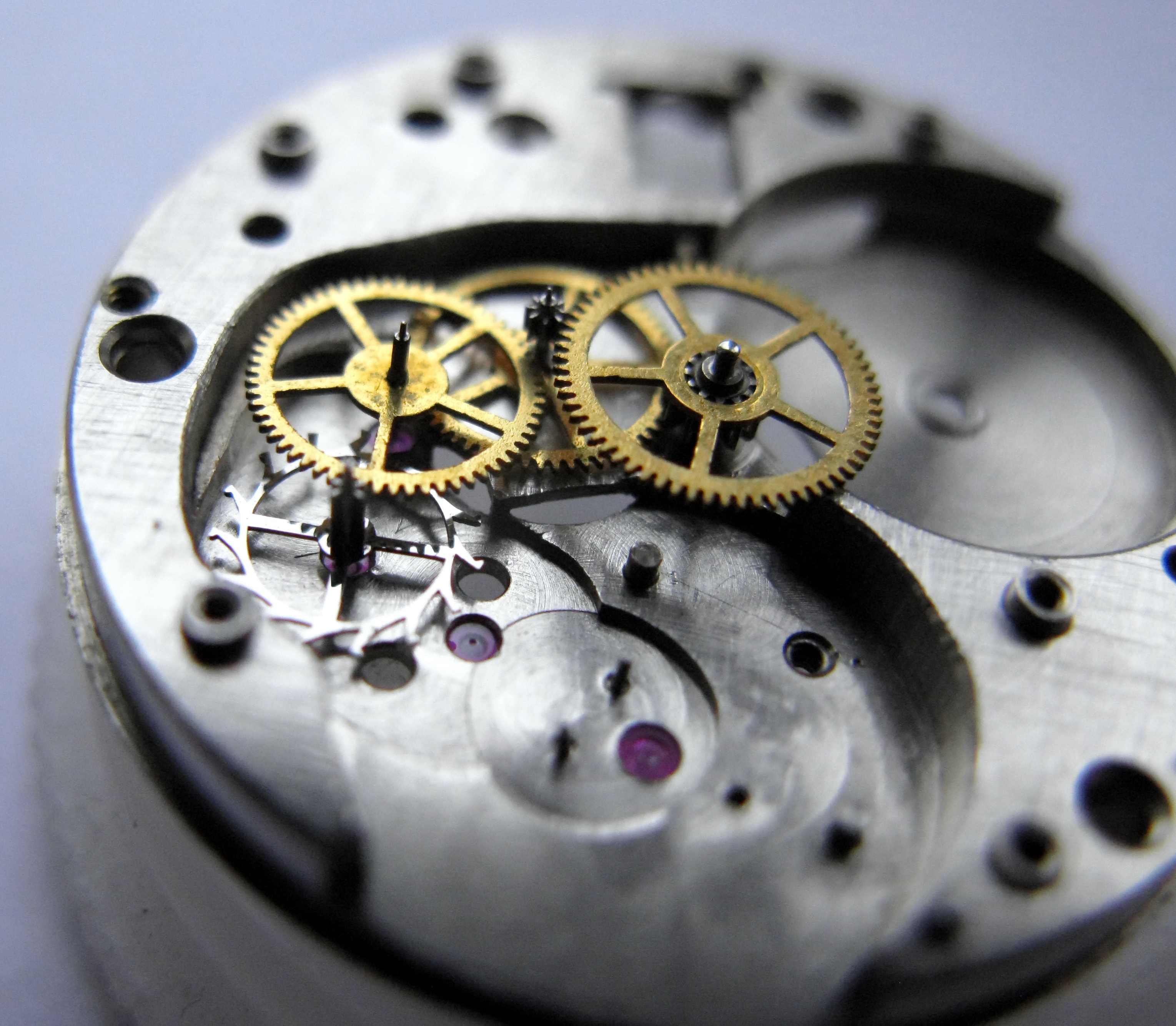
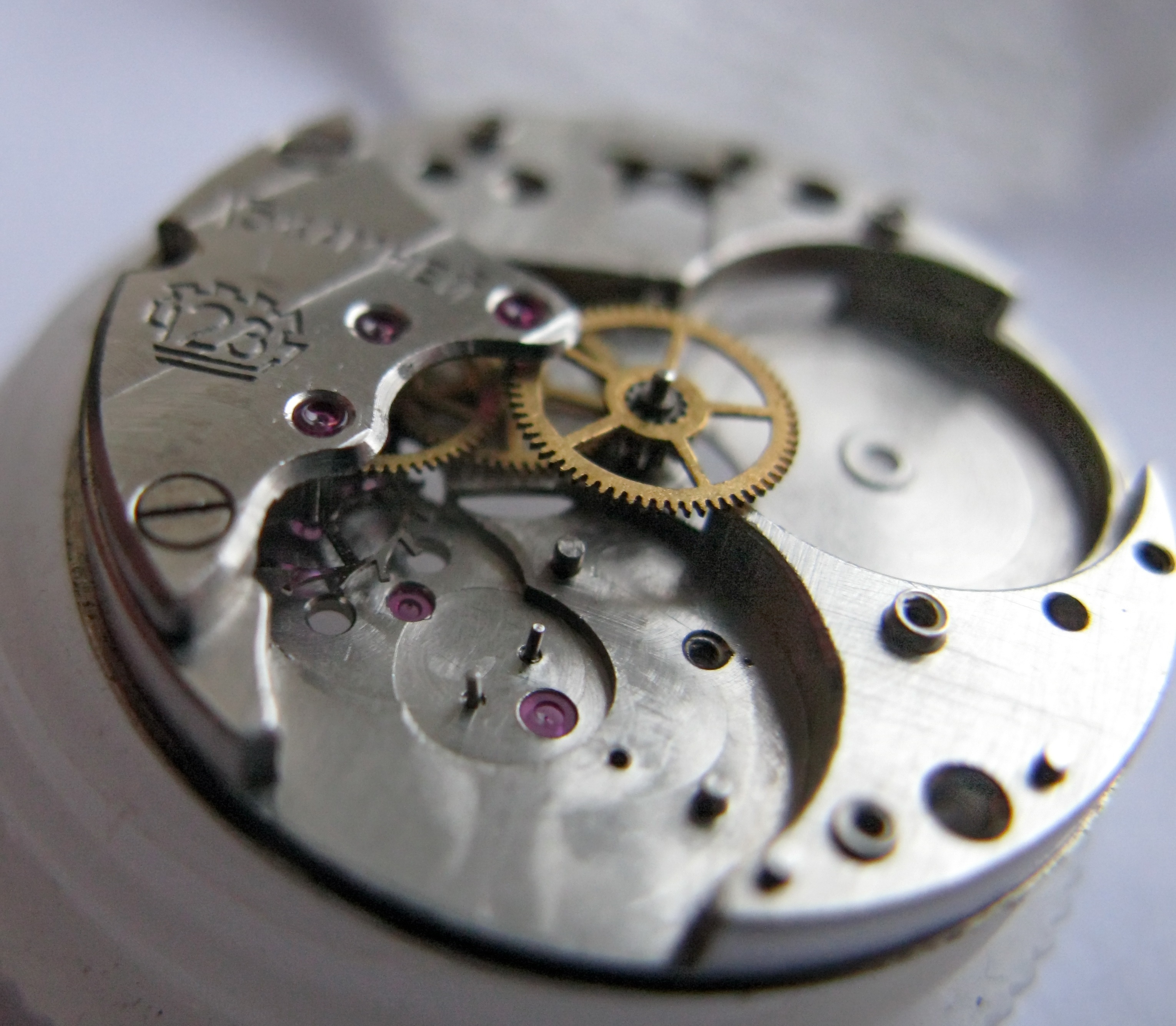
Cleaning done, the rebuild begins — this time with MTs-N oil. The going train goes first, and in a set order: escape wheel and intermediate wheel, then seconds wheel and center wheel, all carefully aligned and capped with the bridge. Then the barrel is assembled, a couple of drops of oil go onto the mainspring coils and the arbor, the lid is closed, and the barrel drops into its seat on the plate before the bridge goes over the motor. The depthing of the wheels checks out cleanly.
Cap Jewel, Slow Side and Escapement
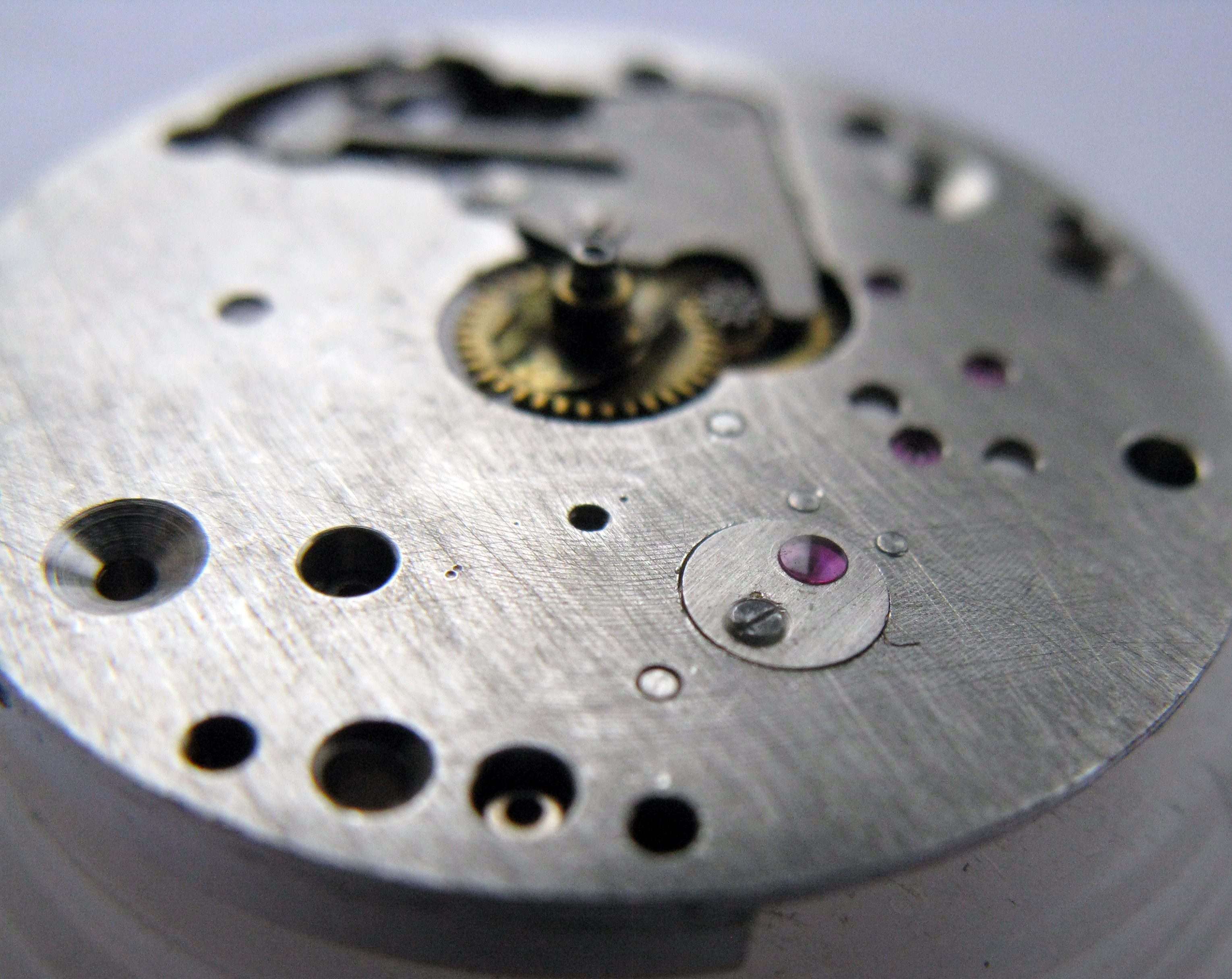
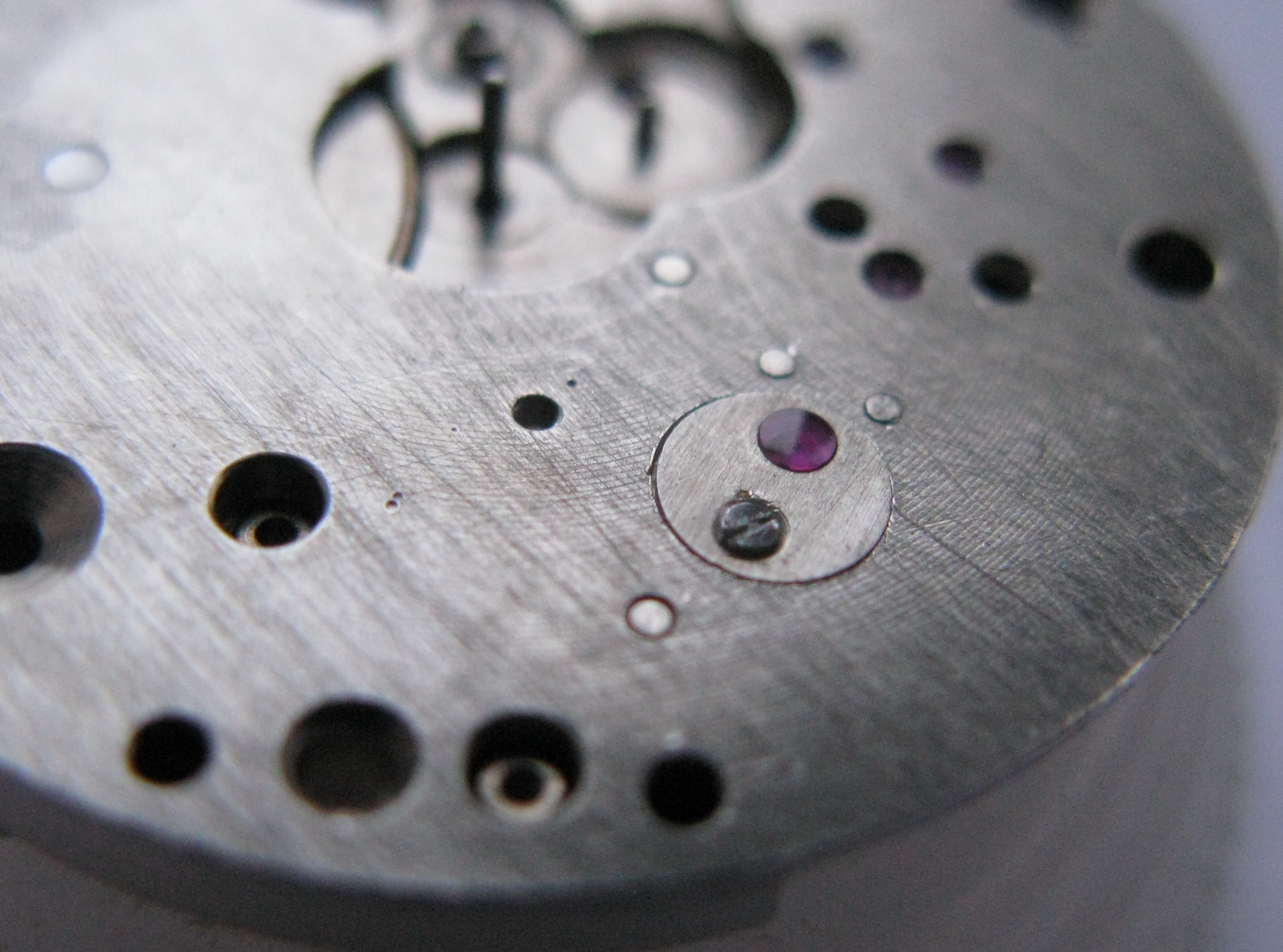
Crossing back to the slow side, the balance cap jewel is oiled first — a drop on the cap jewel itself, never the through-jewel, sized to cover about sixty to seventy percent of the stone. The jewel is seated and secured with its screw. The minute pinion goes back, the keyless works is reassembled, lubricated and closed under its cover. Then back to the motor: the crown wheel and the ratchet wheel are refitted, and finally the pallet fork returns with its bridge. The pivots of the pallet fork are left dry — remember what excess oil there did to the watches in earlier work.
The Tricky Part: Servicing the Balance
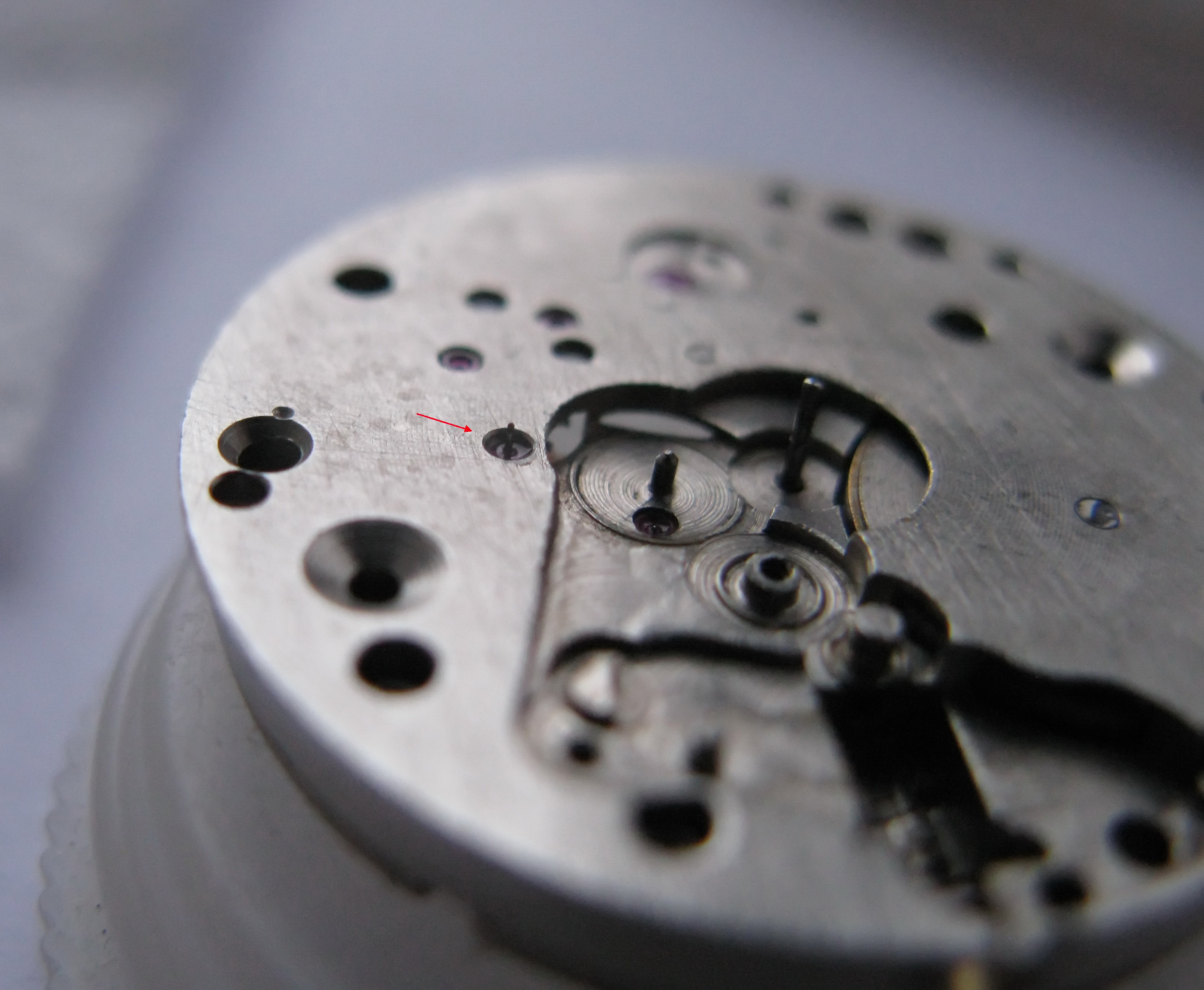
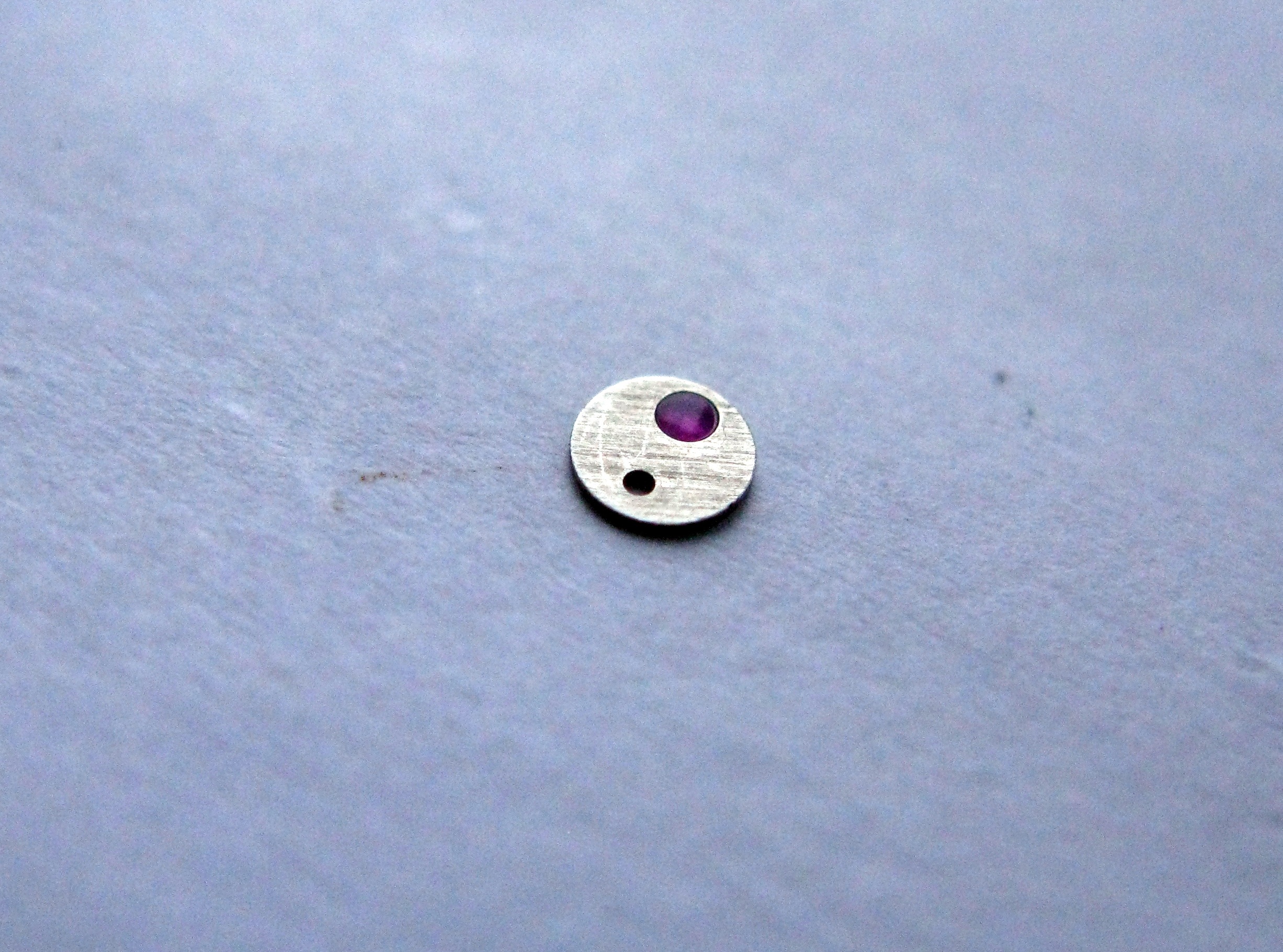
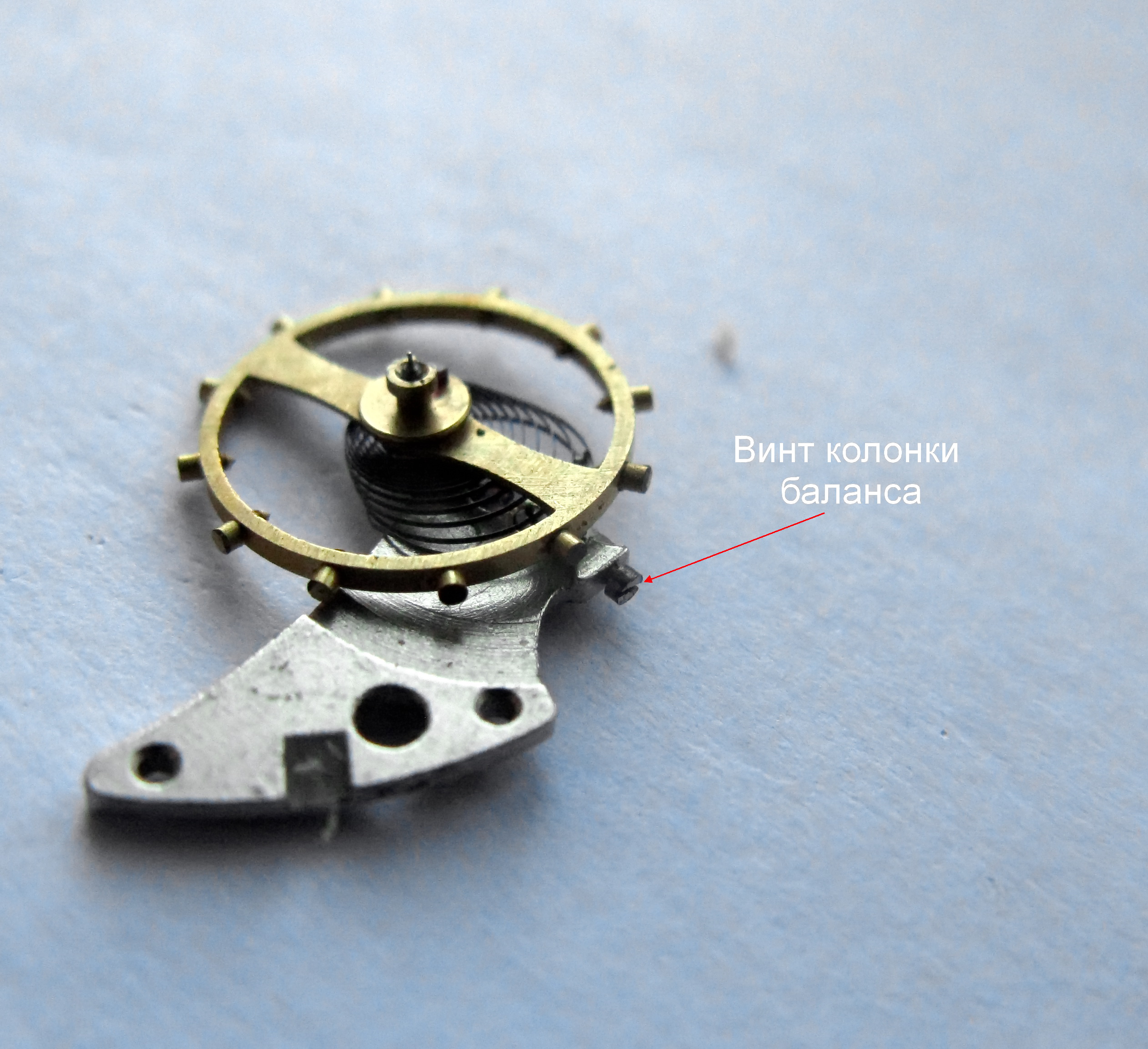
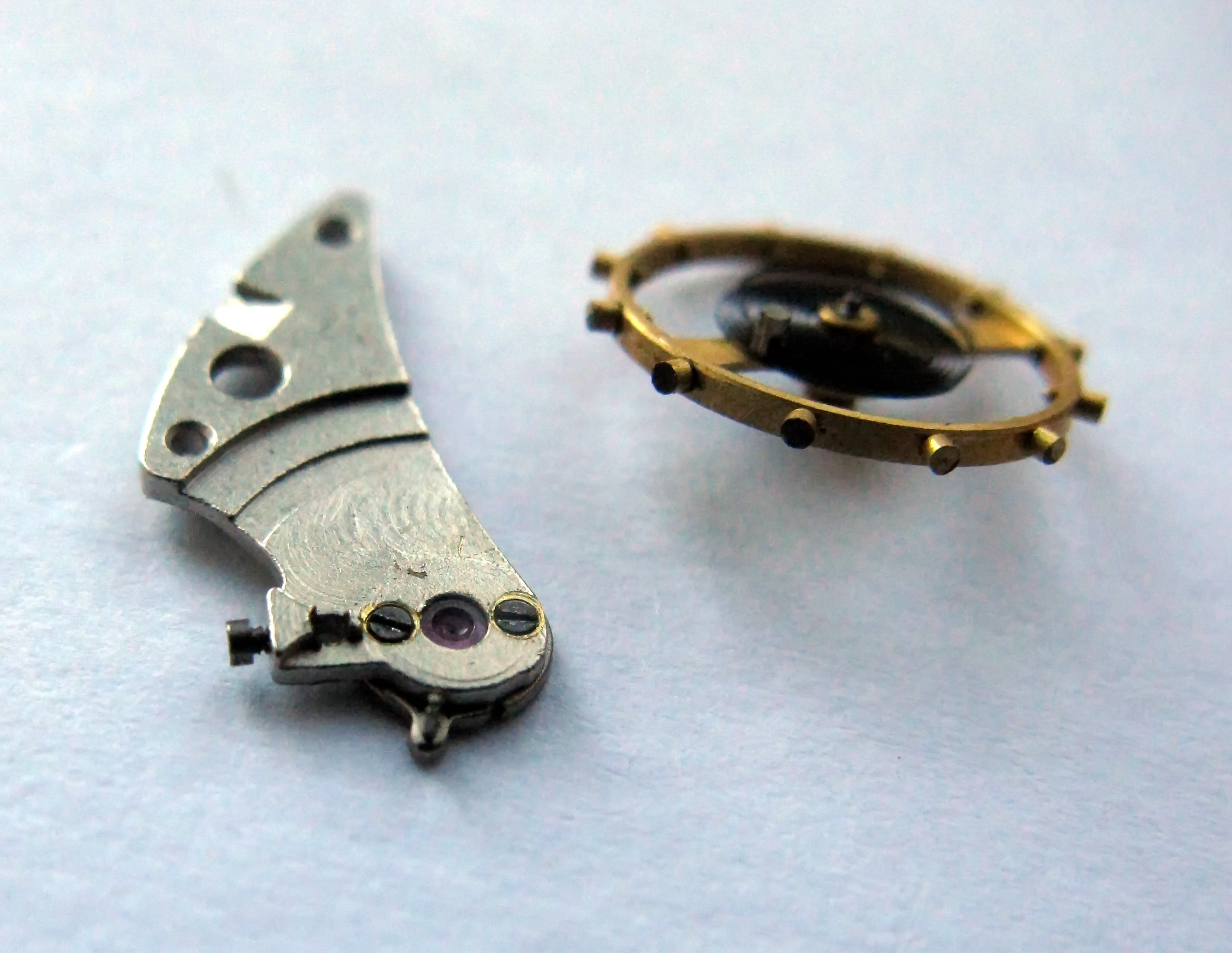
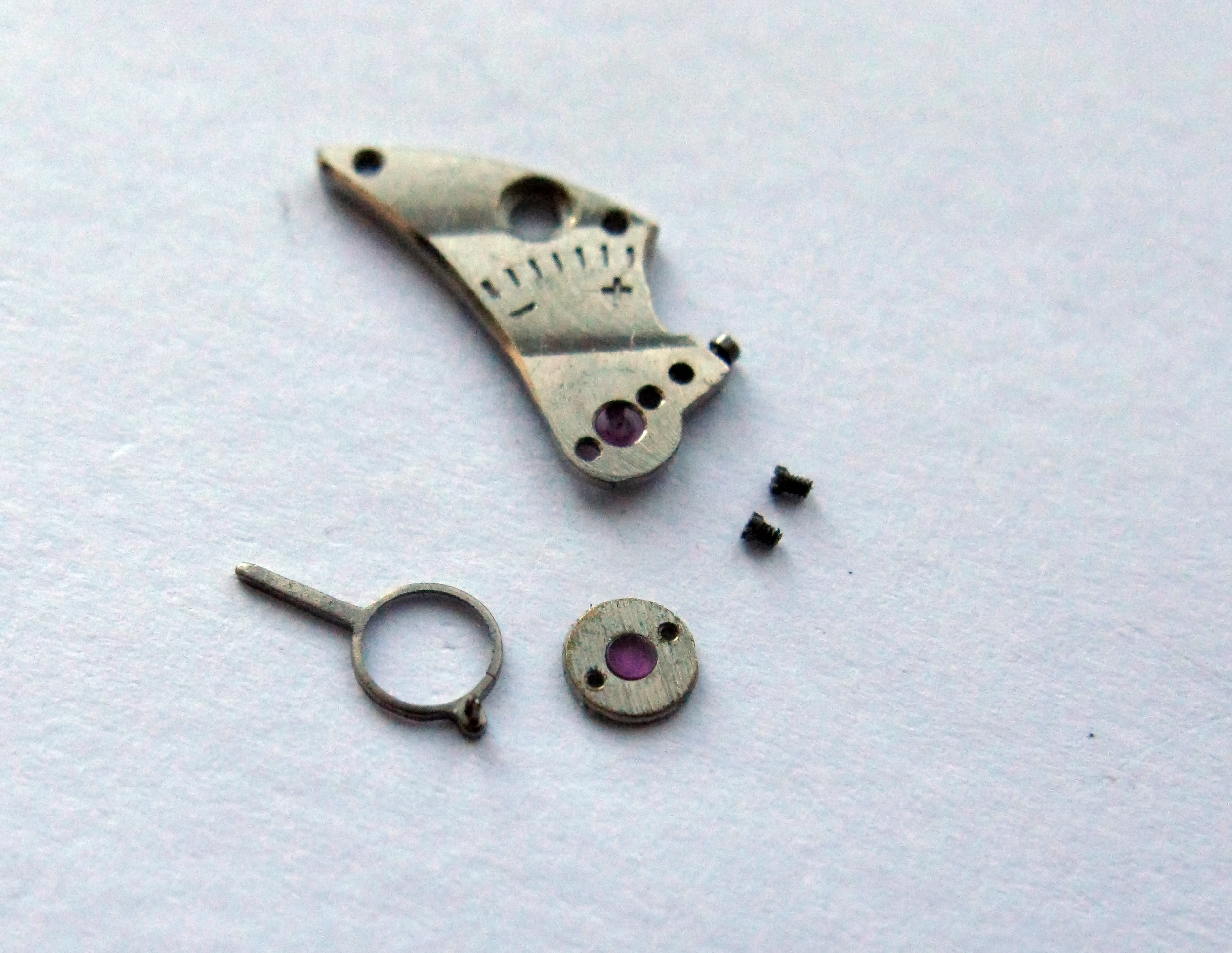
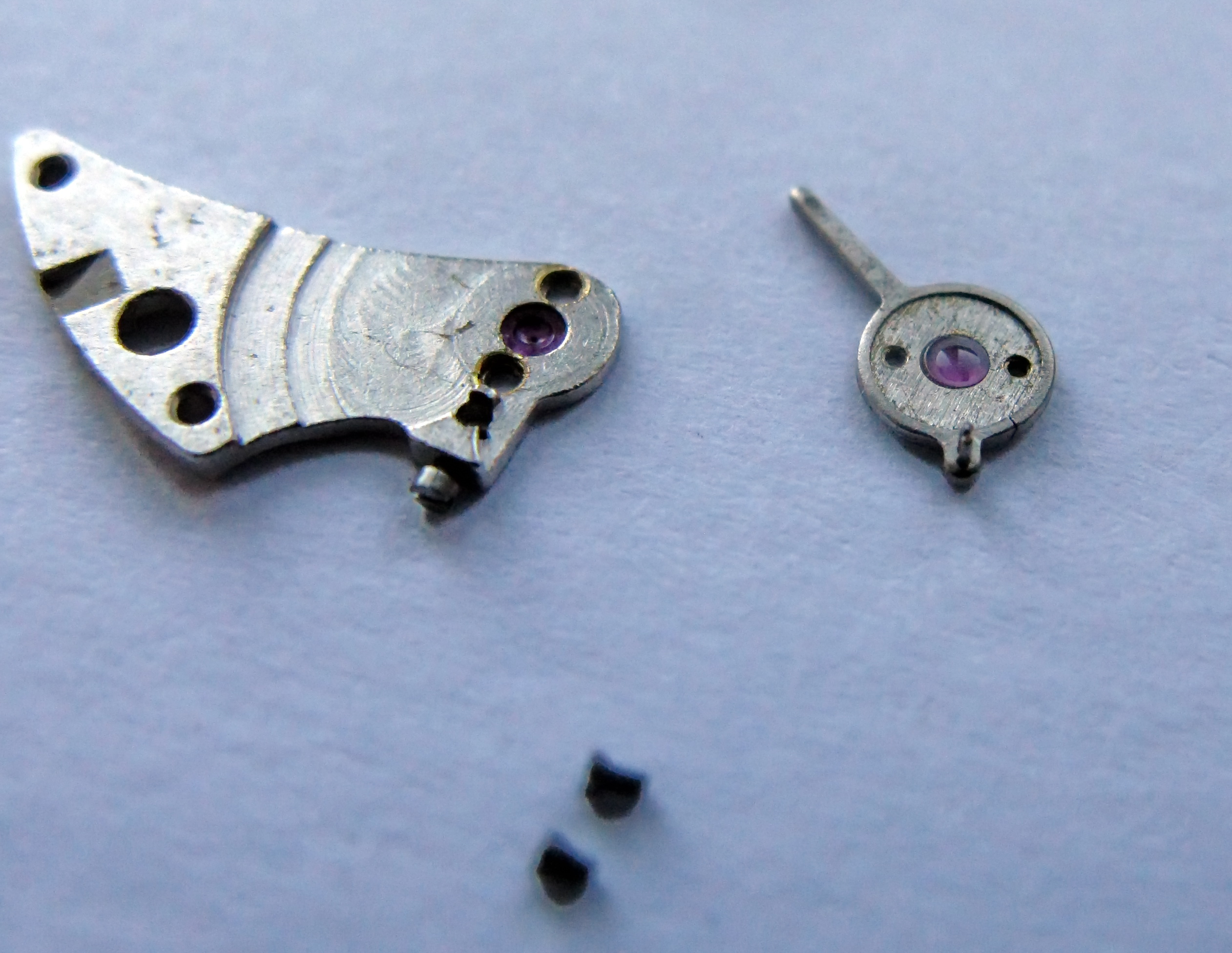
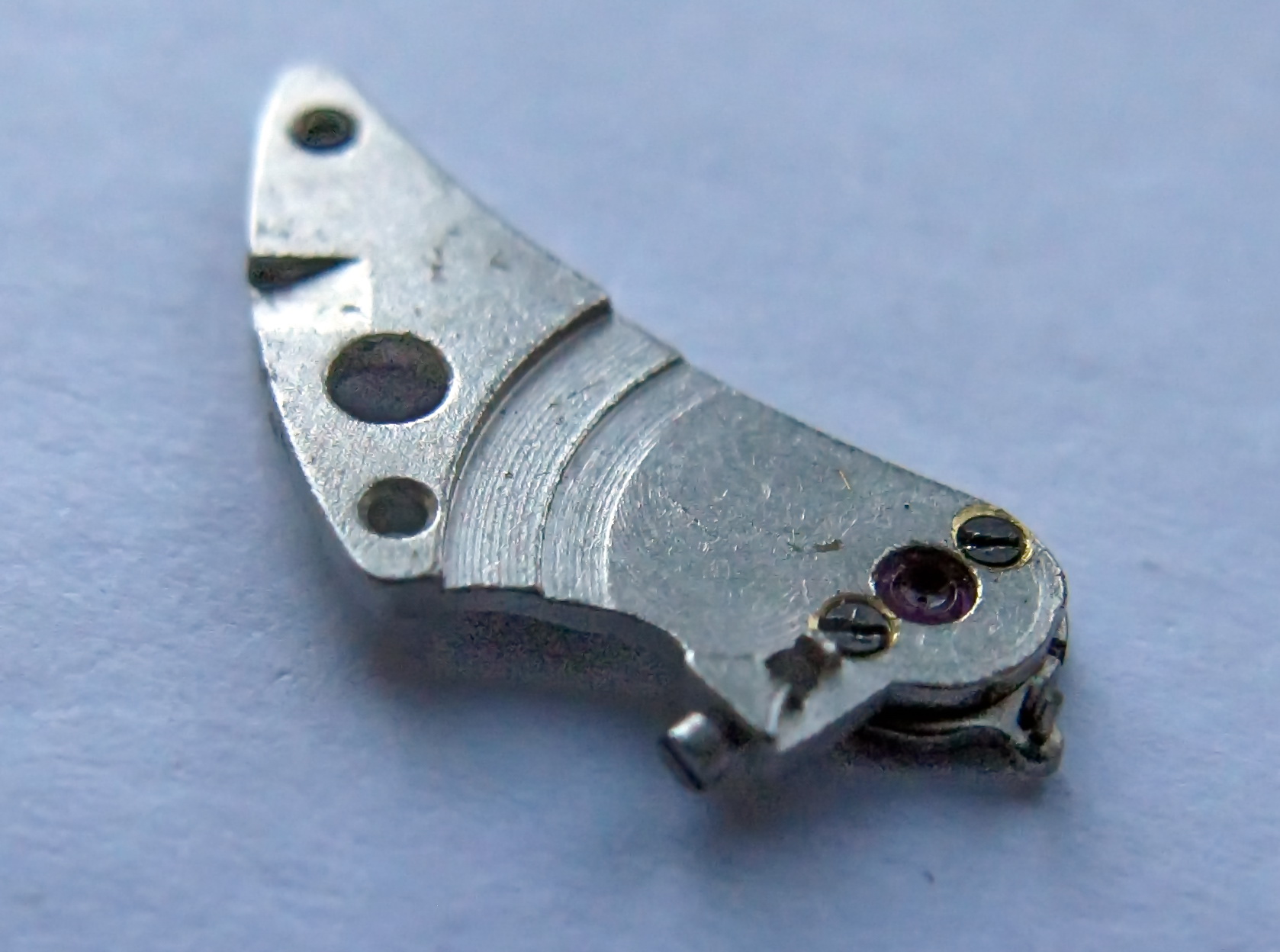
Now the most interesting work — cleaning and lubricating the balance. The catch is that the cap jewel on the balance cock can only be oiled by fully taking the balance assembly apart, because the screws sit underneath rather than on top. The balance is laid wheel-up and the cock pressed down with pegwood; the balance-stud screw is loosened by no more than a single turn. Back the screw out completely and you buy yourself a great deal of grief — refitting it without a special holding screwdriver is possible but genuinely hard. The balance is then tipped so it hangs free, the stud is nudged out of its slot, and the parts separate. The balance goes to be washed; the cock is set so the slots of its cap jewel are visible, and those tiny screws — each the size of a poppy seed — are removed. Wash and dry the cock and cap jewel, oil the cap jewel to that same sixty-to-seventy-percent coverage, align the screw holes, and drive the screws home. Patience, attention, and care, in that order.
Why all this fuss over the balance? Look closely at the pivots of the train wheels: the arbor steps down to the pivot abruptly, forming a shoulder. That shoulder is what keeps the oil from running down the pivot onto the arbor and the pinion. Overfill it and the oil creeps onto the pinion, the wheels damp and effectively glue themselves, and the watch runs stiff. For the oil to stay put it must be of the right viscosity and within the prescribed amount; sometimes the surfaces are epilamed to limit spreading. The balance staff, by contrast, tapers smoothly into its pivot, conically, with no shoulder. Over-oil the balance or break the technique and the oil, with nothing to hold it, runs onto the balance wheel, then onto the hairspring, and the coils stick together. Hence the old line: you cannot spoil porridge with butter, but you can certainly spoil a watch.
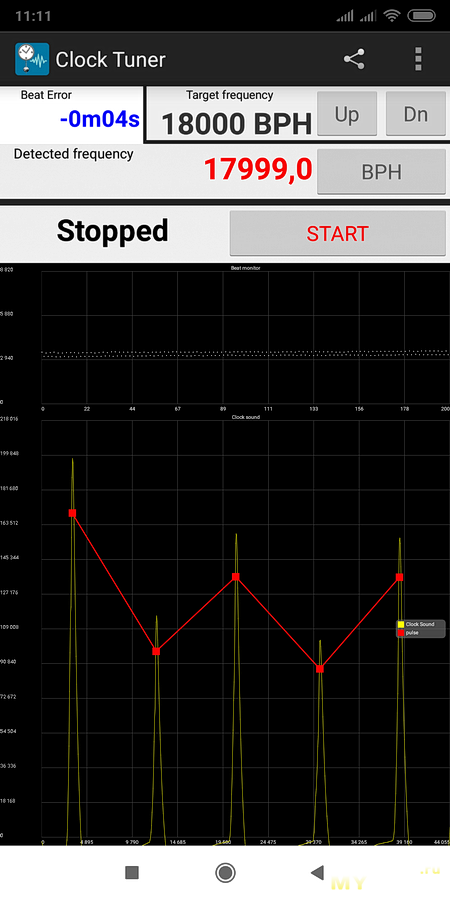
With the balance reassembled, it goes back in: the stud drops into its slot and the hairspring is led under the regulator pins in one motion, the stud pushed home with fine pegwood and locked with its screw — but the balance pivot is not yet in its jewel, it sits to one side. The balance is then suspended on tweezers and lowered into the movement so the pivots enter their jewels just once. If for any reason the balance must come out again, the jewels have to be washed and re-oiled — otherwise there will simply be no oil where it is needed. That is the price paid for a simple design: pull the head out and the tail gets stuck. But it runs beautifully. The timing machine shows a small beat-error discrepancy, well within tolerance.
The Result, and What the Caliber Teaches
So, what came of it? Four seconds of loss per day, on a thoroughly worn and venerable movement of advanced age — and that despite the state it arrived in. A mechanism that has worked for more than seventy years and held figures like these is, in itself, remarkable.
But look hard at the design. Fifteen jewels means the center wheel is not jeweled — and that is the most heavily loaded wheel in the movement, working directly against the mainspring. The result is wear in the bushings of the bridge and the plate; the wheel begins to wobble, the rate goes crooked, and once the wear is bad enough the wheel can jam outright and stop the watch. There is an old joke about a watch that is two jewels short — and it was born from exactly this. Add those two jewels and the movement would barely wear at all.
There is no shock protection on the balance, either. That was simply the era. Provided the watch is not abused or dropped on concrete it is fine — but there is one quiet failure mode: the balance has a little vertical freedom, so the pivot hammers against the cap jewel and slowly peens into a mushroom shape. The mushroom grows, the rate drifts, positional error rises, and eventually the balance jams. Worse, removing such a balance is a real problem, because the peened pivot will not pull back through the through-jewel. When that happened, the balance was replaced together with the cock — which is exactly why so few authentic movements survive today.
The keyless works has its own childhood ailment: over time the stem tunnel in the plate wears and widens, the stem sags, and the setting lever begins to slip when the stem is pulled to the setting position. The cure is tempering and re-bending the setting lever. And then there is the wear in the barrel seats — two more jewels that are not there — which lets the barrel cant and chew into the plate and bridge, a well-known problem and not only on the 2602. The caliber is also sensitive to which seconds hand is fitted: a hand without a counterweight produces a visible waver in the trace, a wave-like rate, so final regulation, like the depthing check, should be done with the hands in place.
All of this was eventually addressed. In time there appeared an essentially equivalent caliber, the 2603, corrected and supplemented, with enough jewels and with shock protection — but that was already a Raketa, the one that was so highly valued. That, however, is a different conversation.
Comments
Write a comment